Showing posts with label early chapter book. Show all posts

Tuesday, September 24, 2024

75. Mouse and His Dog (Dogtown #2)

Mouse and His Dog (Dogtown #2) Katherine Applegate and Gennifer Choldenko. Illustrated by Wallace West. 2024. 336 pages. [Source: Library] [5 stars] [animal fantasy, j fiction, illustrated chapter book]

First sentence:  I want to be one of those brave mice you read about in books. A mouse in a friar's robe brandishing a sword, a mouse in short sleeves paddling a canoe, a mouse in a pullover sweater who saves a princess. But I'm an ordinary field mouse, the size and weight of an average tomato. The only thing I ever wear is slippers.

My thoughts (preview): I have WANTED--no NEEDED--this book since the summer of 2023. I finished Dogtown (the first book) and NEEDED more, more, more. I wanted all the books, forever keep them coming. I loved Dogtown so much I read it TWICE within a couple of months. It is my emotional support library book. So obviously I was excited and counting down the months, weeks, and days until it was released.

It did not disappoint.

Premise/plot: Mouse, whom readers first met in the book Dogtown, returns for another adventure set at the Dogtown animal shelter. Buster, a golden retriever with a high return rate or bounce back, is the star of this one. Mouse's goal throughout the book is to help Buster (and Stewie) find their forever home(s). This one does also feature a robot dog, Smoke Alarm (aka Smokey).

"Smokey's problem was that he'd been put together in a factory that also made smoke alarms, and wires got crossed. Buttons got switched. Gears got shifted. In some home somewhere, there was a smoke alarm that barked. And in Dogtown, we had a metal dog with a smoke alarm that went off when you least expected."
Plenty of adventure and HEART packed into this dog adventure.

My thoughts: How does Mouse compare to Chance as a narrator?!?!?! I loved them both. But Mouse loves, loves, loves, LOVES to read. So Mouse's narration is PACKED with book references.

I loved the narration. It is just a WONDERFUL read. I do think it would be an excellent read aloud. 


© 2024 Becky Laney of Becky's Book Reviews

Wednesday, April 14, 2021

38. Anna Karenina (Easy Classics)


Anna Karenina (Easy Classics, Russian Classics) Adapted by Gemma Barder. Illustrated by Helen Panayi. 2021. [July] 120 pages. [Source: Review copy]

First sentence: St Petersburg in 1874 was full of the most fashionable and important people in all of Russia. One of the most respected families were the Kareninas. Alexis Karenina was a government official. His wife, Anna, ran their large home. She made sure that everything was perfect when they entertained Alexis’s important guests. They had a little son called Serezha, whom Anna adored. Anna’s life was happy, but she had married when she was young. She sometimes felt that marrying someone much older than herself had made her old before her time. 

Premise/plot: Gemma Barder has adapted (but why????) Leo Tolstoy's novel Anna Karenina into an early chapter book geared towards the seven to nine crowd (but why????). The original novel has one of the greatest opening lines ever, "All happy families are alike; each unhappy family is unhappy in its own way." Tolstoy then goes on to show MANY unhappy families (and one happy one).

For those that haven't read the original OR watched one of the adaptations, I'll sum it up concisely. Anna Karenina (a married woman) visits her brother and sister-in-law when the two are at a breaking point in the marriage. (He got caught cheating). She convinces her sister-in-law, Dolly, to give her brother, Stephen, another chance--essentially as many chances as he needs. Family is everything; sacrifices must be made to keep the family whole. While visiting she has a few chance encounters with Count Vronsky (a military man). It's lust at first sight. Though she has a husband and a child, her life is utterly incomplete without HIM. And apparently vice versa? (But is this true? If Anna had said NO, GO AWAY a couple dozen times, would he have started following/stalking the next pretty girl he sees?) We'll never know because Anna didn't say no. The two begin an affair that is not so subtle. When it goes from being a little hidden to right out in the open, her marriage reaches its own breaking point. (It doesn't help that she's pregnant with Vronsky's baby). Hard choices must be made, but she follows her heart...or so she thinks. Abandoning her child in favor of her lover, she risks it all to have a half-life in the shadows. When life proves less than satisfying--why didn't he live up to all of her dreams???? why is life so hard?????)--she decides life isn't worth living at all. Goodbye cruel world of my own making. THUD.

That is one family whose story is told in the original novel. As I said, there were a couple families followed.

This adaptation contrasts Anna's UNhappy ending with Kitty's happy ending. But Kitty and Constantine's story is one visited only briefly.

My thoughts: I have read Anna Karenina twice. Once as a college student. Once as a blogger. I *might* even reread it again one of these days. But my first thought was WHY IN THE WORLD WOULD ANYONE adapt a story about adulterous affairs and suicides into an early chapter book. And I think it is a fair question. Classic or not, this book isn't really a child-friendly read. Not as originally told.

But to be fair, this isn't as originally told. In the original, for example, she goes to visit Dolly because she is heartbroken and upset over her husband cheating on her. But it's been simplified to DOLLY'S REALLY BAD MOOD FOR NO REASON in this early chapter book adaptation:

As Anna headed for the railway station, she thought about her brother, Stephen. He had written to Anna to ask for her help. He and his wife, Dolly, had been arguing. Anna loved her brother and sister-in-law and wanted to help. Plus, Anna was secretly looking forward to a few days back in the city she grew up in, away from Alexis’s dusty old friends and their serious wives. In Moscow, Stephen Oblonsky’s eldest children were running around his feet. The youngest was crying in her cot. ‘Darling!’ he shouted, as calmly as he could. ‘I think the baby wants something!’ ‘Then why don’t you pick her up?’ Dolly huffed, standing in the doorway of their tidy sitting room. ‘Me?’ Stephen asked. ‘Yes, you,’ replied Dolly, hands on her hips. ‘Then maybe you can be of some use around here.’ Stephen looked at a loss. He peered into the cot and hopelessly cooed. ‘For goodness sake!’ Dolly bustled passed her husband, scooping the baby up into her arms. ‘Shouldn’t you be meeting Constantine for dinner anyway?’ Stephen nodded and went to kiss his wife goodbye. But she turned her head away from him and started to play with the baby.
And this is how the book handles Anna's being smitten with Vronsky:
On the dance floor, Anna could not take her eyes from Vronsky’s. She felt as though she had danced with him a thousand times before. The rest of the ballroom seemed to disappear. When Vronsky asked her to dance again, Anna accepted without hesitation. When he asked her a third time, Anna knew she should refuse. It wasn’t right for a married woman to dance so many times with another man. But Anna accepted. She forgot all about politeness. She forgot that she was married. She forgot that young Kitty was in love with the man she was dancing with. All she cared about was Vronsky.

As for the suicides, it's more like boo-boos at the train station. 

Reading is subjective. I suppose there are plenty of adult readers who sympathize/empathize with Anna Karenina, who side with her, if you will. Who see this affair as all kinds of wonderful and oh-so-worth-it. But I think again there are plenty that don't. The adaptation tries with every single page to present Anna Karenina sympathetically and heroically. But the truth is, she's just not that likeable. There are other characters that are a thousand--no, ten thousand times--more likeable within Tolstoy's novel. I just don't see the point of shallowly glorifying Anna's story. Shallow in that it doesn't go the depths--readers are too young to understand about SUICIDAL THOUGHTS, DEEP DEPRESSION, DESPONDENCY. And it's like well, Anna had a boo-boo at the train station and someone else raised her children. The end. (I exaggerate. The text reads something like her family learned that there had been an accident at the train station and Anna was killed.)

For the record (mom asked me this, you may be curious too), reading this would not help you pass any quizzes or tests for school. It wouldn't help you write an essay. You couldn't really bluff your way through class discussion on the themes and significance of the original.

My questions:

  • Why does this book exist? Why was it written? Why was it published?
  • Who is the main audience? Yes, it literally says it's for children age 7+. But who is really going to be buying this one and why? It will be adults buying this one either for their own personal libraries, to give to their children, grandchildren, nieces and nephews; librarians and teachers may come into play as well. But the question is at what age does one need/want an adaptation for a very adult book? An adaptation for teens and new adults would make sense. But if you're *that* old do you want to be reading an early chapter book?
  • If you do want to give this to second graders, third graders, fourth graders to read--presumably for fun--the question again is WHY this book? WHY this classic? What are you hoping they get from exposure to the story? How are you wanting them to connect and interact with the story?
  • Is it really for adults who LOVE, LOVE, LOVE the book?

© 2021 Becky Laney of Becky's Book Reviews

Tuesday, November 13, 2018

That's My Book! And Other Stories

That's My Book! And Other Stories. (Duck, Duck, Porcupine #3) Salina Yoon. 2017. Bloomsbury. 64 pages. [Source: Library]

First sentence: I am bored, Porcupine. Me, too, Big Duck. Hey, Little Duck. That looks like fun! Can we borrow some books?

Premise/plot: This early reader stars Big Duck, Little Duck, and Porcupine. Readers may know these three from previous titles in the series: Duck, Duck, Porcupine and My Kite is Stuck. Once again they appear in three stories. The stories in this collection are, "That's My Book!," "Let's Have A Talent Show!," and "Dress-Like-a-Pirate Day." In the first story, the three discover the many joys of books. (Not all of them involve actually reading books.) In the second story, the three decide to have a talent show. But do all three have talents worth showing off? In the third story, there is some misunderstanding about what they are playing. Are they playing pirates? OR are they playing doctor?

My thoughts: I really love these characters. I do. As I mentioned in my last review--the review of the second book--I hope this series is LONG. I would recommend this series. It's quite enjoyable.


© 2018 Becky Laney of Becky's Book Reviews

Wednesday, November 07, 2018

Whiskerella

Whiskerella (Hamster Princess #5) Ursula Vernon. 2018. 240 pages. [Source: Library]

First sentence: The castle of the hamster king was a bustle of activity.

Premise/plot: This is the fifth novel in Ursula Vernon's fantasy series for young readers starring Princess Harriet Hamsterbone. Harriet and her good friend, Wilbur, team up once again to save the day.

Depending on your point of view, Whiskerella has either been blessed or cursed by a fairy godmother. What matters in this story--and in any story really--is how she herself feels about it. Whiskerella is anything but pleased. She welcomes the assistance of her new friends. Unfortunately, the fairy godmother learns of Harriet's eagerness to help her break the spell...and well...Harriet and Wilbur face some challenges when a spell is cast over them. Can they persevere and still save the day?

My thoughts: This is a twist on the classic fairy tale Cinderella. Whiskerella has little interest in attending balls or marrying royal princes. I enjoyed it--for the most part. But I found it slightly tedious in places. (I would have found even one sentence about lizard pee tedious....let alone it being a running gag throughout the entire novel.)


© 2018 Becky Laney of Becky's Book Reviews

Wednesday, July 25, 2018

Road Trip With Max and His Mom

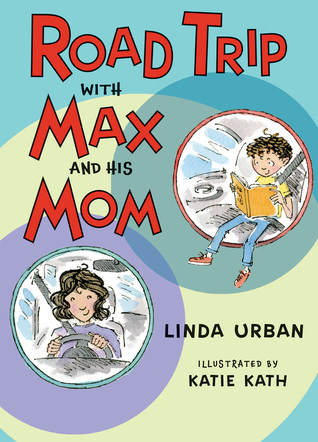
Road Trip with Max and His Mom. Linda Urban. Illustrated by Katie Kath. 2018. Houghton Mifflin Harcourt. 160 pages. [Source: Review copy]

First sentence: On Monday morning after breakfast, Mom made an announcement. "We are going on an adventure. Max was surprised. Mom was not the sort of mom who made announcements about adventures. She was the sort of mom who made announcements about the laundry needing to be put away, or how proud she was of Max's report card, or that Max's hair was getting long and it was time for a trim.

Premise/plot: Road Trip with Max and His Mom is a sequel to Linda Urban's Weekends with Max and His Dad. In the first book, readers met Max and his dad. Max is adjusting to his parents recent divorce. In the second book, Max is skipping one of his weekends with his dad to go with his mom on a trip. Great-Great-Aunt Victory is turning 100 and having a family-reunion-birthday-party at an amusement park. It sounds like an adventure just right for an explorer like Max.

My thoughts: I love, love, love Max. I came to love him in the first book. That's the wonderful thing about series. If you get attached to the characters in the first book, you can just pick up future books with the love already there. Max is over being a spy these days, and now he is all about exploring. He has been LOVING reading biographies about famous and should-be-famous explorers. And I just have to say that having a narrator who gets so excited about books, about reading, about learning is just delightful.

I would definitely recommend both books.


© 2018 Becky Laney of Becky's Book Reviews

Thursday, July 05, 2018

The Princess in Black and the Mysterious Playdate

The Princess in Black and the Mysterious Playdate. (Princess in Black #5) Shannon Hale. Illustrated by LeUyen Pham. 2017. Candlewick Press. 96 pages. [Source: Review copy]

First sentence: It was a clear, crisp, comfortable afternoon. The Princess in Black and the Goat Avenger had just sent a monster back into the hole. The hole led to Monster Land. It was time for the victory dance. They slapped hands. They wiggled bums. They said "Callooo!" It was their thing.

Premise/plot: Princess Magnolia (aka the Princess in Black) has a playdate with Princess Sneezewort. But unbeknownst to the Princess a monster has followed her without detection. His intent to eat pets. If he can't have goats, why not pets? She's not in her kingdom; there is no monster alarm in Princess Sneezewort's castle. Yet she has a way of knowing when she's needed. So does Princess Sneezewort. Could this princess--who has a way of blending into her surroundings--have a secret of her own?

My thoughts: I enjoyed this one. I did. I do like the series as a whole. This was a good installment in the series. I appreciate series books. There's an age--or a stage--in reading where it's just pure HEAVEN to know that your favorite characters--your best friends and kindred spirits--appear in many, many books. That the fun does not have to come to an end as long as there's another book.

Shannon Hale is a fun and talented writer. LeUyen Pham has long been a favorite of mine!

© 2018 Becky Laney of Becky's Book Reviews

Monday, May 21, 2018

Who's a Pest?

Who's a Pest? Crosby Newell Bonsall. 1962. Harper & Row. 64 pages. [Source: Bought]

First sentence:  Lolly, Molly, Polly and Dolly all looked at Homer. Homer was their brother. "I didn't do it," said Homer. "Yes, you did," they said. "Yes, you did. And you're a pest!" Then Lolly and Molly and Polly and Dolly all turned their backs. "Beans," said Homer, "I'm not a pest."

Premise/plot: Who's A Pest is a dialogue driven early reader from the early 1960s. It stars Homer, his sisters, and a LOT of animals. How very easy it is to be misunderstood!

My thoughts: I could not resist this one when I saw it in my local charity shop. The dialogue was so funny. Perhaps not ha-ha funny. But funny nonetheless.

Homer sat down.
Soon he heard a sound.
"Help," it said.
"Help! Help! Help!"
Homer looked around.
"Help who?" he asked.
"Help me," said the sound.
"Who's me?" Homer asked.
"Me is me. I don't know who you are," said the sound.
"I'm Homer," said Homer.
"Please help me, Homer," said the sound.
"Where are you?" cried Homer.
"Here," said the sound.
"Where's here?" asked Homer.
"Here is here," said the sound.
"Oh, my," cried Homer, "I'll never find you. I don't know where here is."
Homer soon enlists others to help him search for ME. Anyway, I found the book delightful. I'm not sure children will equally be delighted by this vintage I Can Read book. (It does have a LOT of text per page.) 

© 2018 Becky Laney of Becky's Book Reviews

Friday, May 04, 2018

A Girl Named Misty

American Girl: A Girl Named Misty: The True Story of Misty Copeland. Kelly Starling Lyons. 2018. Scholastic. 48 pages. [Source: Review copy]

First sentence: Misty Copeland loved to dance.

Premise/plot: A Girl Named Misty is an early chapter book biography of Misty Copeland, an accomplished African American ballerina. It is one of the new books in the nonfiction series by AmericanGirl. Other titles include A Girl Named Hillary and A Girl Named Rosa.

 My thoughts: I enjoyed this one! I know I've said this a thousand times--and a thousand times I've meant it--but biographies have come a LONG way since I was in elementary school. I won't say I wish I'd read it as a child because that would be impossible for several reasons. One being that Misty Copeland would have still been in elementary school herself. The second being that there's still the problem of time travel! But I am so happy that nonfiction books have improved greatly in recent decades. That there are more choices than ever before in terms of subjects.


© 2018 Becky Laney of Becky's Book Reviews

Tuesday, April 24, 2018

Dory Fantasmagory Head in the Clouds

Dory Fantasmagory #4: Head in the Clouds. Abby Hanlon. 2018. 160 pages. [Source: Library]

First sentence: My name is Dory, but most people call me Rascal. I have an enemy named Mrs. Gobble Gracker--you might have heard of her. She has been trying to catch me and bring me to her cave. But today I have a problem that's even bigger than Mrs. Gobble Gracker. It's this coat.

Premise/plot: In this fourth book in the series, Dory gets her first loose tooth. What kinds of things will she imagine about the tooth fairy? And where will her imagination lead her?!

My thoughts: I enjoyed this imaginative chapter book. My favorite part of the series remains the illustrations. They are super fun. For example, the book opens with a map of Dory Land that is partially inspired (perhaps) by the Candy Land game board.

The first two chapters of this one are about a BUNCHY COAT and how it is the coat's fault that she lies again and again and again to her teacher. (Her parents don't buy that excuse, but they give the coat away anyway). The remaining chapters focus on a LOOSE TOOTH and Dory's speculations on the tooth fairy. Her siblings have her convinced that the Tooth Fairy is like Santa Claus, she only leaves money to GOOD children. She leaves EGGS or OMELETS for BAD children. And wouldn't you know Dory HATES eggs. Can she get on the good side of the tooth fairy? Perhaps she'll have the chance to explain when she "meets" the tooth fairy at the local grocery store.

There's never a dull moment if it's spent in Dory's company.

© 2018 Becky Laney of Becky's Book Reviews

Monday, April 23, 2018

Dory Fantasmagory: Dory Dory Black Sheep

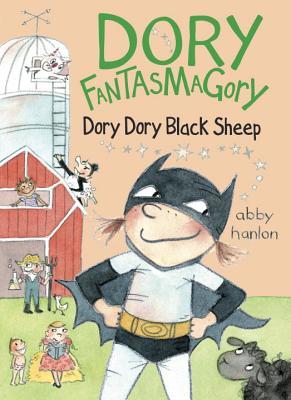
Dory Dory Black Sheep (Dory Fantasmagory #3) Abby Hanlon. 2016. 156 pages. [Source: Library]

First sentence: My name is Dory but everyone calls me Rascal. I am six. I have a lot of freckles. My hair is just messy. This is my nightgown that I try to wear as much as I can. But the most important thing about me is that I have two worlds. One is real and one is imaginary.

Premise/plot: Is Dory the black sheep of her family? Perhaps if you accept the lighthearted definition provided for readers at the beginning of the book: "a member of a family or group who does things a little differently." Dory does things differently. Ask her mom...or teacher...or her older brother, Luke, or her older sister, Violet. (Though her siblings' opinions might be biased!)

Dory does indeed live in two worlds: one real and one imaginary. But she doesn't give equal time and attention to both. In fact, 90% of the time she's in her own world and completely out-of-touch with reality. To use the world miracle lightly and perhaps inappropriately, it's a miracle if Dory stays on task and answers questions when asked.

Because Dory rarely--if ever--stays on task she's having difficulty learning to read. Her reading instruction time at school seems to be completely independent and without much guidance or instruction. Essentially the teacher saying: hey kid, read this book. Dory is paired with a partner, but the partner hasn't any more clue of how to read than Dory does. The teacher doesn't seem concerned with teaching them how to read--the skills and techniques they need to know to progress. Perhaps she just hasn't gotten around to working with their group yet.

Dory doesn't like being in the lowest reading group and being given a basket of "baby books" to read. But when she opens up the book and begins reading the illustrations, well, she supplies a story of her own imagination. A story peopled with her own imaginary friends and characters, and the black sheep of the farm story, well he leaps out of the book and becomes part of Dory's day-in, day-out imagination. Can she get the black sheep back in the book? Does she want to?

Her friends soon get swept up, up, and away with this new story. Even her friend who is able to read LONG chapter books all on her own. Dory's story is more exciting perhaps. 

This is Dory's third adventure. (I reviewed the first chapter book in the series in 2015. And here's my review of the second book in the series.)

My thoughts: One thing is delightful for sure: the illustrations. I LOVE, LOVE, LOVE the illustrations.

 I wanted to love, love, love this one. I didn't quite. Perhaps because I had a hard time NOT taking it seriously. Instead of getting swept up, up, and away by Dory's overactive imagination and delighting in her creative, free spirit, I kept thinking that her mom and her teacher weren't really giving Dory the attention she needed.

Learning to read is important, significant, life-changing. It isn't a cookie cutter process. And every child has his or her own timeframe for learning to read or becoming a fluent reader. There isn't one perfectly-perfect right way to teach reading. But I do think it is something that requires instruction. You just can't leave a child with a basket of books and hope for the best.
We pretend we are reading until she leaves. "If I was the farmer, I would just eat all the animals," whispers George. "If I was the farmer, I would move to the city and get an apartment with an elevator, I say. "If I was the farmer, I would run around naked and put mud all over my body and then stick things to it," says George. "But you would do that anyway," I say. "Yeah..." he says. 
"This little black sheep is kind of cute." I show George the picture. "And he's looking at you," George says. "What do you mean?" I say, and hold the book up closer. "I think his name is Goblin," I say. "Does it say that?" George asks. "I don't know," I say. "I can't read." "Raise your hand if you hate reading!" says George. And we both raise our hands high in the air.
Parenting Dory would be DIFFICULT to say the least. I don't envy her mom the task. But I get the idea that reading aloud to Dory wasn't ever a high priority to her. Perhaps Dory protested every time she tried. Perhaps the struggle wasn't worth it. Perhaps she was busy helping the older children with their homework. Perhaps Dory was so amazing at entertaining herself that she didn't want to interrupt her play, her free time. Perhaps she thinks teaching reading is the teacher's responsibility alone.

But Dory's homework of reading for a certain amount each day is completely independent. Her mom doesn't sit down with her, doesn't listen to her daughter read aloud, doesn't ask her questions about her reading, doesn't witness if her daughter is reading or not. So essentially there are no adults in her life that know Dory is struggling with reading. Dory seems to be all on her own, expected to make progress without any help, encouragement, or instruction.

Does Dory want to learn to read? Yes. Does she stay on task when left on her own to practice? Not really.

The book is cheerful. Dory, for the most part, is happy, happy, happy nearly all the time. She has her real friends and her imaginary friends to keep her company 24/7. Her imagination is over-the-top delightful. And I think Dory is content to make up her own stories instead of reading stories from a book. Her stories seem to be packed more with adventure and excitement.

Dory is a fictional character. I need to keep this in mind. Dory's over-the-top IMAGINATION has the potential to enchant young readers, to make them really excited about reading. Engaging real readers--real children--is more important than a technical behind-the-scenes guide for adults in how to teach children how to read. 

The writing is fun.

Quotes:
But before I get dressed, I have to wake up Mary. Lately, I've had to wake her up with a pan in my hand so she knows I really mean it. She's gotten super lazy now that she stays home when I'm at school. 
Rosabelle has a big thick chapter book in her lap. She looks up and sees me running toward her. We take turns picking each other up. It's like hugging, but more dangerous. 


© 2018 Becky Laney of Becky's Book Reviews

Thursday, February 08, 2018

Just Dance

Just Dance. Patricia MacLachlan. 2017. 128 pages. [Source: Library]

First sentence: I grew up on a farm, and I'm ten, so I don't know much about love. I know about cattle, chickens, two goats, sheep, and how to ride a horse. But I know love when I see it.

Premise/plot: Sylvie Bloom is an observant young girl who loves to write. She's given a unique opportunity to write for the local newspaper over the summer. Her columns are written in poetry and are inspired by local events. Her spin on country life is refreshing to readers. But as much as she observes, she lacks in understanding. Her big question of the summer: why did her mother stop being a famous opera singer to settle down in the country? How is family enough for her when she's so brilliant?

My thoughts: I enjoyed this one. Confession: I have a weakness for Patricia MacLachlan. I've enjoyed most everything of what I've read by her--whether it's contemporary like Just Dance or historical like Sarah, Plain and Tall. I do question the cover, however. I think her mom appears in a prairie-like dress to remind readers, hey, this is by the author of Sarah, Plain and Tall. It just doesn't seem to say contemporary mom who works on a farm.


Do you have a favorite MacLachlan book?

© 2018 Becky Laney of Becky's Book Reviews

Tuesday, November 28, 2017

Waylon! Even More Awesome

Waylon! Even More Awesome. Sara Pennypacker. Illustrated by Marla Frazee. 2017. [October 31, 2017] 208 pages. [Source: Library]

 First sentence: One look at Baxter's face, and Waylon knew. "Dumpster Eddy was picked up again."

Premise/plot: I loved the first book in the series, Waylon! One Awesome Thing. Several months have passed since the first book. In those months, Waylon and Baxter have gotten to know each other much better. One thing unites them: Dumpster Eddy. This is a stray dog that keeps getting picked up by the police. On the day he's scheduled to be shipped to an animal shelter, he always mysteriously disappears. Waylon and Baxter have everything to do with that. But they are beginning to think long-term. How can they really save this dog?

My thoughts: I enjoyed this one. Clementine is definitely more present in this second book. In fact, she helps them out occasionally in their scheming. The action definitely centers around the dog. But this is more than just a dog story. It's a story about working together, working well together. Waylon and Baxter happen to see eye to eye on Eddy. But. Waylon is not seeing eye to eye with another of his friends. The two are supposed to be writing a comic book together--a science themed comic book. But things aren't going well at all. DRAMA. Waylon does have a lot to learn about friendship. And readers continue to get to know Waylon, his family, and his classmates.

© 2017 Becky Laney of Becky's Book Reviews

Tuesday, September 05, 2017

Charlie & Mouse

Charlie & Mouse. (Charlie & Mouse #1) Laurel Snyder. Illustrated by Emily Hughes. 2017. Chronicle Books. 48 pages. [Source: Library]

First sentence: Charlie woke up. There was a lump beside him. He poked the lump. The lump moaned. "Are you awake?" Charlie asked. "No," said the lump. "I am sleeping." "How can you be sleeping?" asked Charlie. "You are talking." The lump stopped talking. Charlie poked the lump again. "Get up," he said to the lump. The lump did not get up.

Premise/plot: Charlie & Mouse is a picture book with four chapters: "The Lump," "The Party," "Rocks," and "Bedtime Bananas." Charlie and Mouse are brothers who have adventures together.

My thoughts: I dare you not to LOVE, LOVE, LOVE Charlie and Mouse by the end. As for me, well, I was hooked by the second or third page. What did I love about this one? What did I NOT love? (The endpapers. That's the only thing I can think of that I didn't love.)

I loved, loved, loved the writing, the dialogue. It was this dialogue that had me hooked from the first chapter.
"Mom," said Mouse. "Dad!" He opened a door. He found two lumps. Mouse poked one of the lumps. "Are you awake?" "No," said the lump. "We are sleeping." "How can you be sleeping?" asked Mouse. "You are talking." "I am a mom," said the lump. "I can do what I want."
I loved the stories. The first chapter shows the two brothers at the start of the day. The last chapter shows the two brothers at the end of the day. Thus the book gives us a complete day. I'm not sure I could pick a favorite chapter. I really enjoyed this one cover to cover.

I loved how the end of the book brings us--in a way--back to the beginning.
Charlie thought about Popsicles. He started to feel sleepy. He turned over. There was a lump beside him in the bed. It was really a very nice lump. "Goodnight," Charlie said. He patted the lump. "I'm sleeping," said the lump. "I can't hear you."
I loved the characters. I loved the relationships in this family. Dialogue can reveal so much!
Though it isn't a traditional size for an early chapter book, the amount of text to illustration is definitely makes this more of an early chapter book.


© 2017 Becky Laney of Becky's Book Reviews

Saturday, September 02, 2017

The Great American Story of Charlie Brown, Snoopy, and the Peanuts Gang

The Great American Story of Charlie Brown, Snoopy, and the Peanuts Gang. Chloe Perkins. Illustrated by Scott Burroughs. 2017. 48 pages. [Source: Library]

First sentence: Everyone has heard of Charlie Brown and Snoopy. Maybe you've seen the Peanuts Movie or read the Peanuts comic strip in the newspaper.

Premise/plot: This biography is a Level 3 Ready-to-Read title published by Simon & Schuster. There is a LOT of text, but it's not bare of illustrations completely. (But don't expect a lot of illustrations of the Peanuts characters themselves.) The book provides basic information on Charles M. Schulz: how he loved to draw even as a child, his becoming a soldier during World War II, his career as a cartoonist, the fame and success he found as a result of his Peanuts characters, his death in 2000.

My thoughts: The book promises A LOT to readers. "By the end of this book you'll know everything there is to know about the artist behind these characters, Charles M. Schultz, and his incredible comic strip. You'll be a History of Fun Stuff Expert on Charlie Brown, Snoopy, and the Peanuts gang!" Does the book deliver on its promise? I'd almost wish it hadn't been so boastful and exuberant about how much of an EXPERT you'll suddenly become just as a result of reading this 48 page book. I felt let down that I didn't learn more, that not much was actually said about the characters themselves, that not much was said about the stories and themes of the comic strips. If you weren't already familiar with the Peanuts characters, you'd hardly be inspired to seek them out based on this book (in my opinion.) Yes, it's packed with facts, you might say, but the facts in and of themselves don't make for a compelling, fascinating read. The book reads more like a dull list of unconnected facts.

Text: 3 out of 5
Illustrations: 3 out of 5
Total: 6 out of 10

© 2017 Becky Laney of Becky's Book Reviews

Monday, August 28, 2017

Counting Sheep

Counting Sheep (Calpurnia Tate #2) Jacqueline Kelly. 2017. 112 pages. [Source: Library]

First sentence: What I'm going to tell you about took place on our farm in Fentress, Texas, in the early spring of 1901.

Premise/plot: Calpurnia Tate is one of seven children growing up in rural Texas at the turn of the century. She has five brothers too many in her opinion. (I think she makes an exception for her younger brother, Travis.) But Callie has more opinions than brothers. Strong opinions. Opinions that clash with her mother's ideal often. But the same traits and qualities that make her at odds with her mother, endear her to her grandfather. Those two are super-super close. Both have scientific minds; both love nature; both love animals. In this one, Callie 'rescues' a butterfly with a broken wing AND saves a sheep and a lamb. (The sheep has twins. The first one she gives birth to without any problem at all; the second, well, it's a good thing Callie has read plenty of books and observed the local vet as he works as well.

My thoughts: It's an early chapter book. It's the second in a new historical series for young readers. The characters are not new, however. They originally appeared in two books written for an older audience. (The Evolution of Calpurnia Tate and The Curious World of Calpurnia Tate.) I would not have thought to continue the series with a younger audience in mind. But. I think it works well for the most part. I really enjoyed the illustrations. It's great to see quality books published for this age group.
© 2017 Becky Laney of Becky's Book Reviews

Wednesday, August 16, 2017

Sideways Stories from Wayside School

Sideways Stories from Wayside School. Louis Sachar. 1978. 144 pages. [Source: Library]

First sentence: Mrs. Gorf had a long tongue and pointed ears. She was the meanest teacher in Wayside School.

Premise/plot: Wayside School was 'accidentally' build sideways. There are thirty floors, each floor containing one classroom. Sideways Stories from Wayside School contains thirty stories that focus on the students, the teachers, and the school. Primarily on the the classroom on the thirtieth floor. (Mrs. Gorf is only the teacher for one chapter. She's later replaced by Mrs. Jewls.) The stories are odd, strange, and sometimes amusing.

Mrs. Jewls, for example, keeps discipline with her chalkboard. If you're in trouble, your name gets put under 'discipline' on the chalkboard. If you get an additional checkmark and circle, you have to go home at noon on the kindergarten bus. There are a few students in her class that are a tiny bit curious what she does in her classroom from 12 to 2!

My thoughts: I liked this one. It's odd in the way Dahl's Matilda is odd. I love the short chapters. While I enjoyed some chapters more than others, my overall feeling is positive. Sometimes it's refreshing for a book to not be serious and realistic.

© 2017 Becky Laney of Becky's Book Reviews

Thursday, August 03, 2017

Nate the Great and the Lost List

Nate the Great and the Lost List. (Nate the Great #3) Marjorie Weinman Sharmat. Illustrated by Marc Simont. 1975. 80 pages. [Source: Library]

First sentence: I, Nate the Great, am a busy detective. One morning I was not busy. I was on my vacation. I was sitting under a tree enjoying the breeze with my dog, Sludge, and a pancake. He needed a vacation too.

Premise/plot: Claude interrupts Nate's vacation one morning when he loses a list. Can Nate help him find his lost list? It was an important list--a grocery list of items he needs to bring home from the store. He can't REMEMBER a single thing from the list, so without it, he's likely to get in trouble. Nate takes the case, and, thus begins an interesting case. Nate decides to retrace Claude's steps and let the wind show them which direction it is blowing. The wind leads them straight to Rosamond's house, but, she hasn't seen the list--or so she claims. Can Nate the Great solve this case?! Or will he be too distracted by Rosamond's new recipe for pancakes?

My thoughts: I really, really enjoyed this one so much! I am really loving Nate the Great. The writing continues to be so strong. And Nate's letters to his mom just make me smile nearly every time.

© 2017 Becky Laney of Becky's Book Reviews

Wednesday, August 02, 2017

Nate the Great Goes Undercover

Nate the Great Goes Undercover. (Nate the Great #2) Marjorie Weinman Sharmat. Illustrated by Marc Simont. 1974. 48 pages. [Source: Library]

First sentence: I, Nate the Great, am a detective. I work hard, I rest hard. Tonight I am resting hard from my last case.

Premise/plot: Nate the Great's latest case involves a "pest" named Oliver. (He's the kid-next-door who always, always catches up with Nate no matter how fast Nate walks.) Oliver is reporting a garbage-snatcher in the neighborhood. He wants Nate to figure out WHO is getting into the garbage and making such a huge mess. This won't be an easy case for him to solve, but, Nate--in addition to loving to eat pancakes--is stubborn or persistent when it comes to being on a case until the case is solved.

My thoughts: I liked this one. In addition to introducing Oliver to readers--I'm relatively sure Oliver didn't appear in the first book--readers meet Nate's new dog, Sludge. Some other characters show up again in this one. (Like Rosamond and her cats). I like the writing very much. There are several notes to his mother. I didn't read these at first, but, I'm glad I read them as I was reviewing the book. Nate is a hoot of a character, I believe.


© 2017 Becky Laney of Becky's Book Reviews

Tuesday, August 01, 2017

Pumpkin the Hamster

Pumpkin the Hamster. (Dr. Kitty Cat #6) Jane Clarke. 2017. Scholastic. 96 pages. [Source: Review copy]

First sentence: The old-fashioned telephone on Peanut's desk began to ring.

Premise/plot: This is the sixth book in the Dr. KittyCat series by Jane Clarke. In this one, Dr. KittyCat and Peanut take a group of small animals on a stargazing adventure. On the trip, Pumpkin--the hamster--trips and falls into a hole. Fortunately, he's surrounded by animals--including the doctor--who know how to bandage legs. Why did Pumpkin trip in the dark? Well, it turns out that Pumpkin has bad vision and needs glasses.

My thoughts: I really LOVED this one. I do love the series as a whole. I admit I am very partial and not all that objective. I think this is the most adorable chapter book series for young readers ever. I liked Pumpkin the hamster. I love hamsters, perhaps not as much as cats, but a great deal. Peanuts is definitely growing on me more and more with each book. In this one Peanuts gets to be the hero!


© 2017 Becky Laney of Becky's Book Reviews

Thursday, July 20, 2017

Skunked

Skunked. (Calpurnia Tate, Girl Vet #1) Jacqueline Kelly. 2016. 106 pages. [Source: Library]

First sentence: None of the terrible things that happened need have happened at all if the skunk hadn't drawn attention to itself by ripping up our garden and stealing a bunch of vegetables. And if Father hadn't told the hired man to set a trap and kill it. And if the skunk hadn't turned out to be a mother with a baby hidden in a den nearby. And if my younger brother Travis hadn't heard the hungry baby crying and stopped to investigate.

Premise/plot: Calpurnia Tate stars in a new series of early readers. (This is not a younger Calpurnia Tate.) Callie LOVES science, her grandpa, and her younger brother, Travis. In this one, Calpurnia and Travis find an orphaned baby skunk. Together they will "save" it. But their rescue mission isn't without challenges!

My thoughts: I enjoyed this one. I like Callie as a character. (Callie also stars in The Evolution of Calpurnia Tate and The Curious World of Calpurnia Tate.) The two previous books are for older readers. I'm not sure why the switch in audience, but, I don't mind it particularly. I like the Texas setting. I love historical fiction. The family atmosphere is great.


© 2017 Becky Laney of Becky's Book Reviews