Showing posts with label charity book. Show all posts

Tuesday, October 01, 2019

Cold Sassy Tree

Cold Sassy Tree. Olive Ann Burns. 1984. 405 pages. [Source: Bought]

First sentence: Three weeks after Granny Blakeslee died, Grandpa came to our house for his early morning snort of whiskey, as usual, and said to me, “Will Tweedy? Go find yore mama, then run up to yore Aunt Loma’s and tell her I said git on down here. I got something to say. And I ain’t a-go’n say it but once’t.”

Premise/plot: Olive Ann Burns’ historical novel is set in the fictional town of Cold Sassy, Georgia, in 1906/07. The narrator is a young boy—14, I believe—named Will Tweedy. It will be a huge year for him: his grandpa remarries just three—yes, three—weeks after his grandma’s death; he gets run over by a train and lives to tell the tale; he not only rides in his first automobile but he learns to drive; he kisses a girl. But there are losses as well. It is a substantive coming of age novel. I wouldn’t be surprised if you laughed and cried while reading it.

My thoughts: Cold Sassy Tree is a fantastic read. I loved just about everything. The characters are well developed. As are the relationships. Will has a special relationship with his grandpa and his new wife, Miss Love. It is an unusual relationship with Miss Love. While the rest of the family is upset, scandalized, bitter, Will becomes her close friend and confidante. Some secrets he comes by honestly—things told to him directly. Other secrets he learns via his eavesdropping. But even the tension-filled relationships are done well. For example, Will’s relationship with his Aunt Loma!!! I also loved the narrative voice. Will’s narrative is complex. He is a storyteller. He knows how to keep things light-hearted and humorous—even when the joke is at his expense. But he can also be serious and somber. Life has thrown him some huge changes—like his best friend’s death—and he has to work out what it all means and where he belongs. Who could help loving him? This doesn’t mean that he has all the answers and is perfectly perfect in terms of morals, ethics, and maturity. But this work in progress is lovable.

Quotes:

One Wednesday night he ended a long prayer with “Lord, forgive me for fittin’ [fighting] thet man yesterd’y—though Thou knowest if I had it to do over again I’d hit him harder.” (20)
There wasn’t a grown person in Cold Sassy who couldn’t pass away the time after Sunday dinner by recollecting who’d died of what when, but Granny was the only one I ever heard be interesting about it. (57)
In Cold Sassy, nobody under forty had ever made or waved an American Flag. Even today, in 1914, there’s not but one United States flag in the whole town. The post office being in one corner of the drug store, Dr. Clark is required to fly a U.S. flag. On July 4, 1906, he put it down to half-mast. (61)
I definitely plan on rereading this one at some point. First I need to convince my mom to read it.


© 2019 Becky Laney of Becky's Book Reviews

Tuesday, April 23, 2019

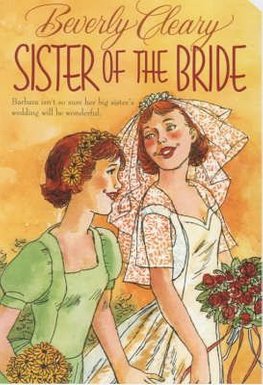
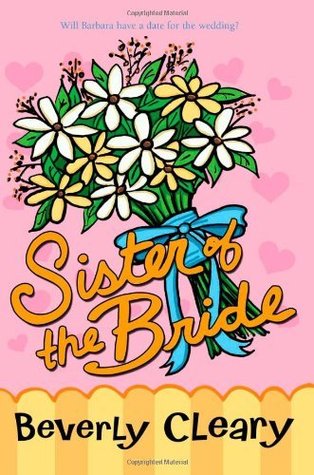
Sister of the Bride

Sister of the Bride. Beverly Cleary. 1963. 240 pages. [Source: Bought]

First sentence: I guess this is just one of those days, thought Barbara MacLane on her way home from school one bright afternoon late in April. She was not alone. She was walking beside a boy, a very tall boy, but their thoughts were like those famous parallel lines that lie in the same plane but never meet.

Premise/plot: Barbara, a junior in high school, is always playing catch up with her older sister, Rosemary, who is a freshman in college. One day Barbara gets a phone call from her sister. Can she keep a secret?!?! She's coming home that weekend--PLEASE TELL MOM NOT TO SERVE MEAT LOAF--and by the way, I'M GETTING MARRIED. Barbara has to keep the secret a day or two. It won't be easy.

It doesn't take Barbara long to get swept up, up, and away in a daydreaming frenzy. She's thinking about Rosemary's wedding--the dress, the flowers, the reception, the cake, the attendants. Will Rosemary's dress one day be her own?! Will she get to help choose her sister's dress? Will she be the maid of honor or a bridesmaid? What will her dress look like? Will the reception be at their house or at a club? Will her sister wear a dress with a long veil and a cathedral train?

But she's also thinking about her own wedding. If she does everything two years--roughly--behind Rosemary, should she focus on picking out her would-be-groom this year? When does she need to start going steady with a guy if she wants a year-long engagement? How many weeks does she have to meet her one true love? She is certain that she'll fall in love by her sister's wedding.

Will she fall in love with the nice boy with a horrible, horrible nickname of TOOTIE. Or will she fall in love with the boy who gives her rides home from school that expects COOKIES and MILK in return? (His name is Bill). One boy keeps asking her out, the other is content to hang out with her after school. She thinks she knows how she feels about both boys, but does she really?

Gordy, their brother, is NOT daydreaming about the wedding. He has dreams that he's focused on--just not romantic ones. He and two of his friends are going to be the NEXT BIG THING. A trio of folk-singers. He's a bit disappointed that his sister's wedding will not be a gig.

My thoughts: I enjoyed this one. For modern readers it might seem an equal blend of SWEET and SILLY. But I enjoyed both elements. The book can serve as a time capsule of sorts for the time in which it was written. In much the same way as FATHER OF THE BRIDE does--both movie versions. (For example, the price of groceries: eight cans of pork and beans for a dollar.)

One of the things I loved most were the family scenes. I loved spending time with this family: the father, mother, Rosemary, Barbara, and Gordy. It felt like a real family--for better or worse. I loved the give and take of it. There's also a mischievous cat that plays an integral role in the novel!

The narrative was also well done.

Quotes:
Greg made the mistake of mentioning the poet E.E. Cummings, who did not use capital letters or punctuation and often ran words together for effect. Of course this provoked an argument from Mr. MacLane. What if every author took it in his head to throw away the rules? What kind of books would we have then? Books that no one would read, that's what we would have. Greg felt that the printer's job was to print the text, not criticize the author's art. (18)
Wouldn't it be nice if people purred as charmingly as cats when they are hungry? Half the quarrels in the world would never take place. (22)
"I would hate to see any daughter of mine throw herself away on someone who approved of writers who did not use punctuation or capitals. This fellow Greg probably likes archy and mehitabel, too." "So do I, Dad," said Barbara. "And the reason there aren't any capitals in archy and mehitabel is that it was supposed to be typed by a cockroach, who couldn't jump on the capital key and a letter key at the same time. The author wasn't just being lazy. He had a good reason." Mr. MacLane chuckled. "A book written by a cockroach is just about what I would expect this fellow to like." (29)
 "And can he afford to pay the orthodontist twenty-five dollars a month?" Mr. MacLane demanded. "Have you thought of that little expense?" "No...I haven't." Crestfallen, Rosemary faltered. How awful thought Barbara as she poured out the dishwater. To want to get married when you are still having your teeth straightened. It must be humiliating to have part of your childhood left over. (43)
Two short years were not much over seven hundred days. Thinking in terms of days instead of years made Barbara feel as if she had not much time left. If she was going to get married in seven hundred days she should think about falling in love, and the sooner the better. Right now. Today. Until this minute she had thought of falling in love as something else that would happen a long time from now. (55)
Barbara watched the umbrella disappear around a bend in the road and, still smiling, she turned and walked into the house. Bill Cunningham. The last boy she had ever expected to notice her. She liked him. She really did. She liked him the way she liked the fizz in ginger ale and the cherry on the sundae. (64)
"It seems to me," said Mr. MacLane, "that ever since Rosemary has been going to the University she has been talking like someone who has read a book on psychology." "I don't know why," puzzled Mrs. MacLane. "She isn't even taking psychology." Barbara had the explanation. "But her roommate is. Millie is majoring in psychology. Rosemary learns a lot from her." "How nice," said Mrs. MacLane dryly. "I am so glad we are to share the benefits of Millie's college education." (69)
Mr. MacLane exhaled a large blue cloud of smoke. "Well, let me tell you something. Someday some mother is going to rebel against her children, and when she does, I will be the first to contribute to a statue in her honor, to be placed downtown in the center of the plaza. A bronze statue. And each year on Mother's Day I shall personally lay a wreat at her feet." (69)
"Millions of footnotes, when all I want to do is think about Greg." (91)
"Your grandfather always liked a bowl of oatmeal for breakfast, reminisced Gramma. "He said it stuck to his ribs." Rosemary looked doubtful. "I don't know whether Greg likes oatmeal or not, but I'm sure I could learn to cook it." Barbara admired her sister for tactfully not telling her grandmother she herself detested oatmeal. Or maybe it wasn't tact at all. Maybe it was love. Maybe Rosemary really would learn to cook oatmeal if Greg wanted it. Rosemary, cooking oatmeal of all things, and early in the morning, too. Rosemary, who always had such a hard time waking up. Barbara smiled to herself. She wondered if Rosemary would learn to eat oatmeal to keep Greg company. That would be the test of love, Rosemary eating oatmeal. (96)


© 2019 Becky Laney of Becky's Book Reviews

Friday, April 12, 2019

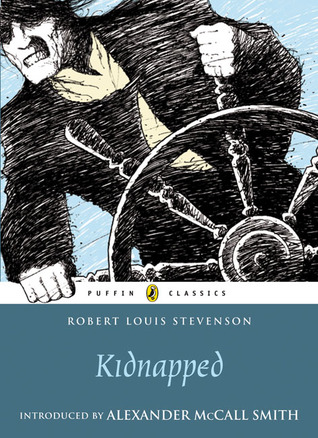
Kidnapped

Kidnapped. Robert Louis Stevenson. 1886. 276 pages. [Source: Bought]

First sentence: I will begin the story of my adventures with a certain morning early in the month of June, the year of grace 1751, when I took the key for the last time out of the door of my father's house.

Premise/plot: When David Balfour's father dies, he sets out on a journey to meet the uncle he never even knew he had. There had been--he reasons, and rightly so--a falling out between the two brothers. But with his father's letter to his brother intact, he sets out with few expectations. Will his uncle welcome him with open arms? Will his uncle invite him to live with him? Will his uncle assist him in getting established in a profession? Will his uncle send him on his way?

Soon after he arrives in the village/town where his father lives, he begins to ask for directions. Every person that he meets gives him a) either a strange look b) strange warning or c) both of the above. It seems this uncle is little respected, much feared. Though he's been warned NOT to make his uncle's acquaintance, he reasons, well, I've come this far already it would be just silly not to go through with my plans.

Can you guess how the meeting goes?

My thoughts: If Kidnapped was a Choose Your Own Adventure book, the version I'd read would be very short! If given the option of choosing to meet the uncle or not meet the uncle, then I'd have him go back to his own neighborhood and trust in the friends he knows versus the family he doesn't.

Though David Balfour's choices would not be my own, I have to say this one is PACKED, absolutely packed, with action and adventure and twists and turns and DRAMA. And I suppose I should have mentioned before now that this one is set in Scotland where feudal disputes and violence abound...

I found this a compelling read. It was INTENSE and enjoyable. Alan Breck and David Balfours certainly know how to keep you turning pages....

Quotes:
"Captain," says Alan, "I doubt your word is a breakable. Last night ye haggled and arglebargled like an apple wife; and then passed me your word, and gave me your hand to back it; and ye ken very well what was the upshot. Be damned to your word!" says he. (86)
Charles the Second declared a man could stay outdoors more days in the year in the climate of England than in any other. This was very like a king, with a palace at his back and changes of dry clothes. (113)
I have seen wicked men and fools, a great many of both; and I believe they both get paid in the end, but the fools first. (118)
At first I proposed I should give him for a signal the "Bonnie House of Airlie," which was a favorite of mine; but he objected that as the piece was very commonly known, any ploughman might whistle it by accident; and taught me instead a little fragment of a Highland air, which has run in my head from that day to this, and will likely run in my head when I lie dying. (239)

© 2019 Becky Laney of Becky's Book Reviews

Monday, April 01, 2019

A Necklace of Raindrops and Other Stories

A Necklace of Raindrops and Other Stories. Joan Aiken. Illustrated by Jan Pienkowski. 1968. 108 pages. [Source: Bought]

First sentence: A man called Mr. Jones and his wife lived near the sea.

Premise/plot: A Necklace of Raindrops and Other Stories is a collection of short stories by Joan Aiken. Most--if not all--of the stories have a fantastic fairy-tale feel to them. The stories include "A Necklace of Raindrops," "The Cat Sat on the Mat," "There's Some Sky In This Pie," "The Elves in the Shelves," "The Three Travellers," "The Baker's Cat,""A Bed for the Night," and "The Patchwork Quilt."

In "A Necklace of Raindrops," the North Wind becomes godfather to a newborn baby. He gifts her with a necklace of three raindrops. Each year on her birthday he visits her and gives another raindrop. Each year the necklace becomes more magical.

"The Three Travellers" stars three men who work for the Railway and live in the desert. One is a signalman, one is a ticket-collector, and the third is a porter. No one ever, ever, ever, ever stops at their station. Their lives are relatively boring...until....they decide to do something.

"The Patchwork Quilt" is a fun story about a grandmother making a magical quilt for her grandson.

My thoughts: I enjoyed this collection. Some stories I absolutely loved, loved, loved. Other stories I merely liked. But here's the thing--I don't usually like story collections at all. So the fact that I found stories that excited and thrilled me so much is really saying something. 

© 2019 Becky Laney of Becky's Book Reviews

Tuesday, February 26, 2019

The First Woman Doctor

The First Woman Doctor: The Story of Elizabeth Blackwell, M.D. Rachel Baker. 1944/1972. Scholastic. 188 pages. [Source: Bought]

First sentence: Three little girls in long, gray Quaker-like gowns, and white dimity bonnets, were walking with their governess and talking quite seriously.

Premise/plot: The First Woman Doctor is a biography of Elizabeth Blackwell, M.D. Over half of the book focuses on her struggle to get higher education. At the time no college or university were accepting women into their programs. A woman doctor?! a woman surgeon?! The idea was laughable, right?! Sure women can be nurses--but nursing isn't a skilled profession! Blackwell is confident, bold, determined, stubborn, diligent. She will be a doctor. She will get an education. Some way, some how she will prove herself. The other half of the book focuses on her life as a doctor. She was determined to help other women become doctors and nurses. She was also determined to help those in the poorest community, the ones who needed medical care the most and were unable to get it.

My thoughts: I enjoyed this one for the most part. The last few chapters were VERY rushed. Most of the biography focuses on four or five years of her life. But the last few chapters speeds through DECADES at a pace that is dizzying and slightly confusing. One gets a good idea of who she was as a person. I do wish that some of the relationships were better explored. This one does a LOT of name-dropping but no 'characterization.'

This biography was originally written in 1944. I wonder if any young girls read this and were inspired to become doctors? It would be nice to think so. 


© 2019 Becky Laney of Becky's Book Reviews

Friday, February 15, 2019

The Boxcar Children

The Boxcar Children. Gertrude Chandler Warner. 1942. 160 pages.

First sentence: One warm night four children stood in front of a bakery. No one knew them. No one knew where they had come from. The baker's wife saw them first, as they stood looking in at the window of her store. The little boy was looking at the cakes, the big boy was looking at the loaves of bread, and the two girls were looking at the cookies. 

Premise/plot: Four orphan children are on the run in Gertrude Chandler Warner's classic children's novel. The children are aware that they have a grandfather; they even know the town where he lives. But...the children fear this man they've never met. They'd rather struggle to survive than risk falling into his hands. (What if he's mean? cruel? what if he doesn't want them? what if he does? what if he separates them?) The four children--Henry, Jessie, Violet, and Benny--begin their new life living in an abandoned boxcar on an abandoned track. Henry is old enough to walk into nearby towns and work for food. The others mostly scrounge around and find useful junk that they can re-purpose into a few necessities. All seems to be going well...until one of the children gets really sick....

My thoughts: I liked  The Boxcar Children. I did. I had read it more than a few times growing up, but it had been at least fifteen or twenty years since I'd last read it. It was such a treat to read it again. It's a simple book, in many ways, yet it's got its charms. I liked how these children do make a home for themselves. How they work together as a family. While I wouldn't say that I ever loved this one as much as Mandy or Anne of Green Gables or The Secret Garden, I have definitely always liked it.

© 2019 Becky Laney of Becky's Book Reviews

Thursday, January 10, 2019

Ivanhoe

Ivanhoe. Walter Scott. 1819. 544 pages. [Source: Bought]

First sentence: In that pleasant district of merry England which is watered by the river Don, there extended in ancient times a large forest, covering the greater part of the beautiful hills and valleys which lie between Sheffield and the pleasant town of Doncaster.

Premise/plot: Wilfred of Ivanhoe is the hero of Walter Scott's historical adventure novel. He has returned from the Crusades but not to a warm, happy welcome from his family. His father, a stubborn Saxon named Cedric, will have none of him. Some of Cedric's servants remain loyal, however, as does his one true love, Rowena. Cedric is determined that Rowena will wed Athelstane and that union will strengthen the Saxon cause. Most everyone else appears to have given up the idea of Saxons uniting and conquering the Norman invaders. But Cedric is the very definition of hard-headed.

When Ivanhoe is injured at a tournament he is rescued by Isaac of York and his daughter, Rebecca--both Jews. Rebecca is a healer with a heart of gold. They are in the act of transporting him when they are deserted by their escorts. They happen to join up with another party--among that party Cedric and Rowena. All--or almost all--are taken captive by a group of Norman villains. Notably among them, Maurice de Bracy who would have Rowena for his wife and Brian de Bois-Guilbert who fancies Rebecca.

Not all of their party are captured and they are able to find support to rescue everyone....

If the novel has a heroine it is Rebecca and not Rowena. So much of the novel's tension focuses on the fate of Rebecca...

This adventure novel features ROBIN HOOD and KING RICHARD I. There is plenty of dashing, daring adventure. Also quite a bit rambling. If you expect ACTION and DRAMA to be equally intense on every page, you'd be disappointed. It's undeniably there, but you have to take it as it comes--on its own terms.

My thoughts: I love, love, love, LOVE the movie starring Anthony Andrews as Ivanhoe. I still do. This movie was my motivation in seeking out the novel. I am glad I finally read it.

Honestly I'm not sure if I "love" Ivanhoe--the novel--or if I love, love, love it. There were certainly chapters that I LOVED and found to be wonderfully exciting. Reading those passages, those scenes, you could see WHY so many people have been drawn into the story and wanted it brought to life on the screen. But there were also plenty of chapters that dragged a bit. The pacing was quite naturally uneven. It's packed with details and description.

Would I read it again? Probably yes. It may be another year or two, but I'm sure I'll read it again. 

Quotes:
"We shall meet again, I trust," said the Templar, casting a resentful glance at his antagonist; "and where there are none to separate us."
"If we do not," said the Disinherited Knight, "the fault shall not be mine. On foot or horseback, with spear, with axe, or with sword, I am alike ready to encounter thee." (106)
In finding herself once more by the side of Ivanhoe, Rebecca was astonished at the keen sensation of pleasure which she experienced, even at a time when all around them both was danger, if not despair. (284)
© 2019 Becky Laney of Becky's Book Reviews

Monday, January 07, 2019

Tisha

Tisha: The Wonderful True Love Story of a Young Teacher in the Alaskan Wilderness. As told to Robert Specht. 1976. 342 pages. [Source: Bought]

 First sentence: I've lived in the Forty Mile country of Alaska for a long time, but even now, every so often when I'm out rock-hunting or looking for fossils, I get lost.

Premise/plot: This novel is based on the life of a real woman, Anne Hobbs, who in 1927 arrived in Chicken, Alaska, as a teacher. Anne, originally from Colorado, was the daughter of a miner. Though young and lacking perhaps in great life experiences, she felt ready--mostly--to tackle anything and everything. Challenges and obstacles there would be PLENTY. Especially when she found herself falling in love with a half-breed, Fred Purdy, in a town with many, many biases. (To clarify, that is how he's referred to in the book by those living in the community at the time.) Especially when she found herself essentially adopting two Indian children after their mother's death.

"Before you leave this office I'd like to give you a bit of advice. I have the feeling that you are a pretty tolerant young lady--young enough to be open to new ideas. Where you're going you'll find that most people are not. They have their own code and they don't take to anybody who tries to go against that code or change it. In short, I hope you're not going into this job with, well...shall I say a missionary zeal?" (66)

My thoughts: I really LOVED this one. I found it at my local charity bookshop. It was so worth the $1 I spent. I would recommend it to anyone who enjoys historical fiction, romance, or drama. The drama not only comes from the community and tense relationships within Chicken but also the natural environment. Tisha is best read under warm blankets or with a cup of hot tea in hand.

Anne Hobb's heart was BIG and she was STUBBORN in all the right ways. I love how she welcomed everyone--even the town outcasts into her heart and home.

Anne married Fred and they raised eleven children together--all adopted, I believe.

© 2019 Becky Laney of Becky's Book Reviews

Wednesday, August 29, 2018

The Day They Came To Arrest The Book

The Day They Came To Arrest The Book. Nat Hentoff. 1982. 176 pages. [Source: Book I bought]

First sentence: "He's going to be right inside the door," Luke said to Barney as they neared the entrance to George Mason High School. "He's going to be standing there with that big phony smile and that chocolate voice."

Premise/plot: When a history teacher assigns The Adventures of Huckleberry Finn to her class to read, the book is challenged by angry parents. Will the book "be arrested" and removed from the reading list AND the school library? Or will the book remain available to students freely and without restrictions? Whose side is the principal on?

My thoughts: The Day They Came To Arrest The Book is a thousand and one times better than The Property of the Rebel Librarian. Primarily because it is more believable--both characters and situations. It is also more thought-provoking.

I appreciated the diverse opinions expressed in The Day They Came to Arrest The Book. The opinions cover a wide spectrum of thought. Perhaps with the exception of the unprincipled principal there are no villains, no bad guys. There are differences of opinion, yes, but no "good" guys and no "bad" guys. Not all opinions are informed opinions. But many are. That is, many people with strong opinions who are speaking up--on both sides--have actually read the book in question in its entirety. A few people have strong opinions and loud voices but haven't actually read the book--just bits and pieces. I think it's important to see that two good people can have differences of opinion.

What makes the principal so unprincipled? He's a sneaky guy. He does not want to fill out forms and paperwork. He doesn't want to go through the proper channels when it comes to book challenges. He'd rather pressure the teacher or the librarian into voluntarily removing the book with no fuss and no publicity. Because of his powerful position, because they fear losing their job, many go along with his "suggestions" that aren't really suggestions. But not this history teacher and not this librarian. The guidelines are in place and they will be followed...this time at least.

The book offers much food for thought--not only about banned books and censorship but also intellectual freedom in general. One of the arguments in the book is that it should be up to educators to choose wisely what to make available to their students. What to teach in their classrooms. What to have available in their libraries. Just because a book is published doesn't mean that it belongs in a school. The opposition claims that this 'choosing wisely' is a form of censorship. That to 'choose wisely' is limiting the student body's freedom to choose.

Personally, I think it makes the most sense. So long as school budgets are limited, it just makes the most sense to spend wisely and thoughtfully. I'll clarify that a tiny bit. Audience is key. Knowing your specific audience. A school librarian should have some idea on what students need, what students want, what teachers need, what teachers want. They should know which authors are popular and stay in circulation. They should know which genres circulate best. They should also read widely themselves. Quality should matter. That is what I mean by spending wisely. Making the most of each dollar. I don't mean that librarians should only buy books that they personally love, love, love and are custom-fit to their tastes and preferences.

One of the examples in the book is the hypothetical question: should a school library buy books written from the perspective that the holocaust never happened? Or should a library keep such 'trash' out of the library. Yes, such books exist--and others like them. But should a school library spend money on books like that because students should have the freedom to decide for themselves what is true and what is a lie?

I would classify this one as a YA book. Readers should know that it does use the n-word a lot in the context of discussing The Adventures of Huckleberry Finn. There are many times when Twain's novel is quoted. The novel also contains blasphemy--taking the Lord's name in vain. In terms of profanity it reminds me of Fahrenheit 451. The book is well worth reading in my opinion.

Quotes:
Show me a book that offends no one, and I will show you a book that no one, in the whole history of the world, has ever willingly read. (34)
You know, it's never the book that's really on trial. It's the author, even if he's dead. Remember that, Barney. Every time this sort of thing happens, it's a person who's being tried. For his ideas, his feelings, his memories, his fantasies, his yearnings, his language, which is his very self. To tell you the truth, I don't care what the book is. I hate to see words on trial. (83)
Once you give people, any group of people, the power to censor books, you're opening up quite a can of worms. And sooner or later, they can turn on you. (107)

© 2018 Becky Laney of Becky's Book Reviews

Tuesday, August 21, 2018

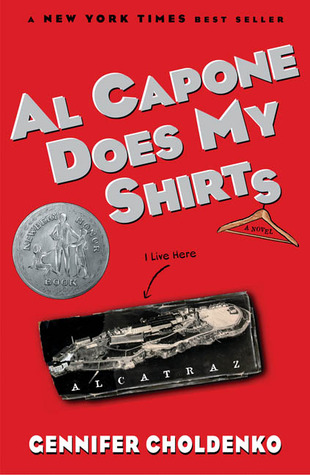
Al Capone Does My Shirts

Al Capone Does My Shirts. Gennifer Choldenko. 2004. 225 pages. [Source: Bought]

First sentence: Today I moved to a twelve-acre rock covered with cement, topped with bird turd and surrounded by water. Alcatraz sits smack in the middle of the bay--so close to the city of San Francisco, I can hear them call the score on a baseball game on Marina Green. Okay, not that close. But still.

Premise/plot: Moose Flanagan, our narrator, has just moved with his family to Alcatraz. His father is an electrician and part-time prison guard. The year is 1935, and there is a certain trendiness or "coolness" about big crime bosses. Al Capone is the most famous resident at the time. Other kids from the island--notably Piper--try to cash in on the situation.

As for Moose, he's more concerned about his sister, Natalie, and BASEBALL. Natalie IS a concern for the whole family because she's autistic at a time when no one knew what it was and everyone was clueless as to how to best help. Moose's mother spends 98% of her time deep in worry about Natalie. There is nothing she won't try in an effort to fix her daughter. Moose's father spends his time working, working, working trying to support the family. Moose has a complex relationship with Natalie. His big sister has become his litter sister. And instead of her watching over him, her bossing him around, he is the one who is on Natalie duty when he's not at school. He hates that this responsibility seems to be falling completely on him. (His mother has started working too.) His island friends seem to be okay with Natalie tagging along--most of the time. On a few occasions, they are even more patient with her than Moose. But it's a huge responsibility and one that he cannot manage on his own.

Baseball. Moose is a kid at heart. He loves, loves, loves playing--and playing baseball tops his list. He would love nothing more than to be involved in a good baseball game a couple of times a week. His dream friends may all be boys his own age, boys equally obsessed with baseball. But his actual friends that he makes on the island--the children of those who work for the prison--turn out to be good friends indeed.

My thoughts: Al Capone Does My Shirts is a great read. It is a perfect blend of light and dark. It can be laugh out loud funny. But it can also be intense and serious. I love, love, love the characters. I do. I can't believe it took me nine years to reread this one. I'm hoping to reread the whole series this year because there is a new book!


© 2018 Becky Laney of Becky's Book Reviews
Thursday, August 02, 2018

Family Tree

Family Tree. Katherine Ayres. 1996. 176 pages. [Source: Bought]

First sentence: I sat in the backseat of the bus and looked out.

Premise/plot: Tyler Stoudt begins her sixth grade family tree project reluctantly. She is a miracle baby; she was delivered thirty minutes after her mother's death. Her only family is her loving father, Jakob Stoudt. She knows nothing of his family or her mother's family--not until she begins the project and her father slowly but surely starts to open up a little about his past. Can she piece together the clues from her father's stories and her mother's writing? (Her mother was an author.)

My thoughts: I enjoyed this one very much. Tyler Stoudt discovers that her father was an Amish man who married an Englisher. She had come to Lancaster, Pennsylvania, to research a book on Amish wedding traditions. The two became friendly since it is Jakob's sister who is the bride she's writing about. After that first book is published she returns to the community to write a second book: this time on woodworking--Jakob is the subject! After the two marry, Jakob is shunned by his family, and Sarah (Tyler's mother) is rejected by hers as well.

Family Tree is a satisfying read about making peace with the past and healing. I really enjoyed getting to know Tyler and her father.

I'm not sure if I would have enjoyed reading this one as a child. Readers find out very early on that Tyler's mother died. I may have put the book down right then and there and not given it a fair chance. That's the kind of reader I was as a kid. Anything that even hinted at potential sads was put aside. I have matured as a reader, thank goodness!

© 2018 Becky Laney of Becky's Book Reviews
Wednesday, July 18, 2018

Roller Skates

Roller Skates. Ruth Sawyer. 1936. 186 pages. [Source: Bought]

First sentence: Spring has come; windows are open.

Premise/plot: Roller Skates is set in New York City in the 1890s. Lucinda Wyman, our roller-skating heroine, will be staying with the Misses Peters (Miss Peters, Miss Nettie) while her parents go abroad for a year. She'll still have to visit her prim and proper relatives once a week, but, most of her time is her own...and she'll use it to make friends with anyone and everyone regardless of their age, gender, and/or social class.

My thoughts: If I'd read this book in one or two days instead of three or four weeks, would I have liked it better? Probably. Reading one or two chapters per week killed the enjoyment I might have gotten from the story.

To be honest the introduction also unsettled me a bit. Who is narrating the introduction? Who is the unnamed old friend Lucinda is visiting? How many years have passed? Were they children together? Or is the unnamed old friend one of the adult friends she made? Is the unnamed friend a man or a woman? Why did Lucinda give this person her diary? And why didn't the book END with her giving someone her diary? Why did the end absolutely not tie back to the introduction at all?

I will need to reread this at some point to give it a better chance to charm me.


© 2018 Becky Laney of Becky's Book Reviews

Thursday, July 12, 2018

Rudi and the Distelfink

Rudi and the Distelfink. F.N. Monjo. Illustrated by George Kraus. 1972. 32 pages. [Source: Bought]

First sentence: On our farm, first of all, there's me Rudi Schimmelpfennig. Then there's my Vati--that's for Papa, in Pennsylvania Dutch, ja? And my Mutti, Mama. And Mutti's Mama Grossmutter Ritter--like you say, my granny. And plenty kinder. That's us Schimmelpfennig children. I mean you'd think there were plenty, except for what Mutti says.

Premise/plot: This book invites you to spend a year with the Schimmelpfennig family. Rudi, our narrator, is one of twelve children. It's set in Pennsylvania in the 1820s. What can happen to one family in the course of a year?! A lot.

My thoughts: Though published in 1972, I can't recall reading this one as a child. Would I have liked it? I did like historical fiction and family stories. So there's a chance I would have. I can easily say that I like it now. It is a quiet gem of a book.

I like the focus of family. I like the focus on culture--way of life--and traditions. I like that we get at least one page of text per month. (Some months like August and December get two pages of text.)

It would definitely be for older readers despite the picture book format.


© 2018 Becky Laney of Becky's Book Reviews

Tuesday, June 12, 2018

Surprise Stories

Surprise Stories. Marjorie Hardy.  Illustrated by Lucille Enders and Matilda Breuer.  1926/1929. Wheeler Publishing Company. 124 pages. [Source: Bought]

First sentence: My name is Puff. I am a little white kitten. I live with a little girl. Her name is Sally. I like to live with Sally. She takes good care of me. She feeds me. Sally knows just what I should eat. She knows just how much I should eat. Sally and I are good friends. I came to live with Sally because I had no home. Do you want to know why I had no home?

Premise/plot: Surprise Stories is vintage early reader from the Child's Own Way series. It was originally published in the 1920s. It is a classroom reader. The stories center around Sally and Billy (sister and brother), Puff and Wag (their pets), and other friends--many of which are animals. The stories flow into one another for the most part.

My thoughts: I love vintage readers. I do. Not that I'm not thankful for modern, contemporary books. I am. Mo Willems shouldn't be worried that children will start preferring Marjorie Hardy's stories to his own. But I like these glimpses into the past.

And I'm happy to say that, for the most part, there is nothing super-atrocious in this one making it inappropriate in terms of being politically correct. I qualify that with the word super.

It is not perfectly perfect. There are a sequence of stories set at the circus. Circus dogs, circus monkeys, and the circus elephant all get a chance to narrate a story. These animals are all pleased to be in captivity and belong to the circus. I imagine that in 1926, it would have been unimaginable that there would come a day when the circus would be no more.   

It was also not perfectly perfect because my copy was missing a page--two pages of text. What happened on page 47 and 48?!

© 2018 Becky Laney of Becky's Book Reviews
Wednesday, May 30, 2018

Historical Cats

Historical Cats. Peter Gethers and Norman Stiles. Illustrated by William Bramhall. 1996. 86 pages. [Source: Bought]

First sentence: Nathan Hale's Cat: "I only regret that I have but nine lives to give for my country."
Albert Einstein's Cat: Ran around the living room at the speed of light for no reason at all, relatively speaking.
Sigmund Freud's Cat: Discovered that the primary motivating factor behind all behavior is the urge to rub up against furniture.

Premise/plot: What if historical figures had cats? Cats who were perhaps just as famous or just as worthy of being famous?

My thoughts: If you love cats--I'm talking LOVE cats--and are easily amused this may be a good fit for you. It is a super-quick read. Each page features an illustration and one or two sentences. I think the aim of the book was to be clever and funny. I'll be honest, there is a LOT of hit or miss within the pages.

I paid fifty cents for my copy. I'm wishing it had been a quarter instead.
  • Marie Antoinette's Cat: "Let them eat dry food."
  • Ponce de Leon's Cat: POUNCE de Leon discovered the fountain of catnip.
  • Eva Peron's Cat: Felita: "Don't meow for me, Argentina."
  • Pablo Picasso's Cat: Accidentally ran into window and created cubism.
My favorite:
Fyodor Dostoyevsky's Cat. Wrote Crime and Punishment and Do It Again Anyway, a complex novel about an evil Russian Blue, Raskolnikat, who eats off his owner's plate despite many stern warnings. Raskolnikat has overwhelming feelings of guilt but looks so cute he is never punished and ultimately dies weighing 57 pounds. 

© 2018 Becky Laney of Becky's Book Reviews

Monday, May 21, 2018

Who's a Pest?

Who's a Pest? Crosby Newell Bonsall. 1962. Harper & Row. 64 pages. [Source: Bought]

First sentence:  Lolly, Molly, Polly and Dolly all looked at Homer. Homer was their brother. "I didn't do it," said Homer. "Yes, you did," they said. "Yes, you did. And you're a pest!" Then Lolly and Molly and Polly and Dolly all turned their backs. "Beans," said Homer, "I'm not a pest."

Premise/plot: Who's A Pest is a dialogue driven early reader from the early 1960s. It stars Homer, his sisters, and a LOT of animals. How very easy it is to be misunderstood!

My thoughts: I could not resist this one when I saw it in my local charity shop. The dialogue was so funny. Perhaps not ha-ha funny. But funny nonetheless.

Homer sat down.
Soon he heard a sound.
"Help," it said.
"Help! Help! Help!"
Homer looked around.
"Help who?" he asked.
"Help me," said the sound.
"Who's me?" Homer asked.
"Me is me. I don't know who you are," said the sound.
"I'm Homer," said Homer.
"Please help me, Homer," said the sound.
"Where are you?" cried Homer.
"Here," said the sound.
"Where's here?" asked Homer.
"Here is here," said the sound.
"Oh, my," cried Homer, "I'll never find you. I don't know where here is."
Homer soon enlists others to help him search for ME. Anyway, I found the book delightful. I'm not sure children will equally be delighted by this vintage I Can Read book. (It does have a LOT of text per page.) 

© 2018 Becky Laney of Becky's Book Reviews

Thursday, April 12, 2018

Amanda

Amanda. (Sunfire #1) Candice Ransom. 1984. Scholastic. 368 pages. [Source: Library book sale]
First sentence: It had been raining forever, endless rain that dripped down the windowpanes. Amanda Bentley could not stand the cramped hotel room another minute.

Dear Scholastic:
If I thought begging would do any good, I would plead with you to republish the Sunfire romance series originally published in the 1980s. The "name" books were my favorite-and-best books from my middle years--my first introduction to the wonderful genre of historical romance. It's a love that's still going strong, by the way. I know the Sunfire books don't contain vampires, werewolves, fairies, or demons. But why should romance novels contain such in the first place. If they were worth publishing in the first place--which they so clearly were--they are worth republishing.

I have given it a lot of thought. I have. And I think it would be wonderful if the books were republished as e-books for the same price as the original paperback books were released. Granted, I would love to see PRINT copies as well. But I imagine that they would cost more than the lovely $2.95 of the originals! But for an e-book, the thought is IT'S WORTH EVERY PENNY.

Becky

Dear Candice Ransom:

Thank you a million times for being the awesome writer that you are. (Thank you for being awesome in general!) I will forever be a fan of yours--your picture books, your early readers and chapter books, and your novels. My first introduction to your work was through the Sunfire romance series. They were--they are--some of my favorite books ever. You gave me a glorious gift--a love of reading.

I still get giddy thinking about the fact that you know who I am. That in 2009 Winchester came to visit me for a few days.

As long as you keep writing, I'll keep reading.

Becky

Premise/plot: Amanda's hopes and dreams are thwarted by her father's gambling ways and big dreams. He decides to steal away from Boston--with her--and start again. On their journey south, he gets a fever to go WEST, to go to Oregon. Amanda does NOT want to go, yet, she finds herself heading west in a wagon, in a wagon train, all the same. It will be the most challenging time in her life, but will the journey change her for the better?

My thoughts: Is Amanda my favorite Sunfire romance?! Maybe. Perhaps my favorite Sunfire romance is the one I've read most recently. Though I will say Amanda is probably always in my top five.

I enjoy a good wagon train story. Why can't wagon train stories become trendy again?!

Amanda brings to mind the only western that I love. You see, I am allergic to westerns in general. The western that is an exception to the rule is WESTWARD THE WOMEN (1951). 

© 2018 Becky Laney of Becky's Book Reviews

Friday, March 30, 2018

Angus and the Cat

Angus and the Cat. Marjorie Flack. 1931. 32 pages. [Source: Bought]

First sentence: Each day as Angus grew older he grew longer but not much higher. Scottie dogs grow that way. Now as Angus grew older and longer he learned MANY THINGS.

Premise/plot: After a few pages sharing what Angus has learned, readers learn that there was one thing Angus was very curious about but had never learned about: CATS. He will have plenty of opportunity to do so when his owner (whom we never see) adopts a cat. Will Angus and the new cat get along?! How much will life change for Angus?!

My thoughts: This is a great little story! I was not familiar with this classic. I discovered it at a local charity bookstore earlier this month. It was instant love on my part!!! I adore the illustrations. And the story is super-sweet!

Text: 4 out of 5
Illustrations: 5 out of 5
Total: 9 out of 10

© 2018 Becky Laney of Becky's Book Reviews

Tuesday, March 27, 2018

The City of Ember

The City of Ember. Jeanne DuPrau. 2003. 270 pages. [Source: Bought]

First sentence: In the city of Ember, the sky was always dark.

Premise/plot: The City of Ember is one of my all-time favorite books. Ember was built by the BUILDERS to protect humanity from its biggest threat in dark, dark days. Hundreds of years have passed, the inhabits of Ember know nothing of the world outside. They know nothing of blue skies and yellow sun. In part, the builders wanted it that way--to protect the people from knowledge of the past. But the time has come--has almost come and gone, in fact--for the people to leave Ember behind and rejoin the world above. The problem? The instructions have been lost. And only one person even knows that something important--something vital--has been lost and is worth searching for. And few take her words seriously because she's "senile" and "not herself." Lina Mayfleet, our heroine, stumbles upon these instructions quite by accident, and really all in thanks to her baby sister, Poppy. Will she be able to decode the instructions--what remain of them after Poppy's little snack--and solve the mystery? It is too big to solve on her own. But Lina has a few good friends that she thinks are trustworthy--and clever. The one who becomes her best friend is Doon Harrow. These two grow close as they work on solving the problems that threaten life as they know it.

My thoughts: I love this book. I do. I can't believe--in a way--that it was the author's first book. It is just MARVELOUS. I love the world-building. I love how thought-provoking it is. And I love the characterization. It is one of those rare books that defies expectations. It is premise-driven, plot-driven, and character-driven.

One of my favorite quotes:
The trouble with anger is, it gets hold of you. And then you aren't the master of yourself anymore. Anger is. (89)

© 2018 Becky Laney of Becky's Book Reviews

Friday, March 23, 2018

Annie Patches: My New Forever Home

Annie Patches: My New Forever Home. Marty Koblish. Photographs by Jessica Charous. 2015. 34 pages. [Source: Bought]

First sentence: My mommy lived on the streets.

Premise/plot: This picture book tells the story of a foster kitty who found her furr-ever home. Her mom was a pregnant stray cat taken in by a foster family. Annie Patches was adopted a few months later and placed in a new home--a forever home. The book uses photographs to tell her story. Well, to show off her cuteness mainly. 

My thoughts: I bought this one at a local charity shop because of the photographs. To say I love cats would be a bit of an understatement. I just couldn't resist this one. Sadly, I lost a few pages just with the first read. The story is heartwarming and the photographs are ADORABLE.

 Text: 3 out of 5
Photographs: 5 out of 5
Total: 8 out of 10

© 2018 Becky Laney of Becky's Book Reviews