Showing posts with label dystopia. Show all posts

Wednesday, February 18, 2026

23. A Canticle for Leibowitz


23. A Canticle for Leibowitz. Walter M. Miller Jr. 1959. 335 pages. [Source: Bought] [4 stars, science fiction, apocalyptic, post-apocalyptic, classic]

First sentence: Brother Francis Gerard of Utah might never have discovered the blessed documents, had it not been for the pilgrim with girded loins who appeared during that young novice's Lenten fast in the desert.

Premise/plot: Canticle for Leibowitz is divided into three parts: "Fiat Homo," "Fiat Lux" and "Fiat Voluntas Tua." Centuries pass between each part, I believe. Essentially what you need to know is that it's post-apocalyptic. The novel opens several centuries (at the very least) after nuclear disaster has wiped out society--at least as we know it. Knowledge is feared and simplicity embraced. A group of monks in the desert cling to what remains of book-knowledge. They memorize. They copy. They wait. They wait knowing that humanity may never be ready for their wisdom. Readers get to know a few monks in each part. The book is not bleak from cover to cover, however, by the end the message is that humanity is incapable of learning from their past mistakes and no matter how many centuries pass, humanity is always its own biggest threat.

My thoughts: This is the first time I ever-ever wished I'd paid more attention in Latin class. Just as Jane Eyre is sprinkled with French, this one is sprinkled with Latin. My general thoughts are that once is not enough to really get everything there is to get. I was reading for big-picture ideas, and not really savoring the details and looking for all possible meanings. My first impression is that it's good, but, depressing. Also thought-provoking.


Favorite quotes:
  • "How can a great and wise civilization have destroyed itself so completely?" "Perhaps," said Apollo, "by being materially great and materially wise, and nothing else." (119)
  • If you try to save wisdom until the world is wise, Father, the world will never have it. (208)
  • It never was any better, it never will be any better. It will only be richer or poorer, sadder but not wiser, until the very last day. (216)
  • The freedom to speculate is essential...(216)
  • Men must fumble awhile with error to separate it from truth, I think--as long as they don't seize the error hungrily because it has a pleasanter taste. (218)
  • If we're born mad, where's the hope of Heaven?" (240)
  • When mass murder's been answered with mass murder, rape with rape, hate with hate, there's no longer much meaning in asking whose ax is the bloodier. Evil, on evil, piled on evil.(259)
  • Too much hope for Earth had led men to try to make it Eden, and of that they might well despair until the time toward the consumption of the world.(264)
  • It is the soul's endurance in faith and hope and love in spite of bodily afflictions that pleases Heaven. (292)
  • The trouble with the world is me. (305)


© 2026 Becky Laney of Becky's Book Reviews

Wednesday, January 07, 2026

3. Into the Fire (Westfallen #2)


3. Westfallen #2: Into the Fire. Ann and Ben Brashares. 2025. 384 pages. [Source: Library] [5 stars, series book, mg speculative fiction]

First sentence: IF at first you don't succeed, cry cry again.

Premise/plot: Into the Fire is the second book in the Westfallen series by brother-and-sister authors, Ben and Ann Brashares. The premise is AWESOME. Three friends from the present (2023) "meet" three friends from the past (1944) and history is changed FOREVER-forever. (Or is it?!?!?!) Henry, Lukas, and Frances were at one time best, best, best friends though in recent years they've grown apart--far apart. Alice, Lawrence, and Artie are friends as well. These six friends become connected by a radio.

In the first book, loose lips from the future changes the past. They make an attempt to fix it for sure, but, that attempt is unsuccessful. America [and the Allies] lost the Second World War. Bad news all around.

The six kids working together--though NOT by magic radio--try time and time and time again to change the future by changing the past. That is the kids from 2023 are searching for clues in a future where they are strangers--strangers in a strange land if you will--to see WHAT events in 1944 led to this terrible, horrible future. IT is a mystery. The kids in the past are trying their best to look for clues too. To be careful and observant. To look for anything off--signs of treason within their neighborhood. WHO is it among them that would communicate with the BAD bad guys.

Will the future be changed? Almost four hundred pages of MORE attempts...is there any progress?!?!?!

My thoughts: I read the first book TWICE. It was awesome. It was thrilling and chilling. Did not disappoint. This second book is equally intense. Same premise BUT with an added layer of dystopia. The world-building IS intriguing--and terrifying. I do think some readers--perhaps older readers???--will piece together clues before the kids in the story. I did want to shout at the characters a few times. Did I expect a cliff hanger ending? I didn't. And that's probably all my own fault. I read this book in two or three sittings BECAUSE I thought at last, at last, at last RESOLUTION. There is no resolution. WAS it a great read? YES for the most part. At least as good as the first book. Perhaps I'm more invested for the second book. I want the third book NOW, NOW, NOW, NOW.


© 2026 Becky Laney of Becky's Book Reviews

Monday, January 05, 2026

2. Fahrenheit 451 (audiobook)


2. Fahrenheit 451. Ray Bradbury. 1953/2011. 194 pages. [Source: Library][5 stars, audiobook, dystopia, science fiction, adult classic]

ETA: The narrator was Penn Badgley. I absolutely love, love, love this science fiction classic. I thought I'd read it more recently than 2022, but, apparently not!

First sentence: It was a pleasure to burn.

Premise/plot: Guy Montag, a fireman, is challenged in his beliefs after meeting a young neighbor girl, Clarisse, who is seventeen and crazy. Though their meetings are brief--she dies soon after--his life is forever changed by the act of actually thinking, observing, engaging.

Guy Montag has his eyes opened--and once they are open--he's quick to see that his society is in BIG, BIG TROUBLE and that most likely it is DOOMED, heading straight for collapse.

My thoughts: Fahrenheit 451 is one of my all-time favorite, favorite, favorite, favorite books. It's not about censorship--not really. Despite what any back cover says.

There is a line in a song from Beauty and the Beast that tackles what this one is about.

Gaston: Lefou, I'm afraid I've been thinking.
Lefou: A dangerous pastime,
Gaston: I know.

It is a nightmarish look at what happens to an entire civilization/culture that embraces the philosophy that IGNORANCE IS BLISS. That a mindless life is a happy life. It shows us the results of several generations CHOOSING for THEMSELVES not to think--to just be entertained quick and easy, fast and mindless. That's why I said it is NOT about censorship. Except for the occasional "oddball" that hasn't been brainwashed by the education system, the parlor families (aka television), the ads and billboards, the majority are happy and content to be mindless. They're not desperate rebels anxious to pick up a book. They don't need the government, the system, the powers that be forbidding them from picking up books and reading. It's almost a non-issue. It's the oddballs that keep the firemen in business.

Mindless, easy entertainment that never challenges or questions--merely entertains has weakened society. Though most wouldn't ever guess it or observe it on their own. They're doomed and clueless.

In addition to entertainment and education (or lack thereof) this one also has MUCH to say about war.

Favorite quotes:

I heard once that a long time ago houses used to burn by accident and they needed firemen to stop the flames. (8)
Sometimes I'm ancient. I'm afraid of children my own age. They kill each other. Did it always use to be that way? My uncle says no. Six of my friends have been shot in the last year alone. (30)
"People don't talk about anything."
"Oh, they must!"
"No, not anything. They name a lot of cars or clothes or swimming pools mostly and say how swell! But they all say the same things and nobody says anything different from anyone else..." (31)

"We need not to be let alone. We need to be really bothered once in a while. How long is it since you were really bothered? About something important, about something real?" (52)

Do you see? Out of the nursery into the college and back to the nursery; there's your intellectual pattern for the past five centuries or more. (55)

School is shortened, discipline relaxed, philosophies, histories, languages dropped, English and spelling gradually neglected, finally almost completely ignored (55)

Who knows who might be the target of the well-read man? Me? I won't stomach them for a minute. Remember, Montag, we're the happiness boys. We stand against the small tide of those who want to make everyone unhappy with conflicting theory and thought. (58)

It didn't come from the Government down. There was no dictum, no declaration, no censorship, to start with, no! Technology, mass exploitation, and minority pressure carried the trick, thank God. Today thanks to them you can stay happy all the time. (58)

Ask yourself, What do we want in this country, above all? People want to be happy, isn't that right right? Haven't you heart it all your life? I want to be happy, people say. Well, aren't they? Don't we keep them moving, don't we give them fun? That's all we live for, isn't it? For pleasure, for titillation? And you must admit our culture provides plenty of these. (59)

The home environment can undo a lot you try to do at school. That's why we've lowered the kindergarten age year after year until now we're almost snatching them from the cradle. (60)

Did you listen to him? He knows all the answers. He's right. Happiness is important. Fun is everything. (65)

"We cannot tell the precise moment when friendship is formed. As in filling a vessel drop by drop, there is at last a drop which makes it run over; so in a series of kindnesses there is at last one which makes the heart run over." (71)

Every hour so many damn things in the sky! How in hell did those bombers get up there every single second of our lives! Why doesn't someone want to talk about it! We've started and won two atomic wars since 1990! Is it because we're having so much fun at home we've forgotten the world? Is it because we're so rich and the rest of the world's so poor and we just don't care if they are? Is that why we're hated so much? Do you know why? I don't, that's sure! Maybe the books can get us half out of the cave. God, Millie, don't you see? An hour a day, two hours, with these books, and maybe. (73-4)

Good God, it isn't as simple as just picking up a book you laid down half a century ago. Remember, the firemen are rarely necessary. The public itself stopped reading of its own accord. (78)

It’s been a long time. I’m not a religious man. But it’s been a long time.’ Faber turned the pages, stopping here and there to read. ‘It’s as good as I remember. Lord, how they’ve changed it in our parlors these days. Christ is one of the family now. I often wonder if God recognizes His own son the way we’ve dressed him up, or is it dressed him down? He’s a regular peppermint stick now, all sugar-crystal and saccharine when he isn’t making veiled references to certain commercial products that every worshiper absolutely needs.’ (81)
I’m one of the innocents who could have spoken up and out when no one would listen to the ‘guilty’, but I did not speak and thus became guilty myself. (82)

It’s not the books you need, it’s some of the things that were once in books. (82)

The magic is only in what books say, how they stitched the patches of the universe together into one garment for us. (83)

And what does the word quality mean ? To me it means texture. This book has pores. It has features. This book can go under the microscope. You’d find life under the glass, streaming past in infinite profusion. The more pores, the more truthfully recorded details of life per square inch you can get on a sheet of paper, the more literary you are. That’s my definition anyway. Telling detail. Fresh detail. The good writers touch life often. The mediocre ones run a quick hand over her. The bad ones rape her and leave her for the flies. (83)

We are living in a time when flowers are trying to live on flowers, instead of growing on good rain and black loam. (83)

The books are to remind us what asses and fools we are. (86)
"Caesarians or not, children are ruinous; you're out of your mind," said Mrs. Phelps.
"I plunk the children in school nine days out of ten. I put up with them when they come home three days a month; it's not bad at all. You heave them into the 'parlor' and turn the switch. It's like washing clothes: stuff laundry in and slam the lid." Mrs. Bowles tittered. "They'd just as soon kick as kiss me. Thank God, I can kick back!" (96)

Mistakes can be profited by. Man, when I was younger I shoved my ignorance in people's faces. They beat me with sticks...if you hide your ignorance, no one will hit you and you'll never learn. (104)

What traitors books can be! You think they're backing you up, and they turn on you. (107)

Oh God, the terrible tyranny of the majority. (108)


© 2026 Becky Laney of Becky's Book Reviews

Friday, March 07, 2025

23. Happy Town

23. Happy Town. Greg Van Eekhout. 2024. [October 22] 208 pages. [Source: Library] [j fiction, mg fiction, j dystopia; mg dystopia, speculative fiction; 4 stars]

First sentence: "Welcome to Happy Town. We Make Happy." The cow-sized blimp sails over our new house, displaying the Happy Town motto in glowing letters. I still don't know much about Happy Town, but I do know that Happy Town doesn't make happy. Happy Town doesn't make anything. They sell everything, though: diapers, donuts, drones, phones, toilet paper, toothbrushes, lawn mowers, luggage, abacuses, applesauce, athlete's foot powder, art supplies, and thousands of other products. Happy Town is the biggest online shop in the world, and it's also my new home.

Premise/plot: Keegan is open to the idea of liking his new town, Happy Town, even though he's not thrilled with how often his parents are moving around. However, Happy Town may just have more secrets than it does products for sell. Fortunately, kids have a little safeguard in place--no imps just yet--but it may not be enough to protect them from zombie consumers...

My thoughts: I enjoyed this one. I didn't love, love, love it in an over-the-top gushy way. Yet it was all silly thrills and overall enjoyment. Keegan makes friends with Tank and Gloriana and the three of them may just have enough spunk to save themselves--and the clueless, mindless adults. The premise was fun. The characters were fun. Solidly enjoyable dystopia for younger readers.


© 2025 Becky Laney of Becky's Book Reviews

Wednesday, October 16, 2024

85. The Legend of the Last Library

The Legend of the Last Library. Frank L. Cole. 2024. 288 pages. [Source: Library] [MG dystopia; MG post-apocalyptic; MG fiction] [3 stars]

First sentence: I never saw the squash coming. One moment I was squatting on the grime-covered floor trying to pry up a section of tile, and the next I was laid out on my back, covered in the goop of a rotten vegetable.

Premise/plot: Juni Knox is part-time student, part-time plifter. She salvages remnants and scraps of paper from a society long gone. There is some classing of "haves" and "have nots" but mainly it's a society with a lot of have nots. If your house has electricity a couple of hours a day, most days of the week, well, you've got it good. The basic premise is that Juni lives in a futuristic society that is paperless and learning how to read is the lowest of priorities....however, rumors are that there is a long lost "last" library where books--actual books printed on actual paper--abound. But there are villainy-villains who would do anything to stop the library from being found. 

Juni (and friends) are on the hunt for the last library.

My thoughts: I am SO conflicted. On the one hand, the premise is interesting. On the other hand, Juni was annoying as a heroine because for plot purposes she almost has to be pushing the limits of being too stupid to survive. Every time there was a decision to be made, Juni would make the stupidest decision possible, almost. But if she made great decisions, the book would probably be 88 pages instead of 288 pages. The world building, in my opinion, was a bit flimsy. Flimsy in the if you go with the flow and stay in the moment, it worked for the most part....however....the more time you put into thinking about it and letting implications grow...the less it works. All that being said, and I know it might sound negative, the book did keep me reading. I liked some elements of this one very much. It was very much a book that loved to talk about books and reading.  


© 2024 Becky Laney of Becky's Book Reviews

Monday, July 15, 2024

55. The Hunger Games

The Hunger Games #1 Suzanne Collins. 2008. 374 pages. [Source: Library]

First sentence: When I wake up, the other side of the bed is cold.

I have seen the movie more than I've read the book. I *believe* that this is my third time to read the novel. And it appears that the last time I actually read the book was October of 2012! I'm surprised by that. 

This has been 'the year' for me revisiting this series. I've reread The Ballad of Songbirds and Snakes. I've seen that movie adaptation twice. I've binged my way through the original movie trilogy. I've been intending to actually read the books themselves again. There is another 'prequel' coming next year, I think. 

As I said, I've watched the movie so many times since 2012, it was so refreshing to discover--rediscover--the DEPTH and substance of the book itself. There are so many layers. Especially when you add in what you've learned from the prequel. One thing that may be super-super-super obvious is that Katniss (our heroine) is BROKEN and traumatized from the moment we meet her. She is strong and resilient and a bit hardened. But the death of her father, the failing of her mother to be an adult, a parent, the HARSH realities of the district, these have made the Katniss we know. She's a provider, a survivor. The Games definitely contributed to her PTSD, her trauma-induced mental and emotional distress, but it wasn't only the games. Life in district 12 is hard--difficult. Raising yourself and your sister is difficult. 

I also was detail focused as I was rereading trying to observe things about all the districts and the characters--no matter how small--themselves. Again, so many layers if you've mainly spent time with the movies.

I do plan on reading the other books in this series. Rereading that is. 2012 may feel like a few years ago, but it's over ten.


© 2024 Becky Laney of Becky's Book Reviews

Monday, April 01, 2024

38. Snowglobe


Snowglobe. (Snowglobe Duology #1) Soyoung Park. Translated by Joungmin Lee Comfort. 2024. 384 pages. [Source: Library] [YA Dystopian; New Adult]

First sentence: In the living room, Grandma is sunk in her chair in front of her favorite TV show, a heavy quilt draped over her lap. I look down at the weather ticker scrolling away along the bottom of the screen.

I read the description of this one and that was enough of a hook to get me. I'm not sure I could do the book justice by trying to summarize it. You should know it is set in a futuristic dystopia. The world building was FANTASTIC. The characters were well-developed, fleshed out. The plot was both simple and complex. 

It stars a sixteen year old, Jeon Chobahm, who wants to be part of their world--Snowglobe. The residents of Snowglobe seemingly have it all. The residents are actors, directors, celebrities if you will. They are the only people on earth to live in a warm climate. The rest of the world is in perpetual winter or ice age. Her dream is to be a director, to be direct one of the shows of Snowglobe. 

Be careful what you wish for. She'll be presented with an opportunity. Does she have the right to say no? Maybe? maybe not? Regardless, she does NOT want to miss this opportunity. She runs straight for it. It is only afterwards when she begins to suspect that the Snowglobe she knows through the screen isn't the real Snowglobe.

I am so glad I borrowed this one from the library. It was such a fascinating/engaging read. Usually dystopian novels require a LOT of suspension of disbelief. You almost read with an eye-roll. It may be very entertaining, but equally obnoxious. Some are so heavy-handed and ridiculous hitting you over the head with a couple of hammers that there's no fun to be had. This one I completely became absorbed in. I didn't feel manipulated or preached at.


© 2024 Becky Laney of Becky's Book Reviews

Tuesday, July 25, 2023

138. Shift Omnibus


Shift. Hugh Howey. 579 pages. 2013. [Source: Book I Bought] [adult science fiction; dystopia; futuristic; apocalyptic]

First sentence: Troy returned to the living and found himself inside of a tomb.

Premise/plot: Shift is the second book published in the Silo science fiction series by Hugh Howey. It is a series of flashbacks. It spans centuries. It reveals how the Silo(s) came to be. It isn't until the end of the novel that the action catches up to Wool.

So there are essentially two or three stories: 1) Donald's story of how the Silo project came to be and how the world ended; 2) Donald/Troy's various shifts through the centuries as manages the Silo project(s). 3) Jimmy (aka Solo)'s never-ending nightmare as the "only" survivor of his Silo. He's not really the one and only survivor--as revealed in Wool. But he might as well be...to some extent. It's all survival of the fittest, shoot to kill, trust no one. This section has  CAT. (I'd forgotten about the cat). 

My thoughts: Jimmy's story was SO compelling and heartbreaking. This character and his experiences have sticking power. I don't think I'll soon forget him. Troy/Donald is perhaps a less likeable character. Perhaps. He's a pawn in many ways. Even if he'd "woken" up and seen the truth about how things were going down, what could he have done???? Is there anything he could have done? anything he could have said? I don't think there is. 

I do think this is a thought-provoking read. It is MORE political than Wool (in my opinion). But it was written political in a time BEFORE politics went...I'm trying to think of a good, polite way to say it...before politics became so very, very, incessantly divisive and explosive for the nation. So it doesn't feel like it was written with a hammer directed at anyone in particular. (Which I appreciated.) 

I've never read the third book in the series. So I'm not sure how the series ends....but I have to keep going now.


© 2023 Becky Laney of Becky's Book Reviews

Saturday, July 22, 2023

137. The Chaperone


The Chaperone. M. Hendrix. 2023. [June] 448 pages. [Source: Library] [YA Fiction; dystopia]

First sentence: I hear it while I'm in my room getting ready for Sunday Visitation.

Premise/plot: The Chaperone is YA dystopian. The premise is that a 'New America' has arisen and is super strict. (Think SHINY HAPPY PEOPLE documentary-ish). Stella Graham, our protagonist, is a high schooler who has lived under the care and guidance of a chaperone--as most young girls do--from the time she came of age [aka her period started]. This one begins with the death of her first chaperone, Sister Helen. (That's not a spoiler. It's literally the second sentence of the novel.) 

Stella has grown up in New America. She doesn't remember a Before. She has nothing to compare it to. No one talks about it--at least not in a fair, representative way. Perhaps they talk about it in a revisionist way. New America is AWESOME, don't you know. It's so wonderful that young girls, women are respected, valued, cherished, protected. There are rules for women [girls] and rules for men [boys]. The only tiny glimpse of 'before' she's been exposed to are a few books that her chaperone has encouraged her to read. 

Sister Laura is her new chaperone...and under her "care" and "guidance" well Stella becomes an independent thinker. She goes from a rule-follower to rule breaker like in a day. [Okay, perhaps I exaggerate. Let's be fair. Three days.] 

Will Stella submit to all the rules and conform??? Or will she find a way to be independent, expressive, and FREE according to her own definition?

My thoughts: I do have thoughts. First, I don't fault The Chaperone for being written with a hammer instead of a pen. That's the way of many dystopian novels. Exaggerate to the point of absurdity. Take an inkling of a perceived problem and magnify it by ten thousand. Hammer your world view for a couple of hundred pages. So I don't fault it for that. 

It is exactly what you think it will be. Conservative values and views magnified by a million and taken to the point of absurdity so they are unrecognizable. This isn't switch and bait. Again, can't fault it for that. I like it when a book delivers on a premise.

What I don't necessarily enjoy/appreciate about this one is the characterization and timing. I think Stella's coming of age is inevitable. The novel would be very short indeed if it wasn't about Stella's journey from rule-follower to rule-breaker. I think it was too instant to be believable. I don't know that the book takes into account how thoroughly "normal" and "ordinary" Stella's upbringing would have seemed. You can't be raised in something--immersed for sixteen to eighteen years in something--and not have it be a foundational, as natural as breathing, way of life. New America formed before her parents were married. She's known no other way of life. Her friends have not known another way of life. Sneaking a few books over the past few years doesn't seem "enough" to push from committed believer to total skeptic. (Not that the book is a god/religion thing). And the catalyst we're supposed to buy into...is her being left unchaperoned for like five or ten minutes. (I think at a library? some public place?) Sister Laura "hid" from view. She had Stella in view, but Stella could not see her. Stella's response was panic, worry, despair. After this initial "trauma" Stella has a complete and total realization--hey I believe nothing and I want out. Again, I just don't buy it. Too instant. Too fast. Not enough time spent wavering, doubting, considering, reasoning with one self. Just GIRL POWER. MUST RAISE UP AND ROAR. I think I would have found Stella more compelling if there was an actual-actual struggle, a journey--a metamorphosis. 

I also found it a bit shaky on WHY. I'll try to explain. If Stella had been being courted by Mateo (or another boy she found cute, attractive, desirable, ideal), would she have been eager to leave New America? If she had been allowed to 'follow her heart' and get to know the boy of her dreams, would she have ever considered leaving New America? If she hadn't been being courted or pursued by young men [and men] she had NO interest in, no attraction, no desire, just pure yuck factor, would the story have played out differently? Would she have EVER realized that New America was less than ideal if her hormones hadn't been influencing her? That is, if she'd been in control of WHO she dated/courted....if she'd been allowed a say in whether or not she said I do or I don't....would it have been an issue???? 

This wasn't so much about god (or God) or a particular religion or practice of religion. (Again, don't care one way or another. Perhaps it's better that it wasn't so much geared that way). But Stella's idea of freedom mainly consists in freedom to express one's sexuality, to act on sexual desires, to be free to be sexual on one's own term. 

I thought the world-building had potential. I thought it was more often than not shallow and one-dimensional....as opposed to immersive and believable. Again, I thought there could be potential with the premise/concept. Just it felt a little too instant and convenient. 


© 2023 Becky Laney of Becky's Book Reviews

Sunday, July 09, 2023

130. Wool Omnibus (Silo #1)


Wool Omnibus (Silo #1) Hugh Howey. 2012. 509 pages. [Source: Bought] [Adult science fiction, adult horror, adult mystery, dystopia]

First sentence: The children were playing while Holston climbed to his death; he could hear them squealing as only happy children do. While they thundered about frantically above, Holston took his time, each step methodical and ponderous, as he wound his way around and around the spiral staircase, old boots ringing out on metal treads.

My thoughts: I first read this one in 2013. I loved it so, so, so much. I never went back to reread it, however, until now. I saw that it was being adapted into a show/series. I may never see the adaptation, but I am so glad that I took this chance to reread it. It's been long enough that it was like reading it for the first time--which was glorious for the horror-mystery bits. I love the tension of this one.

Premise/plot: Set in the future. What remains of humanity is living underground in a silo--or silos, as the case may be. Generations have come and gone, hundreds of years have passed, those that live in the silo have only ever known the silo. It functions or malfunctions, as the case may be, by following or "following" rules and guidelines put into place. But what happens when little things trigger chain reactions? 

So this one is titled, "Wool." Those trouble-makers, those "law-breakers," if you will, are "punished" by being sent OUT. And one of their last responsibilities is cleaning. Cleaning cameras, viewers, windows? But one woman sentenced to this fate refuses to clean....and subsequently....well life in Silo 18 will never be the same.

Further thoughts: I definitely recommend this book. It's a little bit of everything--dystopia, mystery, suspense, horror, science fiction. It alternates points of view. But this is an instance where that is a great thing--used for building suspense.


© 2023 Becky Laney of Becky's Book Reviews

Wednesday, February 01, 2023

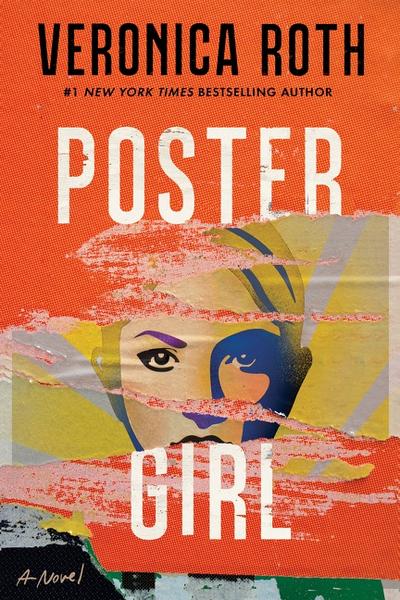
18. Poster Girl


Poster Girl. Veronica Roth. 2022 [October] 288 pages. [Source: Library]

First sentence: When she thinks of the time before, she thinks of the photo shoot. The woman who applied Sonya's makeup smelled of lilies of the valley and hair spray. When she leaned close to dust Sonya's cheeks with blush, or to cover up a blemish with a fingertip dotted beige, Sonya stared at the freckles on her collarbone. When she finished, the woman slicked her hands with oil and ran them through Sonya's hair to make it sleek. 

Premise/plot: Poster Girl is dystopian fiction [for adults, I make this distinction because Veronica Roth has written books for both young adults and adults, and some adult readers are very opinionated when it comes to NOT wanting to 'accidentally' read YA].

Sonya Kantor, our heroine, was literally the poster girl for the now-overturned government. She's spent years--a decade? a little over a decade???--imprisoned in the Aperture paying for her "sins" and her family's sins. And by sins I mean political beliefs and views. Of course personal blends with political and political blends with personal. She was a teenager following in the steps of her parents. Other kids--younger kids--whose parents were involved in this now-overturned government--have been released from the Aperture and returned to society (often with new names, new identities). But not Sonya. 

Sonya is given the opportunity for release, for freedom, or so-called "freedom," if she'll help find a missing person, a child--an illegal second child. But tracking down this mystery will raise more questions than it may answers, and the truth may just SHOCK Sonya and disrupt her life forever...

My thoughts: There is world-building. I didn't include many details of the world-building because it is easier to understand while reading than to try to summarize succinctly and explain to someone else. I would not do justice to the two governments, the revolution, the warring ideas and beliefs, in just a few sentences. This one has a LOT to say about technology, about policing ideas, morals, values, behavior, etc.

I enjoyed this one. It was a fast-paced read with some action, plenty of mystery. There's an attempt at light romance that just didn't make sense to me (at all). The romance was the weakest element, but there were plenty of stronger ones. I do almost wish that a little more time had been spent on personal relationships--just another fifty or so pages might have helped me like it (even) more.


© 2023 Becky Laney of Becky's Book Reviews
Wednesday, August 18, 2021

88. The Middler


The Middler. Kirsty Applebaum. 2019/2020. 272 pages. [Source: Library]

First sentence: I took my summer diary out of my drawer. Nearly all the sheets of paper matched.

Premise/plot: Love middle grade dystopias? The Middler may be a great match for you. Narrated by a middle child, a middler, named Maggie (though her teachers never bother getting her name right), the community of Fennis Wick is getting ready to send several of its eldest (first born sons and daughters) to "camp" to prepare them to fight the Quiet War. Eldest children are practically guaranteed everything...until they turn fourteen. As Maggie's brother, Jed, spends his last week at home, Maggie has a lot of time on her hands to THINK about everything. (Questions like why does no one ever return from the Quiet War? Who are we fighting?)

The book covers a quick span of time--just ten days--but a lot can happen to a person, a family, a community in just ten days. Maggie, for example, stumbles upon a WANDERER one of the dreaded wanderers that they've been warned against a million times. But though Maggie has every reason to not trust Una Opal (the wanderer), she can't help liking her more and more with each forbidden visit...

My thoughts: I definitely liked this one. I found it a quick and satisfying read. I absolutely love the cover of this one. I'm not sure I'd put it in my 'must reread' list like The Giver and City of Ember. But I do like the world-building and the characters. I wouldn't mind more books set in this world.

Quote:
Weird, isn't it, how you think there are dangerous people outside your town, but we think there are dangerous people inside it.


© 2021 Becky Laney of Becky's Book Reviews

Friday, July 23, 2021

67. The Ballad of Songbirds and Snakes


The Ballad of Songbirds and Snakes. Suzanne Collins. 2020. [May] 439 pages. [Source: Library]

First sentence: Coriolanus released the fistful of cabbage into the pot of boiling water and swore that one day it would never pass his lips again.

Premise/plot: The Ballad of Songbirds and Snakes is a prequel (of sorts) to Suzanne Collins' The Hunger Games. The protagonist (he is not a hero) is a young (very young) Coriolanus Snow. He comes from a previously wealthy (high class) family that has fallen (hard and fast) on hard times. His only hope of a better life--a more prosperous future--is a scholarship to university. And that may be completely out of his control. Twenty-four students will become mentors to the twenty-four tributes coming to the Capital for this year's Hunger Games. (It's the TENTH hunger games.) The victor's mentor will receive a scholarship. The Hunger Games are still relatively new. Those viewing (and participating) still remember the hard, bitter, horrifying, traumatic times of actual war. Capital's economy certainly hasn't recovered from the actual war. (There is nothing lavish and luxurious as readers (and viewers) may remember from the original trilogy of books.) The Hunger Games are still in their infancy, still being shaped and formed by master minds. (People like Dr. Gaul...and her students...)

Coriolanus's tribute is from district twelve. Her name is Lucy Gray Baird. She's a singer with charisma, a bit of star quality. She has a little something special that makes her stand out from others. He sees this as her greatest strength. Perhaps the two of them can manipulate things along--here and there--and with a little luck she may win it all. Hooray for his bright future....

But things don't always go according to plan...even when they seem to... It seems there's always someone watching just a smidge cleverer.

Readers also meet his classmates. In particular Sejanus Plinth who is essentially "new money." His family has the funds but they are new to Capital. Sejanus still thinks of himself as belonging to District 2 and being one of the people. Which makes things super tricky when he has to participate (as a mentor) in the Hunger Games. He feels one with the tributes--whether they see him as one of them or not. He cannot accept that these tributes are animals, monsters, incapable of thought and feeling. There is no "us" and "them."

Throughout the book, Coriolanus struggles with his ambitions and his conscience. You might think of the old imagery of an angel on one side and a devil on the other. 

My thoughts: I don't feel like my time has been completely wasted. It hasn't. I just wish the book had been shorter. I really don't understand *why* the part after the conclusion of the Hunger Games had to go on so long. The first half of the novel was compelling enough. It was interesting to see the great contrast between these primitive earlier Hunger Games and the later Games which are depicted in the trilogy. Worlds of difference between Capital then and now, between the Games then and now. I liked how Coriolanus and Sejanus both--in their own ways--disapproved of how the tributes were being treated. There are moments when Snow comes across as well--human.

S
P
O
I
L
E
R
S

I almost wish that Lucy Gray had lost in the games OR been murdered by the powers that be soon after. I really HATED how that story resolved. I think Snow could still have turned all dark side and evil as a result of someone else killing Lucy (the supposed love of his life). Their scenes together reminded me of the DARK and DEPRESSING scenes of Oliver Twist. (The murder of Nancy).


© 2021 Becky Laney of Becky's Book Reviews

Monday, July 12, 2021

60. The Knife of Never Letting Go


The Knife of Never Letting Go. (Chaos Walking #1) Patrick Ness. 2008. 512 pages. [Source: Bought]

First sentence: The first thing you find out when yer dog learns to talk is that dogs don’t got nothing much to say. About anything.

The Knife of Never Letting Go is a science fiction novel for young adults. (What kind of science fiction? It's the colonizing other planets sort. Also the trying to survive sort. And the encountering alien sort.)

Here are a few things you should know before picking it up.

1) It is science fiction. It is set on another planet, aka "New World." The planet has a handful of small settlements, including Prentisstown, the hometown of our narrator/hero. The planet's biggest settlement is Haven.

2) Todd is our narrator. He is a few weeks away from his thirteenth birthday. He "becomes a Man" on his thirteenth birthday. He is an orphan being raised by two men, Cillian and Ben.

3) There are NO WOMEN in Prentisstown. Todd has been taught all his life that there was a plague or virus that killed all the women of the settlement.

4) A virus (perhaps the same virus that allegedly killed all the women?) has made it so that all the men can hear one another's thoughts all the time. This is called NOISE. It isn't just men, though, they can hear thoughts of animals too. Manchee is Todd's dog. And he's a bit too forthright to say the least!

5) The book is thriller-esque. It's essentially one big action-sequence from cover to cover. Well, perhaps it takes three or four chapters to get him on his way. But once he gets started...he stays going. It's an intense, action-packed book.

6) He doesn't go alone. Manchee, his faithful dog that he once didn't even want, is with him....but more importantly he meets Viola.

7) Viola basically "dropped from the sky" and right into his path. Viola is the sole survivor of the settler's scout ship. Her parents died in the crash. The ships with thousands of more settlers is about seven or so months behind the scout ship. Todd cannot hear Viola's noise. Viola is the first female he can remember seeing--apart from reading the memories of the men in his settlement--which is not the same thing I think you'll agree.

8) Both Viola and Todd are in GREAT DANGER. Why?????? Well, it has to do with SECRETS and SCHEMES and PLOTS. The mayor of Prentisstown is ambitious and manipulative....to pick two of his tamer qualities.

9) Todd has some internal conflict going on inside....he cannot bring himself to kill. So while I might have spent a good deal of time emphasizing the ACTION, ACTION, ACTION aspect of this one, that doesn't mean it is without characterization and complexity.

10) Be warned it doesn't really have an ending.

11) It has profanity. A good deal of profanity. For some people it may be off-putting enough to pass on the book. For others that might be a big non-issue.

12) Poor grammar is part of the world-building. This may or may not bother readers!  

The first time I read it, I was meh. I was bothered by the poor grammar and the profanity. The second time I read it, I definitely liked it much better. The third time I read it, I loved it. I was fully engaged and absorbing the world-making and the depths of the characters. I was paying attention to the relationships, the conversations, all the feels. Things that were both spoken and unspoken. 

I have been listening to a lot of Preacher Boys on YouTube. His podcast deals a lot with abuse in the Independent Fundamental Baptist denomination. Or "denomination" as the case may be since technically each church is independent and there is no infrastructure binding the churches together. As I was reading The Knife Of Never Letting Go, I couldn't help thinking that one or two of the settlements might portray a what if--what if an IFB church decided to colonize space and set up their own theocracy?!

So that was one thing running through my mind this time around, but also I thought of all the changes we've gone through the past few decades--in particular the internet, social media, and media itself. All the bits about NOISE felt like it could be talking about our society--in some ways.

This third read was definitely more thoughtful and philosophical. I found myself making lots of notes.

Quotes:

  • The loud is a different kind of loud, because swamp loud is just curiosity, creachers figuring out who you are and if yer a threat. Whereas the town knows all about you already and wants to know more and wants to beat you with what it knows till how can you have any of yerself left at all?
  • Men lie, and they lie to theirselves worst of all.
  • Noise ain’t truth, Noise is what men want to be true, and there’s a difference twixt those two things so big that it could ruddy well kill you if you don’t watch out.
  • The Church is why we’re all here on New World in the first place, of course, and pretty much every Sunday you can hear Aaron preaching about why we left behind the corrupshun and sin of Old World and about how we’d aimed to start a new life of purity and brotherhood in a whole new Eden. That worked out well, huh?
  • Praying Noise comes from inside, it’s got a special feel to it, a special purply sick feel like men are bleeding it out, even tho it’s always the same stuff but the purply blood just keeps on coming. Help us, save us, forgive us, help us, save us, forgive us, get us outta here, please, God, please, God, please, God, tho as far as I know no one’s never heard no Noise back from this God fella.
  • Noise is like grey fire behind him and you can’t pick out anything in it and he might be up to something, mightn’t he? The sermon might be covering for something and I’m beginning to wonder if I know what that something is.
  • Men’s minds are messy places and Noise is like the active, breathing face of that mess. It’s what’s true and what’s believed and what’s imagined and what’s fantasized and it says one thing and a completely opposite thing at the same time and even tho the truth is definitely in there, how can you tell what’s true and what’s not when yer getting everything?
  • The Noise is a man unfiltered, and without a filter, a man is just chaos walking.
  • But a knife ain’t just a thing, is it? It’s a choice, it’s something you do. A knife says yes or no, cut or not, die or don’t. A knife takes a decision out of your hand and puts it in the world and it never goes back again.
  • “History ain’t so important when yer just trying to survive,” I say, spitting it out under my breath. “That’s actually when it’s most important,” Hildy says, standing at the end of the table.
  • “Men’s thoughts, Todd,” she says. “Men. And you notice he said he was going to ask the eldermen to come seek out your advice?” I get a horrible thought. “Did the women all die here, too?” “Oh, there’s women,” she says, fiddling with a butter knife. “They clean and they cook and they make babies and they all live in a big dormitory outside of town where they can’t interfere in men’s business.”
  • He shakes his head. “What d’you think’s been driving you on? What d’you think’s got you this far?” “Fear,” Viola says. “Desperayshun,” I say. “No,” he says, taking us both in. “No, no, no. You’ve come farther than most people on this planet will do in their lifetimes. You’ve overcome obstacles and dangers and things that should’ve killed you. You’ve outrun an army and a madman and deadly illness and seen things most people will never see. How do you think you could have possibly come this far if you didn’t have hope?”
  • “Everything on this planet talks to each other,” he says. “Everything. That’s what New World is. Informayshun, all the time, never stopping, whether you want it or not. The Spackle knew it, evolved to live with it, but we weren’t equipped for it. Not even close.
  • And too much informayshun can drive a man mad. Too much informayshun becomes just Noise. And it never, never stops.
  • “War is a monster,” he says, almost to himself. “War is the devil. It starts and it consumes and it grows and grows and grows.” He’s looking at me now. “And otherwise normal men become monsters, too.”
  • Doing what’s right should be easy. It shouldn’t be just another big mess like everything else.
  • She hurts. I know all this. I know it’s true. Cuz I can read her. I can read her Noise even tho she ain’t got none. I know who she is. I know Viola Eade. And I look at her sitting there and she looks across the river and we wait as the dawn fully arrives, each of us knowing. Each of us knowing the other.
  • Hope may be the thing that pulls you forward, may be the thing that keeps you going, but that it’s dangerous, too, that it’s painful and risky, that it’s making a dare to the world and when has the world ever let us win a dare?
  • “God works thru men,” Aaron says. “So does evil,” Viola says.


© 2021 Becky Laney of Becky's Book Reviews

Sunday, June 13, 2021

51. Siege of the Seven Sins


Siege of the Seven Sins. (Seven Sins #2) Emily Colin. 2021. 300 pages (made up page count because publishers are meanies) [Source: Review copy]

First sentence: The world is on fire, or I am.

Premise/plot: Siege of the Seven Sins is the sequel to Sword of the Seven Sins. In the first book, Eva and Ari fell madly, deeply in love with each other. Love of any form--even familial--is FORBIDDEN in the Commonwealth. But romantic love is especially frowned upon. Good thing they had a way out, right? Well, their exit from their cruel society didn't exactly go as planned--far from it. In fact, it was one disaster after another. But now that they're finally, finally, finally free from the Commonwealth and the past, they can be together forever, right?

Well, not exactly. And not all obstacles are coming from without. In fact even without the NEW powers-that-be (the ones in rebellion against the Commonwealth) and the Commonwealth (which we explored in the first book), these two are just stubborn and stupid enough to mess up their relationship without another soul interfering.

Eva is exploring her new body--or BODIES--as the case may be. And being around Ari may just be the death of them both...

My thoughts: The first half of the book was PAINFUL. I'll clarify what I mean by painful. Every single Eva chapter was like, I WANT TO BE WITH ARI BUT I CAN'T. And every single Ari chapter was like, I WANT TO BE WITH EVA BUT I CAN'T. And literally all that was going on was whining by both characters about how life was so super unfair and tragic because they couldn't be together together. In the background, there were hints of life going on for everyone else in this world.

The second half of the book improved a good deal. Ari and Eva still really wanted to be together together but couldn't. But. Also action and adventure started taking center stage. By the last few chapters, plenty was happening.

Does stuff happening at the very end of the book make up for all that came before???? Not really.

This might be a case for two books being stretched to make a trilogy. I'm assuming it will be a trilogy and that it won't be longer. Because if the same drama is going to have to go on for each book--Ari and Eva wanting to be together but being held back for reasons--then it's going to get old really fast.

For readers who want 98% romance and 2% dystopian world building, these two books might make a good fit. (I would say the first book it was more fifty-fifty. There was a lot of world building and character development....especially in comparison with the second.) I personally enjoyed book one a great deal more than this second book in the series.

 Quote:

"Let me tell you about wanting, Eva. The world could burn and the moon go dark and I would still want you. When I fight, you're the strength behind the arm that wields my blade. Eva, I love you. And nothing that happens between us--nothing you say to me--is going to make that stop." My voice breaks. "So please. Tell me what I have to do--what I have to say--so I won't lose you." 

© 2021 Becky Laney of Becky's Book Reviews

Monday, November 02, 2020

133. The Rules Have Changed


The Rules Have Changed. Lesley Choyce. 2021. [January] 120 pages. [Source: Review copy]

First sentence:  “The rules have changed.” That’s the first thing I was told when I showed up on my first day back at school. What rules? I wanted to ask. What kind of changes? But I decided to say nothing and keep my mouth shut. Why? Well, because everything about the school freaked me out. The uniforms. The kids staring at those slim metallic phones. The look on everyone’s faces. I can’t quite explain it. Let’s just say they looked stern and serious.

 Premise/plot: Blake and his family are in for a shock when they return from an extended boating trip--three whole years disconnected from society and world events. Blake has trouble fitting in and conforming with the new rules and expectations. His parents have trouble finding jobs. Life is unpleasant--but is it also dangerous?

My thoughts: This was a quick read written for young adults. I would say it's more action-driven or premise-driven than character-driven. That isn't a bad thing--just a thing. I'll also add that it doesn't really have an ending in the traditional sense--more a cliffhanger of sorts? It is a dystopian-in-the-making.

© 2020 Becky Laney of Becky's Book Reviews

Wednesday, July 29, 2020

99. And the Last Trump Shall Sound

And the Last Trump Shall Sound. Harry Turtledove. James Morrow. Cat Rambo. 2020. 248 pages. [Source: Review copy]

First sentence of The Breaking of Nations by Harry Turtledove: Nichole Yoshida clicked the remote's channel-up button, first once, then twice.

First sentence of The Purloined Republic by James Morrow: Let's get the snickering over with right away. Yes, I was a porn star.

First sentence of Because It Is Bitter by Cat Rambo: The electric bus was driverless, but you could see the shifting of the driver's wheel back and forth as it adjusted its course, as though someone invisible sat in the seat.

Premise/plot: And The Last Trump Shall Sound is a collection of three novellas set in the 2030s. It is satire slash dystopia. Each story is rooted in the idea that Presidents Trump and Pence have ruined The United States of America beyond all hope of redemption--the only choice remains is for individual states to secede from the USA and form their own nations.

In the first novella, California, Washington, and Oregon secede from the USA--not without threats and rants from President Pence--to form the new nation of Pacifica. (They are not the only states that will secede by the end of the collection, but they are the first three.) The point of view is that Pacifica encapsulates everything good and right and moral...according to a Leftist/Liberal point of view. And the USA encapsulates everything evil, repugnant, and disgusting. To be Southern, to be Christian, to be Conservative, to be Republican, well, you might as well not have a soul, not even be a human being. You are evil, evil, evil, evil, evil. Did you get the idea that you're EVIL. There are no nuances allowed in this satire/dystopia. You can't be a Christian and espouse Christian values and morals and ethics AND question the character and integrity of Trump/Pence. No, if you're a Christian then you are 100% team Republican all the way. Not only team Republican, but TEAM TRUMP AND TEAM PENCE. (As if Republicans aren't divided in some ways about these two). And it's not a good thing to be Christian in this one, no, it automatically makes you evil because you must breathe hate in and out all day long. Again no nuances allowed. Same thing with Southern states. To be born in the South is to automatically be a hater and all kinds of backward. I would assume there's also bias in being WHITE and or white and male and being evil. But by this point, just assume that if you're not well left of anything moderate and common sense then you are just EVIL. There are three stories in all. The first establishes the world that all three are set in. The first story is definitely the weakest--in my opinion.

In the second novella, Polly Nightingale (former porn star) goes undercover for Pacifica and impersonates Reverend Walker Lambert, an advisor to President Pence. Her mission is to speak for the Lord (not really) and convince President Pence to do crazy, outlandish, ridiculous things that even the totally evil people who remain in the USA will find repugnant. Since they are so "warped" in their thinking, Pence's words and actions must be really, really, really, really really out there. Her visions from the Lord must be convincing enough to fool Pence. The climax of this one involves a "supernatural" resurrection of a certain somebody....

In the third novella, Ernst, a worker for GoogleSoft finds himself in a bit of a mess as he leaves the relative safety of Pacifica to venture into the United States pursuing a person who stole his life's work (a research project first started by his grandmother).

My thoughts: I would not recommend this book for Christians, not because I believe--as the authors must???--that ALL Christians must by default be Trump/Pence supporters and be Team Republican until their dying breaths...and maybe even beyond. I would not recommend this book for Christians because it uses crude language, is condescending in its general tone and assumptions, and lacks the depth of being thought provoking. I'm fine completely with critiquing the system and offering political commentary. Political commentary isn't unwelcome--nor is satire, if it's good. Satire, in my opinion, should hold a kernel of truth with some mocking humor. The absolute best writers of satire are equal opportunists--they know that there is plenty worth poking on both sides: Republican and Democrat, Liberal and Conservative, Left and Right, etc. I can laugh at both sides most of the time. I'm not so team anything that I can't find humor in dark and dry places.

The best dystopias have some subtlety thrown in. They draw you into the story in some delightfully creepy ways. Think Twilight Zone, for example. The created worlds can be bizarre, super bizarre, oppressive, weird, horrifying--combinations of all the above. But there is usually some subtlety. Think The Giver...one of the best in the genres. Or think 1984 or Fahrenheit 451. Again the best of the best of the best. This book lacks any hint of subtlety. I would say it would be like applying lipstick with a paintbrush. A smaller brush would do a better job.

This book isn't great at being satire or great at being a dystopia. I will say this....the third story is the best of the three. I would actually rate the third story by itself as closer to four stars. The other two stories--I'm being generous with one and two stars respectively. If all three stories were as clever and as well written as the third story, I would give the book a higher rating.

The book felt lazy to me.


© 2020 Becky Laney of Becky's Book Reviews

Wednesday, July 01, 2020

90. Unwind

Unwind. Neal Shusterman. 2007. 337 pages. [Source: Library]

First sentence from the prologue: The Second Civil War, also known as "The Heartland War," was a long and bloody conflict fought over a single issue. To end the war, a set of constitutional amendments known as "The Bill of Life" was passed. It satisfied both the Pro-life and the Pro-choice armies. The Bill of Life states that human life may not be touched from the moment of conception until a child reaches the age of thirteen. However, between the ages of thirteen and eighteen, a parent may choose to retroactively "abort" a child...on the condition that the child's life doesn't technically end. The process by which a child is both terminated and yet kept alive is called "unwinding." Unwinding is now a common and accepted practice in society.

First sentence: "There are places you can go," Ariana tells him, "and a guy as smart as you has a decent chance of surviving to eighteen." Connor isn't so sure, but looking into Ariana's eyes makes his doubts go away, if only for a moment.

Premise/plot: Imagine living in a world where—if you're a teenager—your life is constantly in danger. If you anger your parents just one time too many, you could be on the next bus out of town heading to a Harvest camp or the "chop shop" as it's called in slang. Your organs—every single part of you (except maybe your appendix), stripped away and 'donated' to make someone else's life better. This scenario is about to become terrifyingly real to three teenagers.

Connor, Risa, and Lev are three of many Unwinds on the run and trying to survive. All are under the age of eighteen. Connor's parents have decided to Unwind him, perhaps because of his attitude. Risa, well, Risa's a ward of a state home and they must make room for new children. She's reached her full potential of life--according to the powers that be. Lev, well, Lev's case is different as well. He's a tithe. His family knew from the moment he was conceived that they would unwind him when he turned thirteen so that he could offer up his service to God. Other teens are introduced as well throughout the book, but the narrators are Connor, Risa, and Lev.

My thoughts: Told through many narrators, Unwind is a suspenseful, fast-paced read. While the premise is fascinating in and of itself, Shusterman manages to make this story resonate with strong characters. The world he creates is haunting yet not completely without hope and redemption as people—teens and adults—team up to change the world one step at a time.

Unwind by Neal Shusterman is dystopia at its best.

Quotes:

"Funny but when he was little Connor was terrified of the boogeyman. He would have to sleep with the lights on, he would have his parents check his closet every night. They told him that the boogeyman wasn't real, but they lied. The Bill of Life made the boogeyman real, and he didn't need the closet; he came walking right in through the front door." (4)

"What does it take to unwind the unwanted? It takes twelve surgeons, in teams of two, rotating in and out as their medical specialty is needed. It takes nine surgical assistants and four nurses. It takes three hours." 


© 2020 Becky Laney of Becky's Book Reviews

Friday, May 22, 2020

71. Goldilocks

Goldilocks. Laura Lam. 2020. 352 pages. [Source: Review copy] [Science fiction; dystopia; feminist]

First sentence: In thirty years, Dr. Naomi Lovelace has never given an interview. Whenever I asked her to tell me what happened up there, Naomi would say no one who has been to space could ever describe it to someone who hasn’t.

Premise/plot: Naomi Lovelace is finally, finally telling her story: a story spanning four or five decades. Readers get their first hint of what is coming in this description, "Dr. Naomi Lovelace has been many things over the years. Scientist. Criminal. Villain. Hero. Famous. Infamous. Who would she have been, if she’d never gone? In the home clips I watched of her before she left Earth, Naomi was still quiet, but a smile often hovered at the edges of her lips, as if she held a secret she wished she could share. In one clip, taken the year before she left Earth, she’d opened her Christmas presents with the careful, considered way she did everything. A scientist through and through."

Naomi is one of five women who steal a space ship and head off to the planet Cavendish, a planet that perhaps may be humanity's greatest chance for survival after the Earth dies due to climate change and ill treatment at the hands of men. The other women are Dr. Valerie Black (whom readers will come to know a great deal about as she's the captain and mastermind), Oksana Lebedeva, lead engineer, Jerrie Hixon, their lead pilot and mathematician, Irene Hart, their doctor. (Naomi is a botanist.)

The story unfolds in snippets. It is not told chronologically. There are flashbacks, if you will, to her narrative. These flashbacks give hints to the world that Lam has created, and reveal some depth to a few of the characters--notably Valerie and Naomi. These two women are tightly connected. Naomi was adopted by Valerie after her own parents died. But just because Valerie raised Naomi for many years doesn't mean their relationship isn't strained and full of tension. There is HISTORY which leads you to question why Naomi would let herself be convinced that this was a good idea and mankind's only hope.

My thoughts: I am conflicted. On the one hand, I read it in two--possibly three days. It was an action-packed read that kept me wanting more, more, more. On the other hand, once I finished and began reflecting on it, it left me with a meh. On the one hand, I thought there were possibly two characters that were mostly fully fleshed out and developed. But there were so many more characters that we simply never got a chance to actually know. Who were they? Why did they want to leave earth? Why did they team up with Valerie? What were their inner ambitions? What were their hopes and dreams? Did they have regrets? On the other hand, did we really get to know any of the characters? Could the case be made that Naomi is an unreliable narrator? That her retelling of the events is biased and selective? Is she trustworthy? So best case scenario, we get two characters that we know...worst case scenario...none. On the one hand, it was interesting to see Lam's dystopia play out. It's a dystopia where women have been silenced and displaced--taken away from the workplace, lacking almost any opportunity for a successful career and making a meaningful impact on society...and a dystopia where the full effects of climate change are playing themselves out in the extreme. And because earth is dying, because humanity is so desperate, ethics have evaporated....even more than you might expect. Dystopias in and of themselves interest me...even if I don't necessarily buy into the preachy agendas. (You don't have to be able to envision our future as that future in order to appreciate the genre.)
On the one hand, I felt disappointed that readers never really get to see Cavendish and the colonization process. What we're given is two sentences at the end of the novel. I felt it was too little if you actually wanted a science fiction novel with colony ships and the potential of a brand new world and all its dangers. On the other hand, I don't really think Naomi would have/could have chosen differently and stayed true to her character. So the ending both worked and didn't work for me.
I definitely felt the ending was a bit rushed. That being said, I'm not sure the pacing could have endured another ten or fifteen years. 


© 2020 Becky Laney of Becky's Book Reviews

Monday, January 27, 2020

16. Messenger

Messenger. (Giver #3) Lois Lowry. 2004. 169 pages. [Source: Library] [Speculative Fiction; Dystopia; Fantasy; Children's Book]

First sentence: Matty was impatient to have the supper preparations over and done with.

Premise/plot: Matty, a character whom we first met in Lois Lowry’s Gathering Blue, now lives in the Village, a near perfect utopia—it seems. The Village has a long, long history of welcoming all refugees: the abused, the downhearted, the broken, and imperfect. Matty has been living with The Seer (aka Christopher, Kira’s father). But in the past few months, changes have been happening. People are less welcoming, less kind, less helpful, less compassionate, less empathetic and are becoming increasingly ruder and more selfish and self-absorbed. There is even talk of closing Village to outsiders (refugees) and building a wall. Matty has come of age since Gathering Blue and he is definitely the hero of this one.

The Messenger introduces readers to The Leader of Village. Readers will recognize him and the book where we first met him...

Of the three books in the series, this one is the most supernatural. While technically still post-apocalyptic, it is definitely magical in the supernatural sense.

My thoughts: Lest you conclude that this is a politically driven novel in response to a certain president, it was published in 2004. I had forgotten much of the plot, but I couldn’t help but see how relevant it is to the times.

Perhaps I unintentionally block the plot of this one?! It has a very Giving Tree feel to it. It is decidedly sad.

I do wonder if Matty was intended to be a Christ figure?! This story does not end with resurrection just a substitutionary atonement of sorts. I don’t want to read too much into it, but don’t want to ignore the obvious either. 


© 2020 Becky Laney of Becky's Book Reviews