Showing posts with label postapocalypse. Show all posts

Wednesday, February 18, 2026

23. A Canticle for Leibowitz


23. A Canticle for Leibowitz. Walter M. Miller Jr. 1959. 335 pages. [Source: Bought] [4 stars, science fiction, apocalyptic, post-apocalyptic, classic]

First sentence: Brother Francis Gerard of Utah might never have discovered the blessed documents, had it not been for the pilgrim with girded loins who appeared during that young novice's Lenten fast in the desert.

Premise/plot: Canticle for Leibowitz is divided into three parts: "Fiat Homo," "Fiat Lux" and "Fiat Voluntas Tua." Centuries pass between each part, I believe. Essentially what you need to know is that it's post-apocalyptic. The novel opens several centuries (at the very least) after nuclear disaster has wiped out society--at least as we know it. Knowledge is feared and simplicity embraced. A group of monks in the desert cling to what remains of book-knowledge. They memorize. They copy. They wait. They wait knowing that humanity may never be ready for their wisdom. Readers get to know a few monks in each part. The book is not bleak from cover to cover, however, by the end the message is that humanity is incapable of learning from their past mistakes and no matter how many centuries pass, humanity is always its own biggest threat.

My thoughts: This is the first time I ever-ever wished I'd paid more attention in Latin class. Just as Jane Eyre is sprinkled with French, this one is sprinkled with Latin. My general thoughts are that once is not enough to really get everything there is to get. I was reading for big-picture ideas, and not really savoring the details and looking for all possible meanings. My first impression is that it's good, but, depressing. Also thought-provoking.


Favorite quotes:
  • "How can a great and wise civilization have destroyed itself so completely?" "Perhaps," said Apollo, "by being materially great and materially wise, and nothing else." (119)
  • If you try to save wisdom until the world is wise, Father, the world will never have it. (208)
  • It never was any better, it never will be any better. It will only be richer or poorer, sadder but not wiser, until the very last day. (216)
  • The freedom to speculate is essential...(216)
  • Men must fumble awhile with error to separate it from truth, I think--as long as they don't seize the error hungrily because it has a pleasanter taste. (218)
  • If we're born mad, where's the hope of Heaven?" (240)
  • When mass murder's been answered with mass murder, rape with rape, hate with hate, there's no longer much meaning in asking whose ax is the bloodier. Evil, on evil, piled on evil.(259)
  • Too much hope for Earth had led men to try to make it Eden, and of that they might well despair until the time toward the consumption of the world.(264)
  • It is the soul's endurance in faith and hope and love in spite of bodily afflictions that pleases Heaven. (292)
  • The trouble with the world is me. (305)


© 2026 Becky Laney of Becky's Book Reviews

Thursday, November 14, 2024

94. The 100

The 100 (The 100#1) Kass Morgan. 2013. 323 pages. [Source: Library] [3 stars, YA dystopia, YA fiction, YA romance]

First sentence: The door slid open and Clarke knew it was time to die.

My thoughts (preview): I picked this one up to reread it after binge-watching the television show The 100. I watched ALL the seasons. It had its ups and downs. It had its wild moments. (Though nothing like Riverdale, which I gave up on after three or four seasons). There were things I loved. There were things I didn't love. But what I appreciated MOST of all, were the character arcs. The characters that are sent down to earth, are NOT the same by any stretch of the imagination by the end of the series. 

Premise/plot: 100 teenage prisoners--all nearing their eighteenth birthdays--are sent to Earth to recolonize it after a hundred plus years after nuclear war. Will it be safe? Who knows! They are prisoners who would be executed upon reaching their eighteenth birthday anyway. That's what the powers that be reason anyway. The space colony is beginning to falter and sacrifices must be made. 

Clarke, Bellamy, and Wells provide perspective from earth. Glass provides perspective from the space ship. Each has a back story of how they became prisoners. (The other main character from earth, though we don't have her perspective, is Octavia). 

My thoughts: I am curious about the timing between the book series and the television series. The two share a premise but are 99% different. Clarke, Bellamy, Wells, and Octavia exist mostly in name only. Is that fair to say? I don't care if it isn't. Clarke and Wells--they keep that Clarke is seriously angry at Wells who is the son of the Chancellor. Bellamy and Octavia--they keep the brother-sister relationship being super protective. But everything else is gone...gone with the wind. 

For example, in the book Clarke's parents are BOTH dead. Both were executed. The powers that be are definitely bordering on evil. In the show, Clarke's father was executed trying to be a hero and warn everyone of imminent danger. Clarke's mother is alive and remains the main perspective from the orbiting space colony. She is our perspective into the powers that be. There is a large cast of characters on board ship and on earth. (In the book, there might be two or three other characters mentioned on earth--out of the one hundred. And two or three other characters mentioned on ship--out of thousands.) 

Glass and her boyfriend Luke do not exist on the television show. Their story is interesting perhaps because it did not make the cut. Glass is ARRESTED because she gets pregnant. The father that she named (there is a twist) is EXECUTED for getting her pregnant. Apparently, population control is so strong that it becomes illegal for anyone to have any child without permission.

 If I had recently read the book before starting the series, I might have cheered when differences occurred. Wells is SUPER, SUPER, SUPER, SUPER, SUPER, SUPER incredibly creepy and a huge jerk. I probably would have been angry that they turned Bellamy into season-one Bellamy.


© 2024 Becky Laney of Becky's Book Reviews

Thursday, April 20, 2023

80. Arch-Conspirator


Arch-Conspirator. Veronica Roth. 2023. 112 pages. [Source: Library]

First sentence: I asked my father, once, why he chose to curse us before we were born.

Premise/plot: A futuristic (post-apocalyptic/dystopian) retelling of Antigone--this is how this one is being marketed. Is knowledge of the classic (tragic) (Greek) play, "Antigone" a must to reading this one? I'd say no. Is familiarity of it helpful to appreciating it? Maybe. Long story short, Antigone and her siblings are "doomed from the start" or "cursed." Their (tyrant) Uncle Kreon has had them in a "gilded cage" of a "prison" since coming to power (after the murder/death of Antigone's parents--Oedipus and Jocasta.) Even if the fate of humanity on Earth wasn't in a terrible, horrible, no good, very bad shape, these siblings would be in a bad position. When two of the brothers kill each other (Polyneikes and Eteocles), Kreon forbids Polyneikes a proper 'memorial' of sorts. (In this futuristic culture, DNA is extracted from the dead (within twenty-four hours) and preserved in an archive. The genetic material from the dead are used to create new life. Future parents select which 'souls' from the past to join together. Natural born children do not have souls according to this lore.) Antigone made a vow to extract her brother's DNA so his soul (ichor) could live on and be immortal. But she does so at great risk to her own life. If caught, she could face extreme punishment. Those closest to her will face difficult decisions...

My thoughts: I would say I am conflicted about this one, but I'm not conflicted at all. Retelling a classic story can work well in some (but not all) instances. Futuristic dystopian novels can work well in some (but not all) instances. 

Typically dystopian novels are written heavy-handed (even if they are not received that way) with an agenda (a dramatized WARNING to 'gently' or not so gently guide the present day away from (perceived) dangers). I expected agenda in Arch-Conspirator as well. In this future-world, women are valued as vessels. Population has plummeted--extinction likely. Women's wombs are extremely valued by society. Now, all humanity has been damaged the effects of by nuclear warfare, but scientists are patching together viable life--using DNA from the Archive--so humanity is surviving (barely) but not thriving. Wanting or not wanting children isn't really a question worth considering.  

Retellings can be handled many different ways. Authors can choose to change a LOT or very little. If you change too much, the original might disappear altogether and become unrecognizable. If you change too little, well, you risk it not working in another way. Removed from the original world, original setting, the plot devices, the characters, the themes might not make sense or as much sense as you'd hope.

 Long story short, I don't know that the meshing of an Antigone retelling in a futuristic, post-apocalyptic world makes the most sense. If the retelling hadn't stuck so closely to the original, then it might have worked better. 


© 2023 Becky Laney of Becky's Book Reviews

Tuesday, March 03, 2020

35. A Boy and His Dog at the End of the World

A Boy and His Dog at the End of the World. C.A. Fletcher. 2019. 365 pages. [Source: Library] [post-apocalyptic; science fiction; speculative fiction; adult fiction]

First sentence: Dogs were with us from the very beginning.

Premise/plot: A Boy and His Dog at the End of the World is a post-apocalyptic novel set After. The world’s population has plummeted from 7 billion to a mere 7,000. Humanity’s mysterious sterility almost certainly dooming the race. Griz, our hero, calls it The Gelding. It’s been several generations, perhaps a couple hundred years even, since then. Griz is keeping a journal, writing to a long-dead unknown boy, a boy she knows only from a photograph. (The photo captures a happy beach moment: a brother and sister with their dog.) Griz picked up the faded relic from Before when he was scavenging with his family. Griz loves, loves, loves, loves to pick up books to bring back to their island. Griz especially loves dystopian and post-apocalyptic novels though the authors always get it wrong—how the world ends, how society collapses.

Griz essentially has it fairly good. Two dogs that are loyal, loving, and helpful. A father and some brothers and sisters. True, Griz‘s mom has suffered a traumatic brain injury and has never recovered much cognitive function. But Life is hard, busy, risky—but there is family.

So the book mainly is about what happens when a blue-eyed, Red-haired stranger named Brand comes to the island to trade....

My thoughts: The narrative is written in first person. Griz has been raised in part by books, but life has changed so very very much since Before. Griz definitely is naive in some ways...not prepared for a dangerous, unpredictable adventure off his home island. But who could possibly be ready for what comes next?!?!

Jess and Jip are the two family dogs...and a catalyst for most of the action. What will one boy do to get his dog back home?!?!?!

I found this a compelling, action-packed read. Griz is a fully fleshed, well-rounded, oh-so-human character. The book doesn’t rely solely on the post-apocalyptic premise or the action and adventure elements. Griz’s narrative voice is strong and compelling. It had me hooked from the start.

Is it for the faint of heart dog lover?! I am not sure. Life After has not in any way been kind to man’s best friend. Not so much this present generation, but the ones that came before as society was saying a very long goodbye to life as we know it. A few places here and there might prove disturbing.

For that matter...this is very much a book for adults and possibly older teens transitioning to adult books. Griz may be young, but a young protagonist doesn’t mean it’s automatically for kids.


© 2020 Becky Laney of Becky's Book Reviews

Tuesday, October 22, 2019

Alas, Babylon

Alas, Babylon. Pat Frank. 1959. 323 pages. [Source: Library]

First sentence: In Fort Repose, a river town in Central Florida, it was said that sending a message by Western Union was the same as broadcasting it over the combined networks. This was not entirely true. It was true that Florence Wechek, the manager, gossiped. Yet she judiciously classified the personal intelligence that flowed under her plump fingers, and maintained a prudent censorship over her tongue. The scandalous and the embarrassing she excised from her conversation. Sprightly, trivial, and harmless items she passed on to friends, thus enhancing her status and relieving the tedium of spinsterhood. If your sister was in trouble, and wired for money, the secret was safe with Florence Wechek. But if your sister bore a legitimate baby, its sex and weight would soon be known all over town.

Premise/plot: Randy Bragg is the hero of this apocalyptic/post-apocalyptic science fiction classic. One day—soon after the novel opens—Randy receives a telegram with a code word: Alas, Babylon. It is from his brother, Mark. The message may confuse Florence, but the message is perfectly clear to Randy. The end is near—nuclear war is imminent. Mark knows that he won’t survive, but he’s hoping that by sending his wife, Helen, his son, Ben Franklin, and his daughter, Peyton, that they will. The message proves timely. Mark’s prediction comes true. Will Randy and his neighbors know how to keep themselves alive in the dark, bleak days and weeks ahead? Will life go on? What will that life look like? What kind of future will humanity have?

My thoughts: I believe this is my third time to read Alas, Babylon. I absolutely love this one. It is such a fascinating read. It reads closer to a survival adventure story than anything else. It does indeed pose the big what if that would have been on the minds of every reader at the time it was published. What if war happens? What if it’s nuclear war? Can nuclear war be won? Will humanity stand a chance of surviving? What would life be like after such a disaster? But this is so much more than a premise driven novel. The characters are so well done...as are the relationships.
© 2019 Becky Laney of Becky's Book Reviews

Friday, September 27, 2019

The Lightest Object in the Universe

The Lightest Object in the Universe. Kimi Eisele. 2019. 325 pages. [Source: Library]

First sentence: Thirteen days into the second month of the year, the lights began to go out.

Premise/plot: The Lightest Object in the Universe is a post-apocalyptic romance novel starring Carson Waller and Beatrix Banks. When the darkness comes (which is after the deadly flu, by the way) Carson and Beatrix are lovers separated by a continent. He lives in New York; she lives in California. They’ve always used technology to communicate on a near daily basis. They visit one another via plane. Their love blossomed before...life as they knew it, as everyone knew it disappeared in a matter of days. Carson heads out on foot—following railway tracks—to California. Beatrix, meanwhile, has a tough choice to make. Should she stay put and work on turning her own community into a communal haven? Or should she follow the vague directions of her fellow roommates?! The chapters do not alternate narrators—for better or worse. Each chapter switches back and forth and back and forth. There are no design indicators to let readers—perhaps sleepy readers—know who is narrating.

My thoughts: This is a good example of an almost love for me. On the one hand, I enjoy post-apocalyptic novels; I enjoy dystopian novels. The community Beatrix becomes a part of seems utopian. The community (the Center) that both Carson and Beatrix are skeptical of is definitely dystopian. This has a light thread of romance which acts as hope. On the other hand, this stayed a premise driven novel. The characters remained a bit too distant for me. I wanted them to find each other again, I did. But I didn’t really feel a true connection with either. There was a potential for tension and suspense. But I never felt the life-and-death danger of this new world they were adjusting to.

I don’t regret my time. But I don’t see myself rereading this one.

© 2019 Becky Laney of Becky's Book Reviews

Friday, May 31, 2019

The Girl in Red

The Girl in Red. Christina Henry. 2019. Penguin Random House. 304 pages. [Source: Review copy]

First sentence: The fellow across the fire gave Red the once-over, from the wild corkscrews of her hair peeking out from under her red hood to the small hand axe that rested on the ground beside her.

Premise/plot: The Girl in Red is a postapocalyptic retelling of the fairy tale Little Red Riding Hood. Our heroine, Red, may wear a red hood and be going to Grandma's house, BUT, she also bears a striking resemblance to the woodcutter/hunter. I would recommend this to those that enjoy sci-fi thrillers.

Life as she knew it has come to an end...and it all starts with a cough. Its a highly contagious, near-always fatal disease. Though some seem to be immune to it. The few that are left have seemed to lost their minds...gone savage or lawless.

When we first meet Red, she is on her own. Readers learn slowly about her family and how she came to be alone. As for Red, she has taken to the woods for her own safety. She hopes to make her way to Grandma's house--since apparently her Grandma lives in a secluded, off-grid place. But it won't be an easy journey. Every day will be a struggle.

My thoughts: I found The Girl in Red to be a mostly compelling read. The first half definitely packs in a LOT of suspense and mystery. Chapters alternate between present and past, before and after.

Red, our heroine, is a complex character: biracial, bisexual, college student, book-loving, movie-loving, an amputee. She's smart. She's skeptical. She's opinionated. When people first start getting sick and dying, she knows--because of her book-reading and movie-watching that sooner or later--the family will need to flee their home on foot. She starts preparing mentally, physically, emotionally for that inevitable time.

Her brother, Adam, thinks his sister is being ridiculous and overly dramatic. Why not trust the quarantine camps set up by the government? If they can't stay in their own house, why can't they drive to Grandma's house? If they have to go on foot and rough it, why can't they travel by road? I think Adam exists just to disagree with Red.

Her parents agree with her--to a point. They agree that they'd end up walking at some point. (The highways would end up congested, they'd run out of gas, the car may break down.) But they are not ready to drop everything and head off into the woods. They want to wait until the last possible minute. They want to go to town and buy supplies. They want to take their time and pack. Red disagrees. Better to go unprepared than to go prepared but EXPOSED TO A DEADLY DISEASE.

The Girl in Red is definitely heavy on the THRILLER. It's a gory read, purposefully so. This isn't an intellectually-driven plot with well-drawn characters and complex relationships. It's all about the fight-for-survival. It's all about the shock factor.

The Girl in Red was working for me for most of the novel. But at some point it began to fall apart for me.

S
P
O
I
L
E
R
S

YES

S
P
O
I
L
E
R
S

It wasn't enough that there was a highly-contagious thought-to-be-air-borne disease that was wiping out whole towns, cities, states, nations, etc. NOT ENOUGH DRAMA. It wasn't enough that this led to no electricity, no radio, no tv, no cell phones, no internet, no technology. NOT ENOUGH DRAMA. It wasn't enough that survivors turned lawless, starting looting and killing, and forming their own militias. NOT ENOUGH DRAMA. It wasn't enough that some militias were white supremacists, or, that others were out to kidnap women and children but slaughter all the men. NOT ENOUGH DRAMA.

What if, on top of that there was a government-experiment-gone awry? What if people were "birthing" parasitic flesh-eating monsters? Wouldn't it be all kinds of awesome if in the middle of this novel, Red stumbled across classified information that the government was trying to hide?!?! Surely this makes perfect sense. Some people legitimately had the COUGH and died from that disease while others had a cough, died, and then the parasitic monster would EAT ITS WAY OUT OF THE HOST AND ATTACK OTHERS. That isn't pushing it a little too far at all. In fact, the other novel would hardly be worth reading, right?

The other thing that bothered me was THE ENDING. I got to about twenty pages from the end and I knew there was absolutely no way in the world this was going to be wrapped up in any kind of way. Sure enough, near the very last page we find a convenient sentence...."25 days later...."

Are you serious?!?!?! You're just going to stop mid-action, give me a 25 DAYS LATER... and then cut to a scene where she's about to knock on Grandma's door?!?!?! And then not bother to linger long enough with Red to see if anyone at all answers the door?!?! So all that and STILL NO RESOLUTION. EITHER GRANDMA IS ALIVE OR DEAD. It doesn't matter to me which--not really. But is it really better for readers to forever be left guessing. Perhaps it is.


© 2019 Becky Laney of Becky's Book Reviews

Thursday, March 08, 2018

Brightly Burning

Brightly Burning. Alexa Donne. 2018. HMH. 400 pages. [Source: Review copy]
First sentence: The gravity stabilizers were failing again.

Premise/plot: Love Jane Eyre? Love science fiction? Now you don't have to choose between reading your favorites. Brightly Burning by Alexa Donne is inspired by the classic novel Jane Eyre. It is set several hundred years--at least--in the future. Earth is uninhabitable, and humanity resides in fleets of star ships or space ships. Stella Ainsley, our heroine, has lived on several. She lived on Empire--one of the finest--until she was orphaned. When the novel opens, she's living on Stalwart and working as an engineer and part-time teacher. She wants to transfer OFF the Stalwart and find a teaching position. But teaching positions are hard to come by for the most part. But one position does become available, a position aboard the Rochester as a private governess for a little girl, Stella is super-excited about the opportunity. She doesn't know it, but her life will never be the same again...

My thoughts: I really enjoyed this one! I began reading it the day I received it. I was really intrigued by the idea of Rochester in space. I appreciated the fact that the names and situations have changed. It is inspired by a classic, but it doesn't stick to all the same particulars. Hugo, our hero, is just a few years older than Stella. And it is his sister--not his foster daughter--that needs a governess. The book offers plenty of drama and action...in addition to some romance. 


© 2018 Becky Laney of Becky's Book Reviews

Sunday, January 22, 2017

Canticle for Leibowitz

A Canticle for Leibowitz. Walter M. Miller Jr. 1959. 335 pages. [Source: Bought]

First sentence: Brother Francis Gerard of Utah might never have discovered the blessed documents, had it not been for the pilgrim with girded loins who appeared during that young novice's Lenten fast in the desert.

Premise/plot: Canticle for Leibowitz is divided into three parts: "Fiat Homo," "Fiat Lux" and "Fiat Voluntas Tua." Centuries pass between each part, I believe. Essentially what you need to know is that it's post-apocalyptic. The novel opens several centuries (at the very least) after nuclear disaster has wiped out society--at least as we know it. Knowledge is feared and simplicity embraced. A group of monks in the desert cling to what remains of book-knowledge. They memorize. They copy. They wait. They wait knowing that humanity may never be ready for their wisdom. Readers get to know a few monks in each part. The book is not bleak from cover to cover, however, by the end the message is that humanity is incapable of learning from their past mistakes and no matter how many centuries pass, humanity is always its own biggest threat.

My thoughts: This is the first time I ever-ever wished I'd paid more attention in Latin class. Just as Jane Eyre is sprinkled with French, this one is sprinkled with Latin. My general thoughts are that once is not enough to really get everything there is to get. I was reading for big-picture ideas, and not really savoring the details and looking for all possible meanings. My first impression is that it's good, but, depressing. Also thought-provoking.


Favorite quotes:
  • "How can a great and wise civilization have destroyed itself so completely?" "Perhaps," said Apollo, "by being materially great and materially wise, and nothing else." (119)
  • If you try to save wisdom until the world is wise, Father, the world will never have it. (208)
  • It never was any better, it never will be any better. It will only be richer or poorer, sadder but not wiser, until the very last day. (216)
  • The freedom to speculate is essential...(216)
  • Men must fumble awhile with error to separate it from truth, I think--as long as they don't seize the error hungrily because it has a pleasanter taste. (218)
  • If we're born mad, where's the hope of Heaven?" (240)
  • When mass murder's been answered with mass murder, rape with rape, hate with hate, there's no longer much meaning in asking whose ax is the bloodier. Evil, on evil, piled on evil.(259)
  • Too much hope for Earth had led men to try to make it Eden, and of that they might well despair until the time toward the consumption of the world.(264)
  • It is the soul's endurance in faith and hope and love in spite of bodily afflictions that pleases Heaven. (292)
  • The trouble with the world is me. (305)


© 2017 Becky Laney of Becky's Book Reviews

Tuesday, August 09, 2016

The Disappearance of Ember Crow

The Disappearance of Ember Crow. Ambelin Kwaymullina. 2016. Candlewick. 432 pages. [Source: Review copy]

The Disappearance of Ember Crow is the middle book in a trilogy by Ambelin Kwaymullina. The series is The Tribe. How to categorize it? Let's see, definitely post-apocalyptic with supernatural, mystical elements. So if you enjoy world-building, whether science-fiction or fantasy, this series may prove to your liking.

First things first. Can it stand alone? Do you need to have read The Interrogation of Ashala Wolf? It does not stand alone in my opinion. I read the first book and absolutely loved it. It was such a wonderful surprise of a book. So in my opinion, why not recommend starting with the first book when the first book is so GOOD?!?!

With a title like "The Disappearance of Ember Crow," anyone can deduce that Ashala's close friend, Ember, is going to disappear! Essentially, the book is about Ashala and Daniel...and a new character, Jules, setting out to find Ember and rescue her if she needs it.

A good deal of world-building occurs in this one. Enough is left a MYSTERY that readers aren't quite sure what will ultimately happen in the series. But readers can probably predict that Ashala and Daniel's quest to locate Ember will be successful and that these friends will meet again.

Did I enjoy this one as much as the first book? Honestly, probably not, but I am partly to blame for that. I read the first book in two days. Maybe three. I read this sequel in about four weeks. It just could NOT compete with my rereading of The Lord of the Rings. Daniel and Ashala just could not compete with Aragorn, Sam, and Gandalf.

Would I recommend this series? Yes. Just don't pick up this series at the exact same time as LOTR!!! It deserves your full attention.

© 2016 Becky Laney of Becky's Book Reviews

Thursday, August 04, 2016

The Interrogation of Ashala Wolf

The Interrogation of Ashala Wolf. Ambelin Kwaymullina. 2014. Candlewick. 383 pages. [Source: Library]

I loved The Interrogation of Ashala Wolf. I did. (I didn't expect to 'love' it. I didn't know a lot about it going into it, hadn't read a thousand gushing reviews or anything. I would rather be surprised by how good a book is than be disappointed in how bad it is. So my thinking: always try to keep expectations moderately low.)

What you should know: 1) It is YA speculative fiction. I'd say somewhere between dystopian and post-apocalyptic. Post-apocalyptic because it is set hundreds of years after 'the reckoning' that almost destroyed the planet and wiped out humanity. Dystopian because of the ordered--often cruel--society or government that has restructured the world. So if you like or love either genre, then you should pick this one up. 2) It is complex--purposefully, strategically structured to keep you always guessing and a bit unsure. Some people love this, I think; some people don't. I enjoyed it very much! 3) The premise is simple perhaps to make up for the complex storytelling and intense plot. The premise? Well, some people are born with special powers or abilities. These abilities manifest themselves over time, so, you essentially grow into your power/ability. Strength (intensity/power) and control (ability to direct, use at will) vary from person to person. These people are labeled 'illegal' and are targeted by the government. 4) The book is about the conflict between Illegals and the Powers That Be. Questioning Authority and Being True To Yourself are some of the themes explored. 5) I love the world-building. Not everything is explained upfront, and, I love that about it. I don't think everything should be revealed from page one. I like the mystery and suspense and the gradual unfolding of how things are as you orient yourself to Ashala's world. It almost is better because it is slow and gradual. 6) The characterization. Like the world-building, characters aren't nicely introduced in a telling, usual way.

Ashala Wolf is one of the leaders of the tribe, a group of Illegals living in the Firstwood, living on their own as far away from society as they can get. Firstwood is a unique, fantastical setting. I never quite pictured or imagined it fully, but, that didn't stop me from loving this one. It didn't feel "less real" because of that. It almost felt "more real." In the opening chapter, readers learn that she has been captured, perhaps even betrayed by the boy, the young man, that she can't help being drawn to. She's essentially a prisoner at a detention camp, and, because she's a leader, and a defiant leader at that, she most likely is facing torture.

Actually, The Interrogation of Ashala Wolf reminded me of first season Alias. There's intensity, action, and confusion all at the same time. I could just as easily compare it to LOST or Once Upon A Time. You may not know everything you want to know, but, you know just enough to know you want more, more, MORE.


© 2016 Becky Laney of Becky's Book Reviews

Tuesday, September 01, 2015

Archivist Wasp

Archivist Wasp. Nicole Kornher-Stace. 2015. Big Mouth House. 268 pages. [Source: Library]

Two words describe Archivist Wasp, in my opinion, confusing and compelling. It's not often a book is equal parts confusing and compelling. Even though I found myself with more questions than answers and lingering confusion, I couldn't stop reading Archivist Wasp. Two more words to describe the book? How about post-apocalyptic and ghosts?

Our heroine is an archivist calling herself "Wasp." I'll be honest, Wasp doesn't have the best of lives, even, when she's not fighting for her life, fighting to stay the Archivist. (She's challenged every year by three Upstarts. That's how she got the job as well, by killing the previous Archivist.) Archivists have a marginally better life than Upstarts. But essentially, no one in this post-apocalyptic world has a happy, easy life. The villagers, well, they have their problems too. But at least they aren't tortured/tormented by the Catchkeep's Priest and brainwashed into a life of hate and violence.

So what does an Archivist do? She hunts ghosts, recording what she learns from each ghost, disposes of ghosts after studying, except, for when a villager wants to buy a ghost for whatever reason. It's a bleak, lonely life. And Wasp does spend a good bit of the book recovering from various injuries.

So the book is about what happens when Wasp meets an out-of-the-ordinary ghost, one that is actually able to communicate with her, one that has a tragic tale to tell and a huge request for her. This nameless ghost (he can't remember his identity, I believe) wants her help in finding another ghost, Catherine Foster. He wants them both to travel to the underworld and search the spirit-world. She agrees, and, in the process learns that life below isn't any more bleak than life above. In fact, in some ways it might even be slightly better. But the search won't be easy. And it will have its own dangers.

The book is about what she learns through this search, it will change her certainly....

Do I understand everything that happened in Archivist Wasp? Not really. The quest was really confusing in places, and, she is thrown in and out of other people's memories. She sees the past on her quest, in bits and pieces, and probably not sequential flashbacks either. She has to piece it all together. And she does a much better job than I did with that!


© 2015 Becky Laney of Becky's Book Reviews

Thursday, October 09, 2014

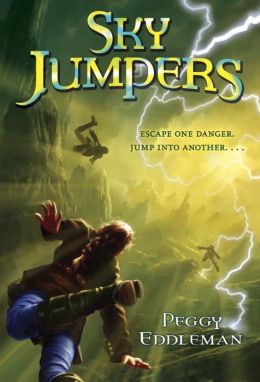
Sky Jumpers (2013)

Sky Jumpers. Peggy Eddleman. 2013. Random House. 288 pages. [Source: Review copy]

I loved, loved, loved Sky Jumpers by Peggy Eddleman. I didn't expect to love it that much. I certainly wanted to enjoy it, to love it even. I always want to like what I read. I was swept away by Sky Jumpers. I found it impossible to put down! I thought the world-building was fantastic. I thought the characterization was so well done. And the plotting too. Really, I have no complaints actually! Everything just works so very well in this one. It is intense and dramatic when it needs to be, and full of heart when it needs to be. It balances action with emotion.

Hope Toriella is the heroine of Sky Jumpers. I loved Hope. I did. Hope is different from the others in the community of White Rock. It seems EVERYONE in the community is good--if not great--at inventing. And since everyone over the age of four is encouraged--strongly encouraged--to invent things throughout the year, to be good at it means that you belong, that you fit. Why are inventions so central to the community? Well, the world has been devastated by World War III. And surviving communities are trying to rebuild and survive. Anything that can make surviving easier, anything that enhances life in the community is a very, very good thing. Hope has strengths. She does. But they aren't useful-to-the-community strengths. She is clever--quick thinking. When she gets in a predicament, she can usually think her way out of it. She is athletic too. And above all else, Hope is a brave, risk-taker. Hope seems certain that the community doesn't need her, that instead of contributing to the community, she's just a burden--another mouth to feed, another body to clothe and shelter. But is that really true? Could Hope's unique gifts be just what the community needs to survive another winter?

Along with Hope, readers get to know Brock, Aaren, and Brenna. To name just a few. I really thought the whole community was developed well, brought to life. The world Eddleman created seems so real, so possible. 

© 2014 Becky Laney of Becky's Book Reviews

Friday, December 27, 2013

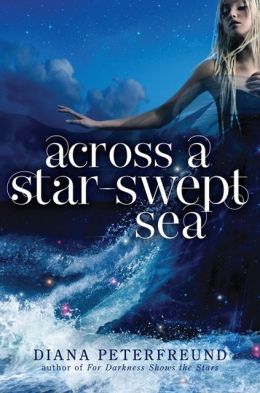
Across A Star-Swept Sea (2013)

Across A Star-Swept Sea. Diana Peterfreund. 2013. HarperCollins. 464 pages. [Source: Library]

I think I enjoyed this one more than the For The Darkness Shows The Stars. The two are companion books. Across A Star-Swept Sea is a futuristic retelling of The Scarlet Pimpernel. (In this reimagining, it is THE WILD POPPY; Galatea = France and Albion = England, of course.) Lady Persis Blake was a delightful heroine. I really enjoyed all of her personas. Readers see her as silly, vain, and gossip-driven. Readers see her brave, resilient, strong, and compassionate. Readers also see her doubts and fears, her vulnerability was touching. The romance, I felt, was well done. I thought the book captured the essence of Percy and Marguerite's troubled attraction. I thought the book also went to great lengths to be thought provoking in terms of gender roles and expectations. For example, in Albion women absolutely cannot inherit. So the Regent, Princess Isla, is just standing in for her brother--a mere toddler. Lady Persis also knows that all of her family's wealth will go to her husband; he will rule and manage it all. The world-building is complex, more complex than you might imagine. I would definitely recommend this one!

© 2013 Becky Laney of Becky's Book Reviews

Friday, December 06, 2013

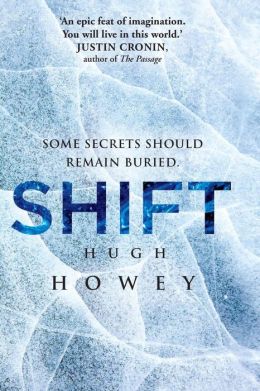
Shift Omnibus (2013)

Shift by Hugh Howey. 2013. CreateSpace. 608 pages. [Source: Book I Bought]

Although Shift is a prequel, Shift should definitely be read after Wool. The novel tells of the creation of the fifty silos, of the politics that led to the end of the world--as they knew it--and to the beginning of a new world--an underground world. This story is told in alternating points of view and alternating time periods.

From before, readers meet Donald an architect who designed the silo and helped make the project happen. He was told that the silos were for just in case. In a way, he was manipulated by others, but, that's another story.

From Silo 1, readers come to know Troy through several of his shifts. In between shifts, Troy is frozen. He and the others in Silo 1 are from before. Those working shifts take pills to help them forget what they want to forget, but, Troy is not like the others. He doesn't want to forget, he wants to remember everything. Even if what he remembers breaks his heart.

Several other silos are visited throughout Shift, usually in connection to failures and rebellions and chaotic times. The last half of Shift, which is perhaps the most haunting narrative portion, tells of a young boy essentially left alone after a failed rebellion. Readers of Wool will recognize him as Solo, but, this is HIS very personal story.

Shift tells a very different story from Wool, but, it is equally compelling. I loved the blending of Shift and Wool towards the end. Reading Shift truly puts a new perspective on Wool. I would definitely recommend both books!

© 2013 Becky Laney of Becky's Book Reviews

Thursday, August 15, 2013

Frozen: Heart of Dread (2013)

Frozen: Heart of Dread. Melissa de la Cruz and Michael Johnston. 2013. Penguin. 336 pages. [Source: Review copy]

I love Frozen for many reasons. I love it for the world-building. It is a fantasy novel with post-apocalyptic themes. So there are magical/fantastical elements to this dark dystopian society. I like how everything is not explained all at once, there is some mystery as well. It is a hard world to live in, survival doesn't come easy or without sacrifice. I love it for the characterization. All our characters--major and minor--have some issues, have some flaws. This makes things interesting! Nat, our heroine, is looking for a way to escape. It is not safe for her where she is, though she has made some friends in New Vegas, but her escape is just as dangerous, if not more so, than staying would be. She is, when she admits it, in search of the mythical Blue, a mysterious, legendary place unaffected by the new Ice Age. She hires one man, Ryan Wesson, and his crew to take her. From the start this is a difficult journey. I loved getting to know Ryan, and some of the crew as well. I liked some of the quirkiness to these characters. In a way, the characters were predictable, but in other ways, they were complex too. Nat and Ryan's relationship may be obvious, but, it wasn't rushed either. I definitely appreciated that it was just the one romance and there wasn't a hint of a love triangle!!! I liked the strangeness of some of the characters, and the magical elements of the story. I thought the storytelling was good. I liked the journey aspect, the dangers along the way, the chance to see the world--bleak and harsh and strange as it may be. I liked the different glimpses of society and community on land and at sea.

If you like dark fantasy OR dystopias OR post-apocalyptic fiction, then this one may be just right for you.

© 2013 Becky Laney of Becky's Book Reviews
Friday, June 14, 2013

The Testing (2013)

The Testing. Joelle Charbonneau. 2013. Houghton Mifflin Harcourt. 344 pages.

I definitely enjoyed this YA dystopia. The novel opens with a big celebration, a day the whole community comes together to celebrate their survival and continued hope for the future. Each member of the graduating class will need to contribute their all in order to help the community thrive. The world has been devastated, and things that were once easy are now a struggle, an achievement. The community has to have a pioneering spirit. Cia, our heroine, has always been proud of her parents and her brothers. Has always enjoyed working with them, learning with them, she values their knowledge and hopes to continue on--in one way or another--with making the Five Lakes Colony something great.

When the novel opens, Cia and her classmates are nervous. Will anyone in the community be chosen for further education? Will any be chosen for the testing? Will any get a chance to go to university and be assigned essentially a new life--if their studies are successful. Being chosen may mean settling down in another colony, another city far, far away and never seeing your family again. But it also may mean that you are a part of a greater community, a community that values restoring life and balance to the planet. Does Cia want to be chosen? Perhaps she wants to be considered smart enough to be chosen.

After a disappointing graduation day--no one was chosen--life settles down into a routine, but not for long! A few days later, visitors to the colony reveal that FOUR graduates have been selected. This news is quite a surprise! But Cia's father does NOT seem pleased with the news. And he will dare to tell her the truth--what he knows of it anyway, for he too was once chosen. Will this information be enough to help Cia in her darkest moments?

I found this one compelling from the start. I definitely found all stages of the testing fascinating. 

© 2013 Becky Laney of Becky's Book Reviews

Thursday, October 04, 2012

Rootless (YA)

Rootless. Chris Howard. 2012. Scholastic. 336 pages.

They figured me too young for a tree builder. I could see it in their eyes.

Rootless is a great example of a not-for-me book. I was not the right audience for this one, but you might be. If you enjoy dark horror stories, then this one may be just right for you. Banyan, our narrator, is a young man struggling to survive. Like his father before him, he is a tree builder; he builds artificial trees, artificial forests.

In this futuristic world, much has changed, and nothing has changed for the better. This is explored, to a certain degree, throughout the novel, as the mystery is revealed and readers come to learn about how the world is and how it came to be that way.

I would say this book is all about surviving, but, that wouldn't exactly be true. It isn't necessarily about avoiding all risks in order to survive. Banyan, our hero, even seeks out danger at times because he wants answers, he wants the truth. He has seen a picture of his father chained to a tree, a REAL tree, and he wants to know more. On his journey to "the truth" he'll meet a handful of characters, some he'll come to care about a lot. He even finds a love interest.

Rootless is incredibly dark and bleak. The world-building is strong, but it is so very haunting and violent. For some, this book may be a great read.

The back cover description: There aren't many books left. People burned most of them to keep warm during the Darkness. And after the Darkness, there were no new books because there was no more paper. The locusts had come. And there were no more trees.

Read Rootless
  • If you enjoy post-apocalypse fiction
  • If you enjoy survival/action/adventure stories
  • If you like horror novels or thrillers

© 2012 Becky Laney of Becky's Book Reviews

Wednesday, October 03, 2012

The Eleventh Plague (YA)

The Eleventh Plague. Jeff Hirsch. 2011. Scholastic. 304 pages.

I was sitting at the edge of the clearing, trying not to stare at the body on the ground in front of me. 

In The Eleventh Plague, Stephen Quinn, our narrator, has to learn to trust himself--and others. Quinn's life has never been easy. He has a few happy memories of his mother, but, for the most part he's been a salvager traveling the country with his father and grandfather. His grandfather's strength and stubbornness may have kept him alive, but, it kept him from having his own voice and opinion. He never had to make a decision on his own until his grandfather's death and his father's accident. Just a day or so after they bury his grandfather, his father has an accident which leaves him in a coma. Quinn and his father are discovered by a few people from Settler's Landing. He takes a chance and goes with them, hoping that their doctor may know what to do to help his father. But he doesn't trust them exactly, and they don't trust him perfectly either. At least some in the community don't trust him. In the days ahead, Stephen Quinn experiences life as he never has before. He's never had a home before, never had the security and certainty of staying in one place. And he's certainly never been around kids his own age, never attended school, never played baseball, etc. There are so many things about this community that impress him. But the girl who intrigues him most is the one who may just lead him to make a horrible decision...

The Eleventh Plague is an interesting novel. It was a quick and often compelling read. I struggled to keep up with all the new people he was meeting. There were times I felt out of my element, which helped me to connect with the narrator.  I liked this one.

Read The Eleventh Plague
  • If you like dystopias OR post-apocalyptic fiction
  • If you like coming of age stories
  • If you like survival/adventure stories 

© 2012 Becky Laney of Becky's Book Reviews

Friday, August 10, 2012

For Darkness Shows the Stars (MG/YA)

For Darkness Shows the Stars. Diana Peterfreund. 2012. HarperCollins. 416 pages.

Elliot North raced across the pasture, leaving a scar of green in the silver, dew-encrusted grass. Jef followed, tripping a bit as his feet slid inside his too-big shoes. 

I really enjoyed Diana Peterfreund's For Darkness Shows the Stars. Did I enjoy it because it was a futuristic dystopia, OR, because it was a retelling of Jane Austen's Persuasion? A bit of both. For those expecting Captain Malakai Wentforth to be as swoon-worthy as Captain Wentworth, well, you might be disappointed. Might. For Kai's romance with Elliot North doesn't exactly mirror that of Wentworth and Anne Elliot. Peterfreund has definitely made this story her own.

For Darkness Shows the Stars is definitely a novel about social class or status. There are three "types" of people in this futuristic world: the Luddites, those with the highest status and wealth, the elite, those that have estates and titles, those that MATTER; the Reduced, those with slave status, essentially, they are thought to be mindless sub-humans, incapable of thought and feelings, definitely thought to be genetically inferior; the POST-Reductionists, the children of the Reduced who happen to be smart enough to function with more independence in the world, they have skills and abilities that make them worth something, they are not thought to be mindless and incapable, but, they're "socially" inferior to the Luddites. No matter how smart or brilliant a POST is, no matter how much money they acquire, they will never be on equal status with the Luddites.

Kai and Elliot grew up together; they share a birthday in fact. (Actually, there are three that share an exact birthday: Kai (Post), Elliot (Luddite), and Ro (Reduced).) But their friendship always had to be a secret, for if Elliot's father or older sister, Tatiana, found out, then everyone would get in trouble. Elliot enjoyed Kai's company, enjoyed spending time with him in the barn, enjoyed watching him fix things--he's a mechanic, the son of a mechanic. But when Elliot chose not to run away with Kai when they were fourteen (or possibly fifteen?), the friendship was broken. He chose to leave the estate, to risk everything in hopes of finding a better future. Elliot hasn't heard from him since the day he left, and he still matters to her. She chose to stay not because she didn't love him, but, because she needed to be responsible, because she was the ONLY one capable of being responsible on the estate, the only one who cared for the welfare of the Reduced, and also respected the Posts.

Meanwhile, Elliot's life has been as unpleasant as ever. Her father and sister are heartless and selfish and at times cruel. The novel opens with her father destroying his daughter's wheat field--weeks before harvest. That wheat could have helped feed the Reduced, it could have been sold for a profit, as well, to help the estate. But her father's "need" for a race track was more important. He's unwilling to see that the estate is struggling financially that they have a responsibility to the Reduced and the Posts that work their land/manage the estate. Elliot doesn't even bother protesting; true, the damage is already done and nothing can bring her wheat back, but, she also has a secret of her own. That wheat was her wheat--her special experimental seed. And Luddites do NOT under any circumstances experiment.

So in an effort to help finances, Elliot decides to rent out the estate to Cloud Fleet....and one of the guests is Captain Malakai Wentforth. Of course, there are plenty of other guests as well.

I enjoyed meeting the different characters in For Darkness Shows the Stars. Since this is a retelling, there is always a chance that the characters could have been weak, shallow copies of the original. For the most part, that was not the case.

I also enjoyed the story; there were just enough twists in the story that it really worked as an original story. The dystopian setting was interesting to me. I didn't have all my questions answered--at least not right away--and this futuristic society definitely added something to the story. 

Read for Presenting Lenore's Dystopian August. 

Read For Darkness Shows the Stars
  • If you enjoy science fiction, dystopias, post-apocalyptic fiction
  • If you enjoy futuristic stories 
  • If you are interested in a new retelling of Jane Austen's Persuasion
  • If you enjoy a little romance in your science fiction

© 2012 Becky Laney of Becky's Book Reviews