Showing posts with label biography. Show all posts

Wednesday, June 18, 2025

60. Make a Pretty Sound


60. Make a Pretty Sound: A Story of Ella Jenkins--The First Lady of Children's Music. Traci N. Todd. Illustrated by Eleanor Davis. 2025. 60 pages. [Source: Library] [5 stars, nonfiction, picture book biography, music appreciation]

First sentence: Amid the blare and bleat
of taxicabs,
the screech of high-up trains,
the tambourines that ring
as preachers preach
and choirs sing--
amid the pool hall-gritty
beat of the city
a little girl named
Ella whistles with
the birds.
Little girls
shouldn't
whistle,
her mother says.
But ella wants
to make
a prety
sound.

Premise/plot: Make a Pretty Sound is a picture book biography of Ella Jenkins. It is written as a narrative poem. The rhythm of it WORKS. (I love it when that happens.) When writing about musicians, it is almost essential that attention is given to the narrative style, to getting the rhythm just right. So this picture book is the story of her life and her work. She is best known for her children's music. (I, for one, remember her appearances on MISTER ROGERS' NEIGHBORHOOD.) 

My thoughts: I would HIGHLY, HIGHLY, HIGHLY recommend that if you are going to take the time to read a picture book biography of a musician, in this case, Ella Jenkins, you take the time to introduce children to the MUSIC as well. Take time to listen to some of Ella Jenkins' albums, or songs at least.

I enjoyed the narrative text. I enjoyed the illustrations. I appreciated listening to her music. (YT for the win!) 

© 2025 Becky Laney of Becky's Book Reviews

Tuesday, March 04, 2025

21. Camera Man


21. Camera Man: Buster Keaton, the Dawn of Cinema, and the Invention of the Twentieth Century. Dana Stevens. 2022. 447 pages. [Source: Library] [nonfiction, biography, history, culture] [3 stars]

First sentence from the introduction: I first fell for Buster Keaton twenty-five years ago, when he had just turned one hundred. It was the spring of 1996, and I was spending the year studying at the University of Strasbourg, close to the French-German border in Alsace.

Premise/plot: Camera Man is closer to a book of essays than a 'proper' biography. For better or worse. (I am not saying that it is 'for the worse' for every reader.) The focus is rarely solely on Buster Keaton. He's merely a piece of a puzzle in her discussing broader subjects. Her interest is in history, culture, theatre, film, and to a certain degree how terrible, horrible, and obviously wrong (aka cringe-worthy) 'the past' was about anything and everything since it doesn't align [close enough to suit] with contemporary opinions, values, morals, and beliefs. The book is certainly not celebrating Buster Keaton's legacy, examining his films for what they are, or diving with any depth into the subject of his life (aka proper biography).

My thoughts: This is my third book about Buster Keaton. I read James Curtis' Buster Keaton: A Filmmakers Life and Buster Keaton's own autobiography My Wonderful World of Slapstick. I was disappointed with this one. I wanted more of the focus to be on Buster Keaton--professionally, personally, the work itself. He was ACTOR, DIRECTOR, EDITOR, GAG WRITER, STUNT MAN. Plenty of angles the book could have examined. Though perhaps the author's way of viewing Keatons' work with the lens of who could possibly be offended by this and how outraged should I be on their behalf it is perhaps a blessing in disguise that she limits her discussion of Buster Keaton to what she does. Though the author claims to have fallen for Buster Keaton, it seems more like a shallow fall that she has long since recovered from. She also takes the approach that his life might as well have ended after Steamboat Bill Jr. [And she's no fan of The General. In fact at times I get the idea she isn't really even a fan of slapstick comedy].

While I was mainly disappointed with this one, I will share what I appreciated. The first third of this one--perhaps a little more--where the focus is on the history of vaudeville and Buster Keaton's stage career as a child/young man--was solidly engaging. I had high hopes that her examination of his film career would be equally so. But here the focus shifts to other filmmakers, other films, other actors, film critics. More specifically in what voices were being heard and which were being "suppressed" or "oppressed" and the like. Obviously, the author's feminist world view is central to who she is and how she views the world. So I think depending on YOUR expectations, this one might prove worth reading? It was not for me in the end. I don't want someone telling me how I should react to Buster Keaton's movies.

© 2025 Becky Laney of Becky's Book Reviews

Monday, February 24, 2025

19. My Wonderful World of Slapstick


19. My Wonderful World of Slapstick. Buster Keaton with Charles Samuels. 1960. 340 pages. [Source: Library] [adult biography, adult autobiography; film-making, show business, comedy]

First sentence: Down through the years my face has been called a sour puss, a dead pan, a frozen face, The Great Stone Face, and, believe it or not, "a tragic mask." On the other hand, that kindly critic, the late James Agee, described my face as ranking "almost with Lincoln's as an early American archetype, it was haunting, handsome, almost beautiful." I can't imagine what the great rail-splitter's reaction would have been to this, though I sure was pleased. People may talk it up or talk it down, but my face has been a valuable trade-mark for me during my sixty years in show business. 

Premise/plot: My Wonderful World Of Slapstick is Buster Keaton's autobiography written just six years before his death in 1966. (So it does not cover *all* of his career, but it does cover many years of his career.) Does the book cover anything and everything? Yes and no. There are chapters in his life that remain very much PRIVATE and undisclosed. Keaton is not one to name names--for better or worse.

For example, I am almost completely certain that he never mentions his first or second wives by name. His first wife is called "his future wife" or "my wife"  or "Mrs. Buster Keaton" and the like, but never her actual name or even nickname. She does appear by name in the book, but only because she appears in his filmography because she was his costar in Our Hospitality. There was a good reason he said zip, zilch about his second marriage. (I believe she was fond of lawsuits for ANYTHING and everything, no matter how tangential to the truth). It was his beloved [third] wife, Eleanor, who gets stories.

There are periods of his life where he shares in great detail about his life--both private stories and show business-y stuff. There are periods of his life where the details are harder to come by. Which is fair, in my opinion. He does talk industry both for STAGE and FILM and television. He has stories about people in front of the camera and behind it. He does not go into great detail about his own films. He does not take himself too seriously. It's like he'd rather shift into telling asides and anecdotes than to deep dive into his own brilliance at what he does/what he did. He comes across as very grounded. He says that Charlie Chaplin's problem was that he believed everything that was being said about him, written about him, and began to take himself too seriously and as [an elite] intellectual.

"I never realized I was doing anything but trying to make people laugh when I threw my custard pies and took pratfalls. Like anyone else I enjoy being called a genius. But I cannot take it seriously. Neither does Harold Lloyd, as far as I know. The only one of us who listened and accepted the role of genius intellectual critics thrust upon him was Chaplin. Sometimes I suspect that much of the trouble he's been in started the first time he read that he was a 'sublime satirist' and a first-rate artist. He believed every word of it and tried to live accordingly."

I would have wished for a little more detail about the making of his own films, but perhaps he wanted his films to speak for themselves. Though at the time this was written, his films would not have been readily available for easy viewing. There were revivals of his films--his films being shown again in theatres, etc.,--especially in Europe. He was MUCH BELOVED in Europe, and I believe the book said Keaton was absolutely HUGE, HUGE, HUGE, MEGA-SUPER-POPULAR in Russia. [Which would make sense of the fact that so many Keaton channels on YOUTUBE are Russian.] 

It was his private stories that fascinated me. He writes in one chapter of several different practical jokes that he was in on. If I remember the story correctly, some big studio executive [or similar execs] were coming into town to meet Roscoe Arbuckle, the two came up with a great practical joke: dress Buster Keaton up as his BUTLER and let the comedy follow. He'd be the clumsiest, klutziest butler ever to see if any would recognize him--the theory being that BUTLERS ARE IGNORED--before the big finale. Arbuckle would finally "lose his temper" and let the butler have it to the astonishment of his guests. Meanwhile, Buster would slip out and return as himself--a rising star in his own right--and "meet" the guests. This was just one of many practical jokes he played. Though it was near impossible to pull the same joke twice because word would spread around town. 


It was his outlook on life--though he has repeatedly been called NOT introspective or reflective--that impressed me most. He writes,

"I think I have had the happiest and luckiest of lives. Maybe this is because I never expected as much as I got. What I expected was hard knocks. I always expected to have to work hard. Maybe harder than other people because of my lack of education. And when the knocks came I felt it was no surprise. I had always known life was like that, full of uppercuts for the deserving and undeserving alike. But it would be ridiculous of me to complain. I find it impossible to feel sorry for myself. I count the years of defeat and grief and disappointment, and their percentage is so minute that it continually surprises and delights me."
My thoughts: I absolutely LOVED, LOVED, LOVED, LOVED, LOVED this autobiography. There was just something so grounded and matter of fact about his narrative style. He was amusing and fascinating. I imagine this book covers such a small, small, small fraction of stories he could have told.

Quotes:

  • At any rate it was on purpose that I started looking miserable, humiliated, hounded, and haunted, bedeviled, bewildered, and at my wit's end. Some other comedians can get away with laughing at their own gags. Not me. The public just will not stand for it. And that is all right with me. All of my life I have been the happiest when folks watching me said to each other, "Look at the poor dope, wilya?" Because of the way I looked on the stage and screen the public naturally assumed that I felt hopeless and unloved in my personal life. Nothing could be farther from the fact. As long back as I can remember I have considered myself a fabulously lucky man. From the beginning I was surrounded by interesting people who loved fun and knew how to create it. I've had few dull moments and not too many sad and defeated ones. In saying this I am by no means overlooking the rough and rocky years I've lived through. But I was not brought up thinking life would be easy. I always expected to work hard for my money and to get nothing I did not earn. And the bad years, it seems to me, were so few that only a dyed-in-the-wool grouch who enjoys feeling sorry for himself would complain of them.
  • The cast for our two-reelers was always small. There were usually but three principals--the villain, myself, and the girl, and she was never important. She was there so the villain and I would have something to fight about. The leading lady had to be fairly good-looking, and it helped some if she had a little acting ability. As far as I was concerned I didn't insist that she have a sense of humor. There was always the danger that such a girl would laugh at a gag in the middle of the scene, which meant ruining it and having to remake it.
  • Even when making my two-reelers I worked on the theory that the story was always of first importance. But one thing we never did when making our silent comedies was put the story down on paper. On the other hand I never would agree to start shooting until I had in my mind a satisfactory ending for a story. The beginning was easy, the middle took care of itself, and I knew I could depend on my writers and myself to come up with any gags we might need as we went along.


© 2025 Becky Laney of Becky's Book Reviews

Wednesday, February 28, 2024

27. Who Is Nathan Chen?


Who is Nathan Chen? (Who Was? Series) Joseph Liu. 2023. 56 pages. [Source: Library]

First sentence: During the 2022 Winter Olympics, Nathan Chen stood alone in the middle of the ice rink in Beijing (say: BAY-jing), China. His legs were spread apart and his arms were relaxed at his side. He was dressed in black pants and a red shirt covered in stars. The stars were not like those you see on a flag. These were more like stars you see in space.

Premise/plot: Who is Nathan Chen? is a biography for young readers--think elementary aged. It is part of the Who HQ series. Who is Nathan Chen? A figure skater--from the United States--who, for a time, dominated the sport and many competitions. The sport is an ever-constant in its changing. Skaters come. Skaters go. Legacies can be formed, for sure. But there's always "new" and "better." I use quotes because there's SO much room for subjective speculation in the sport. There are a million and one factors involved in judging. One person's "better" is another person's flop. Fans can and do disagree with judges. Fans can and do disagree with other fans. The book is a basic, straightforward biography of an athlete, an Olympian.

My thoughts: I just remember so much RAGE of the 2022 Olympics when it comes to figure skating. Though not particularly the men's competition. (I was bitter/am bitter at the LACK OF DECENT coverage on television. But that's another story not for another day). The writing of this one was serviceable and decent. It works okay. I thought the writing was a little lacking, but it was far from horrible.

Do kids watch figure skating? Maybe. Maybe not. Do kids get assignments like read a biography? Yes. Probably. Are athletes a more interesting choice for such assignments? For some, sure. Are living subjects infinitely more exciting than dead ones? Probably. Maybe. This one will have an audience.


© 2024 Becky Laney of Becky's Book Reviews

Tuesday, February 06, 2024

18. Fighting With Love


Fighting With Love: The Legacy of John Lewis. Lesa Cline-Ransome. Illustrated by James E. Ransome. 2024. [January] 48 pages. [Source: Library] [nonfiction picture book; picture book biography; civil rights movement]

First sentence: Before John Robert Lewis was old enough to read the word "love" in his Bible, he could feel it all around him. 

Premise/plot: Fighting with Love is a nonfiction picture book biography of civil rights activist [and politician], John Lewis. 

My thoughts: There are a handful of picture book biographies of John Lewis. In fact, I think there are biographies of John Lewis for just about every age reader--children, middle grade, young adult, adult. I have read a few of these in the past. I wasn't expecting to learn something new. [Be reminded of previous facts, yes, yes, always yes. My memory doesn't hold onto all the details from every book.] What struck me with this picture book is the spread about how the activists [college students mainly] PRACTICED nonviolent protests. 

Quote: They took turns playing the part of the angry whites they would face, and acted out standing silently while being shouted and cursed at. They practiced how to curl in tight on the ground to protect themselves from kicks and punches that would beat down on them. They remembered to look into the eyes of their attackers, reminding them that a child of God was looking back. After hearing the words and feeling the fists, some never finished their training at Highlander, leaving as fast as they'd come, asking what kind of love means you've got to be beaten up outside and in. But John knew. "It is love that accepts and embraces the hateful and the hurtful." And so, John stayed and practiced some more.

The illustrations are quite engaging--bright, bold, colorful. 


© 2024 Becky Laney of Becky's Book Reviews

Friday, January 26, 2024

12. Agatha Christie: An Autobiography


An Autobiography. Agatha Christie. 1977/1996. Berkley. 635 pages. [Source: Bought] 

ETA: I reread this one in January 2024. It had been years since I first read this one. I have so many dog-eared pages from both readings. If I was to quote everything I marked to "remember" to come back to, it would be so long. Definitely glad I reread this one.

Agatha Christie's autobiography has been on my tbr pile for years now. I have looked forward to reading it for so long! I must admit the length had me a little intimidated. But once I started reading this one, I found myself completely absorbed in it. It is truly a fascinating read cover to cover. I think this one could prove appealing to a variety of readers.

Do you love history? I found Agatha Christie's Autobiography to be fascinating. This book is rich in details. Readers learn in great detail about her family and her growing up years. What Christie is describing is a way of life, and the way she saw the world around her. Her thoughts on her parents, grandparents, siblings, the family servants--the cook and the maids and nannies. You get a real sense of what it was to be a child (and teen) growing up in England in the 1890s and 1900s. She was "out" (ready to date) a year or two (or even three) before World War I began.

Are you interested in World War I? in World War II? Christie details what life was like during the war years. She was a nurse for a great part of World War I. She also assisted in dispensing drugs. She fell in love and got married during this time. During World War II she again did her part in the war effort. I believe volunteering in a hospital. She was in and around London during the War. She recalls how she rarely (if ever) took shelter during the raids because she was afraid of being buried alive under all the rubble. She had a grown daughter by that point. A daughter who fell in love, got married, and had a child during this time.

England was at war. It had come. I can hardly express the difference between our feelings then and now. Now we might be horrified, perhaps surprised, but not really astonished that war should come, because we are all conscious that war does come; that it has come in the past and that, at any moment, it might come again. But in 1914 there had been no war for--how long? Fifty years--more? True, there had been the "Great Boer War," and skirmishes on the Northwest frontier, but those had not been wars involving one's own country--they had been large army exercises, as it were; the maintenance of power in far places. This was different--we were at war with Germany. (257)
Are you interested in archaeology? in world-traveling? She spends a good deal of time recalling her travels around the world. She accompanied her first husband on an extended trip--covering several continents. (She left her (quite young) daughter with her mother and sister.) After her divorce--he fell in love with another woman and blamed her for it--she traveled on her own. On one of her trips to the Middle East, she met the man who would become her second husband. He was an archaeologist. While she did not stay with him the duration of all of his digs, she accompanied him on some, and visited on others. Readers learn that Christie LOVED, LOVED, LOVED to travel.

Are you a rehab addict? Christie loved looking at houses, buying houses in need of repair, fixing them up, renting them out, and selling them. She owned many properties at various points in her life. I believe the book said she owned eight during World War II. The book talks about her remodeling and redesigning houses.

Are you interested in writing, in her writing life? You'll find plenty to delight you within her autobiography. She talks about different sides of her writing life. Her novels. Her mystery novels. Her plays. Her short stories. Her poems. She talks about her mistakes and successes. Readers learn about which books she liked best and which book she really, really hated!
It was while I was working in the dispensary that I first conceived the idea of writing a detective story. (289)
People never stop writing to me nowadays to suggest that Miss Marple and Hercule Poirot should meet--but why should they? I am sure the would not enjoy it at all. Hercule Poirot, the complete egoist, would not like being taught his business by an elderly spinster lady. He was a professional sleuth, he would not be at home all in Miss Marple's world. No, they are both stars, and they are stars in their own right. (502)
Do you love to read? Christie shares her thoughts on her favorite writers and books!

I want to emphasize the fact that you do not have to love mysteries in order to find this autobiography of a mystery writer fascinating! I marked so many passages that I wanted to share with you. Too many to actually share. It would overwhelm any post. So just trust me, read this one!

I will choose a quote which happens to bring to mind a certain song from Frozen.
One of the first things that happens when you are attracted to a man and he is to you is that extraordinary illusion that you think exactly alike about everything, that you each say the things the other has been thinking. (228)


© 2024 Becky Laney of Becky's Book Reviews

Saturday, January 20, 2024

7. Make Way


Make Way: The Story of Robert McCloskey, Nancy Schön, and Some Very Famous Ducklings. Angela Burke Kunkel. Illustrated by Claire Keane. 2023. 48 pages. [Source: Library] [Picture book for older readers; biography; art appreciation]

First sentence of 'prologue': In the beginning, a duck is an egg. A drawing is a blank page. A sculpture is a lump of clay.

First sentence of book: In the beginning, a boy named Bob lives in a place called Hamilton. He wanders the Ohio town with his dog, playing a harmonica, notes trailing behind them. Bob's mind whirs like a motor and his hands move constantly.

Premise/plot: Make Way is a nonfiction picture book for slightly older readers. I do think it is one that adults will be drawn to. It is the a) a mini-biography of Robert McCloskey, children's author and illustrator b) a mini-biography of Nancy Schön, an artist who was inspired by Make Way for Ducklings, c) the story of the impact of ONE children's book, the book being Make Way for Ducklings.

MY thoughts: I can't think about Make Way for Ducklings without thinking about my Mom. This is one that she regularly read to us (my sister and I). After reading this one, I immediately had to go put Robert McCloskey's book on hold. (In fact, I put on hold ALL of his books that my library had in their collection). I think that's a good reaction or response. I hope the author would approve! This picture book is like a love letter.

© 2024 Becky Laney of Becky's Book Reviews

Wednesday, May 24, 2023

106. Hidden Hope


Hidden Hope: How a Toy and a Hero Saved Lives During the Holocaust. Elisa Boxer. Illustrated by Amy June Bates. 2023. [March] 48 pages. [Source: Library] [Link to Cover Image] [Middle Grade]

 First sentence: "Hide! Quick!"
Hearts pounding,
breath quickening,
feet scrambling.
Down into damp basements,
up into old attics,
crammed into dark closets.

Premise/plot: Nonfiction title for upper elementary on up. This picture book for older readers is set in France during the Second World War. The focus is on a young girl--a young woman--who smuggles false identity papers to Jews by using a TOY DUCK. (Yes, a toy duck). Her name is Jacqueline Gauthier. This is her story of how she (and the duck) helped save two hundred lives. It is written in verse. 

My thoughts: I loved this one so much. I absolutely love hearing new stories. I love continuing to learn about the war, about the Holocaust, about these experiences. Every voice matters. Every story is worthy of an audience. I'd never heard of this story! And it was such a great story! I loved learning about this young woman and the creative way a TOY DUCK was used to smuggle papers. I loved the gumption and bravery. 

The narrative and illustrations are SO good. Definitely recommend it.


© 2023 Becky Laney of Becky's Book Reviews

Tuesday, May 23, 2023

105. The Woman in the Moon


The Woman in the Moon: How Margaret Hamilton Helped Fly the First Astronauts to the Moon. Richard Maurer. 2023. 272 pages. [Source: Library] [Link to cover image] [middle grade; young adult]

First sentence: One evening in the late 1950s, Massachusetts senator John F. Kennedy and his brother Robert were enjoying a relaxing dinner with their companion, a brilliant, eccentric inventor named Charles Stark "Doc" Draper.

Premise/plot:  The Woman in the Moon by Richard Maurer is a biography of Margaret Hamilton, a mathematician who 'helped fly the first astronauts to the moon.' That is the sum of it; Margaret Hamilton wrote computer codes--routines and subroutines, the software that was integral to the space program.  

My thoughts: When I saw the cover (linked above), I initially thought I was committing to a smaller book--not physically smaller--but a picture book. This is a biography for upper elementary OR middle school OR possibly high school. I think it is not so much the complexity of the subject matter that determines the ideal audience as it is the interest level of the reader. In other words, the more you are interested in math, science, history--the space race--the better this one will "read." If you have zero interest in the subject, then chances are you'll find it 'dull' and 'dry.' 

I do have an interest in history and the space race. I just don't have an interest in math and science. I found this to be a little too technical for me. Reading is subjective and if my mind was wired differently--to appreciate more technical sciences--then perhaps I would have found it fascinating. It is not the fault of the author. 

My favorite bits were the sections that focused on her personal life.

© 2023 Becky Laney of Becky's Book Reviews

Friday, December 09, 2022

171. Scribbles, Sorrows, and Russet Leather Boots


Scribbles, Sorrows, and Russet Leather Boots: The Life of Louisa May Alcott. Liz Rosenberg. 2021. 432 pages. [Source: Library]

First sentence: "On a dismal November day, I found myself, and began my long fight," Louisa May Alcott wrote about her entrance into the world on November 29, 1832. She called her birth day "dismal," though records show a mild autumn all across the United States. Louisa must have been thinking of the family's mood, the inner rather than the outer weather. 

Premise/plot: What you see is exactly what you get: a MG biography of Louisa May Alcott. There are illustrations [by Diana Sudyka] at the start of each chapter. This is in part a straight forward biography of Louisa May Alcott. For many chapters, this is seeing her as a daughter, sister, student. Much [oh-so-much] is said about her parents, her siblings, and how she was raised. Bronson Alcott, well, he was a CHARACTER to say the least. Her mother, also, had her moments. I can't imagine it was an "easy" or "easygoing" childhood for any of the children. Once she comes of age and is a published author--though success wasn't immediate or continuous--the book softens a bit into biography + literary commentary. Her works are introduced and discussed--both unsuccessful and successful. 

My thoughts: I have decided that sometimes it may be better not to know too much about an author. That's not to say I disliked this biography. It's just that if you have a warm, cozy, comfy view of Louisa May Alcott--probably from reading Little Women a little too literally--then that happy, rosy image will be shattered/crushed. Her life is a bit dismal, in some ways. 

I didn't really like her parents. Bronson was definitely WAY, WAY, WAY above my maturity level. I detested him. I wasn't as angry perhaps with Abby [aka Marmee] because I could pity her for having to put up with her husband AND shouldering so much in life. But she has her own issues. 

I do think the book shares just enough details to flesh Louisa May Alcott out. 

I appreciated that this book doesn't seem to have an agenda. So many books about Louisa May/Jo March seem to focus so much on questioning her sexuality, her gender identity, her private life. This book does not do that.

Overall, I'd describe this one as incredibly SAD. 

© 2022 Becky Laney of Becky's Book Reviews

Thursday, November 03, 2022

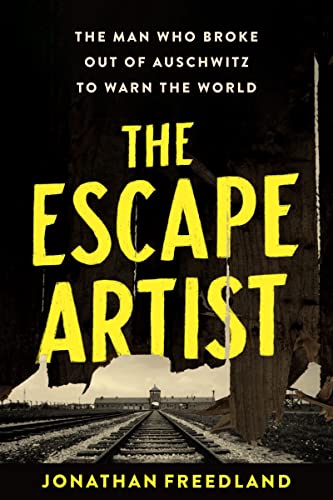
141. The Escape Artist


The Escape Artist: The Man Who Broke Out of Auschwitz To Warn the World. Jonathan Freedland. 2022. [October] 400 pages. [Source: Library]

First sentence: FROM THE START he knew he was special. He was not yet Rudolf Vrba, that would come later. His name was Walter Rosenberg and he had only to look into his mother’s eyes to know he was a one-off. Ilona Rosenberg had waited so long for him, desperate for his arrival. She was already a stepmother – her husband, Elias, came with three children from a previous marriage – but that was not the same as holding a baby of her own. For ten years, she had yearned for a child; the doctors told her she should stop hoping. So when Walter arrived on 11 September 1924, she greeted him like a miracle.

Premise/plot: The Escape Artist is a biography of Walter Rosenberg/Rudolf Vrba. He and Fred Wetzler escaped from Auschwitz--quite a feat--and tried their best to warn the world--especially, especially the Hungarian Jews who were the next target of the Nazis--about the "Final Solution." But that is only a fraction of his story. This is his life story, not only the story of those horrifying war years. Those chapters--which are considerable--are heart-shattering. But just because the contents are heart-shattering and horrifyingly tragic, doesn't mean that readers should look away. All voices should be heard. 

My thoughts: Words don't do this book justice. I know that. I found it an incredible read. Incredibly thought-provoking. Incredibly sad. Incredibly memorable. Sad seems an obvious description due to the subject, but, different kinds of sadness. His life after the war, for example, and how his early experiences effected his marriages (there were two) his children (there were two) and his overall health (mental and physical). The book never once uses the term PTSD, but, certainly I think that might explain so much. Another kind of sadness is that as heart-breaking, heart-shattering, horrifying, and haunting as the Holocaust was--and he witnessed so, so, so, so much, he didn't think that was the most tragic thing that ever happened to him. But I hesitate to spoil this one.

Quotes:

And yet Walter only really began to know of it that moment in Kanada where, in that pile of tiny shoes, the truth was staring him too hard in the face and he could not look away. Perhaps he could be forgiven for taking so long to understand what would eventually seem obvious, for failing to absorb the evidence that surrounded him, for failing to turn clear facts into knowledge. The SS had taken great pains to keep this operation hidden, even from those who were living at the scene of the crime.

The Nazis lied to their victims at every step of their journey towards destruction, step after step after step. Those people falling out of those stinking cattle trucks had boarded them believing they were being taken to new lives in a new place: ‘resettlement in the east’, they called it. Those Jews had packed up their belongings and held on tight to them because they thought they were building a new home, one that would need pots and pans, clothes for their backs and toys for their children. They believed that because that was what the Nazis had told them and it was what their own friends and families had told them, in the form of those postcards home that they did not realise had been written at gunpoint – those messages of forced cheer that Walter had heard read out on the train on the way to Majdanek – and which were designed to seal the lie.
 
For at eighteen years old Walter would witness events so harrowing they could change the life of the person who glimpsed them. He was witnessing such moments not once or twice, but day after day after day. He was in Auschwitz, a place where moral boundaries had dissolved long ago, where everything was permissible. This was a place where Dr Mengele once punished a Jewish woman by making a dog of her young son, because she had, in self-defence, killed an SS attack dog: he had the boy trained at the point of a whip to run on all fours, bark without pause and attack and bite Jews. Walter was in a place where one inmate might steal bread from another, even when that prisoner was dying and when the bread was covered in faeces. 
 
He had drawn a conclusion that would become an article of faith, an unshakeable creed that would drive every decision he took next. He now understood that the difference between knowledge and ignorance, between truth and lies, was the difference between life and death.
It was clear to him from then on that the Jews destined for destruction could defy their fate here only if they knew of it, incontrovertibly and before it was too late. Somehow Walter had to get out of this place and tell the world what was happening. He did not know it yet, but he was about to meet the people who could help.
 
If he had to be a spectator to horror, then he would make himself a witness. He would be a reporter. Christmas came and went, the SS forcing their Jewish captives to learn and sing ‘Stille Nacht’ – ‘Silent Night’ – perhaps to remind the Germans of home. Those who did not sing it properly were murdered. In Birkenau, the SS put up a huge Christmas tree and on Christmas Eve they brought out a group of prisoners. For their own entertainment, they gave the men a pointless task, ordering them to gather up soil in their coats, shooting any man who collected too little. Then they stacked the corpses in a heap under the tree, piled up like festive gifts.
 
The way Walter saw it, they had been written off by the world the day they stopped being Alfréd Wetzler and Walter Rosenberg and became prisoners 29162 and 44070, if not the day they stepped on to those deportation trains. True, they had become people of standing in the Auschwitz inmate hierarchy, but all that was lost now. The moment they crept out from under that fence they had entered a social vacuum. They knew no one; they had no one.
 
Rudolf Vrba was not an entirely new creation. There had been an influential Czech Catholic priest of that name who had died five years earlier, having built a reputation as an energetic antisemite: he had proposed a set of measures to secure the exclusion of Jews from Bohemian life. But the new Rudi, as he was to become, was not bothered by that association, if he was aware of it at all. (Nor, apparently, was he much fazed by sharing his new first name with the commandant of Auschwitz.) All that mattered was to be free of what, to him, was the Germanic taint of ‘Rosenberg’. He wanted to sever every connection with that supposedly ‘civilised’ nation. Walter Rosenberg was no more. From now on, and for the rest of his days, he would be Rudolf Vrba, with a name that was impeccably Czech, carrying no hint of German or, for that matter, Jew. The two men, reborn as Jozef and Rudi, headed for the mountains. Meanwhile, the work of their lives, the Auschwitz Report, was about to embark on a journey of its own.
 
Those audiences would have thrilled to hear the story of his escape and his mission to tell the world of Auschwitz, but he never left it at that. He would not serve up a morally comfortable narrative in which the only villains were the Nazis. Instead he always insisted on hitting out at Kasztner and the Hungarian Jewish leadership, as well as the Jewish council in Slovakia. He faulted them for failing to pass on his report and, in the Slovak case, for compiling the lists that had put him on a deportation train in the first place.
What made Rudi a more awkward witness still was his tendency to refer to the Jews whom he blamed as ‘Zionists’. As it happened, Rudolf Vrba was a supporter of Israel and rooted for it: he believed that the existence of the state of Israel was a good thing for Jews and for the world. But he could not contain his anger against those Zionists who he felt had betrayed the Jewish people, starting with Kasztner.
 
Rudolf Vrba refused to conform to what the world expects of a Holocaust survivor.
 
Rudi had to confront the fact that his younger self had been wrong to believe that the Allies did not know, and wrong to believe that they would come to the rescue of the Jews if they had. But he could cling to one last conviction: that if the Jews of Hungary had only known what he and Fred knew and had written down in their report, then they would have refused to go to their deaths.
Rudi held fast to that belief, and yet in his later years that too would be challenged.


© 2022 Becky Laney of Becky's Book Reviews

Friday, October 07, 2022

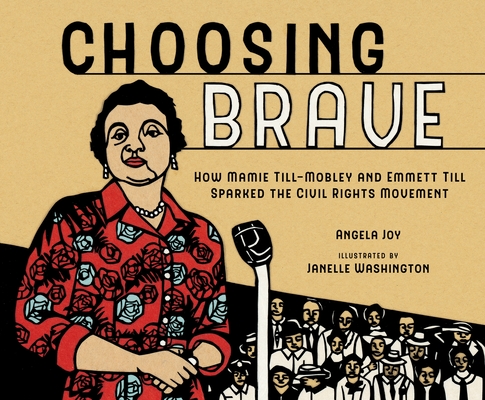
122. Choosing Brave


Choosing Brave: How Mamie Till-Mobley and Emmett Till Sparked the Civil Rights Movement. Angela Joy. Illustrated by Janelle Washington. 2022. 64 pages. [Source: Library]

First sentence: The boy they found was far frome home,
far from Mother and Grandmother.
"Here on a visit," Papa Mose would say.
The sheriff set out to dig a grave that day,
To hide the crime in the mud of Mississippi,
Where no one would see the boy's suffering.
But Mamie did the harder thing.
She said, "No. You send my son home."
It was the braver thing
That changed everything.

Premise/plot: Choosing Brave is a picture book biography of Mamie Till-Mobley, the mother of Emmett Till, and perhaps the mother (or godmother) of the Civil Rights Movement. Because of the incredibly, heavy subject matter, I'm thinking it is a picture book for older readers (upper elementary through adults). 

My thoughts: Choosing Brave is a powerful, compelling, beautiful, haunting, poignant biography written in verse. It does require a bit of 'bravery' to read it because the subject matter is so heartbreaking and rightly heavy. Each word, each phrase, each line was like a puzzle piece coming together to make an incredible picture. The recurring theme of Mamie choosing to do the harder thing, the braver thing because it was RIGHT thing gives readers much food for thought. 

Definitely recommended.
 

© 2022 Becky Laney of Becky's Book Reviews

Thursday, October 06, 2022

121. So Much More to Helen!


So Much More to Helen! Meeg Pincus. Illustrated by Caroline Bonne-Muller. 2022. [April] 32 pages. [Source: Library]

First sentence: Asked of Helen Keller's glory,
most folks talk of this one story:
DeafBlind girl--no one could reach her.
First word "water," thanks to teacher.
It's (mostly) true and worth retellin'--
Yet there's so much more to Helen!

Premise/plot: Picture book biography of Helen Keller. Each spread celebrates a side to Helen Keller that you may not be familiar with. 

My thoughts: I really loved, loved, loved this one!!! So beautiful. I loved the text and the illustrations. I loved the message as well.


© 2022 Becky Laney of Becky's Book Reviews

Tuesday, May 17, 2022

60. American Shoes: A Refugee's Story


American Shoes: A Refugee's Story. Rosemarie Lengsfeld Turke and Garrett L. Turke. 2022. [February] 352 pages. [Source: Library]

First sentence: I was raised with the belief that life gives us a blank canvas on which to paint our lives.

Premise/plot: American Shoes is based on the author's own memories. Rosemarie (aka Rosel) was born in the United States of America to German parents. A family trip to Germany to visit grandparents--an ailing grandfather--has unintended consequences. This trip happened when Rosel was a young girl--four? five? six?--the family found themselves unable to leave the country. Though not Jewish, the family clearly faces some hardship in Nazi Germany. 

This story is not told in a linear manner. The framework of the story is Rosel as a teen girl--15, I believe--leaving Germany on her own. Her parents (and younger sister) having German citizenship and not American citizenship--are unable to get permission to re-enter the United States of America. As an American, Rosel has the ability to leave the country and return to her place of birth. She'll be one of many refugees on their way to the U.S.A. 

The "chapters" of the book chronicle her time on the ship AND include her flashbacks (often tied to specific nightmares). Her past is slowly revealed, perhaps unevenly revealed. Much of the book focuses on her mingling with other refugees and her experiences of preparing to begin a new life. Rightly so, she--and just about every single person she is meeting and talking with--are dealing with a LOT of baggage from the war. (PTSD) 

My thoughts: The book is based on the author's memories. I'm honestly not sure if this book is categorized as fiction (but based on a true story) or a memoir (straight up nonfiction). She is recounting memories from when she was very young. These are strong impressions she is sharing. It seems completely inappropriate to nitpick literary style or narrative because of the subject matter.

History matters. Voices matter. Her story is worth reading--especially if you read books set during this time period. Not every reader seeks out books about World War II. It can be a sensitive subject, a triggering subject. 


© 2022 Becky Laney of Becky's Book Reviews

Tuesday, September 07, 2021

108. The Boy Who Failed Show and Tell


The Boy Who Failed Show and Tell. Jordan Sonnenblick. 2021. [February] 224 pages. [Source: Library]

First sentence: The luckiest boy in my class is this kid Kenneth. Last March, when we were in third grade, there was a massive fire in his apartment building. He had to jump from his bedroom window on the seventh floor onto one of those fire-department trampoline things. He almost died! When he came back to school, he had the best Show and Tell in history. Now he is a legend.

Premise/plot: The Boy Who Failed Show and Tell is a memoir by author Jordan Sonnenblick. It focuses on his fourth grade year, I believe. The book is packed with adventures and misadventures at home and school. On the one hand, life is GREAT because he's got a SNAKE and he's taking drum lessons. On the other hand, life is AWFUL because his teacher hates him and is always picking on him.

My thoughts: I really enjoyed this one so much. The narrative voice is everything. The narrative is just right. I found it super relatable--even though I don't love snakes or play the drum.

Favorite quotes:

I wanted to say hi to the drummer, and maybe ask him how he had started playing. But I was too shy. So I just kind of faded away from the edge of the bandstand until I got back to the tables.
Anyway, I don’t know how I can learn to be that guy from a few lessons. I am only a shrimpy, nervous fourth grader. It seems to me that becoming a drummer isn’t just learning a set of skills. Becoming that guy would be more like a transformation: caterpillar me would have to somehow turn into … not a butterfly, exactly. Something cooler and stronger. Something heroic. Like a lion. Or Robert Falcone, but with drumsticks.
That’s what I want from drum lessons. To become a legend in just thirty minutes a week.

Maybe Mr. Fred Stoll is like Batman or Superman. People in the upstairs world think of him as a mild-mannered, cat-owning husband. But once you are allowed into his DRUM CAVE, you see the truth behind the disguise.
He sits down at a stool next to the drum set and gestures for me to pass him and sit on the stool that is actually set up directly in front of the drums—the stool a real drummer would sit on to play this set!
When I sit down, I am kind of excited and also kind of terrified. I want so badly to be able to sit right here and make amazing, thunderous noise, but I don’t even know how to hold a drumstick. Fortunately, that is the first lesson. Mr. Stoll lays two sticks down on the shallow, wide drum between my legs and says, “Lesson one: Pick those up.” I want to ask him how I am supposed to pick them up, but I feel like this is some kind of test.
Mr. Stoll is Obi-Wan Kenobi, I am Luke Skywalker, and I am supposed to use the Force to lift the sticks.

It’s only the second week of school, and Mrs. Fisher has already noticed that my handwriting is not neat. By not neat, I mean it looks like a dying chicken dragged a pencil across the page because it was stapled to his leg.
And that’s when I print. You should see my cursive.
It doesn’t matter that she’s right. What matters is that she compares me to William Feranek in front of the whole class.
“JORR-dan! This spelling paper is sloppy! I will not accept messy work!” I try to tell her that I spelled every word right, but she doesn’t care. “Nobody cares,” she purrs, “if you’ve spelled the words right if nobody can read them.

The song is called “Drive My Car.” The band is the Beatles.
There is a short guitar introduction. Then Mr. Stoll plays a roll on two of the tom-toms before starting to play an amazing beat. I don’t know how he does it all! One hand is on the snare drum, the other is playing a pair of cymbals called the hi-hats, which open and close if you push your left foot down on a pedal, and his right foot is working the pedal that hits the bass drum. Every time the bass drum thumps, it is like a bright blue shock in the center of my chest. There is also a clanking noise on every beat of the song that lights up the inside of my mind in dark red pulses. I have no idea what that sound is, but it makes me feel wild, like I am about to jump up out of my chair and yell.

Mr. Stoll says, “Now I am going to play the song again, but you are going to keep time.” He hands me a weird blocky metal thing that looks like one of the bells you might see around a cow’s neck in a cartoon, and tells me I am going to hold it in one hand and use my other hand to hit it with a drumstick.
“What is this thing called?” I ask.
“A cowbell,” Mr. Stoll replies. Well, that makes sense. “Did you hear the clanking sound on every beat of the song?”
I nod.
“All you have to do is hit the cowbell along with the clanks, and together you and I will be a percussion section.”
I smile. A percussion section sounds like something a professional musician would be in.
“Ready?” he asks.
I nod, and he puts the needle down onto the beginning of the song again.
“I’ll tell you when,” he says.
I try to hit the cowbell in time with the song, but that is much harder than it sounds. I could hear the cowbell on the record perfectly the first time the song played, but as soon as I start making noise, I drown the recorded cowbell out. When my time starts to drift, Mr. Stoll looks over at me and counts out the rhythm: “One! Two! Three! Four!”
This happens a few times, but Mr. Stoll only smiles and keeps counting.
The third time through the record, Mr. Stoll doesn’t play. He just watches me and counts. I think I am starting to feel the rhythm on my own. It feels like lightning flashing in my brain.
I like it.

We work on my double stroke roll for a while after we are finished with the Beatles, and then comes a moment I know I will remember for the rest of my life. Mr. Stoll carefully takes the album, Yesterday and Today, off the player and carefully puts it into its protective paper sleeve, then slides the sleeve inside the cardboard album cover and hands the whole thing to me.

“The Beatles,” he says. “So good. John, Paul, George, and Ringo. Ringo is the drummer. You can learn a lot from these guys. Take this for the week, and practice hitting your dictionary in time with the different songs. You have a record player at home, right?”
I nod. Really, I don’t exactly have a record player, but Lissa does.
“Just promise me you’ll take care of the album. You know how to hold it by its edges, right?”
I nod again, very enthusiastically. I will treat this album like a precious jewel. I will treat this album like gold. I will treat this album like I treat Hectoria. I won’t even think about hurling it across Lissa’s room like a Frisbee, the way I threw her Saturday Night Fever soundtrack record when she wouldn’t stop calling me names that one time.
“Great,” he says. “I trust you.”
My drum teacher trusts me.
I walk out of there feeling so excited I might explode. I am holding “Drive My Car” in my own two hands. And there are ten more Beatles songs on the record, just waiting for me to discover them.


© 2021 Becky Laney of Becky's Book Reviews

Tuesday, August 10, 2021

86. The Light of Days


The Light of Days: The Untold Story of Women Resistance Fighters in Hitler's Ghettos. Judy Batalion. 2021. 288 pages. [Source: Library]

 First sentence from the introduction: In the spring of 2007, I lived in London and worked as an art historian by day and a comedian by night. I was writing a play about strong Jewish women, and I wanted to learn more about Hannah Senesh, one of the few female resisters in World War II who was not lost to history.

First sentence from chapter one: On Friday, October 10, as the Jews in the small Polish town of Jedrzejow (pronounced YEN-jeh-yuf in Polish) were shutting their shops and preparing for the Sabbath--a day of religious observance--Moshe Kukielka rushed from his store.

There is a central character in this one: Renia Kukielka. But it isn't the story of one person--one woman. It is the story of many working together in Poland during the Second World War. The book opens with a Who's Who: Renia Kukielka, Sarah Kukielka, Zivia Lubetkin, Frumka Plotnicka, Hantze Plotnicka, Chajka Klinger, Gusta Davidson, Hela Schupper, Irena Adamowicz, Bela Hazan, Ruzka Korczak, Vitka Kempner, Faye Schulman, Anna Heilman. You might be tempted to skim it lightly--or even skip it altogether. I won't judge you if you do. But by the end, I'm guessing you'll circle back around in appreciation of what the author has accomplished.

The book, obviously, is set in Poland in the years leading up to the Second World War and the war itself. The focus is on the Jewish communities and neighborhoods. The stories of the ghettos. One doesn't need to use melodrama and imagination to paint the picture--just facts and accounts. This book highlights those that actively resisted. It follows a dozen or so characters through these war years...and if the text alone isn't compelling enough...hitting you right in the heart....the book concludes with PHOTOGRAPHS of those mentioned in the book.

It was a powerful, intense, compelling, substantive read. It was very good.

Quotes:

How do you react to news that you are going to be killed? Do you try to stay optimistic to keep your sanity? Or do you fight back?
When Zivia heard about the mass execution, she didn't doubt it for a second. Other Jews had escaped from death camps and shared their own shocking stories.
If anything, Zivia felt guilty. Why hadn't she seen more clearly that the Nazis meant to kill all Jews? Why hadn't she done more sooner? Precious time had been wasted.


I pledge to engage in active resistance within the framework of the Jewish Fighting Organization of the Halutz Youth Movement. I swear by everything most dear to me, and above all by the memory and honor of dying Polish Jewry, that I will fight with all the weapons available to me until the last moment of my life to resist the Germans, the National Socialists, and those in league with them, the mighty enemies of the Jewish people and of all humanity. I pledge to avenge the innocent deaths of millions of children, mothers, fathers, and aged Jewish people, to uphold Jewish spirit, and to raise the flag of freedom proudly. I pledge to shed my own blood fighting to achieve a bright and independent future of the Jewish nation. I pledge to fight for justice, freedom, and the right of all human beings to live in dignity. I will fight side by side with those who share my desire for a free and equitable social order. I will serve humanity faithfully, dedicating myself without hesitation to achieving human rights for all, subordinating my personal desires and ambitions to that noble cause. I pledge to accept as a brother anyone willing to join me in this struggle against the enemy. I pledge to set the seal of death on anyone who betrays our shared ideals. I pledge to hold out to the end, not to retreat in the face of overwhelming adversity or even death.

© 2021 Becky Laney of Becky's Book Reviews

Monday, March 22, 2021

30. A Most Clever Girl


A Most Clever Girl: How Jane Austen Discovered Her Voice. Jasmine A. Stirling. Illustrated by Vesper Stamper. 2021. [March] 48 pages. [Source: Review copy]

First sentence: Jane loved stories--long ones, short ones, worn and new. 

Premise/plot: A Most Clever Girl is a picture book biography of Jane Austen. The narrative has a specific focus: how did Jane Austen find her voice? or to word it a different way, how did Austen find her own unique narrative style? The book focuses on her love of READING and WRITING and sharing stories with family and friends. Along the way, readers learn a bit more about Austen's family and the times in which she grew up.

My thoughts: I really enjoyed this one. Probably my favorite thing about this picture book is that it includes Austen quotes throughout the narrative. The words that appears in italics are from Austen herself. (Adults can find the sources for these quotes in the back matter.) I also appreciated how this picture book provides context for reading and appreciating Austen's novels.

Is it really written for children? Or is it written for adults? I think that's a fair enough question. I do think there are plenty of adults who love, love, love Jane Austen who have daughters (and sons), granddaughters (and grandsons), nieces (and nephews). I could see this appealing to Austen fans regardless if they have children in their lives.

I am not someone who thinks that picture books are ONLY for children. I'm not. I think readers of all ages can read and enjoy picture books. I think you never outgrow a good story.

Have you read this one? What did you think about it?


© 2021 Becky Laney of Becky's Book Reviews

Monday, January 11, 2021

3. Jane Austen's Best Friend


Jane Austen's Best Friend: The Life and Influence of Martha Lloyd. Zoe Wheddon. 2021. Pen and Sword. 224 pages. [Source: Review copy]

First sentence: It is also a truth universally acknowledged that a woman in possession of a great talent must be in want of a brilliant best friend and Jane Austen was no exception. She may even have appreciated that friend more than we will ever know. That is to say she enjoyed the delights of having someone in her life who would become one of her closest and dearest, nay even beloved people, but was not bound to her by the calls of family duty or a father’s will.

Premise/plot: Jane Austen's Best Friend is a biography of Martha Lloyd that focuses on the friendship between Jane and Martha. The two were close, as close as sisters. Their friendship spanned decades. Jane was around twelve years old when the two met. This perspective gives readers an inside glimpse of Jane's personality. Wheddon writes, "Through tracing the tale of Martha and Jane, we will get to see the human side of our heroine author and really feel like we can get to know her better. In looking back somewhat longingly at Martha and Jane’s friendship we can examine all their shared interests, including the hits and misses of their romantic love lives, their passion for shopping and fashion, their connection to their community and the female biography of the period, their family histories, their lucky breaks, their epic fails and their girly chats. In this way, it is my aim for us to ‘recover a personal Jane Austen’, to allow us the opportunity to spend time in a ‘plausible emotional and psychological hinterland’, to create something like our own time-travelling coffee shop, wherein Jane Austen is revealed to us in a different context, in a different light, through the prism of the magical link of friendship."

Martha wasn't just close to Jane, she was close to the entire Austen clan. (Later in life, Mrs. Austen, Jane, Cassandra, and Martha lived together.) Several years after Jane's death, she marries one of Jane's widower brothers.

The chapters:

  1. In the Beginning
  2. Early Writings
  3. Moving Away
  4. Love Lives
  5. Fashion Fun
  6. Fun and Frolics--Out and About
  7. In Sickness and In Health
  8. Home Is Where the Heart Is
  9. Charity Begins At Home
  10. Our Chawton Home
  11. The Character of Friendship
  12. Anything You Can Do...
  13. The Spirit of Friendship
  14. Life After Death
  15. Friendship Never Ends

My thoughts: This book was a good fit for me!!! I really love reading Austen and reading about Austen. I would recommend this one to anyone with similar taste. Love reading Austen's novels? Love reading about Jane Austen? Love the Georgian/Regency time period? Love history? This one may be for you. It releases in April 2021. 


© 2021 Becky Laney of Becky's Book Reviews

Tuesday, October 27, 2020

129. Grace Banker and Her Hello Girls


Grace Banker and Her Hello Girls Answer the Call. Claudia Friddell. Illustrated by Elizabeth Baddeley. 2021. [February] 40 pages. [Source: Review copy]

First sentence: Grace Banker opened the newspaper on a brisk December morning in 1917--the world was at war, and General John J. Pershing, the commander of US troops across the Atlantic, was calling for female telephone operators to join the fight against Germany. 

Premise/plot: This nonfiction picture book biography stars Grace Banker one of the female telephone operators recruited to serve overseas in France during World War I at great risk to her own life. (She became the Chief Operator of the 1st Unit of World War I telephone operators.)

My thoughts: I really enjoyed this one! I had not heard of Grace Banker or the 'Hello Girls.' (Earlier this year or maybe late last year I came across a sentence or two in another book mentioning telephone operators during the first world war, but I had no idea really about what these women experienced.) I found the story fascinating. It is a well written narrative--well researched too. I loved all that back material which provided more context for understanding their place in history.


© 2020 Becky Laney of Becky's Book Reviews

Wednesday, June 10, 2020

82. The Taste of Longing

The Taste of Longing: Ethel Mulvany and Her Starving Prisoners of War Cookbook. Suzanne Evans. 2020. Between the Lines. 306 pages. [Source: Review copy] [nonfiction; World War II; mental illness]

First sentence: Ethel pulled on the lumpy blue coat she’d been given by the Red Cross and glanced in the mirror before heading out to the printer’s. There was nothing she could do about the coat’s ugliness, but the garment was hers and not much else in the world was. Just over a year before, on an unforgettable September day in 1945 at the end of the war, she had been carried out of a Singapore prison camp on a stretcher. This five-foot-seven-inch woman had been unable to tip the scales past eighty-five pounds then, but now she was on her way back to her old size, if not her old self.

Premise/plot: The Taste of Longing is a biography of Ethel Mulvany. It covers Mulvany's life from 1933 until her death. In 1933, Mulvany met and married her husband--an English doctor then living in India. In the late 1930s, the two are working and serving in Singapore. Which is where these two are when war finds them. Soon they are separated and imprisoned. Mulvany has a unique story to tell of her time in captivity. She oversaw several projects 'for the Red Cross'.

But what this book mainly focuses on is the cookbook she created on two ledgers--provided by the Japanese--which she and the other women of the camp contributed to as they daydreamed about their favorite foods. Each chapter opens with a recipe giving the woman who contributed it to the cookbook when possible. The book concludes with impressions of the recipes. Each recipe had a taster, a man or woman who followed the recipe and tasted it.

But the book isn't only about the cook book or its publication--her determination to publish it and use all the profits to send care packages to recovering Prisoners of War. It is also about her life and her mental illness.

My thoughts: It would be wrong to say it is ever easy to suffer from mental illness. But there are times which it would be worse to live and try to get help and treatment. Mulvany suffered from mental illness at a time when it was misunderstood, misdiagnosed, and mistreated. First do no harm really wasn't the approach. I'd heard about electric shock therapy before, but I'd never heard about "treating" mental illnesses with insulin shots inducing comas! It sounds absolutely APPALLING and all kinds of wrong. Mulvany experienced these two treatments...in addition to others.

The book was fascinating in a bittersweet way. Evans shares the sources of her biography, and that really sheds a light on how mental illness was--and in some cases still is--perceived. Her fellow prisoners--most of them, though not all--really shunned and rejected her because of her mental health or lack thereof. She had supporters who loved her and loved seeing her frantic involvement to improve prison life. And she had enemies who really thought she was trouble with a capital T. But what I really found bittersweet was how her husband reacted to his wife's mental health. For better or worse wasn't the case.

I found it a compelling read yet profoundly sad in a way. 


© 2020 Becky Laney of Becky's Book Reviews