The Tale of Benjamin Bunny. Beatrix Potter. 1904. [Source: Bought]
First sentence: One morning a little rabbit sat on a bank. He pricked his ears and listened to the trit-trot, trit-trot of a pony.
Premise/plot: Benjamin Bunny is a cousin--and friend--to Peter Rabbit. When he sees Mr. and Mrs. McGregor leaving the farm for the day, he rushes over to Peter's house and suggests something daring: go back to Mr. McGregor's garden to GET PETER's JACKET BACK. Peter agrees, though slightly reluctantly. He's had a traumatic experience, after all, but he's not that timid a rabbit. Another adventure will be had!!!
My thoughts: Really love both of these stories. I do. I like both Peter Rabbit and Benjamin Bunny as characters. And I like their adventures. They may be naughty--sometimes VERY naughty--but there isn't ever a dull moment either. And it's quite something to see OLD MR. BUNNY (aka Benjamin's dad) take care of the cat!!!
Text: 5 out of 5
Illustrations: 5 out of 5
Total: 10 out of 10
© 2015 Becky Laney of Becky's Book Reviews
Showing posts with label 1904. Show all posts
Sunday, November 08, 2015
Thursday, February 13, 2014
The New Treasure Seekers (1904)
The New Treasure Seekers. E. Nesbit. 1904. 252 pages. [Source: Book I Bought]
The New Treasure Seekers is a collection of short stories starring the Bastable siblings. Some stories are set BEFORE The Story of the Treasure Seekers; some stories are set AFTER The Wouldbegoods. The stories vary in quality, in my opinion. On the one hand, there are a few stories that are truly wonderful. I absolutely adore "The Conscience Pudding," even though the end of the story has a not-so-nice word in it, a product of its time perhaps. If you'd like to read my favorite parts, I shared them as my Christmas gift to you! I do enjoy Oswald's narration. But reading The New Treasure Seekers and The Wouldbegoods so close together, while nice in some ways, was a bit too much. I found myself getting a bit bored by the misadventures after a while.
© 2014 Becky Laney of Becky's Book Reviews
Sunday, May 12, 2013
Sunday Salon: Reading The Marvelous Land of Oz (1904)
I definitely enjoyed the second book in L. Frank Baum's Oz series. This second book has some old friends--the Scarecrow and the Tin Woodman--and some new friends--Tip, Jack Pumpkinhead, Sawhorse, and Gump. I suppose the "thoroughly educated wogglebug" might count as a friend, he certainly joins the party at some point.
In this second adventure, readers meet Tip, a young boy, who is running away from a witch, Mombi. He takes with him, Jack Pumpkinhead, a creation (made from wood and a pumpkin) which he brought to life with magical powder. (He also takes the powder with him, and in fact uses it to bring Sawhorse and later Gump to life.)
At some point Tip and his friends learn of a plot to take over the Emerald City. An all-girl rebellion led by General Jinjur is determined to bring down the Scarecrow and take the city. The Scarecrow and his new friends seek help from the Tin Woodman, and so the adventure gets off to a start...
What I like best about both Oz books is the dialogue. I love seeing the characters interact with each other. The characters often have interesting observations to make!
Favorite quotes:
“For although I feel that I know a tremendous lot, I am not yet aware how much there is in the world to find out about. It will take me a little time to discover whether I am very wise or very foolish."
“Well, I cannot claim any great experience in life,' the Saw-Horse answered for himself; 'but I seem to learn very quickly, and often it occurs to me that I know more than any of those around me.' 'Perhaps you do,' said the Emperor; 'for experience does not always mean wisdom."
“Everything in life is unusual until you get accustomed to it."
“I think,' said the little Queen, smiling, 'that your friend must be the richest man in all the world.' 'I am,' returned the Scarecrow; 'but not on account of my money. For I consider brains to be far superior to money, in every way. You may have noticed that if one has money without brains, he cannot use it to advantage; but if one has brains without money, they will enable him to live comfortably to the end of days.' 'At the same time,' declared the Tin Woodman, 'you must acknowledge that a good heart is a thing that brains cannot create, and that money cannot buy. Perhaps, after all it is I who am the richest man in all the world.' 'You are both rich, my friends,' said Ozma gently; 'and your riches are the only riches worth having - the riches of content!'
© 2013 Becky Laney of Becky's Book Reviews
Saturday, January 26, 2013
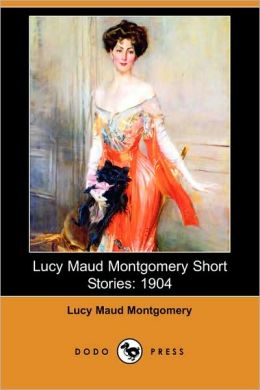
L.M. Montgomery Short Stories 1904
L.M. Montgomery Short Stories, 1904. L.M. Montgomery. Dodo Press. 144 pages.
This is the third L.M. Montgomery short story collection I've read and reviewed this month. (The first covering 1896-1901; the second covering 1902-1903.) This collection features eighteen short stories: "A Fortunate Mistake," "An Unpremeditated Ceremony," "At the Bay Shore Farm," "Elizabeth's Child," "Freda's Adopted Grave," "How Don Was Saved," "Miss Madeline's Proposal," "Miss Sally's Company," "Mrs. March's Revenge," "Nan," "Natty of Blue Point," "Penelope's Party Waist," "The Girl and the Wild Race," "The Promise of Lucy Ellen," "The Pursuit of the Ideal," "The Softening of Miss Cynthia," "Them Notorious Pigs," and "Why Not Ask Miss Price?"
It is always interesting to read her short stories. I noticed in this collection in particular that there were several ideas or themes that were later developed more fully and used in several of her novels. For example, "The Promise of Lucy Ellen," reminded me of the West sisters in Rainbow Valley. And "Miss Sally's Company" reminded me of Miss Lavendar from Anne of Avonlea.
The story I loved MOST of all is "Them Notorious Pigs." Here is how it begins:
I also LOVED The Girl and the Wild Race. Mrs. Theodora Whitney desperately wants Judith to get married. (She is twenty-seven after all.) Mrs. Whitney feels that Eben King would be the perfect match for Judith. He is her choice for Judith. But Eben King is NOT Judith's ideal. Judith thinks Bruce Marshall is her "right one." When Judith overhears her aunt talking to a notorious gossiper about how horribly contrary she is and how she's unlikely to ever marry...she reacts.
© 2013 Becky Laney of Becky's Book Reviews
This is the third L.M. Montgomery short story collection I've read and reviewed this month. (The first covering 1896-1901; the second covering 1902-1903.) This collection features eighteen short stories: "A Fortunate Mistake," "An Unpremeditated Ceremony," "At the Bay Shore Farm," "Elizabeth's Child," "Freda's Adopted Grave," "How Don Was Saved," "Miss Madeline's Proposal," "Miss Sally's Company," "Mrs. March's Revenge," "Nan," "Natty of Blue Point," "Penelope's Party Waist," "The Girl and the Wild Race," "The Promise of Lucy Ellen," "The Pursuit of the Ideal," "The Softening of Miss Cynthia," "Them Notorious Pigs," and "Why Not Ask Miss Price?"
It is always interesting to read her short stories. I noticed in this collection in particular that there were several ideas or themes that were later developed more fully and used in several of her novels. For example, "The Promise of Lucy Ellen," reminded me of the West sisters in Rainbow Valley. And "Miss Sally's Company" reminded me of Miss Lavendar from Anne of Avonlea.
The story I loved MOST of all is "Them Notorious Pigs." Here is how it begins:
John Harrington was a woman-hater, or thought that he was, which amounts to the same thing. He was forty-five and, having been handsome in his youth, was a fine-looking man still. He had a remarkably good farm and was a remarkably good farmer. He also had a garden which was the pride and delight of his heart or, at least, it was before Mrs. Hayden's pigs got into it.Mrs. Hayden is a widow raising two young children and struggling to keep up with her new farm. After the pigs get into Mr. Harrington's garden one too many times...he loses it...
Harrington had never seen his neighbour at close quarters before. Now he could not help seeing that she was a very pretty little woman, with wistful, dark blue eyes and an appealing expression. Mary Hayden had been next to a beauty in her girlhood, and she had a good deal of her bloom left yet, although hard work and worry were doing their best to rob her of it. But John Harrington was an angry man and did not care whether the woman in question was pretty or not. Her pigs had rooted up his garden—that fact filled his mind.Something changed after their meeting...Mr. Harrington finds himself wishing that those pigs would get in again...because he would LOVE to see her again...
"Mrs. Hayden, those pigs of yours have been in my garden again. I simply can't put up with this any longer. Why in the name of reason don't you look after your animals better? If I find them in again I'll set my dog on them, I give you fair warning."
A faint colour had crept into Mary Hayden's soft, milky-white cheeks during this tirade, and her voice trembled as she said, "I'm very sorry, Mr. Harrington. I suppose Bobbles forgot to shut the gate of their pen again this morning. He is so forgetful."
"I'd lengthen his memory, then, if I were you," returned Harrington grimly, supposing that Bobbles was the hired man. "I'm not going to have my garden ruined just because he happens to be forgetful. I am speaking my mind plainly, madam. If you can't keep your stock from being a nuisance to other people you ought not to try to run a farm at all."
Then did Mrs. Hayden sit down upon the doorstep and burst into tears. Harrington felt, as Sarah King would have expressed it, "every which way at once." Here was a nice mess! What a nuisance women were—worse than the pigs!
"Oh, don't cry, Mrs. Hayden," he said awkwardly. "I didn't mean—well, I suppose I spoke too strongly. Of course I know you didn't mean to let the pigs in. There, do stop crying! I beg your pardon if I've hurt your feelings."
"Oh, it isn't that," sobbed Mrs. Hayden, wiping away her tears. "It's only—I've tried so hard—and everything seems to go wrong. I make such mistakes. As for your garden, sir. I'll pay for the damage my pigs have done if you'll let me know what it comes to."
She sobbed again and caught her breath like a grieved child. Harrington felt like a brute. He had a queer notion that if he put his arm around her and told her not to worry over things women were not created to attend to he would be expressing his feelings better than in any other way. But of course he couldn't do that. Instead, he muttered that the damage didn't amount to much after all, and he hoped she wouldn't mind what he said, and then he got himself away and strode through the orchard like a man in a desperate hurry.
I also LOVED The Girl and the Wild Race. Mrs. Theodora Whitney desperately wants Judith to get married. (She is twenty-seven after all.) Mrs. Whitney feels that Eben King would be the perfect match for Judith. He is her choice for Judith. But Eben King is NOT Judith's ideal. Judith thinks Bruce Marshall is her "right one." When Judith overhears her aunt talking to a notorious gossiper about how horribly contrary she is and how she's unlikely to ever marry...she reacts.
"I will," repeated Judith stormily. "I'm tired of being nagged day in and day out. I'll marry—and what is more I'll marry the very first man that asks me—that I will, if it is old Widower Delane himself! How does that suit you, Aunt Theodora?"Which suitor will arrive first when he hears the news of Judith's bold declaration? It WILL lead to quite a race!
Mrs. Theodora's mental processes were never slow. She dropped her knitting ball and stooped for it. In that time she had decided what to do. She knew that Judith would stick to her word, Stewart-like, and she must trim her sails to catch this new wind.
"It suits me real well, Judith," she said calmly, "you can marry the first man that asks you and I'll say no word to hinder."
The color went out of Judith's face, leaving it pale as ashes. Her hasty assertion had no sooner been uttered than it was repented of, but she must stand by it now. She went out of the kitchen without another glance at her aunt or the delighted Mrs. Tony and dashed up the stairs to her own little room which looked out over the whole of Ramble Valley. It was warm with the March sunshine and the leafless boughs of the creeper that covered the end of the house were tapping a gay tattoo on the window panes to the music of the wind.
© 2013 Becky Laney of Becky's Book Reviews
Thursday, August 18, 2011
The Phoenix and the Carpet (MG)
The Phoenix and the Carpet. E. Nesbit. 1904. 224 pages.
It began with the day when it was almost the Fifth of November, and a doubt arose in some breast--Robert's, I fancy--as to the quality of the fireworks laid in for the Guy Fawkes celebration.
I first read The Phoenix and the Carpet last June, but completing the trilogy last week really made me want to revisit them all. I just love and adore the fantasy world created by E. Nesbit! All three of the novels are magical. The children meet several magical creatures (the Psammead, the Phoenix) and find several magical objects (the Carpet, the Charm).
The children--Cyril, Robert, Anthea, Jane, and Lamb--can be naughty. Not so much Lamb. But the other four, well, they can be TROUBLE.
So how do they meet the Phoenix? How do they get a magic carpet? Well, it all starts when the children decide that it would be a very good idea, a very fun idea, to try out their fireworks--to make sure they work properly--INSIDE the house, inside the nursery to be precise. And when one of the fireworks seems to not be lighting, one of the children pours paraffin on it while another lights it again. While the results are not horribly tragic, the nursery must be repainted/repaired, and a new carpet is a must. The carpet that replaces the old is magical, of course. And inside this roll of carpet is an egg. But not an ordinary egg. Though of course, they don't know that until it accidentally falls into the fire in their nursery. And the Phoenix emerges....
And thus the adventures begin. The Psammead is not completely absent from this second adventure, though the children themselves never ask him directly (face-to-face) for wishes. Still, the Phoenix makes good use of him...because truth be told...the children need to be rescued more than once!!!
There were many things I loved about this one. I loved the trouble that comes about when the wishing carpet makes its own wish--and brings back one-hundred and ninety-nine Persian cats. Of course, that is only the start of that particular mishap...
I also LOVED Lamb's scenes in this novel. In particular when this little one crawled onto the wishing carpet and started babbling. The carpet, of course, understands all languages--even baby ones--and Lamb and the carpet vanish. This puzzles the children, how will they get their baby brother back?! How can they ever explain to their mom what happened?! I won't tell you how this one resolves, but I just loved it!
I loved this one. I don't know that I love it any more than I do Five Children and It. I just know that I love E. Nesbit. I love her narrative style. I love her descriptions. And I am so very thankful I've discovered her! And I'm looking forward to reading more of her books.
Favorite passages:
© 2011 Becky Laney of Becky's Book Reviews
It began with the day when it was almost the Fifth of November, and a doubt arose in some breast--Robert's, I fancy--as to the quality of the fireworks laid in for the Guy Fawkes celebration.
I first read The Phoenix and the Carpet last June, but completing the trilogy last week really made me want to revisit them all. I just love and adore the fantasy world created by E. Nesbit! All three of the novels are magical. The children meet several magical creatures (the Psammead, the Phoenix) and find several magical objects (the Carpet, the Charm).
The children--Cyril, Robert, Anthea, Jane, and Lamb--can be naughty. Not so much Lamb. But the other four, well, they can be TROUBLE.
So how do they meet the Phoenix? How do they get a magic carpet? Well, it all starts when the children decide that it would be a very good idea, a very fun idea, to try out their fireworks--to make sure they work properly--INSIDE the house, inside the nursery to be precise. And when one of the fireworks seems to not be lighting, one of the children pours paraffin on it while another lights it again. While the results are not horribly tragic, the nursery must be repainted/repaired, and a new carpet is a must. The carpet that replaces the old is magical, of course. And inside this roll of carpet is an egg. But not an ordinary egg. Though of course, they don't know that until it accidentally falls into the fire in their nursery. And the Phoenix emerges....
And thus the adventures begin. The Psammead is not completely absent from this second adventure, though the children themselves never ask him directly (face-to-face) for wishes. Still, the Phoenix makes good use of him...because truth be told...the children need to be rescued more than once!!!
There were many things I loved about this one. I loved the trouble that comes about when the wishing carpet makes its own wish--and brings back one-hundred and ninety-nine Persian cats. Of course, that is only the start of that particular mishap...
I also LOVED Lamb's scenes in this novel. In particular when this little one crawled onto the wishing carpet and started babbling. The carpet, of course, understands all languages--even baby ones--and Lamb and the carpet vanish. This puzzles the children, how will they get their baby brother back?! How can they ever explain to their mom what happened?! I won't tell you how this one resolves, but I just loved it!
I loved this one. I don't know that I love it any more than I do Five Children and It. I just know that I love E. Nesbit. I love her narrative style. I love her descriptions. And I am so very thankful I've discovered her! And I'm looking forward to reading more of her books.
Favorite passages:
You can always keep the Lamb good and happy for quite a long time if you play the Noah's Ark game with him. It is quite simple. He just sits on your lap and tells you what animal he is, and then you say the poetry piece about whatever animal he chooses to be. Of course, some of the animals, like the zebra and the tiger, haven't got any poetry, because they are so difficult to rhyme to. The Lamb knows quite well which are the poetry animals. (34)
On this particular Sunday there were fowls for dinner, a kind of food that is generally kept for birthdays and grand occasions, and there was an angel pudding, when rice and milk and orange and white icing do their best to make you happy. (52)
Mother was really a great dear. She was pretty and she was loving, and most frightfully good when you were ill, and always kind, and almost always just. That is, she was just when she understood things. But of course she did not always understand things. No one understands everything, and mothers are not angels, though a good many of them come pretty near it. The children knew that mother always wanted to do what was best for them, even if she was not clever enough to know exactly what was the best. (73)
When people have hurt other people by accident, the one who does the hurting is always much the angriest. I wonder why. (102)
"I wish we could find the Phoenix," said Jane. "It's much better company than the carpet."
"Beastly ungrateful, little kids are," said Cyril.
"No. I'm not; only the carpet never says anything, and it's so helpless. It doesn't seem able to take care of itself. It gets sold, and taken into the sea, and things like that. You wouldn't catch the Phoenix getting sold."
It was two days after the bazaar. Everyone was a little cross--some days are like that, usually Mondays, by the way. And this was a Monday. (117)
© 2011 Becky Laney of Becky's Book Reviews
Labels:
1904,
children's classic,
J Adventure,
J Fantasy,
J Fiction,
library book
Tuesday, June 08, 2010
The Phoenix and the Carpet
The Phoenix and the Carpet. E. Nesbit. 1904. 224 pages.
It began with the day when it was almost the Fifth of November, and a doubt arose in some breast--Robert's, I fancy--as to the quality of the fireworks laid in for the Guy Fawkes celebration.
The Phoenix and the Carpet is the sequel to Five Children and It. It stars Robert, Anthea, Jane, Cyril, and Lamb. (Though Lamb isn't a big star in the novel, he does manage to steal a few scenes in this one!) If you thought the magical adventures for these children were over--now that they've returned to the city and are far from their Psammead--you'd be wrong. (The Psammead is the "It" from the previous book.) For the delightful-sometimes-dangerous adventures are just beginning. After an "accident" in the nursery ruins the carpet, the carpet is replaced with a magical one. And this magical carpet holds another secret--for within it was an egg. Not just an ordinary egg. No, the Phoenix hatches from this egg--once another "accident" lands it in the nursery fireplace. The children now have THE Phoenix and a magic carpet--so you see the adventures are just beginning. Do you think these children are any wiser this time around? Do you think their wishes will lead them into trouble? Or into trouble that they can't think themselves out of?
Some of my favorite passages:
On this particular Sunday there were fowls for dinner, a kind of food that is generally kept for birthdays and grand occasions, and there was an angel pudding, when rice and milk and orange and white icing do their best to make you happy. (52)and
Mother was really a great dear. She was pretty and she was loving, and most frightfully good when you were ill, and always kind, and almost always just. That is, she was just when she understood things. But of course she did not always understand things. No one understands everything, and mothers are not angels, though a good many of them come pretty near it. The children knew that mother always wanted to do what was best for them, even if she was not clever enough to know exactly what was the best. (73)There were many things I loved about this one. I loved the trouble that comes about when the wishing carpet makes its own wish--and brings back one-hundred and ninety-nine Persian cats. Of course, that is only the start of that particular mishap...
I also LOVED Lamb's scenes in this novel. In particular when this little one crawled onto the wishing carpet and started babbling. The carpet, of course, understands all languages--even baby ones--and Lamb and the carpet vanish. This puzzles the children, how will they get their baby brother back?! How can they ever explain to their mom what happened?! I won't tell you how this one resolves, but I just loved it!
I loved this one. I don't know that I love it any more than I do Five Children and It. I just know that I love E. Nesbit. I love her narrative style. I love her descriptions. And I am so very thankful I've discovered her! And I'm looking forward to reading more of her books.
Have you read any Nesbit? Do you have a favorite book? Which do you think I should read next?
© Becky Laney of Becky's Book Reviews
Subscribe to:
Posts (Atom)