Showing posts with label Charles Dickens. Show all posts

Thursday, February 03, 2022

19. Our Mutual Friend


Our Mutual Friend. Charles Dickens. 1865. 801 pages. [Source: Bought]

I first read this one in 2011. I don't know why it took me over a decade to reread this one. Since I found it so hard to summarize the first time, I am reposting my initial review. (The plot didn't change after all).

My thoughts, well, they stayed just as enthusiastic or gushy. I still love, love, love this one. This is still my favorite Dickens novel.

First sentence: IN THESE TIMES of ours, though concerning the exact year there is no need to be precise, a boat of dirty and disreputable appearance, with two figures in it, floated on the Thames, between Southwark bridge which is of iron, and London Bridge which is of stone, as an autumn evening was closing in.

How does one begin to describe a novel that is 800 pages long?! A novel that doesn't have one or two main characters--but many. A novel that doesn't have one or two main stories--but many. If you're not familiar with Charles Dickens, you should know that he has his own way of storytelling. His stories and characters unfold slowly but surely. Don't expect to meet all the main characters in the first hundred pages. Or even the first two hundred pages. Dickens won't be rushed. This is something that I have come to appreciate--though other readers may struggle with his pacing. I found it delightful; something to be savored.

Since I have to start somewhere, perhaps I should start with the corpse. Lizzie Hexam and her father, Jesse "Gaffer" Hexam discover a dead body during their night's work on the Thames. Her father's former business partner, Roger Riderhood, witnesses this discovery and later has some unflattering stories to spread to any willing to listen. (Stories that threaten Lizzie Hexam and her brother, Charley.) The body was soon identified as John Harmon--there were clothes and papers identifying him, I think. His death brings changes to several households. For his intended, Miss Bella Wilfer, it ushers in pitifully insincere mourning. She mourns--but for the riches she would have had if they'd married and he'd inherited his father's estate. But the household that changes the most is that of the Boffins. For Mr. and Mrs. Boffin will inherit the Harmon estate now that the heir is dead. Will money prove friend or foe to this lovely couple? One thing we learn early on, is that Mr. Boffin has a heart of gold--for he opens his heart and home to Miss Bella Wilfer. He also hires two men--two very different men--after he comes into his money: Silas Wegg, a man he hired to read to him, and John Rokesmith, a man he hired as his secretary. Is either man who he appears to be?

What did I love best about this one? The characters? I loved Bella Wilfer, John Rokesmith, Mr. and Mrs. Boffin, Melvin Tremlow, Jenny Wren, Mr. Riah, and Lizzie Hexam. And there were characters that I didn't exactly love--they weren't that lovable, after all--but their scenes were enjoyable nevertheless. The Podsnaps. The Veneerings. The Lammles. The Wilfers. Mr. Fledgeby. Mr. Lightwood and Mr. Wrayburn. Some characters added drama; some characters added humor!

Dickens did a great job with his characters. You'll find characters that you'll absolutely love and adore. You'll find characters that are so enjoyable, so fun, to spend time with. You'll find characters that make you laugh--or at least smirk. You might find a few characters that you love to hate, or hate to love. You'll find characters that are just so despicable, so nasty, so horrid that you hate them--with a passion. There might even be a few that drive you crazy! But I hope that you'll find a few characters that genuinely surprise you! I know a few surprised me! There are so many characters. Some are very important to the plot. Others are very minor. But just because they're minor doesn't mean they're pointless. I loved the romances of Bella and Lizzie. 

 The scenes with Bella and her true love made me giddy! And while Lizzie's scenes were a different nature--a bit more melancholy--they were so heartfelt. But it isn't just a romance. There is action, drama, mystery. There are secrets and lies and malicious plotting.


I loved this one. I loved the writing, the descriptions, the characterizations, the storytelling. It's a great, great book.
"Never was an obstinate person yet, who would own to the word!" remarked Miss Potterson, rubbing her vexed nose; "I'm sure I would if I was obstinate; but I am a pepperer, which is different." (74)
"No one is useless in this world," retorted the Secretary, "who lightens the burden of it for any one else."
"But I assure you I don't, Mr. Rokesmith," said Bella, half-crying.
"Not for your father?"
"Dear, loving, self-forgetting, easily-satisfied Pa! Oh, yes! He thinks so."
"It is enough if he only thinks so," said the Secretary. (511-12)

 I don't have a page number for these two, but:

He was too tired to rest in his sleep, until he was even tired out of being too tired, and dropped into oblivion.

People are always calling other people something.


© 2022 Becky Laney of Becky's Book Reviews

Tuesday, December 28, 2021

153. A Christmas Carol


A Christmas Carol. Charles Dickens. 1843. 96 pages. [Source: Bought]

First sentence: MARLEY WAS DEAD, to begin with. There is no doubt whatever about that.

Premise/plot:  Who isn't familiar with the story of Scrooge?! Still, I suppose *something* must be said. Scrooge HATES Christmas. Hate is too soft a word really for the rage he feels when he thinks about the holiday. For Scrooge hating comes as naturally as breathing. He loves no one or no thing--nothing except money and making a profit. But what is driving his obsession with money? what is driving him to live as he does--to make the choices he does? Could there be a secret or two in his past that holds the answers to these questions? Can Scrooge be saved from his own worst enemy--himself?

If Scrooge is to be saved--can he be saved?!--it will take some supernatural intervention. For Scrooge won't be saving himself. For one thing, Scrooge does not see his own need to be saved. Saved from what exactly?!?! Saved from success?! As far as Scrooge is concerned, everything in his life is just as it should be. He in need of help? he in need of saving? Don't be ridiculous.

He will be visited by four ghosts--the first ghost being Marley, his dead business partner of old. The other three ghosts being Christmas spirits past, present, and future. Can these spirits open Scrooge's eyes? Will he start to see--will he start to judge--life differently?

My thoughts: A Christmas Carol is a familiar story--much like the gospels. Is it too familiar a story to pack a punch or two? It doesn't have to be. The truth is--like it or not--we are more like Scrooge than we want to admit. We may not hate Christmas. We may not be super-obsessed with money. We may even consider ourselves good, charitable people. But the truth is that we are all sinners; perhaps I should amend that to we are sinners one and all. At best we can say our pet sins differ from his. All of us need a ghostly encounter to reconcile us with ourselves, the world, and God. I would point out, however, that we need a Holy Ghost encounter, and not one from Marley and the three ghosts of Christmas past, present, and future.

In the first stave, readers are introduced to Scrooge's world. We see him at work and at home. We are witnesses to Scrooge's interactions. Dickens does plenty of telling, but he also does plenty of showing. At the close of Christmas Eve, Scrooge is visited by the ghost of his business partner, Marley. Scrooge is warned of his future fate and promised three spiritual visitors. In the second stave, Scrooge is visited by the first spirit, that of Christmas past. In the third stave, Scrooge is visited by the second spirit, that of Christmas present. In the fourth stave, Scrooge is visited by the third spirit, that of Christmas future. In the fifth stave, it is Christmas morning. Readers are reintroduced to Scrooge; once again, we see him going about his business. Has his outlook on life changed? Is Scrooge a new man?

When I first read A Christmas Carol, I was less than impressed with this "Christ-less" Christmas story. I still loved the Muppet Christmas Carol; I still loved the idea of loving this one. But I found grace to be missing; here was Scrooge a brand new man with a brand new outlook, but no profession or confession of belief or trust in the one true God. The message was not Jesus paid it all; all to him I owe. The emphasis was not that Christ was sufficient--that Scrooge's only hope in life or death was Christ alone. The emphasis seemed to be on outward change, on works. On reflection this time around, I see A Christmas Carol more like the letter of James than any of the four gospels. In spiritual terms, what we're dealing with is not justification--how to be made right with God, how to be saved--but sanctification--how to live life rightly.

My tip for reading A Christmas Carol: try to read it as if for the first time.

 Favorite quotes:

  • Old Marley was as dead as a door-nail. Mind! I don’t mean to say that I know, of my own knowledge, what there is particularly dead about a door-nail. I might have been inclined, myself, to regard a coffin-nail as the deadest piece of ironmongery in the trade. But the wisdom of our ancestors is in the simile; and my unhallowed hands shall not disturb it, or the Country’s done for.
  • There is no doubt that Marley was dead. This must be distinctly understood, or nothing wonderful can come of the story I am going to relate. If we were not perfectly convinced that Hamlet’s father died before the play began, there would be nothing more remarkable in his taking a stroll at night, in an easterly wind, upon his own ramparts, than there would be in any other middle-aged gentleman rashly turning out after dark in a breezy spot—say Saint Paul’s Churchyard for instance—literally to astonish his son’s weak mind.
  • Oh! but he was a tight-fisted hand at the grindstone, Scrooge! a squeezing, wrenching, grasping, scraping, clutching, covetous old sinner! Hard and sharp as flint, from which no steel had ever struck out generous fire, secret, and self-contained, and solitary as an oyster.
  • He carried his own low temperature always about with him; he iced his office in the dog-days; and didn’t thaw it one degree at Christmas.
  • No wind that blew was bitterer than he, no falling snow was more intent upon its purpose, no pelting rain less open to entreaty. Foul weather didn’t know where to have him. The heaviest rain, and snow, and hail, and sleet, could boast of the advantage over him in only one respect. They often “came down” handsomely, and Scrooge never did.
  • Even the blind men’s dogs appeared to know him; and, when they saw him coming on, would tug their owners into doorways, and up courts, and then would wag their tails as though they said, “No eye at all is better than an evil eye, dark master!”
  • Once upon a time—of all the good days in the year, on Christmas Eve—old Scrooge sat busy in his counting-house.
  • Scrooge had a very small fire, but the clerk’s fire was so very much smaller that it looked like one coal. But he couldn’t replenish it, for Scrooge kept the coal-box in his own room; and so surely as the clerk came in with the shovel, the master predicted that it would be necessary for them to part.
  • “I do,” said Scrooge. “Merry Christmas! What right have you to be merry? What reason have you to be merry? You’re poor enough.” “Come, then,” returned the nephew gaily. “What right have you to be dismal? What reason have you to be morose? You’re rich enough.”
  • “Nephew!” returned the uncle sternly, “keep Christmas in your own way, and let me keep it in mine.” “Keep it!” repeated Scrooge’s nephew. “But you don’t keep it.” “Let me leave it alone, then,” said Scrooge. “Much good may it do you! Much good it has ever done you!”
  • “It’s enough for a man to understand his own business, and not to interfere with other people’s. Mine occupies me constantly. Good afternoon, gentlemen!”
  • Darkness is cheap, and Scrooge liked it.
  • “At this time of the rolling year,” the specter said, “I suffer most. Why did I walk through crowds of fellow-beings with my eyes turned down, and never raise them to that blessed Star which led the Wise Men to a poor abode? Were there no poor homes to which its light would have conducted me?”
  • The more he thought, the more perplexed he was; and the more he endeavored not to think, the more he thought.
  • The curtains of his bed were drawn aside, I tell you, by a hand. Not the curtains at his feet, nor the curtains at his back, but those to which his face was addressed. The curtains of his bed were drawn aside; and Scrooge, starting up into a half-recumbent attitude, found himself face to face with the unearthly visitor who drew them: as close to it as I am now to you, and I am standing in the spirit at your elbow.
  • “I am the Ghost of Christmas Past.” “Long Past?” inquired Scrooge, observant of its dwarfish stature. “No. Your past.”
  • “The school is not quite deserted,” said the Ghost. “A solitary child, neglected by his friends, is left there still.” Scrooge said he knew it. And he sobbed.
  • Now, being prepared for almost anything, he was not by any means prepared for nothing;
  • it is always the person not in the predicament who knows what ought to have been done in it, and would unquestionably have done it too.
  • “Forgive me if I am wrong. It has been done in your name, or at least in that of your family,” said Scrooge. “There are some upon this earth of yours,” returned the Spirit, “who claim to know us, and who do their deeds of passion, pride, ill will, hatred, envy, bigotry, and selfishness in our name, who are as strange to us, and all our kith and kin, as if they had never lived. Remember that, and charge their doings on themselves, not us.”
  • It is a fair, even-handed, noble adjustment of things, that, while there is infection in disease and sorrow, there is nothing in the world so irresistibly contagious as laughter and good humor.
  • “Ghost of the Future!” he exclaimed. “I fear you more than any specter I have seen. But as I know your purpose is to do me good, and as I hope to live to be another man from what I was, I am prepared to bear you company, and do it with a thankful heart. Will you not speak to me?”
  • “I will honor Christmas in my heart, and try to keep it all the year. I will live in the Past, Present, and the Future.
  • YES! AND THE bedpost was his own. The bed was his own, the room was his own. Best and happiest of all, the Time before him was his own, to make amends in! “I will live in the Past, the Present, and the Future!” Scrooge repeated, as he scrambled out of bed. “The Spirits of all Three shall strive within me. O Jacob Marley! Heaven and the Christmas-time be praised for this! I say it on my knees, old Jacob, on my knees!”
  • Scrooge was better than his word. He did it all, and infinitely more; and to Tiny Tim, who did NOT die, he was a second father. He became as good a friend, as good a master, and as good a man as the good old City knew, or any other good old city, town, or borough in the good old world. 
  • May that be truly said of us, and all of us! And so, as Tiny Tim observed, God bless Us, Every One! THE END                       


© 2021 Becky Laney of Becky's Book Reviews

Tuesday, March 16, 2021

26. A Tale of Two Cities


A Tale of Two Cities. Charles Dickens. 1859. 446 pages. [Source: Review copy]

First sentence: It was the best of times, it was the worst of times, it was the age of wisdom, it was the age of foolishness, it was the spring of hope, it was the winter of despair, we had everything before us, we had nothing before us, we were all going direct to Heaven, we were all going direct the other way.

Premise/plot: A Tale of Two Cities is very much a novel of love and sacrifice. But would the sacrifice be necessary if bitterness, rage, anger, hatred, despair, and a thirst for vengeance didn't abound? A Tale of Two Cities begins and ends in France. And not a happy period in French history, one of the darkest perhaps. Charles Darnay, our hero, escapes France once, but, he may not escape it a second time. Same can be said of our heroine, Lucie Manette, and her father, Dr. Alexandre Manette. So why do they return to France and risk it all--knowing the country is uneasy, unsafe, topsy-turvy? Well, duty, honor, and nobleness? Of course it is their very nobleness--one understanding of the word--that leads to everyone wanting them to die.

So the very basics for those not in the know: Lucie Manette loves Charles Darnay; the two are married and have a daughter. They both adore her father who has had a very rough time of it--physically, mentally, emotionally. Lucie Manette is beautiful (of course) and practically perfect in every way (of course). So Charles Darnay is not the only one who is head over heels in love with her. He is the one who has her heart, body, soul. Mr. Sydney Carton was also head over heels in love with her; he loves her still.

The trouble begins when Charles Darnay receives a letter from France and decides to return there to see if he can help. His family follows after him risking all.

My thoughts: I found A Tale of Two Cities to make little sense. Hold on before you start hating on me, perhaps this is intentional. France is a chaotic mess; an upheaval in progress; everything right is now wrong and everything wrong is now right. It is almost as if logic and common sense and decency has been thrown out altogether. The characters--particularly the French ones--seem to be corrupted thoroughly. There is little room for kindness, compassion, the benefit of the doubt. It is like the masses have been given permission to run wild: to be violent, to seek vengeance, to let all the rage out; punishments don't fit the crime--not here, now now. A Tale of Two Cities reflects how HORRIBLE mob mentality is. Violence and mob-rule never lead to lasting peace and justice. In their quest for "justice" all the mob could do was injustice. There is nothing just about any of the mob's actions.


Perhaps fear of sympathizing with those on the wrong side of the mob led to little kindness, sympathy, empathy, compassion, or speaking out for truth and justice. The mob could turn on you; you could be next if you spoke out in defense of the "guilty."

Regardless, I found A Tale of Two Cities to be senseless. But I think it's an intentional senseless that reflects the time. There are no good answers for WHY.

It is in contrast to all this CHAOTIC evil that Sydney Carton enters the picture. 

It is a far, far better thing that I do, than I have ever done; it is a far, far better rest that I go to than I have ever known.
I do appreciate this one more the second time. I found it a brutal read the first time.

Favorite quote: 

A wonderful fact to reflect upon, that every human creature is constituted to be that profound secret and mystery to every other. (11)


© 2021 Becky Laney of Becky's Book Reviews

Thursday, December 24, 2020

155. A Christmas Carol Murder


A Christmas Carol Murder (A Dickens of a Crime #3) Heather Redmond. 2020. 320 pages. [Source: Review copy]

First sentence: They hadn’t found the body yet. Old Sal was surely dead. Feathers had caught on candles, igniting the blaze. Maybe a yipping dog had some part in the fiery disaster. The marchioness’s advanced age had surely contributed to the fatal misadventure.

Premise/plot: A Christmas Carol Murder is the third book in Heather Redmond's mystery series starring Charles Dickens as an amateur detective. This one opens in December 1835; Dickens is engaged to be married but not yet married. Soon after the novel opens, a baby is thrust into Dickens' arms--the woman is claiming that the babe is Charles' son. The mother (the woman's sister) is dead--or so it's thought--in a recent fire. Dickens feels sorry for the poor looking baby who'll surely starve without some intervention and care. So Timothy, the baby, is taken back to London and given to some of Dickens' friends. (Characters from earlier books, I'm presuming.) A few days later--or maybe just the next day--Dickens is out Christmas caroling with his friends--including his fiancee--when a DEAD BODY falls from an upstairs window. Thus the caroling gang meets Emmanuel Screws and household. Screws and the dead man--a Mr. Harley--were business partners. Catherine, Charles' fiancee, feels that Mr. Screws though a bit cranky--okay a LOT cranky--is no murderer. Can Dickens solve the murder before another occurs???

My thoughts: I knew this was part of a series, but, I didn't realize it was the third. (The previous books are A Tale of Two Murders and Grave Expectations.) I liked it. I did. I know that I'm missing out on some of the characterization by starting with the third book. But it was easy enough to follow *this* story and focus on this mystery. Dickens is 'Boz' at this point--he's writing and publishing sketches of London life. He has not begun writing (proper) novels just yet. He's also a parliamentary reporter/journalist in this one. I know little enough about this period in Dickens' life so I'm not sure how historically accurate the books may be. (I'm assuming/presuming that a lot of liberties are being taken even if real names are used. I'm relatively sure his wife, for example, didn't get special thrills from coming across dead bodies and working up murder cases.)


© 2020 Becky Laney of Becky's Book Reviews

Tuesday, December 01, 2020

148. David Copperfield


David Copperfield. Charles Dickens. 1850. 882 pages. [Source: Bought]

First sentence: I AM BORN Whether I shall turn out to be the hero of my own life, or whether that station will be held by anybody else, these pages must show. To begin my life with the beginning of my life, I record that I was born (as I have been informed and believe) on a Friday, at twelve o’clock at night.

Premise/plot: David Copperfield is a fictional autobiography of a novelist, David Copperfield. That's the most succinct way to describe the novel. The novel itself is a bit lengthy and not at all concise. It tells of the many adventures and misadventures of his life from birth through old age. And there are plenty of close calls--well, not life-or-death close calls--but moments where he is surely outsmarted, outwitted, fooled, tricked, manipulated. In other words, the character is a bit of a dunce when it comes to having common sense. David's choices don't always make the best sense to readers--or in some cases any sense. But despite his limitations David is a charming enough hero. 

Relationships are key to the novel. It isn't so much that many, many things happen--in an action-packed way--but relationships develop, grow, change, deteriorate or strengthen. If you don't care about David's relationships with others--then you might find yourself bored waiting for "something exciting" to happen. Now a few things DO happen. Namely concerning a few characters--Emily and her uncle; Uriah Heep and his schemes; Agnes' predicament with her father, to name a few.

My thoughts: I don't know that I fully appreciated David Copperfield the first time I read it. I haven't reread my review--yet--but I don't remember really loving it. I definitely loved it this second time. Not because I love, love, love the character of David Copperfield. But because I really came to care about a handful of the people he knows, loves, considers family. In many ways, the novel is about a person CHOOSING his family--and only one is truly his biologically speaking.

Dickens' characters are something. Even the ones I hated--loathed--felt fleshed out and well written. And there are some despicable characters in David Copperfield. (Namely Edward Murdstone, James Steerforth, Uriah Heep, etc.) His characters are memorable.

One thing continues to puzzle me: how David Copperfield could be so UTTERLY blind, stupid, stuck on James Steerforth. I mean there are WARNING SIGNS everywhere that this guy is bad news. That for better or worse he's not exactly honorable and worthy of trust and loyalty. But David seems so head over heels besotted with being bestie best best friends with him that he makes horribly bad choices over and over again just to stay near and stay close. When his villainy is revealed, David's response is WEIRD and WRONG: "What is natural in me, is natural in many other men, I infer, and so I am not afraid to write that I never had loved Steerforth better than when the ties that bound me to him were broken. In the keen distress of the discovery of his unworthiness, I thought more of all that was brilliant in him, I softened more towards all that was good in him, I believed that if I had been brought face to face with him, I could not have uttered one reproach. I should have loved him so well still—though he fascinated me no longer—I should have held in so much tenderness the memory of my affection for him, that I think I should have been as weak as a spirit-wounded child, in all but the entertainment of a thought that we could ever be re-united. What his remembrances of me were, I have never known—they were light enough, perhaps, and easily dismissed—but mine of him were as the remembrances of a cherished friend, who was dead."

 Quotes:

  • We made no more provision for growing older, than we did for growing younger.
  • “Barkis is willin’. That’s the message,” I readily undertook its transmission.
  • “But fashions are like human beings. They come in, nobody knows when, why, or how; and they go out, nobody knows when, why, or how. Everything is like life, in my opinion, if you look at it in that point of view.”
  • What is before you, is a fight with the world; and the sooner you begin it, the better.
  • He solemnly conjured me, I remember, to take warning by his fate; and to observe that if a man had twenty pounds a-year for his income, and spent nineteen pounds nineteen shillings and sixpence, he would be happy, but that if he spent twenty pounds one he would be miserable.
  • “I say,” returned Mr. Micawber, quite forgetting himself, and smiling again, “the miserable wretch you behold. My advice is, never do to-morrow what you can do to-day. Procrastination is the thief of time. Collar him!”
  •  Her first proceeding there was to unlock a tall press, bring out several bottles, and pour some of the contents of each into my mouth. I think they must have been taken out at random, for I am sure I tasted aniseed water, anchovy sauce, and salad dressing.
  • “Never,” said my aunt, “be mean in anything; never be false; never be cruel. Avoid those three vices, Trot, and I can always be hopeful of you.”
  • “How very nice!” exclaimed Miss Dartle. “What a comfort! Really conscientious? Then he’s not—but of course he can’t be, if he’s really conscientious. Well, I shall be quite happy in my opinion of him, from this time. You can’t think how it elevates him in my opinion, to know for certain that he’s really conscientious!”
  • “Really!” said Miss Dartle. “Well, I don’t know, now, when I have been better pleased than to hear that. It’s so consoling! It’s such a delight to know that, when they suffer, they don’t feel! Sometimes I have been quite uneasy for that sort of people; but now I shall just dismiss the idea of them, altogether. Live and learn. I had my doubts, I confess, but now they’re cleared up. I didn’t know, and now I do know, and that shows the advantage of asking—don’t it?”
  • “It’s in vain, Trot, to recall the past, unless it works some influence upon the present.
  • All was over in a moment. I had fulfilled my destiny. I was a captive and a slave. I loved Dora Spenlow to distraction! I was swallowed up in an abyss of love in an instant.
  •  I don’t remember who was there, except Dora. I have not the least idea what we had for dinner, besides Dora. My impression is, that I dined off Dora, entirely, and sent away half-a-dozen plates untouched.
  •  ‘My unchanged love is with my darling child, and I forgive her!’”
  • It was the first time it had ever occurred to me, that this detestable cant of false humility might have originated out of the Heep family. I had seen the harvest, but had never thought of the seed.
  • “I didn’t marry to be reasoned with. If you meant to reason with such a poor little thing as I am, you ought to have told me so, you cruel boy!”
  • As to the washerwoman pawning the clothes, and coming in a state of penitent intoxication to apologise, I suppose that might have happened several times to anybody.
  •  “Gentlemen,” returned Mr. Micawber, “do with me as you will! I am a straw upon the surface of the deep, and am tossed in all directions by the elephants—I beg your pardon; I should have said the elements.”
  • What is the matter, gentlemen? What is not the matter? Villainy is the matter; baseness is the matter; deception, fraud, conspiracy, are the matter; and the name of the whole atrocious mass is—HEEP!” “I’ll put my hand in no man’s hand,” said Mr. Micawber, gasping, puffing, and sobbing, to that degree that he was like a man fighting with cold water, “until I have—blown to fragments—the—a—detestable—serpent—HEEP!  I’ll partake of no one’s hospitality, until I have—a—moved Mount Vesuvius—to eruption—on—a—the abandoned rascal—HEEP!  Refreshment—a—underneath this roof—particularly punch—would—a—choke me—unless—I had—previously—choked the eyes—out of the head—a—of—interminable cheat, and liar—HEEP! I—a—I’ll know nobody—and—a—say nothing—and—a—live nowhere—until I have crushed—to—a—undiscoverable atoms—the—transcendent and immortal hypocrite and perjurer—HEEP!”
  • He is such an incarnate hypocrite, that whatever object he pursues, he must pursue crookedly.
  • Mr. Murdstone delivers public addresses sometimes, and it is said,—in short, sir, it is said by Mrs. Chillip,—that the darker tyrant he has lately been, the more ferocious is his doctrine.” “Mrs. Chillip does go so far as to say,” pursued the meekest of little men, much encouraged, “that what such people miscall their religion, is a vent for their bad-humours and arrogance. And do you know I must say, sir,” “that I don’t find authority for Mr. and Miss Murdstone in the New Testament?” “I never found it either,” said I.
  • Whatever betides, whatever new ties you may form, whatever changes may come between us, I shall always look to you, and love you, as I do now, and have always done. You will always be my solace and resource, as you have always been. Until I die, my dearest sister, I shall see you always before me, pointing upward!”

© 2020 Becky Laney of Becky's Book Reviews

Thursday, January 30, 2020

19. The Pickwick Papers

The Pickwick Papers. Charles Dickens. 1837. 801 pages. [Source: Bought] [Classics; Adult fiction; Travel]

First sentence: THE FIRST RAY of light which illumines the gloom, and converts into a dazzling brilliancy that obscurity in which the earlier history of the public career of the immortal Pickwick would appear to be involved, is derived from the perusal of the following entry in the Transactions of the Pickwick Club, which the editor of these papers feels the highest pleasure in laying before his readers, as a proof of the careful attention, indefatigable assiduity, and nice discrimination, with which his search among the multifarious documents confided to him has been conducted.

Premise/plot: Samuel Pickwick, Tracy Tupman, Augustus Snodgrass, Nathaniel Winkle are the primary members of the Corresponding Society of the Pickwick Club. These fellows set off to have grand adventures (and some misadventures) as they travel throughout England; their goal is to be entertaining and share stories. Did they succeed?! Well. It depends on YOUR attention span and what YOU find funny.  (There's definitely some slapstick humor going on which doesn't necessarily translate well into print. But it isn't only of the slapstick sort. Far from it. At least one story has a gothic feel to it. Really there is something for everybody--if you're patient enough to read it all to find those enjoyable bits.)

I think one thing that would be unanimous is that Sam Weller (and his father to some extent) make this novel BETTER. 

There are snippets of plot lines. For example, the plot line of Pickwick getting sued by his (former) landlady. Or the plot line where his buddies go courting. But essentially the plot is very light. There are more characters introduced throughout this chunkster than actual plot lines. Which isn't necessarily a horrible thing--if you're patient and this is the only book within reach. Either/or.

My thoughts: I gave this one four stars the first time I read it. And according to that review, I did enjoy it and find it worth my time. This time around--the second time--I'm going to be generous and give it three stars. Yes, it's "lost" a star. But really considering how many times I was absolutely bored without a grin in sight versus the time I was entertained, three stars is generous. 

I will say this. What I enjoyed, I actually enjoyed. There were scenes that were fantastic. But as for the rest--it was meh at best. I do think the more I've read Dickens, the more I've come to expect from him.

Quotes: 
‘I am ruminating,’ said Mr. Pickwick, ‘on the strange mutability of human affairs.’
He had judged of his friend’s feelings by his own. 

‘Ah! poetry makes life what light and music do the stage — strip the one of the false embellishments, and the other of its illusions, and what is there real in either to live or care for?’
‘Ah! people need to rise early, to see the sun in all his splendour, for his brightness seldom lasts the day through. The morning of day and the morning of life are but too much alike.’ ‘You speak truly, sir,’ said Mr. Pickwick.
Mr. Pickwick ran to his assistance, but the faster Mr. Pickwick ran forward, the faster the horse ran backward.
‘I, sir,’ replied Mr. Pickwick, ‘am delighted to view any sports which may be safely indulged in, and in which the impotent effects of unskilful people do not endanger human life.’
‘It wasn’t the wine,’ murmured Mr. Snodgrass, in a broken voice. ‘It was the salmon.’ (Somehow or other, it never is the wine, in these cases.)
Every one has experienced that disagreeable state of mind, in which a sensation of bodily weariness in vain contends against an inability to sleep.
‘Mrs. Bardell,’ said Mr. Pickwick, at the expiration of a few minutes. ‘Sir,’ said Mrs. Bardell again. ‘Do you think it a much greater expense to keep two people, than to keep one?’ ‘That depends a good deal upon the person, you know, Mr. Pickwick; and whether it’s a saving and careful person, sir.’ ‘That’s very true,’ said Mr. Pickwick, ‘but the person I have in my eye (here he looked very hard at Mrs. Bardell) I think possesses these qualities; and has, moreover, a considerable knowledge of the world, and a great deal of sharpness, Mrs. Bardell, which may be of material use to me.’ ‘I do,’ said Mr. Pickwick, growing energetic, as was his wont in speaking of a subject which interested him— ‘I do, indeed; and to tell you the truth, Mrs. Bardell, I have made up my mind.’ ‘Dear me, sir,’exclaimed Mrs. Bardell. ‘Well,’ said Mr. Pickwick, ‘what do you think?’ ‘Oh, Mr. Pickwick,’ said Mrs. Bardell, trembling with agitation, ‘you’re very kind, sir.’ ‘It’ll save you a good deal of trouble, won’t it?’ said Mr. Pickwick. ‘Oh, I never thought anything of the trouble, sir,’ replied Mrs. Bardell; ‘and, of course, I should take more trouble to please you then, than ever; but it is so kind of you, Mr. Pickwick, to have so much consideration for my loneliness.’ ‘I cannot conceive,’ said Mr. Pickwick when his friend returned— ‘I cannot conceive what has been the matter with that woman. I had merely announced to her my intention of keeping a man-servant, when she fell into the extraordinary paroxysm in which you found her. Very extraordinary thing.’   
‘Hush. Don’t ask any questions. It’s always best on these occasions to do what the mob do.’ ‘But suppose there are two mobs?’ suggested Mr. Snodgrass. ‘Shout with the largest,’ replied Mr. Pickwick. Volumes could not have said more.
That statement, Sir, may be true, or it may be false; it may be credible, or it may be incredible; but, if it be true, and if it be credible, I do not hesitate to say, Sir, that our grounds of action, Sir, are strong, and not to be shaken.
Magnus is my name. It’s rather a good name, I think, sir.’ ‘A very good name, indeed,’ said Mr. Pickwick, wholly unable to repress a smile. There — Peter Magnus — sounds well, I think, sir.’ ‘Very,’ said Mr. Pickwick. ‘Curious circumstance about those initials, sir,’ said Mr. Magnus. ‘You will observe — P.M. — post meridian. In hasty notes to intimate acquaintance, I sometimes sign myself “Afternoon.” It amuses my friends very much, Mr. Pickwick.’
The more stairs Mr. Pickwick went down, the more stairs there seemed to be to descend, and again and again, when Mr. Pickwick got into some narrow passage, and began to congratulate himself on having gained the ground-floor, did another flight of stairs appear before his astonished eyes.
 words ran high, and voices higher;
  ‘There is no deception now, Mr. Weller. Tears,’ said Job, with a look of momentary slyness— ‘tears are not the only proofs of distress, nor the best ones.’ ‘No, they ain’t,’ replied Sam expressively. ‘They may be put on, Mr. Weller,’ said Job. ‘I know they may,’ said Sam; ‘some people, indeed, has ‘em always ready laid on, and can pull out the plug wenever they likes.’


© 2020 Becky Laney of Becky's Book Reviews

Friday, January 11, 2019

The Murder of Patience Brooke

The Murder of Patience Brooke. (Charles Dickens Investigations #1)  J.C. Briggs. 2018. Sapere Books. 290 pages. [Source: Review copy]

 First sentence: Thrown on the wide world, doom'd to wander and roam, Bereft of my parents, bereft of my home.

Premise/plot: The Murder of Patience Brooke is the first in a new mystery series starring Charles Dickens. Dickens is working with police detective, Sam Jones. The case is personal--the murder victim, Patience Brooke, lived at Urania Cottage, a sanctuary for fallen women that Charles Dickens helps support. Not that Patience Brooke was a fallen woman, she was a woman of many, many secrets but much learning.

This one is set in Victorian London in 1849. (When Charles Dickens IS NOT on the case following leads, he is at work on a new novel, David Copperfield.) 

My thoughts: I loved, loved, LOVED this one. J.C. Briggs does two things well in this one: world building and characterization.

The setting is wonderful--gritty but wonderful. It really showcases the plight of the poor--and seemingly invisible--and the plight of women. Dickens advocates for both. Briggs' Dickens advocates for both in this fictional novel, and Dickens' fiction speaks for itself in my opinion.

But the setting would not be enough to carry the story if it didn't feel peopled. Briggs does a FANTASTIC job with her characters. Not just with the main characters, Charles and Sam, but with ALL the characters. And yes, I do mean ALL. It doesn't matter if we spend a hundred pages with a character or just half a page--all feel fleshed out and human. Briggs had me caring.

I also have to say that I enjoyed the writing. That almost goes without saying since you can't have characterization without writing. But. It is worth mentioning. The story was well-paced and compelling. And compelling not because it was a plot-driven thriller--those have their place perhaps--but because you CARED about the characters and wanted to spend as much time with them as possible.


© 2019 Becky Laney of Becky's Book Reviews

Friday, December 07, 2018

A Christmas Carol

A Christmas Carol. Charles Dickens. 1843. 96 pages. [Source: Bought]

First sentence: MARLEY WAS DEAD, to begin with. There is no doubt whatever about that.

Premise/plot:  Who isn't familiar with the story of Scrooge?! Still, I suppose *something* must be said. Scrooge HATES Christmas. Hate is too soft a word really for the rage he feels when he thinks about the holiday. For Scrooge hating comes as naturally as breathing. He loves no one or no thing--nothing except money and making a profit. But what is driving his obsession with money? what is driving him to live as he does--to make the choices he does? Could there be a secret or two in his past that holds the answers to these questions? Can Scrooge be saved from his own worst enemy--himself?

If Scrooge is to be saved--can he be saved?!--it will take some supernatural intervention. For Scrooge won't be saving himself. For one thing, Scrooge does not see his own need to be saved. Saved from what exactly?!?! Saved from success?! As far as Scrooge is concerned, everything in his life is just as it should be. He in need of help? he in need of saving? Don't be ridiculous.

He will be visited by four ghosts--the first ghost being Marley, his dead business partner of old. The other three ghosts being Christmas spirits past, present, and future. Can these spirits open Scrooge's eyes? Will he start to see--will he start to judge--life differently?

My thoughts: I've read this one quite a few times. I've reviewed it a few times too. My favorite review of it can be found at Operation Actually Read Bible. In that review, I share my spiritual assessment of this Christmas story.

Quotes:
  • The more he thought, the more perplexed he was; and the more he endeavored not to think, the more he thought.
  • Now, being prepared for almost anything, he was not by any means prepared for nothing; 

© 2018 Becky Laney of Becky's Book Reviews

Wednesday, October 17, 2018

My Victorian Year #43

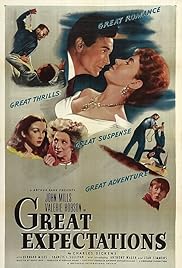
I am still reading Anthony Trollope's Small House at Allington. I will be sharing some quotes from the book. I have finished two books since the last Victorian Year post. The first is Sylvia's Lovers by Elizabeth Gaskell.  The second is Dracula by Bram Stoker. I've also watched an adaptation of Great Expectations (1946).

Great Expectations. 1946. Directed and adapted by David Lean. Starring John Mills, Valerie Hobson, Martita Hunt, Finlay Currie, Alec Guinness, Eileen Erskine, and Bernard Miles.

I feel I should first point out that this is the only adaptation of Great Expectations that I've seen. I have no other film with which to compare it. Is it faithful to the book? Somewhat. It does take liberties. With the ending it takes HUGE liberties. I'm not sure Estella is Estella enough--if that makes sense.

As I was watching it, Mom made the observation that Estella is in many ways similar to Scarlett O'Hara--in her selfish heartlessness. I don't know that Estella deserves a happily-ever-after ending. I would have more respect for Pip, perhaps, if he wasn't so head-over-heels with Estella and blind to her greatest faults. Oh, he knows she has faults. But he seems to ignore/dismiss them. Her insides don't match her outsides--and he seems okay with that, more than okay with that.

But when I really stop and consider Pip--is he a great judge of character in general? He is just as blind when it comes to Joe. The way Pip feels about Joe--the way he's ashamed of him, embarrassed by him, dismissive of him, at times rude to him--if only by default of complete and total ingratitude--makes me angry.

I liked the film okay. I do think they took a few liberties here and there. I'm not sure the film includes all my favorite dialogue-driven scenes. But I'd really have to watch the film again to double-check. (I don't want to.)

Quotes from Small House at Allington
A self-imposed trouble will not allow itself to be banished.
“Ah, that’s so like you. I always said you’d no feeling of real romance. If I cared for a woman I’d give her the coat off my back.” “I’d do better than that,” said Johnny. “I’d give her the heart out of my body. I’d be chopped up alive for a girl I loved; but it shouldn’t be for another man’s wife.”
We saw that he had difficulty in writing it, but the miracle was, that any man could have found it possible to write it.
Love does not follow worth, and is not given to excellence; — nor is it destroyed by ill-usage, nor killed by blows and mutilation.
“Mothers do not often get tired of their children, whatever the children may do of their mothers.”
“I don’t know that any good would be got by knocking him over the head. And if we are to be Christians, I suppose we ought to be Christians.”
“What sort of a Christian has he been?” “That’s true enough; and if I was Bernard, I should be very apt to forget my Bible lessons about meekness.” There are some things for which a man ought to be beaten black and blue.” “So that he shouldn’t do them again?” “Exactly.”

“I don’t know much about being in love with her,” said Johnny, turning very red as he spoke. “But I’d go through fire and water for her, my lord. I knew her years before he had ever seen her, and have loved her a great deal better than he will ever love any one. 
My belief is that in life people will take you very much at your own reckoning.
 There are certain maladies which make the whole body sore.
John Eames had reached his office precisely at twelve o’clock, but when he did so he hardly knew whether he was standing on his heels or his head.
No one thinks of defending himself to a newspaper except an ass; — unless it be some fellow who wants to have his name puffed.

© 2018 Becky Laney of Becky's Book Reviews

Monday, October 08, 2018

Me? Listen to Audio?! #38 My Victorian Year #40

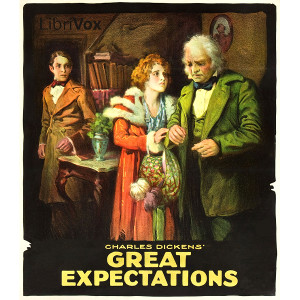
Great Expectations. Charles Dickens. 1860. Read for LibriVox by Mil Nicholson. 20 hours, 13 minutes. [Source: Librivox]

First sentence: My father's family name being Pirrip, and my Christian name Philip, my infant tongue could make of both names nothing longer or more explicit than Pip. So, I called myself Pip, and came to be called Pip.


Note: This was my fourth time to "read" the novel. The first and second times were in high school and college where I rushed through at lightning speed because I was a procrastinator. I remembered nothing. The third time I savored the novel and it finally CLICKED for me. The fourth time was as an audio book. Audio is always slightly different for me. I have a love/hate relationship with it. Sometimes listening doesn't feel like it should count as reading, then again sometimes it does. I was engaged with this audio for the most part--give or take a few interruptions. What I miss most about listening--as opposed to reading--is the inability to mark quotes. For that reason, I am referring back to my first review of the novel.


Premise/plot: Can any Charles Dickens' novel easily--painlessly--be condensed into a couple of sentences that summarizes the plot and introduces the characters in an enticing, compelling way? I say NO. But I'll try. (Because I'm stubborn like that!)

Pip is a young man being raised by his older sister and his brother-in-law--the Gargerys. Mrs. Joe isn't all that nice to him, but, Joe--a blacksmith--is a godsend. The novel opens with some excitement. Pip has been approached--in a cemetery--by a shady character, a grown man, a man readers learn to be an escaped convict. He wants a file--to rid him of his chains--and some food. He's depending on Pip for both. Does Pip have a choice in helping him? Not really. (Though Pip is used to threats since he lives with his sister.) Some time later, Pip is given another opportunity. This time an eccentric old lady, Miss Havisham, wants Pip to be a companion for her and her adopted daughter, Estella. Does Pip have a choice? Again I'll say not really. The meeting is memorable and life-changing. Both his meeting of Miss Havisham and of Estella will change him for better or worse. It is this meeting that brings about his angst--his discontent. After meeting these two, he's no longer content in his home being raised by Joe and Mrs. Joe. He's no longer content being barely literate. He's no longer content with the idea of apprenticing to Joe and following in his footsteps. He wants what seems to be impossible: to be a gentleman--to walk, talk, act, live as a gentleman. But never say never, right? One day--in the middle of his apprenticeship to Joe--his life takes another turn. A lawyer approaches him with glad tidings: he's now a man with expectations. The catch: his benefactor wants to remain anonymous. His life from that moment on will change dramatically. He's being given the opportunity to become a new man. But does new always mean better? And what about those he leaves behind? Joe and Biddy, in particular. (Biddy is a young woman who has come to live with the family after Mrs. Joe is seriously injured. Biddy is of their class but has some education.) He's thrust into a whole new world, and, his manners and morals can sometimes lag behind. Pip goes to live with the Pockets; he becomes best-best friends with Herbert Pocket. Herbert christens him "Handel." The two go through much together; their friendship is deep and sincere. Life seems to be going swell, going according to Pip's grand plan, when Pip learns an unsettling truth. He learns the identity of his benefactor. Pip is shaken, confused, and ANGSTy once again. What is he to do now?! The foundation of his hopes and dreams has collapses. His big plan of marrying Estella seems to be truly impossible now. But not just that plan but all his plans seem to be off-track now. Who can he depend on in this crisis? From this point on, in my opinion, the novel shifts from being a coming-of-age story to a dramatic MYSTERY. So much ACTION and DRAMA are packed into the last hundred or so pages.

My thoughts: I recommend reading Great Expectations at a steady pace. It is not one to rush through in one or two days. If you do, chances are you won't remember what you read, and the novel won't stir up your emotions. It is not one to read slowly hit-or-miss style. If you don't read in it every day or every other day, you might not remember much either. The greatest danger may be that you won't connect with the characters or care about them. And unless you become attached to a character or two, the book won't stay with you. This was my third time to read the novel. In high school, I waited until the day before it was due to open it. It was a NIGHTMARE reading experience. I hated every minute of it. In college, I don't think I made the same mistake twice. I don't think I procrastinated. I think my sin in that instance was holding a grudge and reading it with a closed mind and heart. Since graduating college, I've read Dickens voluntarily. And this year I decided to read Great Expectations--as if for the first time. The goal: to read it with fresh eyes, open heart, open mind, looking for what made Great Expectations GREAT.

What was great about Great Expectations? I really enjoyed the characters, the themes, and the contrasts. What kind of contrasts? Love and hate, foolishness and wisdom, bitterness and forgiveness, friends and enemies, pride and humility. For example, we have two characters that live for revenge and thrive on bitterness to a certain degree. Abel Magwitch and Miss Havisham. Miss Havisham may be the more memorable of the two. She is living in a her worst moment, perpetuating the agony of it. She was jilted at the altar, and from that moment on her life stopped. Instead of moving on with her life, instead of finding a reason to keep living, she became filled with hate, pain, anger, bitterness. Not far behind her is Abel Magwitch. He has an enemy and there is this constant need to get him, to get revenge, to come out on top, to win no matter what. And this enemy haunts him--taunts him. Abel has his good side, as does Miss Havisham. But their worldview is tainted more by hate than love, more by this need to hurt others than to love.

What unites this novel is Pip. And a large part of Pip's identity is his undying, never changing love for Estella. It's unrequited love at that. Pip loves Estella. Estella does not love Pip. Estella loves Estella. I'm not sure if Dickens was trying to enter into the debate of nature versus nurture or not. But Estella has been raised to hate, raised to hurt. Miss Havisham thinks she's protecting Estella from having her heart broken by showing her day in and day out what happens from trusting a man. But in reality, Estella doesn't have a heart to hurt. She doesn't even have a heart to love the woman who raised her. Pip has trouble seeing the real Estella. His Estella is an idealized version, perhaps a version of who she could be if she'd been raised differently, if she'd allow herself to be human, if she'd allow herself to be vulnerable.

"You must know," said Estella, condescending to me as a brilliant and beautiful woman might, "that I have no heart,—if that has anything to do with my memory." I got through some jargon to the effect that I took the liberty of doubting that. That I knew better. That there could be no such beauty without it. "Oh! I have a heart to be stabbed in or shot in, I have no doubt," said Estella, "and of course if it ceased to beat I should cease to be. But you know what I mean. I have no softness there, no—sympathy—sentiment—nonsense."
Then, Estella being gone and we two left alone, she turned to me, and said in a whisper,— "Is she beautiful, graceful, well-grown? Do you admire her?" "Everybody must who sees her, Miss Havisham." She drew an arm round my neck, and drew my head close down to hers as she sat in the chair. "Love her, love her, love her! How does she use you?" Before I could answer (if I could have answered so difficult a question at all) she repeated, "Love her, love her, love her! If she favors you, love her. If she wounds you, love her. If she tears your heart to pieces,—and as it gets older and stronger it will tear deeper,—love her, love her, love her!" Never had I seen such passionate eagerness as was joined to her utterance of these words. I could feel the muscles of the thin arm round my neck swell with the vehemence that possessed her.
"Hear me, Pip! I adopted her, to be loved. I bred her and educated her, to be loved. I developed her into what she is, that she might be loved. Love her!" She said the word often enough, and there could be no doubt that she meant to say it; but if the often repeated word had been hate instead of love—despair—revenge—dire death—it could not have sounded from her lips more like a curse. "I'll tell you," said she, in the same hurried passionate whisper, "what real love is. It is blind devotion, unquestioning self-humiliation, utter submission, trust and belief against yourself and against the whole world, giving up your whole heart and soul to the smiter—as I did!" When she came to that, and to a wild cry that followed that, I caught her round the waist. For she rose up in the chair, in her shroud of a dress, and struck at the air as if she would as soon have struck herself against the wall and fallen dead.
"Herbert," said I, laying my hand upon his knee, "I love—I adore—Estella." Instead of being transfixed, Herbert replied in an easy matter-of-course way, "Exactly. Well?" "Well, Herbert? Is that all you say? Well?" "What next, I mean?" said Herbert. "Of course I know that." "How do you know it?" said I. "How do I know it, Handel? Why, from you." "I never told you." "Told me! You have never told me when you have got your hair cut, but I have had senses to perceive it. You have always adored her, ever since I have known you. You brought your adoration and your portmanteau here together. Told me! Why, you have always told me all day long. When you told me your own story, you told me plainly that you began adoring her the first time you saw her, when you were very young indeed." "Very well, then," said I, to whom this was a new and not unwelcome light, "I have never left off adoring her. And she has come back, a most beautiful and most elegant creature. And I saw her yesterday. And if I adored her before, I now doubly adore her."
"O Estella!" I answered, as my bitter tears fell fast on her hand, do what I would to restrain them; "even if I remained in England and could hold my head up with the rest, how could I see you Drummle's wife?" "Nonsense," she returned,—"nonsense. This will pass in no time." "Never, Estella!" "You will get me out of your thoughts in a week." "Out of my thoughts! You are part of my existence, part of myself. You have been in every line I have ever read since I first came here, the rough common boy whose poor heart you wounded even then. You have been in every prospect I have ever seen since,—on the river, on the sails of the ships, on the marshes, in the clouds, in the light, in the darkness, in the wind, in the woods, in the sea, in the streets. You have been the embodiment of every graceful fancy that my mind has ever become acquainted with. The stones of which the strongest London buildings are made are not more real, or more impossible to be displaced by your hands, than your presence and influence have been to me, there and everywhere, and will be. Estella, to the last hour of my life, you cannot choose but remain part of my character, part of the little good in me, part of the evil. But, in this separation, I associate you only with the good; and I will faithfully hold you to that always, for you must have done me far more good than harm, let me feel now what sharp distress I may. O God bless you, God forgive you!"
Favorite character: I think my favorite character was definitely Joe Gargery. Joe loved Pip unconditionally. Joe loved Pip even when Pip was being a brat or a snob--which was often especially in the first half of the book. Pip did nothing to earn Joe's unconditional love and support. Pip often thought of Joe as a fool, as ridiculous, as an embarrassment. But this reader saw him differently. I didn't need a late hour epiphany to see how awesome and amazing Joe was.

Favorite relationship: I really LOVED Herbert and Handel's friendship. I love how these two supported one another, confided in one another, wanted the best for one another. Herbert knew Pip--his strengths, his weaknesses--and loved him as a brother. That brotherly love was returned. When Pip came of age, he thought of Herbert first. How can I use my wealth to help Herbert get a start in life? When Pip's world started crashing in, I loved that Pip thought first of what this meant to Herbert and only secondly to what it meant for him and his dreams. I loved how these two seemed to understand one another. In hard, dangerous times or easy-going good times, these two were there for each other.

Favorite scene: I think one of my favorite scenes is between Pip and Miss Havisham. He is an adult now; he knows at last who his benefactor was; his own dreams are gone--his illusions shattered. He's come to ask for her help: he is not asking for money for himself, but money for his friend, Herbert, in setting him up in a career. His maturity in this scene effected me.
"If I give you the money for this purpose, will you keep my secret as you have kept your own?" "Quite as faithfully." "And your mind will be more at rest?" "Much more at rest." "Are you very unhappy now?" She asked this question, still without looking at me, but in an unwonted tone of sympathy. I could not reply at the moment, for my voice failed me. She put her left arm across the head of her stick, and softly laid her forehead on it. "I am far from happy, Miss Havisham; but I have other causes of disquiet than any you know of. They are the secrets I have mentioned." After a little while, she raised her head, and looked at the fire Again.
"It is noble in you to tell me that you have other causes of unhappiness, Is it true?" "Too true." "Can I only serve you, Pip, by serving your friend? Regarding that as done, is there nothing I can do for you yourself?" "Nothing. I thank you for the question. I thank you even more for the tone of the question. But there is nothing." She presently rose from her seat, and looked about the blighted room for the means of writing. There were none there, and she took from her pocket a yellow set of ivory tablets, mounted in tarnished gold, and wrote upon them with a pencil in a case of tarnished gold that hung from her neck.
She read me what she had written; and it was direct and clear, and evidently intended to absolve me from any suspicion of profiting by the receipt of the money. I took the tablets from her hand, and it trembled again, and it trembled more as she took off the chain to which the pencil was attached, and put it in mine. All this she did without looking at me. "My name is on the first leaf. If you can ever write under my name, "I forgive her," though ever so long after my broken heart is dust pray do it!" "O Miss Havisham," said I, "I can do it now. There have been sore mistakes; and my life has been a blind and thankless one; and I want forgiveness and direction far too much, to be bitter with you."


© 2018 Becky Laney of Becky's Book Reviews