Showing posts with label true crime. Show all posts

Tuesday, May 27, 2025

53. The Peepshow


53. The Peepshow: The Murders at Rillington Place. Kate Summerscale. 2024/2025. 320 pages. [Source: Library] [true crime, adult nonfiction, 4 stars]

First sentence: In the evening of Tuesday 24 March 1953, Harry Procter, the star crime reporter of the Sunday Pictorial, drove over to a Victorian terrace in Notting Hill in which the bodies of three young women had been discovered. 

Premise/plot: Kate Summerscale's newest nonfiction book--true crime focused, of course--is about the killings at Rillington Place. It is a story that unfolds through the perspective of several interested in the case--namely Harry Procter and Fryn Tennyson. Procter is a crime reporter who GETS very involved in his stories. Fryn Tennyson Jesse is a [female] crime writer. This isn't a book solely focused on the criminal case alone. It is a story about HOW that story is conveyed to the public. It is a story that focuses on true crime reporting itself. It is about the pros and cons, the possibilities for sensationalism, the possible ethical violations of this type of reporting. It is also about the crimes--the many, many crimes. But it is also about the public's interest in true crime and how crime can be 'entertainment' for the masses. The book does focus more on these crime reporters THAN on the police investigation or the legal aspects of the case.

My thoughts: Kate Summerscale's books are almost always dark, dark, super dark. Her books often have horrifying details of crime that aren't for the casual reader. For those, however, who do have an interest in true crime, her books are always worth reading. I read this one in two days. It was a compelling read for sure. 


© 2025 Becky Laney of Becky's Book Reviews

Wednesday, May 14, 2025

48. Death in the Jungle


48. Death in the Jungle. Candace Fleming. 2025. 346 pages. [Source: Library] [YA nonfiction, nonfiction, true crime, 5 stars]

First sentence from prologue: On Friday evening, November 24, 1978, CBS broadcast a special hour-long report: "The Horrors of Jonestown." 

First sentence from chapter one: The first time Jim Jones asked followers to play dead was on an autumn night in 1941.

 Premise/plot: The story of Jonestown and Jim Jones written for a slightly younger audience--young adult instead of adult. It is a heartbreaking, tragic, fascinating story--a story of how one man used charisma, manipulation, and fear tactics to build and lead People's Temple. This didn't happen overnight. He didn't step up to speak one day, one time and get a mass following willing to do anything and everything he commanded. It was a slow process, a long con if you will, that took decades. He started in a "Christian environment," using Christianese--using the traditions and vocabulary of the Christian faith--to gain his first followers. Influenced by the "faith-healers" and the more flamboyant Pentecostal style, he figured out what his audience wanted to hear, and played it up. He used tactics that allegedly some mediums and psychics use--from what I can tell--to "prophesy" messages to specific individuals. He was a showman. Everything was crafted for a certain purpose--to gain more and more power and prestige and acclaim. 

He may have started with a "Christian" message, a "Christian" prophecy, a "Christian" God, but it was a sham through and through. He began shedding the 'Christian' skin little by little by little by little--slowly but surely getting his audience used to his message. If he'd out and out stated clearly and precisely his views--especially at the start--his following would likely have left him recognizing him as dangerous. Within a decade--maybe a little more--he had abandoned the pretense. There was no God in the sky, only a GOD on earth, Jim Jones himself was GOD. He staged fake assassination attempts. Pretend to be shot. Pretend to be dead. And then have a pretend resurrection and come back to life. This lines up with his pretend miracles and signs. 

Another tactic was creating fear, building it up,  and hyping up this chaotic doomsday prophecy or forecast. Distrust everybody. Trust only him. 

The story is told through many perspectives--many of which were his followers [or former followers]. 

The tension builds throughout as the story nears its end.

My thoughts: This one was fascinating and horrifying. It is, of course, dark and horrifying. It isn't light reading material. But I do think it is an important story to revisit. 

Will today's YA audience be familiar with the story? That's a good question. Honestly I don't know the answer. But the story itself is fascinating and compelling. One thing that stood out to me--and I have no comparison to other books about it, since I never finished any (though there's a great one that I put down and never got back to)--is her emphasis that there was murder. There were signs that the tragic ending for some/many was NOT voluntary.

© 2025 Becky Laney of Becky's Book Reviews

Thursday, October 17, 2024

86. The Menendez Murders (Updated Edition)

The Menendez Murders: The Shocking Untold Story of the Menendez Family and the Killings that Stunned the Nation. (Updated Edition) Robert Rand. 2024. 376 pages. [Source: Library] [4 stars, adult nonfiction, true crime, biography]

First sentence: On the night of August 20, 1989, the last in the lives of Jose and Kitty Menendez, their elegant residential street in Beverly Hills was so still you could hear a leaf drop. That in itself was not unusual or suspicious. People pay a steep price to live in such neighborhoods, and they cherish their peace and quiet. 

Premise/plot: Robert Rand has followed the story from the start--literally. This is an account of just about anything and everything you could ever want to know about the murders, the trials, and the decades of aftermath. He is a news reporter--journalist--who has interviewed so many including many family members and the brothers themselves. He was there in court for the trials. This is a well-organized accounting of everything having to do with the case. One might say it has some bias--some--since the author believed and still believes the abuse claims. But that doesn't make his accounting wrong. He literally details the prosecution and the defense cases from both trials. 

The updated edition tells of the new evidence in the case and the push to have the case re-examined.

My thoughts: I did NOT watch Monsters. It was way too much for me. I found it repulsive. And it makes sense that there's some backlash against the portrayal. I did watch the documentary and several other documentaries from the past few years. I even started watching the first trial (though I realized I don't have that much time to give--at least not now). 

It is hard to read this one--for many reasons. The content is rough, horrific even. That being said, just because it tackles several hard topics doesn't mean that it shouldn't be read. Those who are super-sensitive to descriptions might not want to read it. But I found the book to be thorough and well-researched. 

For those wanting to go beyond a few [social media] shorts on the case, I do recommend it.


© 2024 Becky Laney of Becky's Book Reviews

Tuesday, April 04, 2023

68. When the Moon Turns to Blood


When the Moon Turns to Blood: Lori Vallow, Chad Daybell, and a Story of Murder, Wild Faith, and End Times. Leah Sottile. 2022. 320 pages. [Source: Library]

First sentence: I remember when they found the bodies.

Premise/plot: Is this a 'true-crime' book covering the case of Lori Vallow's missing [murdered] children? Yes. In part. It is a broader book than that. It seeks to explore the why. I'll clarify--the why in generalities not specifics. Or not only specifics. Why are there [so many] fringe, extremists, end-times-obsessed groups in the United States? Why do people believe and follow such leaders--often charismatic leaders? How do these groups get started? How do they thrive? How do they go unchecked? In particular, on the fringe-border-spaces of the Mormon (LDS church). Why is doomsday prepping such a big thing? Why the focus on the last days? How much is an inherited "us" vs. "them" mentality? Has the past violence in the church--in the early decades of the nineteenth century--unduly influencing the church still? Why the fascination with near death experiences? Why are so many quick to believe new prophecies and new visions? Is there ever a point where strange becomes too strange? What are the dangers of living in a vacuum. I'll clarify that last one--obviously not literal. If you live in a town, a city, a community, where almost every single person--and almost all authoritative positions--are of a particular religion, say LDS (or Mormon), then what are the dangers and risks? Obviously, there would be plenty of benefits. But there would be risks as well for those that are speaking up about the red flags they see, for those whistle blowers, for those saying HEY something is wrong. The past is the past is the past, but if some of those speaking out had been heard, then maybe just maybe the story would have been different. There were definitely instances of "I knew something was wrong" or "I knew something was off" or "this didn't feel right" or "nothing she was saying made sense to me" etc. Several times outsiders [though perhaps fellow LDS] would say, yes, she's strange but she doesn't pose a threat to anyone else. Yes, she's talking utter nonsense, but it's harmless nonsense. [I can't remember if this was a medical person evaluating her mental health OR a police officer determining if she needed to have her mental health evaluated.] 

The book covers OTHER fringe groups over the past hundred, hundred-fifty years. The book covers the legacy of those end-times obsessed, anti-government groups that were all out committed to surviving these last days. The book covers those overlapping spaces between politics and religion that can breed extremists of multiple varieties.

My thoughts: I wasn't expecting a history lesson. I didn't mind a history lesson. But I was expecting a bit narrower focus. I can see why the focus was broadened. In response to the more shallow coverage of the case that separates it out...and turns it into a case of love, lust, passion, obsession. But the case is more complex than that. WAY more complex than that.

© 2023 Becky Laney of Becky's Book Reviews

Saturday, July 09, 2022

83. A Talent to Deceive


A Talent to Deceive: The Search for the Real Killer of the Lindbergh Baby. William Norris. 2020. 384 pages. [Source: Review copy]

First sentence: On the night of March 1, 1932, a small child was taken from his bedroom in a lonely house near Hopewell, New Jersey. A ransom note was discovered, and a demand of $50,000 paid by the distraught parents. But the little boy never came home. His body was later found some two miles away, decomposed almost beyond recognition.

A Talent To Deceive is true crime nonfiction. It highlights the injustice and absolute absurdity of the investigation, trial, and appeal process. The crime being that of the kidnapping of the Lindbergh baby. From day one it was a total disaster--if the truth, the whole truth, and nothing but the truth is what guides you. 

The presentation itself was a bit messy here and there. It perhaps could have been better organized. But even with its tiny 'flaws' it remains fascinating. (At least to me). So, in no particular order, the book is about: a) how the author became interested in the case b) the bare basic essentials of the crime c) background information on the Morrow and Lindbergh families d) the million mistakes made in every stage of this case e) potential suspects f) red herring suspects g) the trial itself h) the appeal process. 

The book essentially argues that the man arrested, charged, convicted, and sentenced to die--Bruno Richard Hauptmann--was innocent. At the very, very least innocent of kidnapping the Lindbergh baby, and innocent of murdering the toddler. Perhaps, he was guilty of coming into possession of *some* of the $50,000 ransom. In other words, he was found to have some of the ransom in his home. And he did spend some of it. (That's how they knew to search his home.) 

The book makes a case for his innocence. And it's a convincing argument, in my opinion. But Norris doesn't just make a case for Hauptmann's innocence, he argues that at the very, very, very least Charles and Anne Lindbergh KNEW the identity of the kidnapper and covered it up. Perhaps their suspicions were later confirmed, but from day one there are strong reasons to believe that they were covering up, interfering, mangling the investigation. The author does not argue that Lindbergh is guilty of the crime himself. (Though he does mention that some do.) He makes a case for a member of the Morrow family to be the kidnapper. Was his argument 100% convincing???? I'm not sure I'd go that far. While Norris convinced me that Hauptmann was innocent...and that EVERYONE involved in the case was a liar-liar-liar-liar pants. Or completely incompetent. Or completely immoral and unethical. OR easily bribed. I'm not as equally convinced that Dwight Morrow Jr. was the kidnapper/murderer. I definitely think that he should have been on the list of suspects, perhaps, but I'm not convinced he's the one and only most likely candidate.

The book was fascinating. But it was also intense in that it made me ANGRY. This trial was just appalling and absurd. There were a million reasons why the case was handled WRONG. And it cost this man his life.

© 2022 Becky Laney of Becky's Book Reviews

Tuesday, June 02, 2020

78. Jeannie's Demise: Abortion on Trial in Victorian Ontario

Jeannie's Demise: Abortion on Trial in Victorian Ontario. Ian Radforth. 2020. [October] 258 pages. [Source: Review copy] [adult nonfiction; history]

First sentence: Growing impatient, Lovell took an axe and broke open the box. Inside he found some straw, a white chemise, and the naked body of a young woman. A few hours later, Coroner E.C. Fisher held an inquest nearby at Mrs. Mantle’s Robin Hood Hotel on Dundas Street. Two physicians, who had already performed a post-mortem examination of the body, reported that the deceased was an otherwise robust and healthy woman whose death was caused by a violent abortion. The jury at the inquest concluded that there had been a wilful murder of “an unknown woman” by some “person or persons unknown.”

Premise/plot: Jeannie's Demise is an up-close-and-personal, behind-the-scenes glimpse at abortion on trial in Ontario Canada in 1875. In the summer of that year, Jeannie Gilmour got an abortion and died as a result of complications. That fall and winter her two abortionists--husband and wife--went on trial. This news story was covered widely and broadly. (Though for the record, the two were on trial for murdering Jeannie and not for murdering the unborn child.) The book chronicles the case in great depth giving background and context.

My thoughts: I love a good true crime book occasionally. This one fits into that category nicely enough. It is a detailed accounting of three trials: the first trial being that of the two accused abortionists (abortion was illegal in 1875), the second trial being that of the accused seducer, the third being that of a man accused of helping dispose of the body via a coffin in a wagon. Readers get a glimpse of how the police department worked the case, how the prosecution and defense handled the case, the evidence, the testimonies and witnesses. One also definitely got a glimpse of how the media reacted to the case AND influenced the case. One also saw some statistics.

If the book had kept this a book about the past, it perhaps would have set better with me. One could read about the facts of the case--in the past--without trying to moralize, preach, or reveal a modern AGENDA to the case.
It wasn't until the last page or possibly two that the pro-choice cause is championed and glorified. He leaves readers with a warning that there are some in the United States that want to rob women of their oh-so-human right to have access to abortions.

I think both pro-life and pro-choice readers can agree that illegal abortions can be dangerous and risky to women. But to be fair, in 1875 legal or illegal abortion would have been risky. As was childbirth itself it 1875. There was so much about germs and bacteria and care that doctors, midwives, nurses, the general public did not know that lives were put at risk. Medicine has come a long way since the nineteenth century. 


© 2020 Becky Laney of Becky's Book Reviews

Tuesday, August 29, 2017

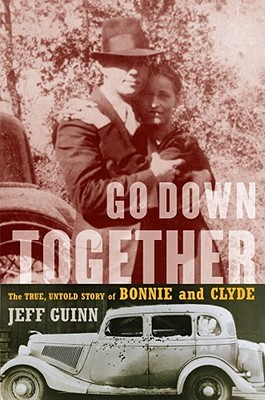
Go Down Together

Go Down Together. Jeff Guinn. 2008. 468 pages. [Source: Library]

First sentence: Clyde Barrow's father, Henry, never had much luck in life, and the hard times started for him right out of the womb.

Premise/plot: The subtitle of Jeff Guinn's Go Down Together sums the premise of the book up perfectly: the true, untold story of Bonnie and Clyde. It is a fascinating story of the Barrows, the Parkers, West Dallas, the Great Depression, the last days of Prohibition, the Dust Bowl, and the justice system of the 1920s and 1930s.

My thoughts: It was interesting to read Go Down Together at the same time I was reading Victor Hugo's Les Miserables. What both books have in common is an up-close-and-personal look at extreme poverty and some of the injustices of the prison system.
Destroy the mine of Ignorance, and you destroy the underminer, Crime. To put in a few words some of what we have been writing about: the only social peril is darkness. Humanity is of one kind. All men are of the same clay. With no difference, here below at least, in their predetermined fate. The same obscurity before, the same flesh during, the same dust afterwards. But ignorance mingled with the stuff of humankind blackens it. This incurable blackness spreads inside man and there becomes Evil. Victor Hugo
Go Down Together is by no means great literature, but, it does ask some thought-provoking questions; questions that perhaps Victor Hugo would have had a ready answer for.

It is a very HUMAN book. I get the idea that the author was not seeking to make great heroes or great villains out of Bonnie or Clyde. When they were alive, these two inspired outlandish stories. "True crime" stories were incredibly popular back in the day; criminals were the vampires and werewolves of the thirties perhaps! Newspapers depended on ENTERTAINING stories to sell copies; it was more important to sell copies than to tell the whole truth and nothing but the truth. After their deaths, the stories continued. Books and movies flourished. It didn't matter how much truth there was to be found--so long as the public bought it and kept coming back for more, more, more. What was selling was the idea of Bonnie and Clyde.

Who was Bonnie Parker? Who was Clyde Barrow? What was the Barrow family like? What was the Parker family like? What were their lives like? What was important to them? What did they want out of life? How did it all go so wrong? What were their options?

The author is CLEAR that while their stories are sad, and pitiful, crime was not the best option or the only option. Clyde was not the only young man who was living in extreme poverty, facing class discrimination, struggling to find a decent job, struggling to have a good life--a home, food to eat, clothes to wear. Bonnie was not the only young woman who felt TRAPPED by poverty. Both, I would imagine, felt trapped by a system they didn't like or trust, a system holding them down, holding them back. Poverty and class and injustice.

For example, as a young man long before his crime spree started, Clyde felt picked on by the police. Any time, or every time, a crime was committed he was hauled in for questioning. Most of the time there was no evidence linking him to the crime in question, he was just a "general suspect." The book mentions how Clyde would hold down a job for a couple days or a week or two, but, inevitably the police would come and get him while he was working, and he'd be fired. The few jobs he got, he lost--Clyde blamed the police, "the laws." Now, Clyde was not innocent. He did grow up stealing--along with at least one brother, maybe two--small things. The small things got bigger and bigger and bigger as he grew. And when he was convicted of theft, he was guilty. And he did get sent to prison. But prison made him a thousand times worse than he was before. And that might be an understatement. If the prison system--to be specific, the prison system in Texas in the late 1920s to early 1930s--had been better--more just, less corrupt would BONNIE AND CLYDE and their infamous Barrow Gang have come to be at all? The details of the prison system were difficult to read about.

The book was fascinating and packed with details. I loved the focus on family. I think it was fitting as well. One thing that might have led to their ultimate downfall was the fact that FAMILY CAME FIRST to both Bonnie and Clyde. No matter what these two always, always, always, always came back to visit their families. And the more stressed they were, the more hunted they were, the more important it was to them to see their family "one more time."

Bonnie enjoyed writing poetry. She gave her mother a poem a few weeks, I believe, before the two died. I'll quote the beginning and the end of "The End of the Line".
You've read the story of Jesse James--
Of how he lived and died;
If you're still in need
Of something to read
Here's the story of Bonnie and Clyde.
Now Bonnie and Clyde are the Barrow gang.
I'm sure you all have read
How they rob and steal
And those who squeal
Are usually found dying or dead.
There's lots of untruths to those write-ups;
They're not so ruthless as that;
Their nature is raw;
They hate the law--
The stool pigeons, spotters, and rats.
They don't think they're too smart or desperate,
They know the law always wins;
They've been shot at before,
But they do not ignore
That death is the wages of sin.
Some day they'll go down together;
And they'll bury them side by side,
To a few it'll be grief--
To the law a relief--
But it's death for Bonnie and Clyde.
It was also interesting to read Go Down Together right after seeing a WONDERFUL production of the musical. The musical doesn't do as great a job as Guinn's book at context. It does tend to keep things on the glamorous side, a bit. It also leaves out a LOT of information. For example, Bonnie's injury as a result of a car crash that left her crippled. Clyde had to carry her EVERYWHERE for the last year. But the music was WONDERFUL. And the humor in the dialogue was just about perfect. I had no idea the show would have me laughing.


© 2017 Becky Laney of Becky's Book Reviews

Thursday, December 29, 2016

Borden Murders

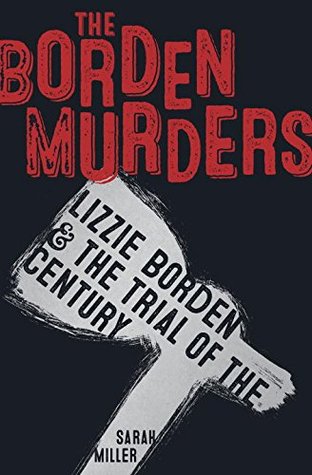
Borden Murders. Sarah Miller. 2016. 304 pages. [Source: Library]

First sentence: It happened every spring in Fall River, Massachusetts.

Premise/plot: Sarah Miller's newest book is a middle grade nonfiction book about Lizzie Borden and the 'trial of the century.' On August 4, 1892, Mr. and Mrs. Borden were murdered. Miller chronicles the events stage by stage. Her book is divided into sections: Lizzie Borden Took An Axe, Murder!, The Bordens, Investigation, Inquest, Arrest, Preliminary Hearing, The Waiting Time, The Trial of the Century, Aftermath, Epilogue.

My thoughts: This one was incredibly compelling and very well researched. (Over twenty pages of notes documenting among other things all the dialogue in the book.) Miller presents a balanced perspective of the case allowing readers to make up their own minds. Miller gives all concerned or connected the human touch. The press does not come out looking innocent.

Whether your interest is true crime, biography, or nonfiction set during the Victorian period, this one is worth your time.


© 2016 Becky Laney of Becky's Book Reviews

Thursday, June 28, 2012

Murder in The First-Class Carriage

Murder in the First-Class Carriage. The First Victorian Railway Killing. Kate Colquhoun. 2011. Overlook Press. 352 pages. 

 Murder in the First-Class Carriage is a nonfiction account of "the first Victorian railway killing." The murder occurred in July of 1864. The victim, Mr. Briggs, was found after the discovery of the hat and all the blood. (His body was found on the railway tracks). The railway car--he'd been supposedly alone in the car--was covered in blood, and one of the only clues was a hat that didn't belong to the victim. It wasn't the only clue--a watch chain, I believe, was missing as well.

Money was offered as a reward for information, and many, many, many people came to share information. But most turned out to be false information or irrelevant information. But. Eventually the detectives were satisfied with a suspect, they chose to follow a particular lead ignoring all others that didn't quite match up. This took them on a little chase across the Atlantic. The alleged murderer having bought passage on a ship to the United States. So the detectives followed him, and arrested him in America. And this story captured attention in America as well even after the suspect returned to England to await his trial.

For me the most interesting aspect of the novel was the trial itself, the book focuses on the three days of trial and the oh-so-short jury deliberation. Readers get to view the legal system of the time, and get a unique perspective on the court system. Readers can "hear" the prosecutor and defense attorney make their cases and arguments. Readers can "hear" the witnesses on the stand. The last chapter or perhaps the last two chapters focus on the pros and cons of capital punishment, or at the very least the pros and cons of public execution versus private execution.

While this one did prove compelling--in places--I wouldn't say that it was that fascinating or compelling throughout the whole book. It worked, in places, but in other places it dragged a bit.

Read Murder in The First-Class Carriage
  • If you're a fan of mystery novels
  • If you're interested in true crime, true court cases, etc.
  • If you're interested in this time period--the Victorian era, the 1860s
  • If you're a fan of nonfiction

© 2012 Becky Laney of Becky's Book Reviews