Showing posts with label 1991. Show all posts

Saturday, April 04, 2026

31. Scarlett


31. Scarlett. Alexandra Ripley. 1991. 884 pages. [Source: Library] [2 stars, historical fiction, sequel, adult fiction, adult romance]

Dear Future Self:

You may have just finished reading Gone With The Wind. You might possibly be wanting just a little bit more to the story. STOP. Don't do it. Don't. I promised to leave myself clues so that I won't reread it again.

First sentence: This will be over soon, and then I can go home to Tara.

Premise/plot: Scarlett O'Hara Hamilton Kennedy Butler loves, loves, loves, loves Rhett Butler. He, however, has stopped giving a damn. Or so he claims. This is the 'sequel' to Gone With The Wind. It covers roughly six to eight years. (That is it covers no more than eight, by my reckoning, and possibly as few as six.) It opens with the funeral of Melanie Wilkes. It ends, well, with much rejoicing on the part of this reader because it is OVER at last.

My thoughts: I first read Scarlett when it released. I was in junior high, I believe. I was excited. I was thrilled. I was eager. I can't remember if I was disappointed, angry, or frustrated....or confused. Probably one of the above.

Does Gone With The Wind need a sequel?

My "no" argument: Margaret Mitchell wrote the LAST chapter of Gone With the Wind FIRST. This was the destination all along. This wasn't an oops. If she'd changed her mind on the ending at any point while she was writing the book, she could have changed the ending. When she saw the success of the book, she could have begun drafting a sequel, talking of a sequel, making plans. From what I remember of the biographies I've read, she did not in any way want or desire a sequel.

My "yes" argument: While the book doesn't "need" a sequel. There's certainly enough life in the characters to allow for creative play.

What I would perhaps STILL like to see is a collection of SHORT STORIES or SHORT NOVELLAS written by a dozen or so authors--perhaps more but not less--that allow for more of the story to unfold. Each author working independently could put their spin on the question WILL SCARLETT O'HARA get Rhett Butler back. What will happen next to Scarlett? What about Rhett? Will he get HIS happily ever after even if that means saying NO to Scarlett forever? At what cost do we want a happy ending if their relationship is toxic?

It might also be AWESOME if an author were to approach the story from decades later. Perhaps told from the point of view of one of Scarlett's children or grandchildren.

Is there anything in Scarlett that works?

I honestly didn't hate the opening chapters. I didn't love, love, love them mind you. But I didn't hate them.

Scarlett reacted just like Scarlett at Melanie's funeral. She's newly discovered that she does in fact love Melanie Wilkes. That Melanie Wilkes was an incredible, incredible woman. But no one--except Rhett--knows of this change of heart. The town has long been skeptic--almost openly hostile--towards Scarlett. She associates with all the wrong people. She was caught alone with Ashley--hugging, nearly an embrace. She doesn't care about what they care about. Melanie interceded standing between Scarlett and polite society. Atlanta was torn between wanting to support Melanie AND despising Scarlett. Now that Melanie has died, Scarlett stands alone. And so being Scarlett, being a proud woman, she accepts standing alone and doesn't want to show her weakness, how broken she feels on the inside. When Ashley plays the fool at the graveside, Scarlett being EVER PRACTICAL acts purely on common sense alone. This will cost her.

Scarlett returning to Tara makes complete and total sense. She returns to Tara just in time to witness Mammy's final days--perhaps weeks. She returned too late to say goodbye to her mother, but, she arrives in plenty of time to say goodbye to Mammy. It isn't simple. Scarlett stays by her bedside night and day, day and night. Barely taking care of herself. She is devoted completely and selflessly caring for her.

I liked Scarlett visiting with some of the country folks--the ones that we especially got to know during the hardest days of the war and directly after. The Fontaines. The Tarletons. Etc.

Rhett returning for Mammy's funeral and lying to her also makes complete sense. Those two had an understanding after bonding after Bonnie's death.

When Scarlett returns to Atlanta because Tara isn't really big enough to live with her sister, Suellen and Will and their kids as well as her first two kids, Wade and Ella, that makes sense as well. Scarlett thinks that Rhett will 'have' to visit Atlanta a few times a year at least to keep up appearances. Atlanta is where her store is, it's where her big fancy house is. She thinks that even if folks don't 'like' her they'll keep on accepting her. She's never been 'cut' by society before. Hated and despised, yes, still invited to all the things, yes. Scarlett reveals that she is still trying to make herself happy with stuff, stuff, and more stuff. She's looking for happiness in all the wrong ways. She's turning to alcohol. She's turning to easy friends that she can buy. However she is also LOOKING to keep her promise to Melanie. And the few interactions we have between India and Scarlett seem true to both women. There is HATE, a hard, rigid HATE that loathes. Scarlett's conversations with Uncle Henry are among my favorite in the book. (That's not saying too much. But it is something).

Scarlett does not stay in Atlanta. Though she might stay in Atlanta for most of a year. At least six months or so. She next goes off in pursuit of Rhett. She goes to Charleston to visit her aunts. (Though I'm still not sure if her aunts were from Charleston or Savannah. Or maybe they divide their time between both????) She isn't with them for a day before she gets herself invited to stay with her mother-in-law. She is welcomed by some of Rhett's immediate family, though others have their doubts. She is introduced to everybody in Charleston. But she has to play a role. Scarlett is absolutely excellent at playing a role. She can even play a role for long stretches of time--months and months. Here she is playing the role of devoted wife who is eager to learn everything about Charleston and make it her forever and ever home. So if that means learning about all the kinds of seafood, then she'll go to market and learn all the best secrets for picking seafood. Rhett is angry, frustrated, confused. But he can't treat Scarlett as he wants because he values his mother too much. So they play pretend. They officially agree to play pretend. Scarlett thinks that if she can get Rhett interested in her again, game over. They'll play happy couple for 'the season' and then she'll go back to Atlanta, or if not Atlanta, anywhere but there.

It is only when their lives are in great danger that Rhett gives into his lust for Scarlett. She assumes this means happily ever after. But this is not to be. Why is this not to be? There are eight million pages left. I jest somewhat.

Scarlett writes a LETTER to Rhett. Rhett does not get the letter. Why? Because his sister decides Rhett deserves better than Scarlett, that Scarlett is TRASH, and so she destroys the letter. This, of course, introduces miscommunication to novel that should be much, much, much shorter.

Scarlett next goes to visit her grandfather--I think in Savannah. I think her aunts are there too. She also visits her uncles and cousins on the O'Hara sides. Her grandfather recognizes something special in her, I believe. I don't know for sure, but I might have preferred the novel IF she'd settled in Savannah and made a new life for herself there. Anything is better than what happens next.

What doesn't work in Scarlett?

Scarlett meets her uncles and cousins and more cousins and more cousins. She's persuaded to take a "short" trip to Ireland--a few weeks--to meet her grandmother. (Gerald's mother). Well, to meet all her relatives. Why do they want to take her to Ireland???? Good question. No one knows. There's no true reason for Scarlett to go anywhere near Ireland. On board the ship, I believe, she discovers that she's pregnant. Does she send word to Rhett? NO. Does she send word to anybody? No. Does she decide to keep it a secret for a few more weeks or months? Yes. It isn't much after that--maybe a few weeks? a month or two? when she hears that RHETT has divorced her. She makes immediate plans to return. She has to tell him about the baby, right?!?!?! But before she leaves Ireland to return to the States, she hears that Rhett has MARRIED AGAIN. I believe she stays in Ireland? Or she might make the shortest of trips back to the States?

Regardless, readers are stuck with Scarlett staying in Ireland for six or so more years. She doesn't just stay in Ireland, mind you, she makes occasional trips about. She meets dozens of people. Are we supposed to care about these people? Maybe. And maybe some readers do. But I found it tedious to have Scarlett coming of age in Ireland. She'll spend a few months LOVING physical labor, working in the fields, the gardens, building the place up, restoring. She's got the role of peasant down wonderfully. She's one with the people. She's in solidarity with them. Earning their like for a bit. BUT when Scarlett's baby is born on Halloween, it's the beginning of the end. The folks just won't accept that Scarlett's baby isn't a witch. Is this logical? No. Of course not. Scarlett moves on from playing the  O'Hara and becomes utterly fascinated by horse racing and the English nobility. Or perhaps the Irish and English nobility? Anyway, she decides she likes rich people stuff again. How could she be happy just working the land when she could be going to all the house parties and meeting all the rich men???

Rhett Butler begins popping up here and there in Scarlett's new world. Maybe Rhett has always been interested in horse racing in England and Ireland? Maybe he is coming because she's there?

Scarlett has an affair with a British soldier. Charles something-or-other, I think. It's weird. It's awkward. She's using him. But to be fair, he doesn't mind at all.

Scarlett gets engaged to some noble. A count? A lord? Somebody. His characterization is thin at best. But again, readers know he won't matter even slightly. We do know that he cares a little too much about Kat (or Cat?) Scarlett's daughter. He thinks Scarlett will give him a son. (She can't.) And he wants it to be feisty and independent like Cat (Kat?). Though will he really want a son that he can't dominate??? I have questions.

Meanwhile, after a famine or drought, the peasants have gone on strike and have turned against everybody. EVERYBODY. Anybody with money is an enemy. Is this oversimplifying it???? Yes. Is it complex in the book? Maybe slightly more than I am giving it credit for. Is it still mostly shallow? YES.

Meanwhile, for the past five or six hundred pages, Scarlett has been having 'revelations' about how life and how to live. But they seem to be more fads than character changes. THAT BEING SAID, Scarlett does seem to have learned to love another human being more than herself. True, she hasn't learned to love more than one person more than herself. But for Cat (Kat?) she does seem to be selflessly inclined to put her daughter first.

Does Scarlett ever think about Wade and Ella? No. No. NEVER. She wouldn't dare feel maternal towards her other children. After taking up a LOT of text about how Scarlett has learned that she will NEVER EVER EVER EVER put Kat (Cat?) in a box and make her do anything she doesn't want to do, never try to shape her into being someone else, of following rules and fitting into society, she has the audacity to lecture Wade about WHO he has to be. Scarlett who has never valued education in the slightest is SHOCKED that Wade refuses to go to college. He must, he must, he must. Why? No one knows. It takes up more pages. Eventually, Will persuades her to let Wade be Wade and stay a farmer at Tara. Ella, well, poor thing she might get five mentions in the entire novel. Though that might be generous. Scarlett does not care even slightly for Wade and Ella.

Does Scarlett fight to maintain friendships? No. IF she's disappointed by a person, then that's it--mostly. She's not able to accept complex people with complex relationships. That being said, I found almost all her cousins annoying too. I don't blame Scarlett for being upset with the main person she's upset with. HE repeatedly lies to her, tricks her, uses her. His lies outweigh his truth.

The ending. Well, it ends. After eight million pages of NOTHING, it ends.

My main problem with the book is that it could have been a book around three hundred pages and it would have been decent. Not great perhaps but it could have been decent. I think the author WANTED a book as long as Gone with the Wind. But Gone with the Wind has PLOT, STORY, CHARACTERS. It has substance and depth. It has complexity. It has moral complexity. It has life. It was well-researched. It lives. Scarlett--the sequel--is SHALLOW and obnoxiously long.


© 2026 Becky Laney of Becky's Book Reviews

Monday, June 07, 2021

50. The Dragon Reborn


The Dragon Reborn. (The Wheel of Time #3) Robert Jordan. 1991. 624 pages. [Source: Bought]

First sentence: The Wheel of Time turns, and Ages come and pass, leaving memories that become legend. Legend fades to myth, and even myth is long forgotten when the Age that gave it birth comes again. In one Age, called the Third Age by some, an Age yet to come, an Age long past, a wind rose in the Mountains of Mist. The wind was not the beginning. There are neither beginnings nor endings to the turning of the Wheel of Time. But it was a beginning.

The Dragon Reborn is the third book in the Wheel of Time series. It stars many characters whom we met in books one and two. In this one Rand is coming to terms with the Pattern--or beginning to slightly. It's a slow process. And the pattern seems to want him to be THE DRAGON REBORN. Not a false dragon, a fake, someone out looking for glory or adventure, but the true dragon of ancient prophecy. He's not entirely super comfortable with that role. But he's processing everything mainly in his own way in his own time. And doing it off screen, so to speak.

The Dragon Reborn barely features Rand. And I'm not complaining. It does feature three main stories.

One story has Egwene, Elayne and Nynaeve working together. They've been assigned the super-super-super-super secret task of hunting the Black Ajah (the DARK, DARK, SUPER-DARK branch of the Aes Sedai). (Elayne and Egwene undergo their super-secret testing to become ACCEPTED into the Aes Sedai. Nynaeve did this in book two.) It will be dangerous. The three know each other to be reliable and good--on the right side--but how can they know who else to trust?

Another story has Perrin, Lan, Loial, and Moiraine questing together. They are following Rand and of course solving more puzzles along the way. Someone else joins this group--for better or worse--and seems determined to find the Horn (not knowing of course that the Horn has not only been found but already blown).

Yet another story has Mat on a journey. In the beginning of this third book he is finally healed (he became deathly ill in book one). The Aes Sedai want him to remain in Tar Valon, but, the girls (Egwene, Elayne, and Nynaeve) have other plans for him. And this has him gambling and rambling his way cross country. He picks up a buddy too. (Who wants to quest alone???) Thom (the gleeman from book one) joins Mat in his adventures/misadventures.

The reader may suspect that these three stories will come together into one story by the end, and, of course, you'd be right. All the questing groups DO end up in the same place at the same time. The only one whose quest we do not follow is Rand. And as I said I'm not complaining. What little we do hear from him is enough for me.

This one continues to develop the cultures and politics of the fantasy world. In particular we continue to look at the corruption within the Aes Sedai. (Of course corruption is also found in the governing bodies of other countries).

Dreams. Dreams. Dreams. More dreams. One of the big threads of this one are the dreams or NIGHTMARES that all the characters have from cover to cover. Are the dreams prophetic? Do they mean something? Why are so many people sharing the same dream? Do the dreams hold all the clues needed to defeat the enemy?

This was my first time to reread The Dragon Reborn. I am definitely enjoying rereading the series. I hope to get to books I've never yet read in the series. I am liking the world building and the characterizations.

I will say that sometimes it does feel a little creepy to unpack the book and think deeper about what is going on. Rand was fourteen in the first book. (As are Perrin and Mat). Yet it seems that all the adult women in this world Jordan has peopled--no matter their culture/ethnicity--seems to take one look at Rand (or Perrin or Mat) and think YUM. CANDY. The fact that so many grown women want to flirt seductively with a fourteen or fifteen year old is creepy. (I believe in the third book it's been a little under a year since the adventure began? They left in spring and the third book mentions it being winter). It is easy to get distracted by all the other drama--the ultimate showdown between Light and Dark--to forget that these heroes are YOUNG. You can almost recast them in your imagination as being older (say eighteen, nineteen) and begin to think nothing of it. I do wonder why Jordan didn't just make them older to begin with? Like Lord of the Ring, Frodo is in his 30s or 40s. Bilbo Baggins wasn't all that young on his quest either.

But overall I am loving the series. Quite an entertaining read.

© 2021 Becky Laney of Becky's Book Reviews

Wednesday, June 02, 2021

49. The Great Hunt

The Great Hunt. (Wheel of Time #2) Robert Jordan. 1991. 705 pages. [Source: Bought]

First sentence: The Wheel of Time turns, and Ages come and pass leaving memories that become legend, then fade to myth, and are long forgot when that Age comes again. In one Age, called the Third Age by some, an Age yet to come, an Age long past, a wind rose in the Mountains of Dhoom. The wind was not the beginning. There are neither beginnings nor endings to the turning of the Wheel of Time. But it was a beginning.

The Great Hunt is the second book in the Wheel of Time series. It definitely has a different "feel" than the first book in the series, in my opinion. It stops feeling like flattery--an adoring fan of Tolkien writing his own love song to the epic quest genre--and begins to feel like its own unique story. Or more so. Perhaps each book takes us a step or two further away from being fan fiction to Lord of the Rings. 

So it is titled The Great Hunt. So expect the questing to turns more towards HUNTING. And the mission this go around is to recover and find THE HORN OF VALERE. The horn is legendary and is linked--supposedly--to the "Last Battle." It was stolen--along with a dagger--and the two must be found. The dagger is less legendary perhaps--though equally dark and shadowy--its worth is of great importance to Rand, Mat, and Perrin (our three heroes) because one of their lives depends on the finding of it. (If you've read the first book, you know which of the three it is.)

Our three heroes, Rand, Mat, and Perrin are joined on their quest with some old friends (like Loial whom I love, love, love and adore) and new faces (like Ingtar, Hurin, and Verin). It will prove a daunting journey. 

While half of our characters are out looking for the Horn (and the dagger), our other characters are continuing on with their own life goals. Nynaeve and Egwene travel to Tar Valon and begin their study to become Aes Sedai. They are joined by Min and Elayne. The four form a friendship of sorts. Particularly Min, Elayne, and Egwene. Min has a strong feeling that their fates are all twisted twisted up with Rand's for better or worse.

You might think they have an easier time. What dangers could they possibly face that would endanger their lives--especially compared to the dangers the guys are facing hunting for the Horn. But you'd be wrong. Readers finally, finally get a glimpse of the Aes Sedai in The Great Hunt. (Widening our perspective from just knowing Moiraine). These heroines end up IN VERY GREAT DANGER.

Some of the most intense scenes--in my opinion--involve the human trafficking of young girls and women. Those being targeted are those who can--in varying degrees--channel. And they are being captured, put in bondage, tortured, and shipped out to a foreign country. I'm sure there's a greater scheme at play, but I'm not sure it's out and out stated why the lands--both cities and rural areas--are being searched to find young girls/women to steal. 

There are two other side stories introduced (or further built upon as the case may be). Occasionally the action will turn from our heroes and heroines altogether and shift focus. We spend time with some Children of the Light (the White Cloaks) OR learning more about the Seanchan. I'll be honest, it just feels ODD to suddenly start reading a chapter where you don't know ANY of the characters and how it relates to the greater whole. But by the end it was beginning to make a wee bit of sense. 

The overall 'big picture' of this one is simple: Will Rand step forward and accept the fate the Pattern has written for him or will he run away--far and fast--and try to escape his fate? Will he accept the fact that he is indeed THE DRAGON of legend REBORN.

I have read the first book in the series The Eye of the World three times. This is my first time to reread The Great Hunt. When I read it the first time--for whatever reason--I rated it four stars--really???? I would definitely raise the stars to five upon rereading. 

I do wish it had more Lan.

Quotes:

"You wish everything could be the way it was, sheepherder? Or you wish the girl would go with you instead of to Tar Valon? You think she'll give up becoming an Aes Sedai for a life of wandering? With you? If you put it to her in the right way, she might. Love is an odd thing." Lan sounded suddenly weary. "As odd a thing there is." (8)

Loial was watching them dice, rubbing his chin thoughtfully with a finger thicker than a big man's thumb, his head almost reaching the rafters nearly two spans up. None of the dicers gave him a glance. Ogier were not exactly common in the Borderlands or anywhere else, but they were known and accepted here, and Loial had been in Fal Dara long enough to excite little comment. The Ogier's dark, stiff-collared tunic was buttoned up to his neck and flared below the waist over his high boots, and one of the big pockets bulged and sagged with the weight of something. Books, if Rand knew him. Even watching men gamble, Loial would not be far from a book. (30)

"My mother," she said firmly, "always told me the best way to learn to deal with a man was to learn to ride a mule. She said they have about equal brains most of the time. Sometimes the mule is smarter." (35) (Egwene)

She thinks only of the knowledge, Moiraine thought wonderingly. The culmination of the direst prophecy the world knows, perhaps the end of the world, and she cares about the knowledge. But she is still dangerous for that. (110)

"There is one rule, above all others, for being a man. Whatever comes, face it on your feet." (119) (Lan)

"I never said--" he took a deep breath. "I told you I had nothing to offer for brideprice but widow's clothes. Not a gift any man could give a woman. Not a man who can call himself a man."
"I understand," she said coolly. "In any case, a king does not give gifts to village women. And this village woman would not take them. Have you seen Rand? I need to talk to him. He was to see the Amyrlin. Do you know what she wanted with him?"
His eyes blazed like blue ice in the sun. She stiffened her legs to keep from stepping back, and met him glare for glare.
"The Dark One take Rand al'Thor and the Amyrlin Seat both," he grated, pressing something into her hand. "I will make you a gift and you will take it if I have to chain it around your neck."
She pulled her eyes away from his. He had a stare like a blue-eyed hawk when he was angry. In her hand was a signet ring, heavy gold and worn with age, almost large enough for both her thumbs to fit through. On it, a crane flew above a lance and a crown, all carefully wrought in detail. Her breath caught. The ring of Malkieri kings. Forgetting to glare, she lifted her face. "I cannot take this, Lan."
He shrugged in an offhand way. "It is nothing. Old, and useless, now. But there are those who would know it when they saw it. Show that, and you will have guestright, and help if you need it, from any lord in the Borderlands. Show it to a Warder, and he will give you aid, or carry a message to me. Send it to me, or a message marked with it, and I will come to you, without delay and without fail. this I swear." (135)
Loial grinned, and his ears stood up. He moved his horse closer. "I say things I should not all the time. The Elders always said I spoke an hour before I thought." (146)


© 2021 Becky Laney of Becky's Book Reviews

Tuesday, April 09, 2019

Searching for Dragons

Searching for Dragons. (Enchanted Forest Chronicles #2) Patricia C. Wrede. 1991/2015. Houghton Mifflin Harcourt. 239 pages. [Source: Review copy]

First sentence: The King of the Enchanted Forest was twenty years old and lived in a rambling, scrambling, mixed-up castle somewhere near the center of his domain.

Premise/plot: Mendanbar is the King of the Enchanted Forest. The Enchanted Forest is experiencing some difficulties--but is it due to wizards or dragons? Mendanbar sets out to investigate the situation which leads him to meeting some of the characters first introduced in Dealing with Dragons--Morwen, the witch, and Cimorene, the dragon's princess. Though Mendanbar had sworn that he would never, ever, ever, ever fall in love with a princess--not really, but close--he can't help being wowed by Cimorene, and not just by her beauty. The two set out on quite an adventure to right some wrongs. They make new friends along the way, of course, including a dwarf named Herman and a magician named Telemain.

My thoughts: If you enjoyed the first adventure, then the second adventure will not disappoint. I will say this--it does not feature dragons as much as the first book. So if love of dragons was your one and only reason for loving the first book, then perhaps this one will not be quite as enjoyable. But there are so many new characters introduced that are just FUN and CLEVER. Plus Cimorene's story advances. She may not be the main character, but without her the story would be going nowhere.

I love the story. I love the characters. I love the writing.

Quotes:
"Ordinary" was not the right word for anyone who lived in the Enchanted Forest, not if they managed to stay alive and in more or less their proper shape. (23)
He had never thought of himself as one of the hazards of the Enchanted Forest that someone might wish to be prepared for, and he did not like the idea much, now that it had been pointed out to him. (30)
As Mendanbar drew nearer, he saw a tarnished brass handle sticking out of a small hole beside the cave. The handle was level with his waist, and next to it was a sign that read: "WELCOME TO THE CAVE OF THE DRAGON KING. Pull handle to ring bell." On the line below, someone had added in neat letters printed in bright red paint, "ABSOLUTELY NO wizards, salespeople, or rescuers. This means YOU."
Mendanbar stared at the sign for a minute and began to smile. No wonder Zemenar didn't like Kazul's princess. Well, he wasn't a wizard, he wasn't selling anything, and he certainly didn't want to rescue anybody. He gave the handle a pull. (59)
"I think I'm beginning to get the idea," Cimorene said. "It's not just spinning straw into gold that's a family tradition, is it? It's the whole scheme." The dwarf nodded sadly. "Right the first time. Only I can never make it work properly. I can find plenty of girls who're supposed to spin straw into gold, and most of them suggest the guessing game, but I've never had even one who managed to guess my name. "Oh, dear," said Cimorene. "I even changed my name legally, so it would be easier," the dwarf said sadly. "Herman isn't a difficult name to remember, is it? But no, the silly chits can't do it. So I end up with the baby as well as the gold, and babies eat and cry and need clothes and the gold runs out, and I have to find another girl to spin gold for, and it happens all over again, and I end up with another baby. It isn't fair!" (117)

© 2019 Becky Laney of Becky's Book Reviews

Sunday, August 20, 2017

Eight Hands Round

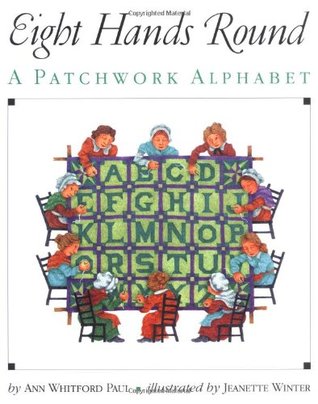
Eight Hands Round: A Patchwork Alphabet. Ann Whitford Paul. 1991. HarperCollins. 32 pages. [Source: Library]

First sentence: Patchwork is pieces of fabric cut into different shapes and sewn together into patterns. During the first one hundred years after the signing of the Declaration of Independence, many women and girls--and even a few men and boys--sewed patchwork.

Premise/plot: It is an alphabet book, but it is an alphabet book for older readers. The goal isn't to teach little ones the alphabet. Each letter of the alphabet shares information about a particular quilt pattern. Information is included providing background on how people lived and showing that how they lived influenced the name of the pattern. (Churn Dash, Grandmother's Fan, Log Cabin, etc.)

My thoughts: My mom is the quilter of the family. She loves to sew quilt blocks by hand. She has books of patterns. She is always looking for new books on quilting at the library. I shared this one with her. I wanted her perspective. She had opinions! What we both loved was that we get to see in each pattern both the one block AND the whole quilt. Not all quilt books include this 'big picture.' There were some letters where she was, "I wouldn't have chosen that block for that letter...."

Overall, I liked it well enough.
© 2017 Becky Laney of Becky's Book Reviews

Thursday, July 27, 2017

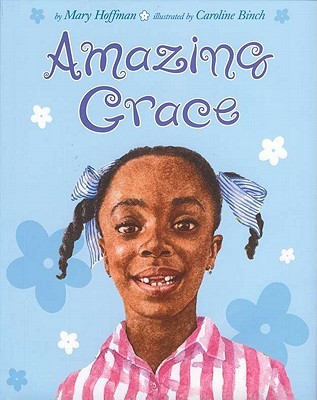
Amazing Grace

Amazing Grace. Mary Hoffman. Illustrated by Caroline Binch. 1991. 32 pages. [Source: Library]

First sentence: Grace was a girl who loved stories. She didn't mind if they were read to her or told to her or made up in her own head.

Premise/plot: Grace, the heroine, loves stories. She loves acting out stories. She does it all the time. So when her class performs Peter Pan, she knows exactly what part she wants--that of Peter Pan. Her classmates, at first, tell her she can't be Peter Pan. She's a girl. She's black. She just doesn't look the part. But Grace knows different. She's been raised to believe that she can be anything she wants. She proves that she can be an amazing Peter Pan.

My thoughts: I liked this one very much. I think Grace is adorable. The kind of girl you'd really love to be friends with in real life.

Text: 4 out of 5
Illustrations: 4 out of 5
Total: 8 out of 10


© 2017 Becky Laney of Becky's Book Reviews

Saturday, July 01, 2017

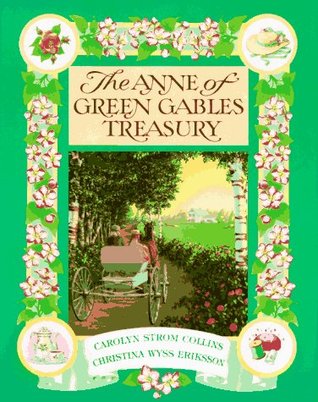
Anne of Green Gables Treasury

Anne of Green Gables Treasury. Carolyn Strom Collins and Christina Wyss Eriksson. 1991. 208 pages. [Source: Bought]

First sentence: Although both of us read and loved the Anne books as children, we became intrigued with them again when our daughters began to read them several years ago. We found ourselves enjoying these "children's books" even more as adults than we had as children!

Premise/plot: In Anne of Green Gables Treasury, the authors share their research with fans of all ages. Their research started with making lists of what their daughters wanted to know more about as they read through the series. The authors also added questions of their own. (I'm sure as they did research, they found out things they weren't particularly searching for but found fascinating enough to include. That's just how research is!)

The book is divided into sections:

L.M. Montgomery and the Anne books. Provides a brief biography of the author, L.M. Montgomery, a map of Prince Edward Island, brief summaries of each book in the series along with a picture of each original cover, a map of Avonlea, and Anne's family tree.

Anne's World. Provides descriptions of Green Gables then and now, a map of Green Gables and Anne's favorite places, and house plans for Green Gables.

Through the Years. Provides readers with context for Anne's world by including an extensive timeline. The timeline starts in 1866 with Anne Shirley's birth, and, concludes in 1919 with the ending of Rilla of Ingleside. Some facts are from the Anne books, and others are from the real world.

School Days, Special Days. Provides readers with information about what nineteenth century life was like in and out of the classroom. (This section includes summer and Christmas.)

Tea Time. Provides readers with ideas for hosting their own tea parties. Includes information about brewing tea, and recipes to prepare for all four courses.

Busy Hands. Provides readers with Anne-themed craft projects. For example, how to press flowers, how to sew a baby bonnet, how to make their own potpourri, how to crochet lace, etc.

In Fine Fashion. Provides readers with descriptions of fashions of the day.

In the Garden. It's no surprise to fans that Anne loved the great outdoors and loved flowers. This section is all about flowers and garden projects.

In Conclusion. The authors encourage readers to think of themselves as Anne's kindred spirits.

My thoughts: I really enjoyed some chapters of this one. I do love the Anne books, and, I can see how this one would have been really POPULAR when it came out in 1991. It's still a good read for fans, but, I'm not sure how practical it is as a cook book or craft book.

© 2017 Becky Laney of Becky's Book Reviews

Sunday, March 19, 2017

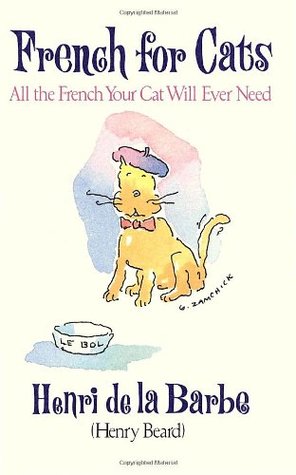
French for Cats

French for Cats. Henry N. Beard. 1991. 96 pages. [Borrowed]

First sentence: The Cat Le Chat

Premise/plot: Love cats? Want to learn French? Want to remember the French you learned in school? French for Cats is a phrase book for cat lovers. It is an illustrated phrase book with clever moments.

I meow
Je miaule
I purr
Je Ron Ronnie
I sleep
Je dors
Some phrases are short and very practical. Others are much more complex.
I wish that the lawn mower would run over the neighbor's cat.
Je voudrais que la tondeuse a Gabon ecrase le chat du voisin.
My thoughts: I like this one. I do. I had French in high school and college, but it's been twenty years. This book is a quick, cute read!

© 2017 Becky Laney of Becky's Book Reviews

Friday, December 16, 2016

The Nutcracker (Golden Book)

The Nutcracker. Rita Balducci. Illustrated by Barbara Lanza. 1991. 24 pages. [Source: Bought]

First sentence: Once there was a little girl named Clara whose family was having a wonderful party on Christmas Eve.

Premise/plot: Rita Balducci adapts the story of the Nutcracker for a Little Golden Book. The illustrations are by Barbara Lanza.

My thoughts: This one avoids being text heavy. The adaptation is just right. It isn't too simple. It isn't too complicated. There are enough illustrations to balance the text. And the pacing seems really well done perhaps because there are just a handful of sentences on each page. The illustrations really seem to sweep you away into a magical dreamland.

This is a great way to introduce younger children to the ballet, perhaps before they attend their first performance of it!

Text: 5 out of 5
Illustrations: 5 out of 5
Total: 10 out of 10

© 2016 Becky Laney of Becky's Book Reviews

Tuesday, July 15, 2014

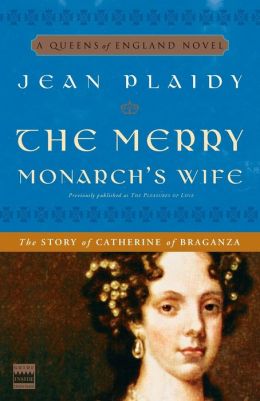
Merry Monarch's Wife (1991)

The Merry Monarch's Wife. (A Queens of England Novel). Jean Plaidy. 1991/2008. Crown. 352 pages. [Source: Bought]

MY LIFE WILL END WHERE IT BEGAN, FOR IN THE YEAR 1692 I left England where I had gone some thirty years before as a bride to the most romantic prince in Europe. I smile now to consider how ill-equipped I was for such a position, and when I look back I say to myself, “If I had done this…,” “If I had not done that…how much happier my life would have been.” But then, although I was not very young—I was twenty-four, which is a mature age for a princess to embark on marriage—I was quite innocent of the world and had hardly ever strayed from the walls of the convent where I had received my education, or the precincts of the royal palace. 
 
I enjoyed reading Jean Plaidy's The Merry Monarch's Wife. Catherine of Braganza was the queen of Charles II. For those familiar with the reign of Charles II, you can imagine what a life she led for better or worse. The book seeks to capture her personal perspective of her husband, of her marriage, of her adopted country. (She's coming from Portugal to England.)

Plaidy's depiction has Catherine truly in love with the King, and oh-so-aware of his shortcomings. In her reckoning, Charles II could not help himself at all, he was completely incapable of fidelity. Readers catch glimpses here and there of Charles' many, many mistresses. But not as much as you might imagine. That is, the focus is on HER and not truly on him and his activities. She is aware of his favorites at any given time, and at times she's sought out in conversation by mistresses in and out of favor.

There is definitely a lot of POLITICS in Merry Monarch's Wife. Readers learn about various plots and threats and conspiracies. Readers meet men and women who are ambitious and manipulative and power-hungry.

I was familiar, in a way, with some of the details of his reign. But not of what life was like for her before and after. Before her arrival in England and after Charles II's death. This book tells a fairly complete story.

Quotes:
We do not know what the future holds, but I believe that one day you are going to be Queen of England, and when you are, you will do your duty to God and your country.” “Oh yes,” I said fervently, “I will.” I had a mission now. Not only was I going to marry Prince Charles, but I was going to save his soul.
He always called himself an ugly fellow, and when one considered his features that could be true, but his charm was overwhelming. There could never have been a more attractive man. I know that I loved him and one is apt to be unaware of the faults of the object of one’s devotion, but I can vouch for it that I was not alone in my opinion. He used to talk of the ringing of bells, the flowers strewn in his path, the women who threw kisses at him, the shouts of loyalty. “Odds fish!” he said. It was a favorite oath of his. “They gave me such a welcome home that I thought it must have been my own fault that I had stayed away so long.”
He laughed. “You remind me of my mother. You and she will be good friends when you meet, I’ll swear. As for this Catholic ceremony…you see, my dear, you are Queen of this country and you must be married according to the religious observances of the place. But you say you will not be happy…and I cannot allow you to be unhappy. I will tell you how we will resolve this matter. There shall be a ceremony here in this bedchamber. It shall be as you wish, and the other one will take place as arranged on the same day. It means you will have to marry me twice. Could you bear that?” I felt my lips tremble. I was going to weep because I was so touched, so happy. “You are all that I hoped for…and all that I dreamed,” I said emotionally. He looked at me in mock dismay. “Do not have too good an opinion of me, I beg you. I fear you will find me a somewhat sinful fellow.” “Oh no. You are the kindest and best man in the world.” He leaned toward me and kissed my cheek. He was sober suddenly. He said: “You shame me.” Then he was merry again. His gravity seemed always to be fleeting, as though his gaiety was waiting impatiently to break in on it.
Charles is fond of you. He likes you very much…but he will never be faithful to you. It is not in him to be faithful…not to any woman. My father was like him. I saw how my mother lived. So I understand. Accept this weakness in him and he will be grateful to you, he will be kind.
We would drink tea, for I had brought this custom with me from Portugal. For a short time people had thought the beverage very strange, but they were soon aware of the pleasure of taking that soothing drink, and my ladies quickly became as ardent tea drinkers as I myself. Indeed the custom was spreading all over the country.

© 2014 Becky Laney of Becky's Book Reviews

Tuesday, October 23, 2012

The Dragon Reborn

The Dragon Reborn. (Wheel of Time) Robert Jordan. 1991. Tor. 624 pages. 

The Dragon Reborn is the third book in the Wheel of Time fantasy series by Robert Jordan. The first book is The Eye of the World; the second book is The Great Hunt. I am continuing to love the series so far. The "hero" of the series, Rand, is a person of interest in this book, but not necessarily a major character. Rand who has recently declared himself to be the Dragon reborn--or allowed himself to be declared the Dragon reborn--has gone missing in this one, and that has many worried including Moiraine, Lan, Perrin, Nynaeve, Egwene, Elayne, Mat, and Loial, to name a few. Many journeys are undertaken in this one as everyone seeks to help their friend in his oh-so-dangerous journey. (There are many different groups traveling, many points of view in this one.)

I enjoyed many of the perspectives in this one. I especially liked reading about Egwene, Nynaeve, and Elayne. (They are still dealing with the events that happened in The Great Hunt.) Even if I didn't absolutely love each character, I still cared enough to keep reading. I found this book to be very connected to the Great Hunt, so it was great to read both books so close together. I think this one has a great pace to it. I loved the adventure, danger, and mystery.

Read The Dragon Reborn
  • If you've read and enjoyed The Eye of the World and The Great Hunt
  • If you enjoy fantasy, dark fantasy
  • If you enjoy world-building and storytelling
  • If you enjoy series books

© 2012 Becky Laney of Becky's Book Reviews

Thursday, March 26, 2009

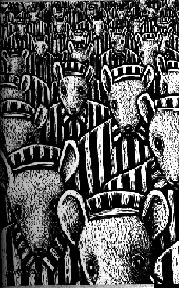
Maus II by Art Spiegelman


Spiegelman, Art. 1991. Maus II: A Survivor's Tale: And Here My Troubles Began.

If Maus I was great, Maus II is even greater. If you thought the first one was heart-felt and moving, wait until you get to this one. Everything is more intense. The sorrows and griefs are even deeper; the actions even more troubling. For here we get to the heart of the story. The darkest place of all. Artie's father and mother have been captured by the Nazis and sent to a concentration camp. (In this graphic novel, the name is "Mauschwitz" instead of Auschwitz.) In the contemporary story line, we see that Artie's father isn't doing well; in fact, it becomes obvious, that he's dying. This complicates things tenfold. More guilt. More anger. More frustration. Even in fine health, Artie had a difficult time getting along with his father. Now, when his father perhaps needs him more than ever, he's crankier and grouchier and meaner than ever. Life isn't easy. Never easy. This is a complex novel--graphic novel--with heart and soul. Highly recommended.


© Becky Laney of Becky's Book Reviews
If you're reading this post on another site, or another feed, the content has been stolen.