Showing posts with label Adult Fantasy. Show all posts

Friday, August 01, 2025

84. The Return of the King


84. The Return of the King. (Lord of the Rings) J.R.R. Tolkien. 1955/1965. Houghton Mifflin. 440 pages.
 
First sentence: Pippin looked out from the shelter of Gandalf's cloak.
 
ETA: I listened to The Return of the King on audio narrated by Andy Serkis. It was great. I've listened to The Hobbit, Fellowship of the Ring, Two Towers, and Return of the King all narrated by Andy Serkis. He's a fabulous voice actor and it was a great experience.

So Return of the King consists of books five and six of Lord of the Rings. In book five, narrators shift from chapter to chapter to chapter. Essentially we spend time with everyone but Sam and Frodo. We spend time in Rohan and Gondor. Scarlett O'Hara would be nothing but bored, bored, bored for this one is all about WAR, WAR, WAR. If they're not actually IN battle, they're marching towards battle, planning battle tactics, or recovering from battle. Did I personally find it boring??? Far from it, it is INTENSE and heartbreaking in places. (For example, Theoden's end.) I would actually say almost all the action happens in book five.

Book six starts out as being all about Sam and Frodo, but, it doesn't stay their book. The climax to the trilogy comes early in book six. Soon the fellowship is reunited and readers get the full cast of characters they've become so attached to. Here we have two to three romances squeezed in. If I had any advice for new readers it would be this: don't expect the book to be as focused on ROMANCE and FEELINGS as the movies are. 

So does book six drag? Is the end of the war coming so early in the novel a weakness in the book? I'm going to say perhaps and NO. I love that the book shows what happens next. I love that the book focuses on soldiers going home, on trying to settle back into life after the war. I love that we see the effect of the war. I love that we don't get a polished, rushed happy ending. It would be so easy for a movie to end in a parade and award ceremony. (Think Star Wars!) But life isn't like that. It isn't always easy for soldiers to adjust back into life, into society. I love that we see the ongoing consequences of war. We see how war has changed everyone--not just the Frodo, Sam, Merry, and Pippin--but everyone in the Shire.

Favorite quotes:

Well, no need to brood on what tomorrow may bring. For one thing, tomorrow will be certain to bring worse than today, for many days to come. And there is nothing more that I can do to help it. The board is set, and the pieces are moving. 
‘Nine o’clock we’d call it in the Shire,’ said Pippin aloud to himself. ‘Just the time for a nice breakfast by the open window in spring sunshine. And how I should like breakfast! Do these people ever have it, or is it over? And when do they have dinner, and where?’

‘I am no warrior at all and dislike any thought of battle; but waiting on the edge of one that I can’t escape is worst of all. What a long day it seems already! I should be happier, if we were not obliged to stand and watch, making no move, striking nowhere first.
‘So we come to it in the end,’ he said: ‘the great battle of our time, in which many things shall pass away. But at least there is no longer need for hiding. We will ride the straight way and the open road and with all our speed. The muster shall begin at once, and wait for none that tarry. Have you good store in Minas Tirith? For if we must ride now in all haste, then we must ride light, with but meal and water enough to last us into battle.
‘O Sam!’ cried Frodo. ‘What have I said? What have I done? Forgive me! After all you have done. It is the horrible power of the Ring. I wish it had never, never, been found. But don’t mind me, Sam. I must carry the burden to the end. It can’t be altered. You can’t come between me and this doom.’
‘So that was the job I felt I had to do when I started,’ thought Sam: ‘to help Mr. Frodo to the last step and then die with him? Well, if that is the job then I must do it. But I would dearly like to see Bywater again, and Rosie Cotton and her brothers, and the Gaffer and Marigold and all. I can’t think somehow that Gandalf would have sent Mr. Frodo on this errand, if there hadn’t a’ been any hope of his ever coming back at all. Things all went wrong when he went down in Moria. I wish he hadn’t. He would have done something.’ But even as hope died in Sam, or seemed to die, it was turned to a new strength. Sam’s plain hobbit-face grew stern, almost grim, as the will hardened in him, and he felt through all his limbs a thrill, as if he was turning into some creature of stone and steel that neither despair nor weariness nor endless barren miles could subdue.
Sam looked at him and wept in his heart, but no tears came to his dry and stinging eyes. ‘I said I’d carry him, if it broke my back,’ he muttered, ‘and I will!’ ‘Come, Mr. Frodo!’ he cried. ‘I can’t carry it for you, but I can carry you and it as well. So up you get! Come on, Mr. Frodo dear! Sam will give you a ride. Just tell him where to go, and he’ll go.’ As Frodo clung upon his back, arms loosely about his neck, legs clasped firmly under his arms, Sam staggered to his feet; and then to his amazement he felt the burden light.
Then to the wonder of many Aragorn did not put the crown upon his head, but gave it back to Faramir, and said: ‘By the labour and valour of many I have come into my inheritance. In token of this I would have the Ring-bearer bring the crown to me, and let Mithrandir set it upon my head, if he will; for he has been the mover of all that has been accomplished, and this is his victory.’ Then Frodo came forward and took the crown from Faramir and bore it to Gandalf; and Aragorn knelt, and Gandalf set the White Crown upon his head, and said:
‘Now come the days of the King, and may they be blessed while the thrones of the Valar endure!’ But when Aragorn arose all that beheld him gazed in silence, for it seemed to them that he was revealed to them now for the first time. Tall as the sea-kings of old, he stood above all that were near; ancient of days he seemed and yet in the flower of manhood; and wisdom sat upon his brow, and strength and healing were in his hands, and a light was about him. And then Faramir cried: ‘Behold the King!’
‘Are you in pain, Frodo?’ said Gandalf quietly as he rode by Frodo’s side. ‘Well, yes I am,’ said Frodo. ‘It is my shoulder. The wound aches, and the memory of darkness is heavy on me. It was a year ago today.’ ‘Alas! there are some wounds that cannot be wholly cured,’ said Gandalf. ‘I fear it may be so with mine,’ said Frodo. ‘There is no real going back. Though I may come to the Shire, it will not seem the same; for I shall not be the same. I am wounded with knife, sting, and tooth, and a long burden. Where shall I find rest?’ Gandalf did not answer.


© 2025 Becky Laney of Becky's Book Reviews

Thursday, July 17, 2025

76. LOTR: Two Towers


76. The Two Towers. (Lord of the Rings) J.R.R. Tolkien. 1954/1965. Houghton Mifflin. 352 pages. [Source: Library] [5 stars, audio book, adult fantasy, adult classic]

First sentence: Aragorn sped on up the hill. Every now and again he bent to the ground. Hobbits go light, and their footprints are not easy even for a Ranger to read, but not far from the top a spring crossed the path, and in the wet earth he saw what he was seeking.

I am still enjoying my reread of Lord of the Rings. The Two Towers consists of books three and four. On this reread, I am listening to the audio book. It is narrated by Andy Serkis. The biggest difference, for me, is that I've switched up how I feel about books three and four. ON audio, I much preferred book four to book three. In print, I think I love both books, but love the third one perhaps a bit more. No matter print or audio, I ADORE SAM.

 
The fellowship has been broken, and, as a result the narrative has been completely split. The fourth book follows the adventures of Sam and Frodo (and Gollum).  The third book follows the adventures of everyone else: Aragorn, Gimli, Legolas, etc.

The book opens with some drama: Merry and Pippin have been taken! Boromir has fallen valiantly in battle trying to protect them. He confesses all to Aragorn moments before he dies. (But the movie does it even better. That death scene in the extended edition is SOMETHING.)

Aragorn knelt beside him. Boromir opened his eyes and strove to speak. At last slow words came. ‘I tried to take the Ring from Frodo,’ he said. ‘I am sorry. I have paid.’ His glance strayed to his fallen enemies; twenty at least lay there. ‘They have gone: the Halflings: the Orcs have taken them. I think they are not dead. Orcs bound them.’ He paused and his eyes closed wearily. After a moment he spoke again. ‘Farewell, Aragorn! Go to Minas Tirith and save my people! I have failed.’ ‘No!’ said Aragorn, taking his hand and kissing his brow. ‘You have conquered. Few have gained such a victory. Be at peace! Minas Tirith shall not fall!’ Boromir smiled. ‘Which way did they go? Was Frodo there?’ said Aragorn. But Boromir did not speak again.
The company also learns that Sam and Frodo have left, have "broken" the fellowship. The mission has changed without a doubt, but the remaining members still have purpose.
‘The rumour of the earth is dim and confused,’ he said. ‘Nothing walks upon it for many miles about us. Faint and far are the feet of our enemies. But loud are the hoofs of the horses. It comes to my mind that I heard them, even as I lay on the ground in sleep, and they troubled my dreams: horses galloping, passing in the West. But now they are drawing ever further from us, riding northward. I wonder what is happening in this land!’ ‘Let us go!’ said Legolas. 

They decide to pursue the orcs and attempt a rescue of the hobbits. In their quest to save Merry and Pippin, they meet an old friend in a surprising place!

In addition to meeting an old friend, readers also meet some new characters: Treebeard, Éomer, Théoden, and Éowyn. Merry and Pippin encounter the Ents! Aragorn, Legolas, Gimli, (and Gandalf) go to Rohan. I absolutely LOVE, LOVE, LOVE, LOVE, LOVE this third book.

The fourth book concerns Frodo, Sam, Gollum. Readers meet Boromir's brother as well. It's good, very good. But I can't help thinking that it is largely redeemed by SAM.

Favorite quotes:
Gimli ground his teeth. ‘This is a bitter end to our hope and to all our toil!’ he said. ‘To hope, maybe, but not to toil,’ said Aragorn.  
‘Awake! Awake!’ he cried. ‘It is a red dawn. Strange things await us by the eaves of the forest. Good or evil, I do not know; but we are called. Awake!’
‘You may say this to Théoden son of Thengel: open war lies before him, with Sauron or against him. None may live now as they have lived, and few shall keep what they call their own.
The world is all grown strange. Elf and Dwarf in company walk in our daily fields; and folk speak with the Lady of the Wood and yet live; and the Sword comes back to war that was broken in the long ages ere the fathers of our fathers rode into the Mark! How shall a man judge what to do in such times?’ ‘As he ever has judged,’ said Aragorn. ‘Good and ill have not changed since yesteryear; nor are they one thing among Elves and Dwarves and another among Men. It is a man’s part to discern them, as much in the Golden Wood as in his own house.’ ‘True indeed,’ said Éomer. ‘But I do not doubt you, nor the deed which my heart would do. Yet I am not free to do all as I would. It is against our law to let strangers wander at will in our land, until the king himself shall give them leave, and more strict is the command in these days of peril.
There are some things that it is better to begin than to refuse, even though the end may be dark.
There are Ents and Ents, you know; or there are Ents and things that look like Ents but ain’t, as you might say. I’ll call you Merry and Pippin, if you please – nice names. For I am not going to tell you my name, not yet at any rate.’ A queer half-knowing, half-humorous look came with a green flicker into his eyes. ‘For one thing it would take a long while: my name is growing all the time, and I’ve lived a very long, long time; so my name is like a story. Real names tell you the story of the things they belong to in my language, in the Old Entish as you might say. It is a lovely language, but it takes a very long time to say anything in it, because we do not say anything in it, unless it is worth taking a long time to say, and to listen to.
‘Of course, it is likely enough, my friends,’ he said slowly, ‘likely enough that we are going to our doom: the last march of the Ents. But if we stayed at home and did nothing, doom would find us anyway, sooner or later. That thought has long been growing in our hearts; and that is why we are marching now. 
‘My name!’ said the old man again. ‘Have you not guessed it already? You have heard it before, I think. Yes, you have heard it before. But come now, what of your tale?’ The three companions stood silent and made no answer. ‘There are some who would begin to doubt whether your errand is fit to tell,’ said the old man. ‘Happily I know something of it. You are tracking the footsteps of two young hobbits, I believe. Yes, hobbits. Don’t stare, as if you had never heard the strange name before. You have, and so have I. Well, they climbed up here the day before yesterday; and they met someone that they did not expect. Does that comfort you? And now you would like to know where they were taken? Well, well, maybe I can give you some news about that. But why are we standing? Your errand, you see, is no longer as urgent as you thought. Let us sit down and be more at ease.’  
They all gazed at him. His hair was white as snow in the sunshine; and gleaming white was his robe; the eyes under his deep brows were bright, piercing as the rays of the sun; power was in his hand. Between wonder, joy, and fear they stood and found no words to say. At last Aragorn stirred. ‘Gandalf!’ he said. ‘Beyond all hope you return to us in our need! What veil was over my sight? Gandalf!’ Gimli said nothing, but sank to his knees, shading his eyes. 
Hope is not victory. War is upon us and all our friends, a war in which only the use of the Ring could give us surety of victory. It fills me with great sorrow and great fear: for much shall be destroyed and all may be lost. I am Gandalf, Gandalf the White, but Black is mightier still.’ 
Go where you must go, and hope! 
A king will have his way in his own hall, be it folly or wisdom.
Men need many words before deeds. 
 ‘Yet dawn is ever the hope of men,’ said Aragorn.
That must be my hope,’ said Legolas. ‘But I wish that he had come this way. I desired to tell Master Gimli that my tale is now thirty-nine.’ ‘If he wins back to the caves, he will pass your count again,’ laughed Aragorn. ‘Never did I see an axe so wielded.’ ‘I must go and seek some arrows,’ said Legolas. ‘Would that this night would end, and I could have better light for shooting.’ 
‘We will have peace,’ said Théoden at last thickly and with an effort. Several of the Riders cried out gladly. Théoden held up his hand. ‘Yes, we will have peace,’ he said, now in a clear voice, ‘we will have peace, when you and all your works have perished – and the works of your dark master to whom you would deliver us. You are a liar, Saruman, and a corrupter of men’s hearts. You hold out your hand to me, and I perceive only a finger of the claw of Mordor. Cruel and cold! Even if your war on me was just – as it was not, for were you ten times as wise you would have no right to rule me and mine for your own profit as you desired – even so, what will you say of your torches in Westfold and the children that lie dead there? And they hewed Háma’s body before the gates of the Hornburg, after he was dead. When you hang from a gibbet at your window for the sport of your own crows, I will have peace with you and Orthanc. So much for the House of Eorl. A lesser son of great sires am I, but I do not need to lick your fingers. Turn elsewhither. But I fear your voice has lost its charm.’ 
Now, Pippin my lad, don’t forget Gildor’s saying – the one Sam used to quote: Do not meddle in the affairs of Wizards, for they are subtle and quick to anger.’
‘Don’t hurt us! Don’t let them hurt us, precious! They won’t hurt us will they, nice little hobbitses? We didn’t mean no harm, but they jumps on us like cats on poor mices, they did, precious. And we’re so lonely, gollum. We’ll be nice to them, very nice, if they’ll be nice to us, won’t we, yes, yess.’
We only wish to catch a fish, so juicy-sweet! 
‘Yess, yess, nice water,’ said Gollum. ‘Drink it, drink it, while we can! But what is it they’ve got, precious? Is it crunchable? Is it tasty?’
‘I am commanded to go to the land of Mordor, and therefore I shall go,’ said Frodo. ‘If there is only one way, then I must take it. What comes after must come.’
Sam said nothing. The look on Frodo’s face was enough for him; he knew that words of his were useless. And after all he never had any real hope in the affair from the beginning; but being a cheerful hobbit he had not needed hope, as long as despair could be postponed. Now they were come to the bitter end. But he had stuck to his master all the way; that was what he had chiefly come for, and he would still stick to him. His master would not go to Mordor alone. Sam would go with him – and at any rate they would get rid of Gollum. 

All hobbits, of course, can cook, for they begin to learn the art before their letters (which many never reach); but Sam was a good cook, even by hobbit reckoning, and he had done a good deal of the camp-cooking on their travels, when there was a chance. He still hopefully carried some of his gear in his pack: a small tinder-box, two small shallow pans, the smaller fitting into the larger; inside them a wooden spoon, a short two-pronged fork and some skewers were stowed; and hidden at the bottom of the pack in a flat wooden box a dwindling treasure, some salt. But he needed a fire, and other things besides. He thought for a bit, while he took out his knife, cleaned and whetted it, and began to dress the rabbits. He was not going to leave Frodo alone asleep even for a few minutes. 
Sam drew a deep breath. ‘An Oliphaunt it was!’ he said. ‘So there are Oliphaunts, and I have seen one. What a life! But no one at home will ever believe me. Well, if that’s over, I’ll have a bit of sleep.’
‘I don’t like anything here at all,’ said Frodo, ‘step or stone, breath or bone. Earth, air and water all seem accursed. But so our path is laid.’ ‘Yes, that’s so,’ said Sam. ‘And we shouldn’t be here at all, if we’d known more about it before we started. But I suppose it’s often that way. The brave things in the old tales and songs, Mr. Frodo: adventures, as I used to call them. I used to think that they were things the wonderful folk of the stories went out and looked for, because they wanted them, because they were exciting and life was a bit dull, a kind of a sport, as you might say. But that’s not the way of it with the tales that really mattered, or the ones that stay in the mind. Folk seem to have been just landed in them, usually – their paths were laid that way, as you put it. But I expect they had lots of chances, like us, of turning back, only they didn’t. And if they had, we shouldn’t know, because they’d have been forgotten. We hear about those as just went on – and not all to a good end, mind you; at least not to what folk inside a story and not outside it call a good end. You know, coming home, and finding things all right, though not quite the same – like old Mr. Bilbo. But those aren’t always the best tales to hear, though they may be the best tales to get landed in! I wonder what sort of a tale we’ve fallen into?’ ‘I wonder,’ said Frodo. ‘But I don’t know. And that’s the way of a real tale. Take any one that you’re fond of. You may know, or guess, what kind of a tale it is, happy-ending or sad-ending, but the people in it don’t know. And you don’t want them to.’
Still, I wonder if we shall ever be put into songs or tales. We’re in one, of course; but I mean: put into words, you know, told by the fireside, or read out of a great big book with red and black letters, years and years afterwards. And people will say: “Let’s hear about Frodo and the Ring!” And they’ll say: “Yes, that’s one of my favourite stories. Frodo was very brave, wasn’t he, dad?” “Yes, my boy, the famousest of the hobbits, and that’s saying a lot.”’ ‘It’s saying a lot too much,’ said Frodo, and he laughed, a long clear laugh from his heart. Such a sound had not been heard in those places since Sauron came to Middle-earth. To Sam suddenly it seemed as if all the stones were listening and the tall rocks leaning over them. But Frodo did not heed them; he laughed again. ‘Why, Sam,’ he said, ‘to hear you somehow makes me as merry as if the story was already written. But you’ve left out one of the chief characters: Samwise the stouthearted. “I want to hear more about Sam, dad. Why didn’t they put in more of his talk, dad? That’s what I like, it makes me laugh. And Frodo wouldn’t have got far without Sam, would he, dad?”’ ‘Now, Mr. Frodo,’ said Sam, ‘you shouldn’t make fun. I was serious.’ ‘So was I,’ said Frodo, ‘and so I am. We’re going on a bit too fast. You and I, Sam, are still stuck in the worst places of the story, and it is all too likely that some will say at this point: “Shut the book now, dad; we don’t want to read any more.”’


© 2025 Becky Laney of Becky's Book Reviews

Monday, June 16, 2025

58. The Fellowship of the Ring (Lord of the Rings)


The Fellowship of the Ring. J.R.R. Tolkien. 1954/1965. Houghton Mifflin. 423 pages. [Source: Bought] [5 stars, fantasy, classic]

First sentence from the prologue: This book is largely concerned with Hobbits, and from its pages a reader may discover much of their character and a little of their history.

First sentence from chapter one: When Mr. Bilbo Baggins of Bag End announced that he would shortly be celebrating his eleventy-first birthday with a party of special magnificence, there was much talk and excitement in Hobbiton.

[ETA: I've reread The Lord of the Rings many times now. This was my FIRST TIME to listen to the audio book of Fellowship of the Rings. It's about 22 hours of awesomeness. Maybe a little longer. The audio book I listened to was narrated by Andy Serkis. He was a GREAT narrator. DISTINCT voices for all the characters. Each one was GREAT. It was just a joy to revisit the book in audio form. It made the poetry/songs especially enjoyable instead of just something you skim/skip.]

Premise/plot: The novel opens with a HUGE celebration. Bilbo will be turning 111 and Frodo will be turning 33.

Bilbo is preparing to leave the Shire forever, but, he'll be leaving most everything to Frodo--including his magical ring. Gandalf is relieved that the ring will pass onto Frodo, it makes him a bit nervous to see Bilbo so attached to it and calling it precious. As the years go by--and years DO go by--Gandalf becomes concerned, worried, anxious about the ring. He fears that it is the ONE RING, and that Frodo's possession of the ring is dangerous.

I believe Frodo is about fifty when he does eventually set out on his very own adventure. And he won't be alone. He'll be accompanied by Sam, Pippin, and Merry. As their journey progresses, more people join the fellowship, and more risks are faced.

My thoughts: I love, love, loved rereading The Fellowship of the Ring. I think this is my third time to finish the series. (Yes, I've read all three of the trilogy when I'm writing this review.) There is something comforting about rereading it. I think it gets better each time. I find more to love, more to share. I notice more as well.

  On birthday presents:

Hobbits give presents to other people on their own birthdays. Not very expensive ones, as a rule, and not so lavishly as on this occasion; but it was not a bad system. Actually in Hobbiton and Bywater every day in the year was somebody’s birthday, so that every hobbit in those parts had a fair chance of at least one present at least once a week. But they never got tired of them.
It was a tendency of hobbit-holes to get cluttered up: for which the custom of giving so many birthday-presents was largely responsible. Not, of course, that the birthday-presents were always new; there were one or two old mathoms of forgotten uses that had circulated all around the district; but Bilbo had usually given new presents, and kept those that he received. 
On the food at the birthday party:
There were three official meals: lunch, tea, and dinner (or supper). But lunch and tea were marked chiefly by the fact that at those times all the guests were sitting down and eating together. At other times there were merely lots of people eating and drinking – continuously from elevenses until six-thirty, when the fireworks started. 
Bilbo confesses something to Gandalf:
‘I am old, Gandalf. I don’t look it, but I am beginning to feel it in my heart of hearts. Well-preserved indeed!’ he snorted. ‘Why, I feel all thin, sort of stretched, if you know what I mean: like butter that has been scraped over too much bread. That can’t be right. I need a change, or something.’ Gandalf looked curiously and closely at him. ‘No, it does not seem right,’ he said thoughtfully. ‘No, after all I believe your plan is probably the best.’ ‘Well, I’ve made up my mind, anyway. I want to see mountains again, Gandalf – mountains; and then find somewhere where I can rest. In peace and quiet, without a lot of relatives prying around, and a string of confounded visitors hanging on the bell. I might find somewhere where I can finish my book. I have thought of a nice ending for it: and he lived happily ever after to the end of his days.’ 
The ring:
As Frodo did so, he now saw fine lines, finer than the finest pen-strokes, running along the ring, outside and inside: lines of fire that seemed to form the letters of a flowing script. They shone piercingly bright, and yet remote, as if out of a great depth. ‘I cannot read the fiery letters,’ said Frodo in a quavering voice. ‘No,’ said Gandalf, ‘but I can. The letters are Elvish, of an ancient mode, but the language is that of Mordor, which I will not utter here. But this in the Common Tongue is what is said, close enough: One Ring to rule them all, One Ring to find them, One Ring to bring them all and in the darkness bind them.
It is only two lines of a verse long known in Elven-lore: Three Rings for the Elven-kings under the sky, Seven for the Dwarf-lords in their halls of stone, Nine for Mortal Men doomed to die, One for the Dark Lord on his dark throne In the Land of Mordor where the Shadows lie. One Ring to rule them all, One Ring to find them, One Ring to bring them all and in the darkness bind them In the Land of Mordor where the Shadows lie.’
But as for breaking the Ring, force is useless. Even if you took it and struck it with a heavy sledge-hammer, it would make no dint in it. It cannot be unmade by your hands, or by mine. 
‘There is only one way: to find the Cracks of Doom in the depths of Orodruin, the Fire-mountain, and cast the Ring in there, if you really wish to destroy it, to put it beyond the grasp of the Enemy for ever.’ 
Frodo and Gandalf 'regret' the times in which they live:
‘I wish it need not have happened in my time,’ said Frodo. ‘So do I,’ said Gandalf, ‘and so do all who live to see such times. But that is not for them to decide. All we have to decide is what to do with the time that is given us. And already, Frodo, our time is beginning to look black. The Enemy is fast becoming very strong. His plans are far from ripe, I think, but they are ripening. We shall be hard put to it. We should be very hard put to it, even if it were not for this dreadful chance. 
I am not made for perilous quests. I wish I had never seen the Ring! Why did it come to me? Why was I chosen?’ ‘You may be sure that it was not for any merit that others do not possess: not for power or wisdom, at any rate. But you have been chosen, and you must therefore use such strength and heart and wits as you have.’
‘Not safe for ever,’ said Gandalf. ‘There are many things in the deep waters; and seas and lands may change. And it is not our part here to take thought only for a season, or for a few lives of Men, or for a passing age of the world. We should seek a final end of this menace, even if we do not hope to make one.’ 
More words of wisdom from Gandalf:
Many that live deserve death. And some that die deserve life. Can you give it to them? Then do not be too eager to deal out death in judgement. For even the very wise cannot see all ends. 
Hobbits really are amazing creatures, as I have said before. You can learn all that there is to know about their ways in a month, and yet after a hundred years they can still surprise you at a pinch.  
The wide world is all about you: you can fence yourselves in, but you cannot for ever fence it out.’ 
It is perilous to study too deeply the arts of the Enemy, for good or for ill. But such falls and betrayals, alas, have happened before. 
‘Despair, or folly?’ said Gandalf. ‘It is not despair, for despair is only for those who see the end beyond all doubt. We do not. It is wisdom to recognize necessity, when all other courses have been weighed, though as folly it may appear to those who cling to false hope. Well, let folly be our cloak, a veil before the eyes of the Enemy! For he is very wise, and weighs all things to a nicety in the scales of his malice. But the only measure that he knows is desire, desire for power; and so he judges all hearts. Into his heart the thought will not enter that any will refuse it, that having the Ring we may seek to destroy it. If we seek this, we shall put him out of reckoning.’ 
Favorite Sam Bits:
‘Well, sir,’ said Sam dithering a little. ‘I heard a deal that I didn’t rightly understand, about an enemy, and rings, and Mr. Bilbo, sir, and dragons, and a fiery mountain, and – and Elves, sir. I listened because I couldn’t help myself, if you know what I mean. Lor bless me, sir, but I do love tales of that sort. And I believe them too, whatever Ted may say. Elves, sir! I would dearly love to see them. Couldn’t you take me to see Elves, sir, when you go?’
‘It is going to be very dangerous, Sam. It is already dangerous. Most likely neither of us will come back.’ ‘If you don’t come back, sir, then I shan’t, that’s certain,’ said Sam. ‘Don’t you leave him! they said to me. Leave him! I said. I never mean to. I am going with him, if he climbs to the Moon; and if any of those Black Riders try to stop him, they’ll have Sam Gamgee to reckon with, I said. They laughed.’
‘Do you feel any need to leave the Shire now – now that your wish to see them has come true already?’ he asked. ‘Yes, sir. I don’t know how to say it, but after last night I feel different. I seem to see ahead, in a kind of way. I know we are going to take a very long road, into darkness; but I know I can’t turn back. It isn’t to see Elves now, nor dragons, nor mountains, that I want – I don’t rightly know what I want: but I have something to do before the end, and it lies ahead, not in the Shire. I must see it through, sir, if you understand me.’
Sam looked at him unhappily. ‘It all depends on what you want,’ put in Merry. ‘You can trust us to stick to you through thick and thin – to the bitter end. And you can trust us to keep any secret of yours – closer than you keep it yourself. But you cannot trust us to let you face trouble alone, and go off without a word. We are your friends, Frodo. Anyway: there it is. We know most of what Gandalf has told you. We know a good deal about the Ring. We are horribly afraid – but we are coming with you; or following you like hounds.’ 
‘Where did you come by that, Sam?’ asked Pippin. ‘I’ve never heard those words before.’ Sam muttered something inaudible. ‘It’s out of his own head, of course,’ said Frodo. ‘I am learning a lot about Sam Gamgee on this journey. First he was a conspirator, now he’s a jester. He’ll end up by becoming a wizard – or a warrior!’ ‘I hope not,’ said Sam. ‘I don’t want to be neither!’ 
Sam sat on the ground and put his head in his hands. ‘I wish I had never come here, and I don’t want to see no more magic,’ he said and fell silent. After a moment he spoke again thickly, as if struggling with tears. ‘No, I’ll go home by the long road with Mr. Frodo, or not at all,’ he said. ‘But I hope I do get back some day. If what I’ve seen turns out true, somebody’s going to catch it hot!’ 
‘So all my plan is spoilt!’ said Frodo. ‘It is no good trying to escape you. But I’m glad, Sam. I cannot tell you how glad. Come along! It is plain that we were meant to go together. We will go, and may the others find a safe road! Strider will look after them. I don’t suppose we shall see them again.’ ‘Yet we may, Mr. Frodo. We may,’ said Sam.
Concerning Aragorn and other members of the Fellowship:
All that is gold does not glitter, Not all those who wander are lost; The old that is strong does not wither, Deep roots are not reached by the frost. From the ashes a fire shall be woken, A light from the shadows shall spring; Renewed shall be blade that was broken, The crownless again shall be king. 
‘I am Aragorn son of Arathorn; and if by life or death I can save you, I will.’
‘Did the verses apply to you then?’ asked Frodo. ‘I could not make out what they were about. But how did you know that they were in Gandalf’s letter, if you have never seen it?’ ‘I did not know,’ he answered. ‘But I am Aragorn, and those verses go with that name.’ He drew out his sword, and they saw that the blade was indeed broken a foot below the hilt. ‘Not much use is it, Sam?’ said Strider. ‘But the time is near when it shall be forged anew.’
There is naught that you can do, other than to resist, with hope or without it. But you do not stand alone. You will learn that your trouble is but part of the trouble of all the western world.


© 2025 Becky Laney of Becky's Book Reviews

Sunday, August 13, 2023

141. Lord of the Rings: Two Towers


The Two Towers. J.R.R. Tolkien. 1954/1965. Houghton Mifflin. 352 pages. [Source: Bought]

I am still enjoying my reread of Lord of the Rings. The Two Towers consists of books three and four.

 
The fellowship has been broken, and, as a result the narrative has been completely split. The fourth book follows the adventures of Sam and Frodo (and Gollum).  The third book follows the adventures of everyone else: Aragorn, Gimli, Legolas, etc.

The book opens with some drama: Merry and Pippin have been taken! Boromir has fallen valiantly in battle trying to protect them. He confesses all to Aragorn moments before he dies. (But the movie does it even better. That death scene in the extended edition is SOMETHING.)

Aragorn knelt beside him. Boromir opened his eyes and strove to speak. At last slow words came. ‘I tried to take the Ring from Frodo,’ he said. ‘I am sorry. I have paid.’ His glance strayed to his fallen enemies; twenty at least lay there. ‘They have gone: the Halflings: the Orcs have taken them. I think they are not dead. Orcs bound them.’ He paused and his eyes closed wearily. After a moment he spoke again. ‘Farewell, Aragorn! Go to Minas Tirith and save my people! I have failed.’ ‘No!’ said Aragorn, taking his hand and kissing his brow. ‘You have conquered. Few have gained such a victory. Be at peace! Minas Tirith shall not fall!’ Boromir smiled. ‘Which way did they go? Was Frodo there?’ said Aragorn. But Boromir did not speak again.
The company also learns that Sam and Frodo have left, have "broken" the fellowship. The mission has changed without a doubt, but the remaining members still have purpose.
‘The rumour of the earth is dim and confused,’ he said. ‘Nothing walks upon it for many miles about us. Faint and far are the feet of our enemies. But loud are the hoofs of the horses. It comes to my mind that I heard them, even as I lay on the ground in sleep, and they troubled my dreams: horses galloping, passing in the West. But now they are drawing ever further from us, riding northward. I wonder what is happening in this land!’ ‘Let us go!’ said Legolas. 

They decide to pursue the orcs and attempt a rescue of the hobbits. In their quest to save Merry and Pippin, they meet an old friend in a surprising place!

In addition to meeting an old friend, readers also meet some new characters: Treebeard, Éomer, Théoden, and Éowyn. Merry and Pippin encounter the Ents! Aragorn, Legolas, Gimli, (and Gandalf) go to Rohan. I absolutely LOVE, LOVE, LOVE, LOVE, LOVE this third book.

The fourth book concerns Frodo, Sam, Gollum. Readers meet Boromir's brother as well. It's good, very good. But I can't help thinking that it is largely redeemed by SAM.

Favorite quotes:
Gimli ground his teeth. ‘This is a bitter end to our hope and to all our toil!’ he said. ‘To hope, maybe, but not to toil,’ said Aragorn.  
‘Awake! Awake!’ he cried. ‘It is a red dawn. Strange things await us by the eaves of the forest. Good or evil, I do not know; but we are called. Awake!’
‘You may say this to Théoden son of Thengel: open war lies before him, with Sauron or against him. None may live now as they have lived, and few shall keep what they call their own.
The world is all grown strange. Elf and Dwarf in company walk in our daily fields; and folk speak with the Lady of the Wood and yet live; and the Sword comes back to war that was broken in the long ages ere the fathers of our fathers rode into the Mark! How shall a man judge what to do in such times?’ ‘As he ever has judged,’ said Aragorn. ‘Good and ill have not changed since yesteryear; nor are they one thing among Elves and Dwarves and another among Men. It is a man’s part to discern them, as much in the Golden Wood as in his own house.’ ‘True indeed,’ said Éomer. ‘But I do not doubt you, nor the deed which my heart would do. Yet I am not free to do all as I would. It is against our law to let strangers wander at will in our land, until the king himself shall give them leave, and more strict is the command in these days of peril.
There are some things that it is better to begin than to refuse, even though the end may be dark.
There are Ents and Ents, you know; or there are Ents and things that look like Ents but ain’t, as you might say. I’ll call you Merry and Pippin, if you please – nice names. For I am not going to tell you my name, not yet at any rate.’ A queer half-knowing, half-humorous look came with a green flicker into his eyes. ‘For one thing it would take a long while: my name is growing all the time, and I’ve lived a very long, long time; so my name is like a story. Real names tell you the story of the things they belong to in my language, in the Old Entish as you might say. It is a lovely language, but it takes a very long time to say anything in it, because we do not say anything in it, unless it is worth taking a long time to say, and to listen to.
‘Of course, it is likely enough, my friends,’ he said slowly, ‘likely enough that we are going to our doom: the last march of the Ents. But if we stayed at home and did nothing, doom would find us anyway, sooner or later. That thought has long been growing in our hearts; and that is why we are marching now. 
‘My name!’ said the old man again. ‘Have you not guessed it already? You have heard it before, I think. Yes, you have heard it before. But come now, what of your tale?’ The three companions stood silent and made no answer. ‘There are some who would begin to doubt whether your errand is fit to tell,’ said the old man. ‘Happily I know something of it. You are tracking the footsteps of two young hobbits, I believe. Yes, hobbits. Don’t stare, as if you had never heard the strange name before. You have, and so have I. Well, they climbed up here the day before yesterday; and they met someone that they did not expect. Does that comfort you? And now you would like to know where they were taken? Well, well, maybe I can give you some news about that. But why are we standing? Your errand, you see, is no longer as urgent as you thought. Let us sit down and be more at ease.’  
They all gazed at him. His hair was white as snow in the sunshine; and gleaming white was his robe; the eyes under his deep brows were bright, piercing as the rays of the sun; power was in his hand. Between wonder, joy, and fear they stood and found no words to say. At last Aragorn stirred. ‘Gandalf!’ he said. ‘Beyond all hope you return to us in our need! What veil was over my sight? Gandalf!’ Gimli said nothing, but sank to his knees, shading his eyes. 
Hope is not victory. War is upon us and all our friends, a war in which only the use of the Ring could give us surety of victory. It fills me with great sorrow and great fear: for much shall be destroyed and all may be lost. I am Gandalf, Gandalf the White, but Black is mightier still.’ 
Go where you must go, and hope! 
A king will have his way in his own hall, be it folly or wisdom.
Men need many words before deeds. 
 ‘Yet dawn is ever the hope of men,’ said Aragorn.
That must be my hope,’ said Legolas. ‘But I wish that he had come this way. I desired to tell Master Gimli that my tale is now thirty-nine.’ ‘If he wins back to the caves, he will pass your count again,’ laughed Aragorn. ‘Never did I see an axe so wielded.’ ‘I must go and seek some arrows,’ said Legolas. ‘Would that this night would end, and I could have better light for shooting.’ 
‘We will have peace,’ said Théoden at last thickly and with an effort. Several of the Riders cried out gladly. Théoden held up his hand. ‘Yes, we will have peace,’ he said, now in a clear voice, ‘we will have peace, when you and all your works have perished – and the works of your dark master to whom you would deliver us. You are a liar, Saruman, and a corrupter of men’s hearts. You hold out your hand to me, and I perceive only a finger of the claw of Mordor. Cruel and cold! Even if your war on me was just – as it was not, for were you ten times as wise you would have no right to rule me and mine for your own profit as you desired – even so, what will you say of your torches in Westfold and the children that lie dead there? And they hewed Háma’s body before the gates of the Hornburg, after he was dead. When you hang from a gibbet at your window for the sport of your own crows, I will have peace with you and Orthanc. So much for the House of Eorl. A lesser son of great sires am I, but I do not need to lick your fingers. Turn elsewhither. But I fear your voice has lost its charm.’ 
Now, Pippin my lad, don’t forget Gildor’s saying – the one Sam used to quote: Do not meddle in the affairs of Wizards, for they are subtle and quick to anger.’
‘Don’t hurt us! Don’t let them hurt us, precious! They won’t hurt us will they, nice little hobbitses? We didn’t mean no harm, but they jumps on us like cats on poor mices, they did, precious. And we’re so lonely, gollum. We’ll be nice to them, very nice, if they’ll be nice to us, won’t we, yes, yess.’
We only wish to catch a fish, so juicy-sweet! 
‘Yess, yess, nice water,’ said Gollum. ‘Drink it, drink it, while we can! But what is it they’ve got, precious? Is it crunchable? Is it tasty?’
‘I am commanded to go to the land of Mordor, and therefore I shall go,’ said Frodo. ‘If there is only one way, then I must take it. What comes after must come.’
Sam said nothing. The look on Frodo’s face was enough for him; he knew that words of his were useless. And after all he never had any real hope in the affair from the beginning; but being a cheerful hobbit he had not needed hope, as long as despair could be postponed. Now they were come to the bitter end. But he had stuck to his master all the way; that was what he had chiefly come for, and he would still stick to him. His master would not go to Mordor alone. Sam would go with him – and at any rate they would get rid of Gollum. 

All hobbits, of course, can cook, for they begin to learn the art before their letters (which many never reach); but Sam was a good cook, even by hobbit reckoning, and he had done a good deal of the camp-cooking on their travels, when there was a chance. He still hopefully carried some of his gear in his pack: a small tinder-box, two small shallow pans, the smaller fitting into the larger; inside them a wooden spoon, a short two-pronged fork and some skewers were stowed; and hidden at the bottom of the pack in a flat wooden box a dwindling treasure, some salt. But he needed a fire, and other things besides. He thought for a bit, while he took out his knife, cleaned and whetted it, and began to dress the rabbits. He was not going to leave Frodo alone asleep even for a few minutes. 
Sam drew a deep breath. ‘An Oliphaunt it was!’ he said. ‘So there are Oliphaunts, and I have seen one. What a life! But no one at home will ever believe me. Well, if that’s over, I’ll have a bit of sleep.’
‘I don’t like anything here at all,’ said Frodo, ‘step or stone, breath or bone. Earth, air and water all seem accursed. But so our path is laid.’ ‘Yes, that’s so,’ said Sam. ‘And we shouldn’t be here at all, if we’d known more about it before we started. But I suppose it’s often that way. The brave things in the old tales and songs, Mr. Frodo: adventures, as I used to call them. I used to think that they were things the wonderful folk of the stories went out and looked for, because they wanted them, because they were exciting and life was a bit dull, a kind of a sport, as you might say. But that’s not the way of it with the tales that really mattered, or the ones that stay in the mind. Folk seem to have been just landed in them, usually – their paths were laid that way, as you put it. But I expect they had lots of chances, like us, of turning back, only they didn’t. And if they had, we shouldn’t know, because they’d have been forgotten. We hear about those as just went on – and not all to a good end, mind you; at least not to what folk inside a story and not outside it call a good end. You know, coming home, and finding things all right, though not quite the same – like old Mr. Bilbo. But those aren’t always the best tales to hear, though they may be the best tales to get landed in! I wonder what sort of a tale we’ve fallen into?’ ‘I wonder,’ said Frodo. ‘But I don’t know. And that’s the way of a real tale. Take any one that you’re fond of. You may know, or guess, what kind of a tale it is, happy-ending or sad-ending, but the people in it don’t know. And you don’t want them to.’
Still, I wonder if we shall ever be put into songs or tales. We’re in one, of course; but I mean: put into words, you know, told by the fireside, or read out of a great big book with red and black letters, years and years afterwards. And people will say: “Let’s hear about Frodo and the Ring!” And they’ll say: “Yes, that’s one of my favourite stories. Frodo was very brave, wasn’t he, dad?” “Yes, my boy, the famousest of the hobbits, and that’s saying a lot.”’ ‘It’s saying a lot too much,’ said Frodo, and he laughed, a long clear laugh from his heart. Such a sound had not been heard in those places since Sauron came to Middle-earth. To Sam suddenly it seemed as if all the stones were listening and the tall rocks leaning over them. But Frodo did not heed them; he laughed again. ‘Why, Sam,’ he said, ‘to hear you somehow makes me as merry as if the story was already written. But you’ve left out one of the chief characters: Samwise the stouthearted. “I want to hear more about Sam, dad. Why didn’t they put in more of his talk, dad? That’s what I like, it makes me laugh. And Frodo wouldn’t have got far without Sam, would he, dad?”’ ‘Now, Mr. Frodo,’ said Sam, ‘you shouldn’t make fun. I was serious.’ ‘So was I,’ said Frodo, ‘and so I am. We’re going on a bit too fast. You and I, Sam, are still stuck in the worst places of the story, and it is all too likely that some will say at this point: “Shut the book now, dad; we don’t want to read any more.”’


© 2023 Becky Laney of Becky's Book Reviews

Tuesday, July 04, 2023

127. The Fellowship of the Ring


The Fellowship of the Ring. J.R.R. Tolkien. 1954/1965. Houghton Mifflin. 423 pages. [Source: Bought]

First sentence from the prologue: This book is largely concerned with Hobbits, and from its pages a reader may discover much of their character and a little of their history.

First sentence from chapter one: When Mr. Bilbo Baggins of Bag End announced that he would shortly be celebrating his eleventy-first birthday with a party of special magnificence, there was much talk and excitement in Hobbiton.

Premise/plot: The novel opens with a HUGE celebration. Bilbo will be turning 111 and Frodo will be turning 33.

Bilbo is preparing to leave the Shire forever, but, he'll be leaving most everything to Frodo--including his magical ring. Gandalf is relieved that the ring will pass onto Frodo, it makes him a bit nervous to see Bilbo so attached to it and calling it precious. As the years go by--and years DO go by--Gandalf becomes concerned, worried, anxious about the ring. He fears that it is the ONE RING, and that Frodo's possession of the ring is dangerous.

I believe Frodo is about fifty when he does eventually set out on his very own adventure. And he won't be alone. He'll be accompanied by Sam, Pippin, and Merry. As their journey progresses, more people join the fellowship, and more risks are faced.

My thoughts: I love, love, loved rereading The Fellowship of the Ring. I think this is my third time to finish the series. (Yes, I've read all three of the trilogy when I'm writing this review.) There is something comforting about rereading it. I think it gets better each time. I find more to love, more to share. I notice more as well.

  On birthday presents:

Hobbits give presents to other people on their own birthdays. Not very expensive ones, as a rule, and not so lavishly as on this occasion; but it was not a bad system. Actually in Hobbiton and Bywater every day in the year was somebody’s birthday, so that every hobbit in those parts had a fair chance of at least one present at least once a week. But they never got tired of them.
It was a tendency of hobbit-holes to get cluttered up: for which the custom of giving so many birthday-presents was largely responsible. Not, of course, that the birthday-presents were always new; there were one or two old mathoms of forgotten uses that had circulated all around the district; but Bilbo had usually given new presents, and kept those that he received. 
On the food at the birthday party:
There were three official meals: lunch, tea, and dinner (or supper). But lunch and tea were marked chiefly by the fact that at those times all the guests were sitting down and eating together. At other times there were merely lots of people eating and drinking – continuously from elevenses until six-thirty, when the fireworks started. 
Bilbo confesses something to Gandalf:
‘I am old, Gandalf. I don’t look it, but I am beginning to feel it in my heart of hearts. Well-preserved indeed!’ he snorted. ‘Why, I feel all thin, sort of stretched, if you know what I mean: like butter that has been scraped over too much bread. That can’t be right. I need a change, or something.’ Gandalf looked curiously and closely at him. ‘No, it does not seem right,’ he said thoughtfully. ‘No, after all I believe your plan is probably the best.’ ‘Well, I’ve made up my mind, anyway. I want to see mountains again, Gandalf – mountains; and then find somewhere where I can rest. In peace and quiet, without a lot of relatives prying around, and a string of confounded visitors hanging on the bell. I might find somewhere where I can finish my book. I have thought of a nice ending for it: and he lived happily ever after to the end of his days.’ 
The ring:
As Frodo did so, he now saw fine lines, finer than the finest pen-strokes, running along the ring, outside and inside: lines of fire that seemed to form the letters of a flowing script. They shone piercingly bright, and yet remote, as if out of a great depth. ‘I cannot read the fiery letters,’ said Frodo in a quavering voice. ‘No,’ said Gandalf, ‘but I can. The letters are Elvish, of an ancient mode, but the language is that of Mordor, which I will not utter here. But this in the Common Tongue is what is said, close enough: One Ring to rule them all, One Ring to find them, One Ring to bring them all and in the darkness bind them.
It is only two lines of a verse long known in Elven-lore: Three Rings for the Elven-kings under the sky, Seven for the Dwarf-lords in their halls of stone, Nine for Mortal Men doomed to die, One for the Dark Lord on his dark throne In the Land of Mordor where the Shadows lie. One Ring to rule them all, One Ring to find them, One Ring to bring them all and in the darkness bind them In the Land of Mordor where the Shadows lie.’
But as for breaking the Ring, force is useless. Even if you took it and struck it with a heavy sledge-hammer, it would make no dint in it. It cannot be unmade by your hands, or by mine. 
‘There is only one way: to find the Cracks of Doom in the depths of Orodruin, the Fire-mountain, and cast the Ring in there, if you really wish to destroy it, to put it beyond the grasp of the Enemy for ever.’ 
Frodo and Gandalf 'regret' the times in which they live:
‘I wish it need not have happened in my time,’ said Frodo. ‘So do I,’ said Gandalf, ‘and so do all who live to see such times. But that is not for them to decide. All we have to decide is what to do with the time that is given us. And already, Frodo, our time is beginning to look black. The Enemy is fast becoming very strong. His plans are far from ripe, I think, but they are ripening. We shall be hard put to it. We should be very hard put to it, even if it were not for this dreadful chance. 
I am not made for perilous quests. I wish I had never seen the Ring! Why did it come to me? Why was I chosen?’ ‘You may be sure that it was not for any merit that others do not possess: not for power or wisdom, at any rate. But you have been chosen, and you must therefore use such strength and heart and wits as you have.’
‘Not safe for ever,’ said Gandalf. ‘There are many things in the deep waters; and seas and lands may change. And it is not our part here to take thought only for a season, or for a few lives of Men, or for a passing age of the world. We should seek a final end of this menace, even if we do not hope to make one.’ 
More words of wisdom from Gandalf:
Many that live deserve death. And some that die deserve life. Can you give it to them? Then do not be too eager to deal out death in judgement. For even the very wise cannot see all ends. 
Hobbits really are amazing creatures, as I have said before. You can learn all that there is to know about their ways in a month, and yet after a hundred years they can still surprise you at a pinch.  
The wide world is all about you: you can fence yourselves in, but you cannot for ever fence it out.’ 
It is perilous to study too deeply the arts of the Enemy, for good or for ill. But such falls and betrayals, alas, have happened before. 
‘Despair, or folly?’ said Gandalf. ‘It is not despair, for despair is only for those who see the end beyond all doubt. We do not. It is wisdom to recognize necessity, when all other courses have been weighed, though as folly it may appear to those who cling to false hope. Well, let folly be our cloak, a veil before the eyes of the Enemy! For he is very wise, and weighs all things to a nicety in the scales of his malice. But the only measure that he knows is desire, desire for power; and so he judges all hearts. Into his heart the thought will not enter that any will refuse it, that having the Ring we may seek to destroy it. If we seek this, we shall put him out of reckoning.’ 
Favorite Sam Bits:
‘Well, sir,’ said Sam dithering a little. ‘I heard a deal that I didn’t rightly understand, about an enemy, and rings, and Mr. Bilbo, sir, and dragons, and a fiery mountain, and – and Elves, sir. I listened because I couldn’t help myself, if you know what I mean. Lor bless me, sir, but I do love tales of that sort. And I believe them too, whatever Ted may say. Elves, sir! I would dearly love to see them. Couldn’t you take me to see Elves, sir, when you go?’
‘It is going to be very dangerous, Sam. It is already dangerous. Most likely neither of us will come back.’ ‘If you don’t come back, sir, then I shan’t, that’s certain,’ said Sam. ‘Don’t you leave him! they said to me. Leave him! I said. I never mean to. I am going with him, if he climbs to the Moon; and if any of those Black Riders try to stop him, they’ll have Sam Gamgee to reckon with, I said. They laughed.’
‘Do you feel any need to leave the Shire now – now that your wish to see them has come true already?’ he asked. ‘Yes, sir. I don’t know how to say it, but after last night I feel different. I seem to see ahead, in a kind of way. I know we are going to take a very long road, into darkness; but I know I can’t turn back. It isn’t to see Elves now, nor dragons, nor mountains, that I want – I don’t rightly know what I want: but I have something to do before the end, and it lies ahead, not in the Shire. I must see it through, sir, if you understand me.’
Sam looked at him unhappily. ‘It all depends on what you want,’ put in Merry. ‘You can trust us to stick to you through thick and thin – to the bitter end. And you can trust us to keep any secret of yours – closer than you keep it yourself. But you cannot trust us to let you face trouble alone, and go off without a word. We are your friends, Frodo. Anyway: there it is. We know most of what Gandalf has told you. We know a good deal about the Ring. We are horribly afraid – but we are coming with you; or following you like hounds.’ 
‘Where did you come by that, Sam?’ asked Pippin. ‘I’ve never heard those words before.’ Sam muttered something inaudible. ‘It’s out of his own head, of course,’ said Frodo. ‘I am learning a lot about Sam Gamgee on this journey. First he was a conspirator, now he’s a jester. He’ll end up by becoming a wizard – or a warrior!’ ‘I hope not,’ said Sam. ‘I don’t want to be neither!’ 
Sam sat on the ground and put his head in his hands. ‘I wish I had never come here, and I don’t want to see no more magic,’ he said and fell silent. After a moment he spoke again thickly, as if struggling with tears. ‘No, I’ll go home by the long road with Mr. Frodo, or not at all,’ he said. ‘But I hope I do get back some day. If what I’ve seen turns out true, somebody’s going to catch it hot!’ 
‘So all my plan is spoilt!’ said Frodo. ‘It is no good trying to escape you. But I’m glad, Sam. I cannot tell you how glad. Come along! It is plain that we were meant to go together. We will go, and may the others find a safe road! Strider will look after them. I don’t suppose we shall see them again.’ ‘Yet we may, Mr. Frodo. We may,’ said Sam.
Concerning Aragorn and other members of the Fellowship:
All that is gold does not glitter, Not all those who wander are lost; The old that is strong does not wither, Deep roots are not reached by the frost. From the ashes a fire shall be woken, A light from the shadows shall spring; Renewed shall be blade that was broken, The crownless again shall be king. 
‘I am Aragorn son of Arathorn; and if by life or death I can save you, I will.’
‘Did the verses apply to you then?’ asked Frodo. ‘I could not make out what they were about. But how did you know that they were in Gandalf’s letter, if you have never seen it?’ ‘I did not know,’ he answered. ‘But I am Aragorn, and those verses go with that name.’ He drew out his sword, and they saw that the blade was indeed broken a foot below the hilt. ‘Not much use is it, Sam?’ said Strider. ‘But the time is near when it shall be forged anew.’
There is naught that you can do, other than to resist, with hope or without it. But you do not stand alone. You will learn that your trouble is but part of the trouble of all the western world.


© 2023 Becky Laney of Becky's Book Reviews
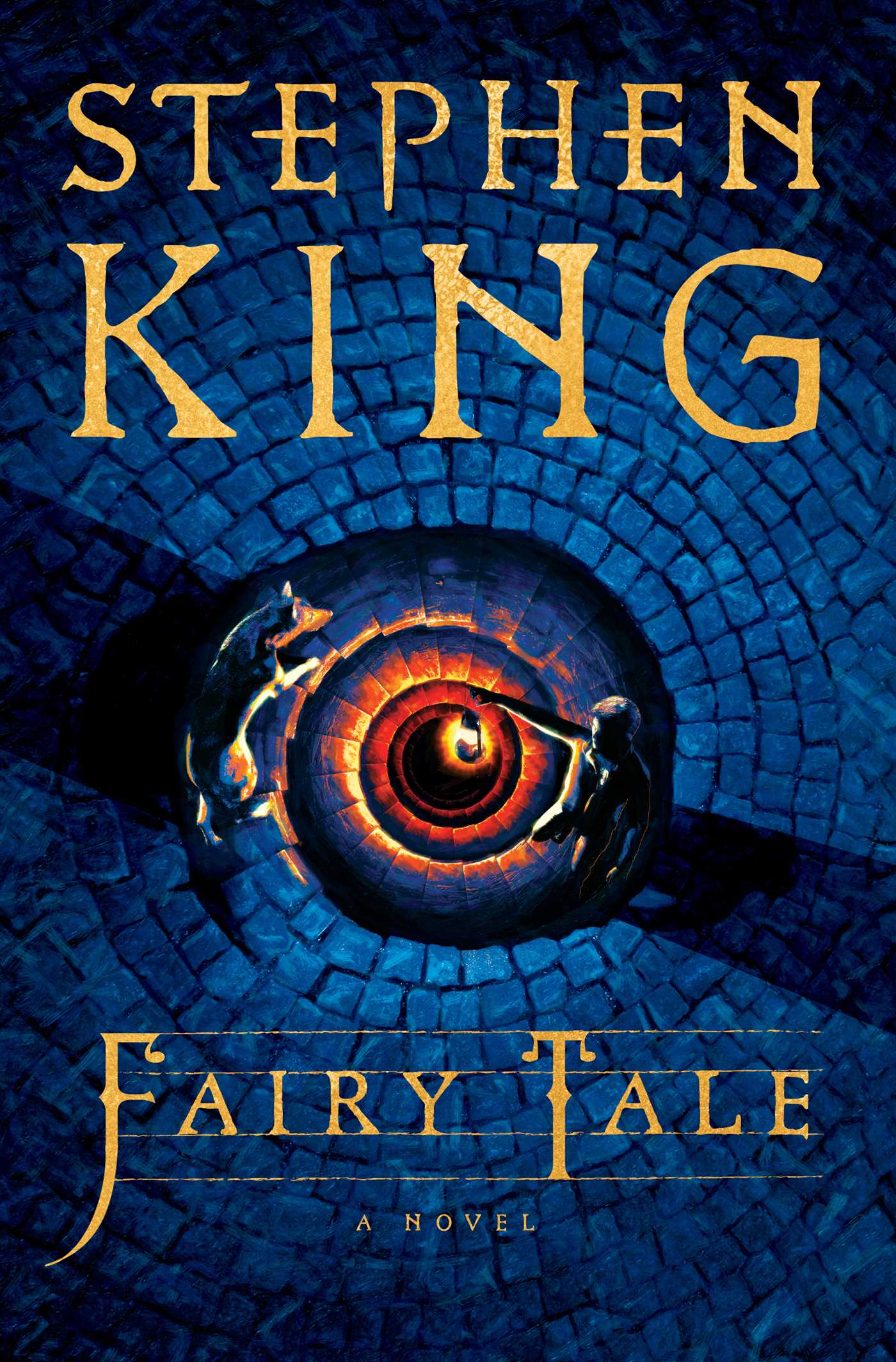
Thursday, October 20, 2022

131. Fairy Tale


Fairy Tale. Stephen King. 2022. 608 pages. [Source: Library]

First sentence: I'm sure I can tell this story. I'm also sure no one will believe it. That's fine with me. Telling it will be enough. My problem--and I'm sure many writers have it, not just newbies like me--is deciding where to start. 

Premise/plot: Charlie Reade, our protagonist, has quite a story to tell readers. Though the adventures [or misadventures] start with a neighbor's shed, the story starts much earlier. He opens his story with the story of a bridge, the bridge where his mother died when he was a young kid. The accident not only took his mom's life, but, his father spent years--many, many years--living life inside a bottle. However, when the story opens--Charlie's father is in recovery and miraculously returned to him. Charlie feels--to a certain extent--that he has made a bargain with God. He'll be GOOD, great, compassionate, kind--all the things--if his father is healed of his alcoholism. In part, this is why he goes above and beyond when his literal neighbor is in need. 

Mr. Bowditch is the crankiest, grumpiest neighbor. He's a recluse essentially. But when Charlie hears his neighbor's dog, Radar, howling (barking?) he checks on the situation to find that his neighbor indeed does need help--a great deal of help. He has fallen off the ladder and the situation is dire. He saves his neighbor's life...and the two are forever joined, in a way. The bridge that holds these together--besides a promise to be good--is Radar. Charlie and Radar become best, best, best buddies. Soon these two will be inseparable. There is literally NOTHING that Charlie wouldn't do for Radar...

...which leads us eventually to the super-mysterious shed...and all the adventures and misadventures. 

My thoughts:  Fairy Tale is not your typical Stephen King novel. I'm assuming. Granted I am not qualified to judge that. (I've read Under the Dome and 11/22/63.) The first half is a heart-felt coming-of-age story starring a BOY AND HIS DOG. You've got a story of unlikely friendship between a dying neighbor and a young, athletic [whole life before him] boy. The relationship between Charlie, Mr. Bowditch [Howard], and Radar is just uplifting and enjoyable. The second half is mystery-suspense-thriller-fantasy. Charlie goes through a portal to another realm/another world. 

I wouldn't be surprised if readers are divided as to which half is "better" or "more enjoyable." As for me, I absolutely LOVED the first half. I enjoyed the second half. I did. I kept turning pages. I read this book in THREE DAYS. There wasn't any "slow" part. I wonder if those who are looking for a thriller-y, action-packed fantasy think the first half too slow??? 

The only content warning I would have is language. I think this is typical King in the use of curse/cuss words--like the f word. If you are super-sensitive and try to carefully avoid books that use "crude" language, then this probably isn't for you. I found the story so captivating and the characters so well done that I wasn't bothered. [This isn't always the case. For me, it is almost a book by book, story by story call.]


© 2022 Becky Laney of Becky's Book Reviews

Sunday, July 25, 2021

70. Wendy, Darling


Wendy, Darling. A.C. Wise. 2021. [June] 352 pages. [Source: Review copy]

First sentence: There is a boy outside her daughter's window.

Premise/plot: Wendy, Darling is (adult) historical fantasy--essentially a sequel to Peter Pan. The premise itself is simple: how would Wendy's adventures in Neverland impact her--and her family--the rest of her life?! 

The what-ifs in this book are fantastic (in my opinion). What if Wendy couldn't forget Neverland. What if her brothers John and Michael grew out of their belief--yes, this happened to us; yes, Peter Pan is real; yes, we visited another realm--but Wendy didn't. What if she spent years--decades--being gaslighted by her family and all those around her. You are delusional. You are making this up. You are crazy. Why are you acting like this? Why can't you get a grip on reality? Why can't you just grow up and be normal. And by normal getting married is definitely part of the whole package.

Another what if explored is what if the Darling parents were on board the Titanic and not among the survivors? What if Wendy had to be the boys' mother in this world as well and not just for pretend? Setting the sequel firmly in the time period of the early twentieth century, that leads to of course the Great War, the first World War. Suddenly this fantasy novel that you've been familiar with for decades comes to life and it's like turning a kaleidoscope. 

The book has two--possibly three--time lines going at once. The "present" day where Wendy discovers that Jane has been kidnapped by Peter Pan (who insists on calling Jane "Wendy.") What won't Wendy do to get her daughter back?! Don't anger a mama bear!!! And the "past" where Wendy is being committed to an insane asylum by her brothers. Her time in the asylum is explored as is her friendship with a fellow inmate, an American (or Canadian?) Indian named Mary. The possible third time line (and it's really just a short hop away from the "past" story line) is when Wendy is released specifically because she's agreed to marry a fellow of her brother's choosing named Ned.

Half the time is spent in England in the "real world" and half the time is spent in Neverland. The transitions can be a wee bit awkward at times. You can go from one story to another and not even realize where the change happens.

My thoughts: If you are looking for a dark (darker) adaptation of Peter Pan, then this may satisfy. I wouldn't say it is the absolute darkest adaptation I've ever been exposed to. Though that being said, this one is plenty DARK. (We may be talking the difference between black-black and navy-blue.)

I found the premise to be excellent. By excellent I mean engaging and thought-provoking. Even if I didn't love, love, love the author's answer to a question, I found the question interesting and engaging. I hope that makes sense!

There is essentially one--possibly two--character(s) explored with great depth and substance: Wendy primarily and perhaps her daughter Jane. The other characters, in my opinion, aren't handled with the same depth and care. It may not bother some readers that Wendy is 1000% developed and the other characters not so much. I would have liked a little more spread around. But that could just be me.

It definitely provides social commentary in terms of women's choices or lack thereof. Her freedom depends on the discretion of her brother who doesn't really know her or care to understand her. Her freedom ultimately depends on her saying yes to marrying a stranger--the son of her brother's business partner. There's a reason why this business partner is so desperate to marry his son off that he'll agree to his marrying a resident of an insane asylum. And again I think social commentary is provided here as well. Neither Ned nor Wendy are free to live life on their own terms--to love the person of their own choosing. So to make it in this world, this society, they have to give in--in some ways--so they can blend and pretend. But that doesn't mean there isn't genuine friendship between the two.

I wish that Michael had entered into the story more. I would have loved to see his character arc shown instead of just told. We know that he survived the war--but it is haunting him and he is in many, many ways broken. 

I think one of the themes is THE TRUTH. And how important it is to be able to live your truth, speak your truth, share your truth. But truth--at least in 1931, the present day of the story--comes with risks and consequences. Speaking of Neverland ultimately led to Wendy's being committed. Jane, once she returns, will have to face that same decision. 

Quote:

Darling, darling, darling. She knows the word for fondness, knows Ned means nothing by it, but she can't help loathing it. The word has become a weapon, not in Ned's mouth, not on purpose, but over the years it's been a word to soothe, to dismiss, to hush. Her own name taken from her and turned against her--a gag, a chain.


© 2021 Becky Laney of Becky's Book Reviews

Sunday, July 18, 2021

62. New Spring


New Spring. (Wheel of Time Prequel) Robert Jordan. 2004. 334 pages. [Source: Bought]

First sentence: A cold wind gusted through the night, across the snow-covered land where men had been killing one another for the past three days.

Premise/plot: New Spring is a prequel to the Wheel of Time. It was published after the tenth book Crossroads of Twilight. It provides readers with an origin story--or back story--of Lan, Moiraine, and Siuan. Lan is a soldier without a country--a soldier-king. But the without a country bit matters. Moiraine and Siuan are Accepted and studying at Tar Valon (or the White Tower). They are on their way to becoming Aes Sedai. When we first catch a glimpse of them, we witness a foretelling and a death--a CHILD has just been born who will be the Dragon Reborn. Gitara, the Aes Sedai who prophesied his birth, promptly dies. Only a few witnessed this. It is super top secret classified. But Siuan and Moiriane are among the few--and most likely the youngest--who have seen and heard. Both think that the baby should be found, taken, brought up, raised, guided. Surely this matter is of the utmost importance, right?! But not all the Ajahs are the same. The two fear that the rumors of Black Ajah are true...

My thoughts: When trying to decide WHEN to read this prequel I researched a lot of opinions on the internet. Essentially no one recommends reading this book first. I'd agree with that. A few mentioned that it would be good any time after The Dragon Reborn (book three). A few suggested after The Shadow Rising (book four). Daniel Greene (author and YouTuber) at one point (he may have changed his mind since then) suggested reading it after book five (The Fires of Heaven). I remember one review mentioned that it would be a good fit after The Lord of Chaos (book six). But most fell into one of two camps: read it after Crossroads of Twilight (book ten) OR read it after all fourteen books in the series the last being Memory of Light. I chose to read it after book five. 

I wish they'd been a glossary like his other books. Sometimes he'd use his fancy fantasy made up words and I'd be like am I supposed to remember what this means or is it new to this story. I didn't realize how often I flip to the glossary until there wasn't one. 

There were a handful of scenes that were EXCELLENT. They truly fit into the series and added depth. It was a joy to discover these bits. BUT. I got to say that most of the book stays in the nice-but-not-particularly-wonderful category. It was nice to read about Moiraine and Siuan training in the White Tower, catch a glimpse of their deep friendship. It was more than nice to spend some time with Lan. 

What was good was really good. What wasn't so good was so skimmable/skippable. (Some parts were just CREEPY/GROSS/NASTY.) But I didn't really feel that this Moiraine was *the* Moiraine I had come to know through the other books in the series. She was super immature and petty. I don't know how anyone put up with her really.

© 2021 Becky Laney of Becky's Book Reviews

Friday, July 16, 2021

61. The Bone Maker


The Bone Maker. Sarah Beth Durst. 2021. [March] 496 pages. [Source: Review copy]

First sentence: Kreya always wore her coat with many pockets when she went out to steal bones.

Premise/plot: The war has been over for twenty-five years, but for the five heroes of Vos who "saved the world," it feels like yesterday. Especially for our heroine, Kreya, who has never come to terms with her husband's death. But all five heroes--Kreya, Jentt, Zera, Marso and Stran--have paid dearly for their so-called victory. 

The Bone Maker is dark fantasy with elements of horror, romance, and comedy. Definitely an adult novel. Mainly we get two points of view that of Kreya and Zera. Though readers get to know all five (yes, even the supposedly "dead" Jentt) heroes to some extent. (There are a few scenes from other points of view.)

So essentially the premise is, what if the grand victory wasn't really so FINAL and "the end." What if the heroes--twenty-five years later--are called upon to save the world again...in their middle age years.

My thoughts: The Bone Maker is an odd book. I think it will definitely appeal to some readers. Those that like their books spooky, creepy, with gothic, horror vibes. An unsettling discomfort that drives the plot forward. We've got dark magic that is ethically suspect. Big time ethically suspect. We've got heroes--and villains--using dark magic to raise the dead. The world building in this one has depth--we've got layers upon layers. Not just with the world-building but with the characterization as well. Perhaps not all five characters are given equal treatment. But what is spared on some of the heroes perhaps is poured out onto the villain. And perhaps that is how it should be. 

The book deals with some serious issues--grief, post traumatic stress disorder, trauma, war, mental health, etc. Not to mention the ethics of using dark magic. It explores what it means to be labeled a "hero" vs. labeled a "villain." But it also blends in some crude passages and slightly distasteful humor. Perhaps for a comedic effect that did nothing for me. I did at times expect it to veer into a philosophical direction and go a bit deeper, but it didn't really. 

The Bone Maker is set in a fantasy world. I have to keep reminding myself of that. The characters do not have any hope of resurrection (and reunion) outside of dark magic. This made me a bit sad.

This one reminded me of a couple science fiction shows. Babylon 5's "Quality of Mercy" and "Rising Star." (The first being from season one and the second being from season four.) There is a device in those episodes. If you've seen Babylon 5 you probably know what I'm talking about. Once you've seen how it is used in season four, even the introduction of the device in season one is brutal to the heart.

Star Trek The Next Generation's Time Arrow (Part I and II) also comes to mind.


© 2021 Becky Laney of Becky's Book Reviews

Monday, July 05, 2021

56. The Fires of Heaven


The Fires of Heaven. (The Wheel of Time #5) Robert Jordan. 1993. 704 pages. [Source: Bought]

First sentence: The Wheel of Time turns, and Ages come and pass, leaving memories that become legend. Legend fades to myth, and even myth is long forgotten when the Age that gave it birth comes again. In one Age, called the Third Age by some, an Age yet to come, an Age long past, a wind rose in the great forest called Braem Wood. The wind was not the beginning. There are neither beginnings nor endings to the turning of the Wheel of Time. But it was a beginning.

If I had to review this one in just three words: WHERE IS PERRIN???????

The fifth book of the series mainly focuses on Rand and his continuing challenges as the Dragon Reborn. Mainly. Those still close to Rand include Moraine, Lan, Egwene, and Mat. But the one that literally gets up, close, and personal with Rand is Aviendha, whom we first met in book four.

The book focuses on the "real" world and the "dream" world. Often bad guys and good guys face off in both. It can occasionally be tricky to try to keep up of where these showdowns happen since dreams have the potential to have real world consequences.

Those not (literally) in Rand's camp (or fellowship?) are Elayne and Nynaeve (and company). They have gone from being the hunters to being hunted. Since the Tower fell--well--it makes things even more dangerous. Of course, they had plenty of enemies before the Tower fell. And they've just got a few more now. 

Readers also spend time with Siuan Sanche (the former Amyrlin Seat) and Leane (former Keeper of the Chronicles) as they run for their lives. Min is among their company....

Is it strange that as busy as this book is--and it is VERY VERY BUSY--that I could spend so much time missing Perrin?????

Also there is the matter of Morgase (Elayne's mother, the Queen). We get like one chapter and one page towards the end of the book and the rest of the time she's missing in action. I was like GET BACK TO HER STORY, PLEASE, THANK YOU.

So perhaps I would have had a couple of words for Robert Jordan about this one. I didn't enjoy it quite as much as previous books in the series. But perhaps it makes up for it in body counts of the Forsaken???? Yet part of me is skeptical. Sometimes showdowns seem to be THE FINAL SHOWDOWN only to turn out to be a dress rehearsal.

 Quote: It would be easier if this was a story, he thought. In stories, there were only so many surprises before the hero knew everything he needed; he himself never seemed to know a quarter of everything. (518)

© 2021 Becky Laney of Becky's Book Reviews

Saturday, June 19, 2021

53. The Shadow Rising


The Shadow Rising. (The Wheel of Time #4) Robert Jordan. 1992. 672 pages. [Source: Bought]

First sentence: The Wheel of Time turns, and Ages come and pass, leaving memories that become legend. Legend fades to myth, and even myth is long forgotten when the Age that gave it birth comes again. In one Age, called the Third Age by some, an Age yet to come, an Age long past, a wind rose on the great plain called the Caralain Grass. The wind was not the beginning. There are neither beginnings nor endings to the turning of the Wheel of Time. But it was a beginning.

Premise/plot: The Shadow Rising is the fourth book in the Wheel of Time fantasy series by Robert Jordan. The series has grown more complex--in my opinion--with each book. The cast of characters and the amount of side stories increases.

There are four-ish main stories unfolding all at once. Not all chapters are narrated by the good guys. Occasionally (for whatever reason, for better or worse) Jordan gives us sections--sometimes entire chapters--from the point of view of the villains. Usually these are super tricksy and confusing to piece together. (It could be because readers are trying to keep up with a thousand plus named characters. According to Wikipedia the entire series has over 2,700 named characters). Darkfriends including the "Forsaken." Seanchan. Children of the Light.

So the main stories:

Rand is out to fulfill more prophecy and be recognized by the Aiel as He Who Comes With the Dawn. It won't be easy. I won't say it's more difficult than any other or every other obstacle he's faced in previous books. But he's always in danger--with a target on his back, if you will--plenty want to turn him, use him, destroy him, etc.

Mat and Egwene travel with Rand for very different reasons. It has been revealed to Mat that his life depends on him going to Rhuidean. The two go into the abandoned city--VERY SPOOKY ABANDONED CITY--together and have very different experiences. Egwene is there to learn from the Wise Ones how to dreamwalk or better dreamwalk.

Moraine (and presumably Lan) are along for this adventure as well. Though as more characters come into the stories, they seem to fade into the background and be less significant.

Aviendha is introduced I believe in this book. She seems to play a major role in the story. She watches over Rand, and it seems to be a case of hate at first sight. (But is this hate love in disguise????)

Nynaeve and Elayne are still in search of the Black Ajah. Their mission takes them to Tanchico. Along for the ride are Thom (the former gleeman) and Juilin Sandar (whom we met briefly in a previous book). It is tricky business looking for the Black Ajah because they are hunting hunters. If they channel, they risk alerting the bad guys to their presence. Yet sometimes it seems so necessary to channel in self defense as they face risks and dangers.

Perrin and Faile (along with Loial, whom I adore) return to Two Rivers. But all is not well--far from it--at home. In the two years (roughly) he's been gone, a LOT has changed. And the lives of those he cares about (and those he's just grown up with) are in danger. He will have to be ever vigilant and ready to fight, fight, fight if he wants to protect his people/country. MEANWHILE, PERRIN AND FAILE GET MARRIED. *Squeal*

Min--for whatever reason, convenience to the story really--is at the White Tower. And she's there just in time to possibly save some lives. All is not well at Tar Valon. And it seems the Black Ajah have a few tricks.

The stories are told unevenly. That is they don't receive equal attention and weight. You might go twenty chapters without hearing from a character only then to have them pop up again.

My thoughts: I have thoughts. I do. I wish I had a paperback copy of this one. The hardback was cumbersome to read from. But the last third was truly EXCITING and ACTION-PACKED. I might compare the first third being like standing in line to ride a roller coaster. Your feet start hurting. You seem to barely be moving. It might be hot. You are just ready for the thrills. The second third is like getting on the roller coaster, getting ready to hold on, and perhaps going up that first big hill. The last third--as I mentioned--is ALL THRILLS AND EXCITEMENT. In the end it makes it worth it.

I am so thankful there is a glossary. It is super handy. I can't imagine listening to this on audio book without a glossary to turn to whenever you need it. I also can't imagine loving an e-book as much for the same reasons. (Though probably an e-book would have a table of contents so maybe it wouldn't be impossible.)


© 2021 Becky Laney of Becky's Book Reviews

Monday, June 07, 2021

50. The Dragon Reborn


The Dragon Reborn. (The Wheel of Time #3) Robert Jordan. 1991. 624 pages. [Source: Bought]

First sentence: The Wheel of Time turns, and Ages come and pass, leaving memories that become legend. Legend fades to myth, and even myth is long forgotten when the Age that gave it birth comes again. In one Age, called the Third Age by some, an Age yet to come, an Age long past, a wind rose in the Mountains of Mist. The wind was not the beginning. There are neither beginnings nor endings to the turning of the Wheel of Time. But it was a beginning.

The Dragon Reborn is the third book in the Wheel of Time series. It stars many characters whom we met in books one and two. In this one Rand is coming to terms with the Pattern--or beginning to slightly. It's a slow process. And the pattern seems to want him to be THE DRAGON REBORN. Not a false dragon, a fake, someone out looking for glory or adventure, but the true dragon of ancient prophecy. He's not entirely super comfortable with that role. But he's processing everything mainly in his own way in his own time. And doing it off screen, so to speak.

The Dragon Reborn barely features Rand. And I'm not complaining. It does feature three main stories.

One story has Egwene, Elayne and Nynaeve working together. They've been assigned the super-super-super-super secret task of hunting the Black Ajah (the DARK, DARK, SUPER-DARK branch of the Aes Sedai). (Elayne and Egwene undergo their super-secret testing to become ACCEPTED into the Aes Sedai. Nynaeve did this in book two.) It will be dangerous. The three know each other to be reliable and good--on the right side--but how can they know who else to trust?

Another story has Perrin, Lan, Loial, and Moiraine questing together. They are following Rand and of course solving more puzzles along the way. Someone else joins this group--for better or worse--and seems determined to find the Horn (not knowing of course that the Horn has not only been found but already blown).

Yet another story has Mat on a journey. In the beginning of this third book he is finally healed (he became deathly ill in book one). The Aes Sedai want him to remain in Tar Valon, but, the girls (Egwene, Elayne, and Nynaeve) have other plans for him. And this has him gambling and rambling his way cross country. He picks up a buddy too. (Who wants to quest alone???) Thom (the gleeman from book one) joins Mat in his adventures/misadventures.

The reader may suspect that these three stories will come together into one story by the end, and, of course, you'd be right. All the questing groups DO end up in the same place at the same time. The only one whose quest we do not follow is Rand. And as I said I'm not complaining. What little we do hear from him is enough for me.

This one continues to develop the cultures and politics of the fantasy world. In particular we continue to look at the corruption within the Aes Sedai. (Of course corruption is also found in the governing bodies of other countries).

Dreams. Dreams. Dreams. More dreams. One of the big threads of this one are the dreams or NIGHTMARES that all the characters have from cover to cover. Are the dreams prophetic? Do they mean something? Why are so many people sharing the same dream? Do the dreams hold all the clues needed to defeat the enemy?

This was my first time to reread The Dragon Reborn. I am definitely enjoying rereading the series. I hope to get to books I've never yet read in the series. I am liking the world building and the characterizations.

I will say that sometimes it does feel a little creepy to unpack the book and think deeper about what is going on. Rand was fourteen in the first book. (As are Perrin and Mat). Yet it seems that all the adult women in this world Jordan has peopled--no matter their culture/ethnicity--seems to take one look at Rand (or Perrin or Mat) and think YUM. CANDY. The fact that so many grown women want to flirt seductively with a fourteen or fifteen year old is creepy. (I believe in the third book it's been a little under a year since the adventure began? They left in spring and the third book mentions it being winter). It is easy to get distracted by all the other drama--the ultimate showdown between Light and Dark--to forget that these heroes are YOUNG. You can almost recast them in your imagination as being older (say eighteen, nineteen) and begin to think nothing of it. I do wonder why Jordan didn't just make them older to begin with? Like Lord of the Ring, Frodo is in his 30s or 40s. Bilbo Baggins wasn't all that young on his quest either.

But overall I am loving the series. Quite an entertaining read.

© 2021 Becky Laney of Becky's Book Reviews