Showing posts with label blog tours. Show all posts

Wednesday, March 23, 2016

By The Stars

By the Stars. Lindsay B. Ferguson. 2016. Cedar Fort. 320 pages. [Source: Review copy]

Do you enjoy reading books about World War II? Do you enjoy reading romance novels? Would you find it refreshing to read a book with Mormon characters that isn't about polygamy and sister wives? By the Stars by Lindsay B. Ferguson may be just the book you're looking for. The book is primarily set in Utah, except for the chapters that follow our hero, Cal, to training camp and war. The story has a framework, someone has come to Cal's home to interview him. Subsequently, Cal is telling his story--his and Kate's story humbly and simply. Most of the book, I suppose, is what I'd call a flashback.

Cal and Kate met in junior high school. Their lockers were next to each other. For him, it was love at first sight. For her, well, she wasn't looking for love right then. And while she was friendly enough, she wasn't overly interested in being best-best friends or having him as a boyfriend. But that was then. The book gives readers glimpses of their encounters, meetings. A scene here and there spread out over ten years.

I can see why these glimpses had to be so short and almost disconnected. To keep the story moving. After all, if the narrative were continuous, and the book started when he was in eighth grade, the book would be at least a couple hundred more pages. And it would have a lot more angst more likely. That being said, I had a hard time at first really connecting with the characters. This didn't stay the case by any means. But it was almost like I was waiting for the "real" story to begin.

After Cal returns from his three year mission trip for the church (which we learn little about besides his bus trip there, and his first day there), he reconnects with Kate. But don't imagine for a second, that it will be easy to woo her. For Kate won't easily be persuaded to say "I do" to anyone. She doesn't, she asserts again and again, believe in marriage....

Cal's time in the war was in the last year. Readers get glimpses of the war as well....

Once the romance starts, the story picks up. If you like romance, I think this one will work for you. I have to be in the exact right mood for romance. (I think of Anne Shirley needing just the right kind of pen in order to be able to right mushy love letters to Gilbert Blythe in Anne of Windy Poplars.) I wasn't in that right mood while I was reading this one. But even so, I found it enjoyable enough.

© 2016 Becky Laney of Becky's Book Reviews

Thursday, December 11, 2014

Jane Austen's First Love

Jane Austen's First Love. Syrie James. 2014. Berkley Trade. 400 pages. [Source: Review copy]

  I enjoyed reading Jane Austen's First Love. I admit I had my doubts at the beginning. On the one hand, after being so disappointed in Becoming Jane, I was hesitant to read anything giving Jane Austen a romance of her own. Also I wasn't wowed by The Lost Memoirs of Jane Austen. On the other hand, several people I respect really did love Jane Austen's First Love. While I can't say that I loved, loved, LOVED Jane Austen's First Love, I did really enjoy it. More than I thought I would at any rate.

1791. Summer of 1791. Jane and Cassandra travel to meet their brother Edward's fiancee, Elizabeth Bridges, and her family. (Several other family members go as well. The mother, but, not the father. Another brother, Charles, I believe. But the focus is mostly on Jane and Cassandra). Jane is just fifteen, she's not "out" yet. Her sister is a year or two older and is. Part of what makes this trip special, is that Jane is to be allowed certain privileges. She'll be allowed to go to dances and balls. She'll be allowed to powder her hair, etc. Most--if not all--the events will be family and friends. (Bringing together multiple families. Several of the Bridges' sisters are engaged to be married. All the engagements are being celebrated. There will be plenty of people there.)

On their trip, they happen to meet--quite dramatically--a young man named Edward Taylor. (He happens to be a neighbor, I believe.) Jane becomes smitten with him. He enjoys being with her, but, there aren't any OBVIOUS signs that he's madly, deeply in forever-and-ever-love with her. She may hope that he is "the one." But he is sixteen and not anywhere close to proposing marriage to anyone, no matter how lively, witty, charming, talented, beautiful, etc. Does Jane hope he is the one? The fictional, Jane, I mean? Perhaps. Perhaps not. Without a doubt, Jane enjoys herself tremendously, and finds time with him thrilling.

Strawberry picking. Dances. Dinners. Walks. Riding horses. Play acting. Matchmaking. Such is the stuff of Jane Austen's First Love.

One of the main plots surrounds the Bridges' sisters: Fanny, Elizabeth, and Sophia. They are all older than Jane. They are all of the courting age. Elizabeth and Fanny are engaged. Sophia is close to an engagement as well. Jane is watching; watching carefully, closely, analyzing and taking notes. Jane's observations lead her to believe that the sisters are mismatched! Readers meet a young Jane, an opinionated Jane, who is enjoying the idea of love, of falling in love, of finding love. What does she know of LOVE? What does she know of what makes two people compatible? It's interesting!

I also enjoyed how readers get a behind-the-scenes glimpse of Jane writing The Three Sisters. I would say that readers should take the time to read this little story on their own before, during, or after the novel.

© 2014 Becky Laney of Becky's Book Reviews

Thursday, July 26, 2012

The Age of Miracles (YA/Adult)

The Age of Miracles. Karen Thompson Walker. 2012. Random House. 288 pages. 

We didn't notice right away. We couldn't feel it. We did not sense at first the extra time, bulging from the smooth edge of each day like a tumor blooming beneath skin.

The Age of Miracles is a thoughtful coming-of-age story narrated by Julia, age 11. When the "big event" happens, or the big announcement about the big event is made, Julia is entering sixth grade. What's the big announcement? Well, the earth has changed its rotation, the days (and subsequently) the nights are getting longer and longer. The earth no longer revolves around the sun in twenty-four hours. Within a week or two (or maybe three?), days are closer to forty hours than twenty. And the days (and nights) are just going to keep getting longer and longer and longer.

The terror of the situation is felt almost immediately by some, but for others it takes a while. Julia's mother was already prone to anxiety even before the announcement, but since the news came she's more hysterical than ever. And she's not alone.

The Age of Miracles captures what it is like for "life as we know it" to fall apart gradually, piece by piece, layer by layer. Specifically it captures what it is like to be eleven in a strange new world. Julia's world is just as much impacted by her new school year, her school worries about friendships and crushes, as it is the global catastrophe. Julia's home life mirrors the greater falling-apart of the world. As her mother is weighed down with sickness and anxiety, as her father escapes his burdens by taking comfort in a neighbor woman, as the three continue to live disconnected from one another.

Perhaps it is only natural for Julia's concerns to be about whether or not she'll ever see her best friend again (her best friend is moving away), or if the boy she likes will ever talk to her or like her back, to wonder if she'll ever get breasts, or to wonder if her parents will get a divorce, to wonder if her mom knows about the affair, to be worried about her grandfather's mysterious disappearance, than to be concerned about food and water supply, to be concerned about if the planet is still capable of supporting life. If the complete cycle of a day becomes several months long, for example, that means weeks of direct sunlight--too much sun, too much radiation, too much heat; but it also means months of complete darkness--not enough sun, too dark, too cold. What kind of crops can grow in conditions like this? Can greenhouses even begin to support enough food for an entire planet? No, there are enough people worrying about the tomorrows, let Julia remain in the worries of today.

Personally, I found the novel compelling. It was an easy, quick read. Is the absolute best post-apocalyptic book? Probably not. It's not Alas, Babylon or The Earth Abides. But it was a good read. I liked its thoughtfulness, its reflective nature. The narrator is reflecting back on the early days of the crisis, she's remembering what it was like at the beginning. I'm not sure if readers ever learn how many years have passed since the novel began, but, we do know that "the end" wasn't imminent or immediate. That people have had plenty of time to accept the slow passage into the end of times--at least the end of times as they know it, as they can imagine it.

The Age of Miracles reminded me, in a way, of "The Inner Light." (For those unfamiliar with that title, well, it's only the BEST, BEST, BEST Star Trek episode ever, Star Trek Next Generation to be precise.) It also reminded me--not in its exact details, but in its feel--of the Twilight Zone episode, "The Midnight Sun." However, I am NOT saying that the book is as good as either episode. I don't want to raise expectations that high. The book is what it is. Don't expect it to be THE BEST BOOK EVER. OR expect it to be the worst book ever. I happened to like it more than I disliked it. But that's me. I saw it as having strengths and weaknesses.

The Age of Miracles did not feel like science fiction. Or at least not obvious science fiction. It feels more like a traditional coming-of-age novel. True, Julia is growing up at a difficult time in history, a time when time itself is losing its identity. But Age of Miracles is grounded in the small details of life, life as seen through the eyes of a child. Nothing seems dependable, nothing seems certain; everything is changing, all the rules are changing, even the rules of science. 

Quotes:
This was middle school, the age of miracles, the time when kids shot up three inches over the summer, when breasts bloomed from nothing, when voices dipped and dove. Our first flaws were emerging, but they were being corrected. Blurry vision could be fixed invisibly with the magic of the contact lens. Crooked teeth were pulled straight with braces. Spotty skin could be chemically cleared. Some girls were turning beautiful. A few boys were growing tall. I knew I still looked like a child. (43)
We were, on that day, no different from the ancients, terrified of our own big sky. (52)
It's hard to believe that there was a time in this country--not so long ago--when thick almanacs were printed every year and listed, among other facts, the precise clock time of every single sunrise and every single sunset a year in advance. I think we lost something else when we lost that crisp rhythm, some general shared belief that we could count on certain things. (96)
Read The Age of Miracles
  • If you like coming-of-age stories
  • If you like apocalyptic/post-apocalyptic novels that are more quiet and subtle and reflective than action-drama oriented. 
© 2012 Becky Laney of Becky's Book Reviews

Tuesday, June 22, 2010

Wayfarer (MG)


Wayfarer by R.J. Anderson. 2010. June 2010. HarperCollins. 304 pages.

First line of the prologue: The Queen is dying.
First line of chapter one: "I expected more of a missionary's son."

More than a few years have passed since the close of Spell Hunter, the first novel in R.J. Anderson's Faery Rebel series. Linden, the newly-hatched faery placed under Knife's care, is now fifteen. Like Knife, she has earned the trust of the Queen. In fact, Linden is given something extraordinary by the Queen. A special mission. But that's not all. No, there's one other thing. She's given some of the Queen's magic. But this isn't Linden's story. In fact, I was surprised by just who told this story! Readers are introduced to Timothy, a cousin of Paul. And though Timothy isn't much of a believer--at least not at the start of the story--by the end, he's quite the convert. He learns of the faeries. He learns that their existence is in great danger. And he feels led to help--and this commitment isn't without sacrifice. Timothy and Linden's lives are in danger--constant danger--and it will take courage and strength to outwit the evil powers that be. Can Linden and Timothy win in their battle against evil? Will Linden's mission succeed? Can she find a way to save her people, the people of the Oak?

To visit other stops on the tour:


Whispers of Dawn, The Book Cellar, The Hungry Readers, My Own Little Corner of the World, KidzBookBuzz.com, Reading is My Superpower, Book Crumbs, Becky’s Book Reviews, Fireside Musings, A Christian Worldview of Fiction, Homeschool Book Buzz, Homespun Light, Book Review Maniac

© Becky Laney of Becky's Book Reviews

Friday, May 28, 2010

A Matter of Character


A Matter of Character. Robin Lee Hatcher. 2010. May 2010. Zondervan. 352 pages.

Maybe it was time to kill Rawhide Rick. He'd served his purpose, the old rascal. He'd hunted buffalo and fought Indians and stolen gold from hardworking miners and sent men to the gallows. Now might be the time for him to meet his Maker. The trick was deciding how to kill him.

Should Daphne McKinley kill Rawhide Rick? Can Joshua Crawford save him?

The year is 1918. And Daphne is a dime novelist. Of course, at the beginning, when readers first meet her, no one knows she's a published writer. Dime novels aren't necessarily books to be proud of having written, or of having read, after all, whether written by a man or a woman. Her pen name is D.B. Morgan.

Joshua Crawford is an out of work reporter with an agenda. He is the grandson of "Rawhide Rick." His grandfather, Richard Terrell, went by that nickname and Joshua is so not happy with this "D.B. Morgan" for making his grandfather the villain in the McFarland Chronicles. The grandfather he knew was loving, compassionate, generous, kind, good. He's angry, and he's searching for the truth. But first he has to find this D.B. Morgan and have a few choice words.

A Matter of Character is the third (and final) book in the Sisters of Bethlehem series by Robin Lee Hatcher. However, each one can be read on its own. I have not read the previous two books, and I did just fine. The three books have overlapping characters, but each is narrated by a different character. It is a romance novel.

I liked this one. I did. It was interesting to see this hero and heroine clash with one another. To see their relationship slowly develop through the weeks and months. I liked the way these two challenged one another.

© Becky Laney of Becky's Book Reviews
Tuesday, April 27, 2010

Warriors In The Crossfire (MG)


Warriors in the Crossfire. Nancy Bo Flood. 2010. March 2010. Boyds Mill Press. 142 pages.

Set on the small island of Saipan during World War II, Warriors in the Crossfire is a novel about the impact of war on families and communities. I've always been interested to read war stories (fiction or not) about how war impacts others. War isn't just about soldiers and battlefields after all. It effects women and children too.

In Warriors in the Crossfire, readers learn how it impacted the island natives. Joseph, our narrator, is placed in a difficult position. He's forced to be 'the man of the house' when the war comes to the island. He's seen the Japanese soldiers be cruel to his people. But he's also heard terrible things about the Americans. He's heard that they eat children. So he knows--or thinks he knows--that the American soldiers can't be trusted either. So is there any place where Joseph and his family can be safe? How can Joseph know who to trust? How can Joseph find the strength and courage to make those tough decisions?

Warriors in the Crossfire is fiction. But there are certain events in the novel which are all too true. This was my first time to learn about Suicide Cliff.

If you enjoyed this story, you might consider reading The Girl With the White Flag by Tomiko Higa. That book is nonfiction, and it is simply amazing.

To read what others are saying:

Whispers of Dawn, Cafe of Dreams, The Hungry Readers, My Own Little Corner of the World, KidzBookBuzz.com, Reading is My Superpower, 5 Minutes for Books, Becky’s Book Reviews, Fireside Musings, My Utopia

© Becky Laney of Becky's Book Reviews

Tuesday, April 20, 2010

The Lost Summer of Louisa May Alcott


The Lost Summer of Louisa May Alcott. Kelly O'Connor McNees. 2010. Penguin. 336 pages.

It didn't take long for the Alcott sisters to finish unpacking their clothes.

In 1855, Walt Whitman's Leaves of Grass was published. But was this also the year that Louisa May Alcott found true love?! In The Lost Summer of Louisa May Alcott, Kelly O'Connor McNees crafts a love story for one of America's finest writers of the nineteenth century.

When the novel opens, Louisa is unpacking and settling into the Alcott's new home. Her family has recently moved to Walpole, New Hampshire. Like her older sister, Anna, Louisa has become tired of her life. Tired of living at home with her parents. Tired of her father's ideals creating economic impossibilities. Anna feels it is time--past time really--to find a young man, marry, and settle down in her own home. And she is crossing her fingers that Walpole will be the place she finds him. Louisa, on the other hand, has other plans. Plans that include her being independent, leaving her family, moving to Boston, and writing, writing, writing. And getting published of course! She has big dreams, big plans. And these dreams don't include having a husband.

Will these two sisters find love in unexpected ways? How will reading Walt Whitman impact Louisa's life? Can Louisa find happiness on her own terms?

© Becky Laney of Becky's Book Reviews
Tuesday, March 30, 2010

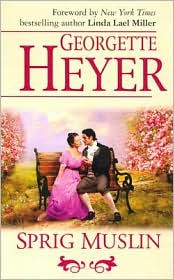
Sprig Muslin


Sprig Muslin. Georgette Heyer. 1956/2009. Harlequin. 288 pages.

Mrs. Wetherby was delighted to receive a morning call from her only surviving brother, but for the first half hour of his visit she was granted no opportunity to do more than exchange a few commonplaces with him over the heads of her vociferous offspring.

Sprig Muslin is an enjoyable Georgette Heyer novel. It's easily accessible, which isn't always the case, and it's a quick action-packed read. What kind of action? Well, more comedy than drama. And by action, I don't mean explosions.

The hero of Sprig Muslin is Sir Gareth Ludlow. Gareth is the brother who is visiting his sister, Mrs. Wetherby. He's there to say that he's going to propose marriage to a woman, Lady Hester. It's all planned out. He's gotten the father's permission, etc. But his sister is shocked. Her brother could have anybody, anybody. Why would he seek out a spinster (she's in her late twenties) who's so boring? (From his sister's position that is. Gareth doesn't find her boring at all. He finds her smart.) His sister thinks the match is unfair. Unfair to him. She knows that her brother has never quite recovered from the death of his fiancee seven years (is it seven?) before. But he's convinced that the time is right, that the girl is right.

However, somewhere along the way--on his way to visit the girls' family on their estate in the country--he happens to "rescue" a young damsel in distress, Amanda. Amanda "Smith." Her stories and tall tales outnumber the hairs on her head. He knows she's under seventeen. He knows that she is running away from home. But he doesn't know who she belongs to...(her name, her home, her situation, etc.) or what to do with her. She's determined to find employment--a chambermaid, a maid, a dairy maid, a governess, etc. All this in an attempt to prove she's "mature" and ready to get married to her soldier-love, Neil.

So he takes her with him. He brings this strange girl with a mind all her own with him on his journey to propose to Lady Hester. Her family is more than a little confused and unsettled about the affair. They think it is an affair--that he's brought his mistress along with him. A Mr. Fabian Theale is Hester's uncle, I believe. It is his notion that the young miss is Ludlow's mistress. That she is that sort sort of "lady." That she is his for the taking if he can steal her right out from under Gareth.

Amanda doesn't know much about Theale except that he's old and a bit fat. But she does see him as serving her immediate needs. She needs transportation and a way to sneak out of this new situation. And Theale is more than willing to oblige. Of course, he hasn't any idea that she's good at manipulating and bamboozling those around her. A girl fond of novels. A girl with a vivid imagination. A silly, very gullible, unthinking girl.

He does propose. And she does listen to him calmly. But she knows that he is not in love with her. And while for many spinsters of that age, the thought of marrying anyone, of having a chance to have a home of their own and children of their own, might tempt them to marry for convenience or companionship...she's not ready to settle for that yet. She doesn't want to be a convenient companion. She knows he likes her. As a friend. As a listener. As a sympathetic, angelic companion. But he doesn't love her. Doesn't want her. Doesn't need her as a soul mate, as a lover.

The morning after the proposal, Sir Gareth wakes up to find that Amanda has given him the slip. That she is off with Theale. And he knows that Theale is not a proper companion for a young girl. That he's a very improper one. So off he goes to give them chase. He must "rescue" Amanda.

Amanda doesn't need rescuing so much from others as from herself. She's prone to getting in and out and in and out and in and out of trouble and messes galore. And no one is EVER going to boss her around.

This is a funny, fast-paced, never-ending chase to the altar. But just who will end up saying I do....

Please visit others on the Georgette Heyer Tour (for The Classics Circuit.)


© Becky Laney of Becky's Book Reviews

Monday, March 29, 2010

Love Finds You In Homestead, Iowa


Love Finds You In Homestead, Iowa. Melanie Dobson. 2010. March 2010. Summerside Press. 320 pages.

The morning fog lingered in the alleyways and draped over the iron palings that fortified the row of saloons along Harrison Street.

Another book set in the Amana Colonies. (The other being Somewhere To Belong by Judith Miller.) Jacob Hirsch, one of our narrators, is a desperate father when we first meet him. His daughter, Cassie, is very sick. The two were meant to be heading East. But the Pullman strike and the economic depression (1890s) have altered his plans. It's a miracle that the two were able to make their way out of Chicago in the back of a freight train. The two make an unexpected stop in Iowa. Liesel, our other narrator, appears as an angel (of sorts) to the delirious Cassie. She's a young woman living in one of the Amana villages. Her willingness to help a stranger sets in motion a chain of events that have long-lasting implications. Jacob's daughter is seriously ill--diphtheria--and she shares close quarters with father and daughter during their quarantine. Tending to Cassie like she was her own. But is she becoming too close to this Outsider? What will the future hold for them all?

I liked this one. But I didn't love it. Personally, I found it a bit too dramatic.


© Becky Laney of Becky's Book Reviews

Monday, March 22, 2010

Heart of Stone


Heart of Stone. Jill Marie Landis. 2010. [February 2010] Zondervan. 320 pages.

Eleven-year-old Lovie Lane would never be certain what actually woke her the night she learned her life was to become a living hell.

After losing both parents, Lovie and her younger sister, Megan, meet the harshest of fates. A fate far worse than being sent to an orphanage. Their aunt and uncle, seeing a money-making opportunity, decide to sell the girls into prostitution, sell the girls into a brothel house. Lovie being just eleven, and Megan, even younger than that. After that first night, when Megan was actually sold to the highest bidder, the two sisters have not seen one another.

No doubt about it, Lovie's life was a living hell. But it was a hell she was determined to escape from.

Years later, Lovie, now living as Laura Foster, hopes that her past stays just that her past. She's moved to a small town in Texas. She's hoping that the folks in Glory, Texas, will never hear about her past. Because how can any woman overcome the prejudice, the hate, the shame if the truth were to become known?

No, living as Mrs. Laura Foster, a wealthy widow, is her only way to cling to respectability. She has rules for how to live her life. Rules that keep her safe. Her boardinghouse only accepts families, women, and children. No single men, ever. NO exceptions to the rule. She doesn't want any person to get the wrong idea about her.

Laura doesn't have room for love in her life. So she won't let any gentlemen come calling. Even if they're respectable. Because she knows that no man would ever want her if the truth was known.

Brand McCormick is the preacher in town. And he finds himself falling fast for this beautiful widow woman. Can he find a way to woo Laura? Find a way to win her heart?

Both Brand and Laura have things in their past that they're keeping hidden. Not only from each other, but from everyone in their lives. When these secrets come to light, will anything ever be the same again?

Historical fiction set in Texas in the 1870s.

I found this to be a quick and compelling read. A book about grace and forgiveness and unconditional love.

© Becky Laney of Becky's Book Reviews
Friday, March 19, 2010

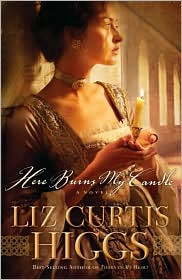
Here Burns My Candle


Here Burns My Candle. Liz Curtis Higgs. 2010. March 2010. WaterBrook Multnomah. 480 pages.

Lady Marjory Kerr heard a frantic tapping at the bedchamber door, then her name, spoken with marked urgency.

Maybe this book isn't for everyone. Maybe you have to have a weakness for all things Scottish. Maybe you have to have a genuine love for historical fiction. But oh, if you're the right kind of reader, this book is oh-so-satisfying!

Set in Scotland in 1745, it follows the Kerr family as it struggles with matters of the heart and mind. Should the Kerr family side with Bonnie Prince Charlie (Charles Edward Stuart), or remain loyal to King George II (a Hanover).

This one is told mainly through two characters: Elisabeth and Marjory. (Though we get other perspectives occasionally).

Lady Marjory Kerr has two sons and two daughters-in-law that live with her in Edinburgh. Donald, her oldest, and his wife, Elisabeth. And Andrew, her youngest, and his wife, Janet. Both of her sons have joined the army of the side they believe is on the right. Both are willing to die for the cause. But is any cause worth dying for? Lady Marjory would do anything--give anything--to keep her two sons safe, out of harm's way. But what can a mother do when her sons have felt called to go to war, to take up arms? Is there anything anyone could have said to keep them at home?

Elisabeth loves her husband dearly. Her Donald is her everything. But she can't help being disquieted by the rumors she hears about her husband. He claims to love her, but how can she be sure of that love? Especially as his secrets start coming to light?!

Can these three women live peaceably together under one roof when the whole world seems to be turning topsy turvy?


I have read and loved three other Liz Curtis Higgs books: Thorn In My Heart, Fair is the Rose, and Whence Came A Prince. There is a fourth as well called Grace In Thine Eyes. But I haven't read that one yet. So I can't honestly say that I loved it. At least not yet! All are historical fiction set in Scotland. All are amazingly rich and satisfying. All are ones I'd recommend!

© Becky Laney of Becky's Book Reviews
Thursday, March 11, 2010

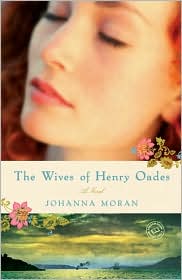
The Wives of Henry Oades


The Wives of Henry Oades. Johanna Moran. 2010. [February 2010] Random House. 384 pages.

A common bat on the other side of the world elects to sink its rabid fangs and one's cozy existence is finished. Margaret Oades knew her husband was up to something the moment he came through the door with a bottle of wine.

Historical fiction. 1890s.

Henry Oades faces a nearly impossible dilemma in Johanna Moran's The Wives of Henry Oades. Two women, Margaret and Nancy share his name, share a claim to being Mrs. Henry Oades. The first, Margaret, is mother of his children. When tragedy struck, he assumed the worst. The death of his wife. The death of his four children. But years later, after a successful move to America, he finds love again. He chooses to marry a widow woman with a newborn baby. He knows that she knows what it feels like to lose someone; he knows that she understands about tragic, unexpected loss. There's comfort in that somehow. But what Nancy doesn't know, what Henry doesn't know will change their lives forever. Because Margaret is not dead. After witnessing much, experiencing much at the hands of her captors, she finds freedom. She takes her children to freedom. But will this new freedom bring back love and peace and happiness? Will Margaret get her happily ever after?

Readers connect with this drama through several narrators. Margaret. Henry. Nancy. All three have something to say, something to share. Is it easy for readers to connect with all three narrators? Does one narrator deserve more sympathy than the others? Well, that's for each reader to decide.

There's tension in this one. And sometimes that tension isn't expressed clearly in the dialogue. (Though sometimes it is!) I think in some places the reader has to read between the lines. For example, when Margaret and Nancy first meet. When Margaret and the children first arrive in the Oades home. Wow! So much tension. Yet it isn't as dramatic as one might expect. If this was a soap opera, well, it would be very different.

I was curious about this one because I am a big fan of My Favorite Wife and Move Over Darling. Both movies feature a woman (a wife) coming back 'from the dead' and discovering that her husband has remarried. Though in both movies, the wife comes back on the wedding day itself. Then there is Twice Loved by LaVyrle Spencer which has a man coming back 'from the dead' to discover his wife has remarried.

Visit other tour stops.

© Becky Laney of Becky's Book Reviews
Friday, March 05, 2010

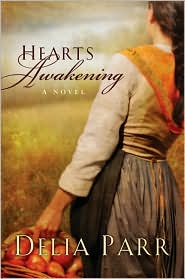
Hearts Awakening


Hearts Awakening. Delia Parr. 2010. [March 2010] Bethany House. 352 pages.

While other women her age were busy preparing a hearty breakfast for their families in snug, warm homes that crowded the city or dotted the outlying farms, Elvira Kilmer was hurrying down an unfamiliar roadway, hugging the woods along the eastern shoreline of Dillon's Island to meet a total stranger.

Ellie is a 'spinster' who is dependent on her cousins. It is Cousin Mark who has arranged for Ellie to keep house for widower, Jackson Smith. He has two children, two young boys Daniel and Ethan. And he sure could use some help around the house, in the kitchen especially. His house has been one big mess since his wife, Rebecca, died. (He's too busy in the orchards to keep up with it all.)

Ellie was expecting to work for Mr. Smith for two weeks. Long enough to get a good reference letter, but that's all. She wasn't looking for anything long term. And marriage was about the last thing on her mind. But when Jackson proposes...despite how he proposes...it gives her something to think about.

This would be a marriage of convenience, a marriage in name only. He needs help raising his two young boys. And he needs help around the house. And whether he'd admit it or not, he does needs a companion, a friend. But he's not looking for more, he's not looking for love. He's been hurt a few too many times. And besides this spinster is so very plain, so very unattractive, he reckons that he'd never fall in love with her.

She says yes. Not without giving it good thought. And not without being offended first in how he proposes. And even why he proposes. But at the end of the day, she has come to care for those little boys. And they do need a mother. And why couldn't that mother be her? After all, she's always wanted children of her own.

Will this marriage turn into a love match? Or will secrets keep love from blossoming?

I liked this one. At times I even loved it.

Ellie is a woman that I appreciated. She was a lot more patient than I would have been! And she was a bit more forgiving too! Was she too perfect, too good to be true? Well, that's something each reader will have to decide.

Jackson, well, I had mixed thoughts on him. There were places where I could see how Ellie would feel the way she does. He was easy to like in some ways. But in other places, I got really angry. Super angry even. He's definitely a flawed man. A man with some baggage, some issues that need working out. But he had his good qualities too.

I did love the story. I never tire of this premise. Yes, I know it's been done dozens of times. But. It still works for me.

Historical Fiction/Romance. Set in the 1840s in Pennsylvania.

© Becky Laney of Becky's Book Reviews

Wednesday, February 17, 2010

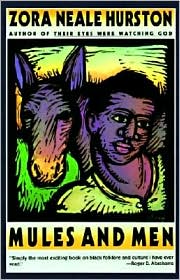
Mules and Men

Mules and Men by Zora Neale Hurston. 1935. HarperCollins. 336 pages.

As I crossed the Maitland-Eatonville township line I could see a group on the store porch. I was delighted. The town had not changed. Same love of talk and song.

I'm happy to be a part of the Classics Circuit Tour this month for The Harlem Renaissance. Be sure to visit other stops on the tour! I chose to read Mules and Men by Zora Neale Hurston. A book that has probably been on my bookshelf a decade. A book that needed this tour as a little extra push to get read.

Soon after reading Zora Neale Hurston's Their Eyes Were Watching God, I went out and bought all the ZNH I could find. (Well, that I could find used.) I just loved it so much. But while I've reread Their Eyes several times I haven't ever gotten around to reading her other books.

What can readers find in Mules and Men? It's a collection of folklore. Stories loosely woven together with the author as a character. Zora Neale Hurston has gone back to her home state, her hometown, to "collect" some good stories, some good folklore for her new project. So it "shows" her doing just that. Talking and interacting with men and women, finding the best stories, and sharing them. It's interesting getting this insider perspective. You'll find tales and stories about anything and everything. From the ordinary to the extraordinary. Stories about God, stories about the Devil, stories about men and women working, loving, fighting, playing, etc. You'll find stories about animals and nature. You'll find trickster tales as well. Men and women getting the best of each other. It is in dialect, so some readers may find this takes some getting used to.

The book is actually in two parts. The first part covers folklore and takes place in Florida. The second part covers Hoodoo and takes place in New Orleans.

I found some of the folklore, the stories, to be interesting. Some I definitely enjoyed more than others. But because they are just stories, just little stories, the book as a whole wasn't the most compelling. The good news is that the contents of each chapter is clearly identified. So readers can find specific stories. "How the Snake Got Poison" and "How Brer Dog Lost His Beautiful Voice" and "How Jack Beat the Devil" and "Why Women Always Take Advantage of Men."


© Becky Laney of Becky's Book Reviews

Tuesday, February 09, 2010

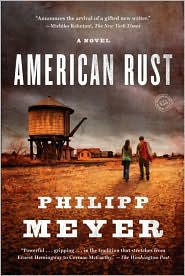
American Rust


American Rust by Philipp Meyer. 2009. Random House. 384 pages.

Isaac's mother was dead five years but he hadn't stopped thinking about her.

There's a good chance you'll like this one more than I did. American Rust is the story of a small American town gone wrong. Plagued with economic problems, Isaac and the other characters in Philipp Meyer's American Rust struggle. And struggle. And struggle. They struggle with how to survive. They struggle with how to make ends meet. They struggle to thrive. Because thriving in the midst of their problems, their woes, is almost impossible. They struggle to just cope another day. It's a dark novel that raises more than a few moral and ethical questions.
All the things you needed to know in life--you didn't learn them until you'd already made your decisions. For better and worse you were shaped by the people around you. (188)

It was his own choices. They never felt like choices while he was making them, but nonetheless they were. It was nice to think it was a vast conspiracy of others but the truth was something different. (111)

There were certain places and certain people who mattered a lot more than others. Not a single dime was being spent to rebuild Buell. (45)
As I said, you might like this one more than I did. Isaac English and his friend, Billy Poe, stumble into trouble in the opening chapter of American Rust. Decisions are made--in the moment--that set them both on a very difficult journey. Things are set in motion that are not easily undone. Bad things. This isn't just the story of a tangled, messy friendship. It's the story of a broken community. We meet many of these "broken" people throughout the novel. Many of them firsthand. Because American Rust is a novel that shifts narrators. A lot. I think this is where I struggled as a reader.

I don't always enjoy books with multiple narrators. The more narrators a book has, the messier it can be. I don't know if "messy" is quite the right word. But "confusing" doesn't seem right either. Because it's not so much that this story is hard to follow. It isn't. It's just that with the focus shifting back and forth so very much, it's hard for my focus to stay in place. I was slow to realize the point of this one. What seems so obvious in retrospect. I was expecting this book to be about something. To be a bit more plot-driven perhaps?! I don't know. What this novel does is focus on humanity, on the emotional side of things, the uncomfortable places that despaBlockquoteir and unhappiness and worry can lead us. It's about feeling hopeless, feeling stuck, trapped. It is a book about something, that something just happens to be choices and consequences and regrets.

Another place I struggled as a reader was the characterization. I had a really hard time liking the characters. Especially Isaac English and Billy Poe. (Though of the two, I liked Billy better.) If I had to choose a favorite narrator, I'd probably go with Grace, Billy's mother. But just because I didn't like the characters doesn't mean they weren't well-crafted. One reason I didn't like them may just be that these characters didn't like themselves. Neither Billy or Isaac liked themselves. Both were unhappy. Both were miserable.

I think some readers--especially those who love modern literature, adult literature--will appreciate this one. It focuses more on the darker side of humanity, the dark places of the soul where anger, bitterness, despair dwell and multiply.

© Becky Laney of Becky's Book Reviews

Wednesday, January 20, 2010

CFBA Blog Tour: A Lady Like Sarah


A Lady Like Sarah. By Margaret Brownley. (A Rocky Creek Romance). 2009. Thomas Nelson. 320 pages.

Vultures signaled trouble ahead..

"She's an outlaw. He's a preacher. Both are in need of a miracle."
That's how it's described on the back cover. I must admit I was a little skeptic heading into this one. Would it be 'too western' for me? After all, it is set in the 1870s and it does feature an outlaw or two?! But my worries went away after I began reading.

The book stars the frustrated but good-intentioned preacher, Justin Wells, and the scared-and-somewhat-embittered outlaw, Sarah Prescott. It was not love at first sight.

When he first stumbles across Sarah, she's handcuffed. The U.S. marshal escorting her back to the Texas town of Rocky Creek has been shot and is in very poor condition. Justin not yet knowing that the prisoner is really a she promises the marshal to take "the prisoner" on to Texas, to see justice done, to take a message to the marshal's family. But can he keep his promise after he knows....

After he knows that "the prisoner" is a woman? She may not be dressed as one. She may not act like one, a lady, I mean. But she is woman through and through. And after hearing her side of the story, after hearing about her troubled past, after hearing her declare her innocence and after hearing about the mockery of a trial that condemned her to hang, after he's come to believe her...how can he keep that promise now? When he knows that there is a very good possibility--that she will hang. Can he live with having her her death on his hands?

She stared at the manacles in his hands and wondered what he saw when he looked at her. Did he see an outlaw or someone else--the woman whose heart suddenly yearned to be held by a man? By him? Cheeks aflame, she looked up.
Head lowered, he reached for her hand, but before cuffing her, he hesitated.
She searched his face and he met her gaze. She wanted him to look at her like she had seen her brothers look at other women. But anything would be better than the pity she saw in his eyes.
Look at me, she wanted to cry. Look at me. Without thinking, she threw her arms around his neck. If he was surprised, she couldn't tell. For his lips melted against hers, sending waves of heat down her body. His mouth on hers was both gentle and demanding, sweet and warm, and more than anything, persuasive. She drank in the moment, wishing it would last forever.
Great sand and sagebrush! How come no one ever told her that kissin' a man was even more fun than fightin' a bear? She'd heard tell about this man and woman stuff, but no one ever said it felt this good, felt so completely and utterly right.
The kiss ended far too soon. One hand on her shoulder, he firmly pushed her away. The mouth that moments earlier had been soft and yielding was now hard and unrelenting. No pity showed in his eyes now. Only rejection...and, somehow, that was even worse.
Her senses in turmoil, she didn't know what to think. She wondered if she had only imagined his response, imagined that he welcomed her kiss.
Confused as much by her own actions as his, she stared up at him.
"I'm sorry, Sarah."
She couldn't have felt more humiliated had she been thrown from a horse.
For the longest while, they stared at each other like two wild animals meeting by chance.
"Forgive me," he pleaded. "I can't do this."
Had he thrust a knife in her heart, he couldn't have hurt her more. "Because of who I am?" she lashed out at him. "Because I'm a wanted woman and not fit to wipe your feet?"
He shook his head sadly. "No, Sarah. Because of who I am." (48-49)


Sarah isn't just Sarah. She's Sarah Prescott. Her brothers are "the Prescott brothers." A no-good robbing gang that go about holding up as many "Wells Fargo" wagons as they can. She doesn't like her brothers, but she loves them. She can't forget that she is--like it or not--a Prescott.

Justin Wells knows just a little about being falsely accused, although he doesn't have a criminal record, his rushed exit from Boston, his reassignment to a little Texas town he's never heard of--Rocky Creek--is not particularly of his choosing. He doesn't feel led to minister here. So he's a bit confused as well as to where he belongs and what he wants and needs.

Together can these two come to trust God, in his will? Will justice be served?

A Lady Like Sarah is a compelling story, a historical romance. The pacing was great. I was always wanting more, more, more. I couldn't put it down. It was enjoyable. It was satisfying. It was good.


© Becky Laney of Becky's Book Reviews
Wednesday, January 13, 2010

Reasons to Love Shannon Hale...


Welcome to the third day of the Calamity Jack tour. I thought I'd take a few minutes to share why I love Shannon Hale so much. And the first few reasons have nothing to do with the books she's authored. As great as they are, I would still love her as much if she was just a blogger. You see, she has a great little blog. And she really contributes to the community with her posts. You *should* definitely seek out her posts on "How To Be A Reader."

How To Be A Reader: Reader Responsibility
How To Be A Reader: Author Responsibility
How To Be A Reader: How Becoming An Author Changed Me As A Reader
How To Be A Reader: Reviewing the Review
How To Be A Reader: The Moral of the Story Is...
The Moral of the--Wait, what's a moral?
How To Be A Reader: Good book, vs. Bad Book
How To Be a Reader: Why Write a Good Book
How To Be A Reader: Making Yourself Fully Literate
How To Be A Reader, Book Evaluation vs. Self Evaluation
Let Them Eat Pictures
Commenting on comments, reviewing reviews

Now is it absolutely essential that authors have websites and blogs? Probably not. But I certainly like discovering my favorite authors have a blog to follow.

Now, let's talk about her books. I love them. I do. These are the ones I've reviewed:

Goose Girl, Enna Burning, River Secrets, Forest Born.

Princess Academy

Book of a Thousand Days

Austenland

There is only one novel that I haven't read yet, The Actor & The Housewife.

Have you read any Shannon Hale books? Do you have a favorite?

To see what others are saying about Shannon Hale...


Sally Apokedak, Reading is my Superpower, firesidemusings.blogspot.com, Through the Looking Glass Book Review , Booking Mama, Cafe of Dreams, Becky’s Book Reviews, The Hungry Readers, , My Own Little Corner of the World, Book Blather, GreenBeanTeenQueen, Book Crumbs , Abby (the) Librarian, Dolce Bellezza, Homeschoolbuzz.com, The Book Cellar, Carrie’s YA Bookshelf, Bookshelf Monstrosity, Everyday Reading, Frenetic Reader, KidzBookBuzz.com

© Becky Laney of Becky's Book Reviews
Tuesday, January 12, 2010

Calamity Jack


Calamity Jack. By Shannon and Dean Hale. Illustrated by Nathan Hale. 2010. Bloomsbury USA. 144 pages.

Welcome to the second day of the Calamity Jack blog tour. Today I bring you my review of Calamity Jack, a companion book to Rapunzel's Revenge. Both graphic novels are twists on old-and-familiar stories. Rapunzel. Jack and the Beanstalk. Hale takes old characters, and breathes new life into them. Giving them oddly modern adventures. While I must admit that I loved Rapunzel's Revenge more than Calamity Jack, I did enjoy it for what it was.

I think of myself as a criminal mastermind...with an unfortunate amount of bad luck. I was born to scheme. See? You can tell just by looking at me. I wasted no time. My first true scheme was at age two.

In Rapunzel's Revenge, Jack was, well, so-clearly-the-good guy. In Calamity Jack, we see that Jack doesn't think of himself in quite that way. In fact, up until the moment he hooked up with Rapunzel, well, he always considered himself a bad boy. He was oh-so-good at being a bad boy. So he's having to redefine himself (in a way) as he's put to new tests and struggles through new adventures.

Calamity Jack tells Jack's back story. How he came to be Jack. Yes, we see how Jack came to grow that beanstalk. We get the real why of it. We also see how he came to be at Rapunzel's side. But it also continues the story. The second half of this graphic novel tells of new adventures shared with Rapunzel and Jack. So it is both a companion and sequel.

What does this one offer readers? Action. Adventure. Fun.

To see what others are saying about Calamity Jack...


Sally Apokedak, Reading is my Superpower, firesidemusings.blogspot.com, Through the Looking Glass Book Review , Booking Mama, Cafe of Dreams, Becky’s Book Reviews, The Hungry Readers, , My Own Little Corner of the World, Book Blather, GreenBeanTeenQueen, Book Crumbs , Abby (the) Librarian, Dolce Bellezza, Homeschoolbuzz.com, The Book Cellar, Carrie’s YA Bookshelf, Bookshelf Monstrosity, Everyday Reading, Frenetic Reader, KidzBookBuzz.com

© Becky Laney of Becky's Book Reviews
Monday, January 11, 2010

Rapunzel's Revenge

Welcome to the first day of the blog tour for Shannon Hale's newest book, Calamity Jack. I'm starting off the three day tour by sharing a previously-posted review of the first book, the companion book, Rapunzel's Revenge. This book is just one of many Shannon Hale books I've reviewed through the years. You see, she's one of my favorite authors.

Hale, Shannon and Dean. 2008. Rapunzel's Revenge. Illustrated by Nathan Hale.

Rapunzel's Revenge is a graphic novel. A great graphic novel of an empowered and spunky Rapunzel who's on a quest for revenge. Really there are no words for how much fun this one is. It does begin in a familiar way, "Once upon a time, there was a beautiful little girl..." and it is loosely based on the fairy tale...but most of the story is original and fun and wonderful. The book really begins to take off when Rapunzel rescues herself from the tower. One of the first things she does is meet her "adventuring hero" who would have rescued her...not. Here's how that exchange goes:

Rapunzel: Ow! What in the--
Would-be-hero: Are you all right?
Rapunzel: Oh...am I...am I all right? Well I was until someone shot my new pet pig. I was going to call him Roger.
Would-be-hero: You're welcome! All in a day's work. I'm an adventuring hero.
Rapunzel: Well, It's nice to meet you. It's nice to meet anyone, really. Can you give me directions to--
Would-be-hero: I was getting so bored watching the workers farm my fields all day. So I left behind the civilized comforts of Husker City, following tales of a beautiful maiden trapped in a high tower.
Rapunzel: Oh! That's so noble of you to come all this way to help her.
Would-be-hero: Yes, noble is a good word for me. I can't actually rescue her, of course. The word is she's Mother Gothel's pet and I won't risk crossing the old lady. But I can tell her I'm going to rescue her. She's bound to be too naive to know the difference, and it'll be such fun in the meantime!
Rapunzel: Oh.
Would be hero: So, tiny ragamuffin, as payment for saving you from that rampaging beast, you may point the way to her mystical tower.
Rapunzel: Uh, yeah, the tower is a huge tree just back that way, but...but she's slightly deaf. If you keep calling out, she'll hear you. Eventually.
Would-be-hero: Excellent! And I'm off.
Rapunzel: Remember to yell as loud as you can!
Narrator: This is where the "once upon a time" part ends, with yours truly finally free from that perpendicular prison.
But Rapunzel's story is far from over. And her adventures have just begun. I loved the story. I loved the style. I loved the illustrations.

I loved this one!!!

To visit others on the tour,


Sally Apokedak, Reading is my Superpower, firesidemusings.blogspot.com, Through the Looking Glass Book Review , Booking Mama, Cafe of Dreams, Becky’s Book Reviews, The Hungry Readers, , My Own Little Corner of the World, Book Blather, GreenBeanTeenQueen, Book Crumbs , Abby (the) Librarian, Dolce Bellezza, Homeschoolbuzz.com, The Book Cellar, Carrie’s YA Bookshelf, Bookshelf Monstrosity, Everyday Reading, Frenetic Reader, KidzBookBuzz.com

© Becky Laney of Becky's Book Reviews

Friday, December 04, 2009

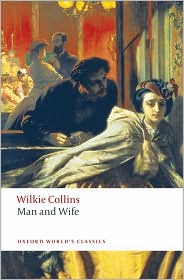
Wilkie Collins: Man and Wife


Collins, Wilkie. 1870. Man and Wife. 688 pages.

On a summer's morning, between thirty and forty years ago, two girls were crying bitterly in the cabin of an East Indian passenger ship, bound outward, from Gravesend to Bombay.

No matter how you look at it, Man and Wife is a strange and often uneven novel. Definitely melodramatic. As complicated as any modern soap opera.

Anne and Blanche are best friends. Their mothers--also named Anne and Blanche--were also best friends. (Though both mothers are dead by the time this story really gets started. Perhaps that is why these two--now of marriageable age--cling to one another so fiercely.) But this friendship is about to be tested. And not just a little bit. Anne, out of necessity or "duty" is about to separate herself (perhaps forever) from her closest friend. Foolishly, Anne gave into temptation with Geoffrey Delamayn, and is now reaping the consequences. She's pregnant. And she's trying to push her lover into marriage. Reminding him of all that he's said and done. How he owes her and his unborn child. The two arrange to meet at an inn and pose as man and wife. She wants--of course--for the marriage to take place soon after. But before Geoffrey can arrive (but after Anne's already run away), he receives notice that his father is ill--perhaps dying. He's needed at home. In London, I believe. So he convinces his friend, Arnold Brinkworth, to go in his place. To deliver a note to Anne. But to do this, he has to tell a few white lies to the landlady. To say he is the young lady's husband. (Arnold, for the record, is newly engaged. He's in love with Blanche.) This makes both uncomfortable. Neither likes the deceit. And both would undo this day if they could. But what's done is done, right?

This book is set in Scotland and England. And it concerns the Scottish marriage laws of the time. (Irregular little marriages including marriage by declaration and marriage by correspondence.) It's an integral part of the plot and much too complex to try to explain here. But these vacationing characters get into quite a mess by the end of it!

I mentioned that the book was strange. Perhaps that's not quite the word for it. The book tackles so many different topics. Scottish marriage laws. Marriage in general. The lack of women's rights. (How if a woman is a wife then she is the property of her husband. It doesn't matter how evil and cruel and drunk and abusive he is. She is his for life to do with as he pleases.) Society itself. The 'dangers' of sports and athleticism. Perhaps it is the attack on sports--the correlation Collins makes between moral depravity and physical fitness--that stands out as most strange. Geoffrey Delamayn is quite an athlete, a sportsman, he prides himself on his physique. He exercises and trains. He does various sports--including running. And Collins argues that all the energy Delamayn is putting into sports is ruining him mind, body, and soul.

The book is definitely didactic in places. And not just about sports. The other causes taken up within the book--particularly marriage and how women should have rights even if they are married--are a bit more welcome to readers though. But before you champion Collins as being completely enlightened and wonderful, you have to wrestle with passages like these:

However persistently the epicene theorists of modern times may deny it, it is nevertheless a truth plainly visible in the whole past history of the sexes that the natural condition of a woman is to find her master in a man. Look in the face of any woman who is in no direct way dependent on a man: and, as certainly as you see the sun in a cloudless sky, you see a woman is not happy. The want of a master is their great unknown want; the possession of a master is--unconsciously to themselves--the only possible completion of their lives. (chapter 31)
Still, you've got to weigh the good with the bad. And there are some places where the writing shines out for its wit, charm, and truth. (It is the nature of Truth to struggle to the light.) ("Our little besetting sins!" she said. "What slaves we are to our little besetting sins!")

Here is a little love scene between Arnold and Blanche:

[Blanche] could have boxed Arnold on both ears for being so unreasonably afraid of her.
"Well," she said impatiently, "if I did look in your face, what should I see?"
Arnold made another plunge. He answered: "You would see that I want a little encouragement."
"From me?"
"Yes--if you please."

Blanche looked back over her shoulder. The summer-house stood on an eminence, approached by steps. The players on the lawn beneath were audible, but not visible. Any one of them might appear, unexpectedly, at a moment's notice. Blanche listened. There was no sound of approaching footsteps--there was a general hush, and then another bang of the mallet on the ball and then a clapping of hands. Sir Patrick was a privileged person. He had been allowed, in all probability to try again; and he was succeeding at the second effort. This implied a reprieve of some seconds. Blanche looked back again at Arnold.

"Consider yourself encouraged," she whispered and instantly added, with the ineradicable female instinct of self-defense, "within limits!"

Arnold made a last plunge--straight to the bottom, this time.

"Consider yourself loved," he burst out, "without any limits at all."
So the book has its strengths and weaknesses. I mentioned some of the weaknesses already, but I'd like to focus on one of the strengths now. Sir Patrick Lundie. Wow. I loved Sir Patrick. I really did. He is the uncle to Blanche, a lawyer, an older man who has a big heart. He was such a stand-out character. He was so kind, so wise, so witty, so funny, so intelligent. He was a good man. The complete opposite of our villain, Geoffrey Delamayn. (Geoffrey made Heathcliff look like good boyfriend material.) I found myself smiling every time Sir Patrick collided (in dialogue) with Lady Lundie, his sister-in-law.

This was my first introduction to Wilkie Collins, and I found this one to be interesting. True, it has flaws. It's a bit long, and it's prone to rambling at times. It's definitely didactic in nature. But at the same time it's complex in a good way. We meet a lot of interesting characters--good and bad--that are well-developed. (We may not love all of the characters. We may want to yell at some and slap a few others.) But the suspenseful pace of the last two hundred pages or so of the novel help to make up for some of the heaviness of the earlier sections. Is it for everyone? Probably not. But I'm very glad I read it.

Tour Dates for Wilkie Collins.
The Classics Circuit

© Becky Laney of Becky's Book Reviews