The Foretelling of Georgie Spider. Ambelin Kwaymullina. 2015/2017. Candlewick Press. 448 pages. [Source: Review copy]
First sentence: I floated, adrift in my own consciousness. All alone in the peaceful dark. Except I wasn't really alone and I wasn't in the dark. Or my body wasn't.
What you should know about the series:
This is the third book in Ambelin Kwaymullina's Tribe series. The first two books are The Interrogation of Ashala Wolf and The Disappearance of Ember Crow. It is absolutely essential that you read the books in order.
It is YA speculative fiction. I'd say somewhere between dystopian and
post-apocalyptic. Post-apocalyptic because it is set hundreds of years
after 'the reckoning' that almost destroyed the planet and wiped out
humanity. Dystopian because of the ordered--often cruel--society or
government that has restructured the world. So if you like or love
either genre, then you should pick this one up. It is also science fiction. Not all characters are flesh-and-blood humans. There is some romance, some mystery, a good bit of fantasy, and a LOT of action.
The premise is simple perhaps to make up for the complex storytelling
and intense plot. The premise? Well, some people are born with special
powers or abilities. These abilities manifest themselves over time, so,
you essentially grow into your power/ability. Strength (intensity/power)
and control (ability to direct, use at will) vary from person to
person. These people are labeled 'illegal' and are targeted by the
government. The book is about the conflict between Illegals and the Powers That Be.
Questioning Authority and Being True To Yourself are some of the themes
explored.
Premise/plot: This third book while not told strictly from Georgie's point of view certainly focuses more on Georgie than the previous two books have. Georgie's special gift is seeing the future. The animals she has a special bond with are spiders. (Ashala, the main heroine, is bonded with wolves; Ember, another heroine, is bonded with crows. You'll find that most characters--each Illegal--have a special bond with a specific animal.)
Georgie's seeing the future--all the many, many, many possibilities of the future. And the future is bleak. In all of the futures she sees, Ashala dies, and, the world is thrown into what she calls a 'blizzard.' It is a future too cold, too bleak, too disconnected, too unbalanced to foresee anymore. Georgie has always thought that she could not, should not, try to change the future, to pick any one future over the others. But. She finds herself NEEDING to save her friend's life...if possible. And she can't do it alone. The future depends on the choices of her friends. And Georgie informs each friend that their choices MATTER, so they should choose wisely.
Enemies were introduced in the first two books, and, this is THE BOOK where it all comes together and the BIG SHOWDOWN has to happen.
My thoughts: I was drawn into the story with the first book. But I can't say that I love, love, love everything about the series. As a fantasy-influenced sci-fi novel, it works well. But the world-building is really world-view-building as well. And this one has a lot of elements that I personally don't care for. Let's just say that the "theology" of this one is more influenced by "I Am the Walrus" than the Bible. Everything--every animal, every human, every plant, every speck of dirt, every breath of air--is connected in a spiritual, philosophical way. So the well-being of everything is interconnected. Ashala and the others interact with an ancient spirit or too. And Ashala even believes that her ancient spirit guide is her "grandfather." One of the ancient spirits is actually my favorite character. I love Starbeauty. I don't love her because she's an ancient spirit; I don't love her because she's oh-so-wise. I love her because she's a cat, and she acts like a cat in many ways.
© 2017 Becky Laney of Becky's Book Reviews
Monday, June 12, 2017
Sunday, June 11, 2017
The Case of the Missing Carrot Cake
The Case of the Missing Carrot Cake. (Wilcox and Griswold #1). Robin Newman. 2015. 40 pages. [Source: Library]
First sentence: Boys and girls, this case is about thieves on Ed's farm. The names have been changed to protect the good guys. Over 100 animals live on this farm. Most work. Some horse around. Others steal. That's where I come in. My name is Detective Wilcox. I'm a policemouse. The boss is Captain Griswold. We're MFIs, Missing Food Investigators. It's our job to investigate cases of missing food. Whatever the food, whatever the crime, we make the bad guys do the time. It was Monday morning. The captain and I were working the day shift when we got our first call.
Premise/plot: This is the first in a new early chapter book series by Robin Newman. It's a mystery series. I should add in a very FUNNY, well-crafted mystery series. In this first book, Miss Rabbit reports that her CARROT CAKE is missing. Wilcox and Griswold take the case, and the hard work begins. WHO is the thief? Can young readers solve the mystery before the big reveal?
My thoughts: I LOVE this one. I read plenty of early chapter books, and, while I appreciate many for what they do, I don't always love, love, love them for myself. I include myself in the target audience for this new series. I just adore the characters. And I LOVE the writing. Newman makes me LAUGH. My favorite line: "Truth to tell, this case was inching along slower than ketchup out of a bottle. Much slower indeed."
© 2017 Becky Laney of Becky's Book Reviews
First sentence: Boys and girls, this case is about thieves on Ed's farm. The names have been changed to protect the good guys. Over 100 animals live on this farm. Most work. Some horse around. Others steal. That's where I come in. My name is Detective Wilcox. I'm a policemouse. The boss is Captain Griswold. We're MFIs, Missing Food Investigators. It's our job to investigate cases of missing food. Whatever the food, whatever the crime, we make the bad guys do the time. It was Monday morning. The captain and I were working the day shift when we got our first call.
Premise/plot: This is the first in a new early chapter book series by Robin Newman. It's a mystery series. I should add in a very FUNNY, well-crafted mystery series. In this first book, Miss Rabbit reports that her CARROT CAKE is missing. Wilcox and Griswold take the case, and the hard work begins. WHO is the thief? Can young readers solve the mystery before the big reveal?
My thoughts: I LOVE this one. I read plenty of early chapter books, and, while I appreciate many for what they do, I don't always love, love, love them for myself. I include myself in the target audience for this new series. I just adore the characters. And I LOVE the writing. Newman makes me LAUGH. My favorite line: "Truth to tell, this case was inching along slower than ketchup out of a bottle. Much slower indeed."
© 2017 Becky Laney of Becky's Book Reviews
Saturday, June 10, 2017
Matilda's Cat
Matilda's Cat. Emily Gravett. 2012. 26 pages. [Source: Library]
First sentence: Matilda's cat likes playing with wool,playing with wool, boxes, playing with wool, boxes and riding bikes!
Premise/plot: In this delightful picture book readers meet Matilda and her cat. Matilda, the heroine, is dressed as a cat. She is trying to play WITH her cat. She's brainstorming constantly. What should we do now? How can we have fun together? How about this? How about that? The truth is most of what Matilda tries to get her cat to do, most of what Matilda says her cat likes...is not really true. But all is not lost. Matilda's cat does love something very much: MATILDA.
My thoughts: I really enjoyed this one. It's very expressive and creative. I loved the spread, "Matilda's cat likes drawing." Readers see Matilda sprawled out on the floor, surrounded by colored pencils, happily drawing. She's drawing a cat of course. But it's the expression on the cat's face that is almost priceless. It's also super-super cute to see all the kid-drawn art. Like there's one of Matilda's drawings that take THREE pieces of paper. The cat is knitting a sweater for Matilda. One of the sleeves covers three pieces of paper. If you look closely, Matilda's art reveals how the earlier activities should have gone. You see Matilda and the cat HAPPILY playing in boxes side by side. You see the cat bravely fighting a dragon. (Just the page before the text reads, "and fighting foes!") The picture of the tea party is adorable. As is the bicycle riding picture. And it is NOT easy to draw a bicycle. I think the book perfectly illustrates that our own interests sometimes dictate a little too much what we like to do with friends. Of course, the more obvious conclusion is that cats will be cats will be cats. And that you can't make a cat do something a cat doesn't want to do.
Another spread I really love is when Matilda tries to read a bedtime story to her cat. Her choice: Emily Gravett's DOGS. The cat REALLY, REALLY, REALLY doesn't want to do that!!!
Text: 5 out of 5
Illustrations: 5 out of 5
Total: 10 out of 10
© 2017 Becky Laney of Becky's Book Reviews
First sentence: Matilda's cat likes playing with wool,
Premise/plot: In this delightful picture book readers meet Matilda and her cat. Matilda, the heroine, is dressed as a cat. She is trying to play WITH her cat. She's brainstorming constantly. What should we do now? How can we have fun together? How about this? How about that? The truth is most of what Matilda tries to get her cat to do, most of what Matilda says her cat likes...is not really true. But all is not lost. Matilda's cat does love something very much: MATILDA.
My thoughts: I really enjoyed this one. It's very expressive and creative. I loved the spread, "Matilda's cat likes drawing." Readers see Matilda sprawled out on the floor, surrounded by colored pencils, happily drawing. She's drawing a cat of course. But it's the expression on the cat's face that is almost priceless. It's also super-super cute to see all the kid-drawn art. Like there's one of Matilda's drawings that take THREE pieces of paper. The cat is knitting a sweater for Matilda. One of the sleeves covers three pieces of paper. If you look closely, Matilda's art reveals how the earlier activities should have gone. You see Matilda and the cat HAPPILY playing in boxes side by side. You see the cat bravely fighting a dragon. (Just the page before the text reads, "and fighting foes!") The picture of the tea party is adorable. As is the bicycle riding picture. And it is NOT easy to draw a bicycle. I think the book perfectly illustrates that our own interests sometimes dictate a little too much what we like to do with friends. Of course, the more obvious conclusion is that cats will be cats will be cats. And that you can't make a cat do something a cat doesn't want to do.
Another spread I really love is when Matilda tries to read a bedtime story to her cat. Her choice: Emily Gravett's DOGS. The cat REALLY, REALLY, REALLY doesn't want to do that!!!
Text: 5 out of 5
Illustrations: 5 out of 5
Total: 10 out of 10
© 2017 Becky Laney of Becky's Book Reviews
Labels:
2012,
books reviewed in 2017,
cats,
library book,
picture books
Friday, June 09, 2017
Dawn's Early Light
Dawn's Early Light. Elswyth Thane. 1934/2017. Chicago Review Press. 336 pages. [Source: Review copy]
First sentence: He stood remote and alone amid the cheerful bustle of the dock at Yorktown. Around his feet in their silver-buckled shoes was stacked enough luggage for two men. Behind him rose the proud, sharp prow and slender spars of the Mary Jones, which had brought him across the Atlantic from Southampton.
Premise/plot: Julian Day, one of our heroes, is a newly arrived Englishman. He's come to America, to Virginia, to be a school master. He becomes great friends with St. John Sprague. In fact he becomes almost one of the family--this in spite of the fact that he's on the 'wrong side' of the conflict or tensions. St. John is madly in love with Regina Greensleeves. Regina vows never to marry a man who'd fight against the King. This coming from the woman who'd flirt with any man within sight. (Think Scarlett O'Hara.) But St. John sees past the surface problems and is convinced he's the only man he'd be able to put her and keep her in place. (He may be right on that.) Julian, meanwhile, is blinded by two things: Regina's beauty AND Tibby's undying love for him. Who is Tibby? Well, she's a young girl, an abused and troubled girl, an impoverished girl who wants to be allowed to attend school with her twin brother. It's just not fair--she insists--that her brother gets an opportunity to go to school and she doesn't. After all, she's just as bright--if not more so--than her brother. After getting to know her better, Julian agrees. He becomes her greatest champion and supporter. It's no surprise that she loves, loves, loves, loves, LOVES him. But will he ever see her as a potential wife? It doesn't seem likely--at least not at first. But as the years go by, as the tensions turn into WAR, much changes.
My thoughts: I really loved this one. I love that it's a first in a series. I love that the series is a family saga that will span generations. I love that it's set in America. So often I'm drawn to books and series set in England, it is nice for me to be able to be swept away by American history. I love the historical aspects of it. I love that some of the characters interacted with real, historical people.
© 2017 Becky Laney of Becky's Book Reviews
First sentence: He stood remote and alone amid the cheerful bustle of the dock at Yorktown. Around his feet in their silver-buckled shoes was stacked enough luggage for two men. Behind him rose the proud, sharp prow and slender spars of the Mary Jones, which had brought him across the Atlantic from Southampton.
Premise/plot: Julian Day, one of our heroes, is a newly arrived Englishman. He's come to America, to Virginia, to be a school master. He becomes great friends with St. John Sprague. In fact he becomes almost one of the family--this in spite of the fact that he's on the 'wrong side' of the conflict or tensions. St. John is madly in love with Regina Greensleeves. Regina vows never to marry a man who'd fight against the King. This coming from the woman who'd flirt with any man within sight. (Think Scarlett O'Hara.) But St. John sees past the surface problems and is convinced he's the only man he'd be able to put her and keep her in place. (He may be right on that.) Julian, meanwhile, is blinded by two things: Regina's beauty AND Tibby's undying love for him. Who is Tibby? Well, she's a young girl, an abused and troubled girl, an impoverished girl who wants to be allowed to attend school with her twin brother. It's just not fair--she insists--that her brother gets an opportunity to go to school and she doesn't. After all, she's just as bright--if not more so--than her brother. After getting to know her better, Julian agrees. He becomes her greatest champion and supporter. It's no surprise that she loves, loves, loves, loves, LOVES him. But will he ever see her as a potential wife? It doesn't seem likely--at least not at first. But as the years go by, as the tensions turn into WAR, much changes.
My thoughts: I really loved this one. I love that it's a first in a series. I love that the series is a family saga that will span generations. I love that it's set in America. So often I'm drawn to books and series set in England, it is nice for me to be able to be swept away by American history. I love the historical aspects of it. I love that some of the characters interacted with real, historical people.
© 2017 Becky Laney of Becky's Book Reviews
Thursday, June 08, 2017
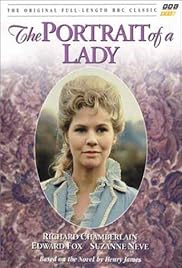
Portrait of a Lady (1968)
Portrait of a Lady (1968) starring Richard Chamberlain, Suzanne Neve, Edward Fox, Ed Bishop, James Maxwell, Rachel Gurney, Sarah Brackett, and Kathleen Byron.
I recently read and reviewed Henry James' Portrait of a Lady. This is the film adaptation my library had. It is a six-part miniseries from 1968--a BBC production. So even though James is an American author, this is a British production of his work. The book begins and ends in England, so that makes sense to me.
If you are looking for a production that stays true to the original, then this miniseries is for you. It hasn't been that long since I read the book, and, I can tell you that I recognized lines of dialogue as coming straight from the book.
Isabel Archer, the heroine, seeks to see the world and make her own path. At first she is greatly helped by her aunt and cousin. Ralph, the cousin, becomes one of her best friends. He is her biggest advocate. He convinces his father--her uncle--to leave her a lot of money in his will. He does. And she uses that money to see much. Unfortunately, she's now become even more vulnerable. Gilbert Osmond, for example, wants to marry her for her MONEY. Her money will make him a man. Of course, his idea of a perfect wife is a woman with no thoughts, ideas, opinions of her own. And absolutely she must be void of all gumption and independence. Her money may be his salvation. But the marriage may prove her undoing. But Isabel doesn't take marriage lightly. And though she realizes after the fact that her charming suitor is a monster, she's in it for better or worse. But that doesn't mean she won't follow her heart, her conscience. The same conscience that won't let her leave him, is the same one that calls to her that she must attend her dying cousin's deathbed no matter what her husband dictates.
I definitely enjoyed this 1968 production. It is almost six hours in length. I will admit that it looks like an "old" production. You can definitely tell the difference between a BBC production say from the 60s or 70s and one from the 2000s. But I appreciate that nothing has been added to make it more dramatic and appealing. I have not seen the 1996 production, but it describes itself as sensual.
© 2017 Becky Laney of Becky's Book Reviews
I recently read and reviewed Henry James' Portrait of a Lady. This is the film adaptation my library had. It is a six-part miniseries from 1968--a BBC production. So even though James is an American author, this is a British production of his work. The book begins and ends in England, so that makes sense to me.
If you are looking for a production that stays true to the original, then this miniseries is for you. It hasn't been that long since I read the book, and, I can tell you that I recognized lines of dialogue as coming straight from the book.
Isabel Archer, the heroine, seeks to see the world and make her own path. At first she is greatly helped by her aunt and cousin. Ralph, the cousin, becomes one of her best friends. He is her biggest advocate. He convinces his father--her uncle--to leave her a lot of money in his will. He does. And she uses that money to see much. Unfortunately, she's now become even more vulnerable. Gilbert Osmond, for example, wants to marry her for her MONEY. Her money will make him a man. Of course, his idea of a perfect wife is a woman with no thoughts, ideas, opinions of her own. And absolutely she must be void of all gumption and independence. Her money may be his salvation. But the marriage may prove her undoing. But Isabel doesn't take marriage lightly. And though she realizes after the fact that her charming suitor is a monster, she's in it for better or worse. But that doesn't mean she won't follow her heart, her conscience. The same conscience that won't let her leave him, is the same one that calls to her that she must attend her dying cousin's deathbed no matter what her husband dictates.
I definitely enjoyed this 1968 production. It is almost six hours in length. I will admit that it looks like an "old" production. You can definitely tell the difference between a BBC production say from the 60s or 70s and one from the 2000s. But I appreciate that nothing has been added to make it more dramatic and appealing. I have not seen the 1996 production, but it describes itself as sensual.
© 2017 Becky Laney of Becky's Book Reviews
Subscribe to:
Posts (Atom)


