Showing posts with label "U" authors. Show all posts

Wednesday, May 20, 2009

Moribito: Guardian of the Spirit (MG, YA)


Uehashi, Nahoko. 1996/2008. Moribito: Guardian of the Spirit. Translated into English by Cathy Hirano. Illustrated by Yuko Shimizu. Scholastic.

High quality. You'll notice it from the start. This book is very pleasing--to the eyes, yes, but also to the touch. But I'm reviewing the book, not the book jacket, so I need to get back on task.

At the moment the royal procession reached the Yamakage Bridge, Balsa's destiny took an unexpected turn.

Who is Balsa? Why should you care? Well, Balsa is the star of Nahoko Uehashi's Moribito: Guardian of the Spirit. She is a body guard, a female warrior. She is paid to protect. Paid to fight. As to why you should care? This book is a fun fantasy novel with lots of action and adventure. Originally published in Japan in 1996, the book has at last been translated into English and published in America.

When Balsa saves the Prince's life (second prince, not the crown prince), the second queen (second wife, mother of the second prince) shows her gratitude by inviting Balsa to her home, her palace. An offer Balsa cannot ignore. Though she knows that this invitation comes with a hidden cost. The Queen wants something from her. Wants it badly. The Queen feels her son is in danger. She wants Balsa to take the prince, Chagum, and run. Why is he in danger? Well, I could go there. But I'd likely confuse you. Or else you wouldn't believe me. If I told you the prince had a magical/spiritual egg inside him waiting to hatch? And that the whole book resolves around protecting this Prince/egg? You might think it a rather odd plot twist. But it works. And well. It's exciting. It's well written.

This is the first book in a long and seemingly well-beloved fantasy series in Japan. (Beloved enough to inspire anime and manga adaptations. According to Wikipedia, the series will air in the United States in the summer of 09.)

© Becky Laney of Becky's Book Reviews
If you're reading this post on another site, or another feed, the content has been stolen.

Wednesday, October 08, 2008

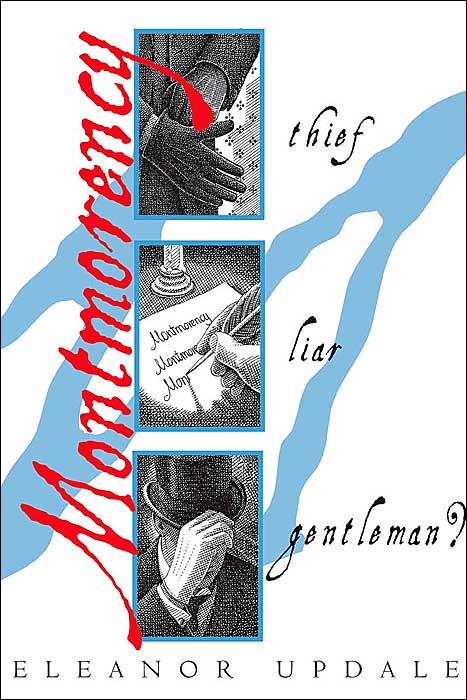
Travel the World: England: Montmorency


Updale, Eleanor. 2003/2004. Montmorency: Thief, Liar, Gentleman?

Originally published in Great Britain in 2003. Montmorency: Thief, Liar, Gentleman is the first in a series. (Montmorency having lots of adventures you see.) Set in Victorian England, it focuses on a thief and con man. We first meet our narrator in prison. We learn that he's been named "Montmorency" by the doctor that saved his life (and made a guinea pig out of him as well), Dr. Farcett. But he goes by another name as well: Prisoner 493.

493 is not well liked by his fellow prisoners. As the subject of study (and experimentation) of Dr. Farcett, he gets to go in and out of prison on a regular basis. True, his times out of prison he is the exhibit, an object on display, of Farcett and his lectures. But the other prisoners think he gets special treatment.

Ever calculating, 493 is already planning for his life out of prison. And he is absorbing everything around him. Absorbing all the information he hears at these lectures. Planning out his next big scheme.

His big plan? After hearing a lecture on the sewer system, he decides that he can use these underground passages as a way to get around during his burglaries. He can sneak into rich neighborhoods, hit his mark, and vanish underground. The scheme is complex--more complex than his previous crimes. So it takes a bit of planning. He soon realizes, he needs to be two people. To play two people. A Mr. Montmorency who is a rich, gentleman. A man who has the look and appearance of a gentleman. A man no one would mistake as a common thief. And Scarper, a lower-class man who can play the role of thief. Not that onlookers would take him as a thief. But he needs to be dirty and grungy and "common" enough that no one cares who he is and what he does. (It is a bit more complicated than that. But he has different "personas" he puts on to act out this scheme.)

Of course, he can plan all he likes when he's in prison...it's a different story to carry it out once he's been released. But Montmorency thinks he can do it.

My thoughts...I know this one is generally well liked (often loved) and it is typically highly recommended. But for me personally, I just didn't like it all that much. So while I think it has a certain amount of appeal to certain readers, I'm not sure I'll be following the series in the future.


© Becky Laney of Becky's Book Reviews

Saturday, October 28, 2006

The Shadow Thieves

Ursu, Anne. 2006. The Shadow Thieves.

Written in a light-hearted conversational style, this fantasy-filled adventure features two heroes: Charlotte Mielswetzki and her cousin Zee (Zachary) Miller. Beginning simply with this description: "See that girl--the one with the bright red hair, overstuffed backpack, and aura of grumpiness? That's Charlotte Mielswetzki. . .and something extraordinary is about to happen to her," the book begins by listing why all the obvious clues (such as a the oddly pale, strangely thin, freakishly tall, yellow-eyed, bald-headed man in the tuxedo) have nothing to do with the 'extraordinary' event coming her way, instead it has everything to do with the ordinary-looking stray kitten that meows her way into the story (3). If grumpy, prickly, and independent are adjectives for Charlotte. Her cousin Zee could easily be described as polite, shy, and a bit on the weird side. No it has nothing to do with his personality, the reader learns. But this young teen has had too many close encounters of the freakish variety.

What happens when a bad guy named Phil (Philonecron) decides he wants to overthrow the god Hades and rule the underworld? Apparently, according to this author, huge numbers of kids become mysteriously ill and unable to even lift their heads off their pillows. If not for a definitely bizarre English teacher, Mr. Metos, the heroes (Charlotte and Zee) might never have connected the dots between their greek mythology and this mysterious illness.

As the title indicates, THE SHADOW THIEVES, the kids' shadows are being stolen. But it is up to our young heroes to figure out the how and why of it all and try to save the world.

Shadow-stealing is not unique in children's literature, at least not this year. With Here There Be Dragons by James A. Owen, Peter and the Shadow Thieves by Dave Barry and Ridley Pearson, and even to some degree Peter Pan in Scarlet by Geraldine McCaughrean all in some way or another have shadow stealing (or losing of one's shadow) playing major and minor roles in the action. Ursu's shadow stealing is a bit lacking in sophistication compared to the others, but sophistication is not what she was aiming towards. With Ursu it is all about humor. (Does that mean The Shadow Thieves is a funny book? No. But the conversational style, the relaxed 'familiar' tone, has a way of stripping the seriousness and in some ways the danger away and drawing attention to itself.

Featuring greek gods and mythology in modern-day fantasy (set in America) is not unique either. The Lightning Thief and Sea of Monsters both by Rick Riordan are two examples of recent successes. Although Francesca Lia Block's newest novel Psyche in A Dress is supposed to feature Greek gods and goddesses in modern contexts as well. (But I haven't been able to read this book yet, although the description makes it sound very worth while). Does this mean that The Shadow Thieves isn't unique enough to be entertaining to readers? NO. Not every book can be the first in its kind. Not every book sets a trend. The Shadow Thieves follows two popular trends in children's literature. And it is often a good thing that there are books that follow certain trends. That way when readers ask for a book that is 'like' another book, the librarian has a long list to suggest. The Shadow Thieves is certainly entertaining enough to recommend to young fantasy readers looking for a new series.

http://www.anneursu.com/