Showing posts with label 1848. Show all posts

Thursday, March 01, 2018

Mary Barton

Mary Barton. Elizabeth Gaskell. 1848. 437 pages. [Source: Bought]

First sentence: There are some fields near Manchester, well known to the inhabitants as "Green Heys Fields," through which runs a public footpath to a little village about two miles distant.

Premise/plot: Elizabeth Gaskell's first novel is largely set in the manufacturing town of Manchester. Readers first meet Mary as a young girl on the eve of an all-too-common tragedy: the death of her mother due to complications from childbirth. Mary is raised by her father, John. Life is difficult--even in good years, when work is to be found and food relatively easy to come by. When Mary is old enough, she too goes to work. It is through her work that she meets a mill-owner's son, Harry Carson. He flatters and flirts and flirts and flatters. Her head is turned, but it doesn't stay turned. After receiving a proposal from a boy she's known practically since she was a toddling baby, Jem Wilson, she realizes her mistake...realizes too late. She's said NO to the worthy man. When Harry Carson is found murdered, people suspect Jem. For their battle of words over Mary were overheard. No one seems to be aware that the unsatisfied workers essentially drew lots to see who got the privilege of killing the mill owner's son. Will Jem be hanged for a crime he didn't commit? Or will Mary be able to save him with her quick-thinking and decisive actions?

My thoughts: I do hope that potential readers will forgive the initial slow-pacing. I don't think the slow pace is a waste. I don't. It allows for character development--relationship development. Mary Barton has friends--close friends--that we come to know and love. Jem's "Aunt Alice" for example, and the young Margaret and not-so-young Job (Margaret's grandfather). These characters become essential to the plot later on.

The first half of the novel definitely focuses on ideas and principles. John Barton is a man of opinions. Aunt Alice is an amazing spiritual role model. The second half of the novel is a fast-paced mystery-novel. A crime has been committed. A suspect has been arrested. A court date has been set. Time is running out to prove his innocence. Mary holds his fate in her hands--at least it feels so to her.

The last few chapters beautifully come together and were absolutely WONDERFUL.

FAVORITE QUOTES:
  • Don't think to come over me with th' old tale, that the rich know nothing of the trials of the poor; I say, if they don't know, they ought to know.
  • Opportunities are not often wanting where inclination goes before, and ere the end of that winter Mary looked upon Margaret almost as an old friend.
  • People admire talent, and talk about their admiration. But they value common sense without talking about it, and often without knowing it.
  • The vices of the poor sometimes astound us HERE; but when the secrets of all hearts shall be made known, their virtues will astound us in far greater degree. Of this I am certain.
  • Errands of mercy—errands of sin—did you ever think where all the thousands of people you daily meet are bound?
  • Such is the contrariness of the human heart, from Eve downwards, that we all, in our old Adam state, fancy things forbidden sweetest.
  • This disparity between the amount of the earnings of the working classes and the price of their food, occasioned, in more cases than could well be imagined, disease and death. Whole families went through a gradual starvation. They only wanted a Dante to record their sufferings. And yet even his words would fall short of the awful truth. So a petition was framed, and signed by thousands in the bright spring days of 1839, imploring Parliament to hear witnesses who could testify to the unparalleled destitution of the manufacturing districts. Nottingham, Sheffield, Glasgow, Manchester, and many other towns, were busy appointing delegates to convey this petition, who might speak, not merely of what they had seen, and had heard, but from what they had borne and suffered.
  • Life-worn, gaunt, anxious, hunger-stamped men, were those delegates.
  • Remember, too, that though it may take much suffering to kill the able-bodied and effective members of society, it does NOT take much to reduce them to worn, listless, diseased creatures, who thenceforward crawl through life with moody hearts and pain-stricken bodies.
  • Real meekness of character is called out by experience of kindness.
  • Her love for him was a bubble, blown out of vanity; but it looked very real and very bright.
  • "But it's so hard to be patient," pleaded Mary. "Ay, dear; being patient is the hardest work we, any of us, have to do through life, I take it. Waiting is far more difficult than doing. I've known that about my sight, and many a one has known it in watching the sick; but it's one of God's lessons we all must learn, one way or another." After a pause—"Have ye been to see his mother of late?"
  • "It's hard work to be patient to all of us," said Mary; "I know I find it so, but I did not know one so good as you did, Alice; I shall not think so badly of myself for being a bit impatient, now I've heard you say you find it difficult."
  • I sometimes think I am a child, whom the Lord is hushabying to my long sleep. For when I were a nurse-girl, my missis always telled me to speak very soft and low, and to darken the room that her little one might go to sleep; and now all noises are hushed and still to me, and the bonny earth seems dim and dark, and I know it's my Father lulling me away to my long sleep. I'm very well content; and yo mustn't fret for me. I've had well-nigh every blessing in life I could desire.
  • The actions of the uneducated seem to me typified in those of Frankenstein, that monster of many human qualities, ungifted with a soul, a knowledge of the difference between good and evil. The people rise up to life; they irritate us, they terrify us, and we become their enemies. Then, in the sorrowful moment of our triumphant power, their eyes gaze on us with mute reproach. Why have we made them what they are; a powerful monster, yet without the inner means for peace and happiness?
  • As the man who has had his taste educated to love reading, falls devouringly upon books after a long abstinence, so these poor fellows, whose tastes had been left to educate themselves into a liking for tobacco, beer, and similar gratifications, gleamed up at the proposal of the London delegate. Tobacco and drink deaden the pangs of hunger, and make one forget the miserable home, the desolate future.
  • Oh! much what all doctors say: he puts a fence on this side, and a fence on that, for fear he should be caught tripping in his judgment.
  • It is the woes that cannot in any earthly way be escaped that admit least earthly comforting. Of all trite, worn-out, hollow mockeries of comfort that were ever uttered by people who will not take the trouble of sympathising with others, the one I dislike the most is the exhortation not to grieve over an event, "for it cannot be helped." I mourn because what has occurred cannot be helped. The reason you give me for not grieving, is the very sole reason of my grief.
  • Oh! surest way of conversion to our faith, whatever it may be— regarding either small things, or great—when it is beheld as the actuating principle, from which we never swerve! When it is seen that, instead of overmuch profession, it is worked into the life, and moves every action!
  • Our Lord Jesus was not above letting folk minister to Him, for He knew how happy it makes one to do aught for another. It's the happiest work on earth.
--
Our Lord Jesus was not above letting folk minister to Him, for He knew how happy it makes one to do aught for another. It's the happiest work on earth.

The firm faith which her mind had no longer power to grasp, had left its trail of glory; for by no other word can I call the bright happy look which illumined the old earth-worn face. Her talk, it is true, bore no more that constant earnest reference to God and His holy Word which it had done in health, and there were no deathbed words of exhortation from the lips of one so habitually pious.
And death came to her as a welcome blessing, like as evening comes to the weary child. Her work here was finished, and faithfully done.
If they've been worthy to be heartily loved while alive, they'll not be forgotten when dead; it's against nature. And we need no more be upbraiding ourselves for letting in God's rays of light upon our sorrow, and no more be fearful of forgetting them, because their memory is not always haunting and taking up our minds, than you need to trouble yourself about remembering your grandfather's face, or what the stars were like—you can't forget if you would, what it's such a pleasure to think about.
"Let my trespasses be unforgiven, so that I may have vengeance for my son's murder." There are blasphemous actions as well as blasphemous words: all unloving, cruel deeds, are acted blasphemy.
He fell to the narrative now afresh, with all the interest of a little child. He began at the beginning, and read on almost greedily, understanding for the first time the full meaning of the story. He came to the end; the awful End. And there were the haunting words of pleading. He shut the book, and thought deeply. All night long, the Archangel combated with the Demon.
"God be merciful to us sinners.—Forgive us our trespasses as we forgive them that trespass against us!" And when the words were said, John Barton lay a corpse in Mr. Carson's arms.
Well! God does not judge as hardly as man, that's one comfort for all of us!
But still, you see, one's often blind to many a thing that lies right under one's nose, till it's pointed out.
You can never work facts as you would fixed quantities, and say, given two facts, and the product is so and so. God has given men feelings and passions which cannot be worked into the problem, because they are for ever changing and uncertain.
If fellow-creatures can give nought but tears and brave words, we take our trials straight from God, and we know enough of His love to put ourselves blind into His hands. You say our talk has done no good. I say it has.
I see the view you take of things from the place where you stand. I can remember that, when the time comes for judging you; I shan't think any longer, does he act right on my views of a thing, but does he act right on his own.
There are stages in the contemplation and endurance of great sorrow, which endow men with the same earnestness and clearness of thought that in some of old took the form of Prophecy.
To those who have large capability of loving and suffering, united with great power of firm endurance, there comes a time in their woe, when they are lifted out of the contemplation of their individual case into a searching inquiry into the nature of their calamity, and the remedy (if remedy there be) which may prevent its recurrence to others as well as to themselves.


© 2018 Becky Laney of Becky's Book Reviews

Wednesday, December 20, 2017

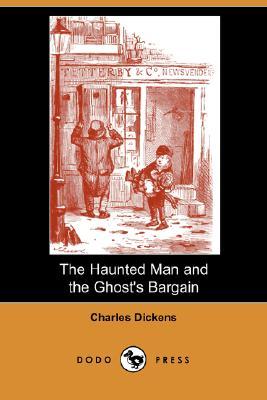
The Haunted Man and the Ghost's Bargain

The Haunted Man and the Ghost's Bargain. Charles Dickens. 1848. 100 pages. [Source: Bought]

First sentence: Everybody said so. Far be it from me to assert that what everybody says must be true. Everybody is, often, as likely to be wrong as right. In the general experience, everybody has been wrong so often, and it has taken, in most instances, such a weary while to find out how wrong, that the authority is proved to be fallible. Everybody may sometimes be right; “but THAT’S no rule,” as the ghost of Giles Scroggins says in the ballad. The dread word, GHOST, recalls me. Everybody said he looked like a haunted man. The extent of my present claim for everybody is, that they were so far right. He did.

Premise/plot:  Redlaw (aka the Chemist) learns an important lesson near Christmas time. In the first chapter, he's tempted by a Phantom to give up what makes him human--though he doesn't realize the consequences, of course. The Spectre (ghost, phantom, spirit, etc.) takes away ALL  of Redlaw's memories of sorrow, wrong, and trouble. And this is the gift that keeps on giving.
The gift that I have given, you shall give again, go where you will. Without recovering yourself the power that you have yielded up, you shall henceforth destroy its like in all whom you approach. Your wisdom has discovered that the memory of sorrow, wrong, and trouble is the lot of all mankind, and that mankind would be the happier, in its other memories, without it. Go! Be its benefactor! Freed from such remembrance, from this hour, carry involuntarily the blessing of such freedom with you. Its diffusion is inseparable and inalienable from you. Go! Be happy in the good you have won, and in the good you do!”


In the second chapter, there are CONSEQUENCES. And these consequences bring him to his knees. He learns that without feeling sorrow and remembering trouble, you have no empathy, no compassion, no concern for others. He sees the Spectre again and begs and pleads for change.
“What have you done?” returned the other, catching at his cloak. “What change have you wrought in me? What curse have you brought upon me? Give me back MYself!” “Give me back myself!” exclaimed Redlaw like a madman. “I am infected! I am infectious! I am charged with poison for my own mind, and the minds of all mankind. Where I felt interest, compassion, sympathy, I am turning into stone. Selfishness and ingratitude spring up in my blighting footsteps. I am only so much less base than the wretches whom I make so, that in the moment of their transformation I can hate them.”
“Shadow of myself! Spirit of my darker hours!” cried Redlaw, in distraction, “come back, and haunt me day and night, but take this gift away! Or, if it must still rest with me, deprive me of the dreadful power of giving it to others. Undo what I have done. Leave me benighted, but restore the day to those whom I have cursed. As I have spared this woman from the first, and as I never will go forth again, but will die here, with no hand to tend me, save this creature’s who is proof against me — hear me!”
“Oh, tell me,” exclaimed Redlaw, catching at the hope which he fancied might lie hidden in the words. “Can I undo what I have done?” “No,” returned the Phantom. “I do not ask for restoration to myself,” said Redlaw. “What I abandoned, I abandoned of my own free will, and have justly lost. But for those to whom I have transferred the fatal gift; who never sought it; who unknowingly received a curse of which they had no warning, and which they had no power to shun; can I do nothing?” “Nothing,” said the Phantom. “If I cannot, can any one?”
In the third chapter, readers see the curse lifted--little by little, person by person.
“I have no learning, and you have much,” said Milly; “I am not used to think, and you are always thinking. May I tell you why it seems to me a good thing for us, to remember wrong that has been done us?” “Yes.” “That we may forgive it.” “Pardon me, great Heaven!” said Redlaw, lifting up his eyes, “for having thrown away thine own high attribute!” “And if,” said Milly, “if your memory should one day be restored, as we will hope and pray it may be, would it not be a blessing to you to recall at once a wrong and its forgiveness?”
Redlaw fell upon his knees, with a loud cry. “O Thou, he said, “who through the teaching of pure love, hast graciously restored me to the memory which was the memory of Christ upon the Cross, and of all the good who perished in His cause, receive my thanks, and bless her!”
My thoughts: This one was good. I almost think it would improve upon rereading. I also think it would pair really well with a much longer work like Les Miserables. It hits upon some of the same themes and is essentially one of those "what life is all about" books. That being said, it is so short it's hard to get truly, deeply attached to the characters. This is definitely an ISSUE-driven book and not a character-driven book.

© 2017 Becky Laney of Becky's Book Reviews

Saturday, July 08, 2017

Camille: The Lady of the Camellias

Camille. Alexandre Dumas, fils. 1848. Translated by Edmund Gosse. 254 pages. [Source: Library]

First sentence: In my opinion, it is impossible to create characters until one has spent a long time studying men, as it is impossible to speak a language until it has been seriously acquired.

Premise/plot: The narrator learns of the death of a famous Parisian courtesan, Marguerite Gautier, and decides to attend her estate sale where he purchases a book with a personal dedication. Some time later, he meets a young man named Armand Duval, Marguerite's lover, who asks for the book back. The narrator is happy to comply, and the two become friends. The narrator learns the whole story of their passionate but tragic love story directly from him.

My thoughts: I really enjoyed this one very much. If one can "enjoy" a tragic love story. It reminded me very much of the musical Moulin Rouge. (Except I think it was a lot less flashy.) The heroine was based on a real person who died about a year before this book was published. The author, I believe, was one of the men madly in love with this celebrity courtesan. (Her name was changed for the book. The name of the real courtesan was Marie Duplessis.) This heroine has been the subject of plays, movies, and operas. Verdi was inspired by Dumas' play and book to write La traviata.

Favorite quotes:
I must tell you the whole story; you will make a book out of it; no one will believe it, but it will perhaps be interesting to do.
How many ways does the heart take, how many reasons does it invent for itself, in order to arrive at what it wants.
The story of Marguerite is an exception, I repeat had it not been an exception, it would not have been worth the trouble of writing it.
© 2017 Becky Laney of Becky's Book Reviews

Monday, January 16, 2017

The Kellys and the O'Kellys

The Kellys and the O'Kellys. Anthony Trollope. 1848. 537 pages. [Source: Bought]

First sentence: During the first two months of the year 1844, the greatest possible excitement existed in Dublin respecting the State Trials, in which Mr O’Connell, his son, the Editors of three different repeal newspapers, Tom Steele, the Rev. Mr Tierney — a priest who had taken a somewhat prominent part in the Repeal Movement — and Mr Ray, the Secretary to the Repeal Association, were indicted for conspiracy.

Premise/plot: Anthony Trollope's second novel, The Kellys and the O'Kellys, chronicles the romances of two men, a Mr. Martin Kelly, and Frank O'Kelly (aka Lord Ballindine). Like Trollope's first novel, it is set in Ireland. Though from different social classes, there is a friendship, of sorts, between the two men. At various times, for various reasons, they seek out one another's company.

In fact, the novel opens with Mr. Martin Kelly going to Lord Ballindine for advice. He wants to marry Anty Lynch. He thinks she's say yes. But there's an obstacle: her brother, Barry. Neither thinks Barry will consent to the marriage. Martin doesn't know if he should try to get her to elope with him and deal with the brother after the fact, or, if he should try to get the brother's consent and risk losing Anty. One thing is clear, he doesn't want anyone thinking that he's trying to take advantage of Anty and manipulate her into marriage. Why? Because she is richer than him, she's recently benefited from her father's will. Barry has issues. Issues is an understatement. He's bitter, angry, and drunk ninety percent of the time. Angry and bitter that their father's will provided for Anty; angry and bitter that he didn't get it all. In truth, he begrudges Anty the air she breathes.

Barry finds out that Anty and Mr. Martin might marry, that there is some talk of a marriage between the two. Barry decides to beat up his sister--remember he has two states 'drunk' and 'asleep.' She's savagely attacked by him, and threatened. He'd rather see her dead than married. A brave servant girl slips out of the house the next morning to go and tell Mrs. Kelly--Martin's mother--what's happened. Mrs. Kelly comes and fetches the girl--while Barry's asleep--to her own home. Martin's mother and sisters will care for her and protect her--as best they can--from Barry. Mrs. Kelly is an awesome defender who can hold her own.

Martin Kelly returns from his visit to see Lord Ballandine and learns all that is happened.

Meanwhile, Lord Ballindine is entertaining the idea of marriage himself. He's in fact engaged to marry a Miss Fanny Wyndham. Soon after the novel opens, he hears from an acquaintance, that HIS match has been broken off. The marriage isn't to be after all. He rushes to Grey Abbey--where she is staying with her aunt and uncle, her guardians--and is confronted with all kinds of unpleasantness. Lord Cashel, the uncle, has changed his mind entirely, and, has persuaded Fanny that it's in her best interest to call off the engagement. The truth is UGLY. Fanny's brother has died; Fanny went from being moderately wealthy to ridiculously wealthy. Lord Cashel wants his own son, Lord Kilcullen, to marry Fanny. He needs Ballindine out of the way. Lord Cashel won't let him see her, and forbids him to come to the house or write.

Lord Ballandine loves Fanny and is determined to marry her. He won't be easily dissuaded.

The book alternates back and forth between these two dramatic love stories.

My thoughts: This one is DRAMATIC but good. Trollope created some memorable characters in this one. I really loved getting to spend time with Fanny especially! I liked Anty well enough, I suppose, but she spent a lot of time in bed almost dying. Anty is one of those good--practically saintly--characters. Imagine someone apologizing for still breathing, and you've got the right idea. Anty's biggest flaw is that she wants every single person to be happy and get what they want. And that's just not possible. Fanny was a strong character, for the most part. Yes, she was persuaded--for a day, maybe two, to follow her uncle's advice, but she remains true to her heart, and VOCAL about what she wants. Martin Kelly and Lord Ballandine (Frank) were GREAT heroes. I really enjoyed spending time with these two. I didn't prefer one story to the other really. Both were compelling.

I really enjoyed Trollope's writing. He sketches scenes and characters very well! Here's a description of Sally, one of Mrs. Kelly's servants.
Mrs. Kelly kept two ordinary in-door servants to assist in the work of the house; one, an antiquated female named Sally, who was more devoted to her tea-pot than ever was any bacchanalian to his glass. Were there four different teas in the inn in one evening, she would have drained the pot after each, though she burst in the effort. Sally was, in all, an honest woman, and certainly a religious one; — she never neglected her devotional duties, confessed with most scrupulous accuracy the various peccadillos of which she might consider herself guilty; and it was thought, with reason, by those who knew her best, that all the extra prayers she said, — and they were very many, — were in atonement for commissions of continual petty larceny with regard to sugar.
On this subject did her old mistress quarrel with her, her young mistress ridicule her; of this sin did her fellow-servant accuse her; and, doubtless, for this sin did her Priest continually reprove her; but in vain. Though she would not own it, there was always sugar in her pocket, and though she declared that she usually drank her tea unsweetened, those who had come upon her unawares had seen her extracting the pinches of moist brown saccharine from the huge slit in her petticoat, and could not believe her.
Favorite quotes:
Time and the hour run through the longest day.
It’s difficult to make an Irishman handy, but it’s the very devil to make him quiet.
“But the great trial in this world is to behave well and becomingly in spite of oppressive thoughts: and it always takes a struggle to do that, and that struggle you’ve made. I hope it may lead you to feel that you may be contented and in comfort without having everything which you think necessary to your happiness. I’m sure I looked forward to this week as one of unmixed trouble and torment; but I was very wrong to do so. It has given me a great deal of unmixed satisfaction.”
I tell you plainly, Selina, I will not forget myself, nor will I be forgotten. Nor will I submit to whatever fate cold, unfeeling people may doom me, merely because I am a woman and alone. I will not give up Lord Ballindine, if I have to walk to his door and tell him so. And were I to do so, I should never think that I had forgotten myself.” “Listen to me, Fanny,” said Selina. “Wait a moment,” continued Fanny, “I have listened enough: it is my turn to speak now. For one thing I have to thank you: you have dispelled the idea that I could look for help to anyone in this family.
© 2017 Becky Laney of Becky's Book Reviews

Friday, February 22, 2013

Mary Barton (1848)

Mary Barton. Elizabeth Gaskell. 1848. 437 pages.

North and South by Elizabeth Gaskell is one of my favorite books. I love, love, love North and South. Mary Barton was Elizabeth Gaskell's first novel. It shares some things in common with North and South: Gaskell's focus on lower classes, the working force, unions and strikes, etc. But it is also very different from North and South. At the heart of Mary Barton is a murder mystery. Our heroine, Mary Barton, loves the man suspected of murdering the mill owner's son. She knows he's innocent; she trusts in his innocence even when most everyone else doesn't. In fact, she's willing to go to great lengths to help acquit him. There are sections of this one that are quite lovely and very intense. Once the mystery begins, once the murder occurs, this book becomes a good read. It does have a slow(er) beginning. Half the book is spent on introducing the two main families of the novel, the Wilsons and the Bartons. The characterization is important in the end, but, this one certainly isn't plot-driven in the beginning! 

Jem Wilson has always only loved Mary Barton. He may not be rich. He may not live in a grand house. But his heart and soul have belonged to Mary Barton. And there's nothing he wouldn't do for the love of his life. Even if he feels that love is unrequited. On the day he proposed, Mary Barton refused him thoroughly. And, to poor Jem, it seemed rather cruel, heartless, and final. But readers know that hope remains. For on that very day Mary has a moment of revelation: she does love Jem, loves him more than anyone. But she doesn't feel it quite proper to chase Jem down and say that she changed her mind, that she wants to marry him desperately. So she waits and hopes praying that one day he'll come and ask her again.

Read Mary Barton
  • If you enjoyed North and South, if you're a fan of Elizabeth Gaskell
  • If you enjoy dramatic mystery novels with a touch of romance
  • If you enjoy Victorian literature with plenty of detail and description
© 2013 Becky Laney of Becky's Book Reviews

Friday, June 22, 2012

Dombey and Son

Dombey and Son. Charles Dickens. 1846-1848. 880 pages.


DOMBEY sat in the corner of the darkened room in the great arm-chair by the bedside, and Son lay tucked up warm in a little basket bedstead, carefully disposed on a low settee immediately in front of the fire and close to it, as if his constitution were analogous to that of a muffin, and it was essential to toast him brown while he was very new. Dombey was about eight-and-forty years of age. Son about eight-and-forty minutes. Dombey was rather bald, rather red, and though a handsome well-made man, too stern and pompous in appearance, to be prepossessing. Son was very bald, and very red, and though (of course) an undeniably fine infant, somewhat crushed and spotty in his general effect, as yet. On the brow of Dombey, Time and his brother Care had set some marks, as on a tree that was to come down in good time--remorseless twins they are for striding through their human forests, notching as they go--while the countenance of Son was crossed and recrossed with a thousand little creases, which the same deceitful Time would take delight in smoothing out and wearing away with the flat part of his scythe, as a preparation of the surface for his deeper operations.

I definitely enjoyed reading Charles Dickens' Dombey and Son. While I can't say that it's my new favorite Dickens novel, we had a lovely time together. Reading Dickens requires a time commitment, for the most part. While it's true that Oliver Twist is a quick and relatively easy read, the same can't exactly be said for Dickens' other novels. (Of course, excusing The Christmas Carol which is so easy to read it almost doesn't feel like a proper Dickens novel.) I don't mind committing my time, energy, effort to Dickens because I know that in the end it will prove worth it. He may take a couple of hundred pages to get going strong, but by the end, every little detail will come together and magic will happen. Such was the case with Dombey and Son.

How do I feel about Paul Dombey? If I had to choose just one word it would be infuriating. He's so proud, arrogant, narrow-minded, egotistical, pompous, cold-hearted, and cruel. He should not be allowed anywhere near women or children. It's no surprise that his first wife didn't "try" very hard to live. True, I'm speaking in jest for the most part, but Mrs. Chick, Dombey's sister, is not. The opening chapters provide ample opportunities for her to chastise her sister-in-law for dying. And Mrs. Chick does feel it was a weakness in her character that she allowed herself to die.

Dombey has a newborn son, named Paul, of course, what did you expect? He also has a daughter, Florence. It is in his relationship with Florence that the man's true weakness is revealed. For he is a horribly neglectful, sometimes cruel Father who takes great pride in the fact that his daughter is a nobody. That is in his eyes he has no daughter, a girl-child is of no conceivable use to him, so she just doesn't exist to him. He doesn't want anyone around him to act as if she exists either. She's not to be mentioned certainly, and not to be loved either, at least not in a way that's visible to him. For if he sees that someone else is loving and kind to her, it makes him who has no feelings (supposedly) feel guilty for not being a decent human being.

Florence is the heroine of this novel. She may be a little too good to be true--she's practically flawless. But she's good at providing contrast for every other character in the novel. Because without a doubt almost everyone else who plays a role in this thick novel is very flawed and very human. If Florence has a fault it is in being too kind, too forgiving, too selfless. She makes excuses for her father's defects for almost all of the novel. No matter how he treats her, no matter how heartless he is, no matter what he decrees or sets in place, she's in the background trying to make it work out. She's almost blinded by hope that one day surely she'll be loved and accepted by her father.

Florence is beloved by so many people! Her younger brother, Paul, loves and adores her until the very end. Her brother's friend, Mr. Toot, loves and adores her too. And then there's Walter Gay. He may be of a different class than Florence, but, he's THE HERO. And it's so very easy to fall in love with Walter. Walter first meets Florence when they're children. He saves her when she's lost--she'd been kidnapped--and restores her to her family. She remains ever-thankful and full of kindness for him, and not only for him but for his uncle and his friend too. (Uncle Sol, Captain Cuttle). Walter works as a lowly clerk for Mr. Dombey; he's completely beneath the notice of Mr. Dombey.

I won't go into the details of this one--it covers at least a decade if not two--but it was such a treat of a novel! It was a nice blend of light and dark; at times very serious and emotionally compelling but at other times quite comedic. The style is rambling. Readers get plenty of descriptions, details, asides, etc. I always enjoy Dickens' creative names and characterizations. He can be so very quirky!!! In other words, typical Dickens.

Read Dombey and Son
  • If you're a fan of Charles Dickens
  • If you love literature and classics
  • If you're a fan of the Victorian period
  • If you enjoy long novels
© 2012 Becky Laney of Becky's Book Reviews
Wednesday, June 09, 2010

The Tenant of Wildfell Hall


The Tenant of Wildfell Hall. Anne Bronte. 1848. 496 pages.

You must go back with me to the autumn of 1827.

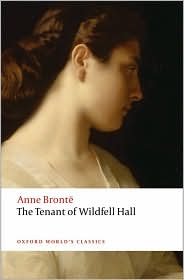
What should YOU know about this one going in? Less than I did, I think. I had the misfortune (yes, I know it's my own fault) of reading the very quick introduction. (For the record, it wasn't the edition that is pictured on the left. Though that edition might have a spoilerish introduction as well. I do wish that introductions could be placed at the end of the book.) So I will do my best to make you curious about this one, but not ruin it for you...

The Tenant of Wildfell Hall is told within a framework. We've got two narrators. Gilbert Markham is telling a friend about how he met this mystery woman in his youth. At the time of this telling, many years have passed. (Thus, the "You must go back with me to 1827" beginning.) This meeting, this acquaintance, isn't without mystery (and drama). He falls for a new woman in the community, a young woman with a son. Her name is Mrs. Graham. Her son's name is Arthur. Slowly--very slowly--he is starting to get to know her better. She's allowing him to visit her, walk with her. But as he begins to want to know her more, as he begins to picture his future with her in it...the rumors about her grow out of control. Who is she really? Is she worthy of his love? Is he doing the right thing by guarding her reputation and standing up for her within the community? Or is he being fooled?

The second narrator is the woman. Here readers meet Helen Huntingdon, Mrs Graham's real name. We learn her story through her journal. We learn her story alongside Gilbert--for she indeed gave this journal to him after some drama, tantrums, and tears.

The Tenant of Wildfell Hall is a novel about unhappy marriages. Helen's marriage isn't the only unhappy account. It is just one of many presented in Anne Bronte's dark novel. It highlights the lack of rights for women--for married women especially. It also could serve as a cautionary tale. Of how serious marriage is. Of how women should not rush into it. And how a pretty face, a handsome face, isn't enough to build a marriage on. That character is EVERYTHING. That marriage has to built on more than desire, more than infatuation. How can a young girl know if her suitor is worthy of her love? How can a young girl discern the truth of the matter? What if she's being deceived? What if he's merely a flatterer? Or a womanizer? Or a drunkard? Or a gambler? Or just after her money? How can she know who to trust? And deception doesn't just work one way. How can HE know her true character as well? How does he know that she loves him, that she cares for him, respects him? How does he know she isn't just after his money, his estate, his title?
When I tell you not to marry without love, I do not advise you to marry for love alone--there are many, many other things to be considered. Keep both heart and hand in your own possession, till you see good reason to part with them; and if such an occasion should never present itself, comfort your mind with this reflection: that, though in single life your joys may not be many, your sorrows, at least, will not be more than you can bear. Marriage may change your circumstances for the better, but in my private opinion, it is far more likely to produce a contrary result. (293)

The Tenant of Wildfell Hall is a gritty novel in some ways. The portrait of marriage it presents is ugly, harsh, cruel. But I am glad to have read this one. I found it to be a compelling read. I did feel for Helen. I'm not quite sure I have the same amount of respect for Gilbert as I do Helen. But then again Gilbert didn't read the introduction as I did. He wasn't omniscient.

Here is one of my favorite exchanges. It is between Helen and Mr. Hargrave.

'You have no love left for him, then?'
'Not the least.'
'I knew that--I knew you were too high-minded and pure in your own nature to continue to regard one so utterly false and polluted, with any feelings but those of indignation and scornful abhorrence!'
'Is he not your friend?' said I, turning my eyes from the fire to his face, with perhaps a slight touch of those feelings he assigned to another.
'He was,' replied he, with the same calm gravity as before, 'but do not wrong me by supposing that I could continue my friendship and esteem to a man who could so infamously - so impiously forsake and injure one so transcendently - well, I won't speak of it. But tell me, do you never think of revenge?'
'Revenge! No -- what good would that do? -- It would make him no better, and me no happier.'
'I don't know how to talk to you Mrs. Huntingdon,' said he smiling 'you are only half a woman -- your nature must be half-human, half angelic. Such goodness overawes me; I don't know what to make of it.' (259-260)
Other reviews: The Book Whisperer, The Reading Life, Helen Loves Books, A Striped Armchair, Booklust, The Zen Leaf.

© Becky Laney of Becky's Book Reviews

Friday, November 20, 2009

Elizabeth Gaskell: Mary Barton

Gaskell, Elizabeth. 1848. Mary Barton. Penguin English Library. 488 pages.

There are some fields near Manchester, well known to the inhabitants as 'Green Heys Fields,' through which runs a public footpath to a little village about two miles distant. In spite of these fields being flat and low, nay, in spite of the want of wood (the great and usual recommendation of level tracts of land), there is a charm about them which strikes even the inhabitant of a mountainous district, who sees and feels the effect of contrast in these common-place but thoroughly rural fields, with the busy, bustling manufacturing town, he left but half an hour ago.

Jem Wilson has always only loved Mary Barton. He may not be rich. He may not live in a grand house. But his heart and soul have belonged to Mary Barton. And there's nothing he wouldn't do for the love of his life. Even if he feels that love is unrequited.

On the day he proposed, Mary Barton refused him thoroughly. And, to poor Jem, it seemed rather cruel, heartless, and final. He dramatically declares:

'And is this the end of all my hopes and fears? the end of my life, I may say, for it is the end of all worth living for!' His agitation rose and carried him into passion. 'Mary! you'll hear, may be, of me as a drunkard, and may be as a thief, and may be as a murderer. Remember! when all are speaking ill of me, you will have no right to blame me, for it's your cruelty that will have made me what I feel I shall become.' (175)
But even though he'll never have Mary as his wife, when Mary's aunt, Esther, asks him to watch out for her, to take care of her, he can't quite refuse. You see, Esther fears for Mary. Fears that Mary Barton is in love with a dangerous man, a rich man who is out to seduce her. His rival's name is Harry Carson. And he seems to have it all. But his luck is about to run out.

Mary Barton was Elizabeth Gaskell's first novel. And it's so much more than a suspenseful love story. (Despite my description, this one is told mainly through the eyes of Mary Barton. Though at times it is told from other perspectives. John Barton, Mary's father, plays a large role in this one.) It's a novel about social class and economics. Of the haves and the have-nots. The Bartons and the Wilsons and almost everyone else of note in the novel are living at the poverty level. Below it more like it. Death from starvation, death by disease, these are very real concerns. Life isn't easy or pretty. It's one hardship after another after another. (It's enough to get you down and keep you down.) John Barton takes these losses poorly. He becomes angry and bitter. He blames the rich for all his problems. Is his anger justified? You be the judge!

One of the strengths of the novel is characterization. We meet Mary Barton, her family, her friends, her community. We meet so many different characters. Characters that are so easy to care about. (For example, Job Legh, Margaret Jennings, and Will Wilson. I particularly enjoyed Job!) All her characters have depth and substance. It's a very human book. The novel is also rich in detail and is very atmospheric.

What I wasn't expecting--and you may not be expecting either--was how rich this one was spiritually. It has some definite spiritual tones and by the end especially its rich spiritual significance really stands out. Something you don't find in just any classic.

I'm happy to be a part of the Elizabeth Gaskell blog tour. To see the rest of the bloggers on tour, visit The Classics Circuit! This was not my first time reading Elizabeth Gaskell. I've also read and reviewed Wives and Daughters and Cranford.

© Becky Laney of Becky's Book Reviews