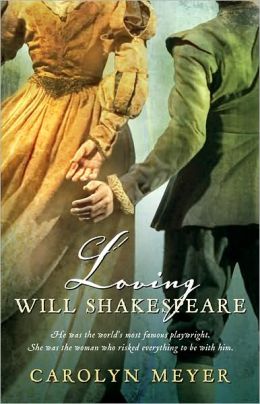
Loving Will Shakespeare. Carolyn Meyer. 2006. Harcourt. 272 pages. [Source: Book I Bought]
Loving Will Shakespeare was the very first Carolyn Meyer novel I ever read. It was LOVE. Loving Will Shakespeare was also one of the very first novels I ever reviewed here at Becky's Book Reviews. (To be precise, it was my SECOND review.) So I have wonderful memories of this one. I recently decided to reread it.
Loving Will Shakespeare is the fictional memoir of Shakespeare's wife, Anne Hathaway. After a brief framework is provided, the novel opens with the christening of William Shakespeare. Agnes Hathaway is in attendance. (I believe she is seven?) The age difference between these two is obvious from the start. The obstacle for the author to overcome is how to create a romance between the two in a believable way when the time comes.
Why did I love Loving Will Shakespeare? I think one of the main reasons is that it was so incredibly rich in detail. I really got a sense of what it was like to live during this time. Through Agnes (or Anne) readers get a chance to see this world up close. The lambing, the sheep-shearing, the sowing and reaping, the holidays and festivals, Twelfth Night and May Day. There is a great sense of community. Also the uncertainty of life. The health risks of living during this time in history. The recurrence of the plague that proves devastating or heartbreaking. The risks every single woman faces with each pregnancy and childbirth. The need for remarriage, the blending of families, etc.
The other reason may be the presence of Will Shakespeare himself. Though this is a mixed blessing. Will is presented as having a way with words, a true gift, a BIG dream. He doesn't quite fit in his setting. He wants more. He can be charming and work hard. It's not that he's dreaming so big that he's lazy. Readers see him in cozy friendship with Agnes for many years. What he is thinking of this older woman readers can't quite be sure of. But from her point of view, this friendly young man is good fun but not a potential mate. She isn't wow this fourteen year old boy is oh-so-dreamy.
Will Shakespeare is not Anne's first love-interest. She has been disappointed in the past in her crushes and suitors. One man she truly loved--the two were even engaged--but he died of the plague. The wooing between the two [Will and Anne] occur when he's seventeen or so. He's started writing poems--sonnets--and songs. And he's a great dancer. He is persistent and she's willing.
But if this love story has a romantic ending, it's definitely bittersweet. For after just a few years of marriage...Will Shakespeare leaves his wife and three children to go to London to make himself into SHAKESPEARE. He becomes famous and successful. And his family is largely not a part of his life in any meaningful way. Anne is not a nagging wife; one to beg her husband to stay. She lets him go with grace and courage believing that he will do great things.
If music be the food of love, play on...
To be or not to be...
© 2013 Becky Laney of Becky's Book Reviews
Showing posts with label Carolyn Meyer. Show all posts
Friday, October 04, 2013
Thursday, October 03, 2013
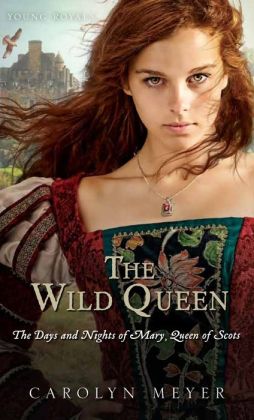
The Wild Queen
The Wild Queen. Carolyn Meyer. 2012. Houghton Mifflin Harcourt. 420 pages. [Source: Review Copy]
Mary, Queen of Scots, has every reason to sing the Blue-Blooded Blues...and I'll tell you for why...
Mary's story is a tragic one for many reasons. It isn't that Mary was a pure, innocent saint. It is the fact that from the time of her birth she was almost always manipulated, used, and abused; she was surrounded by power-hungry people who wanted to grasp power and control through Mary's so-called power. Surrounded by people who wanted to dictate and rule over her. Mary was crowned Queen of Scots before she was one.
The first half of the novel focuses on Mary's time in France. She was betrothed to the French dauphin from a very young age. She was raised in the French court. (She was half-French.) She was well-educated, became quite familiar with the royal household. She also got to see her French relatives (her grandparents, uncles, cousins, etc.) She marries young. All seems to be relatively fine until her husband dies leaving her a widow at age seventeen or eighteen. Then the pressure builds. Who will marry Mary next? Who will decide? Will it be her French uncles? her Scottish brothers? her cousin Queen Elizabeth? Will she decide the matter for herself?
Here, I believe, is where the tragedy begins. For Mary makes some fateful decisions with horrible consequences. Blinded by love, perhaps, or maybe just misplaced trust she chooses abominable husbands, one after the other. The good news, if there is good news to be found, is that Henry Stuart, her second husband, at least left Mary with a baby, James, destined to be James VI of Scotland and eventually James I of England. (And all monarchs ever since have descended from this line.) The last half of the novel traces her fall. If Mary betrayed the trust of Queen Elizabeth, it is perhaps the direct result of almost everyone in Mary's life betraying her first. Every person in Mary's life had an agenda. Mary's tragic flaw is that she didn't see people's not-so-hidden agendas. She trusted those who were unworthy.
I love historical fiction. I do. Carolyn Meyer happens to be one of my favorite writers. I've enjoyed so many of her historical novels! While The Wild Queen isn't my absolute favorite, it is a very good novel, a bit more mature, however, than some of Meyer's previous novels.
© 2013 Becky Laney of Becky's Book Reviews
Mary, Queen of Scots, has every reason to sing the Blue-Blooded Blues...and I'll tell you for why...
Mary's story is a tragic one for many reasons. It isn't that Mary was a pure, innocent saint. It is the fact that from the time of her birth she was almost always manipulated, used, and abused; she was surrounded by power-hungry people who wanted to grasp power and control through Mary's so-called power. Surrounded by people who wanted to dictate and rule over her. Mary was crowned Queen of Scots before she was one.
The first half of the novel focuses on Mary's time in France. She was betrothed to the French dauphin from a very young age. She was raised in the French court. (She was half-French.) She was well-educated, became quite familiar with the royal household. She also got to see her French relatives (her grandparents, uncles, cousins, etc.) She marries young. All seems to be relatively fine until her husband dies leaving her a widow at age seventeen or eighteen. Then the pressure builds. Who will marry Mary next? Who will decide? Will it be her French uncles? her Scottish brothers? her cousin Queen Elizabeth? Will she decide the matter for herself?
Here, I believe, is where the tragedy begins. For Mary makes some fateful decisions with horrible consequences. Blinded by love, perhaps, or maybe just misplaced trust she chooses abominable husbands, one after the other. The good news, if there is good news to be found, is that Henry Stuart, her second husband, at least left Mary with a baby, James, destined to be James VI of Scotland and eventually James I of England. (And all monarchs ever since have descended from this line.) The last half of the novel traces her fall. If Mary betrayed the trust of Queen Elizabeth, it is perhaps the direct result of almost everyone in Mary's life betraying her first. Every person in Mary's life had an agenda. Mary's tragic flaw is that she didn't see people's not-so-hidden agendas. She trusted those who were unworthy.
I love historical fiction. I do. Carolyn Meyer happens to be one of my favorite writers. I've enjoyed so many of her historical novels! While The Wild Queen isn't my absolute favorite, it is a very good novel, a bit more mature, however, than some of Meyer's previous novels.
© 2013 Becky Laney of Becky's Book Reviews
Saturday, February 11, 2012
Cleopatra Confesses (YA)
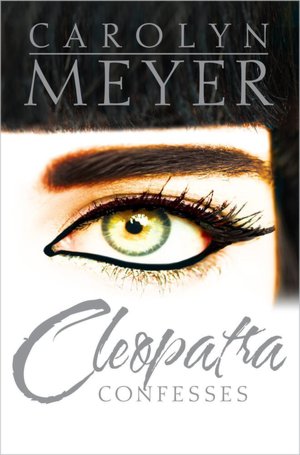
Cleopatra Confesses. Carolyn Meyer. 2011. Simon & Schuster. 304 pages.
From the prologue: My enemy stands at the gates of my city, Alexandria in Egypt.
From chapter one: I gaze out at the sea and remember a summer day in the reign of my father, King Ptolemy XII. In this memory I am ten years old. It is the season of the Inundation, the time of year when the Nile overflows its banks, flooding the fields and renewing them for planting.
While Cleopatra Confesses wouldn't be my absolute favorite Carolyn Meyer novel, I can easily say that it was a good book. I found it compelling. True, most readers will know the ultimate fate of Cleopatra. But still, this historical novel for teens focuses on Cleopatra's journey to that event. The novel is divided into sections. We see her as a young child who loves and adores her father. We see her as a young teen who distrusts her older sisters who proclaim themselves queens when their father enters exile. We see her fear for her life, but meet fear with determination, with strength not weakness. We see her happy reunion with her father, we see her share some of the glory with her father, with her brother, as she does become Queen. We see her as she becomes a mature woman who desires love and passion in addition to power. Julius Caesar gets a little attention--a chapter or two. But if you're expecting this to be a love story--though a tragic, slightly unusual love story--between Mark Antony and Cleopatra, you'll be disappointed. Just an epilogue brings readers up to date. I actually was pleased with this. Because the other story has been told again and again and again. But this story that focuses on her early years, on the rivalry between her and her sisters, on her unhappy marriages to her much, much younger brothers, on her early years as Queen, that is the story that is most worth telling. Especially for this audience.
Read Cleopatra Confesses
© 2012 Becky Laney of Becky's Book Reviews
From the prologue: My enemy stands at the gates of my city, Alexandria in Egypt.
From chapter one: I gaze out at the sea and remember a summer day in the reign of my father, King Ptolemy XII. In this memory I am ten years old. It is the season of the Inundation, the time of year when the Nile overflows its banks, flooding the fields and renewing them for planting.
While Cleopatra Confesses wouldn't be my absolute favorite Carolyn Meyer novel, I can easily say that it was a good book. I found it compelling. True, most readers will know the ultimate fate of Cleopatra. But still, this historical novel for teens focuses on Cleopatra's journey to that event. The novel is divided into sections. We see her as a young child who loves and adores her father. We see her as a young teen who distrusts her older sisters who proclaim themselves queens when their father enters exile. We see her fear for her life, but meet fear with determination, with strength not weakness. We see her happy reunion with her father, we see her share some of the glory with her father, with her brother, as she does become Queen. We see her as she becomes a mature woman who desires love and passion in addition to power. Julius Caesar gets a little attention--a chapter or two. But if you're expecting this to be a love story--though a tragic, slightly unusual love story--between Mark Antony and Cleopatra, you'll be disappointed. Just an epilogue brings readers up to date. I actually was pleased with this. Because the other story has been told again and again and again. But this story that focuses on her early years, on the rivalry between her and her sisters, on her unhappy marriages to her much, much younger brothers, on her early years as Queen, that is the story that is most worth telling. Especially for this audience.
Read Cleopatra Confesses
- If you're a fan of Carolyn Meyer
- If you're a fan of historical fiction, particularly historical fiction set in Egypt
- If you're interested in the Roman Empire
- If you're a fan of Shakespeare (Julius Caesar and Antony and Cleopatra)
- If you're interested in politics and power struggles--particularly within families!
© 2012 Becky Laney of Becky's Book Reviews
Wednesday, March 17, 2010
Bad Queen (YA)

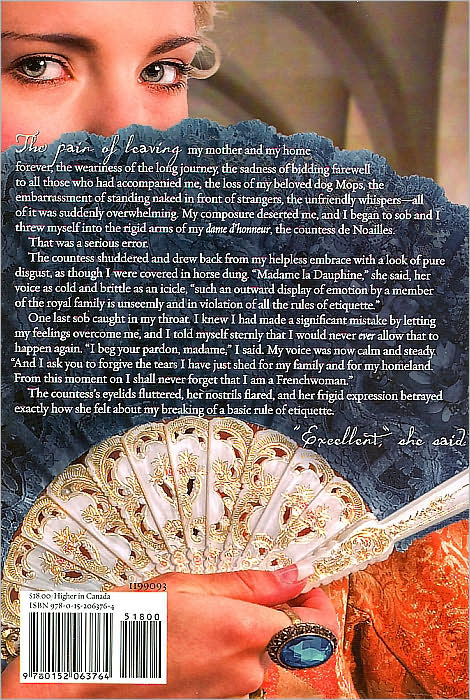
Bad Queen: Rules and Instructions for Marie-Antoinette by Carolyn Meyer. 2010. [April 2010] Harcourt. 420 pages.
The empress, my mother, studied me as if I were an unusual creature she'd thought of acquiring for the palace menagerie. I shivered under her critical gaze. It was like being bathed in snow.
I was not disappointed in Carolyn Meyer's latest book. This historical novel is based on the rise and fall of Marie Antoinette. It is the story of the French Revolution and the monarchs that fell as a nation revolted.
Each chapter is a numbered rule. So you'll see advice such as:
"You must become fluent in French"
"You are born to obey, and you must learn to do so"
"Never behave in a manner to shock anyone"
"An outward display of emotion violates all the rules of etiquette"
"You cannot change the rules of etiquette"
"It is not your role to defy accepted fashion"
"You must control your spending"
The Bad Queen is told in first person through the eyes of Marie Antoinette. Towards the end of the book, as the family's fate becomes more certain, when she knows her days are numbered and the end will be anything but pretty, the narration switches to Marie's daughter.
Readers get a behind-the-scenes look at what it's like to be royalty, what it's like to live in luxury, what it's like to be someone that everyone loves to hate.
I found this one to be a compelling read. Even though I knew what was coming, I just had to keep reading!
This isn't the first time Carolyn Meyer has written about royalty. There is Anastasia: The Last Grand Duchess; Kristina, The Girl King; Doomed Queen Anne; Mary, Blood Mary; Beware, Princess Elizabeth; and Patience, Princess Catherine; and Duchessina: A Novel of Catherine de Medici. I've read and enjoyed them all.
What do you think of the cover of this one?
© Becky Laney of Becky's Book Reviews
Saturday, June 21, 2008
In Mozart's Shadow
Meyer, Carolyn. 2008. In Mozart's Shadow: His Sister's Story."In the beginning, when I was four, Papa sat beside me at the clavichord, the music book open to minuets and other short pieces he had prepared for me, and he taught me how to play." (7)
In Mozart's Shadow is a novelization of Nannerl Mozart. Several years older than Wolfgang Amadeus Mozart, she was a talented, gifted musician in her own right. When Wolferl showed talent and promise as well, the family--mom, dad, brother, sister--went on the road together. The children performed together. Nannerl would have her time to shine. Wolferl would have his spotlight. They'd perform together as well playing duets. Their father would join in on occasion as well. Music was the family business. The Mozart's world revolved around music. Unfortunately, while many many people enjoyed their performances, money never really quite rolled in the way the parents hoped. They wanted fame, yes, but they also wanted money. Lots and lots of money. The father had a habit of living beyond his means, beyond his income. He wanted the best of everything. He thought that by spending money he would look aristocratic. And he thought that by looking aristocratic, people would give him more money.
These times together on the road as a family performing music were some of the happiest of her life. Unfortunately, the good times would not--could not--last. Sooner than Nannerl would have liked, her father stopped touring as a family. Wolferl, her younger brother, was the rising star now. He was the one that everyone hoped and prayed would be a big STAR. If the family were to make a fortune, to have a rise in social standing--fame, glory, success, money--it would be because of Wolfgang Amadeus Mozart. And the father didn't want Nannerl along for the journey--not even in the background.
Nannerl's hopes and dreams would not disappear or dissipate overnight. No, she clung to her dreams, her hopes for many years. Many. But her happiness was not to be. Not at all. Her life was full of disappointments, shattered dreams, and losses. It brings to mind Langston Hughes' "A Dream Deferred." Though she was talented, she was a she. There were not any famous women musicians, keyboard players. Women singers occasionally made it big and became stars. But not musicians. There was no place in that society for a grown woman to succeed in the world of men. The best she could hope for--if she wanted to keep music in her life--was to teach music. That and to play privately for family and friends and acquaintances and such. But there would be no career as a professional musician.
Though Nannerl's story is far from happy, the book itself is rich in detail. The people. The places. The culture and society. Hair. Fashion. Gossip. Those who love historical fiction will find it interesting I'm sure.
P
a
r
t
i
a
l
S
p
o
i
l
e
r
Nannerl's life is one of frustration. Raised by a domineering, controlling, authoritative, demanding father--worst stage dad ever perhaps--she was kept reined in even at home. She was in her early thirties and her father would not even consider letting her get married. He turned away any suitors that came around. She did fall in love. She did hope to marry. There was a man very much in love with her. But her father said never in a million years. She did eventually marry, but she never found love in that marriage. She married a man just as abominable--if not more so--than her father. Her true love stayed true to her even though they could never be together.
I'm not quite sure how well-known the existence the life of Mozart's sister, Nannerl, (Maria Anna) is generally speaking. (I was going to say with teens. But then I got to thinking...how many adults are familiar with her? I just don't know. I certainly didn't learn of her until a year or so ago. And that was just through a conversation with a friend. She mentioned her casually. So maybe I was clueless and the rest of the world is more aware. Or maybe she's just well known in certain sets.)
Blogged with the Flock Browser
Labels:
"I" Titles,
"M" Authors,
2008,
Carolyn Meyer,
music,
YA Historical Fiction
Sunday, February 24, 2008
White Lilacs

Meyer, Carolyn. 1993. White Lilacs.In the time before we knew that we would be driven away, our lives uprooted, and our people scattered, Grandfather Jim Williams spent every spare minute tending his beautiful garden in Freedomtown. He loved that garden, and I loved him. The garden was my favorite place.
Set in the fictional town of Dillon, Texas, White Lilacs tells the story of a community within a community. Freedomtown, a community of African Americans (Though of course they weren't called that then, negroes or colored being the terminology then. Though Meyer does use the n* word later on when relations become more strained.) Our narrator is Rose Lee Jefferson, a twelve year old who is about to forced into growing up rather quickly. She is a girl that loves life, loves her family, loves to draw. She especially loves spending time with her grandfather. He is a gardener for the Bell family. Her Aunt Tillie works for the Bell family as well. (I believe as the cook.) One day, soon after our narrative opens, Rose is unexpectedly called into the Bell's kitchen by her aunt and told that she needs her to serve luncheon to the Bells and their guests. She had been having fun with her grandfather, and the garden was a place she felt at home, felt comfortable. But she does what she must. It's a day that will change her life forever. Why? She overhears that the white folks of the community are planning to force them out, force them to sell. They want a park, a library, a woman's club.
Throughout that summer, Rose works when she can and overhears as much as she dares. But by the middle of July, it's clear that the whites will have their way. Change is a coming. And coming fast. Knowing that it would be impossible to save their community, Rose acts quickly to preserve what she can--on paper. She draws what she can--the school, the churches, the homes, the businesses.
White Lilacs is a heartbreaking story of prejudice and hate. But it is also a story of a loving family, a family that holds onto hope, holds onto the good, that holds together.Though fictional in nature, the book tells the all-too-real story of Quakertown. In the early 1920s, the African Americans of Quakertown were forced to sell their land so that the white folks of the city could have a park. You can read more about the actual Quakertown here. There is now a museum opened that tells the story of the community and documents its past.
Monday, May 14, 2007
Duchessina

Meyer, Carolyn. 2007. Duchessina: A Novel of Catherine de' Medici.
Duchessina is told in first person narrative. This gives the reader an insider-look at being royal...both its ups and downs. As a child, Caterina Maria Romula di Lorenzo de' Medici, aka Duchessina, was orphaned. Being royal, she was raised in great style by relatives--sometimes distant relatives--who loved money more than people. She was often lonely as a child. And often unhappy. She found some friends. But she also learned with each passing year, that her family had many enemies. That being royal could be dangerous. Could be life-threatening. Having a pope for a relation was equally dangerous. She learned that most of the people around her were obsessed with power and crazed for money. Her life was in danger more than once, as rebellions started across Italy. She was 'imprisoned' for her own well being in several monasteries through the years. Depending on which monastery she was living, she found the nuns and other children treated her either kindly or with scorn. Many hated her because of her wealth. Many hated her because of her name. Many hated her for who she represented. She was always viewed as a pawn in a powerful game. Unable to make her own decisions or guide her own fate, she simply reacted to her latest set of circumstances. Sometimes she was dressed in style and living the luxurious life, but other times she was living as a pauper. She faced hunger. She faced poverty. She faced danger. Through the years, she most wondered who she would marry one day. Would he be royal? Would he be noble? Would he be rich? Would he be Italian? French? Would he love her? Or would he treat her as a possession like all of her guardians? Would she ever be loved or appreciated for who she really was? Or would she always be seen as someone representing generations of money and power...and corruption?
It is hard to describe Duchessina. The book, not the person. It covers a wide span of time. Telling the story of her birth, her childhood, her marriage, the birth of her children, and the death of her husband. It is not always easy for YA books to do this successfully. I'll be completely honest here. Duchessina fascinated me. I was drawn into the story. I wanted to know what happened. I cared about what happened. However, I am an adult reader. An adult reader with an obsession for all things Carolyn Meyer. An adult reader with a passion for history. An adult reader with a love of biographies. So while I loved Duchessina, and can happily recommend it to like minded individuals--and I know many--who can't get enough of history, I'm not sure if the typical teenager will be as enthralled with the tale of Duchessina. I certainly read historical fiction as a teen. But it's hard to analyze what teens are reading...and what they might like. It's not really my place to predict though, fortunately.The book will be released in June 2007.
http://www.readcarolyn.com/
http://www.historylearningsite.co.uk/catherine_de_medici.htm
http://en.wikipedia.org/wiki/Catherine_de_Medici
Sunday, January 14, 2007
Kristina The Girl King
This past week I read KRISTINA: THE GIRL KING by Carolyn Meyer. It is a title in the popular THE ROYAL DIARIES series published by Scholastic. As I mentioned yesterday, I absolutely love Carolyn Meyer. She is by far one of my favorite historical fiction writers for young people. One of the things I love about her is how each of her characters--whether a famous royal or an average, ordinary person--is presented as a real young person dealing with problems and situations that anyone of any generation can relate to. For example, MARY, BLOODY MARY and BEWARE, PRINCESS ELIZABETH both portray dysfunctional families. Yes, they were princesses, but they had love-hate relationships with their father. They definitely were dealing not only with sibling rivalry but also with some abandonment issues. How much worse can it get than your father disinheriting you and threatening to kill you??? And peer pressure, talk about the pressure of politics with every adult making power plays and trying to manipulate you to fit into their schemes. Anyway, back to Kristina. Kristina's family life left a lot to be desired. Her mother is presented as quite crazy. She was mean. She was manipulative. She was ungrateful. She was just an absolute terror to live with. When her father dies, Kristina's father that is, her mother refuses to bury the body not for days, not for weeks, not even for months, but for several years. Imagine being seven or eight and having to sleep in a room with a coffin. Yes, Kristina when she was with her mother experienced night mares on a daily basis. And the day time wasn't much better. Her mother was constantly yelling at her and belittling her. Talk about dysfunction. Fortunately for Kristina, her father has a group of men whose purpose is to rule the country and whose task is to prepare her to rule the country. When she's eighteen, this young girl will become KING, not queen, but King. Her father's will was clear that she was to have sole control that no future husband could take away from her. Kristina is a strong-minded, likeable character. It is a great book that I definitely recommend.
Saturday, January 13, 2007
Carolyn Meyer
As faithful readers know, I have loved Carolyn Meyer ever since I 'discovered' her work early last Fall. Since then I've sought out as many books as I can by her so I can read them--or devour them. This past week I have read two books, both in The Royal Diaries series. The first, which I'll be reviewing today, is ANASTASIA: THE LAST GRAND DUCHESS.
As you can imagine, ANASTASIA is not a particularly happy book. Knowing that this young princess--or duchess or whatever the title of a tsar's daughter would be--is doomed to a tragic early death as soon as the Revolution begins makes for an interesting read. Not that reading a book called DOOMED QUEEN ANNE was any happier. At least, in this instance, readers can identify and sympathize with this young royal girl. Anastasia was one of four sisters born to the tsar and his German wife. For the most part, her childhood is typical. There's some sibling rivalry. There's the natural wanting to be allowed to play and do whatever one wants without having to follow strict rules and guidelines. Anastasia is presented as a 'natural' girl who doesn't like having to get dressed up and act like a lady. But what one wants to do doesn't always go hand in hand with the duties of being royal. The reader is presented with court life in Russia from 1914 to 1918. Since it is in diary format, thankfully the reader is spared the ordeal of witnessing the execution of the royal family. The reader sees them in captivity, but not going through the slaughter.
The book is well-written, well-researched, and enjoyable. You like Anastasia from the start and her death while not a surprise does still sadden you--at least if you're like me. :) I can only present my reactions to the book. There are photographs of the family, photographs of the castles and landscapes. There are historical notes and epilogues. I was impressed with the book overall. This was not my first Royal Diaries book, but it was my first that had enough research to back it up appropriately in my opinion. The other I read was on a Native American 'princess' going back six to seven hundred years.
As you can imagine, ANASTASIA is not a particularly happy book. Knowing that this young princess--or duchess or whatever the title of a tsar's daughter would be--is doomed to a tragic early death as soon as the Revolution begins makes for an interesting read. Not that reading a book called DOOMED QUEEN ANNE was any happier. At least, in this instance, readers can identify and sympathize with this young royal girl. Anastasia was one of four sisters born to the tsar and his German wife. For the most part, her childhood is typical. There's some sibling rivalry. There's the natural wanting to be allowed to play and do whatever one wants without having to follow strict rules and guidelines. Anastasia is presented as a 'natural' girl who doesn't like having to get dressed up and act like a lady. But what one wants to do doesn't always go hand in hand with the duties of being royal. The reader is presented with court life in Russia from 1914 to 1918. Since it is in diary format, thankfully the reader is spared the ordeal of witnessing the execution of the royal family. The reader sees them in captivity, but not going through the slaughter.
The book is well-written, well-researched, and enjoyable. You like Anastasia from the start and her death while not a surprise does still sadden you--at least if you're like me. :) I can only present my reactions to the book. There are photographs of the family, photographs of the castles and landscapes. There are historical notes and epilogues. I was impressed with the book overall. This was not my first Royal Diaries book, but it was my first that had enough research to back it up appropriately in my opinion. The other I read was on a Native American 'princess' going back six to seven hundred years.
Monday, October 16, 2006
Where The Broken Heart...
Meyer, Carolyn. 1992. Where The Broken Heart Still Beats: The Story of Cynthia Ann Parker.
Where The Broken Heart Still Beats is a historical fiction novel based on the story of Cynthia Ann Parker, a young girl kidnapped by Comanche raiders from a massacre of their fort shared by nine settler families. The story begins over twenty-five years after her capture when she is captured by Texas Rangers on one of their raids against the Comanches and returned to the white community along with her baby daughter. The book is told from two perspectives: Lucy, a young girl--Cynthia Ann's cousin--and Cynthia Ann herself.
Cynthia Ann (aka Sinty-Ann or Naduah) has forgotten her childhood years--blocked the raid and her capture from her memory--and has thoroughly adopted the ways of her People. She has forgotten the English language, and has only one desire, to return to her People and find her husbands and two grown sons. Forced to live with her Uncle and his family, Cynthia Ann refuses at first to budge. She tries to escape several times unsuccessfully, and she refuses to learn and speak English. But after months of living with her 'family' she is assured that if she tries to fit in with her family, learn English, and learn their culture and faith, that he will help her find her People again and allow her to visit with her family. So relunctantly she begins relearning the ways of the white man.
Lucy has great compassion on Cynthia Ann. She sees her pain and heartache and sympathizes with her loss. She seems not to share her family's deep-set hatred of the Indians and their passion or zeal to see every Indian annihilated. Witnessing these outbursts of her brothers and father disgusts her. She becomes Cynthia Ann's only friend and confidante in many ways. She finally breaks through Cynthia Ann's barrier of distrust and she is allowed close enough to learn and share the memories of her past. Cynthia Ann speaks to her of her past--something she refuses to do with other family members. But both know that Cynthia Ann can never be happy unless she's allowed her freedom to be who she is.
The book is not a complete portrait of the Parker family, it focuses on the Civil War years 1860-1865, but it is excellent in capturing an important time period in Texas history.
The Handbook of Texas Online: Cynthia Ann Parker
http://www.readcarolyn.com/
Where The Broken Heart Still Beats is a historical fiction novel based on the story of Cynthia Ann Parker, a young girl kidnapped by Comanche raiders from a massacre of their fort shared by nine settler families. The story begins over twenty-five years after her capture when she is captured by Texas Rangers on one of their raids against the Comanches and returned to the white community along with her baby daughter. The book is told from two perspectives: Lucy, a young girl--Cynthia Ann's cousin--and Cynthia Ann herself.
Cynthia Ann (aka Sinty-Ann or Naduah) has forgotten her childhood years--blocked the raid and her capture from her memory--and has thoroughly adopted the ways of her People. She has forgotten the English language, and has only one desire, to return to her People and find her husbands and two grown sons. Forced to live with her Uncle and his family, Cynthia Ann refuses at first to budge. She tries to escape several times unsuccessfully, and she refuses to learn and speak English. But after months of living with her 'family' she is assured that if she tries to fit in with her family, learn English, and learn their culture and faith, that he will help her find her People again and allow her to visit with her family. So relunctantly she begins relearning the ways of the white man.
Lucy has great compassion on Cynthia Ann. She sees her pain and heartache and sympathizes with her loss. She seems not to share her family's deep-set hatred of the Indians and their passion or zeal to see every Indian annihilated. Witnessing these outbursts of her brothers and father disgusts her. She becomes Cynthia Ann's only friend and confidante in many ways. She finally breaks through Cynthia Ann's barrier of distrust and she is allowed close enough to learn and share the memories of her past. Cynthia Ann speaks to her of her past--something she refuses to do with other family members. But both know that Cynthia Ann can never be happy unless she's allowed her freedom to be who she is.
The book is not a complete portrait of the Parker family, it focuses on the Civil War years 1860-1865, but it is excellent in capturing an important time period in Texas history.
The Handbook of Texas Online: Cynthia Ann Parker
http://www.readcarolyn.com/
Saturday, October 14, 2006
All or Nothing
Meyer, Carolyn. 2002. Doomed Queen Anne.
Doomed Queen Anne is the third book in Carolyn Meyer's series Young Royals: Tudor women. I've already reviewed Mary, Bloody Mary, and Beware, Princess Elizabeth. Reading Doomed Queen Anne does provide more perspective on the situation. Elizabeth grew up never knowing her mother, but her half-sister Mary, unfortunately knew more than she ever wanted of Anne Boleyn. But it is this changing or sliding of perspectives that makes the book series so appealing to me. I think we have a tendency to look at things only through one perspective never considering how 'reality' would look if we were gazing through another's eyes. Doomed Queen Anne does just that. Called the 'Great Whore' and a 'witch' in Mary, Bloody Mary, Carolyn Meyer finally allows Anne to have a voice, to make an appeal, to seek an understanding and forgiving reader.
The book begins with the prologue in which Queen Anne is in the towers awaiting her execution. The book then is a way of having her life flash before her eyes, her recounting of her life to the readers before her death. While the book makes no apologies for some of Anne's actions--her harsh treatment of Mary and her mocking scorn of Queen Catherine--the book does allow the reader to see that her death was nothing more than King Henry VIII getting tired of having her around (both to talk to and sleep with) and wanting to avoid the hassle of another divorce. Although her actions would make her the evil stepmother in the fairytale, her actions did not warrant death.
Does the reader ever feel sorry for Anne? Is she sympathetic even when close to death? Yes and no. (First of all, I can only recount if the author evoked feelings of sympathy from this reader.) Knowing that someone is falsely accused and condemned of crimes they did not commit, one can't help feeling that injustice was done and that Henry VIII was the one that needed punishing...after all he was the one to blame for everything...he's the one who sought Anne out in the first place...the one that fought against his marriage and sought divorce, the one who ignored his children and declared them bastards, the arrogant, selfish man who would deny himself no lust. But the reader is also aware of the fact that Anne was more than a willing accomplice. She sought the fame and glory of being a Queen. She wanted it all and ignored dozens if not hundreds of warnings from her family and friends that she was pushing too hard and too far and that she'd end up destroyed by her own ambition. A reckless dreamer seeking it all--glory, love, fame, power...in some ways proving that you reap what you sow. She showed no mercy, no compassion, no thought of anyone but herself, so none was showed to her. So in a way, the reader can view Doomed Queen Anne as portraying a tragic hero with a tragic flaw--a character trait that led to her own demise. (Although I must admit Henry VIII seems to play the villain in each of these books!)
http://www.readcarolyn.com/
Doomed Queen Anne is the third book in Carolyn Meyer's series Young Royals: Tudor women. I've already reviewed Mary, Bloody Mary, and Beware, Princess Elizabeth. Reading Doomed Queen Anne does provide more perspective on the situation. Elizabeth grew up never knowing her mother, but her half-sister Mary, unfortunately knew more than she ever wanted of Anne Boleyn. But it is this changing or sliding of perspectives that makes the book series so appealing to me. I think we have a tendency to look at things only through one perspective never considering how 'reality' would look if we were gazing through another's eyes. Doomed Queen Anne does just that. Called the 'Great Whore' and a 'witch' in Mary, Bloody Mary, Carolyn Meyer finally allows Anne to have a voice, to make an appeal, to seek an understanding and forgiving reader.
The book begins with the prologue in which Queen Anne is in the towers awaiting her execution. The book then is a way of having her life flash before her eyes, her recounting of her life to the readers before her death. While the book makes no apologies for some of Anne's actions--her harsh treatment of Mary and her mocking scorn of Queen Catherine--the book does allow the reader to see that her death was nothing more than King Henry VIII getting tired of having her around (both to talk to and sleep with) and wanting to avoid the hassle of another divorce. Although her actions would make her the evil stepmother in the fairytale, her actions did not warrant death.
Does the reader ever feel sorry for Anne? Is she sympathetic even when close to death? Yes and no. (First of all, I can only recount if the author evoked feelings of sympathy from this reader.) Knowing that someone is falsely accused and condemned of crimes they did not commit, one can't help feeling that injustice was done and that Henry VIII was the one that needed punishing...after all he was the one to blame for everything...he's the one who sought Anne out in the first place...the one that fought against his marriage and sought divorce, the one who ignored his children and declared them bastards, the arrogant, selfish man who would deny himself no lust. But the reader is also aware of the fact that Anne was more than a willing accomplice. She sought the fame and glory of being a Queen. She wanted it all and ignored dozens if not hundreds of warnings from her family and friends that she was pushing too hard and too far and that she'd end up destroyed by her own ambition. A reckless dreamer seeking it all--glory, love, fame, power...in some ways proving that you reap what you sow. She showed no mercy, no compassion, no thought of anyone but herself, so none was showed to her. So in a way, the reader can view Doomed Queen Anne as portraying a tragic hero with a tragic flaw--a character trait that led to her own demise. (Although I must admit Henry VIII seems to play the villain in each of these books!)
http://www.readcarolyn.com/
Friday, October 13, 2006
Royal Soap Opera...
Meyer, Carolyn. 2001. Beware, Princess Elizabeth.
Continuing the story begun in Mary, Bloody, Mary, Carolyn Meyer presents readers with the story of another unhappy princess. Elizabeth, like Mary, was torn away from her mother--in this case her father essentially murdered her, and spent many years ignored by or estranged from her father. The book begins with the death of her father and the crowning of her brother, Edward. It then continues through his brief reign, the nine days reign of Lady Jane Grey, and the bloody reign of her sister Mary. It is during her sister’s reign that her life is in constant jeopardy. Through it all, Elizabeth is determined to persevere with hopes that one day she will finally get to be queen.
I am currently reading Doomed Queen Anne, and hope to post a review of it this weekend if all goes according to plan. I still haven't been able to track down a copy of Patience, Princess Catherine so I can review it, but since Carolyn Meyer is one of my new "favorite" authors, I'll keep on reviewing her books whenever I come across them.
http://www.readcarolyn.com/
Continuing the story begun in Mary, Bloody, Mary, Carolyn Meyer presents readers with the story of another unhappy princess. Elizabeth, like Mary, was torn away from her mother--in this case her father essentially murdered her, and spent many years ignored by or estranged from her father. The book begins with the death of her father and the crowning of her brother, Edward. It then continues through his brief reign, the nine days reign of Lady Jane Grey, and the bloody reign of her sister Mary. It is during her sister’s reign that her life is in constant jeopardy. Through it all, Elizabeth is determined to persevere with hopes that one day she will finally get to be queen.
I am currently reading Doomed Queen Anne, and hope to post a review of it this weekend if all goes according to plan. I still haven't been able to track down a copy of Patience, Princess Catherine so I can review it, but since Carolyn Meyer is one of my new "favorite" authors, I'll keep on reviewing her books whenever I come across them.
http://www.readcarolyn.com/
Thursday, October 12, 2006
Bloody Mary
Meyer, Carolyn. 1999. Mary, Bloody, Mary.
Ever wondered what it was like to grow up as a princess? Have you always thought that princesses always get their own way and never have any problems? Meet Mary Tudor, daughter of Henry VIII, and realize that royal blood isn’t always a blessing. This novel based on the terrifying true story presents perhaps one of the most dysfunctional families in history.
Imagine if you will that your father has fallen out of love with your mother and is cheating on her with all the ladies in the neighborhood. Imagine that your father increasingly ignores you and sends you away and doesn’t write for years on end. Then imagine that you’re the first child at least on English soil whose parents have ever divorced. Rejected by the king, forbidden to see her mother, and hated by her stepmother, Mary’s problems are only beginning. Will her father really carry through on his threats to proclaim you a bastard, disinherit you, and leave you penniless? Or worse will he kill you if you don’t agree with his decisions and acknowledge your unworthiness to exist?
Carolyn Meyer’s unique perspective on Mary, often portrayed in textbooks as a bitter, resentful queen bent on murdering all who disagreed with her, offers the reader a chance to sympathize with a princess down on her luck.
Tomorrow I'll be reviewing Beware, Princess Elizabeth. And Saturday I hope to review Doomed Queen Anne.
http://www.readcarolyn.com/
Ever wondered what it was like to grow up as a princess? Have you always thought that princesses always get their own way and never have any problems? Meet Mary Tudor, daughter of Henry VIII, and realize that royal blood isn’t always a blessing. This novel based on the terrifying true story presents perhaps one of the most dysfunctional families in history.
Imagine if you will that your father has fallen out of love with your mother and is cheating on her with all the ladies in the neighborhood. Imagine that your father increasingly ignores you and sends you away and doesn’t write for years on end. Then imagine that you’re the first child at least on English soil whose parents have ever divorced. Rejected by the king, forbidden to see her mother, and hated by her stepmother, Mary’s problems are only beginning. Will her father really carry through on his threats to proclaim you a bastard, disinherit you, and leave you penniless? Or worse will he kill you if you don’t agree with his decisions and acknowledge your unworthiness to exist?
Carolyn Meyer’s unique perspective on Mary, often portrayed in textbooks as a bitter, resentful queen bent on murdering all who disagreed with her, offers the reader a chance to sympathize with a princess down on her luck.
Tomorrow I'll be reviewing Beware, Princess Elizabeth. And Saturday I hope to review Doomed Queen Anne.
http://www.readcarolyn.com/
Wednesday, October 11, 2006
Spotlight On Carolyn Meyer
Name: Carolyn Meyer
Birth: June 8, 1935 in Lewistown, Pennsylvania
Bio: Grew up loving to read and write. Since adulthood has published around 50 books.
Recent bibliography:
Loving Will Shakespeare (2006)
Marie, Dancing (2005)
Patience, Princess Catherine (2004)
Doomed Queen Anne (2002)
Beware, Princess Elizabeth (2001)
Mary, Bloody Mary (1999)
White Lilacs (1993)
I have already reviewed one of Meyer's books, Loving Will Shakespeare, but I will repost a bit of that review to refresh everyone's memory. It is one of the best books I've read this year.
LOVING WILL SHAKESPEARE
Told from Anne Hathaway's perspective, LOVING WILL SHAKESPEARE, is her memoir of sorts. Using the framework of her just having received a letter from her husband in 1611, the rest of the book is her recollection of her life up until that point...a sharing of sorts with the reader of how the then-famous Shakespeare had become her husband. Starting with her early childhood she recounts what life was like growing up in a rural village. Meyer provides the reader with a detailed, believable setting. For example, there are certain historical facts that most readers are intellectually aware of to some extent about this time period...the various plagues that were capable of appearing at any time and destroying entire communities and the ongoing struggle both politically and socially of Catholics and Protestants. But Meyer brings these two issues to life in her book. Anne loses not only her mother to the plague, but twenty years later she loses her fiance to the disease as well. And while none of the major plot lines revolve around religion, many of the minor ones do. As far as romance is concerned, Meyer presents a story where two people who have grown up in the same community become friends over a period of time and their friendship deepens and ripens when Shakespeare is beginning to come of age. It is an intellectual, mutual attraction of minds AND bodies when the time comes. That the young man later falls more in love with the stage and writing breaks her heart, but she accepts what crumbs she's given at that point. And although LOVING WILL SHAKESPEARE is a more romantic portrayal or perspective of "what might have been"...it is well grounded in that her characters are well-developed. Each character has strengths and weaknesses.
I plan on posting two more reviews of Meyer's books this week: Mary, Bloody Mary and Beware, Princess Elizabeth.
Birth: June 8, 1935 in Lewistown, Pennsylvania
Bio: Grew up loving to read and write. Since adulthood has published around 50 books.
Recent bibliography:
Loving Will Shakespeare (2006)
Marie, Dancing (2005)
Patience, Princess Catherine (2004)
Doomed Queen Anne (2002)
Beware, Princess Elizabeth (2001)
Mary, Bloody Mary (1999)
White Lilacs (1993)
I have already reviewed one of Meyer's books, Loving Will Shakespeare, but I will repost a bit of that review to refresh everyone's memory. It is one of the best books I've read this year.
LOVING WILL SHAKESPEARE
Told from Anne Hathaway's perspective, LOVING WILL SHAKESPEARE, is her memoir of sorts. Using the framework of her just having received a letter from her husband in 1611, the rest of the book is her recollection of her life up until that point...a sharing of sorts with the reader of how the then-famous Shakespeare had become her husband. Starting with her early childhood she recounts what life was like growing up in a rural village. Meyer provides the reader with a detailed, believable setting. For example, there are certain historical facts that most readers are intellectually aware of to some extent about this time period...the various plagues that were capable of appearing at any time and destroying entire communities and the ongoing struggle both politically and socially of Catholics and Protestants. But Meyer brings these two issues to life in her book. Anne loses not only her mother to the plague, but twenty years later she loses her fiance to the disease as well. And while none of the major plot lines revolve around religion, many of the minor ones do. As far as romance is concerned, Meyer presents a story where two people who have grown up in the same community become friends over a period of time and their friendship deepens and ripens when Shakespeare is beginning to come of age. It is an intellectual, mutual attraction of minds AND bodies when the time comes. That the young man later falls more in love with the stage and writing breaks her heart, but she accepts what crumbs she's given at that point. And although LOVING WILL SHAKESPEARE is a more romantic portrayal or perspective of "what might have been"...it is well grounded in that her characters are well-developed. Each character has strengths and weaknesses.
I plan on posting two more reviews of Meyer's books this week: Mary, Bloody Mary and Beware, Princess Elizabeth.
Subscribe to:
Posts (Atom)