The Road to Oz. L. Frank Baum. 1909. 272 pages. [Source: Bought]
I've enjoyed reading L. Frank Baum's Oz series. At least I was enjoying it until I came to The Road to Oz. Dorothy and Toto find themselves a bit lost, they're traveling along a road, but they don't know where the road leads. Readers, of course, do. No matter how many countries we encounter on the journey--strange countries with strange citizens with strange rulers and stranger rules--the road will lead inevitably to Oz. Dorothy has several companions in addition to Toto. There's the "shaggy man" with his "love magnet," Button Bright (perhaps the most annoying?), and Polychrome (the Rainbow's Daughter). Many they encounter want to be invited to Ozma's spectacular birthday party. Each chapter leads us closer to Oz, and closer to the big birthday event.
Have you read The Wizard of Oz and its sequels? Do you have a favorite? a least favorite?
© 2013 Becky Laney of Becky's Book Reviews
Sunday, August 04, 2013
Saturday, August 03, 2013
Week in Review: July 28 - August 3
Reviews from July:
The Magic Pudding. Norman Lindsay. 1918. 144 pages. [Source: Bought]
Wool (Omnibus Edition, Wool 1-5). Hugh Howey. 2013. Simon & Schuster. 508 pages. [Source: Library]
The Grand Sophy. Georgette Heyer. 1950/2009. Sourcebooks. 372 pages. [Source: Review Copy]
The Shade of the Moon. Susan Beth Pfeffer. 2013. Houghton Mifflin Harcourt. 304 pages. [Source: Review Copy]
Anomaly. Krista McGee. 2013. Thomas Nelson. 2013. 320 pages. [Source: Library]
Reviews from August:
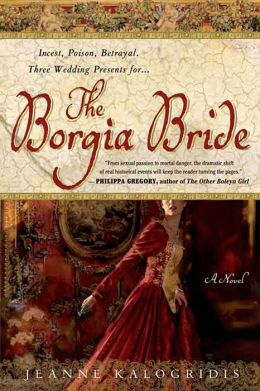
The Borgia Bride. Jeanne Kalogridis. 2005. St. Martin's Press. 528 pages. [Source: Library]
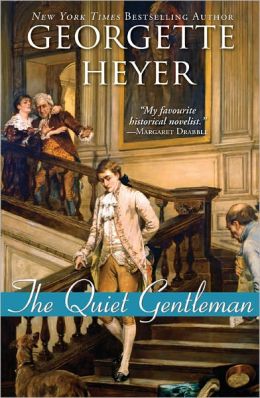
The Quiet Gentleman. Georgette Heyer. 1951/2005. Arrow. 320 pages. [Source: Library]
© 2013 Becky Laney of Becky's Book Reviews
Library Loot: First Trip in August
New Loot:
© 2013 Becky Laney of Becky's Book Reviews
- Reunion by Lauraine Snelling
- A Change of Fortune by Jen Turano
- The 100 Year Old Man Who Climbed Out The Window and Disappeared by Jonas Jonasson, translated from the Swedish by Rod Bradbury
- The Unruly Queen: The Life of Queen Caroline by Flora Fraser
- Charlotte & Leopold: The True Story of the Original People's Princess by James Chambers
- I, Claudius by Robert Graves
- Great Tales from English History: The Truth About King Arthur, Lady Godiva, Richard the Lionheart and More by Robert Lacey
- Great Tales from English History: Joan of Arc, the Princes in the Tower, Bloody Mary, Oliver Cromwell, Sir Isaac Newton and more by Robert Lacey
- Great Tales from English History: Captain Cook, Samuel Johnson, Queen Victoria, Charles Darwin, Edward the Abdicator, and more by Robert Lacey
- Servants' Hall: A Real Life Upstairs, downstairs romance by Margaret Powell
- Claudius the God and His Wife Messalina by Robert Graves
- People's History of Britain by Rebecca Fraser
- 1759: The Year Britain Became Master of the World by Frank McLynn
- English History Made Brief, Irreverent, and Pleasurable by Lacey Baldwin Smith
- Macbeth: A True Story by Fiona Watson
- The Zookeeper's Wife by Diane Ackerman
- The Vikings by Robert Ferguson
- The True Blue Scouts of Sugar Man Swamp by Kathi Appelt
- Forged in Fire by Ann Turnbull
- The Plantagenets: The Warrior Kings and Queens Who Made England by Dan Jones
© 2013 Becky Laney of Becky's Book Reviews
Friday, August 02, 2013
The Quiet Gentleman (1951)
The Quiet Gentleman. Georgette Heyer. 1951/2005. Arrow. 320 pages. [Source: Library]
This year I am attempting to read all of Georgette Heyer's historical romances in chronological order. The Quiet Gentleman is one of the few I had not read before. (Though it seems very familiar to me.) Gervase Frant is the Seventh Earl of St. Erth. He is his father's heir, despite not always being on the best of terms with him. He has a half-brother, Martin, who was more of the favorite. A year after his father's death, Gervase has returned to England from the war. His family--his step-mother, his half-brother, his half-sister, his cousin--were all hopeful that he would have died in battle by now. Why couldn't he have died? It's just not fair. From the very first night back in his old home, Gervase receives friendly warnings from his cousin, Theo, warnings about how his very life is in danger.
The entire book chronicles the failed attempts on his life. Someone wants him dead, but they are doing a clumsy job of it. There are a few other things that happen in the book, readers meet various young men and women who are courting one another, a ball is held, I believe, but mainly The Quiet Gentleman attempts to be a mystery.
I see The Quiet Gentleman as one of Georgette Heyer's weaker novels. Heyer has successfully made her romances mysteries before. And she's told stories mainly from a male point of view before. It didn't work for me because I guessed the would-be-murderer from the very first. It took Gervase about three-hundred pages to reach the same conclusion. However, I really enjoyed Druscilla, the heroine. Perhaps if she'd been the narrator, I would have liked it more?
© 2013 Becky Laney of Becky's Book Reviews
Thursday, August 01, 2013
The Borgia Bride (2005)
The Borgia Bride. Jeanne Kalogridis. 2005. St. Martin's Press. 528 pages. [Source: Library]
The Borgia Bride is not a romance novel. If you expect it to be strictly a "romance novel", you may be shocked at how unromantic it is. If you're reading it because you love history, you may also be disappointed, because of the way Kalogridis has decided to interpret history--or "the facts" as she sees them. (I think she was going for shock.) If you are looking for a book with well-rounded characters, look elsewhere.
The novel is set in Renaissance Italy, roughly around 1492-1503. The heroine of the novel is Sancha of Aragon, the wife of Jofre Borgia. It was an arranged marriage, as many were at the time. The trouble for Sancha truly begins when the couple goes to Rome to live with the rest of the Borgia family. It is then that Sancha meets her father-in-law (Rodrigo Borgia, Pope Alexander VI), her sister-in-law, Lucrezia, and her brother-in-law Cesare. The author has Sancha falling into instant love (or should that be lust?) with Cesare. This is perhaps helped along by the fact that Cesare "saves" her from being raped by her father-in-law. The two speak the next day, and when he apologizes for wanting to seduce her himself, she confesses that she wouldn't mind--she loves him so it would be different. But Sancha though an adulteress soon realizes that the Borgia family is way too immoral for her to ever belong. She discovers the sick, disturbing secrets of the family; if the family learns that she knows these secrets, well, it wouldn't be pretty. For Sancha realizes that Cesare may be oh-so-dreamy and have a voice like velvet (the book does say that, his voice and manners were like velvet), but he is a murderer; he is cold, calculating, selfish. She's brave enough to end the relationship, but, she still remains trapped in this horribly dysfunctional family. Over half the novel is about Sancha gaining the strength and perhaps stealth needed to defeat evil and make a stand for justice.
The Borgia Bride definitely has adult content. It is historical fiction. Its focus is on the outrageous, scandalous, reprehensible behavior of the Borgia family. I'm not sure how much of this is based on actual historical evidence--not historical allegations, because allegations are sometimes known to be questionable or controversial or completely false. The Borgias as depicted by Kalogridis are evil through and through with absolutely no good to them at all. The father, the sons, the daughter. They are not a little bad, a little dangerous--they are pure evil. Cesare is not a Byronic hero; he's the devil. There is absolutely no character depth in this novel. Villains can be exciting or fascinating. (Would Alias be the same without Arvin Sloane? Would Once Upon A Time be the same without Regina or Mr. Gold? There has to be substance even to villains for the story to work.)
The Borgia Bride's biggest weakness is it is almost impossible to truly care about any of the characters.
© 2013 Becky Laney of Becky's Book Reviews
Subscribe to:
Posts (Atom)