New Loot:
Book of a Thousand Days by Shannon Hale
Princess Academy by Shannon Hale
The Goose Girl by Shannon Hale
Mrs. McGinty's Dead by Agatha Christie
Crooked House by Agatha Christie
Poirot Investigates by Agatha Christie
The Pale Horse by Agatha Christie
Three Act Tragedy by Agatha Christie
The Pursuit of God by A.W. Tozer
The Schwa Was Here by Neal Shusterman
Antsy Does Time by Neal Shusterman
Unwind by Neal Shusterman
The Flight of Gemma Hardy by Margot Livesey
Clarity by Kim Harrington
Perception by Kim Harrington
Ella Enchanted by Gail Carson Levine
Spindle's End by Robin McKinley
Beauty by Robin McKinley
Leftover Loot:
Blue Thread by Ruth Tenzer Feldman
Becoming Queen Victoria by Kate Williams
The Book Thief by Markus Zusak
We Two: Victoria and Albert: Rulers, Partners, Rivals by Gillian Gill
A Woman in Berlin: Eight Weeks in the Conquered City: A Diary by Anonymous
Library Loot is a weekly event co-hosted by Claire and Marg
that encourages bloggers to share the books they’ve
checked out from the library. If you’d like to participate,
just write up your post-feel free to steal the button-and
link it using the Mr. Linky any time during the week. And
of course check out what other participants are getting
from their libraries.
© 2012 Becky Laney of Becky's Book Reviews
Saturday, April 14, 2012
Friday, April 13, 2012
Making the List: A Cultural History of the American Bestseller 1900-1999
Making the List: A Cultural History of the American Bestseller 1900-1999. Michael Korda. 2001. Barnes & Noble. 256 pages.
Making the List is a good example of a book that makes for good skimming. This is not one you need to read word-for-word. And the better you are at skimming, the more forgiving you are as a reader, well, the more you'll enjoy this one. The book has a couple of weaknesses. One, Michael Korda is a little too fond of mentioning Michael Korda and Michael Korda's time on the bestseller list. He mentions the title of one of his 'bestselling books' as often as he can. Or at least it felt like it. It feels intrusive on the text to be discussing the statistics and patterns of trends and genres or discussing the popularity of certain authors through the decades, and then suddenly the text becomes all-about-him either as an author or as a publisher, someone inside the publishing field. Some of his commentary feels a little odd, a little too random. Once he begins his job in the late fifties, I believe, he couldn't resist mentioning which books came from his publisher, how he felt about those books, his reaction to a book making it or not making it on the list. I don't know about all readers, but this reader, didn't want to know anything and everything he could possibly say on every book that made the list.
But. Making the List remains an interesting book. It is interesting because of what it has to offer readers: a list of fiction and nonfiction from each year. It is interesting because it does the work for you. You might be able to find the information online at various places--but it would probably be work. And it would definitely take more time and energy. And reading the lists is in itself interesting. To see which authors were repeats. To see how many years a book could stay on the list. To see which 'genres' dominated year by year, decade by decade. To see some strange titles--fiction and nonfiction. To see which books and authors became forgotten by time, by the reading public. To see which books are still in print. To see how many books were adapted into plays or movies. To see how many books were children's books (Pollyanna, etc.) To see the tension between "literary" books and "popular" books. It was interesting at a very basic level to see how many I'd read.
Read Making the List: A Cultural History of the American Bestseller, 1900-1999
© 2012 Becky Laney of Becky's Book Reviews
Making the List is a good example of a book that makes for good skimming. This is not one you need to read word-for-word. And the better you are at skimming, the more forgiving you are as a reader, well, the more you'll enjoy this one. The book has a couple of weaknesses. One, Michael Korda is a little too fond of mentioning Michael Korda and Michael Korda's time on the bestseller list. He mentions the title of one of his 'bestselling books' as often as he can. Or at least it felt like it. It feels intrusive on the text to be discussing the statistics and patterns of trends and genres or discussing the popularity of certain authors through the decades, and then suddenly the text becomes all-about-him either as an author or as a publisher, someone inside the publishing field. Some of his commentary feels a little odd, a little too random. Once he begins his job in the late fifties, I believe, he couldn't resist mentioning which books came from his publisher, how he felt about those books, his reaction to a book making it or not making it on the list. I don't know about all readers, but this reader, didn't want to know anything and everything he could possibly say on every book that made the list.
But. Making the List remains an interesting book. It is interesting because of what it has to offer readers: a list of fiction and nonfiction from each year. It is interesting because it does the work for you. You might be able to find the information online at various places--but it would probably be work. And it would definitely take more time and energy. And reading the lists is in itself interesting. To see which authors were repeats. To see how many years a book could stay on the list. To see which 'genres' dominated year by year, decade by decade. To see some strange titles--fiction and nonfiction. To see which books and authors became forgotten by time, by the reading public. To see which books are still in print. To see how many books were adapted into plays or movies. To see how many books were children's books (Pollyanna, etc.) To see the tension between "literary" books and "popular" books. It was interesting at a very basic level to see how many I'd read.
Read Making the List: A Cultural History of the American Bestseller, 1900-1999
- If you like lists
- If you like participating in reading challenges, particularly challenges that challenge you to find books from specific years, decades, etc.
- If you're always looking for older books, classic books, titles that may be available for free online
- (This would probably be only a quarter of the list, but still, it may give you ideas.)
© 2012 Becky Laney of Becky's Book Reviews
Thursday, April 12, 2012
Henry Tilney's Diary
Henry Tilney's Diary. Amanda Grange. 2011. [December 2011] Penguin. 288 pages.
Wednesday 14 April 1790
No lessons, no tutors, no Latin, no Greek! How glad I am to be home again, with time to spend with my horses and dogs, my brother and sister, my mother and father. No more school for a month! Instead time to wander the abbey and roam the grounds.
Out of all the Austen heroes, Henry Tilney is probably my favorite and best. "Even more than Captain Wentworth?!" you might ask...
Well, that's like deciding between chocolate cake and chocolate cheesecake. Both are too good, too satisfying, too giddy-making to resist. Why would anyone ever even try...
So. Henry Tilney is a swoon-worthy Austen hero, in my opinion. His strength is his charm, his wit, his friendliness, his teasing-manner. He has a way of making people feel at ease, of making people feel good about themselves. I'm not even sure he has a weakness. He's not proud or anti-social. He's not insincere or deceitful or manipulative. He doesn't flirt with (other) women for fun or sport, or to make anyone jealous. He's not a bore. He's just a fun-loving, novel-loving, light-hearted guy. Who wouldn't want to spend time with him?!
So Henry Tilney's Diary presents his side--and to some extent his sister's side--of the story found in Jane Austen's Northanger Abbey. Half of the novel takes place before he travels to Bath and meets Catherine Morland. Readers learn about his relationship with his sister, Eleanor, his father and mother, and his older brother. (Does Amanda Grange try to redeem this bad-boy brother? Well, she gives just enough background that empathetic readers can put together an argument of sorts. But is it enough for your average reader? Well, I'm not sure that it is. Not that that matters horribly to the enjoyment of the novel.)
Henry Tilney spends MUCH of his time reading aloud to his sister, Eleanor. Both just LOVE Ann Radcliffe. Both just LOVE novels--gothic novels, in particular. Amanda Grange gives us multiple reading scenes. In fact, some might say too many reading-together scenes. On the one hand, she's definitely showing instead of telling. These two love to read. And since these two will in a period of time be meeting Catherine Morland, a heroine who LOVES, LOVES, LOVES to read, it makes a certain amount of sense to show that Henry Tilney is the oh-so-perfect match for her. On the other hand, by quoting so much from a gothic novel--it appears to be the actual text of A Sicilian Romance--it just made this reader want to pick up the original.
The strength of this one is the background it provides readers. It doesn't add to Austen's Northanger Abbey, that is it doesn't improve it. As far as building his relationship with Catherine Morland. It doesn't make the story, the romance, 'better.' Tilney isn't more swoon-worthy or giddy-making in Grange's retelling. Neither is he less swoon-worthy. Where it adds to the enjoyment of Northanger Abbey is in its imagining of the close, caring relationship between brother and sister.
I liked this one. I definitely liked it. It made me want to spend time with the original. It even made me want to pick up an Ann Radcliffe novel.
Read Henry Tilney's Diary
© 2012 Becky Laney of Becky's Book Reviews
Wednesday 14 April 1790
No lessons, no tutors, no Latin, no Greek! How glad I am to be home again, with time to spend with my horses and dogs, my brother and sister, my mother and father. No more school for a month! Instead time to wander the abbey and roam the grounds.
Out of all the Austen heroes, Henry Tilney is probably my favorite and best. "Even more than Captain Wentworth?!" you might ask...
Well, that's like deciding between chocolate cake and chocolate cheesecake. Both are too good, too satisfying, too giddy-making to resist. Why would anyone ever even try...
So. Henry Tilney is a swoon-worthy Austen hero, in my opinion. His strength is his charm, his wit, his friendliness, his teasing-manner. He has a way of making people feel at ease, of making people feel good about themselves. I'm not even sure he has a weakness. He's not proud or anti-social. He's not insincere or deceitful or manipulative. He doesn't flirt with (other) women for fun or sport, or to make anyone jealous. He's not a bore. He's just a fun-loving, novel-loving, light-hearted guy. Who wouldn't want to spend time with him?!
So Henry Tilney's Diary presents his side--and to some extent his sister's side--of the story found in Jane Austen's Northanger Abbey. Half of the novel takes place before he travels to Bath and meets Catherine Morland. Readers learn about his relationship with his sister, Eleanor, his father and mother, and his older brother. (Does Amanda Grange try to redeem this bad-boy brother? Well, she gives just enough background that empathetic readers can put together an argument of sorts. But is it enough for your average reader? Well, I'm not sure that it is. Not that that matters horribly to the enjoyment of the novel.)
Henry Tilney spends MUCH of his time reading aloud to his sister, Eleanor. Both just LOVE Ann Radcliffe. Both just LOVE novels--gothic novels, in particular. Amanda Grange gives us multiple reading scenes. In fact, some might say too many reading-together scenes. On the one hand, she's definitely showing instead of telling. These two love to read. And since these two will in a period of time be meeting Catherine Morland, a heroine who LOVES, LOVES, LOVES to read, it makes a certain amount of sense to show that Henry Tilney is the oh-so-perfect match for her. On the other hand, by quoting so much from a gothic novel--it appears to be the actual text of A Sicilian Romance--it just made this reader want to pick up the original.
The strength of this one is the background it provides readers. It doesn't add to Austen's Northanger Abbey, that is it doesn't improve it. As far as building his relationship with Catherine Morland. It doesn't make the story, the romance, 'better.' Tilney isn't more swoon-worthy or giddy-making in Grange's retelling. Neither is he less swoon-worthy. Where it adds to the enjoyment of Northanger Abbey is in its imagining of the close, caring relationship between brother and sister.
I liked this one. I definitely liked it. It made me want to spend time with the original. It even made me want to pick up an Ann Radcliffe novel.
Read Henry Tilney's Diary
- If you're a fan of Amanda Grange
- If you're a fan of Jane Austen
- If you like historical romance
- If you like gothic romance
© 2012 Becky Laney of Becky's Book Reviews
Wednesday, April 11, 2012
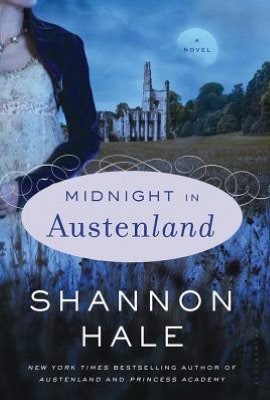
Midnight in Austenland
Midnight in Austenland. Shannon Hale. 2012. Bloomsbury. 288 pages.
No one who knew Charlotte Constance Kinder since her youth would suppose her born to be a heroine.
While I didn't love this one, I certainly liked it. Charlotte Kinder ("Mrs. Cordial") is a divorced mom of two. She's got a very successful business, but her husband left her for another woman, a woman named Justice, and her two children just don't appreciate her at all. Especially her fourteen-year-old daughter. Her personal life is anything but successful. She's even resorted to stalking her daughter's boyfriend because she doesn't trust him not to break her daughter's heart. So a two-week vacation could be just what she needs to gain a little perspective on her life...
And vacationing Austen style, well, it may change her life completely. By adding in some unexpected thrills. She expected a phony romance, a suitor all her own, a Regency gentleman, who knows all the ways to flatter a woman and make her feel giddy. But what she didn't expect was an all-too-real dead body in a secret room. What she didn't expect was to fall in all-too-real love with her "brother," the actor posing as her brother, that is!
I liked this one. It is equal parts romance and mystery. It is definitely seeking to pay tribute to Northanger Abbey. But this modern romance doesn't really have a proper Mr. Henry Tilney, a giddy-making, witty, oh-so-charming, just-can't-help-but-loving-him hero.
Read Midnight in Austenland
No one who knew Charlotte Constance Kinder since her youth would suppose her born to be a heroine.
While I didn't love this one, I certainly liked it. Charlotte Kinder ("Mrs. Cordial") is a divorced mom of two. She's got a very successful business, but her husband left her for another woman, a woman named Justice, and her two children just don't appreciate her at all. Especially her fourteen-year-old daughter. Her personal life is anything but successful. She's even resorted to stalking her daughter's boyfriend because she doesn't trust him not to break her daughter's heart. So a two-week vacation could be just what she needs to gain a little perspective on her life...
And vacationing Austen style, well, it may change her life completely. By adding in some unexpected thrills. She expected a phony romance, a suitor all her own, a Regency gentleman, who knows all the ways to flatter a woman and make her feel giddy. But what she didn't expect was an all-too-real dead body in a secret room. What she didn't expect was to fall in all-too-real love with her "brother," the actor posing as her brother, that is!
I liked this one. It is equal parts romance and mystery. It is definitely seeking to pay tribute to Northanger Abbey. But this modern romance doesn't really have a proper Mr. Henry Tilney, a giddy-making, witty, oh-so-charming, just-can't-help-but-loving-him hero.
Read Midnight in Austenland
- If you are a fan of Shannon Hale, particularly Austenland
- If you are a fan of Jane Austen
- If you are a fan of mysteries with a touch of romance
Tuesday, April 10, 2012
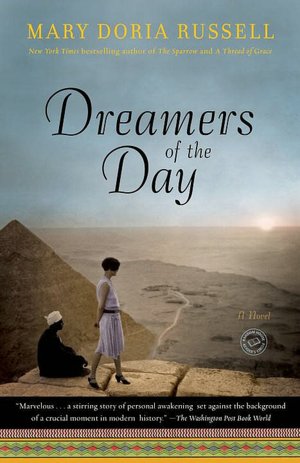
Dreamers of the Day
Dreamers of the Day. Mary Doria Russell. 2008. Random House. 254 pages.
I suppose I ought to warn you at the outset that my present circumstances are puzzling, even to me. Nevertheless, I am sure of this much: my little story has become your history. You won't really understand your times until you understand mine.
There were a few things that I just loved about Dreamers of the Day by Mary Doria Russell. For example, I loved the first few chapters. Readers see the impact of World War I and the 'Spanish' influenza on our heroine, Miss Agnes Shanklin. She truly lost everyone. Her mother. Her sister. Her brother-in-law. Her two nephews. Her brother. These chapters spent describing both the war and the influenza were truly fascinating. Here she is as a young woman trying to make sense of the world, of the war, of her place in it all, she's just an ordinary woman, a school teacher, and within weeks or at the very most months, to face such sudden devastation.
A few months after these losses, she decides to visit the Middle East, to visit Egypt, Cairo, in particular. She wants to see the land where her brother-in-law and sister spent their happiest years together before the War. Her sister was friends with T.E. Lawrence, and soon she is too. She is soon mingling with other famous people too--like Winston Churchill and Lady Gertrude Bell. She is listening to their heated discussions on the Middle East. Everyone has an opinion on what is best for the many people who live there, an opinion on who should rule, how they should rule, how many countries or nations, etc.
She also makes a "special" friend while in Cairo. A man who is very, very interested in what she has to say. A man who listens intently. A man who always treats her with such kindness and respect. But this "relationship" has its basis in politics too, as she later realizes.
But as much as I loved a few things about this novel, there were other things that I just did not like at all. And these weren't small things that were bothering me. For example, I did NOT care for the narration at all. I do not like dead-narrators, for the most part. People who are telling their life story from beyond-the-grave. I do not like dead people narrating on the present, and sharing their so-called wisdom. I especially do not like opinionated dead narrators who treat Christianity with disdain and contempt.
Read Dreamers of the Day
© 2012 Becky Laney of Becky's Book Reviews
I suppose I ought to warn you at the outset that my present circumstances are puzzling, even to me. Nevertheless, I am sure of this much: my little story has become your history. You won't really understand your times until you understand mine.
There were a few things that I just loved about Dreamers of the Day by Mary Doria Russell. For example, I loved the first few chapters. Readers see the impact of World War I and the 'Spanish' influenza on our heroine, Miss Agnes Shanklin. She truly lost everyone. Her mother. Her sister. Her brother-in-law. Her two nephews. Her brother. These chapters spent describing both the war and the influenza were truly fascinating. Here she is as a young woman trying to make sense of the world, of the war, of her place in it all, she's just an ordinary woman, a school teacher, and within weeks or at the very most months, to face such sudden devastation.
A few months after these losses, she decides to visit the Middle East, to visit Egypt, Cairo, in particular. She wants to see the land where her brother-in-law and sister spent their happiest years together before the War. Her sister was friends with T.E. Lawrence, and soon she is too. She is soon mingling with other famous people too--like Winston Churchill and Lady Gertrude Bell. She is listening to their heated discussions on the Middle East. Everyone has an opinion on what is best for the many people who live there, an opinion on who should rule, how they should rule, how many countries or nations, etc.
She also makes a "special" friend while in Cairo. A man who is very, very interested in what she has to say. A man who listens intently. A man who always treats her with such kindness and respect. But this "relationship" has its basis in politics too, as she later realizes.
But as much as I loved a few things about this novel, there were other things that I just did not like at all. And these weren't small things that were bothering me. For example, I did NOT care for the narration at all. I do not like dead-narrators, for the most part. People who are telling their life story from beyond-the-grave. I do not like dead people narrating on the present, and sharing their so-called wisdom. I especially do not like opinionated dead narrators who treat Christianity with disdain and contempt.
Read Dreamers of the Day
- If you are interested in novels set during the 1920s, this one, I believe, is set in 1920/1921.
- If you are interested in reading about World War I, the 'Spanish' influenza, etc.
- If you are interested in politics and history
- If you are interested in the Middle East, the formation of the Middle East; much of this one is set in Egypt, but they also travel to Palestine.
© 2012 Becky Laney of Becky's Book Reviews
Subscribe to:
Posts (Atom)