Conjured. Sarah Beth Durst. 2013. Walker. 368 pages. [Source: Library]
I definitely found Conjured by Sarah Beth Durst to be a compelling and surprisingly romantic read. What I enjoyed most about this dark YA novel is the mystery. Readers are kept clueless, just as clueless as the heroine herself. Her name, so she's been told, is Eve. What can Eve remember? Not much. And the two people "closest" to her, well, they're odd sorts. One, Malcolm, seems honorable enough, but still crazy mysterious. The other, Nicki, seems mysterious too, but, also antagonistic. Both seem anxious for Eve to recover her memories, but, are trying to pretend that it's no big deal, that the memories will come--or not--as they will. Eve definitely feels PRESSURE from almost everyone in her life.
Eve has, for better or worse, started a job at a library. She meets a boy around her own age, Zach. I would say that he's unlike any other boy she's ever met, but, since Eve has no memories at all of her past, and surprisingly few of her present, that would not be worth much. But Zach is special, and, he thinks Eve is very, very special indeed. Zach isn't the only "young person" she's met since leaving the hospital. She's also met a few others, that are STRANGE, STRANGE, SUPER-STRANGE.
Conjured is a book that celebrates MYSTERY. Eve is on a journey of self-discovery, and, the mystery she's trying to solve is herself...
© 2015 Becky Laney of Becky's Book Reviews
Tuesday, September 08, 2015
Monday, September 07, 2015
History of Women's Fashion
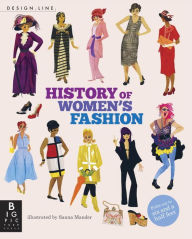
History of Women's Fashion (Design Line). Natasha Slee. Illustrated by Sanna Mander. 2015. Candlewick. 16 pages. [Source: Review copy]
Is it a book? Is it a chart? Readers can decide for themselves how they want to approach this newest book in Candlewick's Design Line. The subject of this illustrated nonfiction guide? Women's fashion from the past hundred and ten years--or so.
One side of the fold-out-spread (or chart) features the fashions themselves, briefly labeled. The other side features a silhouette of each fashion and a longer description. Each item was chosen because it was "iconic." (Readers can agree or disagree with the choices. Perhaps even have some suggestions on what should have been included instead.)
It covers hats, shoes, purses, dresses, bathing suits, shirts, skirts, pants, glasses, jewelry etc.
This is a fine example of one type of nonfiction reading. You don't have to read it cover to cover. You are invited to look, to examine, to study. There isn't a right or wrong way to read this one.
So what iconic pieces are included in this one:
© 2015 Becky Laney of Becky's Book Reviews
Is it a book? Is it a chart? Readers can decide for themselves how they want to approach this newest book in Candlewick's Design Line. The subject of this illustrated nonfiction guide? Women's fashion from the past hundred and ten years--or so.
One side of the fold-out-spread (or chart) features the fashions themselves, briefly labeled. The other side features a silhouette of each fashion and a longer description. Each item was chosen because it was "iconic." (Readers can agree or disagree with the choices. Perhaps even have some suggestions on what should have been included instead.)
It covers hats, shoes, purses, dresses, bathing suits, shirts, skirts, pants, glasses, jewelry etc.
This is a fine example of one type of nonfiction reading. You don't have to read it cover to cover. You are invited to look, to examine, to study. There isn't a right or wrong way to read this one.
So what iconic pieces are included in this one:
- The Gibson Girl (1906)
- Silk Turban Hat (1912)
- Flapper Dress (1926)
- Chanel Costume Jewelry (1935)
- Christian Dior Suit (1947)
- Halter-Neck Sundress (1952)
- Mondrian Dress (1965)
- Mid-Calf Platform Boots (1972)
- High-Waisted Jeans (1986)
- Flannel Shirt and Ripped Jeans (1990s)
- Gym Chic (2004)
Blue Utility Suit (1945)
War rationing meant the "utility look" dominated fashion. Skirts were shorter as more women rode bicycles, while narrow waists, peep-toe shoes, and the 1940s curl hairstyles ensured that the look remained feminine. Even brides wore the utility suit!
Land Girl Uniform (1939)
The British Government formed the Women's Land Army at the start of World War II to replace farm laborers who had gone to fight and to help the country grow more of its own food. Nicknamed the "Land Girls," 80,000 women volunteered. They wore a uniform of overalls, a shirt, and Wellington boots, with headscarves to hold back their hair.
Beaded Purse with Zipper (1924)I really enjoyed the illustrations.
Frenetic Charleston dancers required secure bags small enough to grip in their hands. This elegantly beaded bag, in the "tango purse" style designed for dancing, features a small strap to wrap around the wrist and a zipper to keep possessions inside--zippers having only just begun to be used in fashion.
© 2015 Becky Laney of Becky's Book Reviews
Labels:
2015,
books reviewed in 2015,
Candlewick,
Nonfiction,
novelty,
review copy
Sunday, September 06, 2015
Meet Inspector Rutledge
A Test of Wills (Ian Rutledge #1) Charles Todd. 1994/2006. Harper Collins. 305 pages. [Source: Library]
A Test of Wills is the first book in Charles Todd's Inspector Ian Rutledge mystery series. He has returned home from war--the first world war--and is on his first case. It will prove challenging in more ways than one. First, the war has left him changed--broken, confused, uncertain. Second, the case itself is tricky. One of the suspects is super-friendly with royalty, and there is pressure to solve the case, but, solve it in such a way that there isn't a scandal. He is arriving on the scene several days after the crime, the murder, and he doesn't even see the crime scene or the body. His work mainly has him interviewing anyone and everyone that might have seen something--or heard something. But there aren't many leads that are fruitful. He has a handful of clues, but, the clues lead him to no one person. There's always something off. For example, the person with the best motive, has an alibi that is solid. The people with opportunity have no motive, etc. So can he do it? can he solve the case?
I liked this one well enough. Ian Rutledge is so very, very different from Bess Crawford. (I've read two or three of the Bess Crawford mystery series also by Charles Todd). Both show the effect of the war certainly. Bess Crawford mainly does this through her other characters: Bess is nursing men who have been wounded--sometimes severely--and/or are suffering from post traumatic stress disorder. The soldiers we meet in the Crawford mystery series certainly showcase the effect of war. But with the Ian Rutledge series it is completely different. It's an inside-out look, for better or worse. Ian is very broken, very disturbed, and we're in his head for the most part. It was an interesting aspect and added a new level to the mystery.
© 2015 Becky Laney of Becky's Book Reviews
A Test of Wills is the first book in Charles Todd's Inspector Ian Rutledge mystery series. He has returned home from war--the first world war--and is on his first case. It will prove challenging in more ways than one. First, the war has left him changed--broken, confused, uncertain. Second, the case itself is tricky. One of the suspects is super-friendly with royalty, and there is pressure to solve the case, but, solve it in such a way that there isn't a scandal. He is arriving on the scene several days after the crime, the murder, and he doesn't even see the crime scene or the body. His work mainly has him interviewing anyone and everyone that might have seen something--or heard something. But there aren't many leads that are fruitful. He has a handful of clues, but, the clues lead him to no one person. There's always something off. For example, the person with the best motive, has an alibi that is solid. The people with opportunity have no motive, etc. So can he do it? can he solve the case?
I liked this one well enough. Ian Rutledge is so very, very different from Bess Crawford. (I've read two or three of the Bess Crawford mystery series also by Charles Todd). Both show the effect of the war certainly. Bess Crawford mainly does this through her other characters: Bess is nursing men who have been wounded--sometimes severely--and/or are suffering from post traumatic stress disorder. The soldiers we meet in the Crawford mystery series certainly showcase the effect of war. But with the Ian Rutledge series it is completely different. It's an inside-out look, for better or worse. Ian is very broken, very disturbed, and we're in his head for the most part. It was an interesting aspect and added a new level to the mystery.
© 2015 Becky Laney of Becky's Book Reviews
Saturday, September 05, 2015
Week in Review: August 30 - September 5
A Girl Named Disaster. Nancy Farmer. 1996. Scholastic. 320 pages. [Source: Review copy]
Fab Four Friends: The Boys Who Became The Beatles. Susanna Reich. 2015. Henry Holt. 32 pages. [Source: Review copy]
Archivist Wasp. Nicole Kornher-Stace. 2015. Big Mouth House. 268 pages. [Source: Library]
William Shakespeare's The Clone Army Attacketh. Ian Doescher. 2015. Quirk. 176 pages. [Source: Review copy]
Seventh Most Important Thing. Shelley Pearsall. 2015. Random House. 288 pages. [Source: Review copy]
Sunny Side Up. Jennifer L. Holm and Matthew Holm. 2015. Scholastic. 224 pages. [Source: Review copy]
Big Dog and Little Dog Going for a Walk. Dav Pilkey. 1997/2015. Houghton Mifflin Harcourt. 24 pages. [Source: Review copy]
Great Day for Up. Dr. Seuss. Illustrated by Quentin Blake. 1974. Random House. 36 pages. [Source: Library]
The Golden Braid. Melanie Dickerson. 2015. Thomas Nelson. 368 pages. [Source: Review copy]
The Most Eligible Bachelor Romance Collection. 2015. Barbour Books. 448 pages. [Source: Library]
This week's recommendation(s):
Seventh Most Important Thing
Sunny Side UP
The Golden Braid
© 2015 Becky Laney of Becky's Book Reviews
Fab Four Friends: The Boys Who Became The Beatles. Susanna Reich. 2015. Henry Holt. 32 pages. [Source: Review copy]
Archivist Wasp. Nicole Kornher-Stace. 2015. Big Mouth House. 268 pages. [Source: Library]
William Shakespeare's The Clone Army Attacketh. Ian Doescher. 2015. Quirk. 176 pages. [Source: Review copy]
Sunny Side Up. Jennifer L. Holm and Matthew Holm. 2015. Scholastic. 224 pages. [Source: Review copy]
Big Dog and Little Dog Going for a Walk. Dav Pilkey. 1997/2015. Houghton Mifflin Harcourt. 24 pages. [Source: Review copy]
Great Day for Up. Dr. Seuss. Illustrated by Quentin Blake. 1974. Random House. 36 pages. [Source: Library]
The Most Eligible Bachelor Romance Collection. 2015. Barbour Books. 448 pages. [Source: Library]
This week's recommendation(s):
Seventh Most Important Thing
Sunny Side UP
The Golden Braid
© 2015 Becky Laney of Becky's Book Reviews
Seuss on Saturday #36
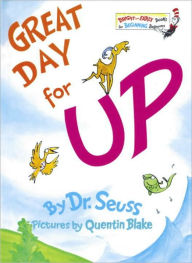
Great Day for Up. Dr. Seuss. Illustrated by Quentin Blake. 1974. Random House. 36 pages. [Source: Library]
First sentence: Up! Up! The sun is getting up. The sun gets up. So UP with you!
Premise/plot: Do you like getting up in the morning? The book is gentle prompting to do just that. "Up" being the prominent word of the entire book. But does the narrator himself end up getting out of bed? Read and see for yourself!
My thoughts: I liked the "twist" ending. I did. Overall, I liked this one fine. I didn't love, love, love it. But it's certainly an entertaining enough read.
Have you read Great Day for UP! Did you like it? love it? hate it? I'd love to know what you thought of it!
If you'd like to join me in reading or rereading Dr. Seuss (chronologically) I'd love to have you join me! The next book I'll be reviewing is Wacky Wednesday!
© 2015 Becky Laney of Becky's Book Reviews
First sentence: Up! Up! The sun is getting up. The sun gets up. So UP with you!
Premise/plot: Do you like getting up in the morning? The book is gentle prompting to do just that. "Up" being the prominent word of the entire book. But does the narrator himself end up getting out of bed? Read and see for yourself!
My thoughts: I liked the "twist" ending. I did. Overall, I liked this one fine. I didn't love, love, love it. But it's certainly an entertaining enough read.
Have you read Great Day for UP! Did you like it? love it? hate it? I'd love to know what you thought of it!
If you'd like to join me in reading or rereading Dr. Seuss (chronologically) I'd love to have you join me! The next book I'll be reviewing is Wacky Wednesday!
© 2015 Becky Laney of Becky's Book Reviews
Labels:
1974,
books reviewed in 2015,
Dr. Seuss,
picture books
Subscribe to:
Posts (Atom)