Thursday, December 05, 2019

2020 Middle Grade Reading Challenge

Girl reading a book by Federico Zandomeneghi

Host: Becky's Book Reviews (sign up)
Duration: January - December 2020
# of books: minimum 12

Level One: Read ANY twelve books throughout the year.
Level Two: Themed Then and Now Pairs (minimum 6 pairs, or twelve books)

Sign up for either (or both) by leaving a comment.

Level one is self-explanatory. Any means ANY. If a book qualifies as being for a middle grade audience, then it qualifies as ANY. Fiction. Nonfiction. Graphic novels. Poetry. What is a middle grade audience? There's a younger range and an older range within middle grade. Certainly there are distinctions between books published for twelve year olds and books published for eight year olds. But essentially think books for mid-to-upper elementary schools and/or lower middle schools.

Level two is, I hope, a fun twist to the challenge. Read two books that share a theme. One book representing "then" and one book representing "now." Then and now are subjective terms certainly. Depending on one's own age, life experiences, and reading habits. But there should be around a twenty year gap (or more) between the "then" and "now" books. For example, you might compare CLEMENTINE by Sara Pennypacker to RAMONA THE PEST by Beverly Cleary.

I have a list of suggested themes, but, by all means feel free to come up with your own!

Suggested themes:

Newbery Winners
Newbery Honors
Coming of age novels
Problem novels
Death/Dying/Grief
Friendship
Family/Dysfunctional Family
Series books
Fantasy
Animal Fantasy
Pets
Orphans
Action/Adventure
Science Fiction/Dystopias
Ghost Stories
Sports
Mysteries
Young Love/First Romance
First Job(s)
Historical Fiction
War
Rural setting
Urban setting
School setting
Summer
Characters from TV, movies, games, etc.
New Experiences
Nonfiction
British Authors
American Authors
Australian Authors
Canadian Authors

How was the subject treated then? How is it treated now? Were there any similarities in the two books that you read? Were there any differences? How well did your "then" book age? Is it dated or still relevant? Do you think your "now" book will age well? Could it become a classic? Which did you prefer? Which would you recommend to an actual child?

If you have a blog, write a post reviewing both books...OR...write a post comparing the two and linking to your reviews. If you don't have a blog, then you can share your thoughts in a comment on one of the check-in posts.


© 2019 Becky Laney of Becky's Book Reviews

2020 Victorian Reading Challenge

Victorian Reading Challenge
Host: Becky's Book Reviews (sign up here)
Duration: January - December 2020
Goal: Read between 4 to 6 Books (4 minimum)

Choose to participate in the basic challenge (quarterly) or the advanced challenge (themed months). All books must fall into the "Victorian" category being either a) books originally published between 1837 and 1901 b) books originally written (but not published) between 1837 and 1901 c) general nonfiction about the Victorian era (the times, the culture, the people, the events) d) biographies of Victorians.

Sign up by leaving a comment.

I. Quarterly Victorian Challenge; Check-Ins will be posted at the end of each quarter so you can share your progress.

Read ONE book between January 1, 2020 and March 31, 2020
Read ONE book between April 1, 2020 and June 30, 2020
Read ONE book between July 1, 2020 and September 30, 2020
Read ONE book between October 1, 2020 and December 31, 2020


II. There will be ELEVEN themed monthly posts. (And ONE Super-Bonus Theme that will cover all twelve months). You can sign up for this level of the challenge and not "have" to participate every month. The goal is to read at least four to six books throughout the whole year. It is also more important to finish your current book than start a new theme. So if a new month comes and you're still halfway through your book...finish your book...and don't worry about keeping up with that month's theme. I will post check-ins throughout the year.

JANUARY/FEBRUARY: The theme is JOURNEYS and TRAVELS. Read any book where a character goes on ANY journey. (For example, Pickwick Papers, Three Men in a Boat, Jane Eyre, Can You Forgive Her?, Great Expectations, Treasure Island, Alice in Wonderland, etc.) The journey does not have to be a grand adventure or luxurious vacation.

FEBRUARY/MARCH: The theme is LOVE and MARRIAGE. Read any book where characters fall in love, or fall out of love, or court, or become engaged, or get married. It doesn't have to be an epic romance with a happily ever after. (Though it can!)

MARCH/APRIL: The theme is SECOND CHANCES. Give an author a second chance. Give a book a second chance. Give a genre a second chance.

APRIL/MAY: The theme is NAMES AS TITLES. Read any book where a proper name (a person, a place, etc) is the title of the book.

MAY/JUNE: The theme is LONG TITLE OR LONG SUB-TITLES. Victorians could be RIDICULOUS and a bit over-the-top with the titles and subtitles of their books. Choose to read one with a long/longer title and/or subtitle.

JUNE/JULY: The theme is ADAPTATIONS. Read any book that has been adapted into a movie, miniseries, or television show. OR read any book that you think SHOULD be adapted into a movie. If you choose that option you can even make a case for WHO should star in it.

JULY/AUGUST: The theme is FAVORITE AUTHORS, NEW-TO-ME Books. Choose a favorite author and read a book by him/her that you've never read before.

AUGUST/SEPTEMBER: The theme is BACK TO SCHOOL. Read (or reread) any book that you were assigned to read in school or university. OR Read any book where a character's education is emphasized (Great Expectations, Nicholas Nickleby, Jane Eyre, etc.) OR Read any book that you think SHOULD be required reading for high school or university.

SEPTEMBER/OCTOBER: The theme is CRIME OR TRUE CRIME. Thrillers. Mysteries. Suspense. Horror. GOTHIC. This would be a great place to fit in general nonfiction about the Victorian era. Some great true crime books have been published.

OCTOBER/NOVEMBER: The theme is HOME AND FAMILY. Read any book with a focus on family life and relationships between family members. (The relationships do not have to be healthy.)

NOVEMBER/DECEMBER: The theme is COMFORT READS. Reread a book (of any length) that just makes you HAPPY.

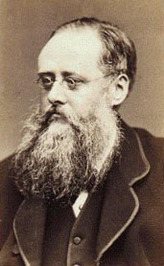
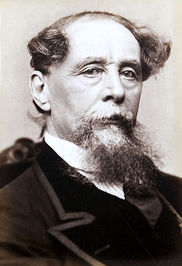
January Through December: The super-bonus theme is BEARDED VICTORIANS. I've listed a few examples below.

Charles Dickens

Anthony Trollope
Wilkie Collins

George MacDonald

© 2019 Becky Laney of Becky's Book Reviews

Wednesday, December 04, 2019

World at War: Fing's War

Fing's War. Benny Lindelauf. Translated into English by John Nieuwenhuitzen. 2019. 376 pages. [Source: Library]

First sentence: One rainy afternoon, I was called to heaven.

Premise/plot: Fing’s War is the sequel to Nine Open Arms by Benny Lindelauf. While the first book focused on the whole family, multiple narrators, the second book is Fing’s story. It is an historical coming of age story set in Holland at the very start of the Second World War. There aren’t many opportunities for young girls in their small town. Domestic work or marriage is the norm. Fing hasn’t really dreamed beyond that until the Sisters at her school offer her a chance for a scholarship at teacher’s college. But her father and grandmother have different plans for her. And the scholarship seems like another word for charity case to suit her grandma. No, Fing is to be hired out as help for the Cigar Emperor and his German wife. Fing, well, what choice does she have?! Enter the Nazi soldiers and the Dutch Blackshirts. The war will change her mind, body, and soul forever. Her whole family as well...

My thoughts: I am so glad I put off reading this one until I was able to read Nine Open Arms. It may claim to be a stand alone novel, but it would be hard going to actually CARE about the characters if you haven’t read the first book. Once that relationship with the family is in place, this one is a compelling read. I could see how this one might be a slow read if you don’t already love this family and appreciate their unique house on the edge of town. I didn’t find it slow. True not all elements were equally compelling. But I could see how Fing might interpret life that way. This one is very much coming of age. So many firsts are touched on throughout the novel. 


© 2019 Becky Laney of Becky's Book Reviews

Tuesday, December 03, 2019

The Secrets We Kept

The Secrets We Kept. Lara Prescott. 2019. 368 pages. [Source: Library]

First sentence: We typed a hundred words per minute and never missed a syllable.

Premise/plot: This historical novel focuses around the publication and distribution of Boris Pasternak’s Doctor Zhivago. Unable to find a publisher in the Soviet Union, he risked it all by allowing it to essentially be smuggled out of the country and published in Italy. Meanwhile in America, the C.I.A. was hard at work smuggling banned literature into the U.S.S.R. It seemed obvious to try to get their hands on the Russian manuscript or a copy. To produce a copy—in Russian—to smuggle into the U.S.S.R. would be just the thing.

While part of the novel is about Doctor Zhivago, much of the novel is about the women’s typing pool of the agency focusing on a handful of employees that have a second secret job in the agency. Irena and Sally are the two main characters.

The novel Doctor Zhivago features a “forbidden” love story between Zhivago and Lara. It is an adulterous affair. Likewise The Secrets We Kept features a “forbidden” love story between Sally and Irena. Set during a time when being outed could prove costly—loss of job, loss of reputation, loss of family and friends, etc., the novel captures the dangers and intensity of love.

My thoughts: This is the first book about the Lavender Scare that I’ve read. (Though I did see the recent PBS documentary last year on the subject.) I didn’t seek out the book because of this angle. In fact, there were no obvious clues in the jacket description that indicated exactly what the SECRET alluded to in the book title actually was. For better or worse. I think knowing ahead of time would probably bring in more readers. Perhaps.

I sought out the book solely because of my interest in history and literature. I have read and enjoyed Doctor Zhivago. I have an interest in Russian literature. It seemed like a good fit.

I felt like the description was a tiny bit misleading. I wanted more spies and suspense.

I would warn about the contents of this one. There is a graphically violent rape scene. Most adults should be able to handle it. I think it will make you rightfully angry. I found myself wanting to scream at the book.


© 2019 Becky Laney of Becky's Book Reviews
Monday, December 02, 2019

Nine Open Arms

Nine Open Arms. Benny Lindelauf. Translated into English by John Nieuwenhuizen. 2004/2014. 272 pages. [Source: Library]

First sentence: At the end of Sjlammbams Sahara stood a house. We weren’t the first to live there or the first to give it a name. We had no idea yet about Nienevee from Outside the Walls and Charley Bottletop. But if it hadn’t been so windy that day, we surely would have been able to hear them signaling to each other, drumming with their bones deep under ground.

Premise/plot: John Nieuwenhuizen has translated this Dutch coming of age novel into English. Nine Open Arms is a historical middle grade novel starring the Boon family. Primarily we spend time with three sisters (Fing, Jess, and Muulke), their father (Antoon), and their maternal grandmother (Oma Mei). There are nine in the family in all. But the brothers seem to hardly make an appearance or impression.

So the plot?! The Boon family is moving. Again. The father is trying a new venture. Again. This time it is making cigars. He believes this is it—no more worries, no more new beginnings. But the rest of the family might take a bit more convincing. Especially Oma Mei. She, among other things, is a story teller. But she has to be in the right mood to pull out her crocodile, to pull out a photograph, to share a story. But when she does...it’s something. Family stories. Community stories. So many they’ve not heard before.

So about a third of the plot is a story she tells about the previous owners of the house. This is set not in the 1930s (like most of the novel) but several decades earlier (1860s). This story is fascinating all the more so because of how it connects with the present.

My thoughts: I really loved this one. I did. I love Oma Mei. I love the three sisters. I love the complexity of the family relationships. I love, love, love the crocodile—the holder of all the family photographs. I love the mini-mysteries. I love the stories. It is definitely a character driven novel, but those are my favorite and best kind. I would highly recommend.


© 2019 Becky Laney of Becky's Book Reviews