Showing posts with label "G" Titles. Show all posts

Saturday, December 27, 2008

Girl Overboard


Headley, Justina Chen. 2008. Girl Overboard.

Girl Overboard stars a very unhappy girl, Syrah, who is frustrated with practically everything in her life: she's unhappy with how her knee is healing after a bad snowboarding accident; unhappy that there seems to be a mental/emotional block preventing her from moving on in her life after a disappointing first taste of love/lust; unhappy that her very best friend, Adrian "Age", has a girlfriend who won't allow him to see her; unhappy that her parents ignore her except for when they're bossing her around--how her mom is always onto her about her weight, how they both rarely take her seriously and how both want to keep her from ever snowboarding again; angry with her two half-siblings, Wayne and Grace, both much older than herself; disappointed that her only real friend in the house--her nanny if you will--Bao-mu is going to be leaving the family to go care for her own granddaughter; and super-super angry that her parents have told her that they're all moving to Hong Kong next year. Syrah has an oh-so-terrible life because her parents are oh-so-wealthy. But it has its advantages in a way too--when Syrah decides she wants to be a part of her family and use everything to get what she wants. And what Syrah ends up wanting more than anything is to help someone else--to save a life.

It's a coming of age novel heavy on the whine in the opening chapters. The first fifty pages didn't hook me. But I kept going, I kept reading and sure enough by the end I was enjoying it. While all the characters seemed a bit flat and stereotypical in the beginning, by the end, they were beginning (at least if not more) to become fully fleshed characters with heart and soul. Her developing relationship with her family--her mother, Betty; her half-sister, Grace; her mother's family whom she meets for the first time--her aunts and cousins, etc--add depth to this story. I liked how Syrah changed through the course of the book, how she came to be someone I could like, someone I could respect.

© Becky Laney of Becky's Book Reviews

Wednesday, November 19, 2008

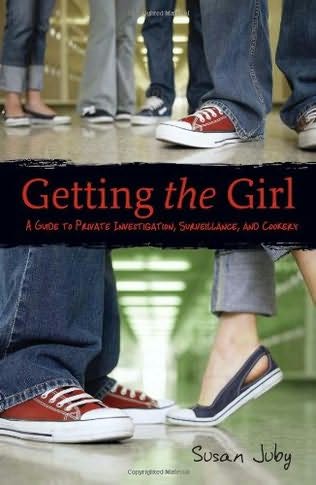
Travel the World: Canada: Getting The Girl


Juby, Susan. 2008. Getting the Girl.

Getting The Girl is about as subtle as a skunk. That's not to say it stinks. It's just that the topic of this one--social hierarchies, school bullies, self-esteem--is in your face and a bit over the top. I'm not even saying that the book is unrealistic or unbelievable. I think kids--rather you want to call them tweens or teens--can be cruel. This cruelty can manifest itself in several ways--either the cool iciness of making people invisible OR in the more direct confrontational style--using words and physical actions. Or in this day and age--online bullying through social network sites and blogs. And I think situations like the ones in the book could exist in that extreme.

You don't want to get D-listed. Trust me. That's the fear of all teen girls attending Harewood Technical School. Sherman Mack is a boy-on-a-mission. A ninth grader who is out to save his crush from getting D-Listed by the Defilers. Once you're "D-Listed" or "Defiled" no one--no matter how cool or uncool will talk to you. You essentially vanish from the hierarchy altogether. Not even teachers want to acknowledge those unfortunate students.

Sherman Mack is a wanna-be detective. He's read a few detective stories--mainly borrowed from his good friend, Vanessa--and he's watched more than his fair share of cop shows like the three Law & Orders. When his crush, Dini, begins dating Lester, Sherman is more than flustered. He fears that she'll be D-Listed. Lester's previous girlfriend, Farrah, was D-Listed last year. Vanessa thinks it's a good idea--at least at the first--but she thinks his motivations are all wrong. He should be investigating this cruel caste system--identifying the nameless Defilers--for the sake of all girls, not just one in particular.

So he begins his investigation.

Sherman is more than a little dorky. More than a little awkward. Yet his quirky voice works most of the time. To be honest, I spent half the time thinking that the book was clever and funny in just the right amounts. But the other half thinking that it was just too much--too silly, too unrealistic. While I can admire much of the book, I felt that it was uneven in times. Sherman I loved. But his friends weren't as developed as they might have been. Particularly Rick. Something about him just felt flat to me. I did enjoy the secondary story line, however, Sherman's interest in cooking. At first, I felt it didn't quite belong. I couldn't quite see the connection, but the ending made it work for me and tied it all together.

Other reviews: Reading Rants, The Compulsive Reader,

© Becky Laney of Becky's Book Reviews

Saturday, November 08, 2008

The Girl Who Could Fly


Forester, Victoria. 2008. The Girl Who Could Fly.

Piper decided to jump off of the roof. It wasn't a rash decision on her part.

The Girl Who Could Fly is an odd little book that I couldn't help enjoying. Piper McCloud, she flies. A girl who flies. When her flying catches attention, mysterious strangers show up on the family farm promising her family that they've got the perfect school for her. A school where her specialness will be appreciated. So away Piper goes. Leaving behind her family and her home. The school or institute (initials I.N.S.A.N.E) is different alright. And everyone Piper meets is unusual from the adults to her fellow classmates.

I hesitate to say anymore because I don't want to reveal too much. The plot twists are best enjoyed firsthand.

The Girl Who Could Fly is a quirkier Mysterious Benedict Society. Unique, quirky characters. Fast-paced plot. A good mix of fun.


© Becky Laney of Becky's Book Reviews

Saturday, October 25, 2008

The Graveyard Book


Gaiman, Neil. 2008. The Graveyard Book. With illustrations by Dave McKean.

I really loved this one. The atmosphere, the pacing, the characters, everything is just right with this one. The Graveyard Book is the story of a young boy, Nobody Owens, whose parents (and sister) have been murdered. The young baby--toddler--wanders into the neighboring graveyard and happens to escape the killer. The residents of the graveyard take pity on him. They adopt him. Mr. and Mrs. Owens especially. (Along with Silas.) Give him the freedom of the grave yard. They raise him. They teach him. He is one of their own. And yet...and yet he's not quite of them. He's alive. Can the dead really and truly raise the boy right? Silas is his guardian. He is one of the few that can leave the graveyard. He walks amongst the living and the dead. Him being quite neither. They only know this. Someone is out to kill 'Bod' (their nickname for Nobody). And it is only if the boy remains there that he is safe. But how long will the boy be content with them, with only the dead for company, alone from others his own kind?

This is an adventure-filled story with great characters and amazing atmosphere. The book is slightly unusual in that it is episodic. The book spans a dozen years or so. We see Bod grow from a toddler to a young man--a teen boy of fifteen or sixteen. We see him learn to walk and talk and fade and haunt and dreamwalk. We see him learn to explore the world around him both in and out of the graveyard.

Definitely recommended.

First sentence: There was a hand in the darkness, and it held a knife.

© Becky Laney of Becky's Book Reviews

Thursday, September 11, 2008

The Ghost's Child


Hartnett, Sonya. 2008. The Ghost's Child. Releases October 14, 2008.

"An exquisite fable about love and loss by the author of the Michael L. Printz Honor Book Surrender."

It's important for readers to realize they're holding a fable in their hands. It will help explain some of the strangeness for one thing. If they're not trying to make it fit reality. Not that the book is unrealistic--it has its moments of course--but it's a blended reality meets fantasy. It has its own set of rules.

So fable about life, love, loss....it could go either way, right? Good? Bad? Too melodramatic? Just right? Well, of course, each reader will have to determine if this one works for them or not. But for me, I liked it. I liked it a lot. I liked the writing. I liked the story.

One damp silvery afternoon an old lady came home from walking her dog and found a boy sitting in her lounge room on the floral settee. The boy hadn't been invited, so the old lady was surprised to see him. It wasn't a large boy, and he looked annoyed and bored, as if he had been waiting for her for some time.

It's a quick book--just 192 pages. It's a sweet story, but a bittersweet one. Our narrator, Maddy (Matilda), has long known that you can't always get what you want in life. And she's an intelligent woman, a brave one, one not afraid to try, one not afraid to do. And as her story is revealed chapter by chapter, as she relives her best and worst times; as she tells her story to a young boy, it's hard not to get caught up in it. Maddy is quite the storyteller. Her narrative increases in power with each chapter.

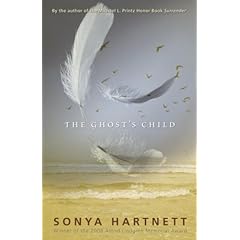
Originally published in Australia (red cover), there is quite a change in covers...when it is published in other countries...which do you like better? And here is the UK cover (to the left). And the American cover is at the top of the post. Very different images, aren't they? I must say I like the UK version best of the three. I think it best captures the feel of the book.


© Becky Laney of Becky's Book Reviews

Thursday, August 21, 2008

Girl, Hero


Jones, Carrie. 2008. Girl, Hero.

I don't know why I was surprised by Girl, Hero being so wonderfully fantastic. I enjoyed both of Carrie Jones' previous novels: Tips on Having a Gay (Ex) Boyfriend, and Love (and Other Uses For Duct Tape). Perhaps it was the John Wayne factor. You see, the novel, Girl, Hero, consists of letters from our heroine, Liliana Faltin, to the legendary (but deceased) John Wayne. I was skeptical at first. But it worked. It really worked. Here's our introduction:
Dear Mr. Wayne,

My mother's got a man coming to see her. She's all excited, running around, getting ready, making me clean up the whole house. She thinks this man might be the one, you know, the big enchilada, her soul's mate, her life's light, and stuff. She's always thinking that.
She's had men before, since my stepfather died. But this guy's going to stay with us in our house, for a while. Not too long, she tells me. Just until he's back on his feet. This one's moving back east from Oregon and needs a place to sleep while he looks for work.
I think, that's what hotels are for, but she's so happy, humming all the time, singing Celine Dion songs, that I don't say anything that I'm thinking in my head.
She's made up the guest bedroom. I don't think he'll stay there. I don't know who she thinks she's fooling. Not me.
He's a tall man, Mr. Wayne, like you. She knew him a long time ago, back when she was married to my father. On the phone his voice sounds Western, or Texan, like he has traces of sand and grit stuck in it that float out with his words when he talks. He sounds like he's been in the desert a long, damn while and hasn't had any water to drink and has a mighty thirst.
He doesn't sound like he's from Maine, but she says he was born and raised here.
I didn't know that people could move and have their accents change, that all their baby years and teenage years of talking could just get erased.
My mother blows air out her nose when I say this to her, and she taps her fingernails on the kitchen counter, crosses her legs and gets out a cigarette.
People adapt, Liliana, she says, and the whole sentence is just one long exasperated sigh.
It's kind of cool in a way, the adapting thing. I mean, depending on how bad high school goes, I might want to erase all of it and pretend I'm someone else when I go to college--if I get into college.
My mom thinks this man will be like you: a hero kind of man with a clean face and soul. She thinks that about every man she sees. But they never are. There's only one you. (1-2)
Jones' writing speaks for itself. She is an authentic writer, her characters have heart and soul--meaning depth and layers. And her stories have spirit or staying power. There's something about her books that just work.
"Sometimes I think friends are a necessary evil, say like McDonald's burgers. You need to have them, you want to have them, but sometimes they make your stomach ache." (6)
"Dear Mr. Wayne

Before you were a movie star, did you have to do homework? I should get a biography about you so that I can know these things, but I'm afraid to. What if I open up the book and start reading and find out you aren't who I think you are? I want people to be who they're supposed to be, but nobody ever seems to want to. I'll give it to you firsthand, Mr. Wayne: nobody in this world seems to be who they are. And my guess is that most people don't even know who they are supposed to be. Which sucks. I'm not supposed to use that word. My mother acts like it's worse than the f-word or something. You would probably say the same thing." (24)

"Sometimes I get so scared, Mr. Wayne. Sometimes I am so far from being the cowboy with the hat and the horse and my gun drawn and ready. Sometimes I'm so far away from anything I want to be and it's like that sunset you're always riding to but you never quite reach." (104)

"Sometimes I think hugs are like helmets. Sometimes I wish I could walk around with someone hugging me the whole time. You could probably make a lot of money doing that, being a professional hugger." (262)
I just fell in love with this book. With the characters. With their stories. With the language itself. With the cover itself. Everything about this book is just right, it's practically perfect right.

© Becky Laney of Becky's Book Reviews

Sunday, July 06, 2008

Geek Magnet


Scott, Kieran. 2008. Geek Magnet.

Okay, so I was dizzy with power. Can you blame me? It was the first day of rehearsals for the spring musical, Grease, at Washington High and I, KJ Miller, was the stage manager. The woman in charge. The first junior ever to be granted this most prestigious position.

KJ Miller. How to describe KJ? Well, there's the obvious. She's a geek magnet. She draws some geeky undesirables close to her. Fred. Glenn. Andy. Perhaps because of all the buzzing geeks near her, KJ is not quite as popular as she'd like to be. She's not in the outer rings of the social strata, but she's far from being "in" with the in crowd of beautiful people. With great power comes great responsibility. KJ now has some power at least when it comes to the drama folks. And this new-found power has brought someone new to KJ's life: Tama, Tama Gold. And Tama has something KJ wants more than anything: power and sway over KJ's crush, Cameron. KJ loves Cameron. And Tama, well, Tama sees that as her "in." As the "star" of the show, Tama, wants--no, needs--KJ to be on her side.

Tama easily agrees to setting KJ and Cameron up. Knowing that by 'befriending' KJ, the power to rule the show, rule the production, would be within her reach. After all, boys can be distracting.

The first rule Tama sets for her new best friend is that KJ has to stop being nice to the geeks, to the nobodys. She had to start being mean, being firm, being direct. KJ needed to cut free and clean from those holding her back. Who would want to date her if all her friends were dorks and geeks?

There is one person, however, that KJ still listens to. Robbie. The male lead of the play. Robbie. A guy she sees as being so wonderfully himself. He didn't hang out with the cool people, the beautiful people. But that was his choice. And that choice makes all the difference to KJ. She sees him as anything but a geek. Robbie wants Tama. KJ agrees. This requires much plotting together. This cozy together time that is oh-so-predictable.

If Geek Magnet has a flaw it is that it is ultra-predictable. That's not necessarily a bad thing. I'm sure some folks will find it enjoyable and satisfying. To me, as an adult, I found KJ a bit too self-absorbed. KJ wasn't exactly shallow. Far from it in some areas. KJ's life isn't easy. She has an alcoholic father, a mother in denial, and a younger brother that is absent-though-present. (It's weird how many scenes this brother is in, yet he never made an impression.) While KJ's relationship hate-and-angst filled relationship with her father takes up some space, the rest of her family just fades into the backdrop.

The romance. Well. I thought it lacked a bit. I thought Robbie and KJ definitely had some chemistry. But, predictably so, they were almost the last ones to know it. And the resolution, the closing scenes where they're drawn together...well, they technically get the job done, but I was hoping for a bit more fireworks.

Where Geek Magnets might pick up some fans is in the drama department. For readers who have a love for drama, for theatre, for musicals, for Grease in particular...I think this one might work better. It does spend a good majority of time behind-the-scenes pulling together a musical production. Actors. Directors. Props. Costumes. Dress rehearsals.

I think other readers would probably like this one better than I did.

Read the first chapter here.
Other reviews: Flamingnet, RomanticTimes, ReaderViews,

© Becky Laney of Becky's Book Reviews

Sunday, June 08, 2008

Gods of Manhattan


Mebus, Scott. 2008. Gods of Manhattan.

The 'gods' in question in Scott Mebus' Gods of Manhattan are not Greek gods. Just so you know. They are men and women immortalized by legend and fame and success. The mayor of the gods, of Manhatta a world that is invisible to most mortals, is Alexander Hamilton. (All of the gods started out as mortals, but their fame, their success, their ingenuity made them be reborn as immortal gods in this spirit world residing side by side with modern Manhattan.) It's a rather fun premise, for the most part. The gods, these immortal gods, are in danger--real danger. Though immortal, a way has been discovered to kill them, murder them. A special knife that threatens to end everything...unless they get some help from a rather extraordinary mortal, a young boy, Rory.

Rory is your typical hero. He doesn't want to be a hero. He doesn't want the responsibility of saving the world. But with the proper motivation, he may prove to be hero material after all. Like quite a few heroes, he has a younger sister. And this sister plays quite an important role. This butt-kicking heroine loves to be strong and brave. The idea thrills her. She carries around a sword called 'Butt-kicker' for example. Definitely spunky.

I won't get into the particulars now. But fans of Percy Jackson and Fablehaven might enjoy this one. It has history and fantasy colliding...and the result is mostly fun and entertaining. It is the first in a series, and I would imagine that the second one will be even better.

© Becky Laney of Becky's Book Reviews

Monday, June 02, 2008

Genius Squad

Genius_squadJinks, Catherine. 2008. Genius Squad.

Genius Squad is the sequel to Evil Genius. A book that *almost* everyone (excluding me) loved when it released last year. So if I didn't love (and if I'm honest, really almost hated) why would I pick up the sequel? Am I just into torturing myself? Maybe. But it's a good thing. A really good thing in this case. My problems with Evil Genius was in the narrator (and also the pacing but it's not necessary to go there). Our hero, Cadel Piggott, was so far removed from the human race, so cold, so calculating, so mean-spirited, so outside-it-all, so without conscience that it made it hard for me to like him. Even just a little bit. But Cadel's a whole new man now. Well, sort've. He's fifteen. He's matured in many ways. If by maturing you mean becoming human, becoming likable, becoming vulnerable, becoming a person who thinks about his choices being right or wrong. That doesn't mean he's above doing wrong, it just means that he thinks first. He may lie. He may keep secrets. He may want to do small acts of revenge. But he now thinks about whether the ends justify the means. But more importantly, Cadel is now beginning to think about other people besides himself--at least part of the time.

So, I liked this one. I really liked it. Cadel, as I mentioned, is fifteen now. And we first meet him living in a foster home. He's in a home with two other children. (I believe they're both foster care kids too.) And life isn't easy for this ex-genius. At the beginning, he's living a mostly restricted life. He does get some computer time, a few hours each day, but it's not his computer. It's not super-advanced. And he can't really go about doing his normal genius-y things. He's under police protection as well. He's the sole witness for the prosecution. He has to stay alive so he can testify against Prosper English. Surviving may be more difficult than he at first thought.

So, the book is called Genius Squad. As you might have guessed, Cadel (and his best friend Sonja) get an offer they can't refuse. A chance to prove their genius for the "good" guys. Off the record of course. No, he isn't working for the police. And no, there isn't proof that these so-called good-guys are actually good. In fact, these good guys are doing some illegal things. But Cadel thinks the ends will justify the means. I won't go into all the specifics, but this genius squad does add some suspense and mystery to the plot.

Genius Squad is an exciting page turner. I definitely recommend it.

© Becky Laney of Becky's Book Reviews

Tuesday, May 27, 2008

The Glory Field


Myers, Walter Dean. 1994. The Glory Field.

Recently released in a new paperback edition, The Glory Field is a true must-read. Why? It's practically perfect in every way. It is a novel that traces a family from its Sierra Leone roots to what was at the time of its publishing modern-day, urban America. The Glory Field loosely weaves together the story of one family through multiple generations. Our story begins with a brief vignette (1753) focusing on Muhammad Bilal, a young boy who is captured and sold into slavery in the South. Many settings, many narrators, many individual stories and legacies that collectively capture the African-American experience. (1753, 1864, 1900, 1930, 1964, 1994). It is an emotional, well-written, almost poetic journey. Very heartfelt. Very real. Very moving. The characterization is wonderful. I really came to love, came to care for all the characters across the generations. I've read a few other novels through the years that have sought to tell a multi-generational story...but none have been so effective, so masterfully done.

If you love historical fiction, then you MUST read this one. It's a truly great novel.

"We come a long way and we got a long way to go. You can't make much progress if you don't leave home, but you can sure mess yourself up if you don't remember where home is." (232)

© Becky Laney of Becky's Book Reviews

Saturday, May 17, 2008

Generation Dead

http://www.fearzone.com/content/images/large/large-267.jpg
Waters, Daniel. 2008. Generation Dead.

I read Leila's review of this yesterday--I was already a good ways through it--and I echo her sentiments in part. I wanted to really like this one. When you get the first part of the premise--zombies in high school--you think it would be a really fun novel. A novel where perhaps just maybe a girl (or guy) will fall in love with someone a bit unusual--a bit dead. Like Bella falling for Edward, maybe. Or one of those countless other books where teens are falling in love with vampires, werewolves, and such. But that's not what this novel is about. It's not romance exactly. And it's not horror either--zombies attacking. It's social propaganda 101. Sort've. Mostly.

Here's the basic premise--teens all over America are rising from their graves. For whatever reason--still unexplained by scientists--some (but not all) teens are coming back from the dead. Some zombies--aka living impaired aka differently biotic--are accepted by their families. Others are not so lucky. Some are rejected by family, friends, and former significant others. There isn't a lot of love going around for the undead among us. Far from it, hate and disgust reign supreme. And since their rights as human beings, as American citizens, died with them, the zombies are left to fend for themselves and make do best they can. There isn't really much support--so far--private or public for the zombies' cause and interests.

There is one school--I believe the novel is set in Connecticut--that has more living impaired students than most of the others. In fact, some living impaired are moving there just so they won't be so alone, so isolated. This is a good and bad thing. The more living impaired students there are, the more ticked off the living become. While the principal promotes loving acceptance and inclusion, the student body is far from treating their fellow classmates with respect and courtesy and dignity.

Meet Phoebe. Phoebe isn't quite like the others. She is a goth chick, for one, but she's different for another reason as well. She's not blind to the zombies. She notices them. She's drawn to one in particular, a boy named Tommy Williams. She feels the need, the desire, to become his friend.

Tommy. Tommy isn't like most zombies. He's the best of the best, you might say. He's more articulate, more graceful (less clumsy and awkward) than his peers. At one point in the novel, someone says he could almost pass as living. Almost. He "represents" the best of what a zombie can be. He does try out for the football team.

But his friendship with Phoebe will have consequences. Adam, Phoebe's best friend, learns to deal with it respectfully for the most part. He still wants her for himself. But he comes to like Tommy. They become friendly with one another. But Adam is almost the only one on the football team that treats Tommy as a human. The others are set to destroy. Most would kill him if they could. After all, killing the undead isn't a crime. Most would say Tommy doesn't have any right to be "alive" at all.

Here's the thing, you can support the message--really be more than fine with the message--and not want to read a 392 page novel that pimps that message in such a didactic way. It accelerates from subtle to didactic (preachy) very very quickly. You won't necessarily think this in the first few chapters, I know I didn't, but towards the middle it gets very bogged down with THE MESSAGE. The message here is on prejudice and discrimination and human rights. The zombies represent any and every minority group ever scorned and mistreated by society. This novel is the battle between tolerance and intolerance of love and hate. It's not quite a full parable, but it borders one so nearly with its in-your-face hitting you with a hammer style that it's hard not to feel it tries a bit too hard. Why be subtle when you can be IN YOUR FACE. Why say something once or twice when you can say it a hundred times in all caps?

I guess this is what it comes down to. I wanted more from this one, so I'm disappointed. However, that's not strictly fair to the book. It does offer something to readers. It does offer food for thought. It does offer a mix of dark sarcasm and wit with some rather serious overtones--bullying, hate, murder, etc. There were moments I smiled. There were moments I enjoyed it. There were places when I connected with the story. But it wasn't a completely satisfying experience either. It wasn't an I-loved-every-page kind of book. I liked it in parts and bits. Tommy is by far my favorite thing about the novel. Read his blog here.

The ending left me a little unsatisfied. It could have done more perhaps, and if there is a sequel, perhaps we'll see more resolution. By the way, most reviews seem to be positive and gushing praise. So I'm in the minority in being only "meh" about it.

Other reviews: here, here, here, here, here, here, here, here, here, here, here, and here. Just to name a few.

© Becky Laney of Becky's Book Reviews

Friday, May 16, 2008

Good Enough


Yoo, Paula. 2008. Good Enough.

Paula Yoo's debut novel Good Enough is more than good enough by my standards. Patti Yoon, our narrator, is always being told--directly or indirectly--that she's not good enough. Why be happy with being assistant concertmaster? If you're not in first place, you're a loser, right? Why be happy with anything other than the perfect 2400 for SAT's, right? 2010? Not good enough. Pressured to focus on the Ivy League colleges, Patti Yoon spends her life always always working towards her parents goals. That is until she meets "Cute Trumpet Guy" Ben Wheeler who shows her that there are other important things in life--friendship, fun, doing what you want to do, etc. Now, Patti is torn between striving to be THE best and trying to do her best.

The novel is about life and love (in this case unrequited) and friendship. It's a novel about being. It's a novel about being torn, not knowing exactly what you want. Patti's parents want her to go to HarvardYalePrinceton. It doesn't matter which school--as long as it's Ivy League. They don't necessarily care what profession she pursues either--so long as its practical. Music? Impractical! But Patti loves playing her violin, and quite a few people have told her she's gifted, talented. That she should be focusing on music. Her parents see her violin, her talent, as a hook to her getting into college. What does Patti want? That is the question at the heart of this book.

The novel focuses on a Korean-American family. (And on their Korean church, especially the youth group.) Patti and her family definitely experience some prejudice and discrimination. Patti just can't understand why though she suspects its the fact that she's the only Asian-American at her high school. The "mean" people, the bullies, will name call all the geeks, (Patti is among 'the geeks') but she's singled out by her race.
Oh my God. I'm not Japanese! Why is he even calling me a Jap? What does my ethnicity have to do with any of this? Why does Susan get to be called Queen of the Hobbits or dork or geek but I always get called Jap or Chink or gook? What does being Asian have to do with me being a nerd/geek/dork/physically uncoordinated loser? Why can't he just call me a geek, too? It would still hurt, but I'd take geek over gook any day. Because we all know geeks can change--just look at all those Hollywood romantic comedies where the girl geek takes off her glasses, unpins her ponytail, and turns into a princess. But I can't stop being Korean. I can't change my skin color. Even though I know he's wrong, Eric still makes me feel embarrassed for being Korean sometimes. (80)
Good Enough is a coming-of-age, finding-yourself novel, with plenty of heart and soul. Definitely recommended.

http://paulayoo.com/

© Becky Laney of Becky's Book Reviews

Friday, May 09, 2008

Greetings From Nowhere


[lhs_star_rg4.00.gif]O'Connor, Barbara. 2008. Greetings From Nowhere.

Greetings From Nowhere can be described in many ways: charming, delightful, satisfying, sweet, and a general all around feel-good treat. It's a story told by many narrators. (Aggie, Willow, Kirby, Loretta) Each voice is unique and just right. This isn't a story of one person, it's a story of a whole community of characters. It's a story about humanity, about life. I can't recommend it highly enough. If you're a fan of Because of Winn Dixie, I think you'll just love this one. It just resonates with rightness.

This one would make a great read aloud to share with the whole family.

© Becky Laney of Becky's Book Reviews

Thursday, February 22, 2007

The Green Glass Sea

Klages, Ellen. The Green Glass Sea.

Set in Los Alamos, New Mexico, during World War II, THE GREEN GLASS SEA tells the story of two young girls--Dewey and Suze--whose parents work for the government on a top-secret project called Project Manhattan. Told that they are working on the gadget that will end the war, the children are confused by their new surroundings but soon become accustomed to its strangeness. Suze and Dewey are both outsiders. But it takes three-fourths of the novel for the two to become friends. In fact, Suze is one of the girls that torments Dewey and makes fun of her for wearing a leg brace. But Suze slowly becomes compassionate during the course of this novel. Dewey is a unique character. A tomboy. A wanna-be mechanic/inventor. She loves to build. She loves to take things apart. She loves math and science. The Green Glass Sea is an interesting novel. It has strengths, but it also has weaknesses. For example, Ellen Klages shifts between a wonderful style where the reader can see and feel and know what the characters are doing and a horrible style that is very didactic, very out-of-body, very removed, very distant, very awkward. What’s worse is that the first thirty-seven pages of the book are written in that style. But if you’re patient, it does get better.

The Green Glass Sea by Ellen Klages (Viking) is the winner of the 2007 Scott O'Dell Award for Historical Fiction. The award is presented to a children's or young adult book published in English by a U.S. publisher and set in the Americas.

http://www.ellenklages.com/

Preview of Green Glass Sea, and the place the illustration comes from

Monday, November 13, 2006

The Goose Girl Revisited


Yesterday's review of The Goose Girl focused on the similarities between the traditional tale and Hale's new novel. Today I'd like to briefly revisit the novel to prepare the reader for the companion novels Enna Burning and River Secrets.

1) Friendships. The Goose Girl did an excellent job of portraying the friendships of "Ani" or "Isi." From her most trusted guard, Talone, to her first new friend, Finn, whose home she took refuge in when she was most distraught to her fellow animal-yard workers Enna, Razo, and Conrad. It was her ability to learn to trust again that strengthened her spirit and enabled her to rise from obscurity to reclaim the prince and earn her happily ever after ending. Her success was a group effort. These people MATTERED to the story. So it was to Hale's advantage that they were so well-developed thus opening the door up to companion novels drawing not from traditional fairy tales but new original stories.

2) Important magical concept. In The Goose Girl, Anidori Kiladra Talianna Isilee was raised in her early years to be open to certain magical ideas. An aunt told her nursery stories of people having the ability to 'speak' other languages and communicate with different animals, the wind, fire, and water. These 'fanciful' stories were forbidden by the king and queen especially after they heard Ani speaking to swans as a young child. But these stories--and the notion that one could learn to communicate with others in a secret language--formed an important part of Ani's heritage. As the reader finds out in THE GOOSE GIRL, Ani or Isi has the ability to speak with birds (at least swan and geese) and she learns to speak with the wind and have it do her bidding.

Orson Scott Card's review of Shannon Hale's Goose Girl
Orson Scott Card's review of Shannon Hale's Enna Burning
Orson Scott Card's review of Shannon Hale's The Princess Academy

Sunday, November 12, 2006

The Goose Girl


Hale, Shannon. 2003. The Goose Girl.

Drawing from the richness of the Grimms fairy tale 'The Goose Girl,' Hale expands the simple story of a bride's mistaken identity into a beautiful, romantic novel adding new layers of depth to an already promising tale. Whether the reader is familiar with the Grimms' text or not, they can't help but be swept up into the story of the bravery and strength of a young princess robbed of her title, her groom, and her freedom by a lady in waiting who has been waiting for a chance all along to betray her.

Anidori Kiladra Talianna Isilee was born to be Crown Princess. Raised to be the future queen of Kildenree. But plans change when her father dies and her mother arranges her marriage with a foreign prince in order to ensure peace for another generation. Ani accepts her fate with patience and hope. Hope that her new country, her husband will treat her well. But on the long journey to her new home, Selia, her lady in waiting, charms the royal guard and plans a violent upheaval before they arrive in Bayern. Escaping with only her life, Ani must take on a new identity until one day when she can reclaim what rightfully belongs to her.

Her disguise? What better way to stay hidden than to work as a goose girl tending the flocks of the king and queen. As "Isi" (her new name) befriends her fellow workers, she begins to discover new things about herself. New strengths. New determination. New confidence.

What the reader discovers while reading The Goose Girl is that 'happily ever after' endings don't come easily. And that the journey to 'happy endings' are often paved with disappointment, frustration, injustices, and unexpected difficulties.

Grimm 089: The Goose Girl
The Annotated Goose Girl
Shannon Hale's Official Site Page for Goose Girl with discussion guide, deleted scenes and chapters, quizzes, etc.

Friday, September 01, 2006

Waiting for A Memory

Bruchac, Joseph. 2006. Geronimo

Geronimo was a legendary figure in American culture, and during the last half of his lifetime, a tourist attraction wherever he went. And while Joseph Bruchac's novel GERONIMO describes this vividly, he also paints a portrait of a real man. Told through the eyes of "Little Foot" or "Willie" this fictional grandchild of Geronimo is responsible for passing on his legacy through the stories he shares.

"Remember That is what I now do. I tell the story as best I can. With each line of my tale I will place a kernel of corn on the ground. Then, when I am done, that corn will be there for you to pick up. Eat it and this story may stay with you as it has stayed with me. Do not fall asleep, or the story may be broken, as were our lives. Listen" (5).

While it doesn't follow strictly chronological guidelines, the main story takes place between 1883 and 1908. The heart of the story is the imprisonment of the Apache Indians--yes, I know there is a more descriptive, more accurate name, and their exile from their land in Arizona. They were deported by train, under guard, to camps and forts in Alabamba and Florida. The train carrying Geronimo became a tourist attraction at every stop along the way, and a money-making venture.

"'They are waiting for a memory,' Wratten said to me as we passed slowly by yet another great crowd of waving, shouting people. 'They want to be able to tell their children they saw Geronimo.'" (78)

The memories they make for themselves in their new homes were anything but pleasant. Full of hard work, sadness, depression, and disease--their camps were prone to malaria--they were often separated from their families...wives from husbands, and children from parents. Many children were sent to a school in Pennsylvania where many became sick with tuberculosis and died.

Woven into the stories of hardships and broken promises, are stories of the past both pleasant and bittersweet. Their days of peace and contentment, and their days of battle fighting the Mexicans and Americans.

Beautifully written, I hope this book finds its audience because it is a truly memorable book.

http://www.josephbruchac.com/
http://www.let.rug.nl/usa/B/geronimo/geronixx.htm