Showing posts with label Kingfisher. Show all posts

Monday, September 01, 2014

Two Get Into Art Books

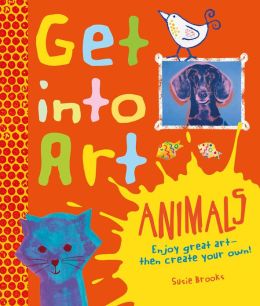
Get Into Art: Animals. Susie Brooks. 2013. Kingfisher. 32 pages. [Source: Review copy]

 If you were going to draw an animal, what would it be? You have so much choice, it might be hard to decide! Animals are a great subject for artists because there are so many shapes, colors, and characters to choose from...Look at the different ways in which animals have inspired famous artists--and then let them inspire you, too!

What a fun concept book for sharing art with children! Get Into Art Animals shares twelve famous artworks with children. Facts about the artists are given for each work of art. In addition, there is a recommended hands-on art project inspired by each work. A glossary in the back defines art terms. There's also a list of everything you'll need to do all the projects.

The Snail, Henri Matisse, 1953
Suspense, Sir Edwin Landseer, 1861
Crinkly Giraffe, Alexander Calder, 1971
The Bird, Georges Braque, 1949
Peacock and Magpie, Edward Bawden, 1970
Fish (E59), M.C. Escher, 1942
Carnival of Harlequin, Joan Miro, 1924-1925
Totem Poles, Wayne Alfred and Beau Dick 1991 and Ellen Neel 1955
Yellow Cow, Franz Marc, 1911
Dragon Wish, Chinese artist 1600-1635
Portrait of Maurice, Andy Warhol, 1976
Jockeys in the Rain, Edgar Degas, 1883-1886

The project for "Totem Poles" is "Crafty Totem." Making your own totem pole out of a cardboard tube and paper. But my favorite may just be "Colorful Cats" a project inspired by Andy Warhol.
Colorful Cats
Warhol's silk-screen method was complicated, but you can get a similar effect with a simple stencil.
1. On a piece of card stock, draw the outline of an animal and carefully cut it out. You'll end up with two stencils like these. (Cut out the eyes, nose and mouth on the second stencil).
2 Lay stencil 1 on a piece of thick paper and attach it with paper clips. Sponge yellow paint all over it.
3. When the paint is dry, lift the stencil and move it slightly down and to one side. Sponge red paint unevenly over it and then leave it to dry.
4. Now lay stencil 2 on top of the picture and sponge blue paint over the holes. Leave it to dry, and then remove the stencil. Cut out the animal and stick it onto a colorful background. (You can print whiskers by dipping the edge of a strip of card stock in paint.)
Warhol often repeated his prints in different colors. Try making a set like this. (27)
Get Into Art: People. Susie Brooks. 2013. Kingfisher. 32 pages. [Source: Review copy]

Can you think of an art subject that's always around? Just look in a mirror for the answer! Artists often base their work on themselves or other people. Some create portraits to remember people by or characters to illustrate a story. Others capture feelings, actions, fashions, or imaginary faces. The great thing is that people are all different, and artists can bring them to life in many ways. See how people have inspired famous artists--then let them inspire you, too!

I have really enjoyed looking at both books in this art-appreciation series. Like the previous book, this one introduces twelve works of art to children. Facts about each artist are shared. Each work is connected to a hands-on art project. A project materials checklist and a glossary are included in the back.

Vertumnus, Giuseppe Arcimboldo, about 1590
Weeping Woman, Pablo Picasso, 1937
David, Michelangelo Buonarroti, 1501-1504
The Scream, Edvard Munch, 1893
Children's Games, Pieter Bruegel the Elder, 1560
Portrait of Adele Bloch-Bauer 1, Gustav Klimt, 1907
A Sunday Afternoon On the Island of La Grande Jatte, Georges Seurat, 1884
Grotesque Faces, Leonardo da Vinci, 1500s
Egyptian Burial Mask, Ancient Egyptian craftspeople, around 3000 BC to A.D. 1st Century
Girl in Mirror, Roy Lichtenstein, 1964
Lawn Tennis, Eadweard Muybridge, 1887
Las Meninas, Diego Velazquez, 1656

There are so many great project ideas in this one! I find myself liking the projects better in Get Into Art People than in Get Into Art Animals. I'm not sure why! I like how the project for "David" is teaching proportion in drawing. It shows step by step how to draw a face (and body) in proper proportion. The Mummy Mask looks like so much fun!!! However, the example I'd like to share with you is inspired by the photograph action sequences of Eadweard Muybridge.
Action Snaps
To photograph your own action sequences you'll need a camera and a friend.
1. Decide what movement you are going to photograph. It's best if it's something that can be done slowly. Get your friend to try moving in slow motion and holding each stage of the pose. When you're ready to start, stand at a good distance from your subject so that he or she fills the camera frame.
2. Keep the same distance between you and your friend as you photograph each stage of the action. If your model moves in one direction, you should move too.
3. If you're photographing something quick, like a somersault, get your friend to repeat the movement and press the shutter button at a different stage each time.
4. Print out your photos and arrange them in sequence--or "stitch" them together on a computer.  (27)
I would recommend both of these books by Susie Brooks. 

© 2014 Becky Laney of Becky's Book Reviews

Monday, March 31, 2014

Two More Kingfisher Readers

In the Rainforest by Claire Llewellyn. 2014. Kingfisher. 32 pages. [Source: Review copy]

In the Rainforest by Claire Llewellyn is a level two nonfiction reader published by Kingfisher. Other level two titles include: Fur and Feathers, Trucks, What Animals Eat, Where Animals Live, Where We Live, and Your Body. Level two titles feature longer sentences with familiar vocabulary, engaging pictures, a table of contents, page headings, and a simple glossary. The glossary for In The Rainforest includes these words: canopy, camouflage, equator, mine, nectar, oxygen, poison, prey, and sloth. Level two readers definitely have a different look to them compared to level one readers! They are definitely more complex and focused on sharing even more information.

I liked the page headings. I liked how the two-page spread focused on sharing specific information, and how easy it was to find exactly what you were looking for. I do believe that children need to learn how to use nonfiction books from an early age, and this one will help with that task.

The book focuses on rainforests as a whole: plants and trees, and, of course, animals. It also mentions humans and rainforests: how humans have lived in villages in-or-near rainforests, but, how some humans pose a threat to the survival of rainforests.

Firefighters by Chris Oxlade and Thea Feldman. 2014. Kingfisher. 32 pages. [Source: Review copy]

Firefighters by Chris Oxlade and Thea Feldman is a level three nonfiction reader published by Kingfisher. Other level three titles include: Ancient Rome, Cars, Creepy-Crawlers, Dinosaur World, Record-Breakers, and Volcanoes. Level three readers feature short paragraphs with more complex sentences, introduce high-interest specialized vocabulary, include a table of contents, captions, fact boxes, glossary, and index. The glossary for Firefighters include the words: breathing apparatus, cutter, emergency, equipment, fire extinguisher, foam, hydrant, nozzle, pump, siren, smoke detector, spreader, sprinkler, wildfire, and winch. You can tell from the glossary that this will definitely be more complex and informative than any level one or two reader!

From "What is a Firefighter?"
A firefighter is someone who helps in an emergency. A firefighter's main job is to put out fires. When a fire starts, a team of firefighters rushes to the fire. The firefighters use hoses, ladders, and other equipment to put out the fire. They rescue people trapped by fire, too.
Firefighters help with other emergencies. They rescue people after accidents such as car crashes. They also help people trapped in floods or on cliffs by the sea.

I found this one to be very informative. It even includes a two page spread on firefighters in the past!

© 2014 Becky Laney of Becky's Book Reviews

Monday, March 24, 2014

Two Kingfisher Nonfiction Readers

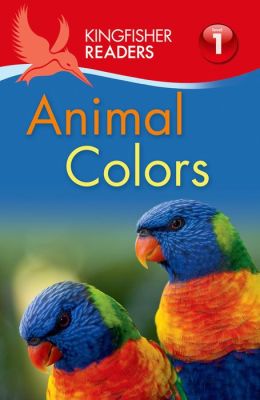
Animal Colors. Thea Feldman. 2014. Kingfisher. 32 pages. [Source: Review copy]

Animal Colors by Thea Feldman is a level one nonfiction early reader published by Kingfisher. (Other level one readers include Baby Animals, Busy as a Bee, Butterflies, Colorful Color Reefs, Jobs People Do, Seasons, Snakes Alive!, Tadpoles and Frogs, Trains, and Tyrannosaurus.) Level one readers feature short, simple sentences with familiar vocabulary, engaging pictures, and a simple glossary. The glossary of Animal Colors, for example, includes the words: blend, camouflage, hare, mate, and poison.

First paragraph: There are many colorful animals in the world! This grasshopper is bright green. This snake is green too. These birds are pink. This crab is red. So is this ant. This sea star is blue. So is this lizard.

From the opening pages, I thought this book was a bit too simple. At first, I did not find it very informative or interesting. But, as I kept reading, it seemed to become more complex which was a good thing. It began going beyond the basics: this is blue, this is red; here are some spots, here are some stripes. Once it started sharing information--interesting facts, I didn't-know-that-facts, it became easier to recommend.

For example:
Some animals change their colors! This spider is white when it is on a white flower. It turns yellow on a yellow flower. Insects do not see the spider. The spider grabs and eats the insect!


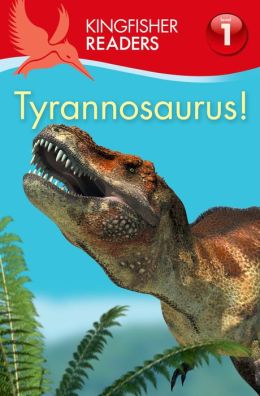
Tyrannosaurus. Thea Feldman. 2014. Kingfisher. 32 pages. [Source: Review copy]

Tyrannosaurus by Thea Feldman is a level one nonfiction early reader published by Kingfisher. Other level one readers include Animal Colors, Baby Animals, Busy as a Bee, Butterflies, Colorful Color Reefs, Jobs People Do, Seasons, Snakes Alive!, Tadpoles and Frogs, and Trains. Level one readers feature short, simple sentences with familiar vocabulary, engaging pictures, and a simple glossary. The glossary for Tyrannosaurus includes these words: dinosaur, extinct, fossils, prey, and scientists.

First paragraph: This is a big, fierce dinosaur! It is called Tyrannosaurus. Tyrannosaurus lived millions of years ago. That is a very long time ago. There were no people yet. Let's go back in time and take a look at Tyrannosaurus!

This early reader takes an imaginative approach to sharing information about dinosaurs. It's what-if scenario is conversational and to some extent enjoyable. "Tyrannosaurus is hungry! He is looking for food. What does he eat? Other dinosaurs! Tyrannosaurus is a hunter" and "Look! Tyrannosaurus runs after his prey. He runs on his toes. His tail sticks out behind him." It does keep the book in the present tense, inviting readers in.

Personally, dinosaur books will never prove interesting or thrilling to me. It's not a subject I care about. But for readers, particularly young readers, this book would be a good fit.


© 2014 Becky Laney of Becky's Book Reviews

Sunday, September 15, 2013

Two Pop and Play Board Books

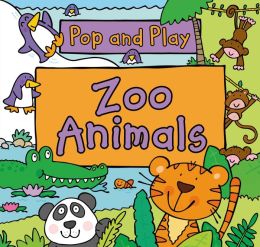
Zoo Animals. (Pop & Play). Simon Abbott. 2013. Kingfisher. 10 pages. [Source: Review copy]

Monkeys swing through the trees.
What noise do they make?
Chatter! Chatter!
Pandas eat bamboo.
Crunch!
Peekaboo!
Say hello to the tiger.
Count the bugs.
Roar!

Zoo Animals is a pop-up board book. Each spread reveals a fun pop for little ones. Monkeys swing on the vine, for example, and a crocodile opens wide and snaps. The text is simple and direct. It isn't the most amazing text ever. But it works well enough, I suppose. The illustrations are bright and fun. My favorite pages: the monkeys, the tiger, and the crocodiles. (My least favorite spread is the panda.) Your little one would need to be old enough not to pull on the pop-ups. A few rips could take all the fun out of this one. But if your little one is gentle with books, then this one definitely has appeal!

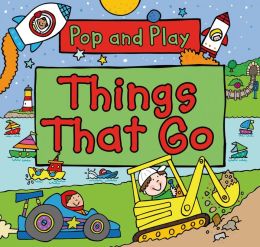
Things That go (Pop & Play) Simon Abbott. 2013. Kingfisher. 10 pages. [Source: Review copy]

The racecar whizzes past. What shape are the wheels? Vroom!
The digger scoops up dirt. Count the builders.
Chug! Chug!
The boat bobs up and down.
Where is the dolphin?
Toot! Toot!

Things That Go is another book in Kingfisher's Pop and Play board book series. The focus this time is on vehicles. Some of the movements (the pop-ups) are great. I really loved the last two, the train and the rocket. Others didn't thrill me. The text is simple. But the flow could be a bit better perhaps. Though I think questions that ask readers to interact with the illustrations are good, at least in theory. The book's main appeal may be the pop-ups. They can be fun! For little hands that can be gentle, this one may work.

© 2013 Becky Laney of Becky's Book Reviews

Monday, September 02, 2013

Creative Writing (2013)

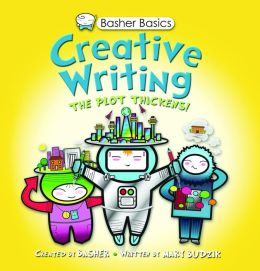
Creative Writing: The Plot Thickens. Mary Budzik. 2013. Kingfisher. 64 pages. [Source: Review Copy]

Creative Writing is a book in the Basher Basics series published by Kingfisher. (Other titles in the series include: Grammar, Punctuation, Music, Weather, Math, etc. There are two other lines as well: "Basher History" and "Basher Science".) This one would be perfect for middle grade (upper elementary school and/or junior high).

In the first chapter entitled "What's The Story?" readers learn about genres. Seven genres are included in chapter one: adventure, horror, science fiction, fantasy, mystery, diary, and poetry. Each genre has its own two-page spread. Mystery is found on page sixteen.
Mystery
*Story in which a protagonist investigates a mystery or crime
*The detective (amateur or professional) often has a sidekick
*Canny clues help connect the dots

I'm a cagey type whose world is seldom as it seems. Wary Protagonist might look for the story behind the story but, dogged by dastardly deeds, seems instead to stumble into muddles, mayhem, and even murder.
I scatter clues for detectives, private investigators, and interfering old ladies. I lead Protagonist into some sticky situations and courageous capers, but good old Pro is always equal to the challenge, refusing to back off despite ominous omens, threats from thieves, or pleas from the police. It is a question of having to be supremely self-confident, of trusting that gumption and grit will save the day. Even then, with criminals corralled and cooped up for good, it won't be long before I set yet another trail of trouble.  This game of wits is just too much fun to play.

Three to Read:
*Detectives in Togas by Henry Winterfeld (1956)
*Cam Jansen and the Mystery of the Stolen Diamonds by David A. Adler (1980)
* Hoot by Carl Hiaasen (2002)
The second chapter is entitled "Scene Setters." This chapter explores the concept or significance of title, theme, setting, and atmosphere. Theme is found on page twenty-six.
Theme
*A Central message or idea expressed by a story or poem
*Usually woven into a story rather than stated outright
*Often has a significance beyond the story itself

I'm a thoughtful type and sometimes a bit shy. Sure, Plot likes to scurry here and there, Plot Device teases readers with its tricks and colorful Figurative Language draws all eyes. Meanwhile, I meditate peacefully at the very center of a story, waiting patiently for you to find me. I often speak through other elements of a story rather than in a voice of my own, which means I can be a little hard to spot. I am worth seeking out, though. If you pay close attention and, like me, practice quiet reflection, you will hear my message, I'm sure--I'm intuitive! Ask yourself: Are there subjects in the story that reappear in different ways in different episodes? What makes Protagonist especially happy or sad? Does the story's title offer any clues? Before you know it, you'll have found me!

Try these:
*Identify the different themes in your favorite novel
*Choose a simple theme (for example, "friends are found in unexpected places") then work on a story to illustrate the theme.
Chapter three is entitled "Schemers and Dreamers." It introduces these concepts: plot, structure, flashback and flashforward, plot device, and denouement. Structure is found on page thirty-six.
Structure
*The arrangement of the events within a plot
*Gives a story a beginning, a middle, and an end
*Getting the order of events just so increases a story's impact

I am Plot's conscience. Addicted to the roller-coaster ride of events, Plot has a tendency to overwhelm a story like a tsunami, scattering mishap and misfortune all around. Well, it's my job to make Plot stop and think. I show that hothead some restraint! Yes, with me on board, plot chooses balance over bedlam and cause over coincidence. You see, I have a set of tools that help organize events in a logical progression, each incident causing the next. Thus Plot is able to set the scene (exposition), get things moving (rising action), stir things up (conflict), put on the brakes (suspense), cue the thunder (climax), and let everything settle back to earth (denouement). If I've done my job well, you'll feel like everything that happened was meant to be!

Try these:
*See if you can find the exposition, rising action, conflict, climax, and denouement in your favorite book
*Can you reorder some of the events without altering the outcome of the story?
The fourth chapter is "Heroes and Villains." It introduces these concepts: character, protagonist, antagonist, viewpoint, first person, and third person.

The fifth and final chapter is "Wordsmiths." It introduces the following: figurative language (more can be found in the glossary), diction, and dialogue.

I found Creative Writing to be packed with information in a reader-friendly way. I thought they did a great job in defining terms. I think the book could be just as useful for helping people talk about literature (stories, poems, novels, etc.) as it is for helping people write creatively.

© 2013 Becky Laney of Becky's Book Reviews
Thursday, April 18, 2013

Four Board Books (2013)

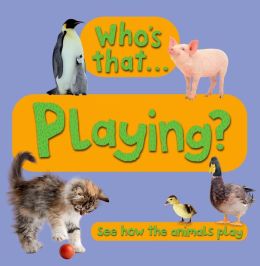
Who's That...Playing? See How The Animals Play.  Kingfisher. 2013. 14 pages.
Who's that playing?
Tip tap
I am a kitten.
I have long fur and pointed ears.

Who's that splashing?
Splish splosh
I am a duckling.
I have a beak and webbed feet.
Who's That...Playing is a fun board book for young readers--toddlers and preschoolers. Each two-page spread focuses on a different animal at play: kittens, puppies, ducklings, bear cubs, lambs, penguin chicks, piglets. Real photographs are used throughout. It is in a series of board books published by Kingfisher. Other titles include: "Who's That? Roaring," "Who's That? Jumping," "Who's That? Eating."

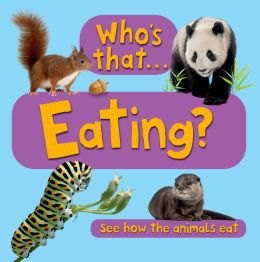
Who's That...Eating? See How The Animals Eat. Kingfisher. 2013. 14 pages.
Who's that eating?
Chomp
I am a giant panda.
I have black and white fur and I like munching bamboo.

Who's that gnawing?
Gnaw
I am an otter.
I have whiskers and I use my tail to help me swim.
If you're looking to share simple animal facts with your little one, this new series by Kingfisher would be a great choice. There are four books in this series, each focusing on a different aspect of animal life. Different animals are featured in each book. In this title, the focus is on eating. The animals featured include pandas, otters, caterpillars, squirrels, anteaters, chickens, and giraffes.

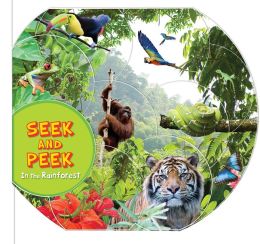
Seek and Peek In the Rainforest. Kingfisher. 2013. 8 pages.

Another series published by Kingfisher is the Seek and Peek series. There are four titles in the series: Seek and Peek in the Rainforest, Seek and Peek On the Farm, Seek and Peek Dinosaurs, and Seek and Peek at the Zoo. The books are oddly shaped, which may appeal to young readers who love to grasp. Readers can choose which animal they want to read about--learn about--and turn directly to that page. But some pages feature more than one animal. And some animals are not featured on the cover.

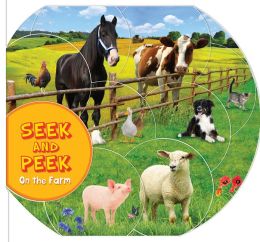
Seek and Peek On the Farm. Kingfisher. 2013. 8 pages.

The final book I'll be reviewing today is another in the Kingfisher's Seek and Peek series. I'm curious if little hands will appreciate the oddly shaped board book--it is almost a circle. It is easy to grasp and turn pages, which may be a plus! Farm books are almost always fun, and this one isn't an exception. Little ones can learn simple facts about farm animals like pigs, horses, chickens, cows, ducks, etc.


© 2013 Becky Laney of Becky's Book Reviews