Showing posts with label Louisa May Alcott. Show all posts

Saturday, September 29, 2018

My Victorian Year #37

This week I finished listening to Bleak House on audio. I began listening to Charles Dickens' Great Expectations on audio. I've also continued reading Louisa May Alcott's Little Men and Anthony Trollope's Small House at Allington. It's been a great week.

From Small House at Allington:
I enjoy a snooze after dinner; I do indeed; I like it; but then, when one comes to go to bed, one does it in such a sneaking sort of way, as though one were in disgrace!
And my sister, she thinks it a crime — literally a sin, to go to sleep in a chair. Nobody ever caught her napping!
Few liars can lie with the full roundness and self-sufficiency of truth; and Crosbie, bad as he was, had not yet become bad enough to reach that perfection.
But he was chiefly angry with himself for this, — that he had been a villain without gaining anything by his villainy; that he had been a villain, and was to lose so much by his villainy. 
There are deeds which will not bear a gloss, — sins as to which the perpetrator cannot speak otherwise than as a reptile; circumstances which change a man and put upon him the worthlessness of vermin.
“What are we to do to him?” said Bernard, after a while. “Treat him as you would a rat. Throw your stick at him, if he comes under your feet; but beware, above all things, that he does not get into your house. That is too late for us now.” “There must be more than that, uncle.”
From Little Men:
"Happy is the man who can put temptation in his pocket and learn self-denial from so sweet a little teacher!" added Mr. Bhaer.
Money is the root of all evil, and yet it is such a useful root that we cannot get on without it any more than we can without potatoes.
Daisy knew nothing about women's rights; she quietly took all she wanted, and no one denied her claim, because she did not undertake what she could not carry out, but unconsciously used the all-powerful right of her own influence to win from others any privilege for which she had proved her fitness.
Nan attempted all sorts of things, undaunted by direful failures, and clamored fiercely to be allowed to do every thing that the boys did. They laughed at her, hustled her out of the way, and protested against her meddling with their affairs. But she would not be quenched and she would be heard, for her will was strong, and she had the spirit of a rampant reformer.
"You must put swearing away in your fault-drawer, and lock it up; that's the way I do with my badness." 
"I play that my mind is a round room, and my soul is a little sort of creature with wings that lives in it. The walls are full of shelves and drawers, and in them I keep my thoughts, and my goodness and badness, and all sorts of things. The goods I keep where I can see them, and the bads I lock up tight, but they get out, and I have to keep putting them in and squeezing them down, they are so strong. I don't think there is a lock strong enough to keep my badness shut up. Any way my room is in such a clutter I don't know how to clear it up."


It is never too early to try and plant them [good principles] in a child, and never too late to cultivate them in the most neglected person.

© 2018 Becky Laney of Becky's Book Reviews

Monday, September 24, 2018

My Victorian Year #35

I have continued reading Louisa May Alcott's Little Men and Anthony Trollope's Small House at Allington.

Quotes from Small House at Allington
  • You are my bird that I have shot with my own gun; and the assurance of my success is sufficient for my happiness. [Lily to Crosbie]
  • As she herself had said, he was her bird, the spoil of her own gun, the product of such capacity as she had in her, on which she was to live, and, if possible, to thrive during the remainder of her life.
  • He who was now everything to her might die; nay, it was possible that he might be other than she thought him to be; that he might neglect her, desert her, or misuse her.
  • But she had resolved to trust in everything, and, having so trusted, she would not provide for herself any possibility of retreat.
  • The little sacrifices of society are all made by women, as are also the great sacrifices of life.
  • A man who is good for anything is always ready for his duty, and so is a good woman always ready for a sacrifice.
  • It is, however, no doubt, true that thought will not at once produce wisdom.
  • It may almost be a question whether such wisdom as many of us have in our mature years has not come from the dying out of the power of temptation, rather than as the results of thought and resolution.
  • Last days are wretched days; and so are last moments wretched moments. It is not the fact that the parting is coming which makes these days and moments so wretched, but the feeling that something special is expected from them, which something they always fail to produce.
  • When last days are coming, they should be allowed to come and to glide away without special notice or mention. And as for last moments, there should be none such.
  • I have almost more to think of than I know how to manage.  
  • But listen to me. I should not die if you left me, — not be utterly broken-hearted. Nothing on earth can I ever love as I have loved you. But I have a God and a Saviour that will be enough for me. I can turn to them with content, if it be well that you should leave me. I have gone to them, and— [Lily to Adolphus Crosbie]
  • “And who is the old gentleman who chanted the Litany?” he asked the verger afterwards, as he allowed himself to be shown round the monuments of the cathedral. “That’s our precentor, sir, Mr Harding. You must have heard of Mr Harding.” But Crosbie, with a full apology, confessed his ignorance. “Well, sir; he’s pretty well known too, tho’ he is so shy like. He’s father-in-law to our dean, sir; and father-in-law to Archdeacon Grantly also.” “His daughters have all gone into the profession, then?” “And who is his granddaughter?” “Why Lady Dumbello, as will be the Marchioness of Hartletop.”
 Quotes from Little Men
  • "Why don't I remember you then, Aunty? Was I too young?" asked Demi. "Rather, dear."
  •  "I suppose my memory hadn't come then. Grandpa says that different parts of the mind unfold as we grow up, and the memory part of my mind hadn't unfolded when you were little, so I can't remember how you looked," explained Demi.
 

© 2018 Becky Laney of Becky's Book Reviews

Saturday, September 08, 2018

My Victorian Year #33

I've continued reading Louisa May Alcott's Little Men and Anthony Trollope's Small House at Allington.

Quotes from Little Men:
  • It takes so little to make a child happy that it is a pity, in a world so full of sunshine and pleasant things, that there should be any wistful faces, empty hands, or lonely little hearts.
  • I regret to say that Nat sometimes told lies. Not very black ones, seldom getting deeper than gray, and often the mildest of white fibs; but that did not matter, a lie is a lie, and though we all tell many polite untruths in this queer world of ours, it is not right, and everybody knows it.
  • Little men are like big ones, good cooking will touch their hearts and soothe their tempers delightfully," added Aunt Jo, with a merry nod toward the door, where stood Papa Bhaer, surveying the scene with a face full of amusement.
  • "Salt is like good-humor, and nearly every thing is better for a pinch of it, Posy," and Uncle Fritz stopped as he passed, hammer in hand, to drive up two or three nails for Sally's little pans to hang on.
I still don't have quotes to share from Small House at Allington. Not because it isn't interesting but because it isn't all that quotable--at least not yet. 

© 2018 Becky Laney of Becky's Book Reviews

Saturday, September 01, 2018

My Victorian Year #31

I have really missed posting My Victorian Year. But. When you don't read anything Victorian during the week, you can't invent a reason to post on the weekend!

There are three Victorian novels on my 2018 TBR Pile Reading Challenge list. I need to finish these three Victorian chunksters before December 31, 2018. I may need a little cheerleading. I wouldn't mind your help in picking which one to read first. The three books are: Sylvia's Lovers by Elizabeth Gaskell, Blue Fairy Book by Andrew Lang, and Romola by George Eliot.

I haven't decided-decided, but I may abandon The Three Musketeers. I didn't pick it up once in the month of August.

I am currently reading Anthony Trollope's The Small House at Allington. I think I'm six possibly seven chapters into this one--it is a reread. This one is starting slow. But I remember liking it and really loving a few of the characters in it. So far--at least--it is not proving quotable.
I would have women, and men also, young as long as they can be young. It is not that a woman should call herself in years younger than her father’s family Bible will have her to be. Let her who is forty call herself forty; but if she can be young in spirit at forty, let her show that she is so.
 I am also currently reading Louisa May Alcott's Little Men. Of the three books in the series, it is my mom's favorite. I have never read it before. I am excited to see if it is as wonderful as my mom says it is!
A holiday isn't a holiday without plenty of freedom and fun;
Latin, Greek, and mathematics were all very well, but in Professor Bhaer's opinion, self knowledge, self-help, and self-control were more important, and he tried to teach them carefully.
"Yes, I know many people think boys are a nuisance, but that is because they don't understand them. I do; and I never saw the boy yet whom I could not get on capitally with after I had once found the soft spot in his heart. Bless me, I couldn't get on at all without my flock of dear, noisy, naughty, harum-scarum little lads, could I, my Teddy?" and Mrs. Bhaer hugged the young rogue, just in time to save the big inkstand from going into his pocket. Nat, who had never heard anything like this before, really did not know whether Mother Bhaer was a trifle crazy, or the most delightful woman he had ever met. He rather inclined to the latter opinion, in spite of her peculiar tastes, for she had a way of filling up a fellow's plate before he asked, of laughing at his jokes, gently tweaking him by the ear, or clapping him on the shoulder, that Nat found very engaging.
"The big dog is Emil's. His name is Christopher Columbus. Mrs. Bhaer named him because she likes to say Christopher Columbus, and no one minds it if she means the dog," answered Tommy, in the tone of a show-man displaying his menagerie.
Sympathy is a sweet thing, and it worked wonders here, for each boy knew that Father Bhaer was interested in him, and some were readier to open their hearts to him than to a woman, especially the older ones, who liked to talk over their hopes and plans, man to man.
"I shall devote the whole of my plot to the largest crop of patience I can get, for that is what I need most," said Mrs. Jo, so soberly that the lads fell to thinking in good earnest what they should say when their turns came, and some among them felt a twinge of remorse, that they had helped to use up Mother Bhaer's stock of patience so fast.
"We will plant self-denial, and hoe it and water it, and make it grow so well that next Christmas no one will get ill by eating too much dinner. If you exercise your mind, George, it will get hungry just as your body does, and you will love books almost as much as my philosopher here," said Mr. Bhaer;      


© 2018 Becky Laney of Becky's Book Reviews

Saturday, June 16, 2018

My Victorian Year #24

This week I read in Anthony Trollope's Rachel Ray. But. I also watched a new-to-me adaptation of Little Women: a TV miniseries from 1978. I'll start with that!

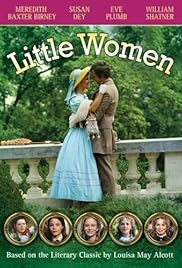
This adaptation stars dozens of familiar faces. Meredith Baxter (Facts of Life) is Meg March. Susan Dey (Partridge Family) is Jo March. Eve Plumb (Brady Bunch) is Beth. Ann Dusenberry is Amy. (She was the only one I couldn't place clearly.) Dorothy McGuire is Marmee. (She was in Old Yeller and Swiss Family Robinson to name just two.) Greer Garson is Aunt March. (I know her best from Pride and Prejudice which made the scene where she's nagging Meg about her choice of husband seem very hypocritical). Robert Young was Laurie's grandfather. (Father Knows Best, Marcus Welby, M.D.) Richard Gilliland was Laurie (Theodore Lawrence). I was not familiar with him but he was a busy actor back in the day apparently. Cliff Potts was Mr. John Brooke. (Mom recognized him; I didn't.) William Shatner (Star Trek) as Professor Bhaer. Can't say that he could pull off a German accent. And a beardless Professor for Jo seemed a bit wrong. But he can pull off being a romantic lead...so it wasn't that bad. William Schallert as Mr. March. (The Many Loves of Dobie Gillis, Patty Duke Show, Star Trek's Trouble with Tribbles episode, etc.) Virginia Gregg as Hannah. (Emergency! Dragnet, Perry Mason, My Three Sons, etc.) John de Lancie (Star Trek Next Generation, Q) as Freddy Vaughan. (They list him as Frank Vaughn for some bizarre reason).

I enjoyed this one. I did. It was in two episodes. It stuck fairly closely to the book. Some of the dialogue really did the book justice.

The only issue I had with this adaptation is Amy. Granted Amy isn't my most favorite character to begin with. But in this adaptation she's played by one actress--not two. So instead of a young girl acting--well as Amy does--you have a fully-grown woman acting like an immature, spoiled BRAT. (And getting away with it.) The scenes where she throws fits are RIDICULOUS. Some of what Amy does passes somewhat if you can picture her in the eight-to-twelve age range. But to see a fully grown actress acting that way it was just GRATING on the nerves. This portrayal focuses more on the outward drama of Amy being Amy without the quieter, subtler scenes of her maturing over the course of the years. At least in the book, there's character growth and one sees Amy go from being that bratty-brat to being an older-and-wiser woman.

Turning to Rachel Ray. Luke Rowan goes to Rachel's house and meets her mother, Mrs. Ray. They all have tea. He finds a way to ask permission to call on Rachel and perhaps propose to her if all goes well. As he's leaving, Mrs. Prime is coming by unannounced. She's the sister--if you remember--and she has a HISSY fit. Not in front of Luke though. It's not the only drama going down either. Luke's mother has come to visit and she's heard rumors of this Rachel character. She's decided to loathe Rachel though she's never met her before. She's poor therefore shes' trash. As if that wasn't enough....Luke's business partner truly has a melt-down. It looks like they will have to bring in some lawyers to work everything out. 

Quotes from Anthony Trollope's Rachel Ray.
He looked and spoke like a sheep; but then, was it not known to all the world that wolves dressed themselves often in that guise, so that they might carry out their wicked purposes?
On Monday, Mrs. Prime had left the cottage; on Tuesday, Rachel had gone to a ball, expressly to meet the young man! and on Wednesday the young man was drinking tea at Bragg’s End cottage!
“We’re so glad to see you, Dolly,” said Rachel, and in Rachel’s voice there was no tone of shame. It was all just as it should not be!
“But what ails him that he shouldn’t be a very good young man?” says Mrs. Ray. “And if it was so that he was growing fond of Rachel, why shouldn’t he? And if Rachel was to like him, I don’t see why she shouldn’t like somebody some day as well as other girls.”
I believe he’s a very good young man, with nothing bad about him at all, and he is welcome to come here whenever he pleases. And as for Rachel, I believe she knows how to mind herself as well as you did when you were her age; 
And if a young man isn’t to be allowed to ask leave to see a young woman when he thinks he likes her, I for one don’t know how young people are to get married at all.”
She had resolved that Luke Rowan was a black sheep; that he was pitch, not to be touched without defilement;
Luke chose to manage the brewery instead of being managed; and had foolishly fallen in love with Rachel Ray instead of taking Augusta Tappitt to himself as he should have done.
The civility which he wants is the surrender of my rights. I can’t be so civil as that.
I intend to marry neither the mother nor the sister; but Rachel Ray I do intend to marry, — if she will have me.
 I intend that she shall be my equal, — my equal in every respect, if I can make her so. I shall certainly ask her to be my wife; and, mother, as my mind is positively made up on that point, — as nothing on earth will alter me, — I hope you will teach yourself to think kindly of her.

© 2018 Becky Laney of Becky's Book Reviews
Saturday, June 09, 2018

My Victorian Year #23

I finished Louisa May Alcott's Little Women. I posted my review on Thursday. This last chunk was an emotional ride. Beth, well, you know what happens to her. But that is balanced well by AMY and JO. In the movies, the romance between Amy and Laurie is always super-super-super rushed and more awkward than not. In the book, it isn't all that rushed. It covers months, includes plenty of conversations, and is not all that unexpected. I liked the proposal scene more than I thought I would. It was actually very sweet and charming. Jo's courtship with her Professor is also delightful. I LOVED how those two came together!!!
“Rome took all the vanity out of me, for after seeing the wonders there, I felt too insignificant to live and gave up all my foolish hopes in despair.” “Why should you, with so much energy and talent?” “That’s just why, because talent isn’t genius, and no amount of energy can make it so. I want to be great, or nothing. I won’t be a common-place dauber, so I don’t intend to try any more.”
“I’m never angry with you. It takes two flints to make a fire. You are as cool and soft as snow.”
The pleasantest room in the house was set apart for Beth, and in it was gathered everything that she most loved, flowers, pictures, her piano, the little worktable, and the beloved pussies. Father’s best books found their way there, Mother’s easy chair, Jo’s desk, Amy’s finest sketches, and every day Meg brought her babies on a loving pilgrimage, to make sunshine for Aunty Beth.
Amy’s lecture did Laurie good, though, of course, he did not own it till long afterward. Men seldom do, for when women are the advisers, the lords of creation don’t take the advice till they have persuaded themselves that it is just what they intended to do. Then they act upon it, and, if it succeeds, they give the weaker vessel half the credit of it. If it fails, they generously give her the whole.
As the word “brotherly” passed through his mind in one of his reveries, he smiled, and glanced up at the picture of Mozart that was before him . . . “Well, he was a great man, and when he couldn’t have one sister he took the other, and was happy.”
“How well we pull together, don’t we?” said Amy, who objected to silence just then. “So well that I wish we might always pull in the same boat. Will you, Amy?” very tenderly. “Yes, Laurie,” very low. Then they both stopped rowing, and unconsciously added a pretty little tableau of human love and happiness to the dissolving views reflected in the lake.
For the parents who had taught one child to meet death without fear, were trying now to teach another to accept life without despondency or distrust, and to use its beautiful opportunities with gratitude and power.
Now, if she had been the heroine of a moral storybook, she ought at this period of her life to have become quite saintly, renounced the world, and gone about doing good in a mortified bonnet, with tracts in her pocket. But, you see, Jo wasn’t a heroine, she was only a struggling human girl like hundreds of others, and she just acted out her nature, being sad, cross, listless, or energetic, as the mood suggested. It’s highly virtuous to say we’ll be good, but we can’t do it all at once, and it takes a long pull, a strong pull, and a pull all together before some of us even get our feet set in the right way.
“I’ve no heart to write, and if I had, nobody cares for my things.” “We do. Write something for us, and never mind the rest of the world. Try it, dear. I’m sure it would do you good, and please us very much.”
Jo never knew how it happened, but something got into that story that went straight to the hearts of those who read it, for when her family had laughed and cried over it, her father sent it, much against her will, to one of the popular magazines, and to her utter surprise, it was not only paid for, but others requested.
“I don’t understand it. What can there be in a simple little story like that to make people praise it so?” she said, quite bewildered. “There is truth in it, Jo, that’s the secret. Humor and pathos make it alive, and you have found your style at last. You wrote with no thoughts of fame and money, and put your heart into it, my daughter. You have had the bitter, now comes the sweet. Do your best, and grow as happy as we are in your success.”
So taught by love and sorrow, Jo wrote her little stories, and sent them away to make friends for themselves and her, finding it a very charitable world to such humble wanderers, for they were kindly welcomed, and sent home comfortable tokens to their mother, like dutiful children whom good fortune overtakes.
Gentlemen, which means boys, be courteous to the old maids, no matter how poor and plain and prim, for the only chivalry worth having is that which is the readiest to pay deference to the old, protect the feeble, and serve womankind, regardless of rank, age, or color. Just recollect the good aunts who have not only lectured and fussed, but nursed and petted, too often without thanks, the scrapes they have helped you out of, the tips they have given you from their small store, the stitches the patient old fingers have set for you, the steps the willing old feet have taken, and gratefully pay the dear old ladies the little attentions that women love to receive as long as they live.
Mr. Bhaer could read several languages, but he had not learned to read women yet. He flattered himself that he knew Jo pretty well, and was, therefore, much amazed by the contradictions of voice, face, and manner, which she showed him in rapid succession that day, for she was in half a dozen different moods in the course of half an hour.
“Heart’s dearest, why do you cry?” Now, if Jo had not been new to this sort of thing she would have said she wasn’t crying, had a cold in her head, or told any other feminine fib proper to the occasion. Instead of which, that undignified creature answered, with an irrepressible sob, “Because you are going away.” “Jo, I haf nothing but much love to gif you. I came to see if you could care for it, and I waited to be sure that I was something more than a friend. Am I? Can you make a little place in your heart for old Fritz?” he added, all in one breath. It was certainly proposing under difficulties, for even if he had desired to do so, Mr. Bhaer could not go down upon his knees, on account of the mud.
Jo never, never would learn to be proper, for when he said that as they stood upon the steps, she just put both hands into his, whispering tenderly, “Not empty now,” and stooping down, kissed her Friedrich under the umbrella.
I read a few chapters in Anthony Trollope's Rachel Ray. She DID go to the ball. Her sister is as true as her word. Mrs. Prime is out of her mother's home. But will she live on her own or accept Mr. Prong's marriage proposal?! The party wasn't all thrills and no consequences for Rachel. Mrs. Tappitt is definitely unhappy and angry with her. She does not want Rachel to steal the attention that should--in her opinion--be on her daughters. And Luke's interest in Rachel is totally unacceptable. Luke should be for one of her daughters! Not that Rachel. Rachel did get plenty of attention at the party. Some welcome--most not.

Mrs. Cornbury to Rachel:
"Never be made to dance with any man you don’t like; and remember that a young lady should always have her own way in a ball-room."
Mr Prong to Mrs. Prime
If you can bring them back with you from following after the Evil One! But you cannot return to them now, if you are to countenance by your presence dancings and love-makings in the open air,” —

 Other quotes:
The words of men, when taken at the best, how weak they are! They often tell a tale quite different from that which the creature means who uses them.
There is so much of seeming in this deceitful world.
No one can have done with the world as long as there is work in it for him or her to do.


© 2018 Becky Laney of Becky's Book Reviews

Thursday, June 07, 2018

Little Women

Little Women. Louisa May Alcott. 1868. 566 pages. [Source: Bought]
First sentence: “Christmas won’t be Christmas without any presents,” grumbled Jo, lying on the rug. “It’s so dreadful to be poor!” sighed Meg, looking down at her old dress.

Premise/plot: Meg, Jo, Beth, and Amy are the 'little women' of the March family. The novel opens during the Civil War; their father is away and will be away for the duration. Marmee and Hannah try their best to raise the girls right. Laurie (aka Teddy Laurence) isn't always the best influence!

The first half of the novel is a coming-of-age novel. The young women have a lot of adventures and misadventures and life lessons to learn before they are ready to face the world as women. Each girl has her 'burden' to bear; each burden is unique. Beth's burden, for example, is her intense or profound shyness.

The second half of the novel features the women all grown up--essentially. Meg is married and has twins. Jo has gone off to the big city as a governess/writer. Amy has gone abroad. Beth, well, Beth stays at home and endures her physical suffering like a saint.

My thoughts:  I didn't read Little Women wholly until I was in college. Though I made it through the first half of the novel a handful of times, I never worked up as much interest in the second half. It didn't help that I knew Beth was going to....well...you know....die. Beth and her shyness was the character I identified with most. It didn't seem fair that she didn't get a happily ever after ending like her sisters. (I've made peace with that now.)

I definitely almost love Little Women. I do love it--in a way. But I don't think it stands a chance of ranking in my favorite, favorite, favorite books of all time list or my favorite books to reread list. I appreciate it; I find it charming. I love a good adaptation of it.

I've been sharing my quotes in my Victorian posts. This last selection of quotes come from chapter thirty-nine on to the end.
“Rome took all the vanity out of me, for after seeing the wonders there, I felt too insignificant to live and gave up all my foolish hopes in despair.” “Why should you, with so much energy and talent?” “That’s just why, because talent isn’t genius, and no amount of energy can make it so. I want to be great, or nothing. I won’t be a common-place dauber, so I don’t intend to try any more.”
“I’m never angry with you. It takes two flints to make a fire. You are as cool and soft as snow.”
The pleasantest room in the house was set apart for Beth, and in it was gathered everything that she most loved, flowers, pictures, her piano, the little worktable, and the beloved pussies. Father’s best books found their way there, Mother’s easy chair, Jo’s desk, Amy’s finest sketches, and every day Meg brought her babies on a loving pilgrimage, to make sunshine for Aunty Beth.
Amy’s lecture did Laurie good, though, of course, he did not own it till long afterward. Men seldom do, for when women are the advisers, the lords of creation don’t take the advice till they have persuaded themselves that it is just what they intended to do. Then they act upon it, and, if it succeeds, they give the weaker vessel half the credit of it. If it fails, they generously give her the whole.
As the word “brotherly” passed through his mind in one of his reveries, he smiled, and glanced up at the picture of Mozart that was before him . . . “Well, he was a great man, and when he couldn’t have one sister he took the other, and was happy.”
“How well we pull together, don’t we?” said Amy, who objected to silence just then. “So well that I wish we might always pull in the same boat. Will you, Amy?” very tenderly. “Yes, Laurie,” very low. Then they both stopped rowing, and unconsciously added a pretty little tableau of human love and happiness to the dissolving views reflected in the lake.
For the parents who had taught one child to meet death without fear, were trying now to teach another to accept life without despondency or distrust, and to use its beautiful opportunities with gratitude and power.
Now, if she had been the heroine of a moral storybook, she ought at this period of her life to have become quite saintly, renounced the world, and gone about doing good in a mortified bonnet, with tracts in her pocket. But, you see, Jo wasn’t a heroine, she was only a struggling human girl like hundreds of others, and she just acted out her nature, being sad, cross, listless, or energetic, as the mood suggested. It’s highly virtuous to say we’ll be good, but we can’t do it all at once, and it takes a long pull, a strong pull, and a pull all together before some of us even get our feet set in the right way.
“I’ve no heart to write, and if I had, nobody cares for my things.” “We do. Write something for us, and never mind the rest of the world. Try it, dear. I’m sure it would do you good, and please us very much.”
Jo never knew how it happened, but something got into that story that went straight to the hearts of those who read it, for when her family had laughed and cried over it, her father sent it, much against her will, to one of the popular magazines, and to her utter surprise, it was not only paid for, but others requested.
“I don’t understand it. What can there be in a simple little story like that to make people praise it so?” she said, quite bewildered. “There is truth in it, Jo, that’s the secret. Humor and pathos make it alive, and you have found your style at last. You wrote with no thoughts of fame and money, and put your heart into it, my daughter. You have had the bitter, now comes the sweet. Do your best, and grow as happy as we are in your success.”
So taught by love and sorrow, Jo wrote her little stories, and sent them away to make friends for themselves and her, finding it a very charitable world to such humble wanderers, for they were kindly welcomed, and sent home comfortable tokens to their mother, like dutiful children whom good fortune overtakes.
Gentlemen, which means boys, be courteous to the old maids, no matter how poor and plain and prim, for the only chivalry worth having is that which is the readiest to pay deference to the old, protect the feeble, and serve womankind, regardless of rank, age, or color. Just recollect the good aunts who have not only lectured and fussed, but nursed and petted, too often without thanks, the scrapes they have helped you out of, the tips they have given you from their small store, the stitches the patient old fingers have set for you, the steps the willing old feet have taken, and gratefully pay the dear old ladies the little attentions that women love to receive as long as they live.
Mr. Bhaer could read several languages, but he had not learned to read women yet. He flattered himself that he knew Jo pretty well, and was, therefore, much amazed by the contradictions of voice, face, and manner, which she showed him in rapid succession that day, for she was in half a dozen different moods in the course of half an hour.
“Heart’s dearest, why do you cry?” Now, if Jo had not been new to this sort of thing she would have said she wasn’t crying, had a cold in her head, or told any other feminine fib proper to the occasion. Instead of which, that undignified creature answered, with an irrepressible sob, “Because you are going away.” “Jo, I haf nothing but much love to gif you. I came to see if you could care for it, and I waited to be sure that I was something more than a friend. Am I? Can you make a little place in your heart for old Fritz?” he added, all in one breath. It was certainly proposing under difficulties, for even if he had desired to do so, Mr. Bhaer could not go down upon his knees, on account of the mud.
Jo never, never would learn to be proper, for when he said that as they stood upon the steps, she just put both hands into his, whispering tenderly, “Not empty now,” and stooping down, kissed her Friedrich under the umbrella.

© 2018 Becky Laney of Becky's Book Reviews

Saturday, June 02, 2018

My Victorian Year #22

I have read some in Little Women and some in Rachel Ray--just not a lot! In Little Women, Jo has met the Professor, refused to marry Laurie, and realized that Beth is fading fast and is not long for this world. Amy has gone off to Europe as has Laurie with his grandfather.

In Rachel Ray, Mrs. Ray is still struggling with her conscience. Does she believe her youngest daughter, Rachel? Believe in her innocence--her innocent intent, her moral character? Or does she believe her oldest daughter, Mrs. Prime? Does she believe that Rachel is walking down a dangerous path, destined for wickedness, a path that will bring shame and dishonor down upon them all.

The accusation: Rachel has talked to a YOUNG MAN--alone. There were witnesses who saw the two stop walking, stand in a churchyard, and TALK. Mrs. Prime has threatened to leave the house forever if her mother doesn't put a stop to the situation. Mrs. Ray confused as ever goes to her pastor, Mr. Comfort, I believe. He tells her that Rachel has done nothing wrong. That it would be good if Rachel married. That there is nothing to his knowledge against the young man. That there is no reason at all to be concerned. 

Rachel has been invited to a dance and accepted the invitation--with the permission of her mother. Her older sister is MOVING OUT certain that her sister is no longer in the grace of God.

Quotes from Little Women:
“I’ve done my best, but you won’t be reasonable, and it’s selfish of you to keep teasing for what I can’t give. I shall always be fond of you, very fond indeed, as a friend, but I’ll never marry you, and the sooner you believe it the better for both of us—so now!”
I give you entire liberty, but I trust you to make an honest use of it. Promise me that, Laurie.” “Anything you like, sir.” “Good,” thought the old gentleman. “You don’t care now, but there’ll come a time when that promise will keep you out of mischief, or I’m much mistaken.”
Don’t neglect husband for children, don’t shut him out of the nursery, but teach him how to help in it. His place is there as well as yours, and the children need him. Let him feel that he has a part to do, and he will do it gladly and faithfully, and it will be better for you all.”

Quotes from Rachel Ray:
People do get to know each other without any looking, and they can’t help it.
Mr. Prong was an energetic, severe, hardworking, and, I fear, intolerant young man, who bestowed very much laudable care upon his sermons. The care and industry were laudable, but not so the pride with which he thought of them and their results. He spoke much of preaching the Gospel, and was sincere beyond all doubt in his desire to do so; but he allowed himself to be led away into a belief that his brethren in the ministry around him did not preach the Gospel, — that they were careless shepherds, or shepherds’ dogs indifferent to the wolf, and in this way he had made himself unpopular among the clergy and gentry of the neighbourhood.
What might be the length of a sermon of Mr. Prong’s no man or woman could foretell, but he never spared himself or his congregation much under an hour.
If our girls are to be made respectable by giving grand dances, I’d rather not have them respectable. How much is the whole thing to cost?”
 Mrs. Tappitt knew that she had done well, and prepared for his dinner that day a beef-steak pie, made with her own hands. Tappitt was not altogether a dull man, and understood these little signs. “Ah,” said he, “I wonder how much that pie is to cost me?”
© 2018 Becky Laney of Becky's Book Reviews

Saturday, May 26, 2018

My Victorian Year #21

This week I read from two Victorian novels: Louisa May Alcott's Little Women and Anthony Trollope's Rachel Ray. I also finished watching the newest adaptation of Little Women that aired on PBS. It was good--very good.

Rachel Ray is a reread for me. In the first chapters we meet Mrs. Ray and her two daughters. The youngest, Rachel, is unmarried. The oldest daughter is a widow, Mrs. Prime. Mrs. Ray is the woman who 'cannot grow alone' and whose 'words and thoughts are genuine...but mistaken.' Mrs. Prime is trying to convince her mother that Rachel is misbehaving and up to no good with a local lad named Luke Rowan. He is a clerk hoping to be made partner in a local brewery.

From Rachel Ray:
There are women who cannot grow alone as standard trees; — for whom the support and warmth of some wall, some paling, some post, is absolutely necessary; who, in their growth, will bend and incline themselves towards some such prop for their life, creeping with their tendrils along the ground till they reach it when the circumstances of life have brought no such prop within their natural and immediate reach.
There was nothing hypocritical about Mrs. Prime, nor did she make any attempt to appear before men to be weighted with a deeper sorrow than that which she truly bore; hypocrisy was by no means her fault. Her fault was this; that she had taught herself to believe that cheerfulness was a sin, and that the more she became morose, the nearer would she be to the fruition of those hopes of future happiness on which her heart was set.
In all her words and thoughts she was genuine; but, then, in so very many of them she was mistaken!
It was all gospel to her. The parson in the church, and the parson out of the church, were alike gospels to her sweet, white, credulous mind; but these differing gospels troubled her and tormented her.
Such a one as Mrs. Prime is often necessary. But we all have our own pet temptations, and I think that Mrs. Prime’s temptation was a love of power.
Her sister was, in truth, only seven years her senior, but in all the facts and ways of life, she seemed to be the elder by at least half a century.
Obedience in this world depends as frequently on the weakness of him who is governed as on the strength of him who governs.
There is something in the very name of beer that makes money.
“All eyes will see a loaf of bread alike, or a churchyard stile, but all eyes will not see the clouds alike. Do you not often find worlds among the clouds? I do.”
“Do you never feel that you look into other worlds beyond this one in which you eat, and drink, and sleep? Have you no other worlds in your dreams?”
From Little Women:
It takes people a long time to learn the difference between talent and genius, especially ambitious young men and women.
If “genius is eternal patience,” as Michelangelo affirms, Amy had some claim to the divine attribute, for she persevered in spite of all obstacles, failures, and discouragements, firmly believing that in time she should do something worthy to be called “high art.”
Though after her father had told her that the language was good, the romance fresh and hearty, and the tragedy quite thrilling, he shook his head, and said in his unworldly way . . . “You can do better than this, Jo. Aim at the highest, and never mind the money.”
 Little notice was taken of her stories, but they found a market, and encouraged by this fact, she resolved to make a bold stroke for fame and fortune.
“Don’t spoil your book, my girl, for there is more in it than you know, and the idea is well worked out. Let it wait and ripen,” was her father’s advice, and he practiced what he preached, having waited patiently thirty years for fruit of his own to ripen, and being in no haste to gather it even now when it was sweet and mellow.
“It seems to me that Jo will profit more by taking the trial than by waiting,” said Mrs. March. “Criticism is the best test of such work, for it will show her both unsuspected merits and faults, and help her to do better next time. We are too partial, but the praise and blame of outsiders will prove useful, even if she gets but little money.”
“Do as he tells you. He knows what will sell, and we don’t. Make a good, popular book, and get as much money as you can. By-and-by, when you’ve got a name, you can afford to digress, and have philosophical and metaphysical people in your novels,” said Amy, who took a strictly practical view of the subject.
“You said, Mother, that criticism would help me. But how can it, when it’s so contradictory that I don’t know whether I’ve written a promising book or broken all the ten commandments?” cried poor Jo, turning over a heap of notices, the perusal of which filled her with pride and joy one minute, wrath and dismay the next.
“Come, Jo, it’s time.” “For what?” “You don’t mean to say you have forgotten that you promised to make half a dozen calls with me today?” “I’ve done a good many rash and foolish things in my life, but I don’t think I ever was mad enough to say I’d make six calls in one day, when a single one upsets me for a week.”
 If people care more for my clothes than they do for me, I don’t wish to see them.
 “I’m a crotchety old thing, and always shall be, but I’m willing to own that you are right, only it’s easier for me to risk my life for a person than to be pleasant to him when I don’t feel like it. It’s a great misfortune to have such strong likes and dislikes, isn’t it?”
“You asked me the other day what my wishes were. I’ll tell you one of them, Marmee,” she began, as they sat along together. “I want to go away somewhere this winter for a change.” “Why, Jo?” and her mother looked up quickly, as if the words suggested a double meaning.
“Where will you hop?” “To New York. I had a bright idea yesterday, and this is it. You know Mrs. Kirke wrote to you for some respectable young person to teach her children and sew. It’s rather hard to find just the thing, but I think I should suit if I tried.”
P.S. On reading over my letter, it strikes me as rather Bhaery, but I am always interested in odd people, and I really had nothing else to write about. Bless you!
I’m glad Laurie seems so happy and busy, that he has given up smoking and lets his hair grow. You see Beth manages him better than I did. I’m not jealous, dear, do your best, only don’t make a saint of him. I’m afraid I couldn’t like him without a spice of human naughtiness.
Speaking of books reminds me that I’m getting rich in that line, for on New Year’s Day Mr. Bhaer gave me a fine Shakespeare. It is one he values much, and I’ve often admired it, set up in the place of honor with his German Bible, Plato, Homer, and Milton, so you may imagine how I felt when he brought it down, without its cover, and showed me my own name in it, “from my friend Friedrich Bhaer.”
“You say often you wish a library. Here I gif you one, for between these lids (he meant covers) is many books in one. Read him well, and he will help you much, for the study of character in this book will help you to read it in the world and paint it with your pen.” I never knew how much there was in Shakespeare before, but then I never had a Bhaer to explain it to me. Now don’t laugh at his horrid name. It isn’t pronounced either Bear or Beer, as people will say it, but something between the two, as only Germans can give it.
She took to writing sensation stories, for in those dark ages, even all-perfect America read rubbish.
“People want to be amused, not preached at, you know. Morals don’t sell nowadays.” Which was not quite a correct statement, by the way.
Mr. Bhaer, in one of their conversations, had advised her to study simple, true, and lovely characters, wherever she found them, as good training for a writer. Jo took him at his word, for she coolly turned round and studied him—a proceeding which would have much surprised him, had he known it, for the worthy Professor was very humble in his own conceit.
“I almost wish I hadn’t any conscience, it’s so inconvenient. If I didn’t care about doing right, and didn’t feel uncomfortable when doing wrong, I should get on capitally. I can’t help wishing sometimes, that Mother and Father hadn’t been so particular about such things.”
But much as she liked to write for children, Jo could not consent to depict all her naughty boys as being eaten by bears or tossed by mad bulls because they did not go to a particular Sabbath school, nor all the good infants who did go as rewarded by every kind of bliss, from gilded gingerbread to escorts of angels when they departed this life with psalms or sermons on their lisping tongues. So nothing came of these trials, and Jo corked up her inkstand, and said in a fit of very wholesome humility.
“Well, the winter’s gone, and I’ve written no books, earned no fortune, but I’ve made a friend worth having and I’ll try to keep him all my life.”

© 2018 Becky Laney of Becky's Book Reviews

Saturday, May 19, 2018

My Victorian Year #20

I finished The Struggles of Brown, Jones, and Robinson by Anthony Trollope. I started the next Trollope book, Rachel Ray.

I also continued reading Louisa May Alcott's Little Women. 

Quotes from Little Women by Louisa May Alcott:
Amy was having hard times at Aunt March’s. She felt her exile deeply, and for the first time in her life, realized how much she was beloved and petted at home. Aunt March never petted any one; she did not approve of it, but she meant to be kind, for the well-behaved little girl pleased her very much, and Aunt March had a soft place in her old heart for her nephew’s children, though she didn’t think it proper to confess it.
Finding the child more docile and amiable than her sister, the old lady felt it her duty to try and counteract, as far as possible, the bad effects of home freedom and indulgence. So she took Amy by the hand, and taught her as she herself had been taught sixty years ago, a process which carried dismay to Amy’s soul, and made her feel like a fly in the web of a very strict spider.
The evenings were the worst of all, for Aunt March fell to telling long stories about her youth, which were so unutterably dull that Amy was always ready to go to bed, intending to cry over her hard fate, but usually going to sleep before she had squeezed out more than a tear or two.
“I’ve thought a great deal lately about my ‘bundle of naughties,’ and being selfish is the largest one in it, so I’m going to try hard to cure it, if I can. Beth isn’t selfish, and that’s the reason everyone loves her and feels so bad at the thoughts of losing her.
“Do you think Meg cares for him?” asked Mrs. March, with an anxious look. “Mercy me! I don’t know anything about love and such nonsense!” cried Jo, with a funny mixture of interest and contempt. “In novels, the girls show it by starting and blushing, fainting away, growing thin, and acting like fools.
“I did wrong to sigh, Jo. It is natural and right you should all go to homes of your own in time, but I do want to keep my girls as long as I can, and I am sorry that this happened so soon, for Meg is only seventeen and it will be some years before John can make a home for her. Your father and I have agreed that she shall not bind herself in any way, nor be married, before twenty.
Now and then, in this workaday world, things do happen in the delightful storybook fashion, and what a comfort it is.
There never was such a Christmas dinner as they had that day. The fat turkey was a sight to behold, when Hannah sent him up, stuffed, browned, and decorated. So was the plum pudding, which melted in one’s mouth, likewise the jellies, in which Amy reveled like a fly in a honeypot.
“Rather a rough road for you to travel, my little pilgrims, especially the latter part of it. But you have got on bravely, and I think the burdens are in a fair way to tumble off very soon,” said Mr. March, looking with fatherly satisfaction at the four young faces gathered round him.

“I’ll wait, and in the meantime, you could be learning to like me. Would it be a very hard lesson, dear?” “Not if I chose to learn it, but. . .” “Please choose to learn, Meg. I love to teach, and this is easier than German,” broke in John, getting possession of the other hand, so that she had no way of hiding her face as he bent to look into it.

“Oh, do somebody go down quick! John Brooke is acting dreadfully, and Meg likes it!”
“In most families there comes, now and then, a year full of events. This has been such a one, but it ends well, after all.”
“It can never be the same again. I’ve lost my dearest friend,” sighed Jo. “You’ve got me, anyhow. I’m not good for much, I know, but I’ll stand by you, Jo, all the days of my life. Upon my word I will!” and Laurie meant what he said.
 Don’t you wish you could take a look forward and see where we shall all be then? I do,” returned Laurie. “I think not, for I might see something sad, and everyone looks so happy now, I don’t believe they could be much improved.”
The girls gave their hearts into their mother’s keeping, their souls into their father’s, and to both parents, who lived and labored so faithfully for them, they gave a love that grew with their growth and bound them tenderly together by the sweetest tie which blesses life and outlives death.
 “I don’t want a fashionable wedding, but only those about me whom I love, and to them I wish to look and be my familiar self.”
So she made her wedding gown herself, sewing into it the tender hopes and innocent romances of a girlish heart. Her sisters braided up her pretty hair, and the only ornaments she wore were the lilies of the valley, which “her John” liked best of all the flowers that grew.
“Then I am satisfied. But please hug and kiss me, everyone, and don’t mind my dress. I want a great many crumples of this sort put into it today,” and Meg opened her arms to her sisters, who clung about her with April faces for a minute, feeling that the new love had not changed the old.
© 2018 Becky Laney of Becky's Book Reviews

Saturday, May 12, 2018

My Victorian Year #19

Last week I finished ORLEY FARM by Anthony Trollope. I started the next book in chronological order--The Struggles of Brown, Jones, and Robinson. I have also been reading Louisa May Alcott's Little Women.

Quotes from The Struggles of Brown, Jones, and Robinson.
It will be observed by the literary and commercial world that, in this transaction, the name of the really responsible party does not show on the title-page. I — George Robinson — am that party.
Advertise, advertise, advertise; — and don’t stop to think too much about capital. It is a bugbear. Capital is a bugbear; and it is talked about by those who have it, — and by some that have not so much of it neither, — for the sake of putting down competition, and keeping the market to themselves.
They who’s up a bit is all for keeping down them who is down; and they who is down is so very soft through being down, that they’ve not spirit to force themselves up. Now I saw that very early in life.
Capital is a very nice thing if you can get it. It is the desirable result of trade. A tradesman looks to end with a capital. But it’s gammon to say that he can’t begin without it. You might as well say a man can’t marry unless he has first got a family. Why, he marries that he may have a family. It’s putting the cart before the horse.
Capital, though it’s a bugbear, nevertheless it’s a virtue. Therefore, as you haven’t got it, you must assume it. That’s credit. Credit I take to be the belief of other people in a thing that doesn’t really exist.
To obtain credit the only certain method is to advertise. Advertise, advertise, advertise. That is, assume, assume, assume. Go on assuming your virtue. The more you haven’t got it, the more you must assume it.
Smile sweet enough, and all the world will believe you. Advertise long enough, and credit will come.
 One cannot touch pitch and not be defiled.
O Commerce, how wonderful are thy ways, how vast thy power, how invisible thy dominion! Thou civilizest, hast civilized, and wilt civilize. Civilization is thy mission, and man’s welfare thine appointed charge. The nation that most warmly fosters thee shall ever be the greatest in the earth; and without thee no nation shall endure for a day. Thou art our Alpha and our Omega, our beginning and our end; the marrow of our bones, the salt of our life, the sap of our branches, the corner-stone of our temple, the rock of our foundation. We are built on thee, and for thee, and with thee. To worship thee should be man’s chiefest care, to know thy hidden ways his chosen study.
 “Buy in the cheapest market and sell in the dearest.” May those divine words be ever found engraved on the hearts of Brown, Jones, and Robinson!
Mr. Brown should put his “capital” into the business, and be entitled to half the profits. Mr. Jones and Mr. Robinson should give the firm the advantage of their youth, energies, and genius, and should each be held as the possessor of a quarter.
 “I’ll tell you what,” said Robinson; “there’s nothing like colour. We’ll call it Magenta House, and we’ll paint it magenta from the roof to the window tops.” This beautiful tint had only then been invented, and it was necessary to explain the word to Mr. Brown.
“And, I’ll tell you what,” said Robinson— “nine times nine is eighty-one.” “Certainly, certainly,” said Mr. Brown, who delighted to agree with his younger partner when circumstances admitted it. “You are right there, certainly.”
“But they must be paid some day, George.” “Of course they must; but it will never do to think of that now. In twelve months or so, when we have set the house well going, the payment of such bills as that will be a mere nothing, — a thing that will be passed as an item not worth notice.
“Morals above everything. In such an establishment as this, if we are not moral, we are nothing.” I supposed he was right, but it seemed to me to be very hard on the young men and women. I could only hope that they walked home together in the evening.
To startle men and women to any purpose, and drive them into Bishopsgate Street, you must startle them a great deal. It does not suffice to create a momentary wonder.
He had pledged himself to the firm, and was aware that it would ill become him to allow private sorrows to interfere with public duties.
Quotes from Little Women
 “Aunt March is a regular samphire, is she not?” observed Amy, tasting her mixture critically. “She means vampire, not seaweed, but it doesn’t matter. It’s too warm to be particular about one’s parts of speech,” murmured Jo.
“Don’t let us do any lessons, Beth, for a while, but play all the time and rest, as the girls mean to,” proposed Amy.
“May we, Mother?” asked Meg, turning to Mrs. March, who sat sewing in what they called “Marmee’s corner.” “You may try your experiment for a week and see how you like it. I think by Saturday night you will find that all play and no work is as bad as all work and no play.”
No one would own that they were tired of the experiment, but by Friday night each acknowledged to herself that she was glad the week was nearly done. Hoping to impress the lesson more deeply, Mrs. March, who had a good deal of humor, resolved to finish off the trial in an appropriate manner, so she gave Hannah a holiday and let the girls enjoy the full effect of the play system.
“Mother isn’t sick, only very tired, and she says she is going to stay quietly in her room all day and let us do the best we can. It’s a very queer thing for her to do, she doesn’t act a bit like herself. But she says it has been a hard week for her, so we mustn’t grumble but take care of ourselves.” 
So a tray was fitted out before anyone began, and taken up with the cook’s compliments. The boiled tea was very bitter, the omelet scorched, and the biscuits speckled with saleratus, but Mrs. March received her repast with thanks and laughed heartily over it after Jo was gone.
“Poor little souls, they will have a hard time, I’m afraid, but they won’t suffer, and it will do them good,” she said, producing the more palatable viands with which she had provided herself, and disposing of the bad breakfast, so that their feelings might not be hurt, a motherly little deception for which they were grateful.
Language cannot describe the anxieties, experiences, and exertions which Jo underwent that morning, and the dinner she served up became a standing joke.
Fearing to ask any more advice, she did her best alone, and discovered that something more than energy and good will is necessary to make a cook.
She boiled the asparagus for an hour and was grieved to find the heads cooked off and the stalks harder than ever.
At the conclusion of the ceremonies, Beth retired to her room, overcome with emotion and lobster, but there was no place of repose, for the beds were not made, and she found her grief much assuaged by beating up the pillows and putting things in order.
“Are you satisfied with your experiment, girls, or do you want another week of it?” she asked, as Beth nestled up to her and the rest turned toward her with brightening faces, as flowers turn toward the sun. “I don’t!” cried Jo decidedly. “Nor I,” echoed the others. “You think then, that it is better to have a few duties and live a little for others, do you?” “Lounging and larking doesn’t pay,” observed Jo, shaking her head. “I’m tired of it and mean to go to work at something right off.” So I thought, as a little lesson, I would show you what happens when everyone thinks only of herself. Don’t you feel that it is pleasanter to help one another, to have daily duties which make leisure sweet when it comes, and to bear and forbear, that home may be comfortable and lovely to us all?”  
My Dear: I write a little word to tell you with how much satisfaction I watch your efforts to control your temper. You say nothing about your trials, failures, or successes, and think, perhaps, that no one sees them but the Friend whose help you daily ask, if I may trust the well-worn cover of your guidebook. I, too, have seen them all, and heartily believe in the sincerity of your resolution, since it begins to bear fruit. Go on, dear, patiently and bravely, and always believe that no one sympathizes more tenderly with you than your loving . . . MOTHER
I’ll work hard and not trouble anyone, and you’ll take care of me, Jo, so I’ll go.” “That’s my good girl. You do try to fight off your shyness, and I love you for it. Fighting faults isn’t easy, as I know, and a cheery word kind of gives a lift.
“My sister Beth is a very fastidious girl, when she likes to be,” said Amy, well pleased at Beth’s success. She meant “fascinating,” but as Grace didn’t know the exact meaning of either word, fastidious sounded well and made a good impression.
“Wouldn’t it be fun if all the castles in the air which we make could come true, and we could live in them?” said Jo, after a little pause. “I’ve made such quantities it would be hard to choose which I’d have,” said Laurie, lying flat and throwing cones at the squirrel who had betrayed him.
“Are you going to deliver lectures all the way home?” he asked presently. “Of course not. Why?” “Because if you are, I’ll take a bus. If you’re not, I’d like to walk with you and tell you something very interesting.”
“November is the most disagreeable month in the whole year,” said Margaret, standing at the window one dull afternoon, looking out at the frostbitten garden. “That’s the reason I was born in it,” observed Jo pensively, quite unconscious of the blot on her nose.
Go on with your work as usual, for work is a blessed solace. Hope and keep busy, and whatever happens, remember that you never can be fatherless.” “Yes, Mother.”
I rushed up garret when the letter came, and tried to thank god for being so good to us, but I could only cry, and say, “I’m glad! I’m glad!” Didn’t that do as well as a regular prayer? For I felt a great many in my heart.
“Oh, Jo, it’s not so bad as that?” cried Laurie, with a startled face. “Yes, it is. She doesn’t know us, she doesn’t even talk about the flocks of green doves, as she calls the vine leaves on the wall. She doesn’t look like my Beth, and there’s nobody to help us bear it. Mother and Father both gone, and God seems so far away I can’t find Him.”
 
© 2018 Becky Laney of Becky's Book Reviews

Saturday, May 05, 2018

My Victorian Year #18

This week I continued reading Orley Farm by Anthony Trollope and Little Women by Louisa May Alcott.
The end is in sight. I can see light at the end of the tunnel. I have about six or seven chapters of ORLEY FARM left!!! I think I'll get it finished this week! Could this be the last Saturday I share quotes from Orley Farm?!

I am also making good progress in Little Women.

Quotes from Orley Farm:
“And who more would be wanting to make it still dear, — unless it be the judge? I declare, Mr. Staveley, I was quite in love with your father when I left. Talk of honey falling from people’s mouths! — he drops nothing less than champagne and pineapples.” “How very difficult of digestion his conversation must be!”
“By no means. If the wine be good and the fruit ripe, nothing can be more wholesome. And is everybody else gone? Let me see; — Mr. Graham was still there when I left.” “He came away shortly afterwards, — as soon, that is, as his arm would allow him.”
Do you want me to kneel at your feet, as our grandfathers used to do?” “Oh, certainly not. Our grandmothers were very stupid in desiring that.” “If I put my hand on my heart will you believe me better?” “Not in the least.”
When heart has spoken to heart, or even head to head, very little other speaking is absolutely necessary.
A man with what is called a logical turn of mind may prove anything or disprove anything; but he never convinces anybody.
On any matter that is near to a man’s heart, he is convinced by the tenour of his own thoughts as he goes on living, not by the arguments of a logician, or even by the eloquence of an orator.
“I don’t mean to be uncivil,” said the baron, “but of all words in the language there is none which I dislike so much as that word ventilation. A man given to ventilating subjects is worse than a man who has a mission.”
But nevertheless I did hear a little bird say — eh! Mr. Graham.” “Those little birds are the biggest liars in the world.”
“How is it you can bear with such a one as I am? How is it that you do not hate me for my guilt?” “He does not hate us when we are guilty.”
“God has been very good to me, and not placed temptation in my way; — temptation, I mean, to great faults. But little faults require repentance as much as great ones.”
It is odd that it never occurs to judges that a witness who is naturally timid will be made more so by being scolded.
“I mean to do it as well as I can,” said Kenneby. “I believe you do,” said Furnival; “but in so meaning you must be very careful to state nothing as a certainty, of the certainty of which you are not sure.
As for himself, Mr. Chaffanbrass knew well enough that she had spoken nothing but the truth. But had he so managed that the truth might be made to look like falsehood, — or at any rate to have a doubtful air? If he had done that, he had succeeded in the occupation of his life, and was indifferent to his own triumph.
When a man knows that he can speak with ease and energy, and that he will be listened to with attentive ears, it is all but impossible that he should fail to be enthusiastic, even though his cause be a bad one.
Quotes from Little Women:
“Oh, dear, how hard it does seem to take up our packs and go on,” sighed Meg the morning after the party, for now the holidays were over, the week of merrymaking did not fit her for going on easily with the task she never liked.
“There never was such a cross family!” cried Jo, losing her temper when she had upset an inkstand, broken both boot lacings, and sat down upon her hat. “You’re the crossest person in it!” returned Amy, washing out the sum that was all wrong with the tears that had fallen on her slate.
Jo laughed, Meg scolded, Beth implored, and Amy wailed because she couldn’t remember how much nine times twelve was.
“I like good strong words that mean something,” replied Jo, catching her hat as it took a leap off her head preparatory to flying away altogether.
Poor Meg seldom complained, but a sense of injustice made her feel bitter toward everyone sometimes, for she had not yet learned to know how rich she was in the blessings which alone can make life happy.
The moment Aunt March took her nap, or was busy with company, Jo hurried to this quiet place, and curling herself up in the easy chair, devoured poetry, romance, history, travels, and pictures like a regular bookworm.
Long, quiet days she spent, not lonely nor idle, for her little world was peopled with imaginary friends, and she was by nature a busy bee. There were six dolls to be taken up and dressed every morning, for Beth was a child still and loved her pets as well as ever. Not one whole or handsome one among them, all were outcasts till Beth took them in, for when her sisters outgrew these idols, they passed to her because Amy would have nothing old or ugly.
There are many Beths in the world, shy and quiet, sitting in corners till needed, and living for others so cheerfully that no one sees the sacrifices till the little cricket on the hearth stops chirping, and the sweet, sunshiny presence vanishes, leaving silence and shadow behind.
“Going out for exercise,” answered Jo with a mischievous twinkle in her eyes. “I should think two long walks this morning would have been enough! It’s cold and dull out, and I advise you to stay warm and dry by the fire, as I do,” said Meg with a shiver. “Never take advice! Can’t keep still all day, and not being a pussycat, I don’t like to doze by the fire. I like adventures, and I’m going to find some.”
“Isn’t there some nice girl who’d read and amuse you? Girls are quiet and like to play nurse.” “Don’t know any.” “You know us,” began Jo, then laughed and stopped. “So I do! Will you come, please?” cried Laurie.
“Here I am, bag and baggage,” she said briskly. “Mother sent her love, and was glad if I could do anything for you. Meg wanted me to bring some of her blanc mange, she makes it very nicely, and Beth thought her cats would be comforting. I knew you’d laugh at them, but I couldn’t refuse, she was so anxious to do something.” 
The solitary, hungry look in his eyes went straight to Jo’s warm heart. She had been so simply taught that there was no nonsense in her head, and at fifteen she was as innocent and frank as any child.
“Never mind. Little girls shouldn’t ask questions,” returned Jo sharply. Now if there is anything mortifying to our feelings when we are young, it is to be told that, and to be bidden to “run away, dear” is still more trying to us.
Amy teased Jo, and Jo irritated Amy, and semioccasional explosions occurred, of which both were much ashamed afterward. Although the oldest, Jo had the least self-control, and had hard times trying to curb the fiery spirit which was continually getting her into trouble.
Jo’s book was the pride of her heart, and was regarded by her family as a literary sprout of great promise. It was only half a dozen little fairy tales, but Jo had worked over them patiently, putting her whole heart into her work, hoping to make something good enough to print. She had just copied them with great care, and had destroyed the old manuscript, so that Amy’s bonfire had consumed the loving work of several years. It seemed a small loss to others, but to Jo it was a dreadful calamity, and she felt that it never could be made up to her.
Jo still looked like a thunder cloud, and nothing went well all day.
“My Jo, you may say anything to your mother, for it is my greatest happiness and pride to feel that my girls confide in me and know how much I love them.”
My child, the troubles and temptations of your life are beginning and may be many, but you can overcome and outlive them all if you learn to feel the strength and tenderness of your Heavenly Father as you do that of your earthly one.
The more you love and trust Him, the nearer you will feel to Him, and the less you will depend on human power and wisdom. His love and care never tire or change, can never be taken from you, but may become the source of lifelong peace, happiness, and strength.
Believe this heartily, and go to God with all your little cares, and hopes, and sins, and sorrows, as freely and confidingly as you come to your mother.
Well, I am happy, and I won’t fret, but it does seem as if the more one gets the more one wants, doesn’t it?
“I’m not Meg tonight, I’m ‘a doll’ who does all sorts of crazy things. Tomorrow I shall put away my ‘fuss and feathers’ and be desperately good again,” she answered with an affected little laugh.
“I told you they dressed me up, but I didn’t tell you that they powdered and squeezed and frizzled, and made me look like a fashion-plate. Laurie thought I wasn’t proper. I know he did, though he didn’t say so, and one man called me ‘a doll.’ I knew it was silly, but they flattered me and said I was a beauty, and quantities of nonsense, so I let them make a fool of me.” “Is that all?” asked Jo, as Mrs. March looked silently at the downcast face of her pretty daughter, and could not find it in her heart to blame her little follies. “No, I drank champagne and romped and tried to flirt, and was altogether abominable,” said Meg self-reproachfully.

Learn to know and value the praise which is worth having, and to excite the admiration of excellent people by being modest as well as pretty, Meg.
To be loved and chosen by a good man is the best and sweetest thing which can happen to a woman, and I sincerely hope my girls may know this beautiful experience. It is natural to think of it, Meg, right to hope and wait for it, and wise to prepare for it, so that when the happy time comes, you may feel ready for the duties and worthy of the joy.
 Money is a needful and precious thing, and when well used, a noble thing, but I never want you to think it is the first or only prize to strive for.
One thing remember, my girls. Mother is always ready to be your confidant, Father to be your friend, and both of us hope and trust that our daughters, whether married or single, will be the pride and comfort of our lives.


© 2018 Becky Laney of Becky's Book Reviews