Showing posts with label "T" Titles. Show all posts

Thursday, April 16, 2009

To A God Unknown


Steinbeck, John. 1933. To A God Unknown. 186 pages.

Steinbeck seeks the answer to the age-old question, "Can a man love a tree too much?" in his novel To A God Unknown. What? You don't believe me that that is a universal question that everyone is dying to know the answer to? You've never pondered (to yourself or maybe even with a friend) if you could love a tree so much that you begin to worship it?

This novel focuses on the Wayne family. In particular, Joseph Wayne and his brothers. Determined to head west, to settle in California, Joseph disappoints his father, John, and sets out on his own. When Joseph finally arrives, when he finally sets foot on his own land, his own property, he gets a strange feeling. He knows, he feels, that his father has passed. Around the same time, he feels that his father is right there with him, right there watching him, watching the land. He gets the strongest feeling that his father settles into a tree--becomes one with it in a way. So time passes, as it always does, and Joseph convinces his brothers to come and settle near him. To buy adjoining property, to make one large family ranch that they can own all together and settle. And so it begins, at first it's not quite so obvious, the amount of respect, attention, adoration Joseph feels for 'the tree.' But it can't be hidden forever. One brother knows that his brother has lost touch with reality--at least with good Christian faith--when he sees his brother sacrificing wine and food to the tree, leaving offerings under it, sneaking off at night to speak with it. One brother becomes so angry he decides to do the unthinkable....

Does this tree have magical powers? Is Joseph right in assuming that as long as the tree thrives, the ranch will thrive, the family will thrive?

This is one strange book, I'll admit that up front. Joseph is not easily understood. Not by his wife, Elizabeth. Not by his brothers and their wives. Not by his hired hands. Not by the local priest. No, this Joseph is one-of-a-kind. But is he one-of-a-kind crazy? You be the judge!

I don't want to sound too flippant. I think this book has more literary value than I made it sound like in the first paragraph. A lot of symbols, for example. I think it could be discussed and dissected and explored in depth if readers wanted to get every literary drop out of it. I think it builds up on and explores various mythologies and religious symbols. It weaves together a mythology of its own in a way.

Did I like it? Yes and no. It isn't my favorite Steinbeck by any means. I don't think it is his masterpiece. It is his second novel after all. I'm glad I read it. But I'm not going to go out of my way to buy my own copy either.

© Becky Laney of Becky's Book Reviews
If you're reading this post on another site, or another feed, the content has been stolen.

Friday, April 10, 2009

This Is What I Want To Tell You


Stone, Heather Duffy. 2009. This Is What I Want To Tell You.

I can't tell you exactly what happened, but I can tell you part of it. My part.

Nadio and Noelle are inseparable twins. They love to hang out together. With Noelle's best friend, Keeley, these three are as close as close to be...until. Until one fall day they just aren't. In a way, perhaps it starts when Keeley goes to England for the summer. Noelle gets a job in an icecream shop and starts hanging out with a different crowd. The two aren't in touch over the summer. And on the night of Keeley's return, Noelle is nowhere to be found. In reality, Noelle chose to hang out with another friend, Jessica, at a party...a party with guys and drinking and oh-so-much-more. It is there--on that night--that she meets Parker. Her first love. From that moment, Noelle chooses Parker--and their secret relationship--over the comfort and security of her former friends and family. But Nadio and Keeley have a secret of their own that they're keeping. Nadio and Keeley, well, they're noticing each other in a whole new way. A wonderful way, a beautiful way. As Noelle and Keeley drift apart, there's love in the air even in the midst of anger and bitterness. But not all relationships are healthy as these teens find out. Not all love is real.

The book is bittersweet; the book chronicles the relationship of Noelle and Parker. But the book isn't so much about discovering that love isn't all that wonderful...it's a book about finding and losing yourself and choosing to be okay...even if your prince charming turns out to be a frog. It's a book about friendship as well.

© Becky Laney of Becky's Book Reviews
If you're reading this post on another site, or another feed, the content has been stolen.

Monday, December 15, 2008

Thaw


Roe, Monica M. 2008. Thaw.

Our narrator, Dane Rafferty, is a dumb boy. And that's not an exaggeration. He's a boy that really and truly doesn't get it. Doesn't get what it means to be considerate, be nice, be respectful, be humane, be compassionate. Stubborn. Angry. Self-centered. Frustrated.

Dane, when we first meet, him is helpless. Stricken with a disease--Guillain-Barre Syndrome--Dane is paralyzed. The good news, 75% of patients with GBS recover and gain back use of their bodies. Dane is past the worst--he's now able to breathe on his own. But the rest--control of his body from simple things like turning one's head, moving his arms, hands, fingers, sitting up, standing, walking, etc.--is all beyond him. For Dane, an active teen guy--a skier to be exact--this disease has crippled him mentally and emotionally.

The narrative is fractured, told in two parts--then and now. The now is March through May; the then is February. In just a few months, his life has changed--everything has changed. We meet his parents, his girlfriend, his friends through these passages. And what we see is not pretty. Dane is a jerk--pure and simple. But we are also seeing Dane in the present. We understand--or I suppose that should be I understood--why he was bitter and angry and cold. Why he put up such a defensive stand. He's angry at himself. Angry at his body. Frustrated with everybody including himself. He doesn't know how to trust. He doesn't know how to be patient. He doesn't know how to accept help.

The book is well-written. Very authentic. Even when Dane is acting like an a**, it feels like he's an authentic one. His coming-of-age story is powerful in its vulnerable honesty. This one's definitely worth sticking with, the pay off is very satisfying. One of my favorite aspects? The characterization. Everyone has depth. The story and characters are intricately done. Loved it.

Set in Florida and New York.

© Becky Laney of Becky's Book Reviews

Friday, December 12, 2008

They Called Me Red


Kilbourne, Christina. 2008. They Called Me Red.

It's been about a week since I read They Called Me Red, and I'm still not quite sure what to make of it. It had my attention--I'm not saying it didn't. But it was so unique, so different--in a way--that I'm not quite sure how to sum it up without giving too much away. (I don't know if that will make sense to others or not.) They Called Me Red is the novel of a father and son divided. First divided because of the father's attentions to a woman--a wicked stepmother type--and then divided by death. Devon, our young hero, endures a lot within the pages of the novel. Much more than you're probably expecting. It's an ugly story in many ways. But it's not without glimmers of hope either.

Because of the subject matter--a child being sold into the sex industry (a male brothel) in another country, a foreign country--it won't be for everyone. Also because of the content, it's impossible to say that I "enjoyed" this one. But just because I didn't enjoy it, doesn't mean it was poorly written--far from it. It was an engaging story, but one that will take a certain kind of reader to appreciate.


© Becky Laney of Becky's Book Reviews

Sunday, June 29, 2008

The Trials of Kate Hope


Downing, Wick. 2008. The Trials of Kate Hope.

This one was just too much fun. Fun might not be the right word. By fun, I don't mean it's fluff. I don't mean it lacks any in substance or heart. I just meant that I liked spending time with it. That I really really enjoyed it. I loved Kate. And I loved her Grandpa. More than I ever thought I would to tell you the truth. Set in 1973 in Denver, Colorado, it follows the life of a most unusual fourteen-year-old. Kate Hope. Lawyer. Yes, lawyer. She's the law partner of her eighty-something year old grandfather. The book focuses in on two cases. It's really much more interesting than the book cover might suggest.

Another review: Feminist Review, Richie,
Author website: http://www.wickdowning.com/About.htm

© Becky Laney of Becky's Book Reviews

Saturday, June 07, 2008

Take Me There


Colasanti, Susane. 2008. Take Me There.

I really really enjoyed her first novel, When It Happens, so I think my expectations were a little too high for this one. I think this is a nice read, a good read. One that I wouldn't hesitate to recommend to teen romance fans, or to teen fans of realistic fiction. It's got drama--lots and lots of drama: school, family, friendship, love. It has three narrators. Two girls--best friends--and one guy. All three are friends. This book, in some ways, is just as much about falling out of love as it is falling in it. Both female narrators have recently broken up with their boyfriends. And now that I think about it, the male narrator had also recently broken up with his girlfriend. Funny how I didn't realize that before. Anyway, this novel is about letting go, moving on, and making it through each day. It covers so many things, and the characterization is really quite good. All three are developed nicely. And some of the classmates are as well. Characterization doesn't really extend to the narrators' families, however, the parents are rarely if ever a part of the action. But that's not a bad thing necessarily, it's a typical thing.

Anyway, I liked this one. But I didn't love this one. I think other readers may have a better, stronger response.

© Becky Laney of Becky's Book Reviews

Sunday, May 11, 2008

Tales From the Hood


Buckley, Michael. 2008. Tales From the Hood.

Tales from the Hood is the sixth novel in The Sisters Grimm series by Michael Buckley. This is a series that is fun and exciting. A series that I would have absolutely loved if it had been around when I was a kid. One that I still love now even as a grown up. It focuses on Sabrina and Daphne Grimm and their grandmother, Granny Relda, and on their sibling-of-sorts Puck. (Puck isn't a real relation mind you, but he has been unofficially (in a way) adopted into the family by Granny Relda.) Sabrina is beginning to grow up, not mature necessarily, but grow up. In other words, she's starting to get to that age. That difficult age. And as such she's not always the easiest person to get along with. She's not really "listening" or "obeying" the rules laid out for her by Granny Relda and Uncle Jake. This time is difficult for Daphne as well. Daphne has always loved and looked up to her older sister, but now....now her sister is unrecognizable at times. So weird, so mean.

I won't really get much into the plot. It's exciting enough that it will keep you reading. But if I talk about book six, then it would probably spoil some things from earlier books--especially book five--and that just wouldn't be any fun at all.

I like this series a lot. I like how the fairy tales are woven together in a fun, topsy-turvy way. The characterization and the plot twists are just really well done.

© Becky Laney of Becky's Book Reviews

Saturday, May 03, 2008

The Twelfth Window

[lhs_star_rg2.50.gif]Norwood, J.M. 2007. The Twelfth Window.

What can I say about The Twelfth Window? It's an almost-but-not-quite book. The characters were almost. The plot was almost. The setting was almost. It's supposed to be a parable-of-sorts of the Christ story. His life, his death, his resurrection. This kind of thing has been done before--in a way--for example C.S. Lewis and J.R.R. Tolkien are known for their great fantasy fiction. And while not everything each of those has written is allegorical in nature, a good bit of it is. It is easier, in a way, to have a parable or allegory set in an other-world. Narnia. Middle Earth. Set someplace long ago or far away. A place that is so unlike present-day life that it is easier to suspend your disbelief. The setting of The Twelfth Window, on the other hand, is a locale that is Different-Yet-Not-Different-Enough. It's set in the 1980s. It's set in a high school. It features a typical girl, Lisa, who worries about many typical things: her friends, her popularity, having or not having a boyfriend, parental issues, her studies and school work. There are just one or two big differences keeping this from being your normal high school melodramatic realistic fiction. One, Lisa and her family--and a few of her friends--are religiously devout. They attend Temple. Their worship, their spirituality or religion is different. Made to be a stand-in perhaps for the God of the Old Testament, the story is fairly familiar but the names have all been changed. This isn't a bad thing. I'm not saying it is. If Christians can see Christ in Aslan. They might very well learn to see Christ in Atael. The second big difference is what I hinted at earlier. In this particular allegory, this particular story, Christ--Atael--has not come yet. Nor are the people expecting him to come. They don't know quite what the prophecy is that will fill the 12th Stain-glassed window, but they know it hasn't happened yet. Again, this has been down a handful of times before. What would the world be like if Christ came in the Twentieth Century. Yet in most of the other versions, the world is so dramatically different that it would hardly be recognizable to modern readers. It certainly wouldn't feel like the real deal--the 1980s. I can't honestly speak to the authenticity. I wasn't in high school in the 80s. I was in elementary school. i certainly wasn't keeping up with fashion or slang or music. But it feels close or close enough. To say that I had a hard time wrapping my head around the premise that this Christ-figure was a somewhat typical albeit smarter but poorer high school student is an understatement. Michael Joseph, the boy we're supposed to identify with Christ, is poor. He doesn't have a family. He works at a local diner and lives in a relatively dingy place above the diner. He is a kind, compassionate, good. He is forgiving of others' faults. He tries his best to get along with everyone. But he's just as well.He won't let others be bullied or pushed around. He speaks up for those in need. He tutors those who need it. He counsels those who need it. He's your all-around good guy, your saint. Lisa is his girl friend. Yet Lisa is not a saint. As representing the Church, or representing Christ's Beloved, she has to be faithless and doubtful in order to fill the role. The presence of angels and their counterparts might remind readers of some of Frank Peretti's work.

Yet I feel, in a way, this is too ambitious of an undertaking. It might almost work. But it has a long way to go. The writing is jumpy. Jumpy to the point where it loses clarity, loses focus. More often than not, I was left with the feeling, "How did I get here? What happened?" The narrative is a collection of loosely related vignettes or scenes. Often conversations will occur and you're at a loss of how you got there, where you are, where you're going, and why you're there with this person, this character in the first place. While some of this may be intentional, I couldn't help but get the feeling that the author was assuming that just because she understood it that her readers would as well. She might could jump and leap and twist and turn all over the place without getting lost, but I was lost and confused and puzzled. The plot lacked clarity for most of the novel. I wasn't confused on everything, on every little detail. But there were plenty of gaps and holes that kept me from seeing the big picture, the cohesive whole. I'll tell you exactly what it reminded me of. Of listening to one half of a phone conversation. The writing. I'll let you judge for yourself. Most of the time it was good enough--satisfactory enough. Nothing special. Nothing outstanding. Just average. But not awful. Not terrible. But it told more than it showed. And it somewhat-liberally used underlining especially in the second half of the book. There is a reason most authors don't use underlining to get their tone across.

"Reconciling with the one you love is its own spring. The heavy snows of guilt, the ice of blame and the biting winds of vanity all melted away by virtue of the care, the new understanding and the deeper love that Lisa and Michael had and felt for each other. A month and a day after they made up, he gave her a new photo of him to replace the one she had ripped up. The gang was together again even though winter plodded on..." (157)

It does have five--yes, five--five stars on Amazon. (To clarify of the five reviews it does have, all of them are five-star reviews.) And according to the AuthorHouse website, it is a finalist for the ForeWord Book of the Year Award. So it appears I'm in the minority on this one.

© Becky Laney of Becky's Book Reviews

Friday, February 23, 2007

Tyrell


Booth, Coe. 2006. Tyrell.

I didn't know what to expect with Tyrell. Typically I pick up a book and get an impression of whether I'm going to like it, love it, or hate it. Not that my impressions are ever foolproof. I often prove myself wrong. I like to be suprised. Still, you can't help as a reader judging a book by its cover. Reading the back of the book, reading the flaps, reading other reviews...and compiling a first impression of sorts. I had heard some great things about the book. So I knew I wanted to read it. But I just want to say how impressed I am with this novel. It is a great book. It has done something that few books can do: create multiple characters in a love triangle that are all equally likable and that you can really relate to and understand their point of view.

Tyrell is a young man who has a lot of hard decisions to make. His father is in jail. His mother and his younger brother are depending on him to help them out of their difficult situation. At the moment, they are homeless and depending on the government to place them in shelters or housing. Their current environment couldn't get much worse. They are living in a run-down hotel that is roach-infested. We're not talking a few roaches now and then. We're talking major roach infestion. They're everywhere and in everything. There is no escape. There is no way to make their hotel room any cleaner. Any nicer. Set during the winter, this new placement is supposed to be temporary, but temporary turns into weeks. He has dropped out of school. He is trying to find a way to support his family that is legal--relatively legal--and not dangerous. He has a turbulent relationship with him mom at best because they disagree on so many things. For example, she doesn't care HOW he brings the money home. She would rather her son be a drug dealer or pimp or both instead of having to find a minimum job wage herself. She feels she is too good to do something menial. She also has no problem doing drugs, drinking, and leaving her young son (maybe seven or eight) at home alone for hours or even a day or so. Often, she'll disappear without warning Tyrell first. So he might be out visiting friends thinking his mom and brother are at home....only to return late that night or the next morning to find his brother has been there alone and scared. Tyrell's girlfriend is a big influence on him. She's his reason for living almost. He lives to love and protect her. But when the relationship begins to break down, he finds comfort and friendship with another girl. A girl who understands him. Who knows what it's like to have so much pressure. Who knows what poverty is like. Who knows about hard choices. Who doesn't judge him. Who doesn't preach at him to be different. To be better. Yes, Tyrell's life is all about hard choices.

Depicting multiple relationships (family, friends, love interests), Tyrell is a wonderfully human novel. Very well-written. Very enjoyable. These characters become people you know and care about.

Tuesday, January 23, 2007

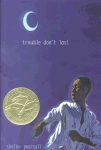
Trouble Don't Last


Pearsall, Shelley. 2002. Trouble Don’t Last.

Trouble has followed Samuel almost his entire life. Born a slave, he is owned by Master Hackler and life on his Kentucky farm is all he’s ever known. Raised not by parents but by fellow slaves, he learned that his mother was sold off the plantation when he was a baby. But Samuel’s luck is about to change. After being punished for breaking a plate, Samuel visits Harrison and is told to expect something big to happen that night. Fearing the worst, he goes to bed with his ‘top eye open’ like Harrison warned. The surprise--Harrison and Samuel are going to start their journey to freedom that night. At first Samuel is afraid. Afraid that they’ll never make it. Afraid of what will happen if they’re caught. When they’re caught. But Harrison reassures him by telling him to put all his fear about the journey into the pack Harrison carries on his back so he could carry it for him. And when us git there safe and sound, say I let it out, and it can float straight up into that free sky and be gone from us forever (23-24). With a few stolen items, a lot of courage, and Harrison’s secret knowledge that he’s obtained about the stops along the Underground railroad, the two begin on an unforgettable journey full of danger but also of hope. Can the pair reach Canada safely? And what kind of new life can they expect there? Are Samuel’s troubles finally over?

http://www.shelleypearsall.com/
Trouble Don't Last page of Pearsall's site

Friday, January 19, 2007

Taking Liberty

Rinaldi, Ann. 2002. TAKING LIBERTY: THE STORY OF ONEY JUDGE, GEORGE WASHINGTON’S RUNAWAY SLAVE.

Taking Liberty is the remarkable story--straight from history--of a slave woman who took liberty the only way she could. Born a slave, Oney Judge was the daughter of a slave that was ‘privileged’ enough to work in the big house as a seamstress and a white man who was an indentured servant. Taught and trained in her early years in the arts that would entitle her to work in the house rather than the field, she often thought herself lucky compared to the other slaves. Belonging to George Washington is a kind of privilege as well. Knowing that they belong to such a respectable, important man--the novel begins out in the years leading up to the revolutionary war--gives everyone an air of importance. As she grows up, she becomes a pet not only of the other house servants but of the mistress as well. Martha Washington takes a particular fondness for her. She secretly learns to read with her mistresses’ approval, and she is granted more and more luxuries. Now wearing finer clothes and given more privileges, her mother becomes crazy with jealous. Stressing to her daughter that no matter how much of a ‘pet’ she becomes she will always be a slave, her mother makes attempt after attempt to escape and rebel. During the war years, Oney is a good, obedient slave. She takes pride in her master and mistress. She is now the confidante of Martha. She goes everywhere with her. But her mother--now relegated to the field for her rebellious and crazy nature--remains resolute. When the British soldiers come to the plantation--Mount Vernon--she is one of the slaves that takes the British at the word that they’ll be freed if they switch allegiance. But with each passing year, Oney becomes more and more fascinated with the idea of liberty and freedom. Will she ever be brave enough, smart enough, resourceful enough to wage her own war against the system? Set during the revolutionary war and the first term of his presidency, TAKING LIBERTY is a wonderfully honest and emotional journey of one woman’s journey to freedom.

Sinda was another saltwater Negro. Born in Africa...we children loved to visit her...this was how I learned about life around me, the past of both the whites and the Negroes. It all became my past. Sometimes I mixed up people in Virginia society with African tribes. When there was fear, after the general left, that the British would come up the Potomac and seize Lady Washington and burn the place, I saw in my head Sambo Anderson’s village burned by the Hausa tribe. I saw Lady Washington with a leather thong around her neck, marched for miles to the sea... (19-22)

When you learn about someone, hear their stories, you tote them around. They flow in your blood and your dreams. They become a part of you. So that when something bad happens to you, there is something to liken it to. I know someone else it happened to. And he still lives and breathes. So, when I was four and my daddy left, I cried, but I understood. He became part of the Gone. (23)

It was all Patrick Henry’s fault that my daddy left. That’s what my mama said... ‘Give me Liberty or give me death’ sounded wonderful in there, with the fire crackling and us sewing. It didn’t sound so wonderful in our dwelling when Daddy told Mama he was taking his liberty and leaving. (24)

Sally’s (an old servant who was Mrs. Washington’s personal maid) advice to her replacement:
’White peoples will sometimes say things to each other in front of you. Give no never mind to you bein’ in the room. Like you a chair. If they do, you act like a chair.’ ‘How do I act like a chair?’ ‘Do a chair talk? Do a chair allow that it hear sumpthin’? Do a chair tell what it hear?’ So I acted like a chair. (102)

I don’t suppose it matters if you’re Negro or white. If your mama doesn’t love you, you’ve got no color. You’ve got nothing. (124)

White children have childhoods. Negro slave children don’t. If there are moments of joy, afternoons of splashing in a brook, playing ‘prisoner’s base’ or a game with clay marbles in the dust, the moment lives forever in the memory because it must. So little joy comes after. (132)

Remembering eases the pain. We can choose what we wish to remember and pretend that the things we wish to forget never happened. (136)

Sunday, December 31, 2006

Trapped In Ice

Sandler, Martin W. 2006. Trapped In Ice: An Amazing True Whaling Adventure.

Readers in search of amazing survivor stories need look no further than TRAPPED IN ICE, a nonfiction book telling the story of how thirty-two whaling vessels were trapped in the Arctic with only one hope to survive. Their story begins in the Spring of 1871, thirty-nine whaling vessels set sail from Hawaii full of arrogant adventurers seeking a plentiful and prosperous whaling adventure. The book provides readers with the background of the whaling industry, whaling vessels, and an in-depth glimpse of average whalers. (Primary sources such as journals, diaries, letters, etc.) When they arrive in the Arctic circle to hunt whales, they soon see something strange. Eskimos are seeking out each vessel to pass on a warning: winter is coming early. It is unsafe to stay. Most vessels (or should I say most captains) decide that they know better. After all return home with less than a full cargo? They’d be laughed out of the ports. And who would ever hire them for other expeditions? But seven vessels heed the warning and turn back. Thirty-two remain to spend weeks in the frozen waters hunting whales. They are plentiful. Always busy killing and processing whales. But soon trouble begins. One vessel after another becomes trapped, lodged in ice. Some vessels can’t withstand the pressure of the ice and begin to break apart and sink. Others seem stronger and more stable. The thirty-two vessels were carrying 1,219 officers, crewmen, captain’s wives, and children. Now there only hope for survival was to try to send a handful of men in several of the smaller whaleboats to see if the seven whaling vessels were still close enough to rescue them. A small team was elected to go and see if rescue was even possible. The others would have to stay and wait.

The amazing thing? They found the seven vessels, obtained permission for all 1,219 to be distributed among the seven remaining ships, and returned to spread the good news. The journey is not easy. The whaleboats are overcrowded and offer little protection from the harsh climate. Yet through it all, they persevere. Losing wealth and prestige but learning a valuable lessons...human life is more important than making a profit.

Martin W. Sandler is the author of many books, including The Story of American Photography, which was a Boston Globe-Horn Book Award Honor Book. He has been nominated twice for the Pulitzer Prize, and is one of America's most respected television producers, with five Emmy Awards to his credit. He is the author of five other Library of Congress Books: Pioneers, Cowboys, Immigrants, Presidents, and Civil War. Mr. Sandler and his wife, Carol, live in Massachusetts.

Tuesday, November 28, 2006

Twilight Child

Warner, Sally. 2006. Twilight Child.

I could honestly say that I've never read a historical fiction book set in Finland and Scotland in the mid-eighteenth century until I picked up a copy of Twilight Child. It has long been said that when a baby is born at twilight, the precise moment that hangs between day and night, that child is given a special gift. She is able to sense other in-between things. Eleni, our heroine, is a twilight child. She is able to see and therefore communicate with both Finnish and Scottish 'mythological' creatures: the tonttu of the sauna, the blue men of the Minch, and the brounies of the Scottish highlands. But her life while full of magic is also full of sorrow.

Prologue: Eleni and her best friend Matias are out walking in the forest discussing the war between Sweden and Russia. Their fathers are being called upon to join the army, though neither are too fond of Sweden. (Sweden apparently was in control of Finland much like England was in control of Scotland). It is only a few pages long, but it serves to present the idea of a peaceful childhood and a best friend she could trust.

The First Few Chapters: Taking place at least five to six years later, Eleni's life is radically different. Her father is an outlaw after leading an unsuccessful rebellion. Her mother is sick and dying. And Eleni is a maid in a lady's household. Mattias has been 'missing' for years on end. She has no idea what happened to him or his family or if they're even still in Finland.

The book takes a while to get into the 'main' part of the story. After the death of Eleni's mother, she is 'kidnapped' by her father and his friends. He is a captain of a small vessel, a vessel barely sea worthy. They are on their way to Spain where he will leave his teenage daughter with his new lady-friend. Eleni is far from pleased. Her father's friends turn out to be brutes, well, all except for one who gets killed tragically in a storm. So when Eleni is out on deck and sees the blue men of the Minch, she is told that everyone on board will die at sea but she'll be allowed to live because she is 'one of them' (aka a Twilight Child). She is told to escape from the ship at the next port which happens to be in Scotland--near the town of Tobermory. She is weak but she manages with the help of some creatures to make it away. And sure enough the rest of the crew are lost at sea a bit later on. She is rescued by a wonderful family and taken into the first real home she's had in a long time. There she meets another child touched by magic.

As Eleni gets used to her new life: meeting new people, regaining strength, learning a new language, making friends, etc. she has to decide where she belongs and who she really is. Is 'home' a place in Finland, a place in Scotland, or a place with her future-husband wherever that may be. As different men pay court to her, she must rely on her heart to lead her to a place she can truly call home.

http://www.kidsreads.com/authors/au-warner-sally.asp

Friday, November 03, 2006

This Is All

Chambers, Aidan. 2006. This Is All: The Pillow Book of Cordelia Kenn.

This is All: The Pillow Book of Cordelia Kenn is a massive undertaking for almost any reader numbering over 800 pages long (808 to be precise). Told in first person narrative, This Is All is the diary--or edited diary--of our young heroine Cordelia. Preparing for the birth of her first child, this nineteen-year-old decides to make a gift of her 'pillow books' to her daughter for her sixteenth birthday. Keeping in mind her future audience, Cordelia relates her very personal and intimate story chronicling her life from the age of 15 to the age of 19. Drawing from her pillow books (as best as I can tell something very similar to a diary format), she preserves her teenage years for posterity weaving new commentary with old entries. The book is divided into six parts. And each one tells a unique part of the story.

But what is the book about? Her friendships, her loves, her heartaches, her confusion, her search for meaning in life, and just relating very intimate and detailed portraits of growing up: some funny, some embarrassing, some sad. Within its pages, the reader feels Cordelia Kenn isn't a figment of some writer's imagination--but that she is a real woman.

There is the Cordelia I show to others. And there is the Cordelia, the real Cordelia, the private, secret Cordelia, who I never show to anyone. Well, here I am, the secret Cordelia laid bare for you, embarrassing flaws and all (485).

The fact is, I've never even as a child, felt that I'm only one self, only one person. I've always felt I'm quite a few more than one. For example, there's my jokey self, there's my morose and fed-up self, and there's my lewd and disgusting self. There's my clever-clogs self and my fading-violet-who-can't-make-up-her-mind-about-anything self. There's my untidy-clothes-everwhere-all-over-my-room self, and my manically tidy self where I want my room to be minimalist and Zen to the nth degree. There's my confident, arrogant self and my polite and reasonable and good-listener self. There's my self-righteous self and my wickedly bad self, my flaky self and my sentimental self. There are selfs I like and selfs I don't like. There's my little-girl self who likes to play silly games and there's my old-woman self when I'm quite sure I'm about eighty and edging towards the geriatric. And especially there's my Little C self and my Big C self, both of whom will make their entrance into my story soon. The self on show and in action at any moment depends on where I am, who I'm with, and the circumstances of the situation, and my mood at the time. Are you the same, or is it only me who's like this? (5).

Aidan Chambers is a talented writer, winner of three prestigious awards: The Carnegie Medal (1999) Hans Christian Andersen Award (2002) and the Michael Printz Award (2003). His most noteworthy book is the award-winning Postcards from No Man's Land. While the length of the book may seem daunting or overwhelming at first, dedicated readers (and those who search out long books) will find This Is All to be worth the time and effort.


http://www.aidanchambers.co.uk/

Saturday, October 21, 2006

The Teacher's Funeral

Peck, Richard. 2004. THE TEACHER'S FUNERAL: A COMEDY IN THREE PARTS. New York: Dial. ISBN 0803727364

With a winning opening line--"If you're teacher has to die, August isn't a bad time of year for it" --THE TEACHER'S FUNERAL is off to great start. Set in 1904, Russell Culver, fifteen, narrates this hilarious novel about his family, his community--and above all else--his experiences at Hominy Ridge, the local one room schoolhouse. Miss Myrt Arbuckle, the former teacher, died weeks before school was supposed to begin. And no one could have been happier than the Culver boys Russell and Lloyd. . . that is until they realized that their older sister Tansy would be taking her place as teacher! With Tansy in charge, Russell soon learned that he couldn't get away with anything. THE TEACHER'S FUNERAL has everything you need for a successful novel: great writing (particularly his descriptions and dialogue), great characterization (including both primary and secondary characters), and great pacing. Peck sure knows how to tell a story. THE TEACHER'S FUNERAL is one of the best books of the year. It is a book that begs to be read aloud over and over again. (There is an audio book available as well.)

http://www.richardpeck.smartwriters.com/

Sunday, October 08, 2006

The Truth About Forever


Dessen, Sarah. 2004. THE TRUTH ABOUT FOREVER. New York: Viking. ISBN 0670036390.

Grieving the death of her father, Macy Queen buries her emotions behind a mask of perfection not even allowing her friends and family to see her real self. However, what Macy learns in THE TRUTH ABOUT FOREVER is that "even the smallest fragments can't help but make a whole" (129). When Macy lets go of her need to be perfect and to always be in control, she learns what it means to be free. She learns to just be. "When I was with him I didn't have to be perfect, or even try for perfect. He already knew my secrets, the things I'd kept hidden from everyone else, so I could just be myself. Which shouldn't have been such a big deal. But it was" (187).

THE TRUTH ABOUT FOREVER is an honest examination of one girl's reaction to the death of her father. Through the character of Macy, Dessen shows that there are many aspects to the grieving process. The novel shows the key role open communication plays in the healing process.

http://www.sarahdessen.com/

Sunday, September 03, 2006

New in Paperback...

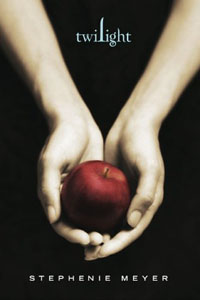
Meyer, Stephenie. 2005. Twilight.

TWILIGHT is a great YA novel that successfully captures the "heart" of a teenage girl experiencing the dramas of daily high school life (and family life) and the dark and dangerous world of vampires. Bella Swan is the daughter of the town's police chief. She is new to the town, and on her first day of classes she notices one boy that stands out above all the rest--a loner with pale skin, purplish eyelids, and perfect face and body. As the weeks and months unfold, her "strange" attraction becomes harder and harder for her to deny. Stranger still is his reaction to her very presence. Sometimes he goes out of his way to avoid even being in the same room with her, and at other times he is a perfect gentleman. He even saves her life! As she begins to get to know her mystery man, Edward, she falls madly in love with him despite his warnings that they shouldn't even be friends...let alone romantically involved...but warnings go unheeded as this passion grows leading to a thrilling conclusion. The first in a series, Twilight is too good to miss.

Be sure to read my review of New Moon, the sequel, which I posted in August.

http://stepheniemeyer.com/

Twilights: For Over-Obsessive Twilight Fans

Twilight Lexicon

Wednesday, August 30, 2006

He Loves Me, He Loves Me Not

I bring you two reviews this time around, both of which are brand new YA books about Shakespeare's love life. The first entitled THE TWO LOVES OF WILL SHAKESPEARE is by Laurie Lawlor and published by Holiday House. The second is LOVING WILL SHAKESPEARE by Carolyn Meyer and published by Harcourt. While I find it rather odd that two books on a relatively obscure topic should both be published in the same year, it must be pointed out that they are quite different from one another.

THE TWO LOVES OF WILL SHAKESPEARE

Told from Shakespeare's perspective, THE TWO LOVES... is an account of how he just happened to file two marriage license applications on consecutive days for two different women both named Anne. One Anne is rich, beautiful, noble, intelligent, the inspiration of his sonnets, and the former fiancee of his best friend. The other Anne is ugly, poor, ignorant, ill-mannered (of bad temperment) but willing to sneak out of the house at any time for arranged trysts in barns, fields, wherever. Will Shakespeare is portrayed by the author in such a way that he comes across to the reader--at least this reader--as a bumbling, fumbling, immature idiot. He is not clever. He is not charming. He is not romantic. He has absolutely no integrity. He steals at least half of his sonnets from his sister Joan who puts up with her brother the best she can knowing it's her lot in life to take care of stupid men. Shakespeare is shown as a conniving, selfish, uncaring man who steals his best friend's girl, who recklessly sleeps with any woman he can...and who feels no remorse when one of his former lovers commits suicide because she's pregnant with his child, and who does not care about hurting his family or his family's reputation because he knowingly violates the law throughout the book...sometimes getting caught, other times escaping just barely. It is hard as a reader to have any empathy at all for this character. This book would perhaps be better titled the Dumb and Reckless Mistakes of Will Shakespeare. Or perhaps The Lusty Will Shakespeare. Now all this being said, it is not a criticism of the WRITING of the novel. It is just one perspective of how these people might have lived and behaved. In my opinion, not a very beautiful or endearing perspective to hold but a possible realistic one.

LOVING WILL SHAKESPEARE

Told from Anne Hathaway's perspective, LOVING WILL SHAKESPEARE, is her memoir of sorts. Using the framework of her just having received a letter from her husband in 1611, the rest of the book is her recollection of her life up until that point...a sharing of sorts with the reader of how the then-famous Shakespeare had become her husband. Starting with her early childhood she recounts what life was like growing up in a rural village. Meyer provides the reader with a detailed, believable setting. For example, there are certain historical facts that most readers are intellectually aware of to some extent about this time period...the various plagues that were capable of appearing at any time and destroying entire communities and the ongoing struggle both politically and socially of Catholics and Protestants. But Meyer brings these two issues to life in her book. Anne loses not only her mother to the plague, but twenty years later she loses her fiance to the disease as well. And while none of the major plot lines revolve around religion, many of the minor ones do. As far as romance is concerned, Meyer presents a story where two people who have grown up in the same community become friends over a period of time and their friendship deepens and ripens when Shakespeare is beginning to come of age. It is an intellectual, mutual attraction of minds AND bodies when the time comes. That the young man later falls more in love with the stage and writing breaks her heart, but she accepts what crumbs she's given at that point. And although LOVING WILL SHAKESPEARE is a more romantic portrayal or perspective of "what might have been"...it is well grounded in that her characters are well-developed. Each character has strengths and weaknesses. Therefore her characters are easier to like and understand.

CONCLUSION

Since both books are purely fictionalized accounts with no evidence or proof either way--simply not that much is known about Shakespeare's life...at least not his thoughts and motivations. It is simply a matter of choice which perspective the reader wants to entertain in their mind as being "true." If you're a romantic at heart looking for a charming, lovable Shakespeare...chances are you'll love LOVING WILL SHAKESPEARE. If you're a skeptic...particularly a skeptic when it comes to Shakespeare having authored at least some of the work accredited to him, then you might enjoy THE TWO LOVES OF WILL SHAKESPEARE.

http://www.laurielawlor.com/books/titles.html

http://www.readcarolyn.com/