Showing posts with label alternate history. Show all posts

Friday, September 20, 2024

73. Westfallen

Westfallen. Ann Brashares and Ben Brashares. 2024. 384 pages. [Source: Library] [5 stars] [MG speculative fiction, MG science fiction, MG dystopia, TIME TRAVEL, alternate history]

First sentence: Let me ask you this: What's the worst thing you've ever done? Really think about it. Well, multiply your thing by a billion and you don't even get close. Sorry to brag. It's just...your thing? It's the Cheeto-dust thumbprint you left on the basement sofa. It's an ant's toe you stepped on. And then you said, "Sorry!" and the ant went, "No worries, mate!" Because the ant's British, I don't know. 

My thoughts (preview): Ever been HOOKED on a premise????? It doesn't happen all that often, though it does happen. This is the case with Westfallen. The premise had me at HELLO. Reading the synopsis raised my expectations immeasurably, and it did NOT, I repeat did NOT disappoint. 

Premise/plot: Six kids working together (with the best intentions)--separated by time--manage to destroy life as we know it. Shocked I was able to sum up an entire book in one sentence? Me too. 

Henry, Lukas, and Frances were at one time best, best, best friends though in recent years they've grown apart--far apart. Alice, Lawrence, and Artie are friends as well. These six friends become connected by a radio.

Alice "saves" her brother's radio from the trash. It's broken and her brother, Robbie, is gone--presumably for the war. Her two friends, Lawrence and Artie, are near by and interested in seeing if they can fix the radio.

Henry is burying his gerbil, Zeus, when he discovers a long-buried radio. His (former) friends are there for the funeral. All are interested in this buried "treasure" of sorts. 

All six kids are SHOCKED when the radio works. The two sets of friends refer to themselves as "Mars" and "Jupiter." It takes time for them to realize that the new friends they've made aren't living in the same year. Henry, Lukas and Frances are in 2023....and Alice, Lawrence, and Artie are in 1944. Both are in the same house, same street, same city. 

Will innocent casual conversation lead to the unwinding of the universe?????

My thoughts: I LOVED, LOVED, LOVED THIS ONE. Mostly. I will say that the CLIFF HANGER ending was while not a huge surprise a bit disappointing. If the cliff hanger leads to a book two, then YES PLEASE. If it does NOT lead to a book two then readers everywhere have been robbed. 

I loved the premise. I loved the characters. I loved the plot. This is one I could easily see myself reading again and again and again. 


© 2024 Becky Laney of Becky's Book Reviews

Wednesday, July 12, 2023

131. Quantum Radio


Quantum Radio. A.G. Riddle. 2023. 562 pages. [Source: Library] [adult science fiction; multi-verse]

First sentence: In an auditorium at CERN, Tyson Klein stood behind a wooden podium, watching his colleagues arrive. It was the end of the workday, and most seemed tired. 

Premise/plot: Tyson (Ty) Klein is one of four protagonists in A.G. Riddle's newest science fiction thriller. His newest discovery proves dangerous. The day he reveals his latest research, an attempt is made on his life. He flees to the United States with the help of his father. But it comes at a cost. The powers that be in the U.S. don't want him so closely involved in the project--even if it does rely heavily on his research. Both the "good guys" and the "bad guys" want to be the first to build and use a quantum radio. No one is quite sure exactly, exactly what it will do...but there is this race to be first. 

When it is turned on or dialed, Ty and three companions are transported to an alternate universe--one of many in the multi-verse. They have a mission to solve though none of the four know what it is they are supposed to be doing. But they get an idea that that world--at least--will end within the week if they don't stop it from ending.

My thoughts: This one had all the elements that you would think I would naturally love, love, love. It reminded me in many ways of one of my favorite, favorite all-time favorite television shows that was cancelled way too soon. Perhaps because I kept thinking of that show--its twists and turns--I had a harder time connecting with the book in hand. That plus my natural skepticism/realism when it comes to "good guys" and "bad guys" in science fiction. There are obvious-obvious bad-guys, no doubt, but I'm not personally sure that the from-the-future-in-an-alternate-universe "good" guys are being 100% honest and straightforward. 

This one stayed a strong "almost" for me for most of the novel. I think if the plot was a little tighter, perhaps, I would have loved it more? Or maybe I just need it to be a television show.


© 2023 Becky Laney of Becky's Book Reviews

Saturday, June 03, 2023

109. Reign


Reign. (American Royals #4) Katharine McGee. 2023. [August] 432 pages. [Source: Review copy] [Link to cover image] [Young Adult]

First sentence: The sound of a door swinging open, and a sharp intake of breath. 

Premise/plot: Reign is the fourth and perhaps final book in the American Royals series by Katharine McGee. The series premise is relatively simple: what if George Washington had been crowned king and his (non-existent) descendants reigned through the centuries. The series is contemporary alternate history. The series introduces us to three Washington heirs--Beatrice (the oldest), Samantha and Jefferson (twins). These young-ish royals have a balancing act on their hands--how to balance drama-filled love lives AND maintain a good reputation in the public spotlight. Beatrice, now queen, is relatively tame--boring, even. She had her love triangle in the first two books, I believe. She chose Teddy, and that's it, right???? Well, what if she has amnesia from that car accident in book three???? Samantha is the 'spare' who loves drama. What happens if she were to LOSE her title and government funding? What if she were to be thrown out of the royal family and walk away from her duties and become a regular citizen? Read and see, I suppose. Jefferson, poor, poor, poor Jefferson. Out of all the siblings, he has NO VOICE because the author chose not to give him one. He exists solely to be the middle of a sandwich. (I jest, mostly). Daphne and Nina are the other two in this oh-so-stupid love triangle. Will Daphne marry her prince? Will Nina move on from Jefferson? (She hasn't in three books...)

My thoughts: There's one big question you may have--if you're like me. DOES THIS BOOK HAVE ETHAN? The answer is YES. Ethan returns. And Daphne's chapters are entirely better for it. Nina also gets a new love interest, another ROYAL interest. 

I have a hate-love-hate-love-hate relationship with these books. I don't know ever why I keep reading them, and why I can't stop reading them. The history is SO incredibly pointlessly wrong. The world-building is shallow and unexplained at best. The modern/contemporary world is barely different at all. You know it would HAVE to be different if we were to take the history stuff seriously. 

I loved the way most of the stories wrapped up. So I am happy that I've read this one.

© 2023 Becky Laney of Becky's Book Reviews

Tuesday, January 25, 2022

15. My Fine Fellow


My Fine Fellow. Jennieke Cohen. 2022. [January] 352 pages. [Source: Review copy]

First sentence: In the year 1833 of the Common Era, a fair ten years since King George IV died and his much beloved daughter, Princess Charlotte, succeeded him as Queen Charlotte of England, Ireland, Hanover, and so on and so forth, one Miss Penelope Pickering stood in the shadowed portico of St. Paul's London, wondering how much longer she'd have to wait for her dear friend Helena Higgins.

My Fine Fellow is a YA adaptation--a spin--on the classic musical My Fair Lady which is an adaptation of Pygmalion. Helena Higgins and Penelope Pickering team up to teach a young street vendor, Elijah Little, how to become a gentlemen chef. The two young heroines are still in training themselves, mind you, but they feel that with their "expertise" and a little luck, they can fool everyone with their finished project. If all goes well, he'll be cooking for Queen Charlotte herself.

The novel is told primarily through Penelope Pickering's perspective--with perhaps a few moments here and there from other characters. 

It is set in an alternate history one where Princess Charlotte survives childbirth and goes on to reign as Queen. Queen Charlotte is ALL about women's rights, women's equality, opening up all education and careers to women.

The novel definitely is heavier than you might expect. You might suppose that this would be a light, entertaining, silly read. And it is--in places. The heaviness comes in with race and racism. In some ways there's no recovering from that. 

The book provides an opportunity for rants. If you've ever had a strong opinion on HENRY HIGGINS (from the original), then you might enjoy the ranting against Helena Higgins. But really, the characterization is minimal. 

I feel this book is too 'modern' for its own good. Just my opinion. I think the dishes they were having the characters prepare scream out Food Network from the past ten years AND not like any recipe you'd find in any book from the nineteenth or even twentieth centuries. Granted, this is an alternate history, but, still.


© 2022 Becky Laney of Becky's Book Reviews

Wednesday, February 19, 2020

30. Do You Dream of Terra-Two?

Do You Dream of Terra-Two? Temi Oh. 2019. 520 pages. [Source: Library][Adult science fiction; science fiction; space opera; alternate histories]

First sentence: It is just like Earth; Terra Two.

Premise/plot: Do You Dream Of Terra Two? is a science fiction novel set in an alternate past or history. What if a life-sustaining planet had been discovered in the twentieth century? What if colonies and space stations had happened in the space race? What if at the dawn of the twenty-first century saw nations preparing to colonize this Terra Two planet? What if colonizing space was seen as part of the solution to global warming and climate change? The six young adults preparing for this first mission trained from 2004-2012. At the start there were several hundred students (10 to 13 year olds), through the years cuts were made until the final six and a back-up team of six were ready. These six will work with four veteran astronauts (one is picked up from Mars). These pioneers will prepare the way for future settlers.

It will take twenty three years give or take to arrive on Terra Two. The mission is dangerous and a once in a lifetime opportunity and experience. Yes, they’ve been trained, but training can’t prepare you for so many unknowns and uncertainties. Can they handle it?

Harry, Jesse, Astrid, Juno, Eliot, and Poppy these are the six young adults on board....

My thoughts: This one has many narrators. For over half the novel I found the characterization to be on the weaker side. By the end the characters were starting to come about and feel more developed. But make no mistake, this one is a premise-driven, action-driven space opera. The characters alone can’t carry this story forward.

I found the premise intriguing. I did. I like science fiction. I have a soft spot for books set in space. I liked the idea of space pioneers trekking across space dreaming of the future and battling the obstacles that stand in their way. I liked how some of these obstacles are internal. The six are troubled souls. I don’t know how these problems could have gone undetected on earth. So maybe these mental and psychological weaknesses were seen as strengths? I don’t know.

There were occasions of info dumping. In particular there’s a scene where socialism/communism is pushed quite strongly and obviously as the solution to everything. This new planet will be set up in such a way that it could never ever ever fail: socialism/communism. The characters acknowledge that humanity has messed up the planet earth. But fail to realize that transplanting humans to another planet won’t give any human a new nature. Human nature can’t be flawed on Terra Two! There will be a written constitution in place before settlers come! We all know that written constitutions, laws, and rules are always kept, obeyed, upheld and never changed, rewritten, updated, overturned, rebelled against, revolted against.

The ideals of a few characters and lack of a common sense understanding of reality caused a few eye rolls.

Also, this one has adult content of a semi-graphic nature plus a few obscenities. So it is not a clean read. (I don’t think all books should be, have to be, need to be “clean.” I mention it just because I like to know so I can make an informed decision when I pick a book up.)

I liked it. I think for the right reader it will work well. 


© 2020 Becky Laney of Becky's Book Reviews

Monday, February 18, 2019

Ruled Britannia

Ruled Brittania. Harry Turtledove. 2002. 576 pages. [Source: Library]

First sentence: Two Spanish soldiers swaggered up Tower Street toward William Shakespeare. Their boots squelched in the mud. One wore a rusty corselet with his high-crowned morion, the other a similar helmet with a jacket of quilted cotton. Rapiers swung at their hips.

Premise/plot: What if the English navy had not defeated the Spanish Armada in 1588? What if instead of Queen Elizabeth reigning in the year 1597 she was instead locked away in the Tower? Turtledove gives us alternate history in his novel Ruled Britannia. It is told primarily from two perspectives: William Shakespeare and Lope de Vega.

Shakespeare has a choice to make. Should he commit treason against Spain and write a play that could potentially help overthrow Spain's rule and restore Elizabeth to the throne? Or should he play it safe and write a play memorializing King Philip II of Spain? Perhaps he'll be crafty and do both....but which one will get performed upon the King's death?!

Lope de Vega is in awe of William Shakespeare. He can nearly always be found watching his plays, watching the actors on and off stage, hanging around and conversing. He's a soldier on a mission: be on the lookout for any treason, any subversive meanings in the plays he watches. Some higher ups are suspicious of Shakespeare--but not de Vega, not really. Shakespeare doesn't care who rules so long as he can write, right?!

My thoughts: I imagine that Ruled Brittania was an absolute joy to write. Turtledove claims--and I have no reason to doubt--that he repurposed many, many lines from actual Shakespeare plays into "new" Shakespeare plays in this alternate history. In addition to Shakespeare, he used other contemporary playwrights from the time to craft his new plays and dramas. He obviously felt it was important to bring Shakespeare to life--and so he relied on Shakespeare's own words to flesh out his character and his dialogue. Like William Shakespeare, Lope de Vega is a real historical figure--a Spanish playwright from this time period who--at least according to the author's note--sailed on the Spanish Armada and returned to Spain to have a successful career.

Did I enjoy reading it as much as Turtledove enjoyed writing it? Probably not. In fact, I found it MUCH too long--tedious even. I was interested in the bare bones of this one. I wanted to know WHAT happened overall--would Shakespeare's play about Boudica (alternate spellings Boudicca, Boadicea, Boudicea) rebelling against the Roman Empire happen? Would it be successful? Would Elizabeth reign once more?

There were dozens of characters that peopled this novel that I just did not care about at all--not even slightly. I imagine that some--perhaps many--were actual historical figures. I just didn't care. Perhaps if the author's note was placed FIRST, I might have tried to care harder. Perhaps if there was a list of characters--noting which were historical and which were fictional. Perhaps if there were footnotes indicating which lines came from which actual Shakespeare plays or noting the other sources used?

One thing I know without a doubt...the chapters were unreasonably LONG...insufferably long. "Short" chapters were around thirty-five pages long. WHY TORTURE READERS?! You take a perfectly good premise--an entertaining one--and practically do everything possible to drain all the enjoyment of actually reading it?!

© 2019 Becky Laney of Becky's Book Reviews

Thursday, January 31, 2019

Annelies

Annelies. David R. Gillham. 2019. 480 pages. [Source: Library]

First sentence: She lies sprawled among the dead who carpet the frozen mud flats, time slipping past, her thoughts dissolving. The last of her is leaking away as the angel of death hovers above, so close now. So close that she can feel him peeling away her essence.

Premise/plot:  What if Anne Frank had survived? That is the premise of David Gillham's new book Annelies. The first third of the novel--roughly--novelizes the time Anne Frank spent with her family in hiding. The novel also briefly tells of her cruel days in the concentration camps. But, for the most part, the novel gives us alternate history. What if Anne Frank survived until the concentration camp was liberated. What if she returned to Amsterdam and was reunited with her father? What would her story--her journey, if you will--look like? How would she have settled back down into living life?

My thoughts: I love the premise of this one. I'm relatively new to this what-if genre of literature. The question is worth asking, in my opinion. Gillham's Anne felt a little older, but not too much so. She is definitely not the same Anne readers know and perhaps love. She is haunted/traumatized by her time in the concentration camp and near-death experience. Literally. It is like her sister never left her side. This Anne is hungry for life and new experiences yet angry too. 

I think my favorite part of the novel was the ending which was set in 1961. (We flash forward from 1946 to 1961 to get an ending worthy of a bow.) If you want to know, look below the spoiler alert.

But did I like this one? really like it? love it? I can't say that I did more than like it. I found it interesting. Yet I didn't find it as compelling as The Diary of A Young Girl. Also as much as I love the idea of loving the ending--it seems like the author skipped over how Anne grew up and got to that peaceful, content place in life. Because when we left her in 1946 she was still in full-angst-mode. (Not that there's anything wrong with that. She's endured/suffered/witnessed too much. She's traumatized no other word for it. And the world still wasn't all that welcoming or supportive to the Holocaust victims that survived.)

Is the Diary of a Young Girl powerful and compelling and heartbreaking BECAUSE Anne died at a young age? because she died at the hands of the Nazis? Think carefully before you answer. All voices--all stories--have worth, have value. All should be known. Those that survive. Those that died. All should be remembered.

S
P
O
I
L
E
R

A
r
e

y
o
u

s
u
r
e
?

Diary of a Young Girl was still published. Anne Frank is answering fan mail. We get to read the correspondence. It's the best possible ending that one could hope for. The real Anne's dream come true--being a writer, being famous.


© 2019 Becky Laney of Becky's Book Reviews

Thursday, January 17, 2019

The Plot Against America

The Plot Against America. Philip Roth. 2004. 391 pages. [Source: Library]

First sentence: Fear presides over these memories, a perpetual fear. Of course no childhood is without its terrors, yet I wonder if I would have been a less frightened boy if Lindbergh hadn't been president or if I hadn't been the offspring of Jews.  

Premise/plot: What if Charles Lindbergh had been elected the President of the United States of America in 1940 instead of FDR? What if America had never joined the Allied Forces and entered the war? What if we were in fact allied--through peace treaties-- with Germany and Japan? What compromises would such peace treaties call for?

The Plot Against America is a FICTIONAL memoir of Philip Roth that imagines such a time. The book chronicles the non-war years of 1940 through 1942. Philip witnesses the adults in his life respond differently to the politics of the day. His father is angry, worried, afraid, outspoken. But his aunt and her soon-to-be-husband get all comfy-cozy with the new President and his wife even dining at the White House. His cousin runs away to Canada and joins the army though so he can fight Hitler. And that's just a few...

The book examines the potential destructiveness of ideas and philosophies...

My thoughts: I found this a mostly compelling read. I would have finished it sooner if the chapters had been shorter. In fact that's probably my biggest complaint against the book. The chapters are so long that it's impossible, in my opinion, to read more than one a day. Perhaps this is intentional. There's no rushing through this one so that the book has more time to resonate with you. And resonate it does.

The book itself is premise-driven. But oh what a premise it has! It had me soon thinking of other what ifs I'd love to have explored in fiction.

I do try to read mainly clean books--books free from profanity and blasphemy. This one has both. But the premise was so strong and my curiosity to know where Roth was going with this one so high that I made an exception. Perhaps with the politics involved it would be impossible to tell this one without such language.

© 2019 Becky Laney of Becky's Book Reviews

Friday, November 16, 2018

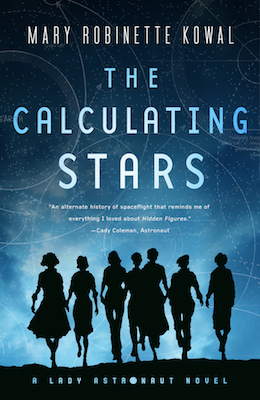
The Calculating Stars

The Calculating Stars (Lady Astronaut #1) Mary Robinette Kowal. 2018. Tor. 432 pages. [Source: Library]
First sentence: Do you remember where you were when the Meteor hit? I've never understood why people phrase it as a question, because of course you remember.

Premise/plot: The Calculating Stars is set in an alternate reality 1950s. There are two what-ifs. One is small. One is big. What if Dewey had won the presidential election instead of Truman? What if a meteor--an extinction event--had struck earth in 1952? The heroine of the book is a former WASP, a current computer for NACA, a wife of an engineer, Nathaniel York. Her name is Elma York and within Kowal's fictional universe she may be better known to the world as LADY ASTRONAUT.

In the weeks following he devastating event, Elma York realizes that the worst is yet to come. It's just a matter of time--mere decades--before the earth becomes uninhabitable. The earth will experience great climate change. The earth will begin to heat up and will keep heating up. If humanity is to survive, it needs to find a way to leave the planet. But can she--and her fellow scientists--convince the powers of the dangers? Or will politics get in the way? (For example, there are a few convinced that the meteor wasn't a meteor but something that originated from the Soviet Union. Yet another example, some are convinced that men should go into space and colonize--but only men. Don't they realize that women would be absolutely essential to any colony? How can you "save" the human race without women?)

The book is about the struggle to get men--and women--into space in an effort to save humanity. It won't be easy. There's the science and engineering aspect of it. There's also the political and social aspect. Issues of sexism and racism play a large role in the novel. It is interesting to consider how some things stay the same--in this alternate reality--and how other things change. (For example, the Soviet Union dissolves; the Korean war ceases; there is no space race between nations. The world comes together as one to solve the problem. Astronauts can come from all nations.)

My thoughts: I didn't love, love, love this one. In many ways it was a compelling read. I loved Hidden Figures. I do have an interest in the history of the space program. I enjoy science fiction. I found it interesting that our hero and heroine are Jewish. But two things kept me from loving it.

I prefer my fiction on the cleaner side. This one had profanity--blasphemy--and smut. Way too much detail is given about Elma and Nathaniel's intimate life. But even this isn't my number one complaint of the book....

My number one complaint is a technical one. Kowal consistently uses WASPs instead of WASP. WASP stands for Women Airforce Service Pilots. PILOTS plural. WASP is already plural--it never needs an S added to it. Never. Every time I saw WASPs in the text, it was like finger nails on a chalkboard. I am not sure how much Kowal actually researched the WASP. I think she spent her time researching other things. (She does have a bibliography, but she lists no books about the WASP.) There was also one place where she mentions a WASP delivering planes overseas during the war. This is not something WASP did. (I think she did this because it was a convenient way to have had two characters met in the past.)

I spent almost four years of my life editing and proofreading oral histories of the WASP. I read up on books about the WASP as job training (in addition to watching documentaries) and often read biographies and autobiographies as well. Writers would come to the special collections library and do research.

© 2018 Becky Laney of Becky's Book Reviews

Wednesday, October 08, 2014

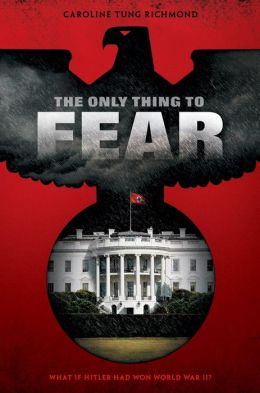
The Only Thing To Fear (2014)

The Only Thing To Fear. Caroline Tung Richmond. 2014. Scholastic. 288 pages. [Source: Review copy]

What if the Nazis had won the war? The Only Thing To Fear by Caroline Tung Richmond is set in an alternate universe where this is so. It is set in the future, eighty years after the Nazis win the war. Zara St. James is our sixteen year old heroine. She is a bit unusual. And not just because the Nazis are so strict as to what is normal and abnormal. There are a couple of premises in the book: 1) Germany and Japan were successful in creating super-soldiers, genetically enhanced superior soldiers giving them the military advantage. 2) Russia, or the Soviets, never joined the war against the Nazis. I share these details because it is important to be grounded in this imagined reality or future. Both facts are important not only in understanding the past--as created by the author--but the future as well.

Though the eastern states have been under Nazi rule for almost eight decades, there are plenty of Americans still angry enough to fight and rebel. Zara's uncle Redmond leads the local Alliance. Zara whines for almost the entire book on how it is so completely unfair that she's not allowed to join yet. Zara is the only family Uncle Red has left. He's lost almost everyone he's ever cared about. Plenty of people have lost loved ones to the Nazis. Zara refuses to accept that that is just the way things are. She demands justice. Not clinging to future justice when the Alliance gains strength and numbers, but a RIGHT NOW justice even though all the odds are against them.

So Zara's rebellion is strengthened by her odd gifts. To say more would be to spoil the book. To say less would give you the wrong impression of the book. This book is DEFINITELY speculative fiction and not just because it's set in an alternate future. Zara has a unique advantage over most people--an unnatural advantage. I almost wish that it hadn't gone that direction. I wasn't looking for that kind of read.

Romance. What would a YA read be without a little romance?!

The Only Thing To Fear was a quick read. I liked it just fine. I didn't love it.


© 2014 Becky Laney of Becky's Book Reviews

Wednesday, September 24, 2014

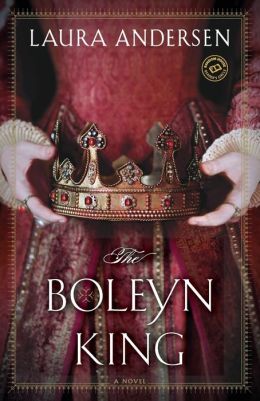
The Boleyn King

The Boleyn King. Laura Andersen. 2013. Ballantine. 358 pages. [Source: Library]

Alternate history. What if Anne Boleyn had given Henry VIII the son he so desperately wanted and needed? What if she survived her husband instead of being beheaded? What if Henry VIII had only had TWO wives? What if Elizabeth and her younger brother grew up with both parents, relatively happy? King William is that son. His father has died, and, he though under the age of 18, has been England's king. He faces challenges, every king does, and those challenges are what The Boleyn King is all about. The book has four narrators: William and Elizabeth (royal siblings) and Minuette and Dominic (close and trusted friends of both William and Elizabeth). Minuette seems to be the type of heroine that no male character can resist. Elizabeth somewhat secretly is in love with a married man, no surprises as to who that is. William is being pressured to marry well. Will his choice be a) Mary, Queen of Scots b) Jane Grey c) a French princess d) someone of his own choice that will upset his advisers and the court just as much as his father's decision to marry Anne Boleyn. This is the start of a trilogy...

The good news: It's a quick read. I read it in one day. It is also a premise-driven book. For readers who find the premise intriguing, this one is worth the read. Especially if one can get it from the library. Just in case. I liked seeing which characters avoided death and disaster. I don't know if these characters will continue to have happily ever afters, of, if they'll find themselves in troubles of a different sort. But. It was an interesting enough read.

The bad news: It's light on history. This one focuses more on fictional characters than on real people. And the characters based on real people aren't always that accurate. This makes some sense for some characters whose lives were very different in this alternate universe. But this may leave some readers disappointed that there isn't more substance and depth. If you're looking for a character-driven book, this one might disappoint. Also. It definitely is trying to appeal more to romance readers than historical readers. If that makes sense.

© 2014 Becky Laney of Becky's Book Reviews

Friday, September 28, 2012

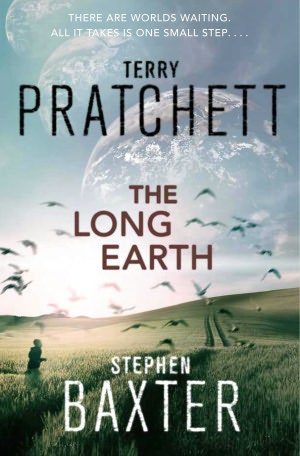
The Long Earth

The Long Earth. Terry Pratchett and Stephen Baxter. 2012. HarperCollins. 352 pages.

In a forest glade: Private Percy woke up to birdsong. It was a long time since he had heard birdsong, the guns saw to that. For a while he was content to lie there in the blissful quiet.

There's a very good chance you'll like this one more than I did. Why? Well, let's just say that by the end of this one, we were not on good terms. I ended up hating this one. I didn't start out hating it, mind you. The first third--perhaps the first half--of the novel I thought the novel had potential to be for me. The good news is that the issues I had with the book are probably not going to be your issues. This book just happens to fall into the not-for-me category. I prefer those categories--a book being either for me or not for me--as opposed to saying that a book is either good or bad. The very qualities that make one person love a book, may make another hate a book. (My big issue with the book has more to do with ideology, philosophy, etc. I didn't find this one faith friendly in the slightest.)

So what can I say about this one? Well, the last part reminded me of the later Foundation novels by Isaac Asimov. In particular, the last novel of the Foundation series, the book that I've spent years trying to forget. I can't talk about details, obviously, without spoiling The Long Earth.

Characters and Pacing. This novel has SO MANY characters, so many points of views, so many story lines. And the book isn't always clear on chronology, meaning, as a reader I was always a bit unsure about how much time has passed. Has it been a year from step day, five years from step day, ten years from step day, twenty years from step day, etc. By just barely getting to know characters and just following their story for a chapter or two or three, one doesn't get a clear glimpse of how much time has passed, and how things are going--or not going--on Datum Earth.  The narrative gives us extremely brief, extremely limited "flashes" of what life is like on probably a dozen or so different Earths--maybe even a hundred--but no framework, no context is given to really grasp everything going on. Perhaps we're never meant to understand, perhaps it's beyond comprehension, perhaps that is the point--that endless earths with endless possibilities with endless variables is too much of a riddle to be solved by humanity. Pacing does become a slight issue at least because the moment the story begins to gain momentum and focus on something interesting and compelling, we're sent down another path. I felt, in some cases, there were characters/stories introduced that we never went back to.

The book that would have proved most interesting to me would have chosen a small handful of characters that we would follow as they pioneered across the Long Earth trying to find the right Earth for them as settlers. The book would have focused on new beginnings, establishing settlements, creating civilizations, facing unknown dangers, dealt with homesickness, etc. The book could have even focused on several settlements on several different Earths showing the differences in how societies, civilizations, governments, communities are set up, allowing for differences in politics, ideology, philosophy, etc. Perhaps showing the struggle between the new "earth" they were claiming as home, and the old earth with all its problems, etc. But The Long Earth does none of those things.

It is a science fiction adventure story. And it has many, many characters. And a few of these seem to be main character material. But I didn't particularly like the ones I was supposed to like most of all. I found myself more interested in the characters that were with us for five or six or maybe even twenty pages.

The book does start with an interesting premise, but, I ended up disappointed in the direction this one went. A good reminder, to me, that premise isn't everything.

Read The Long Earth
  • If the premise of having endless alternate Earths that you can 'step' between intrigues you
  • If the premise of each Earth having evolved differently based on small and large variables appeals to you; each Earth represents one "what if"
  • If the premise of humans exploring and settling these Earths fascinates you (just don't expect this to be a book about settling and establishing)
  • If you like science fiction adventure stories with a blend of human characters and artificial intelligence
© 2012 Becky Laney of Becky's Book Reviews

Monday, May 28, 2012

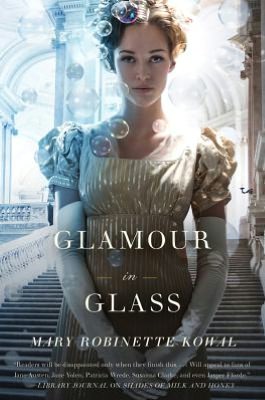
Glamour in Glass

Glamour in Glass. Mary Robinette Kowal. 2012. Tor. 336 pages.

Finding oneself a guest of honor only increases the presentiment of anxiety, should one be disposed to such feelings. Jane Vincent could not help but feel some measure of alarm upon hearing her name called by the Prince Regent, for though she fully expected to be escorted into dinner by someone other than her husband, she had not expected to accompany His Royal Highness and to be seated at his right hand.

 Sequel to Shades of Milk and Honey.

How much should you know going into a book? On the one hand, I had a difficult time getting into Glamour in Glass and just a hint of what it was REALLY about would have helped me so much. On the other hand, would knowing have taken out all the suspense and tension?

I enjoyed quite a few things about Glamour in Glass. I liked that it was a clean read, for the most part. It is so refreshing to read a honeymoon book that is not graphic in detail. I know that wouldn't be a plus for every reader, but, for me, it worked out well. And while this one is a 'honeymoon' book--meaning that everyone is waiting to see *when* the honeymoon would be over, when the couple would start fighting and getting annoyed with one another--it isn't just that though. If the real drama had not started, I might have given up on this one. If the book had just been about the tension between these two as business partners--as glamour partners--or if the book had just been about her getting annoyed with her husband for not sharing enough about his feelings, his memories, his doubts, his dreams, etc., then I would have probably given up on it.

S
P
O
I
L
E
R

But this book is set in Europe during a dangerous but exciting time (exciting to read about perhaps, not exactly exciting to live through). Napoleon's threatening return. And since this honeymoon just happens to be in his path--well, things get a bit exciting.

What I didn't exactly love in this one was all the talk about glamour, about *how* glamour worked, about the new experiments in glamour, about all the rules of glamour and what that meant for married women in particular. In some ways the talk was just too much, but in other ways even with all this talk, not enough was clearly said. For example, we're told that pregnant women could never, ever, ever, ever, ever, ever use glamour. Ever. But we're not told why really. We're not told how using glamour effects the unborn baby, and what risks would be involved if a woman dared to break the rules.

Read Glamour in Glass
  • If you enjoy Regency romances, particularly clean romance
  • If you enjoy historical fiction
  • If you enjoy fantasy (though this is more alternate history...what if magic/glamour were real)
  • If you enjoy Jane Austen or other classic authors

© 2012 Becky Laney of Becky's Book Reviews

Friday, March 09, 2012

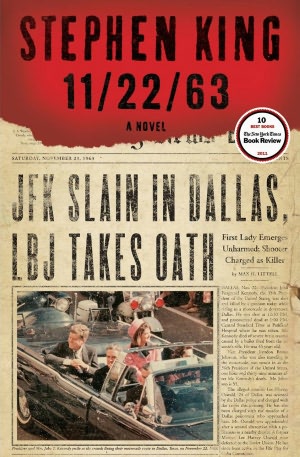
11/22/63

11/22/63. Stephen King. 2011. Scribner. 864 pages.

I have never been what you'd call a crying man. 

This is the second Stephen King novel I've read, and honestly I'm not sure how I'd compare the two I've read: Under the Dome and 11/22/63.

In Under the Dome, the violence is graphic, and the bad language proved problematic...for me. But, oh, the tension. It was such a compelling read. The pacing was amazing. It really was. It was a page-turner. I didn't like the characters particularly. I hated some of them--granted, some of them were evil incarnate. But I HAD TO KNOW what happened next. The premise, well, it was horrifying and intriguing all at the same time.

11/22/63 was in many ways a tamer novel. Less violence, less bad language (though it's still there to a certain degree. I am NOT claiming this is a clean read.) But. Well, how can I say this? For me at least it lacked tension. The premise of time travel should have been wowing me from start to finish. But it didn't. The only one that had to deal with consequences--in my opinion--was the narrator Jake Epping who time-traveled under the name George Amberson. So long as he remained alive and able to return to 2011 through the time-bubble, all other mistakes, all other consequences just didn't matter at all. Not really. Sure, they mattered to him. He, personally, felt those mistakes and had his struggles and doubts. But no one else could ever know the difference between worlds and alternate realities.

I'm not sure how I really felt about the narrator, Jake/George. On the one hand, his "good angel" intentions of playing God and determining the future and making the world a better place by preventing a handful of tragedies were understandable. I mean if you could prevent a death by time-travel, shouldn't you? Jake knew one person whose life was forever-changed one Halloween night when his drunken father came home and murdered his mother, his two brothers, and his sister. He was the only one to survive--and only because he was in the bathroom when the killing spree began. But he saw too much--much too much--and his father tried and failed to kill him too. So when Jake discovers this time-travel-bubble that automatically sends you to September 1958--almost a full month before this tragedy--he feels like he has to "fix" things. He has to test time-travel to see if he can change things...for the better.

But Jake/George's main goal, his main mission, is not to save his friend from a horrible childhood, but to save "the world" or "the nation" from experiencing the tragedy of Kennedy's assassination. A world where Kennedy continued his term (and was reelected) as president would have to be a better world than the one we now live in, right? Especially if you're tempted to think he was the best human, best leader, best politician, best president ever, ever, ever. To think that he was the best, smartest, wisest, kindest, strongest.

So that is his mission: prevent JFK from being assassinated. And, to a certain degree, King stays on task. But his idea of staying "on task" isn't the most thrilling way to spend your time. Readers are treated to five years (at least) of Jake/George living in the past. And part of the focus is on his mission, but much of it is not. Part of it is focused on his career as a teacher/mentor. Part of it is focused on his 'career' as a writer as he prepares a manuscript or two. Part of it--a large part of it--is focused on his finding his one, true love. Yes, a good part of 11/22/63 is a romance novel with focus on feelings, dancing, and secret weekend hideaways. 

While many elements of the story are nice enough in their own way, they don't necessarily add up to the most compelling, most page-turning read ever. I suppose there are several questions that could keep you reading--Will he successfully stop the assassination? (Hint: Don't look at the back cover.) Will he get to stay with his one, true love? Will he stay with her in the past? Or will she go with him to the future? Will this divorced teacher find his happily ever after? But none of those were quite enough for me.

The one area this novel worked for me--and I'm not even sure if this was the intent--was seeing this novel as a test for one man, to see how selfish or selfless one man could be. I can't say more without spoiling it. But essentially he's asked to choose between his own happiness and the greater good of the world at large.

I suppose this one also treats morality and ethics. Do two wrongs make a right? Does shooting a murderer before he's murdered anyone make your murder moral? I also saw this one as dealing with humans playing God. Here we have one man who is determined to remake the world into a "better" place. But what he didn't take into account is how tragedy shapes us. How tragedies and sorrows and struggles shape our character and develop us. I thought of so many scenes from Orson Scott Card's Worthing Saga.

Part of me really, really wishes that more time had been spent on alternate presents. The ending felt incredibly rushed and not completely believable.

Read 11/22/63
  • If you're interested in time travel, in science fiction
  • If you're interested in history, particularly history/culture of the late 1950s to early 1960s
  • If you're interested in politics and issues (Vietnam war, communism, civil rights, etc.) of the times
  • If you're interested in teachers and librarians (our hero and heroine)

© 2012 Becky Laney of Becky's Book Reviews

Monday, October 25, 2010

Behometh


Behemoth. Scott Westerfeld. 2010. October 2010. Simon & Schuster. 485 pages.

Alek raised his sword. "On guard, sir!"
Deryn hefted her own weapon, studying Alek's pose.
His feet were splayed at right angles, his left arm sticking out behind like the handle of a teacup. His fencing armor made him look like a walking quilt. Even with his sword pointed straight at her, he looked barking silly.

Behemoth is the sequel to Leviathan. It's a science fiction action-packed historical novel that presents an alternate what-if to the Great War. Its alternative world is fascinating. A world divided into two camps: Clankers (those who love machines and technology) and Darwinists (those who love splicing together 'incredible' new beings).

The books have two narrators: Alek, a young boy who is trying to hide his real identity, and Deryn, a young woman who is trying to keep her gender hidden so she can be in the British Air Service. She's living her new life as Dylan Sharp. In the first novel, these two begin an unpredictable friendship. After all, he's a Clanker, she's a Darwinist. Both have secrets--if his secret is revealed, he'd become a prisoner--if her secret is revealed, then her military career would be over. (She's guessed his secret. But he doesn't have a clue about hers.) Can they trust each other? Can they help each other?

The setting for Behemoth is interesting. It's set in Istanbul, the Ottoman Empire. It's a compelling novel. I enjoyed it more than the first novel.

© Becky Laney of Becky's Book Reviews

Tuesday, March 17, 2009

The Man in the High Castle

Dick, Philip K. 1962. The Man in the High Castle. 272 pages.

For a week Mr. R. Childan had been anxiously watching the mail.

What can I say about this one? Really. An alternative reality is created, a reality in which the Axis powers won World War II. The United States? Not so united. They've been divided--some being more occupied than others--between Germany and Japan. Life isn't all bad--well, unless you happen to be Jewish or black. For this reason, it is better to be on the Japanese side of the border. (Don't even ask what the Germans did to Africa.) This nightmarish reality is all too real for the handful of characters the reader meets. (Yes, a few of the characters are Jewish.)

Decisions. Decisions. Decisions. This book is all about choices--ethical and moral questions that these characters have to answer. It isn't easy to be the person you want to be, should be. Life is too complex to be simplified into wrong and right...or so it appears. Some decisions change your life forever. Some change who you are. Some hasten the inevitable...death itself. How much of yourself would you be willing to sacrifice to be "safe" in this nightmare-of-a-world?

One of the fascinating aspects of this one is how the novel revolves around a book or two. Specifically, the novel revolves around another novel and its author. A science-fiction novel that in itself is an alternate reality. A novel imagining what life would be like if the Allies had won the war. This novel is by Hawthorne Abendsen. It's called The Grasshopper Lies Heavy. And this novel weaves its way into the stories of the many characters and narrators. As you can imagine, this novel isn't all that popular with the powers-that-be. It's outlawed on the German-occupied side of the country. But that doesn't stop people from reading it. Giving this novel power. If anything, it makes it all that more popular.

This one is definitely interesting! It's a bit more philosophical and ideas-oriented than action-packed. But I enjoyed reading it.

Plot summary (from the publisher?)

It's America in 1962. Slavery is legal once again. The few Jews who still survive hide under assumed names. In San Francisco, the I Ching is as common as the Yellow Pages. All because some 20 years earlier the United States lost a war--and is now occupied jointly by Nazi Germany and Japan.

This harrowing, Hugo Award-winning novel is the work that established Philip K. Dick as an innovator in science fiction while breaking the barrier between science fiction and the serious novel of ideas. In it Dick offers a haunting vision of history as a nightmare from which it may just be possible to awake.


© Becky Laney of Becky's Book Reviews
If you're reading this post on another site, or another feed, the content has been stolen.

Tuesday, June 03, 2008

Never On These Shores

Pastore, Stephen R. 2007. Never On These Shores.

The time? 1942. The place? America. Jacket flap:
1942: The Nazis have successfully landed in Mexico and have invaded the United States through Texas. The Japanese have conquered western Canada and have captured and occupied most of the West Coast from Seattle to the outskirts of Los Angeles. The Italians have launched a massive amphibious assault from Cuba and have taken control of Florida and the Southeast as far north as Atlanta. New York City and Washington D.C. are fortifying and preparing for the onslaught. American forces are stranded in Europe and Southeast Asia. the homeland is being defended neighborhood to neighborhood by women, the elderly, and gay men, all ineligible for military service. The KKK and Right Wing radicals are supporting the invaders hoping to establish concentration camps where blacks and Jews are being transported all over the western U.S. Amid the carnage and brutality of an enemy seeking to destroy everything in its path, the American Spirit is put to its greatest test. Pastore weaves a tale that will not soon be forgotten as this highly imaginative story unfolds. It is an awe-inspiring parable of the true nature of the American people when put to their greatest test.
Except for the end where it gets a little too proud for its britches, it is a fairly good assessment of the plot. As far as alternate histories, alternate realities go, exploring the "what if's" of the Nazi's winning the war is a highly popular subject for "imaginative" speculation. There are several Star Trek (Original Series) episodes, for example, that feature Nazis or Nazi-thinking. There are several Twilight Zone episodes as well. (And that's just what I've seen. I can only imagine that they're is much more out there in film and in print that I'm not familiar with.) There must be something inexplicably fascinating or captivating about going there, about allowing yourself to go that dark and scary place and envisioning how events would unfold if the Nazis (Nazi thought, Nazi culture, or flesh-and-blood actual Nazis) controlled the world. Maybe it's because they just make the ultimate bad guys? Who knows? But this book relishes the idea of being your worst nightmare.


Told through multiple points of view, Never on These Shores is the most violent, most hate-filled, most vile imagining possible. The language. The violence. The murder. The rapes. It's meant to 'shock-and-awe' you I imagine. When I was *warned* to expect dirty language, I shrugged it off. I've seen plenty of movies, read quite a few books, how much more "shocking" can something get? Well, there is the language of an "R" film, and then 500 miles past that is this book. Is it as it should be? Maybe. Maybe not. As I mentioned earlier, if the Nazis had invaded, if war was invading our neighborhoods, our backyards, if our lives were being threatened by three enemy armies...keeping our language clean and pristine WOULD not be on the agenda. If ever there would be a time to let loose, then that might be the time. Still, it makes for an uncomfortable read.

Everything about this book is designed to make you uncomfortable and ill-at-ease. The fact that invading armies are slaughtering people. The fact that Americans--both civilians and politicians--are joining up with the Nazis, supporting them fully, working against the American resistance. The fact that the murderous agenda is being carried out--the rounding up of blacks to be gassed and burned. (Of course they're not called black.) This book is just a million and one disturbing images.

What can I really say about this one? It's not for everyone. I can see that some people might like it. Might enjoy it. (If enjoy is the right word.) But it's not for those that are easily disturbed. Reading it can turn your stomach. Is it realistic? I'm not sure. I don't think it is. Not really. Maybe in some areas, but not others. I have a hard time accepting it from the military point of view. I don't know how even working together these three armies have enough men, enough soliders, enough troops to hold their positions in Europe and Asia (and wherever) and conquer North America as well. I don't know how they could spread their armies out so thin to hold positions in so many places. And if they were using their newly-conquered enemies as soldiers, I'd imagine that sooner or later that would backfire on them. And I certainly don't buy that the entire nation was soldier-free in the spring of 1942. I'm not an expert. Obviously. But I've done *some* reading, and it just seems unlikely. War takes training, it takes recruitment, it takes time.

But one idea that this book stirs up is racism and prejudice and propaganda. Modern readers can look back at this time and see how "wrong" we were to hate the Germans, hate the Italians, hate the Japanese. How "wrong" we were to fear an invasion. How "wrong" we were to tell people to keep an eye out, to keep a watch out for suspicious behavior. How "wrong" we were to mistrust German, Italian, and Japanese citizens. How "wrong" we were to doubt anyone's loyalty based on descent. How "wrong" we were to create propaganda--ads, cartoons, etc.--during the war. But in this book, we see that the propaganda was right. We did have something to fear. We did have ample reason to mistrust. Not that there is much they could do about being "right." But still. But the part that is really unsettling, the part that throws doubt on everything is the fact that the book shows 'normal' and 'average' American citizens (some politicians, but most just regular folks) joining in the Nazi cause. In most cases, not out of fear, not out of wanting to come out on the winning side, but because of genuine support for the Nazi's white supremacist philosophy. It's the out-in-the-open (as well as the behind-closed-door variety) of racism, of hate, of prejudice that turns my stomach so. The thought that maybe just maybe racism is so dangerous, so deadly that something like this could have happened then. And the fear, the realization, that racist thought might not be as dead as we'd like to believe. Racism should be scary, should be crazy to modern readers. It should carry some shock-and-awe kind of punches.

© Becky Laney of Becky's Book Reviews