Thursday, May 20, 2010

Ship Breaker (YA)


Ship Breaker. Paolo Bacigalupi. 2010. May 2010. Little Brown. 326 pages.

Nailer clambered through a service duct, tugging at copper wire and yanking it free.

This futuristic novel wowed me. It is set on what was once the Gulf Coast. Nailer and his friends from the light crew are scavengers. They scavenge the ruins of what once was--mainly ships and tankers--looking for valuable (and now scarce) metals and other resources.

Loyalty is everything--and the crew is bonded together by blood. To join the crew you must take a blood oath to be there for one another. If you break your oath, then you're out. And being on your own in this crowd, in this community, something you want to avoid at all costs. Desperate times and all. You have to be a certain weight and height to be on the light crew--to fit places most wouldn't--and it's hard, demanding work.

Nailer's best friend is a young woman named Pima. These two are together (after a BIG, BIG storm) when they make an extraordinary find. They find a newly wrecked clipper ship--a private ship. And this kind of luck doesn't come along twice in a lifetime. As they are searching the ship and making a plan, they discover something even more surprising. The ship's sole survivor, a young girl named Nita. She's the daughter of a somebody. She's wealthy. She's unbelievably wealthy. What's to be done now? To trust or not to trust? Can someone that rich understand the depth of poverty? The desperation that comes along with not having enough to eat? of having no real place to call home?

I loved this one. Bacigalupi has created an intense world--dark and desperate and cruel in many ways--and given readers a unique cast of characters. It's a very compelling read. (Definitely one hard to put down!)

© Becky Laney of Becky's Book Reviews

Wednesday, May 19, 2010

Living Hell (YA)


Living Hell. Catherine Jinks. 2010. April 2010. Harcourt. 256 pages.

You have to understand what it was like.
There were so many of us--hundreds and hundreds. In A Crew alone there were more than seven hundred people. And B Crew was almost as big. Not that we had anything to do with B Crew. But they were there, in the Stasis Banks. ready for their next shift.
The shift that never arrived.


Living Hell is narrated by Cheney, one of the would-be survivors of the starship Plexus. Life on ship was going well. And it was the only life Cheney had ever known. He was one of the children born on Plexus. He was thirty-three or seventeen--depending on your view of things. (If you counted real years or shift years.) Yet one day, one moment can change everything.

When the Plexus encounters a powerful radiation wave--everything changes...

I liked reading Cheney's account. I did. It felt good to be reading science fiction again. To be reading science fiction that wasn't dystopia. (Though I do love, love, love a good dystopia!) I would recommend it to science fiction fans.

© Becky Laney of Becky's Book Reviews

Tuesday, May 18, 2010

Fever Crumb (YA)


Fever Crumb. Philip Reeve. 2010. April 2010. Scholastic. 336 pages.

That morning they were making paper boys.

In this futuristic prequel, readers learn a bit more about the origins of the world first introduced in the Hungry City Chronicles quartet. (Mortal Engines, Predator's Gold, Infernal Devices, A Darkling Plain.)

Fever Crumb is an orphan who has been adopted by a group of engineers. But Fever isn't your average orphan, or your average girl. (She's the youngest member of the Order of Engineers, and she's the only female member.)

When we first meet Fever, we learn that she is about to become an assistant to an archaeologist, Kit Solent. He is hoping that Fever can help him unlock some secrets from the past--from the time of the Scrivens. But this new job isn't without risk. Fever has never been out in the world, and her appearance causes some to fear her. Is she a Scriven? a half-Scriven? If she is, her life and the lives of those protecting her could be in danger...

This is an interesting futuristic science fiction novel. But I thought it lacked the humor and the wit of the earlier books in the quartet. And it wasn't quite as action-packed as the later books in the quartet. So it didn't quite work for me the way I was hoping. I think the world-building was intriguing. I think some of the details work well. But as much as I liked some of the elements of this one, I just failed to stay connected throughout the book. (I had moments where I liked it, and moments I was bored.) This could also be a timing issue. Perhaps I wasn't in the right mood for this one just now.

Other reviews: Reading Rants, The Discriminating Fangirl, Carrie's YA Bookshelf.

© Becky Laney of Becky's Book Reviews

Monday, May 17, 2010

Once (MG)


Once by Morris Gleitzman. 2010. March 2010. Henry Holt. 176 pages.

Once I was living in an orphanage in the mountains and I shouldn't have been and I almost caused a riot. It was because of the carrot.

Once is a holocaust novel. It stars a young Jewish boy, Felix. He loves stories. You might could even say he gets a bit carried away with the stories--with crafting a story. If Felix has a fault, it would be his innocence. Is innocence really a fault? It might be in dangerous times such as these. Because Hitler's got the power. And Felix, well, Felix doesn't understand what that means exactly for him, for his family, for all European Jews.

When we first meet Felix, he is living in a Catholic orphanage. He doesn't know why his parents--booksellers--left him there in the care of nuns. He doesn't understand that there is an enemy to be feared. That this enemy does more than just burn books. It's a hard lesson to learn, but can he learn it in time?

What I appreciated most about this one was the writing. He begins each chapter with the word once. And these are some powerful sentences--sentences that make you want to read more.

Here are a few examples:

Once I escaped from an orphanage in the mountains and I didn't have to do any of the things you do in escape stories. Dig a tunnel. Disguise myself as a priest. Make a rope from nun robes knotted together. I just walked out through the main gate. (29)

Once I escaped from an underground hiding place by telling a story. (99)

There is something about this one that just worked for me.

© Becky Laney of Becky's Book Reviews

Sunday, May 16, 2010

Sunday Salon: Reading, Read, To Read #20

Happy Sunday!

Do you listen to audio books? That is the poll of the month, by the way. If you haven't voted yet, there is still plenty of time. I am curious to see how many do make time to listen to books. I'm not sure 'make time' is the right way to phrase it though. I think some people have more time to fit in for audio books than others. Those with long(er) commutes, for example. I don't have much time to squeeze in for audio, personally. It's not that I devalue audio books. That I think listening to a book isn't the same as reading a book. But when you think about it listening isn't the same as reading. (I think they take different skills.) And I've found that I have a harder time listening than reading. (Perhaps I just haven't exercised those skills enough yet.) I can (and do) listen to audio books as a way to reread a book. I love, love, love The Book Thief. And I really have enjoyed Life As We Knew It and This World We Live In. And I probably shouldn't admit how many times I've listened to The Willoughbys. And the narration on the Little House books was just so delightful. (I'm so thankful to Sarah Miller for blogging about those.) But it's hard for me to listen to a book if I'm new to it. (Or to listen to a book if the narrator and I clash.)

Anyone have any experiences to share?

What I've Reviewed This Week:

North and South. Elizabeth Gaskell. 1854-1855.* 452 pages.
The House of Dead Maids by Clare B. Dunkle. 2010. September 2010. Henry Holt. 160 pages.
A Conspiracy of Kings by Megan Whalen Turner. 2010. March 2010. HarperCollins. 316 pages.
Swoon at Your Own Risk. Sydney Salter. 2010. April 2010. Houghton Mifflin Harcourt. 356 pages.
The Wager. Donna Jo Napoli. 2010. April 2010. Henry Holt. 272 pages.
Gimme A Call. By Sarah Mlynowski. 2010. April 2010. Random House. 320 pages.
The Red Pyramid. (Kane Chronicles #1) Rick Riordan. 2010. May 2010. Hyperion. 528 pages.
My Best Frenemy. Julie Bowe. 2010. May 2010. Penguin. 240 pages
Dewey the Library Cat: A True Story. Vicki Myron and Bret Witter. 2010. May 2010. Little Brown. 214 pages.
Mama Miti: Wangari Maathai and the Trees of Kenya. Donna Jo Napoli. Illustrated by Kadir Nelson. 2010. January 2010. Simon & Schuster. 40 pages.
The Poet Slave of Cuba: A Biography of Juan Francisco Manzano. By Margarita Engle. Art by Sean Qualls. 2006. Henry Holt. 192 pages.
Rise and Shine. Illustrated by Tim Warnes. (Song is in the public domain.) 2010. February 2010. Board Book. Simon & Schuster. 26 pages.
Crossing Oceans by Gina Holmes. 2010. April 2010. Tyndale. 384 pages.
Mighty Acts of God: A Family Bible Story Book. Written by Starr Meade. Illustrated by Tim O'Connor. 2010. Crossway. 288 pages.
Jesus. Illustrated by Gennady Spirin. 2010. March 2010. Marshall Cavendish. 32 pages.
Animal Soup. Todd H. Doodler. 2010. May 2010. Random House. 14 pages.
I Love My Mom. Anna Walker. 2010. March 2010. Simon & Schuster. 32 pages.
Mommy is a Soft Warm Kiss by Rhonda Gowler Greene. Illustrated by Maggie Smith. 2010. March 2010. Walker Books. 32 pages.
The Wild, Wild Inside. Kate Feiffer. Illustrated by Laura Huliska-Beith. 2010. March 2010. Simon & Schuster. 32 pages.
I'm the Best. Lucy Cousins. 2010. May 2010. Candlewick Press. 32 pages.
Miss Brooks Loves Books (And I Don't) by Barbara Bottner. Illustrated by Michael Emberley. 2010. March 2010. Random House. 32 pages.
Dancing Feet. Lindsey Craig. Illustrated by Marc Brown. 2010. May 2010. Random House. 40 pages.
Please Take Me For a Walk. Susan Gal. 2010. May 2010. Random House. 40 pages.

Currently Reading:


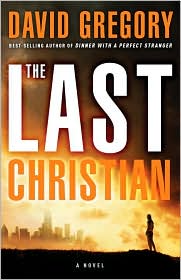
The Last Christian. David Gregory. 2010. Waterbrook Press. 416 pages.


Fire Will Fall. Carol Plum-Ucci. 2010. May 2010. Houghton Mifflin Harcourt. 485 pages.


Alcatraz Versus the Knights of Crystallia. Brandon Sanderson. 2009. October 2009. Scholastic. 336 pages.


Faery Rebels: Spell Hunter. R.J. Anderson. 2009. April 2009. HarperCollins. 336 pages.


Doctor Thorne. Anthony Trollope. 1858. 639 pages. (Oxford World's Classic, 1981)

What I Hope To Begin/Finish Soon:


The White Queen by Philippa Gregory. 2009. Simon & Schuster. 432 pages.


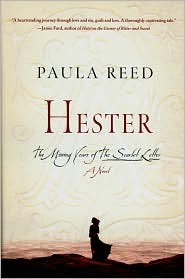
Hester. Paula Reed. 2010. February 2010. St. Martin's Press. 308 pages.


Sisters Red. Jackson Pearce. 2010. June 2010. Little, Brown. 328 pages.


My Life With the Lincolns. Gayle Brandeis. 2010. March 2010. Henry Holt. 256 pages.


© Becky Laney of Becky's Book Reviews