Showing posts with label "U" Titles. Show all posts

Friday, December 19, 2008

Uprising


Haddix, Margaret Peterson. 2007.

Tell me about the fire.

I honestly don't know what took me so long to get around to this one. Okay, that's a half-truth. It got put on the bottom in a box that got put on the bottom in a pile of boxes. That happens more frequently than I'd like. But they can't all be on the top on the top. The only reason you're seeing a review of this one at all is that I finally went to the library and checked it out.

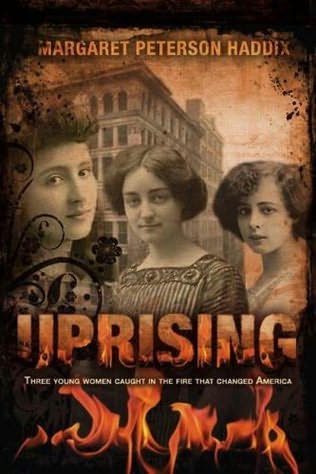
Uprising is very straightforward. It makes no apologies for being what it is: a heartbreaking story of an all-too-true tragedy, the fire at the Triangle Shirtwaist Company. In the first chapter, we meet two survivors--a Mrs. Livingston--and a young woman named Harriet. Harriet had been just a girl--five to be exact--when the fire occurred. (And her presence at the factory that day was circumstantial--just happened to be there visiting her father, the owner of the company.) Now as a grown-up, or an almost grown up on any account, Harriet is on a quest to discover the truth about the past, her past, her father's past, his role in the tragedy.

It is a book that addresses many "issues"--women's rights--the suffrage movement included; the plight of the immigrant--the prejudices and discrimination not to mention the language barriers and the poverty; workers' rights--the need for unions to protect the rights of the employees from greedy and corrupt employers. The truth isn't pretty. To be an immigrant. To be a factory worker. To be living in the tenements. Not pretty at all. It was harsh and ugly and all-too-real for the characters we meet.

Our story is narrated by three girls--two of whom will meet an untimely end; we just don't know which two. Bella. Yetta. Jane.

"We did not know one another for long," Mrs. Livingston says. "We had so little time." This is both a lament and an accusation. After all these years, she still wants the story to end differently. Three girls meet, become friends, struggle, find happiness, and have their lives go on and on and on until they are three old ladies in rocking chairs. It just didn't happen that way. Mrs. Livingston stares off into the distance, off into the past, off into a time when she didn't know the fire was coming. "The story begins like so much else," she says slowly. "With hope. Hope and dreams and daring..." (4-5)

Each of the girls make for a compelling narrator--particularly Yetta and Bella. Bella is an Italian immigrant. Yetta is a Jewish immigrant--I am almost certain she's from Russia. When Bella first arrives in New York, she mistakenly learns Yiddish thinking that she's learning English. It takes some convincing too for her to realize her mistake! Two girls, two different natural languages, yet they share so much in common. Jane? Well, she's a rich society girl. How does Jane become mixed in with a bunch of poor immigrants who can barely speak English? I'll let you discover for yourself!

Richly detailed, this is a novel with haunting power. It is so good.

Other reviews: Abby, A Year of Reading, A Patchwork of Books and Sara's Holds Shelf, The Reading Zone, Teenreads.com,

© Becky Laney of Becky's Book Reviews

Monday, December 15, 2008

Under the Night Sky


Lundebrek, Amy. 2008. Under the Night Sky. Illustrated by Anna Rich. Tilbury House Publishers.

Under the Night Sky is a picture book story of a single working mom and her son taking time to be spontaneous and enjoy the wonder and spectacular beauty of the natural world around them. In this case, it is the northern lights--the aurora borealis--that they are enjoying together side by side. It is moments like these that make special memories, a life worth living. The illustrations by Anna Rich are nice. I love the colors and tones. They complement the text well. As to the text, I enjoyed it as well. The story was a good one--a mother and son seeing each other and the world in a new way, sharing these unplanned moments together.

© Becky Laney of Becky's Book Reviews

Thursday, December 04, 2008

Undone


Taylor, Brooke. 2008. Undone.

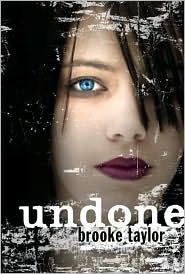
Undone is a story of friendship and grief. Kori and Serena are best friends. Though when they first met they appeared to come from very different worlds. Now, after several years of close friendship, the girls are inseparable. In fact, the girls are becoming more difficult to tell apart. Serena, our narrator, could never imagine a day could come where she'd be separated from Kori. But Kori's tragic death hits Serena hard. Serena decides one way for her to deal, to cope with her friend's death is to complete her friend's list. A list which started as a school assignment--to list five things they would never dream could really happen--takes on a whole new meaning. What's on Kori's list? 1. Sing with Bleeder Valve. 2. Get a tattoo. 3. Work things out with Shay. 4. Confront D. 5. Tell Serena. The list doesn't make a whole lot of sense to Serena--there are mysteries to be solved, secrets to be discovered. Serena is not alone--although she may feel it at times. There are a few people--two guys especially--who become rather important to Serena on her journey. Then, of course, there is the friction between Serena and her mother, Destiny.

First sentence: There they were--the worst words in all of the English language, scribbled in my mother's perky handwriting. "Let's Talk." I snatched the Post-it off the refrigerator door and glared at it. It didn't matter who said them--parent, teacher, or police officer--nothing good ever came of those words. (5)

Undone is well written. And it's a good book--a very good book even. A fact which is neither here nor there is that this one is set in Colorado. I seem to have stumbled across a few books this year set in Colorado--just something odd that I've noticed with this years reading.

© Becky Laney of Becky's Book Reviews

Thursday, June 05, 2008

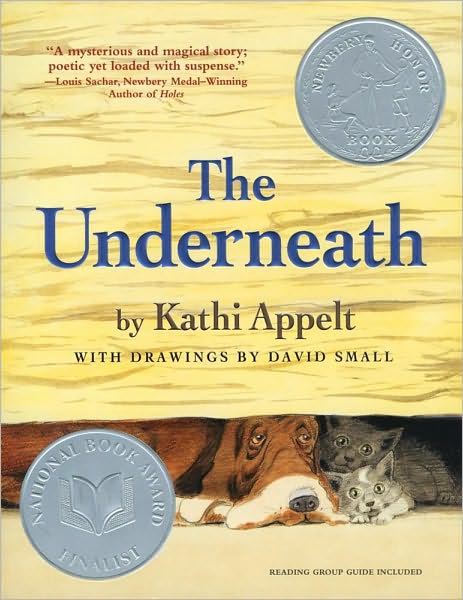
The Underneath


Appelt, Kathi. 2008. The Underneath.

The Underneath is a novel that I would have avoided (at all costs) as a kid. I was a wimp. Big-time. Seeing the dog and two kittens on the cover? That would have made me suspicious or wary from the get go. Reading that it is for folks who love, "Sounder, Shiloh, and The Yearling" would have sealed the deal. I wouldn't have gone near this one. No way. No how.

As an adult, however, how can I help but fall in love with The Underneath? It's beautiful. It's simply beautiful. Like a love letter to the English language. Appelt's poetic style suits this prose novel achingly well. (Appelt has written several poetry books, a short story collection, and more than a few picture books. I've had the pleasure of meeting her as well and have quite a few autographed copies.) Appelt's storytelling is powerful, effective, and oh-so-magically spellbinding.

There is nothing lonelier than a cat who has been loved, at least for a while, and then abandoned on the side of the road. A small calico cat. Her family, the one she lived with, has left her in this old and forgotten forest, this forest where the rain is soaking into her soft fur. (1)

The Underneath is about friendship, about love, about hate, about sacrifice, about revenge, about death, about life in all its shades and colors. It's bittersweet but beautiful. It's sorrows and joys are pure and heartfelt.

For cats, a hound is a natural enemy. This is the order of things. Yet how could the calico cat be afraid of a hound who sang, whose notes filled the air with so much longing? But when she got to the place where the hound sang, she knew that something was wrong. She stopped. In front of her sat a shabby frame house with peeling paint, a house that slumped on one side as if it were sinking into the red dirt. The windows were cracked and grimy. There was a rusted pickup truck parked next to it, a dark puddle of thick oil pooled beneath its undercarriage. She sniffed the air. It was wrong, this place. The air was heavy with the scent of old bones, of fish and dried skins, skins that hung from the porch like a ragged curtain. Wrong was everywhere. She should turn around, she should go away, she should not look back. She swallowed. Perhaps she had taken the wrong path? What path should she take? All the paths were the same. She felt her kittens stir. It surely wouldn't be safe to stay here in this shabby place. She was about to turn around, when there it was again--the song, those silver notes, the ones that settled just beneath her skin. Her kittens stirred again, as if they, too, could hear the beckoning song. She stepped closer to the unkempt house, stepped into the overgrown yard. She cocked her ears and let the notes lead her, pull her around the corner. There they were, those bluesy notes.
Oh, I woke up, it was rainin',

But it was tears came fallin' down.

Yes, I woke up, it was rainin',

But it was tears came fallin' down.

Can't you see I'm tryin'?
Can't you hear my cryin'?
Can't you see I'm all alone?

Can't you throw this old dog a bone?

Then she realized, this song wasn't calling for a bone, it was calling for something else, someone else. Another step, another corner. And there he was, chained to the corner of the back porch. His eyes were closed, his head held back, baying. She should be afraid, she should turn around and run, she should climb the nearest tree. She did not. Instead, she simply walked right up to this baying hound and rubbed against his front legs. She knew the answer to his song, for if she could bay, her song would be the same. Here. Right here. Ranger. (9-11)
I really can't recommend this one highly enough.


© Becky Laney of Becky's Book Reviews
Saturday, December 30, 2006

Up Before Daybreak

Hopkinson, Deborah. 2006. Up Before Daybreak: Cotton and People In America.

Up Before Daybreak is a well-researched and well-written nonfiction book about the cotton industry in America from its humble beginnings in the seventeenth century, to its reign during the eighteenth and nineteenth century before the civil war, and even expanding beyond the civil war through the reconstruction era and the first half of the twentieth century. It is an expansive view going beyond race, ethnicity, and class. Discussing issues such as slavery, sharecropping, and mill factories. Looking at the people behind the work--black, white, young, old, male, female--the common thread is poverty. The workers whether enslaved or paid cheap labor (a few dollars for 70+ hours of labor) their livelihood was dependent on the crop. It is an interesting examination of race, culture, and class. Up Before Daybreak is also well-documented and makes full use of primary documents such as oral histories. Includes selected bibliography, notes, index, and some amazing black and white photographs.

Tuesday, November 07, 2006

Superstition

Wallace, Karen. 2006. THE UNRIVALLED SPANGLES.

Meet the Spangles. A highly dysfunctional spirited circus family living in London's East End in the nineteenth century. Ellen, Lucy, Sam Spangle are used to performing in front of large crowds, but do they have the strength and courage it takes to persevere when they're hit with a long run of bad luck?

Ellen is the oldest child in the family. Practically a young woman who could be ready for love and marriage when the right man comes along, she is tired of performing in the spotlight and dreams of life away from the circus. Lucy, the middle child is spoiled rotten--too rotten as it turns out. She majors in selfishness and minors in manipulation. Sam is the baby of the family. A good-natured sort of boy who gives Ellen hope that maybe the family isn't as crazy as it seems. The parents? One is controlling, domineering, and has a temper. The other has a more calming effect on everyone and balances out the pair.

When one of Ellen's suitors sends her a mirror as a present, the selfish Lucy grabs it out of her hands and accidentally drops it. Though no one wants to say that they're 'cursed' with seven years bad luck, everyone is thinking it. And it turns out they're not wrong to be concerned. As one thing after another goes wrong....can Ellen hold her fragile family together? And will she ever live the life she wants? Or is she doomed to live in her sister's shadow?

http://www.karenwallace.co.uk/