Friday, July 06, 2018

The Tea Dragon Society

The Tea Dragon Society. Katie O'Neill. 2017. [Oct. 31, 2017] 72 pages. [Source: Library]

First sentence: Once upon a time, blacksmiths were as important as magicians. They made tools for the healers to cure the sick. Shoes to shod the hooves of working animals. Swords for adventurers to slay monsters. The world was forged in iron...Once upon a time.

Premise/plot: Greta is the heroine of Katie O'Neill's The Tea Dragon Society a middle grade graphic novel. It is a fantasy. Greta finds a small, injured dragon. The dragon is a tea dragon. Her father recognizes the dragon and knows the owner. Greta returns the dragon to its owner, Hesekiel. Seeing her interest in the tea dragon, he invites her to visit his tea shop anytime and learn more about tea dragons and how to take care of them. She also meets Minette and Erik. All three have tea dragons. The book is divided into four sections--the four seasons. Will Greta be lucky enough to get a tea dragon of her own one day?

My thoughts: Odd can be good. It can. I'm not sure that I love, love, love this one. It's not quite my cup of tea. But I liked it. So what makes a tea dragon a tea dragon? I can't tell you their origins of how they came to be, but, I can tell you a little bit about them. Tea dragons grow tea leaves off their horns. The tea leaves--when dried and brewed--offer tea drinkers (especially their owners) a magical trip down memory lane. The shared memories of tea dragons and their caretaker are imparted to the leaves themselves. Drink the tea and you'll be taking a trip.

There are many different kinds of tea dragons: Jasmine Tea Dragon, Rooibos Tea Dragon, Chamomile Tea Dragon, Ginseng Tea Dragon, Earl Grey Tea Dragon, Hibiscus Tea Dragon, Ginger Tea Dragon, and Peppermint Tea Dragon. Each has its own personality. I get the idea that no two tea dragons are alike. These dragons offer a rewarding relationship with their owners, but, it isn't easy-going especially in the beginning.

Katie O'Neill has without a doubt spent a great deal of time world-building. This especially comes through in the appendix. 

I love, love, love, love, LOVE tea. I've had all the teas listed above with the exception of Ginseng. (I've never drank Ginseng before.) I've never had a magical trip as a result of tea drinking. But I've made plenty of happy memories. I love to drink tea and read; I also love to drink tea and watch stuff. (For example, I love to watch Call the Midwife with a cup of tea in hand.)

If I had an equally strong attachment to dragons, I imagine this one would have delighted even more.

© 2018 Becky Laney of Becky's Book Reviews

Thursday, July 05, 2018

The Princess in Black and the Mysterious Playdate

The Princess in Black and the Mysterious Playdate. (Princess in Black #5) Shannon Hale. Illustrated by LeUyen Pham. 2017. Candlewick Press. 96 pages. [Source: Review copy]

First sentence: It was a clear, crisp, comfortable afternoon. The Princess in Black and the Goat Avenger had just sent a monster back into the hole. The hole led to Monster Land. It was time for the victory dance. They slapped hands. They wiggled bums. They said "Callooo!" It was their thing.

Premise/plot: Princess Magnolia (aka the Princess in Black) has a playdate with Princess Sneezewort. But unbeknownst to the Princess a monster has followed her without detection. His intent to eat pets. If he can't have goats, why not pets? She's not in her kingdom; there is no monster alarm in Princess Sneezewort's castle. Yet she has a way of knowing when she's needed. So does Princess Sneezewort. Could this princess--who has a way of blending into her surroundings--have a secret of her own?

My thoughts: I enjoyed this one. I did. I do like the series as a whole. This was a good installment in the series. I appreciate series books. There's an age--or a stage--in reading where it's just pure HEAVEN to know that your favorite characters--your best friends and kindred spirits--appear in many, many books. That the fun does not have to come to an end as long as there's another book.

Shannon Hale is a fun and talented writer. LeUyen Pham has long been a favorite of mine!

© 2018 Becky Laney of Becky's Book Reviews

Wednesday, July 04, 2018

Barracoon

Barracoon: The story of the Last Black Cargo. Zora Neale Hurston. 2018. HarperCollins. 2018. 256 pages. [Source: Library]

First sentence of the preface: This is the life story of Cudjo Lewis, as told by himself.

Premise/plot: When he was a young man, Kossula was captured by the Dahomey and eventually sold to American slave traders. The year was 1860. Though a slave for just five years--give or take--the experience forever changed him. In 1927, Kossula (aka Cudjo Lewis) met--befriended--a young folklorist named Zora Neale Hurston. His story was important to capture, and Hurston wanted to be the one to do it--in his own words, in his own style. Which meant it was to be written in dialect, in a conversational style. The manuscript did not find a publisher in Hurston's lifetime. But it has now. 

He tells his story in his own way in his own words. He speaks of Africa. He tells of his family, his community, his childhood. He shares memories of visiting his grandfather's home, of his funeral, for example. He talks of learning to hunt and initial training to become a soldier. He was still too young to be a soldier, to join the grown-ups in his village; he was still too young to build his own house and marry. But he didn't get a chance to live the life he thought he would.

His life was interrupted--brutally so. The Dahomey attacked his gated village: capturing some, slaughtering the rest. He was among the captured young men and women. He was kept prisoner in the barracoons of Ouidah (Whydah) until he was purchased by slave traders and loaded as cargo onto the ship Clotilda. He tells of the journey and the destination. He shares his experiences as a slave. He talks of his experiences as a free man. There was no going back. There was no erasing those years. He was cut off from the future that should have been his--his home in Africa. There are stories about his wife, his children, his grandchildren. Make no mistake it's a hard life.

"My Grandpa, he a great man. I tellee you how he go."
I was afraid that Cudjo might go off on a tangent, so I cut in with, "But Kossula, I want to hear about you and how you lived in Africa."
He gave me a look full of scornful pity and asked, "Where is de house where de mouse is de leader? In de Affica soil I cain tellee you 'bout de son before I tellee you 'bout de father; and derefore, you unnerstand me, I cain talk about de man who is father till I tellee you bout  de man who he father to him, now, dass raight ain' it?" (20)
"Ole Charlie, he de oldest one come from de Afficky soil. One Sunday after my wife left me he come wid all de others dat come cross de water and say, 'Uncle Cudjo, make us a parable.'
'Well den,' I say, 'You see Ole Charlie dere. S'pose he stop here on de way to church. He got de parasol 'cause he think it gwine rain when he leave de house. But he look at de sky and 'cide hit ain' gwine rain so he set it dere by de door an' go on to church. After de preachin' he go on home 'cause he think de parasol at Cudjo house. It safe. He say, 'I git it nexy time I go dat way.' When he come home he say to one de chillun, 'Go to Cudjo house and tellee him I say sendee me my parasol.' 'De parasol it pretty. I likee keep dat one.' But I astee dem all, 'Is it right to keep de parasol?' Dey all say, 'No it belong to Charlie.' 'Well,' I say, 'my wife, she b'long to God. He lef' her by my door.'" (92)
 My thoughts: I am so glad I read this one. I have long been a fan of Zora Neale Hurston. I was introduced to her work in college and LOVED, LOVED, LOVED it. I would recommend this one. It isn't necessarily easy reading. Some readers may struggle with the dialect. More readers may struggle with the content. I think many of us--if not most of us--want to look away from pain and cruelty and injustice. Even when we know we shouldn't. We don't want to know how it feels, what it looks like. We don't want to be witness to it. But his story deserves to be known and known widely.

I would recommend it.


© 2018 Becky Laney of Becky's Book Reviews

Tuesday, July 03, 2018

How It Feels To Be A Boat

How It Feels To Be A Boat. James Kwan. 2017. Houghton Mifflin Harcourt. 40 pages. [Source: Review copy]

First sentence: Ahoy, ahoy! Raise your crooked anchor and head out to sea, as your foghorn howls and barnacles tickle your bottom.

Premise/plot: What does it feel like to be a boat? Well, Kwan's imagination has led him to explore just that in his new picture book.
In your belly everyone gets along, but sometimes they fight. When they yell your belly aches, your heart shrinks, and your rooms shiver. You are strong, but sometimes you tremble. 
From inside your belly you smell a delicious thing and hear your favorite doot-doot tune and feel everyone singing and moving together: lee lee lee doo.
My thoughts: My first thought upon reading this one is why does this book exist?! My second thought was who is the intended audience?! Fair or not fair those were my initial impressions.

Is this a story picture book for young children encouraging active--or over-active imaginations? Perhaps. Is this a picture book for young adults soon to graduate and enter 'the real world'?

It didn't work for me personally as either. Either as an imaginative storybook or as an allegory or metaphor for life it was just unsettling. Are the different "rooms" in the boat and the different characters who live on the boat representative of desires, needs, wants, opportunities? Do they represent multiple personalities? Because most of the challenging aspects of being a boat come from within the boat itself--not the stormy seas, not the obstacles at sea or near shore.

Text: 3 out of 5
Illustrations: 3 out of 5
Total: 6 out of 10


© 2018 Becky Laney of Becky's Book Reviews

Monday, July 02, 2018

Currently #27

Something Old
Roller Skates. Ruth Sawyer. 1986. 186 pages. [Source: Bought]

Rachel Ray. Anthony Trollope. 1863. 326 pages. [Source: Bought]

The Blue Fairy Book. Andrew Lang. 1887. 390 pages. [Source: Bought]

East of Eden. John Steinbeck. 1952. 601 pages. [Source: Bought]
Something New
The Preacher's Catechism. Lewis Allen. 2018. Crossway. 224 pages. [Source: Review copy]

Something Borrowed
Barracoon: The story of the Last Black Cargo. Zora Neale Hurston. 2018. HarperCollins. 2018. 256 pages. [Source: Library]

Something True
Daily Chronological Bible: KJV Edition. Holman Bible Publishers. 2014. 1440 pages. [Source: Free giveaway]

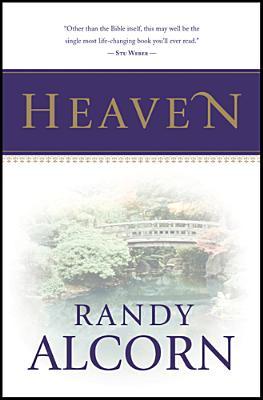
Heaven. Randy Alcorn. 2004. Tyndale. 533 pages. [Source: Gift]

© 2018 Becky Laney of Becky's Book Reviews