Showing posts with label 1855. Show all posts

Tuesday, December 29, 2020

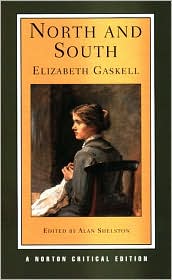
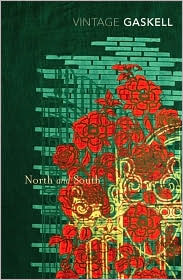
157. North and South


North and South. Elizabeth Gaskell. 1855. 521 pages. [Source: Bought]

First sentence: 'Edith!' said Margaret, gently, 'Edith!' But, as Margaret half suspected, Edith had fallen asleep.

Premise/plot: Sometimes I think the more I've read a book, the harder it is to summarize...well. Margaret Hale, our heroine, is uprooted from her Southern (rural) home when her father leaves the Church and moves the family north to the industrial town of Milton. It is a time of much adjustment--her father making the transition the smoothest of all perhaps; her mother having the roughest time of it. For Margaret it marks a 'wilderness' time of sorts--as she grows more self aware and begins to look and listen more closely to the world around her. She dares to think of others more and her own comfort less. It's definitely a growing time--with some awkwardness thrown in, because it's realistic. Margaret is far from a perfect, ideal woman. 

Mr. John Thornton, our hero, is drawn to Margaret despite their differences of opinion. He's much more forgiving of her pride and prejudice--her immaturity and innocence--than many others might be. This isn't so much a growing time for him. Not really. True, he has lessons in patience and actually LISTENING. But from the start he is considerate and compassionate. Though some might readily compare North and South to Pride and Prejudice and only Pride and Prejudice, I see some Gilbert Blythe in John Thornton. 

The novel is bittersweet. Margaret endures MUCH LOSS throughout the years chronicled in the novel. 

My thoughts: I love this one so much. It is one of my all-time favorite favorite favorite FAVORITE books. The movie and the book are different as night and day. Really in the movie, it's very much a re-do of Pride and Prejudice. Mr. John Thornton is just cut and pasted from Mr. Darcy. This just isn't true to the book at all. 

It is my opinion that Margaret is like MR. DARCY and ELIZABETH BENNET all at the same time. She is the one who has to GROW UP and mature. She is so very proud and extremely prejudiced. She is a bit insufferable at times!!! But her character arc is lovely to see. The Margaret we see at the end of the novel is not the Margaret we first meet. 

Quotes:

  • Whenever I have seen you lately, you have been carried away by a whirlwind of some other person's making.
  • But the cloud never comes in that quarter of the horizon from which we watch for it.
  • But the truth was, that Dixon, as do many others, liked to feel herself ruled by a powerful and decided nature.
  • 'I cannot bear it. I cannot bear to see the sufferings of others. I think I could go through my own with patience. Oh, is there no going back?'
  • But the future must be met, however stern and iron it be.
  • The question always is, has everything been done to make the sufferings of these exceptions as small as possible? Or, in the triumph of the crowded procession, have the helpless been trampled on, instead of being gently lifted aside out of the roadway of the conqueror, whom they have no power to accompany on his march?
  • 'Oh, mamma, that shows you never saw Mr. Thornton. He looks like a person who would enjoy battling with every adverse thing he could meet with--enemies, winds, or circumstances. The more it rains and blows, the more certain we are to have him.
  • 'Take care you don't get caught by a penniless girl, John.' 'I am not easily caught, mother, as I think you know. But I must not have Miss Hale spoken of in that way, which, you know, is offensive to me. I never was aware of any young lady trying to catch me yet, nor do I believe that any one has ever given themselves that useless trouble.'
  • Perhaps our Milton girls have too much spirit and good feeling to go angling after husbands; but this Miss Hale comes out of the aristocratic counties, where, if all tales be true, rich husbands are reckoned prizes.'
  • 'Papa, I do think Mr. Thornton a very remarkable man; but personally I don't like him at all.'
  • 'I believe, perhaps, more than yo' do o' what's to come. I read the book o' Revelations until I know it off by heart, and I never doubt when I'm waking, and in my senses, of all the glory I'm to come to.'
  • And looking back upon the year's accumulated heap of troubles, Margaret wondered how they had been borne. If she could have anticipated them, how she would have shrunk away and hid herself from the coming time!
  • And yet day by day had, of itself, and by itself, been very endurable--small, keen, bright little spots of positive enjoyment having come sparkling into the very middle of sorrows.
  • 'Loyalty and obedience to wisdom and justice are fine; but it is still finer to defy arbitrary power, unjustly and cruelly used-not on behalf of ourselves, but on behalf of others more helpless.'
  • 'I know we differ in our religious opinions; but don't you give me credit for having some, though not the same as yours?'
  • I never lived in a place before where there were two sets of people always running each other down.'
  • 'Nay, Bessy--think!' said Margaret. 'God does not willingly afflict. Don't dwell so much on the prophecies, but read the clearer parts of the Bible.' 'I dare say it would be wiser; but where would I hear such grand words of promise--hear tell o' anything so far different fro' this dreary world, and this town above a', as in Revelations? Many's the time I've repeated the verses in the seventh chapter to myself, just for the sound. It's as good as an organ, and as different from every day, too. No, I cannot give up Revelations. It gives me more comfort than any other book i' the Bible.'
  • She seems to have a great notion of giving herself airs; and I can't make out why. I could almost fancy she thinks herself too good for her company at times. And yet they're not rich, from all I can hear they never have been.' 'And she's not accomplished, mamma. She can't play.'
  • 'I cannot forgive her her pride,' said his mother; 'I will befriend her, if there is need, for your asking, John. I would befriend Jezebel herself if you asked me.
  • Only, he knew what she was doing--or not doing--better than he knew the movements of any one else in the room.
  • I shall put myself at her feet--I must. If it were but one chance in a thousand--or a million--I should do it.'
  • How dared he say that he would love her still, even though she shook him off with contempt?
  • Read me--not a sermon chapter, but a story chapter; they've pictures in them, which I see when my eyes are shut. Read about the New Heavens, and the New Earth; and m'appen I'll forget this.'
  • 'No one loves me,--no one cares for me, but you, mother.' He turned away and stood leaning his head against the mantel-piece, tears forcing themselves into his manly eyes.
  • 'Margaret!' said Mrs. Hale, rather querulously, 'you won't like anything Mr. Thornton does. I never saw anybody so prejudiced.'
  • Margaret the Churchwoman, her father the Dissenter, Higgins the Infidel, knelt down together. It did them no harm.
  • And it was no thought of her son, or of her living daughter Fanny, that stirred her heart at last; but a sudden remembrance, suggested by something in the arrangement of the room,--of a little daughter--dead in infancy--long years ago--that, like a sudden sunbeam, melted the icy crust, behind which there was a real tender woman.
  • Thinking has, many a time, made me sad, darling; but doing never did in all my life.
  • My theory is a sort of parody on the maxim of "Get money, my son, honestly if you can; but get money." My precept is, "Do something, my sister, do good if you can; but, at any rate, do something."'
  • 'Not excluding mischief,' said Margaret, smiling faintly through her tears. 'By no means. What I do exclude is the remorse afterwards.
  • Sorrows is more plentiful than dinners just now;
  • Oh papa! it's a hard world to live in!'
  • 'The exact truth!' said he. 'Very few people do speak the exact truth. I have given up hoping for it. Miss Hale, have you no explanation to give me? You must perceive what I cannot but think.'
  • 'I will walk slower for your own sake. I like you twenty times better than Hamlet.' 'On the principle that a living ass is better than a dead lion?' 'Perhaps so. I don't analyse my feelings.'
  • 'I begin to understand now what heaven must be--and, oh! the grandeur and repose of the words--"The same yesterday, to-day, and for ever." Everlasting! "From everlasting to everlasting, Thou art God."
  • I must not think so much of how circumstances affect me myself, but how they affect others, if I wish to have a right judgment, or a hopeful trustful heart.
  • Margaret herself had probably the worst temper of the three, for her quick perceptions, and over-lively imagination made her hasty, and her early isolation from sympathy had made her proud;
  • but she had an indescribable childlike sweetness of heart, which made her manners, even in her rarely wilful moods, irresistible of old; and now, chastened even by what the world called her good fortune, she charmed her reluctant aunt into acquiescence with her will.
  • 'How shall I ever tell Aunt Shaw?' she whispered, after some time of delicious silence. 'Let me speak to her.' 'Oh, no! I owe to her,--but what will she say?' 'I can guess. Her first exclamation will be, "That man!"' 'Hush!' said Margaret, 'or I shall try and show you your mother's indignant tones as she says, "That woman!"' 

© 2020 Becky Laney of Becky's Book Reviews

Sunday, February 22, 2015

Revisiting The Warden

The Warden. Anthony Trollope. 1855. Oxford World's Classics. 294 pages. [Source: Bought]

I make no secret of the fact that I LOVE, LOVE, LOVE Anthony Trollope. The Warden is the first in his Barchester series. And, I believe, it was the first Trollope novel I read. I first read and reviewed it in the spring of 2009.

I loved rereading it. I loved going back and visiting with these characters particularly the character of Mr. Harding. As much as I enjoy the other characters, I LOVE, LOVE, LOVE Mr. Harding. He's such a dear old soul.

Reasons you should read The Warden
  • As one of Trollope's shorter novels, it's a great introduction to his work.
  • It is the first book in a series, his Barchester series, which is FANTASTIC.
  • It is all about the characters and relationships between characters. Sure, there's a plot, but, it's not an action-packed plot. It's all about ethics. Is it right or is it wrong for Mr. Harding to receive the salary he does?! 
  • The writing is delightful. 
 What is it about?!

It's about one man, Mr. Harding, and his family: two daughters, one married, the other quite single. It's also about Harding's neighborhood and circle of friends. It's about the necessity of having a good reputation and a clean conscience.

Eleanor is the apple of her daddy's eye. Susan is married to an Archdeacon (Grantley). Because of his eldest daughters good fortune in marriage, Mr. Harding, has been named warden of Hiram's Hospital (alms house). The 'enemy' of Mr. Harding (and the suitor of Eleanor) is a young man named John Bold. When we are first introduced to these characters, we are learning that Bold is encouraging a law suit against Mr. Harding. He feels that Mr. Harding is in violation of the will. (Way, way, way back when (several centuries past), a man left his (quite wealthy) estate to the church. The church followed the will for the most part, but as times changed, they changed the way they carried it out. They were following it through in spirit in a way: still seeking to take care of twelve poor men (bedesman) but over time the salary of the warden increased.) Bold has stirred up the twelve bedesmen into signing a petition demanding justice, demanding more money, demanding 'fairer' distribution of funds.

The book presents this case through multiple perspectives: through two Grantleys (father and son), a few lawyers, Mr. Harding and Mr. Bold, of course, and through a handful of the twelve men involved that would profit from the change. There is one man whose voice seems louder than all the rest. And that voice comes from the newspaper, the Jupiter, one journalist writes harsh, condemning words directed at Mr. Harding--he assumes much having never met Harding personally. These words weigh heavy on the heart and soul of Mr. Harding. (And they don't sit easy on Mr. Bold either.)

Can Mr. Harding get his reputation back? What is the right thing to do? Is he in violation of the will? Is the church? What is his moral responsibility in caring for these twelve poor-and-retired men? What is his responsibility to the community?

© 2015 Becky Laney of Becky's Book Reviews

Sunday, March 06, 2011

Little Dorrit

Little Dorrit. Charles Dickens. 1855-1857. Penguin. 928 pages.

Thirty years ago, Marseilles lay burning in the sun, one day. 

Little Dorrit is the third full-length Dickens that I've read*. Last fall, I read Bleak House, and last month I read Our Mutual Friend. Did I like Little Dorrit? Not as much as Bleak House. Not as much as Our Mutual Friend. But there were plenty of things I liked about it. Like the heroine, Amy Dorrit, and her love-interest, Arthur Clennam.

Arthur first meets 'Little Dorrit' in his mother's home. He is returning from a LONG absence, returning after his father's death. His parents marriage being a disaster, he spent part of his time with his mother in England, part of his time with his father in China. Little Dorrit (Amy) is quiet, not one to call attention to herself. But there is something about her that intrigues him. So he sets out to befriend, to learn all he can about her. What he learns is that she was born to her father and mother in Marshalsea--a debtor's prison. Her father has been a long-time resident. She's never known freedom, she leaves the gates most every day to earn what she can--she's a good seamstress, happy to find work where she can, like at the Clennams. But to Marshalsea she returns each evening before the gates are locked. She's happy to have a friend in Arthur. But while she may think of him as something-more-than-a-friend, he's settled into thinking of her as a daughter. He's twenty years older than Amy, and, well, he's not the smartest of men when it comes to realizing the obvious. (He has to be TOLD by someone he barely knows that Amy is in love with him, has always been in love with him.) He decides that the best way to help Amy is to help get her father out of debtor's prison. So with the help of a few friends, he sets out to do just that. But is Amy suited to riches?! Does society really hold a place for Amy, Fanny (her older sister), Tip (her older brother), her father, and her uncle? Can money buy happiness? Can money redeem past wrongs? What do you think?!


The minor characters and subplots didn't thrill me in Little Dorrit. Don't get me wrong, there were times when I found it very comical. Dickens had a good sense of humor. And there are some great sketches of characters here and there. Arthur's old love-interest, for example, is almost always good for a laugh. Though it is a laugh at her expense. And Mr. Sparkler, Fanny's love interest, is good for comic relief too. There's a scene between him and Fanny--after they're married--that had me laughing a great deal! (And just when I needed it too!) And Little Dorrit offers a certain amount of drama--drama that for me might have been spoiled by having seen the adaptation two years ago. I thought that the book would clarify things for me, that characters that didn't make a lot of sense in the film would become clearer when I read the book. But I didn't find that to be the case. There are still pieces of the puzzle that I'm missing. There are still characters that leave me confused and puzzled. Which I suppose is why Little Dorrit isn't a book that I can love, love, love. However, I do like it. I am glad I read it.

He had a certain air of being a handsome man--which he was not; and a certain air of being a well-bred man--which he was not. It was mere swagger and challenge; but in this particular, as in many others, blustering assertion goes for proof, half over the world (25).

In our course through life we shall meet the people who are coming to meet us, from many strange places and by many strange roads and what is set to us to do to them, and what it is set to them to do to us will be done. (39)

Flora, always tall, had grown to be very broad too, and short of breath; but that was not much. Flora, whom he had left a lily, had become a peony; but that was not much. Flora, who had seemed enchanting in all she said and thought, was diffuse and silly. That was much. Flora, who had been spoiled and artless long ago, was determined to be spoiled and artless now. That was a fatal blow. This is Flora! (165)


*Not including GREAT EXPECTATIONS which was required reading in high school. Or A Christmas Carol which is so familiar that I'm not sure it should count.  

© 2011 Becky Laney of Becky's Book Reviews

Saturday, February 26, 2011

North and South (Revisited)

North and South. Elizabeth Gaskell. 1854-1855. 452 pages.

'Edith!' said Margaret, gently, 'Edith!'
But, as Margaret half suspected, Edith had fallen asleep.


Last spring I discovered North and South by Elizabeth Gaskell. It was a story that I couldn't forget. I read the book. I listened to the audio book. I watched the movie. (I watched the movie twice.) When I wrote in my review that I loved it--I meant it. No question about that. But at the same time, I questioned the intensity of that love. Would it prove a lasting love? Would North and South prove to be a true favorite? Yes, the characters, the stories made an impression on me. But would it make a lasting impression? I knew that sooner or later I would have to reread this one.

So what do I think after rereading this one? I love it even more than I did before! And I didn't think that was quite possible! Because I was very enthusiastic the first time around.

There were things that I noticed for the first time. There were things that I was only able to appreciate the second time through. Little details that may not seem like much, but taken together add to the beauty and complexity of the whole.

I was able to focus on the relationships more, I think.  John's relationship with his mother and sister. And the relationship between Margaret and her mother and father and brother. And, of course, I was paying attention to every sign of affection between John and Margaret! Knowing the characters--knowing their strengths and weaknesses--it affected how I read the novel.
 
This was such a satisfying, comfort read.

North and South is bittersweet. I think the contrast between life's joys and sorrows is one reason why I love this one so very much. Because of everything that Margaret endures, her happily ever after means just that much more to me. I think I love John and Margaret more because of all the obstacles along the way.


Some of my favorite lines:

As she realized what might have been, she grew to be thankful for what was. (68)

'Take care you don't get caught by a penniless girl, John'
'I am not easily caught, mother, as I think you know. But I must not have Miss Hale spoken of in that way, which, you know is offensive to me. I never was aware of any young lady trying to catch me yet, nor do I believe that any one has ever given themselves that useless trouble. (78)

'Papa, I do think Mr. Thornton a very remarkable man; but personally I don't like him at all.' (88)

'Bessy, don't be impatient with your life, whatever it is--or may have been. Remember who gave it you, and made it what it is!' (91)

'Loyalty and obedience to wisdom and justice are fine; but it is still finer to defy arbitrary power, unjustly and cruelly used -- not on behalf of ourselves, but on behalf of others more helpless.' (109)

'I cannot forgive her pride,' said his mother; 'I will befriend her, if there is need, for your asking, John. I would befriend Jezebel herself if you asked me. But this girl, who turns up her nose at us all--who turns up her nose at you--'
'Nay, mother; I have never yet put myself, and I mean never to put myself, within reach of her contempt.'
'Contempt, indeed! Don't go speaking of Miss Hale, John, if I've to be kind to her. When I'm with her, I don't know if I like or dislike her most; but when I think of her, and hear you talk of her, I hate her.' (143)

'Don't dwell so much on the prophecies, but read the clearer parts of the Bible.'
'I dare say it would be wiser; but where would I hear such grand words of promise--hear tell o' anything so far different fro' this dreary world, and this town above as in Revelations? Many's the time I've repeated the verses in the seventh chapter to myself, just for the sound. It's as good as an organ, and as different from every day, too. No, I cannot give up Revelations. It gives me more comfort than any other book i' the Bible.' (137)

'I suspect my "gentleman" includes your "true man."'
'And a great deal more, you would imply. I differ from you. A man is to me a higher and completer being than a gentleman.'
'What do you mean?' asked Margaret. 'We must understand the words differently.'
'I take it that "gentleman" is a term that only describes a person in his relation to others; but when we speak of him as "a man," we consider him not merely with regard to his fellow-men, but in relation to himself, - to life - to time - to eternity. A cast-away lonely as Robinson Crusoe - a prisoner immured in a dungeon for life - nay, even a saint in Patmos, has his endurance, his strength, his faith, best described as being spoken of as "a man." I am rather weary of this word "gentlemanly," which seems to me to be often inappropriately used, and often, too, with such exaggerated distortion of meaning, while the full simplicity of the noun "man," and the adjective "manly" are unacknowledged - that I am induced to class it with the cant of the day.' (163)

'He is the first specimen of a manufacturer - of a person engaged in trade - that I had ever the opportunity of studying, papa. He is my first olive, let me make a face while I swallow it. I know he is good of his kind, and by and by I shall like the kind. I rather think I am already beginning to do so. (165)

'Speak to your workmen as if they were human beings. Speak to them kindly. Don't let the soldiers come in and cut down poor creatures who are driven mad. I see one there who is. If you have any courage or noble quality in you, go out and speak to them, man to man.' (175)

'I hardly know if it is pain or pleasure, to think that I owe it to one - nay, you must, you shall hear - to one whom I love, as I do not believe man ever loved woman before.' (192)

'One word more. You look as if you thought it tainted you to be loved by me. You cannot avoid it. Nay, I, if I would, cannot cleanse you from it. But I would not, if I could. I have never loved any woman before: my life has been too busy, my thoughts too much absorbed with other things. Now I love, and will love. But do  not be afraid of too much expression on my part. (194)

'I see a great deal of difference between Miss Hale and Fanny. I can imagine that the one may have weighty reasons, which may and ought to make her overlook any seeming impropriety in her conduct. I never knew Fanny have weighty reasons for anything. Other people must guard her. I believe Miss Hale is guardian to herself.' (305)

'The exact truth! Very few people do speak the exact truth. I have given up hoping for it.' (320)

'He may care for her, though she really has been almost rude to him at times. But she! - why, Margaret would never think of him, I'm sure! Such a thing has never entered her head.'
'Entering her heart would do. But I merely threw out a suggestion of what might be.' (329)


© 2011 Becky Laney of Becky's Book Reviews

Saturday, May 15, 2010

North and South


North and South. Elizabeth Gaskell. 1854-1855.* 452 pages.

'Edith!' said Margaret, gently, 'Edith!'
But, as Margaret half suspected, Edith had fallen asleep.


I loved this one. I really loved this one. I think it is easily my favorite Elizabeth Gaskell. So far. I've read Wives and Daughters. Mary Barton. And Cranford. (Though perhaps if Wives and Daughters had been finished, then they'd be some competition.)

Is it a romance? Is it a novel of two different social classes battling it out? Is it a novel about the industrial revolution that was for better or worse changing the world, changing life as they knew it at least, transforming it into who knows what? Is it about the ethics of business, and the responsibilities of the middle class? Maybe a little bit of all the above.

Margaret, our heroine, is a dutiful daughter. (But that doesn't mean she doesn't have opinions. And that doesn't mean she'll keep quiet about having opinions either.) She accompanies her parents to the Northern town of Milton. Though she'd much rather have stayed in the South, in the comfy-cozy parsonage where she spent so many happy years. But after her father, Mr. Hale, decides he has to split from the Church--that he has to give up his vicarage, well, the family moves to the North. (It's not so much what is best for the family that is to be considered, but what is best for Mr. Hale has to be what's best for his wife and daughter.) Mr. Hale becomes a tutor, a teacher to the young men (and some older men) in this manufacturing town. (Not that the town has high goals for education. No, it's all work all the time, in some ways.)

One of her father's favorite students is Mr. John Thornton. He is a mill owner. One of the wealthier folks in the town of Milton. He is one of the first people in town that Margaret meets. And you might say that neither got a fair impression--a true impression--of the other. And Miss Hale doesn't make the best of impressions on John's family either. His mother. His sister. But John--for better or worse--can't help being distracted by Margaret. It doesn't matter what his mother has to say on the subject. There's just something about Margaret that keeps her on his mind. All the time. Even when he has no reason at all to hope...

What does Margaret think of John? Well, it's complicated! It almost always is in these classics isn't it!

I loved this one. I loved its depth. I loved its characters. I loved its twists and turns. I loved its descriptions.** It is definitely bittersweet. (You should probably know that going into it. At least if you're sensitive to such things.) But it is oh-so-good. I would definitely recommend this one. I thought it was an amazing read.

If you listen to audio books, you should consider listening to North and South. Naxos released an unabridged edition of the novel this past February. (I believe there is an abridged version available as well.) It is read by Clare Wille. I'm not quite finished with the audio book. (I read faster than I listen.) But what I've heard so far has been good.

*The Oxford edition I read was published in 1998. It doesn't match the cover though. The cover is from the 2008 Oxford edition.
**One of my favorite descriptions comes towards the end of the novel. When Margaret returns to her old town, and learns about the new vicar and some of the changes that have happened during the years she's been away:
'Times is changed, miss; our new Vicar has seven children, and is building a nursery ready for more, just out where the arbour and tool-house used to be in old times. And he has had new grates put in, and a plate-glass window in the drawing room. He and his wife are stirring people, and have done a deal of good; at least they say it's doing good; if it were not I should call it turning things upside down for very little purpose.' (387)
That is such a GREAT description of a church, a congregation, getting a new preacher. At least in my experience.


© Becky Laney of Becky's Book Reviews

Wednesday, April 29, 2009

Travel the World: UK: The Warden


Trollope, Anthony. 1855. The Warden. Oxford World's Classics. 294 pages.

The Rev. Septimus Harding was, a few years since, a beneficed clergyman residing in the cathedral town of -----; let us call it Barchester.

This is a charming little classic concerning ethics. While that, strictly speaking, is true, it's not really the half of it. It's about one man, Mr. Harding, and his family: two daughters, one married, the other quite single. It's also about Harding's neighborhood and circle of friends. It's about the necessity of having a good reputation and a clean conscience.

Eleanor is the apple of her daddy's eye. Susan is married to an Archdeacon. (I *believe* his name is Grantley). Because of his eldest daughters good fortune in marriage, Mr. Harding, has been named warden of Hiram's Hospital (alms house). The 'enemy' of Mr. Harding (and the suitor of Eleanor) is a young man named John Bold. When we are first introduced to these characters, we are learning that Bold is encouraging a law suit against Mr. Harding. He feels that Mr. Harding is in violation of the will. (Way, way, way back when (several centuries past), a man left his (quite wealthy) estate to the church. The church followed the will for the most part, but as times changed, they changed the way they carried it out. They were following it through in spirit in a way: still seeking to take care of twelve poor men (bedesman) but over time the salary of the warden increased.) Bold has stirred up the twelve bedesmen into signing a petition demanding justice, demanding more money, demanding 'fairer' distribution of funds.

The book presents this case through multiple perspectives: through two Grantleys (father and son), a few lawyers, Mr. Harding and Mr. Bold, of course, and through a handful of the twelve men involved that would profit from the change. There is one man whose voice seems louder than all the rest. And that voice comes from the newspaper, the Jupiter, one journalist writes harsh, condemning words directed at Mr. Harding--he assumes much having never met Harding personally. These words weigh heavy on the heart and soul of Mr. Harding. (And they don't sit easy on Mr. Bold either.)

Can Mr. Harding get his reputation back? What is the right thing to do? Is he in violation of the will? Is the church? What is his moral responsibility in caring for these twelve poor-and-retired men? What is his responsibility to the community?

The Warden is a charming little book. In part because of the language and style. There's an easiness and rightness about it. It was one of those cases where I knew almost from the start that Trollope and I would come to be good friends. Though I'd never read any Trollope before, never seen a movie based on one of his books, reading Trollope felt like coming home. Trollope was good at characterization and equally good at storytelling.

© Becky Laney of Becky's Book Reviews
If you're reading this post on another site, or another feed, the content has been stolen.