Showing posts with label 1964. Show all posts

Wednesday, November 25, 2020

146. Rock of Freedom


Rock of Freedom: The Story of the Plymouth Colony. Noel Gerson. 1964/2020. 167 pages. [Source: Review copy]

First sentence: There was no sound in the vast, black expanse of wilderness but the faint, steady drip of raindrops falling from pines and birches, cedars and poplars and firs. Gradually the dark clouds hovering over the crescent of land on which Plymouth Colony was built began to roll away.

Premise/plot: Rock of Freedom is nonfiction narrative--an account of the first two to four years of the Plymouth Colony. The framework of the story is the arrival of Anne and Little James in 1623. This is where the story opens and closes. In between is the story of how the Separatists--and other would-be colonists--together sailed to the New World (on the Mayflower) and settled in what would become New England. It focuses primarily on three or four leaders; not every colonist was mentioned and received attention. It is a story of strength and weaknesses, successes and failures. It is grim and gritty--for life was hard, unimaginably hard. 

The book was originally written in 1964 at a time when political correctness was not reigning supreme--for better or worse. Know this going in that perhaps if an author was writing today that he/she might phrase things a bit differently in hopes of reaching the widest audience possible. I am not ever suggesting that facts should be manipulated or twisted--revised or corrected long, long after the fact. Facts are facts are facts; they can be interpreted differently with each generation, with each reader. Researchers should stick to facts and if at all possible show their work--their research. Modern writers don't necessarily need to "rescue" or "save" historical figures--by justifying every word, every act. Nor do modern writers "need" to crucify those that lived in the past and vilify everyone and everything. Present the facts and let readers decide for themselves. In the case of the pilgrims, it's not an either/or. They are neither saints nor sinners. I don't need perfect heroes to idolize. 


This book definitely presents the pilgrims as an incredible group of people--a bit idealistic at times perhaps. But then again they do stick to the first few years of the colony.

My thoughts: Rock of Freedom is READABLE. Sadly not all books about the pilgrims are. I have read several adult books this year on the subject of the Mayflower and Pilgrims, etc. Some of them are a CHORE. One of them I'm almost ready to give up on completely. A dryer book has never been penned. And that book in particular seeks to strip all the pilgrims of any good attributes or nature. Again, I don't need my pilgrims to be saints--but human nature is always such a mixing of the good and bad, the right and wrong; no one is purely good or purely evil. So it was refreshing that this book was READABLE.

It does include a lot of dialogue. I'm not sure this much dialogue would pass as nonfiction in 2020, but, in a way it's delightful. I take dialogue in nonfiction with a grain of salt. I know that the writer might be putting words in someone's mouth that may or may not in any way whatsoever be true and legit. Maybe those words reflect his or her interpretation of written facts in primary or secondary sources. 

I definitely enjoyed reading it.

© 2020 Becky Laney of Becky's Book Reviews

Tuesday, July 04, 2017

If You Lived In Colonial Times

If You Lived In Colonial Times. Ann McGovern. 1964. 80 pages. [Source: Bought]

First sentence: When were Colonial times? Colonial times were a long time ago.

Premise/plot: Interested in reading about what the New England states were like during the years 1620-1730? This early reader is for you. It is written almost exclusively in question and answer format. Sometimes questions are answered on one page, sometimes questions are answered on two pages. Whether the answer is short or long, the answer tends to be interesting and engaging.

My thoughts: This was one of the first nonfiction books I remember reading as a kid. I remember being really fascinated by history even from a young age. I was so pleased to find this one again at a local charity book shop! I would definitely recommend this one.


© 2017 Becky Laney of Becky's Book Reviews

Tuesday, April 19, 2016

Bread and Jam for Frances

Bread and Jam for Frances. Russell Hoban. Illustrated by Lillian Hoban. 1964/1992. HarperCollins. 32 pages. [Source: Library]

First sentence: It was breakfast time, and everyone was at the table. Father was eating his egg. Mother was eating her egg. Gloria was sitting in a high chair and eating her egg too. Frances was eating bread and jam.

Premise/plot: Is Frances an adventurous eater or a picky one?!

My thoughts: Frances just LOVES, LOVES, LOVES bread and jam. She wants to eat it for breakfast, lunch, dinner, and snack. She doesn't want to try new foods. She doesn't want to eat anything BUT bread and jam. Other people in her life--like her good friend, Albert, may have more interesting lunches, but is anything as good as her favorite comfort food?! Will Frances, the badger, ever tire of bread and jam?! Read and see in one of my favorite, favorite picture books! Frances makes up so many lovely songs in this one! And readers get to meet Albert--I've always liked Albert very much!

Here's one of the songs she makes up in the book. I'll also give a little context:
"What a lovely egg!" said Father.
"If there is one thing I am fond of for breakfast, it is a soft-boiled egg."
"Yes," said Mother, spooning up egg for the baby, "it is just the thing to start the day off right."
"Ah!" said Gloria, and ate up her egg.
Frances did not eat her egg. She sang a little song to it. She sang the song very softly:
I do not like the way you slide,
I do not like your soft inside,
I do not like you lots of ways,
And could do for many days
Without eggs.
Text: 5 out of 5
Illustrations: 5 out of 5
Total: 10 out of 10
© 2016 Becky Laney of Becky's Book Reviews

Thursday, April 14, 2016

A Baby Sister for Frances

A Baby Sister for Frances. Russell Hoban. Illustrated by Lillian Hoban. 1964/1992. HarperCollins. 32 pages. [Source: Review copy]

First sentence: It was a quiet evening. Father was reading his newspaper. Mother was feeding Gloria, the new baby. Frances was sitting under the kitchen sink. She was singing a little song: Plinketty, plinketty, plinketty, plink, Here is the dishrag that's under the sink. Here are the buckets and brushes and me, Plinketty, plinketty, plinketty, plee. She stopped the song and listened. Nobody said anything.

Premise/plot: Frances is having a hard time adjusting to her new baby sister, Gloria. She's still Frances, an imaginative badger that loves to make up her own songs, but she's finding it harder and harder to be noticed by her busy parents. And her parents don't have as much time to devote to keeping things in the house flowing smoothly. Frances decides it may be best to run away.
After dinner that evening Frances packed her little knapsack very carefully. She put in her tiny special blanket and her alligator doll. She took all of the nickels and pennies out of her bank, for travel money, and she took her good luck coin for good luck. Then she took a box of prunes from the kitchen and five chocolate sandwich cookies.
"Well," said Frances, "it is time to say goodbye. I am on my way. Good bye."
"Where are you running away to?" said Father.
"I think that under the dining-room table is the best place," said Frances. "It's cozy and the kitchen is near if I run out of cookies."
"That is a good place to run away to," said Mother, "but I'll miss you."
"I'll miss you too," said Father.
"Well, said Frances, "good-bye," and she ran away. (12-13)
My thoughts: Essentially this one is like Noisy Nora, but, I think I like this one better because I like Frances so much. I enjoy this one. It's not my favorite Frances story--in fact, it's probably my least favorite--but that has more to do with the others being so great, so memorable.

Text: 4 out of 5
Illustrations: 4 out of 5
Total: 8 out of 10

© 2016 Becky Laney of Becky's Book Reviews

Tuesday, June 02, 2015

Book of Three (1964)

Book of Three. (The Chronicles of Prydain) Lloyd Alexander. 1964. 190 pages. [Source: Bought]

Taran wanted to make a sword; but Coll, charged with the practical side of his education, decided on horseshoes. And so it had been horseshoes all morning long. Taran's arms ached, soot blackened his face. At last he dropped the hammer and turned to Coll, who was watching him critically. 
"Why?" Taran cried. "Why must it be horseshoes? As if we had any horses!"
Coll was stout and round and his great bald head glowed bright pink. "Lucky for the horses," was all he said, glancing at Taran's handiwork. 

Have you read The Chronicles of Prydain? I'm new to the series though I've been meaning to read this series almost as long as I've been blogging. Did I like The Book of Three? Yes, for the most part. Though I liked it more for its promise or potential than its actual content. The Book of Three introduces readers to Taran and his companions. Taran himself is a newly "appointed" Assistant Pig-Keeper. Does he have what it takes to be an actual hero? He hopes so. For part of him longs for real action and adventure and drama. At least he longs for it before he stumbles into it. Is adventure everything he hoped it would be? Is it as thrilling as he hoped? He may be kept too busy to reflect and analyze! For most of the book his very life is in danger...

In addition to getting to know Taran, readers meet Dallben, Gwydion, Gurgi, Eilonwy, Fflewddur Fflam, Medwyn, King Eiddileg, Doli, and Hen Wen (the oh-so-special talking-pig). It is the fact that Hen Wen runs away from home that leads Taran on the adventure in the first place. While tracking the pig, he spots an enemy army and realizes that trouble is coming, that his way of life, his country is in danger.

Would I like The Book of Three better if the names weren't so unique? Perhaps. It can be tricky to keep track of all the characters and where they're from. But I think if I'd read it in one sitting instead of over six or seven weeks, then I'd have found it easier. Still, overall I enjoyed it!

Do you have a favorite book in this series?

© 2015 Becky Laney of Becky's Book Reviews

Thursday, May 14, 2015

Across Five Aprils (1964)

Across Five Aprils. Irene Hunt. 1964. 224 pages. [Source: Bought]

Did I love, love, love Irene Hunt's Across Five Aprils? Probably not. Did I love it a lot more than I thought I would? Yes, definitely. Across Five Aprils is a Newbery Honor Book. This May I'll be focusing on Newbery honor books and winners published in the 1960s. I probably wouldn't have picked this one up if I hadn't been doing a Newbery challenge or two this year. I'm very glad I read this one.

Across Five Aprils is historical fiction. Jethro Creighton is the hero of the novel. It opens in April 1861 and concludes in April 1865, I believe. Readers see the Civil War through his eyes. He is not a soldier, he's just a boy. His older brothers, however, do go to war. (This one is set in Illinois). Most of his brothers fight for the Union, but, one of his brothers, his favorite brother, fights for the Confederacy. Jethro tries to keep up with the war news as well as he can, mainly through newspapers he picks up when he does manage to get into town, but also from letters home from his brothers. Jethro is busy enough on the farm. He's essentially running his family's farm.

Readers get an opportunity not only to get to know Jethro, but his family as well. I was most interested in his sister, Jenny, and his schoolteacher, Shadrach Yale.

There were many things I liked about Across Five Aprils. I thought the characterization was very well done. Some of the scenes were just wonderful.

© 2015 Becky Laney of Becky's Book Reviews
Sunday, October 13, 2013

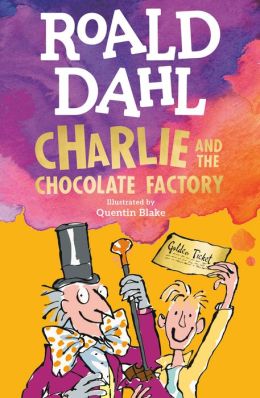
Sunday Salon: Reading Charlie and the Chocolate Factory

Charlie and the Chocolate Factory. Roald Dahl. 1964. 155 pages. [Source: Library]

Charlie and the Chocolate Factory is one of my favorite books to reread. I adore this one. Each chapter feels like a good friend. The text, the illustrations, everything just feels so right, so cozily right about this one.

Willy Wonka is an eccentric factory owner; he manufactures candy, chocolate mostly. He has a contest with five winners; he hides five golden tickets within his candy bars. Charlie Bucket, our hero, is desperate. Not necessarily desperate to win so much as desperate for a miracle. His family is starving. His father, his mother, all four grandparents, and himself--all are starving. If any boy deserves a life time's supply of chocolate, it's Charlie.

The book is quirky, delightful, and full of messages or morals. These messages aren't exactly hidden, they are obvious, especially in the lyrics of the songs. For example, Mike Teavee's song. No reader could miss that message! Is it a message for children or parents?!
"The most important thing we've learned,
So far as children are concerned,
Is never, NEVER, NEVER let
Them near your television set–
Or better still, just don't install
The idiotic thing at all.
In almost every house we've been,
We've watched them gaping at the screen.
They loll and slop and lounge about,
And stare until their eyes pop out.
(Last week in someone's place we saw
A dozen eyeballs on the floor.)
They sit and stare and stare and sit
Until they're hypnotised by it,
Until they're absolutely drunk
With all the shocking ghastly junk.
Oh yes, we know it keeps them still,
They don't climb out the window sill,
They never fight or kick or punch,
They leave you free to cook the lunch
And wash the dishes in the sink–
But did you ever stop to think,
To wonder just exactly what
This does to your beloved tot?
IT ROTS THE SENSES IN THE HEAD!
IT KILLS IMAGINATION DEAD!
IT CLOGS AND CLUTTERS UP THE MIND!
IT MAKES A CHILD SO DULL AND BLIND
HE CAN NO LONGER UNDERSTAND
A FANTASY, A FAIRYLAND!
HIS BRAIN BECOMES AS SOFT AS CHEESE!
HIS POWERS OF THINKING RUST AND FREEZE!
HE CANNOT THINK–HE ONLY SEES!
'All right!' you'll cry. 'All right!' you'll say,
'But if we take the set away,
What shall we do to entertain
Our darling children? Please explain!'
We'll answer this by asking you,
'What used the darling ones to do?
'How used they keep themselves contented
Before this monster was invented?'
Have you forgotten? Don't you know?
We'll say it very loud and slow:
THEY...USED...TO...READ! They'd READ and READ,
AND READ and READ, and then proceed
To READ some more. Great Scott! Gadzooks!
One half their lives was reading books!
The nursery shelves held books galore!
Books cluttered up the nursery floor!
And in the bedroom, by the bed,
More books were waiting to be read!
Such wondrous, fine, fantastic takes
Of dragons, gypsies, queens, and whales
And treasure isles, and distant shores
Where smugglers rowed with muffled oars,
And pirates wearing purple pants,
And sailing ships and elephants,
And cannibals crouching 'round the pot,
Stirring away at something hot.
(It smells so good, what can it be?
Good gracious, it's Penelope.)
The younger ones had Beatrix Potter
With Mr. Tod, the dirty rotter,
And Squirrel Nutkin, Pigling Bland,
And Mrs. Tiggy–Winkle and–
Just How The Camel Got His Hump,
And How The Monkey Lost His Rump,
And Mr. Toad, and bless my soul,
There's Mr. Rat and Mr. Mole–
Oh, books, what books they used to know,
Those children living long ago!
So please, oh please, we beg, we pray,
Go throw your TV set away,
And in its place you can install
A lovely bookshelf on the wall.
Then fill the shelves with lots of books,
Ignoring all the dirty looks,
The screams and yells, the bites and kicks,
And children hitting you with sticks–
Fear not, because we promise you
That, in about a week or two
Of having nothing else to do,
They'll now begin to feel the need
Of having something good to read.
And once they start–oh boy, oh boy!
You watch the slowly growing joy
That fills their hears. They'll grow so keen
They'll wonder what they'd ever seen
In that ridiculous machine,
That nauseating, foul, unclean,
Repulsive television screen!
And later, each and every kid
Will love you more for what you did.
P.S. Regarding Mike Teavee,
We very much regret that we
Shall simply have to wait and see
If we can get him back his height.
But if we can't–it serves him right."
Do you have a favorite character? A favorite scene?


© 2013 Becky Laney of Becky's Book Reviews
Wednesday, February 16, 2011

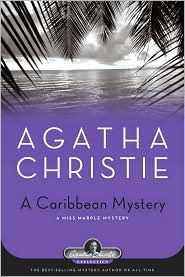
A Caribbean Mystery

A Caribbean Mystery. Agatha Christie. 1964/2007. Black Dog & Leventhal. 256 pages.

"Take all this business about Kenya," said Major Palgrave. 

 Miss Marple is on vacation. And, for the most part, she's enjoying herself. Enjoying getting to know the other people staying at the resort owned by a husband and wife, Tim and Molly Kendal. When the novel opens, she is listening--or pretending to listen--to Major Palgrave. Little knowing that within twenty-four hours this man will be dead. Did he die because he talked too much? Could one of his stories have led to his death? Maybe. Miss Marple will have to investigate to know for sure. But she suspects that his story about having a snapshot of a murderer might be to blame. Since this snapshot is not found after his death.

I enjoyed this one. I wouldn't say it is my absolute favorite Miss Marple--I don't know that I could really choose just one for that. But it was certainly enjoyable! I enjoyed the unfolding mystery of this one. I enjoyed the characters. I enjoyed the setting. I enjoyed the dialogue! It was a fun read!

Miss Marple woke early. Like many old people, she slept lightly and had periods of wakefulness which she used for the planning of some action or actions to be carried out on the next or following days. Usually, of course, these were of a wholly private or domestic nature, of little interest to anybody but herself. But this morning Miss Marple lay thinking soberly and constructively of murder, and what, if her suspicions were correct, she would do about it. It wasn't going to be easy. She had one weapon and one weapon only--and that was conversation.
Old ladies were given to a good deal of rambling conversation. People were bored by this, but certainly did not suspect them of ulterior motives. It would not be a case of asking direct questions. (Indeed, she would have found it difficult to know what questions to ask!) It would be a question of finding out a little more about certain people. (46)
"Conversations with you might be dangerous," he said.
"Conversations are always dangerous, if you have something to hide," said Miss Marple. (142)
"I've been wrong about her," said Mr. Rafiel with characteristic frankness. "Never been much of a one for the old pussies. All knitting wool and tittle-tattle. But this one's got something. Eyes and ears, and she uses them." (148)


© 2011 Becky Laney of Becky's Book Reviews