Showing posts with label Spring Reading Challenge. Show all posts

Tuesday, April 22, 2008

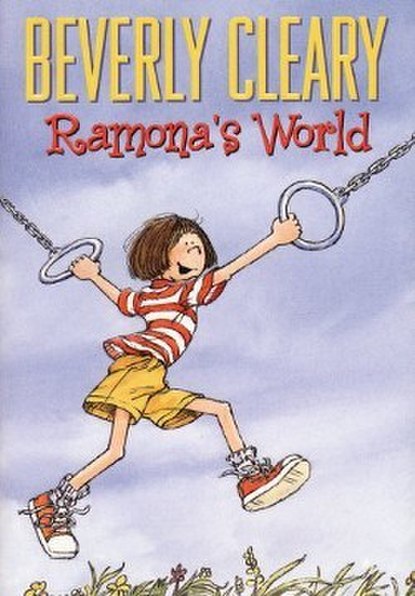
Ramona's World


Cleary, Beverly. 1999. Ramona's World.

Ramona's World is the final in the Ramona series. In our last encounter with Ramona, Ramona Forever, her sister, Roberta Day Quimby, is born. Ramona's World opens several months later. Ramona is starting fourth grade. And she's relatively optimistic. She loves being a big sister (most of the time). In the first chapter we read, "She was often excited. She liked to be excited." Isn't that a great description? It does describe Ramona. But it also describes me. I knew there was a reason Ramona and I were such good friends.

In Ramona's World, Ramona gets a best friend. A girl best friend, Daisy. She also has more than a few battles over the evil that is spelling. Ramona has never liked to spell. But it comes to a head in Ramona's World. Spelling threatens to ruin her happiness, unless she finds a way to conquer it once and for all.

I love this quote: "All this made Ramona feel surrounded by words. There were words every place she looked in books and newspapers, on signs and television, on cereal boxes and milk cartons. The world, Ramona decided, was full of people who used their dictionary skills and probably weren't any fun."

There are quite a few things I could highlight from Ramona's World. Elements I loved or found charming. But I think one of my favorite recurring elements are about Mrs. Quimby and her book club. Now that she's back at home, Mrs. Quimby wants to join a book club and stimulate her mind. The first book that the club chooses is Moby Dick. Every now and then, Ramona has some key insight into her mother and her mother's club. It is just really fun.

Example 1: Ramona picked up her mother's book. Moby Dick. "What's this about?" she asked.
"A whale that bit off a man's leg," said Mrs. Quimby. "Our book club decided to read a book we had all heard about all our lives but had never actually read."
"Sounds exciting." Ramona opened the book, which turned out not to look exciting at all. The print was small, the lines were close together, and there were almost no quotation marks. She closed the book. She liked her own writing better. (22)

Example 2: Mrs. Quimby found more time to read Moby Dick, a book with so many pages that members of the book club, most of them mothers or women who worked outside their homes or both, had difficulty finishing it. They postponed their meeting for another month. Ramona wondered why they didn't just skip the hard parts. (40)

© Becky Laney of Becky's Book Reviews

Thursday, April 17, 2008

Speak

Anderson, Laurie Halse. 1999. Speak.

It is my first morning of high school. I have seven new notebooks, a skirt I hate, and a stomachache.

Meet Melinda. A ninth grader, a freshman. Maybe her experiences will remind you of your own high school days. Maybe not. But whether you were popular or among the outcasts, Speak has something vital to offer readers. Her story is powerful, yet not without humor.

THE FIRST TEN LIES THEY TELL YOU IN HIGH SCHOOL

1. We are here to help you.

2. You will have enough time to get to your class before the bell rings.

3. The dress-code will be enforced.

4. No smoking is allowed on school grounds.

5. Our football team will win the championship this year.

6. We expect more of you here.

7. Guidance counselors are always available to listen.

8. Your schedule was created with your needs in mind.

9. Your locker combination is private.

10. These will be the years you look back on fondly.

Speak places high school life under the microscope. In minute detail, the reader sees what high school is like perhaps from a perspective that is new to them. (Or perhaps one that feels all-too-familiar). The teachers. The students. The classmates. The classes. The cafeteria. The bus rides. Melinda isn't happy, and it shows, but she's an example of how appearances can be deceiving. Labeled a trouble maker by a few of her teachers and some of the administration, despised by most of her classmates, she would be easy to brush off, to cast aside as just another lazy, rebellious teen. A teen that needs discipline, punishment, stern lectures, but never a teen that needs compassion and mercy and understanding. But there is always more going on underneath the surface. Always.

I think Speak should be required reading for any adult who is working with teens or who plans to work with teens. As for requiring it for teens within the classroom setting, I'm not so sure. For one, any time a book is required it loses its power. If you "have" to read it, then it strips away most of your natural inclinations to like it. I certainly never "liked" any of my assigned reading. The message of Speak might lose its resonance if it is forced. Especially if it is dissected and analyzed for hidden messages and symbolism. That being said, I do feel it's a true must-read. And it does have much that would be discussion-worthy.

What do I love about Speak? Well, it's authentic. And it's thought-provoking. If you're an adult, it makes you remember (or is prone to making you remember) your own high school days. Rather those days were painful and you're still a bit bitter or if you were one of the rare who actually remember high school "as the best time of your life." It's all in the details. The small things. The small daily interactions of how you relate with others, and how they relate to you. All the little things that add up to create the big picture. I didn't read it as a teen. The book was published when I was in college. But I would hope that the book would help those teens who are going through some of these situations not feel so alone, so isolated. I would hope that they'd feel understood. And for those teens that are bullies, I hope that the book would make them think about their actions a little more, take time to think about how these "little" things are adding up to big-time misery for those that are 'beneath' them. I'm not naive enough to think that this book will have the same impact on every one who reads it. It is just one book after all. But I hope that those who do read it, it will have a strong enough impact that the story will stay with them for a while.

Becky's Online Reading Group.

Wednesday, April 2nd; First Marking Period; Roughly 3-46
Monday, April 7th; Second Marking Period; Roughly 49-92
Friday, April 11th; Third Marking Period; Roughly 95-137
Wednesday, April 16th; Fourth Marking Period; Roughly 141-198

© Becky Laney of Becky's Book Reviews

Sunday, April 06, 2008

Diary of A Young Girl


Frank, Anne. 1952. The Diary of A Young Girl.

"You're reading that again?" That's what my mother said as she caught me reading Anne Frank. Like I haven't read anything but this one book in all these years. She's right. I have read Anne Frank's Diary of A Young Girl before. But some things are worth repeating. Diary of A Young Girl is one of them. The first time I read this book, I would have been in high school. Close enough to Anne's age to feel it--the drama of adolescence on top of extreme political and social upheaval. The Diary of A Young Girl captures both. The war. The threat of death. The threat of captivity. The threat of starvation and disease. But it also captures youth. What it means to be young, to be at that ever-awkward stage in life, in development. Always a me-in-the-making, never quite done finding out who you are and what you believe and what you want out of life. Anne could be any girl in any place and time. But because she was born a Jew. Because Hitler came to power. Her life--her perfectly ordinary life--was cut short.

The book begins in June of 1942. The last entry is in August of 1944. In these two years, these two turbulent years, Anne and her family and several other people as well all go into hiding in the Secret Annexe. Mr. and Mrs. Frank. Margot, the older sister. Mr. and Mrs. Van Daan. Their son Peter. And Mr. Dussel. Eight people. Cramped living conditions. This isn't reality tv. This is life and death. Yes, every person gets super-cranky and super-sensitive. But wouldn't you?

The reader gets a glimpse into the lives of real people through the eyes of one very young sometimes-mature, sometimes-immature girl. Anne Frank. Very famous now because of her diary. But just then--at the moment--one very ordinary girl with a natural desire to write a diary. I think most kids (or teens) at one time or another try their hand at keeping journals. Though perhaps now, blogging has replaced all that. Diaries are intimate, personal, private. Each entry is a snapshot into that one day, that one hour, that one moment. When you're young, (and even when you're older and supposedly all grown up) your mood, your outlook changes moment by moment, day by day. Happy one minute, miserable the next. Such is the case with Anne. Personally, I'm surprised that Anne had as many happy moments, contented moments, grateful moment in the Annexe as she did. I think it would only be natural to be unhappy, scared, miserable, depressed. Living in cramped quarters with people you dislike, people you disagree with, not being able to go outside, to go anywhere you want. Not having the freedom to move, to make noise when you want. To always be on alert. To always worry about the threat of discovery, the threat of capture, the threat of bombs blowing you to bits. High stress. Very high stress.

But this isn't just a book about war, about being Jewish, about being a victim. This book is so much more than that. It's a book about growing up. A book about changing from a girl into a young woman with hopes and dreams and fears and desires. It's a book about being that age. That extremely awkward stage of life. My mom thought all people of that age should be shipped off to junior high island until they grew out of it. That moody, I-hate-you, you-don't-understand-me stage. Anne was a work-in-progress. There's no doubt about it. When we first meet her, she's entering that phase of life. She doesn't get along with her mother. At all. She feels completely disconnected from her. Misunderstood. Unloved. Unwanted. Unappreciated. And her relationship with her father is better, but not perfect. Sometimes she feels the disconnect with him too. And her sister. She feels that her parents love her sister more. That her sister gets all the praise, the love, the positive attention. And she feels that she gets attacked, bombarded with negative attention--lectures, lectures, more lectures. Everyone is always out-to-get-her. But though this does seem to be Anne's story, Anne's predicament, by the second half of the book, Anne is growing, changing, maturing. She looks back over past entries and realizes that things are different, things have changed. And she realizes that most of the changes were in her. She is beginning to build, to establish a better relationship with her family. She is beginning to get comfortable in her own skin.

Anne is someone I think we all can relate to in a way. Anne was just a girl. A girl with interests and hobbies. Likes and dislikes. She could be anybody.

The Diary of A Young Girl was originally published in Holland in 1947. It was soon translated into other languages, including English, and printed in the United States. 1952 is the first publication date for the United States. Almost from the very beginning, it was recognized as a good book, a powerful book, a book worthy of time and attention and respect. But it's not without its enemies.

Though I'll never in a million years understand the mindset of those that challenge books, I'll never ever ever understand why Diary of A Young Girl is one of their targets. I just don't understand it. Can't understand it. One challenge brought against the book stated that it was pornographic. How??? Why??? Fortunately, the challenge failed, and the book stayed on the shelves. I suppose pornography is subjective. But a young girl writing about her period is so not pornographic! A young girl writing about her breasts developing? Not pornographic. A young girl writing about her first kiss? Not pornographic. There is no talk, no hint of sex in the book. Though Anne spends the last part of the book making out with Peter, the son of the Van Daans. But it's not pornographic in the slightest. Not unless it's the mention of Anne reading a book where there is mention of a woman selling her body. Or perhaps it is the conversation about the cat's male organs that is so offensive to folks? Whether the cat is a tom cat.

I could go on for hours about all the suffering the war has brought, but then I would only make myself more dejected. There is nothing we can do but wait as calmly as we can till the misery comes to an end. Jews and Christians wait, the whole earth waits, and there are many who wait for death. (64)

I see the eight of us with our "Secret Annexe" as if we were a little piece of blue heaven, surrounded by heavy black rain clouds. The round, clearly defined spot where we stand is still safe, but the clouds gather more closely about us and the circle which separates us from the approaching danger closes more and more tightly. (115)

But seriously, it would seem quite funny ten years after the war if we Jews were to tell how we lived and what we ate and talked about here. Although I tell you [the diary] a lot, still even so, you only know very little of our lives. (192)

And if I haven't any talent for writing books or newspaper articles, well, then I can always write for myself. . . I want to go on living after my death! And therefore I am grateful to God for giving me this gift, this possibility of developing myself and of writing, of expressing all that is in me. I can shake off everything if I write; my sorrows disappear, my courage is reborn. But, and that is the great question, will I ever be able to write anything great, will I ever become a journalist or a writer? I hope so, oh, I hope so very much. (197)

© Becky Laney of Becky's Book Reviews

Thursday, March 27, 2008

Sense and Sensibility


Sense and Sensibility by Jane Austen. What can I say? I didn't love it like I loved (or loved, loved, loved) Persuasion or Pride and Prejudice. It was so different to Northanger Abbey in a way which makes it more difficult to compare. But in its favor, I didn't dislike it like I disliked Mansfeld Park or Emma. (A word on Emma's behalf. Emma, the character, annoys me. I know she's supposed to be annoying because she represents the young and foolish and rich and selfish and spoiled stereotype. But still. It's hard to like someone like that. It would be like reading a book told from Lydia's perspective. I wonder if anyone has done that???)

Sense and Sensibility is the story of the Dashwood family. The mother has recently been widowed. She's got a step-son who's inherited everything, and her own three daughters. She's also got a daughter-in-law from hell. Really. This woman would make even a saint think that. The two are somewhat indirectly pushed out the door by the couple--Mr. and Mrs. John Dashwood. They're insufferable to live with. And they're rude and pushy. Contemptible really. The only good thing that happens is that Elinor meets a young man, Edward Ferrars, and falls in love. Though nothing is promised or exchanged between them.

The Dashwoods (mother and three daughters: Elinor, Marianne, Margaret) move to a cottage quite a distance away. (Barton I believe is the place where they're staying.) While there, Marianne 'makes' two men fall in love with her. Colonel Brandon, a respectable but older gentleman, and the young and dashing and ever-so-handsome Mr. Willoughby. Marianne sees only Willoughby. Brandon doesn't stand a chance. They also meet many people in the neighborhood--Mrs. Jennings, the Middletons, the Palmers, the Steeles, etc.

The story centers around the love lives of the two older sisters Elinor and Marianne. Often the two are down on their luck. Money plays a big role in the novel. But Jane Austen loved happy endings so never fear. It may take a good many pages, but Marianne and Elinor are assured of finding men that suit them perfectly one way or another.

368 pages.
Originally published in 1811.
First sentence: The family of Dashwood had long been settled in Sussex.

© Becky Laney of Becky's Book Reviews
Monday, March 24, 2008

I, Claudius


I_claudius_2Graves, Robert. 1934. I, Claudius.

Opening lines: “I, Tiberius Claudius Drusus Nero Germanicus This-that-and-the-other (for I shall not trouble you yet with all my titles) who was once, and not so long ago either, known to my friends and relatives and associates as “Claudius the Idiot,” or “That Claudius,” or “Claudius the Stammerer” or “Clau-Clau-Claudius” or at best as “Poor Uncle Claudius,” am now about to write this strange history of my life; starting from my earliest childhood and continuing year by year until I reach the fateful point of change where some eight years ago, at the age of fifty-one, I suddenly found myself caught in what I may call the “golden predicament” from which I have never since become disentangled.”

Narrated by Claudius, I, Claudius is an often bloody memoir of the Roman empire under Augustus, Tiberius, and Caligula. (It might reference pre-Augustan Roman history, but it does so in a flashback kind of way.) What can I say about this one? The narration varies between being very witty and dry and sarcastic and just downright fun in that sort of way. But I won't lie either. There are hundreds of names from first to last. Some turn out to be key players, some disappear a page or two later--and it's hard to distinguish between the two. I did get lost in more than a few places trying to puzzle out who was who. But at the same time, it was enjoyable. Even though I didn't pick up on every single little detail, what I did pick up on and follow I enjoyed for the most part. The book is full of politics, plots, crimes, murders, and plenty of drama both small and grand in scale. Claudius had three wives and two main mistresses, for example, (one at a time though) and a few of them were truly scary. Livia, Claudius's grandmother, is one of the stars of the novel. She's a truly despicable character--poisoning and plotting to kill off most of the opposition even if the opposition were completely innocent and were her own flesh and blood.

It's very detailed, but it's also very bloody. Probably not for everyone, but I'm glad I read it.

468.

Saturday, March 01, 2008

Spring Reading Challenge (Rock Creek Rumblings)


Rock Creek Rumblings' Spring Reading Challenge officially begins today. Here is the link to the sign-up post. (Also where the rules are to be found.) This one is simple. Make a list of books to read in the months of March, April, and May. Post a link of your list (and your intentions of reading said list) in the comments of that post. I'm hoping to read at least eight of the following. (If 8 is the # I achieve, I'll be pleased. If more, great. If less, I'll be disappointed.)

Diary of A Young Girl by Anne Frank
I Have Lived A Thousand Years by Livia Bitton Jackson
The Cage by Ruth Minsky Sender
In My Hands by Irene Gut Opdyke
Gone With The Wind by Margaret Mitchell
American Gods by Neil Gaiman
London by Edward Rutherfurd
I, Claudius by Robert Graves. (Will be participating in a group read led by Bookshelves of Doom. Starts Monday.)
Sense and Sensibility by Jane Austen (Will be a group read for March If you're interested please visit Becky's Online Reading Group. Discussion for this one starts on Monday. )
Speak by Laurie Halse Anderson (Will be a group read for April. If you're interested please visit Becky's Online Reading Group.)
Looking For Alaska by John Green. (Will be a group read for April. If you're interested please visit Becky's Online Reading Group.)
Life As We Knew It by Susan Beth Pfeffer. (Will be a group read for May. If you're interested please visit Becky's Online Reading Group.)
Beezus and Ramona by Beverly Cleary
Ramona the Pest by Beverly Cleary
Ramona the Brave by Beverly Cleary
Ramona and Her Father by Beverly Cleary
Ramona and Her Mother by Beverly Cleary
Ramona Quimby, Age 8 by Beverly Cleary
Ramona Forever by Beverly Cleary
Ramona's World by Beverly Cleary
A Horse and His Boy by C.S. Lewis
The Magician's Nephew by C.S. Lewis
The Last Battle by C.S. Lewis
The Hobbit by J.R.R. Tolkien
LOTR: Fellowship of the Ring by Tolkien
LOTR: The Two Towers by Tolkien
LOTR: Return of the King by Tolkien
Ender's Shadow by Orson Scott Card
Xenocide by Orson Scott Card
Enchantment by Orson Scott Card
Curse Dark as Gold by Elizabeth C. Bunce
Seeing Redd by Frank Beddor
Princess Ben by Catherine Gilbert Murdock
Dragon Flight by Jessica Day George
Schindler’s List by Thomas Keneally
The Hawk That Dare Not Hunt by Day by Scott O'Dell