Sunday, January 14, 2018

Week in Review: January 7-13

Favorite Book of the Week:

What I've Read and Reviewed:

Board books and picture books:

4. The New LiBEARian. Alison Donald. Illustrated by Alex Willmore. 2018. Houghton Mifflin Harcourt. 32 pages. [Source: Review copy]
5. The Very Fluffy Kitty, Papillon. A.N. Kang. 2016. Disney-Hyperion. 40 pages. [Source: Library]
6. Papillon Goes to the Vet. A.N. Kang. 2017. Disney-Hyperion. 40 pages. [Source: Library]

Early readers and chapter books:

2. Mr. Putter and Tabby Fly the Plane. (Mr. Putter and Tabby #5) Cynthia Rylant. Illustrated by Arthur Howard. 1997. Houghton Mifflin Harcourt. 44 pages. [Source: Library]
3. Mr. Putter and the Tabby Row the Boat. (Mr. Putter and Tabby #6) Cynthia Rylant. Illustrated by Arthur Howard. 1997. HMH. 48 pages. [Source: Library]

Speculative Fiction:

3. Dream Life for Children. Mattie K. Foster. 1918. 178 pages. [Source: Read online]
4. Alice's Adventures in Wonderland. Lewis Carroll. Illustrated by John Tenniel. 1865/1871. 247 pages. [Source: Bought]

Classics:

2. Dream Life for Children. Mattie K. Foster. 1918. 178 pages. [Source: Read online]
3. Alice's Adventures in Wonderland. Lewis Carroll. Illustrated by John Tenniel. 1865/1871. 247 pages. [Source: Bought]
4. My Antonia. Willa Cather. 1918. 336 pages. [Source: LIBRARY]
5.  Framley Parsonage. Anthony Trollope. 1861. 573 pages. [Source: Bought]

Historical fiction:

3. The Widow of Windsor. Jean Plaidy. 1974. 318 pages. [Source: Bought]
4. My Antonia. Willa Cather. 1918. 336 pages. [Source: LIBRARY]
5. Where We Belong. Lynn Austin. 2017. Bethany House. 480 pages. [Source: Review copy]
6. The Lacemaker. Laura Frantz. 2018. Revell. 416 pages. [Source: Review copy]

Christian Fiction:

2. Where We Belong. Lynn Austin. 2017. Bethany House. 480 pages. [Source: Review copy]
3. The Lacemaker. Laura Frantz. 2018. Revell. 416 pages. [Source: Review copy]

Christian Nonfiction:

4. What Can We Know About God? R.C. Sproul. 2017. Reformation Trust. 53 pages. [Source: Review copy]
5. Good News: The Gospel of Jesus Christ. John MacArthur. 2018. Reformation Trust. 148 pages. [Source: Review copy]February

What I've Blogged:
What I've Watched:
  • Monarchy, Complete Series
  • Young Victoria 
  • Knight's Tale
  • The Paradise, episodes 1 and 2
  • Merlin, series 3, episode 8 "The Eye of the Phoenix"
What I've Drank:
  • English Breakfast Tea (7)
  • Green Tea (16) 
  • Pomegranate Raspberry Green Tea (3)
  • Earl Grey (3)
  • PG Tips (2)
  • Lady Grey (1)
  • White Tea (1)
  • Orange Spice (1)
  • Candy Cane Lane (2)
  • Rooibos Madagascar Vanilla (5)

© 2018 Becky Laney of Becky's Book Reviews

Saturday, January 13, 2018

My Victorian Year #2

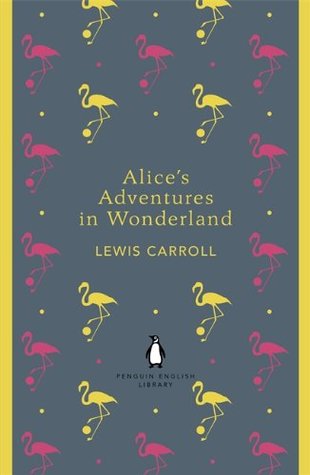
This week I reviewed three Victorian books. I reviewed Alice's Adventures in Wonderland by Lewis Carroll. I reviewed Framley Parsonage by Anthony Trollope. I reviewed The Widow of Windsor by Jean Plaidy.

The next Trollope I'll be reading is Orley Farm. I do have a decided order for approaching Trollope; I am reading chronologically. I believe I've read the first three chapters?! I'm sure we'll be spending quite a few Saturdays talking about the book. It is 825 pages! I'd love to finish it by the end of January, but we'll have to see how it goes!

This is how the novel begins, "It is not true that a rose by any other name will smell as sweet. Were it true, I should call this story “The Great Orley Farm Case.” But who would ask for the ninth number of a serial work burthened with so very uncouth an appellation? Thence, and therefore, — Orley Farm."


Two more quotes: 
  • Let one live according to any possible or impossible rule, yet some offence will be given in some quarter.
  • The capital that is really wanting is thought, mind, combination, knowledge.
I have also begun Elizabeth Gaskell's Mary Barton. I have read four chapters so far.

Favorite quote:
Don't think to come over me with th' old tale, that the rich know nothing of the trials of the poor; I say, if they don't know, they ought to know.


© 2018 Becky Laney of Becky's Book Reviews
Keep it Short #2

This week I read five short stories by L.M. Montgomery. The stories were: "Fair Exchange and No Robbery," "Four Winds," "Marcella's Reward," "Margaret's Patient," and "Matthew Insists on Puffed Sleeves." 

Fair Exchange and No Robbery

First sentence: Katherine Rangely was packing up. Her chum and roommate, Edith Wilmer, was sitting on the bed watching her in that calm disinterested fashion peculiarly maddening to a bewildered packer.

Premise/plot: Katherine and Edith amicably exchange boyfriends in this short story by L.M. Montgomery. Of course, they don't plan on it. Katherine is going to visit one of her aunt's for a month or two just when her boyfriend, Ned, has come to town. Katherine tells Edith to keep company with Ned and show him around town. Katherine is pleasantly surprised that Edith's boyfriend, Sidney, is staying nearby. They start seeing a lot of each other.

My thoughts: This is a silly, almost amateurish story. I would recommend Montgomery to anyone who's weighed down by a recent Thomas Hardy read. Montgomery is the perfect antidote.

Four Winds

First sentence: Alan Douglas threw down his pen with an impatient exclamation. It was high time his next Sunday's sermon was written, but he could not concentrate his thoughts on his chosen text.

Premise/plot: A preacher (Alan) falls in love with a young woman (Lynde) who has never entered a church in her life.

Alan finds inspiration from his nature walks. One day he takes a new path that leads him to a house that he's never seen before. He sees a beautiful woman. He wants to know who she is and more about her. The gossip he hears is discouraging. She's the daughter of a reclusive sea captain; he's known to be an atheist who yells visiting preachers off his property. But all is not as it seems. He begins to know all three residents. He falls madly in love with Lynde Oliver, the young woman. But will they get their happily ever after?

My thoughts: Four Winds was a much better read. The characters are more developed. The story is definitely more complex as well. But it was the writing that hooked me.
Many of Alan's best sermons were written after he had come home, rapt-eyed, from some long shore tramp where the wilderness had opened its heart to him and the pines had called to him in their soft, sibilant speech.
"I believe no ill of anyone until I have absolute proof of it," said Alan, smiling—he was quite unconscious what a winning smile he had, which was the best of it—"and I never put faith in gossip. Of course you are gossipped about—you know that."
"I think many dogs are much more lovable—and worthy of love—than many people," said Alan, laughing.
"I never talk religion," said Alan emphatically. "I try to live it. I'll not come to your house as a self-appointed missionary, sir, but I shall certainly act and speak at all times as my conscience and my reverence for my vocation demands. If I respect your beliefs, whatever they may be, I shall expect you to respect mine, Captain Oliver."
"Souls should not be rudely handled any more than bodies."
Marcella's Reward

First sentence: Dr. Clark shook his head gravely. "She is not improving as fast as I should like to see," he said. "In fact—er—she seems to have gone backward the past week. You must send her to the country, Miss Langley. The heat here is too trying for her."

Premise/plot: Marcella and Patty live with their Aunt Emma. Patty is ill, perhaps even dying. Marcella is in despair because she doesn't have enough money to care for Patty as the doctor recommends. But she keeps a bright spirit, and endures the drudgery of work patiently, even kindly. Her goodness is noticed and rewarded by a stranger.

My thoughts: There must have been quite a market for feel-good stories. Montgomery certainly wrote a lot of them. Marcella's kind stranger turns out to be her mother's childhood friend. Upon learning who Marcella's mother is, she becomes a fairy godmother of sorts. This story lacks a prince but one isn't really needed. It is quite happy enough as is.

Margaret's Patient
 
First sentence:  Margaret paused a moment at the gate and looked back at the quaint old house under its snowy firs with a thrill of proprietary affection. It was her home; for the first time in her life she had a real home, and the long, weary years of poorly paid drudgery were all behind her. Before her was a prospect of independence and many of the delights she had always craved; in the immediate future was a trip to Vancouver with Mrs. Boyd.

Premise/plot: Margaret Campbell's goodness is rewarded beyond all expectations in this short story. Dr. Forbes asks Margaret to take in and nurse a patient, Freda Martin. She does, giving up her vacation to do so. Freda's health returns and it turns out that Freda is a cousin. These two lonely souls have found a family to belong to.

My thoughts: There must have been quite a market for feel-good stories. Montgomery certainly wrote a lot of them. Quite a few of them depend completely on happy coincidences. Reading too many in a row can be like eating pixie sticks.

Matthew Insists on Puffed Sleeves

First sentence: Matthew was having a bad ten minutes of it. He had come into the kitchen, in the twilight of a cold, grey December evening, and had sat down in the wood-box corner to take off his heavy boots, unconscious of the fact that Anne and a bevy of her schoolmates were having a practice of "The Fairy Queen" in the sitting-room. Presently they came trooping through the hall and out into the kitchen, laughing and chattering gaily.

Premise/plot: This short story is really a chapter from Anne of Green Gables.  Essentially, Matthew notices that Anne is not dressed like her classmates. He decides she needs a new dress for Christmas. At first, he thought to buy the dress himself, or the material for the dress. But his awkward encounter with the female clerk at the store is one for the ages. He goes to Mrs. Lynde--after bringing home TWENTY pounds of brown sugar to Marilla--and she saves the day. She'll sew the dress herself. Anne cries tears of joy--and perhaps readers will as well.

My thoughts: I love, love, love this chapter from the novel. Matthew is one of my favorite characters ever. I love him for his shyness, his awkwardness. I love him for his big, big heart. I love him because he's a dear. I love him because he so completely gets Anne. The scene of Matthew in the store is hilarious.
Alas! Matthew did not know that Samuel, in the recent expansion of his business, had set up a lady clerk also; she was a niece of his wife's and a very dashing young person indeed, with a huge, drooping pompadour, big, rolling brown eyes, and a most extensive and bewildering smile. She was dressed with exceeding smartness and wore several bangle bracelets that glittered and rattled and tinkled with every movement of her hands. Matthew was covered with confusion at finding her there at all; and those bangles completely wrecked his wits at one fell swoop.
"What can I do for you this evening. Mr. Cuthbert?" Miss Lucilla Harris inquired, briskly and ingratiatingly, tapping the counter with both hands.
"Have you any—any—any—well now, say any garden rakes?" stammered Matthew.
Miss Harris looked somewhat surprised, as well she might, to hear a man inquiring for garden rakes in the middle of December.
"I believe we have one or two left over," she said, "but they're upstairs in the lumber-room. I'll go and see."
During her absence Matthew collected his scattered senses for another effort.
When Miss Harris returned with the rake and cheerfully inquired: "Anything else tonight, Mr. Cuthbert?" Matthew took his courage in both hands and replied: "Well now, since you suggest it, I might as well—take—that is—look at—buy some—some hayseed."
Miss Harris had heard Matthew Cuthbert called odd. She now concluded that he was entirely crazy.
"We only keep hayseed in the spring," she explained loftily. "We've none on hand just now."
"Oh, certainly—certainly—just as you say," stammered unhappy Matthew, seizing the rake and making for the door. At the threshold he recollected that he had not paid for it and he turned miserably back. While Miss Harris was counting out his change he rallied his powers for a final desperate attempt.
"Well now—if it isn't too much trouble—I might as well—that is—I'd like to look at—at—some sugar."
"White or brown?" queried Miss Harris patiently.
"Oh—well now—brown," said Matthew feebly.
"There's a barrel of it over there," said Miss Harris, shaking her bangles at it. "It's the only kind we have."
"I'll—I'll take twenty pounds of it," said Matthew, with beads of perspiration standing on his forehead.
Matthew had driven halfway home before he was his own man again. It had been a gruesome experience, but it served him right, he thought, for committing the heresy of going to a strange store. When he reached home he hid the rake in the tool-house, but the sugar he carried in to Marilla.
"Brown sugar!" exclaimed Marilla. "Whatever possessed you to get so much? You know I never use it except for the hired man's porridge or black fruit-cake. Jerry's gone and I've made my cake long ago. It's not good sugar, either—it's coarse and dark—William Blair doesn't usually keep sugar like that."
"I—I thought it might come in handy sometime," said Matthew, making good his escape.
and

Christmas morning broke on a beautiful white world. It had been a very mild December and people had looked forward to a green Christmas; but just enough snow fell softly in the night to transfigure Avonlea. Anne peeped out from her frosted gable window with delighted eyes. The firs in the Haunted Wood were all feathery and wonderful; the birches and wild cherry trees were outlined in pearl; the ploughed fields were stretches of snowy dimples; and there was a crisp tang in the air that was glorious. Anne ran downstairs singing until her voice re-echoed through Green Gables.
"Merry Christmas, Marilla! Merry Christmas, Matthew! Isn't it a lovely Christmas? I'm so glad it's white. Any other kind of Christmas doesn't seem real, does it? I don't like green Christmases. They're not green—they're just nasty faded browns and greys. What makes people call them green? Why—why—Matthew, is that for me? Oh, Matthew!"
Matthew had sheepishly unfolded the dress from its paper swathings and held it out with a deprecatory glance at Marilla, who feigned to be contemptuously filling the teapot, but nevertheless watched the scene out of the corner of her eye with a rather interested air.
Anne took the dress and looked at it in reverent silence. Oh, how pretty it was—a lovely soft brown gloria with all the gloss of silk; a skirt with dainty frills and shirrings; a waist elaborately pin-tucked in the most fashionable way, with a little ruffle of filmy lace at the neck. But the sleeves—they were the crowning glory! Long elbow cuffs, and above them two beautiful puffs divided by rows of shirring and bows of brown silk ribbon.
"That's a Christmas present for you, Anne," said Matthew shyly. "Why—why—Anne, don't you like it? Well now—well now."
For Anne's eyes had suddenly filled with tears.
"Like it! Oh, Matthew!" Anne laid the dress over a chair and clasped her hands. "Matthew, it's perfectly exquisite. Oh, I can never thank you enough. Look at those sleeves! Oh, it seems to me this must be a happy dream."
"Well, well, let us have breakfast," interrupted Marilla. "I must say, Anne, I don't think you needed the dress; but since Matthew has got it for you, see that you take good care of it. There's a hair ribbon Mrs. Lynde left for you. It's brown, to match the dress. Come now, sit in."
"I don't see how I'm going to eat breakfast," said Anne rapturously. "Breakfast seems so commonplace at such an exciting moment. I'd rather feast my eyes on that dress. I'm so glad that puffed sleeves are still fashionable. It did seem to me that I'd never get over it if they went out before I had a dress with them. I'd never have felt quite satisfied, you see. It was lovely of Mrs. Lynde to give me the ribbon, too. I feel that I ought to be a very good girl indeed. It's at times like this I'm sorry I'm not a model little girl; and I always resolve that I will be in future. But somehow it's hard to carry out your resolutions when irresistible temptations come. Still, I really will make an extra effort after this."
When the commonplace breakfast was over Diana appeared, crossing the white log bridge in the hollow, a gay little figure in her crimson ulster. Anne flew down the slope to meet her.
"Merry Christmas, Diana! And oh, it's a wonderful Christmas. I've something splendid to show you. Matthew has given me the loveliest dress, with such sleeves. I couldn't even imagine any nicer."
"I've got something more for you," said Diana breathlessly. "Here—this box. Aunt Josephine sent us out a big box with ever so many things in it—and this is for you. I'd have brought it over last night, but it didn't come until after dark, and I never feel very comfortable coming through the Haunted Wood in the dark now."
Anne opened the box and peeped in. First a card with "For the Anne-girl and Merry Christmas," written on it; and then, a pair of the daintiest little kid slippers, with beaded toes and satin bows and glistening buckles.
"Oh," said Anne, "Diana, this is too much, I must be dreaming."

© 2018 Becky Laney of Becky's Book Reviews

Me? Listen to Audio?! #1

I have discovered the joys of listening to BBC radio dramas. This is what I listened to this week:

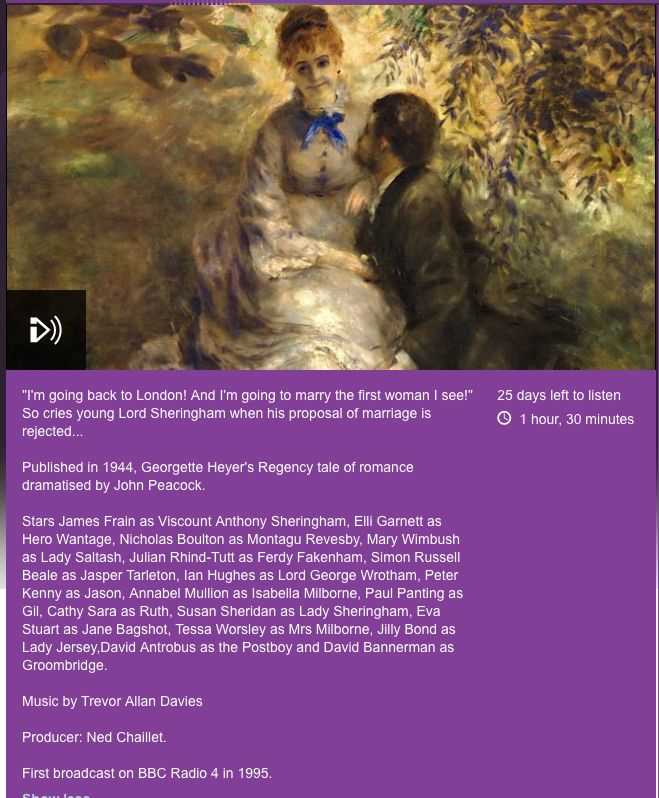
Friday's Child by Georgette Heyer, dramatised by John Peacock. 1 hr. 30 minutes. 

I have read this one at least twice, but it was such a JOY to listen to it dramatized. Now is Friday's Child my absolute favorite Heyer romance? Not really. But I do enjoy it--especially all the minor characters that seem to steal the show.

Here's what it's about: When we first meet Lord Sherington* he is proposing to Miss Isabella Milborne. He marries a few chapters later, but, his wife is NOT Miss Milborne. After a brutal rejection, he decides to marry the first woman he sees. He happens across an old friend from childhood days, a Miss Hero Wantage. She is much younger than he is--just seventeen! But she's willing, more than willing, to be his wife. How did these two happen to meet? Well, she's running away from home! So Sherry and Hero set off together to London to arrange their marriage. He settles her into a hotel room, and, then begins to go about the necessary details of arranging a super-quick wedding!

Sherry wanted to marry so he could inherit now instead of later. At first he thinks his marriage won't really change anything at all in his daily life. But, of course, he was mistaken! Hero is completely clueless about how a proper young wife should behave, what things are socially acceptable and socially encouraged, and what things are NOT to be done. Hero absorbs everything, she's very observant but not exactly discerning. She's impulsive too! So if she wants to try something, she does!

Hero's closest friends are her husband's closest friends: Gil, Ferdy, and George. And they all adore "Kitten." In fact, sometimes they understand her better than her own husband. They are quicker to perceive things! They can "read" her better and sometimes they interfere in the marriage to help things run smoother. They often explain things to Sherry in such a way that he finally gets it. Sherry, however, feels that they interfere too much!

While Hero is aware of her feelings for Sherry, will her husband ever realize how he truly feels about his young wife?!


It is available to listen to online for a few more weeks.

How To Stop Time. Matt Haig. Read by Tom Hollander. 2 hrs. 30 minutes.

I also listened to How To Stop Time by Matt Haig. This drama was split into two episodes. I have NOT read the book. But it's in my tbr pile! Typically my rule is never listen to an audio book unless I've already read it. But I couldn't resist, this one sounded so interesting, so full of potential. I'll let you know what I think if/when I get to the book.

Publisher Description: Tom Hazard has a dangerous secret. He may look like an ordinary 41-year-old, but owing to a rare condition, he's been alive for centuries. Tom has lived history--performing with Shakespeare, exploring the high seas with Captain Cook, and sharing cocktails with Fitzgerald. Now, he just wants an ordinary life.

So Tom moves back to London, his old home, to become a high school history teacher--the perfect job for someone who has witnessed the city's history first hand. Better yet, a captivating French teacher at his school seems fascinated by him. But the Albatross Society, the secretive group which protects people like Tom, has one rule: never fall in love. As painful memories of his past and the erratic behavior of the Society's watchful leader threaten to derail his new life and romance, the one thing he can't have just happens to be the one thing that might save him. Tom will have to decide once and for all whether to remain stuck in the past, or finally begin living in the present.

How to Stop Time is a bighearted, wildly original novel about losing and finding yourself, the inevitability of change, and how with enough time to learn, we just might find happiness.


Show Boat. Edna Ferber. Dramatised by Moya O'Shea. 2 hours. 

The novel Show Boat is in my TBR pile. In fact, it is one of my selections for the 2018 Official TBR Pile challenge.

I have not read the novel. But I have seen the non-musical film AND the musical film. I was curious to see if the radio drama would be like or unlike the film in terms of story and characters. Definitely some differences! I am more anxious than ever to read it now.

I thought the drama was very compelling. There are still a few more weeks left to listen to this one if you're interested.

© 2018 Becky Laney of Becky's Book Reviews

Friday, January 12, 2018

Framley Parsonage

Framley Parsonage. Anthony Trollope. 1861. 573 pages. [Source: Bought]

 First sentence: When young Mark Robarts was leaving college, his father might well declare that all men began to say all good things to him, and to extol his fortune in that he had a son blessed with so excellent a disposition.


Premise/plot: Framley Parsonage is the fourth novel in the Barsetshire series by Anthony Trollope. In my opinion, the women characters are the greatest strength of this novel. Mark's wife, Fanny; Mark's sister, Lucy; Miss Dunstable; Mrs. Crawley; even more difficult to like characters like Mrs. Harold Smith, Mrs. Proudie,  and Lady Lufton.

So what is this one about? Mark Robarts is a vicar at Framley. He is married to a wonderful woman, Fanny, whose true strength and courage is not obvious at first or second glance perhaps. He gets into big, big trouble when he decides to sign his name alongside his new friend's name on a bill. Embarrassed that he could be held responsible for the money if his friend proves to be anything but, he keeps it a secret from almost everyone in his life. That bill--and another that follows it--haunt him throughout the novel until he has his epiphany moment.

At one point, Mark's sister, Lucy, comes to stay at the parsonage. Lord Lufton, Mark's close friend, falls in love with Lucy. But their love seems doomed almost from the start since Lady Lufton (Lord Lufton's (busybody) mother has set ideas about who is and isn't appropriate for her son to marry. She visits Fanny and tells her that Lord Lufton is off limits and that Lucy should make herself scarce. Fanny tells Lucy that she shouldn't fall in love with Lord Lufton, but it's too late.) Will Lord Lufton stand up to his mother? Will Lucy agree to be his wife? Will the novel end with a wedding?

Lady Lufton wants her son to marry Griselda Grantly. She throws them together at multiple social events--both in Barsetshire and in London. But to no avail. Griselda does get some attention from another Lord however.

Miss Dunstable, whom we met before, is still very much single. There are still men in pursuit of her. Mrs. Harold Smith would have her unworthy brother--admittedly unworthy, a scoundrel--Mr. Sowerby marry the incredibly wealthy Miss Dunstable. She even proposes on his behalf. But Miss Dunstable doesn't want that kind of husband. The man she has in mind, well, is more honorable: Dr. Thorne!

Here is part of his letter to her:
We have known each other now somewhat intimately, though indeed not very long, and I have sometimes fancied that you were almost as well pleased to be with me as I have been to be with you. If I have been wrong in this, tell me so simply, and I will endeavour to let our friendship run on as though this letter had not been written. But if I have been right, and if it be possible that you can think that a union between us will make us both happier than we are single, I will plight you a word and troth with good faith, and will do what an old man may do to make the burden of the world lie light on your shoulders.
I do not know that I could add anything to the truth of this, if I were to write three times as much. All that is necessary is, that you should know what I mean. If you do not believe me to be true and honest already, nothing that I can write will make you believe it.
Mr. Sowerby features a lot in this one, for better or worse. But every novel, make that every Victorian novel, needs a character to boo and hiss at when they enter the scene, right?!

My thoughts: This was a reread for me. I think I liked it more the second time. I still struggled to like Mark for most of the novel. I think that is because it was hard for me to respect him. But when Mark comes to his senses, and stands strong and courageous, well, then my opinion began to change.

I really LOVED the characters of Lucy and Fanny and Miss Dunstable. The story line where Mary is trying to play matchmaker with her uncle, Dr. Thorne, and Miss Dunstable were priceless. I adored this couple so much.

Lucy was such a gem of a heroine. She was witty and compassionate. Her observations were great.

I also REALLY loved the fact that so many familiar faces pop up in this one. Even if old friends just show up for a couple of scenes, they're still there, still a reminder that Barchester is a place I'd love to visit.

Quotes: For my favorite quotes from the first half of the novel, see My Victorian Year #1.
  • Is it not a good thing that grapes should become sour which hang out of reach? Is he not wise who can regard all grapes as sour which are manifestly too high for his hand?
  • A man does not wish to marry a statue, let the statue be ever so statuesque. She could not teach her daughter to be impulsive, any more than she could teach her to be six feet high; but might it not be possible to teach her to seem so?
  • That, I believe, is always the first thought in the mind of a good wife when her husband returns home. Has he had his dinner? What can I give him for dinner? Will he like his dinner? Oh dear, oh dear! there is nothing in the house but cold mutton.
  • You are like a great many other people that I know. You want to eat your cake and have it. You have been eating it for the last twenty years, and now you think yourself very ill-used because the duke wants to have his turn.
  • What wretchedness can exceed that of remembering from day to day that the race has been all run, and has been altogether lost; that the last chance has gone, and has gone in vain; that the end has come, and with it disgrace, contempt, and self-scorn — disgrace that never can be redeemed, contempt that never can be removed, and self-scorn that will eat into one’s vitals for ever?
  • You have had your cake, and eaten it — eaten it greedily. Is not that sufficient for you? Would you eat your cake twice? Would you have a succession of cakes? No, my friend; there is no succession of these cakes for those who eat them greedily.
  • But you must detest a man who professes to stand by his party, and then does his best to ruin it.
  • All is fair in love and war, — why not add politics to the list? If we could only agree to do that, it would save us from such a deal of heartburning, and would make none of us a bit the worse.
  • In society Griselda’s toes were more serviceable to her than her tongue, and she was to be won by a rapid twirl much more probably than by a soft word.
  • Lord Lufton had not offered to her, nor given any signs that he intended to do so; and to give Griselda Grantly her due, she was not a girl to make a first overture. Neither had Lord Dumbello offered; but he had given signs, — dumb signs, such as birds give to each other, quite as intelligible as verbal signs to a girl who preferred the use of her toes to that of her tongue.
  • “I wonder whether you will ever be sorry for the cruelty of your doings, or whether these things are really a joke to you.”
  • A man in love seldom loves less because his love becomes difficult. And thus, when those moments were over, he would determine to tell his mother at once, and urge her to signify her consent to Miss Robarts.
  • It would be a terrible curse to have to talk sense always.
  • Any allusion to Mr. Slope acted on Mrs. Proudie as a red cloth is supposed to act on a bull; but when that allusion connected the name of Mr. Slope in a friendly bracket with that of Mrs. Proudie’s future son-in-law it might be certain that the effect would be terrific.
  • Fanny, I shall always call you Don Quixote, and some day or other I will get somebody to write your adventures.
  • They say that prosperity makes a man selfish. I have never tried that, but I am quite sure that adversity does so.
  • Of the faults which a man commits he must bear the punishment.
  • Success does beget pride, as failure begets shame.
© 2018 Becky Laney of Becky's Book Reviews