The number will be posted on August 1, 2018. Here are my twenty. THE NUMBER WAS NINE.
1. Ruth by Elizabeth Gaskell 1853.
2. Les Miserables, Victor Hugo, translated by Julie Rose. 1862/2008.
3. The Three Musketeers. Alexandre Dumas. Richard Pevear, translator. 1844/2006.
4. Villette by Charlotte Bronte (1853)
5. Gone With The Wind. Margaret Mitchell (1936)
6 To Kill a Mockingbird. Harper Lee. 1960.
7. The Small House at Allington. Anthony Trollope. 1864.
8. Raintree County by Ross Lockridge Jr. (1948)
9. The Conqueror by Georgette Heyer. 1931.
10. Show Boat by Edna Ferber (1926)
11. The Sword of the Wicked. Richard Sibbes.
12. Domestic Manners of the Americans. Frances Trollope. 1832.
13. Don Quixote. Miguel de Cervantes. 1605.
14. The Forsyte Saga by John Galsworthy (1921)
15. Dear and Glorious Physician. Taylor Caldwell. 1958.
16. Robinson Crusoe. Daniel Defoe. 1719.
17. The Idiot. Fyodor Dostoyevsky. 1869.
18. The Tempest by William Shakespeare (1610)
19. Richard the Third by Paul Murray Kendall (1955)
20. Blue Fairy Book. Andrew Lang. 1887.
© 2018 Becky Laney of Becky's Book Reviews

Showing posts with label classics club 2016-2021. Show all posts
Showing posts with label classics club 2016-2021. Show all posts
Friday, July 27, 2018


Monday, May 07, 2018
Orley Farm
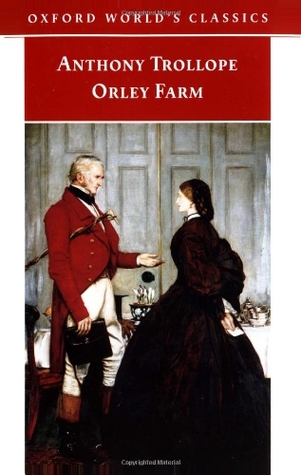
First sentence: It is not true that a rose by any other name will smell as sweet. Were it true, I should call this story “The Great Orley Farm Case.” But who would ask for the ninth number of a serial work burthened with so very uncouth an appellation? Thence, and therefore, — Orley Farm.
Premise/plot: Can Orley Farm be condensed into a single plot or premise?! Doubtful. Should it have been condensed into a single plot or premise by an editor way back when? Maybe. There are essentially two very different stories unfolding with a few overlapping characters to tie them together.
Lady Mason is one of the heroines of the novel. Twenty years before our novel properly opens she made a decision inspired by the story of Rebekah and Isaac from the book of Genesis. Her husband was dying, and, she needed to act then and there to do what was best for her baby son, Lucius. She did not think it fair that Orley Farm should be left to the older son, Joseph, Lucius' much much older half-brother. Why should he get it all when he already had property? There was a trial after the husband's death. Joseph found it strange--suspicious--that his father should at the last minute add a codicil to his will leaving Orley Farm to Lucius. But the jury found in favor of Lady Mason.
Twenty years have come and gone. Her son is all grown up. Her son is beginning to have ambitions of his own. Ambitions for improving the property. Ambitions of marrying well. But obstacles spring up in his path. An embittered man with questionable motives and intents decides the Orley Farm case should be reopened. He just has to convince Joseph Mason and the lawyers that it will be worth their while. And emphasis that if it is worth their while that they will make it worth his while.
The community is shocked when Lady Mason's honor and innocence is challenged. Hasn't the will and its codicil been challenged and verified already? What new evidence could there be to make a new trial worth the time and effort? Who will stand by Lady Mason?
Lady Mason takes refuge with the Orme family of The Cleeve. She's disliked by the grandson, but BELOVED by the grandfather. He falls madly, deeply head-over-heels in love with her. He's ready to sacrifice his good reputation for her sake, to be a complete fool for her. But will she let him make that sacrifice? She finds great support with Mrs. Orme--the daughter-in law/mother. Mrs. Orme may best be compared to Melanie Wilkes. She sees the best in people even in the darkest situations. She is compassionate, sympathetic, true to herself and steadfast to others. Is it any wonder that she's my favorite character in the book?
There are PLENTY of other characters in the book. Some of them are loosely connected to the 'main' story by being friends, neighbors, lawyers, or even acquaintances. For example, there are several young men that are acquaintances/friends with Lucius Mason. The book begins following their adventures/misadventures in love and courtship.
Mr. and Mrs. Furnival are two people we meet in the novel. Mr. Furnival is one of Lady Mason's lawyers. Mrs. Furnival is VERY unhappy in her marriage and becomes viciously jealous. Is she right to do so? She is right to suspect that her husband's attentions are not what they used to be and not what they should be. But she is wrong to suspect that Lady Mason is a no-good flirt out to steal Mr. Furnival. These domestic scenes are lively to say the least.
Two young women that we meet are Sophia Furnival and Madeline Staveley. The young men we meet are Lucius Mason, Augustus Staveley, Peregrine Orme (the younger), and Felix Graham. One successful marriage results in the end. But NOT every proposal gets a yes in this one.
My thoughts: Last year I set out to read Anthony Trollope in chronological order. I knew it would take more than one year. I knew that it could possibly take a good many years. I knew there would be stumbles along the way and that I'd encounter books that would be sluggish to get through. I knew that there would be books that were "easy" because I LOVED them from the start. I knew that there would be books that were "hard" because I'd find them difficult to get into. I didn't expect any book to take as long to read as Orley Farm did. It is a LONG book not made any easier because of its story.
I found it picked up quite nicely once the new trial began. But that was like sixty-something chapters into an eighty-chapter novel!!!
Quotes to share since last week's My Victorian Year:
But a woman can do things for which a man’s courage would never be sufficient.
“As long as a man can pay twenty shillings in the pound and a trifle over, what does it matter if all the judges in the land was to call him stupid?” said Snengkeld. “Stupid is as stupid does,” said Kantwise.
Had Lady Mason been guilty of all the sins in the calendar except one, Mrs. Furnival could find it within her heart to forgive her.
But no lesson is truer than that which teaches us to believe that God does temper the wind to the shorn lamb. To how many has it not seemed, at some one period of their lives, that all was over for them, and that to them in their afflictions there was nothing left but to die! And yet they have lived to laugh again, to feel that the air was warm and the earth fair, and that God in giving them ever-springing hope had given everything.
Men will not be talked out of the convictions of their lives. No living orator would convince a grocer that coffee should be sold without chicory; and no amount of eloquence will make an English lawyer think that loyalty to truth should come before loyalty to his client.
We can do nothing by interference. Remember the old saying, You cannot touch pitch without being defiled.
Nobody holds a good opinion of a man who has a low opinion of himself.
What are love and friendship worth if they cannot stand against such trials as these?
Friendship between true friends must extend to all the affairs of life.
It is easy to talk of repentance, but repentance will not come with a word.
When heart has spoken to heart, or even head to head, very little other speaking is absolutely necessary.
© 2018 Becky Laney of Becky's Book Reviews
Thursday, April 19, 2018
Crime and Punishment
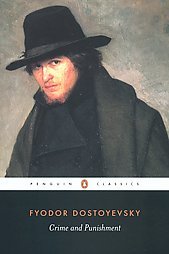
First sentence: At the beginning of July, during a spell of exceptionally hot weather, towards evening, a certain young man came down on to the street from the little room he rented from some tenants in S--- Lane and slowly, almost hesitantly, set off towards K---n Bridge.
Premise/plot: Rodion Raskolnikov, the "hero" of Dostoyevsky's Crime and Punishment, has major issues. He's become convinced, mostly, that murder is justifiable if it's for the 'greater good' of mankind. He has thought a lot about this--even written an article about it. His abstract theory becomes his one consuming obsession.
Does he have what it takes to kill someone? More importantly perhaps, does he have what it takes to kill someone and get away it. In his mental state, he does not believe that the crime IS a crime. His "victim" (he doesn't see her as a victim) is a pawnbroker who "takes advantage" of the poor. The world would be a better place without her, wouldn't it? If it would be--and he is convinced it would be--it's the right thing to eliminate her. He plans everything out--to the best of his ability--but things don't go according to plan. He didn't plan on the victim's sister returning to their home mid-crime; he didn't plan on a second victim; he didn't plan on nearly being caught by young men who'd come to pawn their goods. He also didn't plan on his physical health coming unhinged just as his mental and emotional health was breaking down. Is his madness caused by illness? Is his illness caused by madness? Is his illness real or in his head? Is there a cure for what ails him?
Another family is central to the novel as well. Semyon Zakharovich Marmeladov is an out-of-luck drunk whom Rodion meets early in the novel. This drunk tells the tragic story of his tragic family to anyone and everyone who will listen; he tells it with drink in hand of course. Rodion witnesses his new friend's death and makes sure that he's taken to his own home to die. He meets the soon-to-be widow, Katerina Ivanovna Marmeladova, and more importantly one of his daughters, Sonya. (She's been "forced" into prostitution in an effort to keep her family alive. Her father is an incompetent drunk and her mother is dying of consumption. She has, I believe, three younger siblings.) Rodion gives the family money for the funeral. He's not trying to cause a scandal; he's moved with compassion--pity--for their plight. Sonya becomes one of the main characters of the book. She is also the first person to whom he confesses his crime. (At this point he still doesn't see it as a crime.)
Most of the novel is about the cat-and-mouse game being played by Rodion Raskolnikov and the detective Porfiry Petrovich. Rodion becomes suspicious that the detective suspects him and is trying to trap him. So he tries to stay a couple of steps ahead of him. Likewise, Porfiry KNOWS that Rodion suspects that he's suspected. He knows that Rodion is trying to stay a few steps ahead. He also knows that ultimately Rodion will fail and that justice will be done. It doesn't matter to him if the case is resolved today or next week or next month.
My thoughts: Are ideas dangerous? Can a germ--a seed--of an idea become dangerous and deadly? Do ideas have consequences? What if theories and ideas and philosophies are carried out in day to day life and bear fruit?
I don't always "like" unreliable narrators. I haven't decided if the category applies here or not. Is he mentally ill? Is he mad? Did he know right from wrong when he committed the crime? If he was insane--was the insanity long-lasting? or was it temporary? When did his madness start? And what caused it? Was the idea fermenting in his mind the root cause? Is there a cure for his madness? Even if he's punished by the state, will he ever admit moral responsibility? That is will he ever come to see his crime as a CRIME. Will he come to see that his idea of justifiable murder is reprehensible? Or will he continue to think that the only crime--the crime he's being punished for--is the crime of getting caught, the crime of being incompetent, the crime of being weak?
According to Wikipedia, Dostoyevsky was inspired by a French murderer, Pierre Francois Lacenaire.
I have shared quotes from the novel in my weekly 'My Victorian Year' posts.
Here are my quotes from the last part of the book.
Power is given only to those who dare to lower themselves and pick it up. Only one thing matters, one thing: to be able to dare! (499)
All human beings need air, air, air...That above all else! (525)
There is nothing in the world more difficult than plain speaking, and nothing easier than flattery. If when a man is trying to speak plainly one-hundredth part of a false note creeps into what he is saying, the result is an instant dissonance, and following it--a scandal. In the case of flattery, however, even if everything in it, right down to the very last note, is false, it sounds agreeable and is received not without pleasure; even though it's a crude sort of pleasure, it's pleasure nevertheless. And no matter how crude the flattery may be, at least half of it always seems genuine. (568)
Everyone must look out for himself, and the best time is had by those who're best able to deceive themselves. (574)
But those people had the courage of their convictions, and so they were right, while I didn't, and consequently had no right to take the step I did. (649)
And here are my overall favorite quotes:
One can always forgive a man for telling lies; lying's a harmless activity, because it leads to the truth. (163)
"We've got facts," they say. But facts aren't everything: at least half the battle consists in how one makes use of them! (164)
Talking nonsense is the sole privilege mankind possesses over the other organisms. It's by talking nonsense that one gets to the truth! I talk nonsense, therefore I'm human. Not one single truth has ever been arrived at without people having talked a dozen reams of nonsense, even ten dozen reams of it, and that's an honorable thing in its own way; well, but we can't even talk nonsense with our own brains! Talk nonsense to me, by all means, but do it with your own brain, and I shall love you for it. To talk nonsense in one's own way is almost better than to talk a truth that's someone else's; in the first instance you behave like a human being, while in the second you are merely being a parrot. (242)
We've got accustomed to making do with other people's intelligence--we're soaked in it! (242)
The harmonious individual, it needs to be said, hardly exists at all. (270)
The living soul demands to live. (305)
It's impossible to leap over nature solely by means of logic! (305)
Pain and suffering are inevitable for persons of broad awareness and depth of heart. The truly great are, in my view, always bound to feel a great sense of sadness during their time upon earth. (315)
© 2018 Becky Laney of Becky's Book Reviews
Monday, March 05, 2018
Classics Club Spin #17
I think this is my third spin to participate in since joining the Classics Club. Here are my list of twenty books. The date the number is announced is March 9. The book "must" be finished by April 30, 2018. The number was THREE.
© 2018 Becky Laney of Becky's Book Reviews
- Blue Fairy Book. Andrew Lang. 1887.
- The Conqueror by Georgette Heyer. 1931.
- Crime and Punishment. Fyodor Dostoyevsky. 1866.
- Dear and Glorious Physician. Taylor Caldwell. 1958.
- Don Quixote. Miguel de Cervantes. 1605.
- East of Eden by John Steinbeck (1952)
- The Forsyte Saga by John Galsworthy (1921)
- Gone With The Wind. Margaret Mitchell (1936)
- Hester by Margaret Oliphant (1883)
- Little Women by Louisa May Alcott
- Lucy Maud Montgomery Short Stories: 1909-1922
- North and South. Elizabeth Gaskell. 1854-55
- Old Paths by J.C. Ryle
- One Day in the Life of Ivan Denisovich by Alexander Solzhenitsyn (1963)
- Orley Farm by Anthony Trollope (1862)
- Raintree County by Ross Lockridge Jr. (1948)
- Richard the Third by Paul Murray Kendall (1955)
- Shirley by Charlotte Bronte (1849)
- Show Boat by Edna Ferber (1926)
- The Tempest by William Shakespeare (1610)
© 2018 Becky Laney of Becky's Book Reviews
Friday, January 12, 2018
Framley Parsonage

First sentence: When young Mark Robarts was leaving college, his father might well declare that all men began to say all good things to him, and to extol his fortune in that he had a son blessed with so excellent a disposition.
Premise/plot: Framley Parsonage is the fourth novel in the Barsetshire series by Anthony Trollope. In my opinion, the women characters are the greatest strength of this novel. Mark's wife, Fanny; Mark's sister, Lucy; Miss Dunstable; Mrs. Crawley; even more difficult to like characters like Mrs. Harold Smith, Mrs. Proudie, and Lady Lufton.
So what is this one about? Mark Robarts is a vicar at Framley. He is married to a wonderful woman, Fanny, whose true strength and courage is not obvious at first or second glance perhaps. He gets into big, big trouble when he decides to sign his name alongside his new friend's name on a bill. Embarrassed that he could be held responsible for the money if his friend proves to be anything but, he keeps it a secret from almost everyone in his life. That bill--and another that follows it--haunt him throughout the novel until he has his epiphany moment.
At one point, Mark's sister, Lucy, comes to stay at the parsonage. Lord Lufton, Mark's close friend, falls in love with Lucy. But their love seems doomed almost from the start since Lady Lufton (Lord Lufton's (busybody) mother has set ideas about who is and isn't appropriate for her son to marry. She visits Fanny and tells her that Lord Lufton is off limits and that Lucy should make herself scarce. Fanny tells Lucy that she shouldn't fall in love with Lord Lufton, but it's too late.) Will Lord Lufton stand up to his mother? Will Lucy agree to be his wife? Will the novel end with a wedding?

Miss Dunstable, whom we met before, is still very much single. There are still men in pursuit of her. Mrs. Harold Smith would have her unworthy brother--admittedly unworthy, a scoundrel--Mr. Sowerby marry the incredibly wealthy Miss Dunstable. She even proposes on his behalf. But Miss Dunstable doesn't want that kind of husband. The man she has in mind, well, is more honorable: Dr. Thorne!
Here is part of his letter to her:
We have known each other now somewhat intimately, though indeed not very long, and I have sometimes fancied that you were almost as well pleased to be with me as I have been to be with you. If I have been wrong in this, tell me so simply, and I will endeavour to let our friendship run on as though this letter had not been written. But if I have been right, and if it be possible that you can think that a union between us will make us both happier than we are single, I will plight you a word and troth with good faith, and will do what an old man may do to make the burden of the world lie light on your shoulders.
Mr. Sowerby features a lot in this one, for better or worse. But every novel, make that every Victorian novel, needs a character to boo and hiss at when they enter the scene, right?!I do not know that I could add anything to the truth of this, if I were to write three times as much. All that is necessary is, that you should know what I mean. If you do not believe me to be true and honest already, nothing that I can write will make you believe it.
My thoughts: This was a reread for me. I think I liked it more the second time. I still struggled to like Mark for most of the novel. I think that is because it was hard for me to respect him. But when Mark comes to his senses, and stands strong and courageous, well, then my opinion began to change.
I really LOVED the characters of Lucy and Fanny and Miss Dunstable. The story line where Mary is trying to play matchmaker with her uncle, Dr. Thorne, and Miss Dunstable were priceless. I adored this couple so much.
Lucy was such a gem of a heroine. She was witty and compassionate. Her observations were great.
I also REALLY loved the fact that so many familiar faces pop up in this one. Even if old friends just show up for a couple of scenes, they're still there, still a reminder that Barchester is a place I'd love to visit.
Quotes: For my favorite quotes from the first half of the novel, see My Victorian Year #1.
- Is it not a good thing that grapes should become sour which hang out of reach? Is he not wise who can regard all grapes as sour which are manifestly too high for his hand?
- A man does not wish to marry a statue, let the statue be ever so statuesque. She could not teach her daughter to be impulsive, any more than she could teach her to be six feet high; but might it not be possible to teach her to seem so?
- That, I believe, is always the first thought in the mind of a good wife when her husband returns home. Has he had his dinner? What can I give him for dinner? Will he like his dinner? Oh dear, oh dear! there is nothing in the house but cold mutton.
- You are like a great many other people that I know. You want to eat your cake and have it. You have been eating it for the last twenty years, and now you think yourself very ill-used because the duke wants to have his turn.
- What wretchedness can exceed that of remembering from day to day that the race has been all run, and has been altogether lost; that the last chance has gone, and has gone in vain; that the end has come, and with it disgrace, contempt, and self-scorn — disgrace that never can be redeemed, contempt that never can be removed, and self-scorn that will eat into one’s vitals for ever?
- You have had your cake, and eaten it — eaten it greedily. Is not that sufficient for you? Would you eat your cake twice? Would you have a succession of cakes? No, my friend; there is no succession of these cakes for those who eat them greedily.
- But you must detest a man who professes to stand by his party, and then does his best to ruin it.
- All is fair in love and war, — why not add politics to the list? If we could only agree to do that, it would save us from such a deal of heartburning, and would make none of us a bit the worse.
- In society Griselda’s toes were more serviceable to her than her tongue, and she was to be won by a rapid twirl much more probably than by a soft word.
- Lord Lufton had not offered to her, nor given any signs that he intended to do so; and to give Griselda Grantly her due, she was not a girl to make a first overture. Neither had Lord Dumbello offered; but he had given signs, — dumb signs, such as birds give to each other, quite as intelligible as verbal signs to a girl who preferred the use of her toes to that of her tongue.
- “I wonder whether you will ever be sorry for the cruelty of your doings, or whether these things are really a joke to you.”
- A man in love seldom loves less because his love becomes difficult. And thus, when those moments were over, he would determine to tell his mother at once, and urge her to signify her consent to Miss Robarts.
- It would be a terrible curse to have to talk sense always.
- Any allusion to Mr. Slope acted on Mrs. Proudie as a red cloth is supposed to act on a bull; but when that allusion connected the name of Mr. Slope in a friendly bracket with that of Mrs. Proudie’s future son-in-law it might be certain that the effect would be terrific.
- Fanny, I shall always call you Don Quixote, and some day or other I will get somebody to write your adventures.
- They say that prosperity makes a man selfish. I have never tried that, but I am quite sure that adversity does so.
- Of the faults which a man commits he must bear the punishment.
- Success does beget pride, as failure begets shame.
Wednesday, December 27, 2017
Uncle Tom's Cabin

Dear Uncle Tom's Cabin,
I'm so sorry it took me this long to read you. You see, I blame The King and I. My only frame of reference to you was through that movie--and, well, let's be honest, that part of The King and I is hard to sit through. I didn't know you were better than that, and for that I do owe you an apology.
So why did I read you now? The Classics Club. I included you on my list in the first place because you came recommended from one of my best, best, best friends. I trust her opinion. So on the list you went. But it took the 'classics club spin' to prompt me to read you NOW. And the truth is, I was hoping you were the one--the one to get picked. (And no, I'm not just saying that.)
You're a rare gem of a novel. You are premise-driven AND character-driven--and dare I say plot-driven? The premise is simple: slavery is wrong for a million and one different reasons and there is no possible good defense to keeping it around. Some of the characters within the book are pro-slavery; some of the characters are anti-slavery. A few are confused or on the fence. Within your pages, these ideas do BATTLE. If you were just an idea-driven novel, you'd still be worth reading.
But you're not just an idea-driven novel. You're more than that.
You are definitely, without a doubt, a character-driven novel. Your characters LIVE and BREATHE. Uncle Tom. George Harris. Eliza. Miss Ophelia. Eva. St. Clare. Cassy. Emmeline. To name just a few. You might think, well, this book has an agenda--all of her characters will sound the same, act the same, hammer in the point--stick to the agenda: slavery is evil; down with slavery. And many of her characters--not just the slaves--are anti-slavery. There is an intense longing for freedom, for liberty. There is also anger and sorrow. But each slave is presented as an individual, as unique as can be. I really loved hearing each voice, learning each story. Every voice matters.
If I had to pick just one favorite character--and I don't want to, mind you--I would pick Uncle Tom. I loved Tom's faith. I loved Tom's reliance on God's daily-given-grace to endure. I loved Tom's hope. Hope that the Lord does indeed hear his prayers, see his miseries, care about him. Hope that the victory is the Lord's, that justice will be done. Hope that the Lord will see him through, that he'll be an overcomer, that heaven is HIS. I loved Tom's heart. He loved. He was compassionate. He was an encourager. He also forgave. He lived the gospel--day in, day out. He didn't just live it by example; he also spoke it. He was a seed-planter. Even when his words fell on "deaf ears," so to speak, he continued to hold true to the gospel. He didn't see sharing the good news of Jesus Christ as a waste of breath. He wanted to see others around him KNOW Jesus as he knew Jesus. Whether they were white or black, free or slave. He prayed for the salvation of Augustine, of Simon Legree, of Sambo and Quimbo, of Cassy. He knew that God can save anyone, no one was beyond God's ability to save. And because he believed so strongly in heaven and hell, he CARED. He didn't want to see anyone in hell. Tom is in many ways, a saint, just like Eva. Faith didn't come easy to Tom. It wasn't like he was all: bring on the suffering, bring on the pain, do your worst and I'll smile and grin through it all. He prayed for deliverance. He prayed for the suffering to go away. He prayed for better circumstances. He longed for freedom. Being a Christian didn't stop him from wanting, from needing. But he was content that the Lord was his lot, his portion, his reward. Near the end he proclaims, "The Lord’s bought me, and is going to take me home,—and I long to go."
As a Christian, it matters to me to see faith represented in fiction. And you do that so well. I wish there were more contemporary examples like you. Books with characters living, breathing the faith day in and day out--no matter how hard, no matter their doubts, no matter their weaknesses. Books that uphold that the Bible is the BOOK OF BOOKS. But. I'm getting distracted.
Plot-driven. Yes, you're plot-driven too. There are scenes with such intensity, such drama, such danger and peril that I was worried and on the edge of my seat. Sometimes your action wasn't so much physical as emotional. What a roller coaster of a book. My poor heart.
To sum it up, I LOVE YOU. And thank you for being you. I will do my best to encourage others to pick you up and read you. Oh. I also plan to come back and read you again.
Love, Becky
P.S. I've also reviewed you at Operation Actually Read Bible. I've included LOADS of quotes.
© 2017 Becky Laney of Becky's Book Reviews
Tuesday, November 07, 2017
Classic Spin (my second; their 16th)
My list of twenty books for the Classic Spin. Number will be posted at the Classics Club on Friday, November 17. The number was--is--4. I'll be reading Uncle Tom's Cabin!
1. Spurgeon Study Bible
2. East of Eden by John Steinbeck (1952)
3. To Kill A Mockingbird. Harper Lee. 1960.
4. Uncle Tom's Cabin by Harriet Beecher Stowe (1852)
5. Mill on the Floss. George Eliot. 1860.
6. Gone with the Wind by Margaret Mitchell (1936)
7. Deerbrook. Harriet Martineau. 1839.
8. David Copperfield. Charles Dickens. 1849-1850
9. Pickwick Papers. Charles Dickens. 1836-37
10. Hester by Margaret Oliphant (1883)
11. Crime and Punishment. Fyodor Dostoyevsky. 1866.
12. Show Boat by Edna Ferber (1926)
13. Don Quixote. Miguel de Cervantes. 1605
14. How Green Was My Valley by Richard Llewellyn. 1939.
15. Raintree County by Ross Lockridge Jr. (1948)
16. Commentary on Romans by Martin Luther
17. Dear and Glorious Physician. Taylor Caldwell. 1958.
18. Robinson Crusoe. Daniel Defoe. 1719.
19. Framley Parsonage. Anthony Trollope. 1861.
20. Richard the Third by Paul Murray Kendall (1955)
© 2017 Becky Laney of Becky's Book Reviews
1. Spurgeon Study Bible
2. East of Eden by John Steinbeck (1952)
3. To Kill A Mockingbird. Harper Lee. 1960.
4. Uncle Tom's Cabin by Harriet Beecher Stowe (1852)
5. Mill on the Floss. George Eliot. 1860.
6. Gone with the Wind by Margaret Mitchell (1936)
7. Deerbrook. Harriet Martineau. 1839.
8. David Copperfield. Charles Dickens. 1849-1850
9. Pickwick Papers. Charles Dickens. 1836-37
10. Hester by Margaret Oliphant (1883)
11. Crime and Punishment. Fyodor Dostoyevsky. 1866.
12. Show Boat by Edna Ferber (1926)
13. Don Quixote. Miguel de Cervantes. 1605
14. How Green Was My Valley by Richard Llewellyn. 1939.
15. Raintree County by Ross Lockridge Jr. (1948)
16. Commentary on Romans by Martin Luther
17. Dear and Glorious Physician. Taylor Caldwell. 1958.
18. Robinson Crusoe. Daniel Defoe. 1719.
19. Framley Parsonage. Anthony Trollope. 1861.
20. Richard the Third by Paul Murray Kendall (1955)
© 2017 Becky Laney of Becky's Book Reviews
Saturday, October 28, 2017
Adam Bede

First sentence: With a single drop of ink for a mirror, the Egyptian sorcerer undertakes to reveal to any chance comer far-reaching visions of the past.
Adam Bede opens in the summer of 1799 in a rural community that is about to be scandalized.
Adam Bede loves Hetty Sorrel. Seth Bede loves Dinah Morris. Dinah and Hetty are cousins; both orphans, both staying with the same aunt and uncle. The two women couldn't be more different from one another. Hetty is young, beautiful, lives in the clouds instead of down on earth, believes in fairy tales and knights in shining armor. Dinah Morris isn't "old" by any stretch of the imagination, but her wisdom makes her more of an old soul than Hetty could ever be. She's a Methodist--a Methodist preacher. She's loving, compassionate, intelligent, wise, honest and sincere.
The squire's heir, Arthur Donnithorne, falls hard for Hetty. He's a soldier--home visiting just for a short time. He sees her, sees potential danger, rushes ahead anyway. He knows how it will end--just not when. It will end with him leaving her behind forever. Arthur could no more marry Hetty than he could fly to the moon and back. He knows also that Hetty will be crushed when he leaves. He'll also be upset. But he doesn't seem to grasp that he's aware of all the risks and she isn't. Not really. For one thing, she thinks she's as good as engaged. She knows that one day--hopefully soon--they'll be man and wife. All will be made right then.
Readers aren't horribly clear on if Hetty is aware of one HUGE danger. Does Hetty realize that she could get pregnant? Arthur seems aware of this danger; in his goodbye forever letter, he tells Hetty to write to him immediately if a PROBLEM should come up in the next month or so. Hetty doesn't seem to realize Arthur's veiled hints mean: if you should find yourself with child, let me know.
Before Arthur leaves, Dinah reaches out to Hetty. If you should ever find yourself in need of a friend, I'll be there for you no matter what. You are loved--unconditionally. Dinah herself leaves the community much earlier than that. She is being led by the Lord. She rejects Seth's proposal before she leaves.
Adam and Arthur are friends; their friendship is unequal perhaps. Arthur will be squire one day. He's several ranks above what Adam could ever hope to be. Adam is a working man, a hard-working man. He may or may not ever have enough money to marry and have his own place--apart from his brother and mother. But he loves Hetty. He is biding his time. Arthur is speeding up the situation by giving Adam opportunities and advantages in his carpentry business.
Arthur has a conscience, but it's weak. Adam has a conscience, and it's STRONG. Arthur knows right from wrong, but he follows his mind and not his conscience. He feels guilt, but doesn't repent. Part of repenting is turning away from sin, fighting temptation, and changing your behavior. Arthur's guilt doesn't lead him to repentance.
Adam and Arthur have a CONFRONTATION before he leaves. He has caught Arthur and Hetty kissing in the woods. Adam loses respect for Arthur, but not for Hetty. She was a victim; Arthur was taking advantage of her innocence. Arthur should have known better. Hetty wasn't capable of knowing better. As Adam reckons it.
Several weeks after Arthur leaves, Hetty and Adam begin to court. She agrees to marry him. The family is elated. The wedding is planned for around Easter time.
A month or so before the wedding, in February, I believe. Hetty decides to "visit" Dinah. Hetty is in actuality planning on running away--for good. Where is she running? To the last place she knew Arthur to be. Why? Because she's about to give birth to Arthur's child and no one knows.
When does Hetty learn that she's pregnant? Why did she wait so long to run away? Why didn't she write Arthur as he told her to? Does Hetty know she's pregnant? Is she in denial? How do her friends and family not know she's pregnant? When she runs away she is about eight months pregnant. Is Hetty in her right mind when she runs away? At what point does her brain break down? When does Hetty lose the ability--does she lose the ability--to know right from wrong?
Because her excuse was a good one, it takes almost three weeks before her family realizes she is missing. And it takes a good bit of time before Adam tracks down where Hetty went first. Before he puts all the pieces together, he is given a big shock. A woman matching Hetty's description has just been put in JAIL for MURDER. She has murdered her baby. He was found half-buried in the woods and discovered by a farmer.
SCANDAL. The "scandal" of the summer of 1799 might have been a "crazy" woman preacher preaching outside to the masses. The scandal of the spring/summer of 1800 was that one of their own was capable of MURDER (not to mention fornication). Who will be there for Hetty? Will every single man and woman turn their backs on her?
Enter Dinah. Only Dinah embraces Hetty and supports her one hundred percent. Unconditional love is in fact unconditional.
Where does Adam fit in? Well. He doesn't love Hetty anymore. He sees her as forever stained and beyond redemption. Because she is facing death, he digs deep and finds it possible to forgive her. Love, for Adam, was not unconditional but conditional. Now, for the record he blames Arthur almost exclusively. If it were up to Adam, both Hetty and Arthur would be on trial and facing death. Justice demands that Arthur be held accountable too. Of course, that is not how the world works.
The aftermath. Life eventually settles back into a routine of its own, but, some things can't be forgotten completely. Adam does find love again--in the arms of an amazing, wonderful woman: Dinah.
If I had to pick one character to LOVE from Adam Bede, it wouldn't be Adam Bede. It would be DINAH. For a more spiritual/philosophical review read my review at Operation Actually Read Bible.
Favorite quotes:
- Let evil words die as soon as they're spoken.
- Weaknesses and errors must be forgiven—alas! they are not alien to us.
- The vainest woman is never thoroughly conscious of her own beauty till she is loved by the man who sets her own passion vibrating in return.
- We may determine not to gather any cherries and keep our hands sturdily in our pockets, but we can't prevent our mouths from watering.
- I don't believe there's anything you can't prevail on people to do with kindness.
- A man can never do anything at variance with his own nature. He carries within him the germ of his most exceptional action; and if we wise people make eminent fools of ourselves on any particular occasion, we must endure the legitimate conclusion that we carry a few grains of folly to our ounce of wisdom.
- You must learn to deal with odd and even in life, as well as in figures.
- And so Adam went to bed comforted, having woven for himself an ingenious web of probabilities—the surest screen a wise man can place between himself and the truth.
- For there is no hour that has not its births of gladness and despair, no morning brightness that does not bring new sickness to desolation as well as new forces to genius and love. There are so many of us, and our lots are so different, what wonder that Nature's mood is often in harsh contrast with the great crisis of our lives? We are children of a large family, and must learn, as such children do, not to expect that our hurts will be made much of—to be content with little nurture and caressing, and help each other the more.
- Sleep comes to the perplexed—if the perplexed are only weary enough.
- Our deeds determine us, as much as we determine our deeds, and until we know what has been or will be the peculiar combination of outward with inward facts, which constitutes a man's critical actions, it will be better not to think ourselves wise about his character.
- Pity that consequences are determined not by excuses but by actions!)
- A LONG, lonely journey, with sadness in the heart; away from the familiar to the strange: that is a hard and dreary thing even to the rich, the strong, the instructed; a hard thing, even when we are called by duty, not urged by dread.
- The beginning of hardship is like the first taste of bitter food—it seems for a moment unbearable; yet, if there is nothing else to satisfy our hunger, we take another bite and find it possible to go on.
© 2017 Becky Laney of Becky's Book Reviews
Thursday, October 19, 2017
Castle Richmond

First sentence: I wonder whether the novel-reading world — that part of it, at least, which may honour my pages — will be offended if I lay the plot of this story in Ireland! That there is a strong feeling against things Irish it is impossible to deny. Irish servants need not apply; Irish acquaintances are treated with limited confidence; Irish cousins are regarded as being decidedly dangerous; and Irish stories are not popular with the booksellers.
Premise/plot: Castle Richmond is set in Ireland at the start of the Irish Potato Famine (1845-1849). Is it solely about the potato famine? No. Not really. Would it be better if it were? Maybe. Maybe not. You see what the plot turns around mainly are two men in love with the same young woman: Herbert Fitzgerald and Owen Fitzgerald are cousins in love with the same woman, Lady Clara Desmond. If that were all, it wouldn't be all that surprising and unusual. But that's not all.
Lady Clara's mother--also named Clara, a countess and a widow--is madly in love with Owen Fitzgerald. It is for herself that she invites this man into her home, into their lives. She doesn't suspect that Owen will be more likely to fall in love with the young daughter instead of herself. Patrick, Clara's brother, is best, best friends with Owen. So Owen is at their place a lot of time. Until...one day he declares his love for Lady Clara. Lady Clara says YES, I'll marry you. Her mother and brother say NO, NEVER. GET OUT AND STAY OUT. Why the rejection? Owen Fitzgerald is a poor man. He has no estate, no wealth, no title. And Lady Clara deserves an estate, wealth, and title.
Herbert Fitzgerald will have an estate, wealth, and title--when his father, Sir Thomas, dies. When the story opens, that is looking like it will happen soon. Sir Thomas is STRESSED. It seems that his wife's first husband is very much alive and that Herbert--and his other children--are illegitimate. Herbert will not inherit after all. And the next in line....is, of course, Owen.
You would think, Owen will win the approval of the family now! Owen and Lady Clara will live happily ever after. All will be well. But I forgot to mention one little thing. While the potato crop is failing, and Owen is sad and depressed--Herbert Fitzgerald starts wooing Lady Clara. Though she swore to be true to her love forever and ever, her mother has said that the marriage is impossible. And Lady Clara finds herself more and more okay with that. When Herbert proposes, she says YES. This happens days--maybe a couple of weeks--before the big reveal. And it isn't long after the big reveal that Sir Thomas dies.
Lady Clara has said I love you to two different men. She's accepted two proposals. Now that the poor man will be the rich man, and the rich man will be the poor man....who will she stand by? who do we want her to stand by?
Owen doesn't want the estate. Owen wants Lady Clara. Herbert does want the estate. He wants Lady Clara too. So when Owen offers to sign the estate back over to Herbert in exchange for Herbert breaking the engagement, Herbert says NO. Owen pouts. But that doesn't really change anything. Owen still doesn't want the estate. Owen still loves and wants Lady Clara.
Meanwhile, Clara (the mother, the countess) is breaking her heart over Owen. If she can't have him for herself, maybe Lady Clara can still have him. At least he'd be part of her life. Maybe that would be enough. Patrick returns (oh so briefly) but Lady Clara says she won't break her engagement with Herbert (no matter how poor) to marry Owen (no matter how rich). Patrick and Lady Clara are a bit confused. Could Lady Clara really have fallen out of love so quickly with Owen and into love so quickly with Herbert?!
Herbert runs away to London, and begins to study law. But this study is cut very short because of two letters the family lawyer receives. One is from Owen saying he has no plans whatsoever to accept the estate. The other is from the book's villain. The son of Lady Fitzgerald's first husband. He has news that will change everything....or so he claims.
Throughout the book, readers get a few sketches here and there of how the failure of the potato crop has disastrous effects on the poor. It is very here and there coverage. And it's mainly on how the gentry and clergy come together to offer "relief" to the poor. One minor plot revolves around whether Catholics and Protestants can come together to help the poor.
My thoughts: This book reminded me of Spin Doctors' Two Princes. "I ain't got no future or a family tree. But I know what a prince and lover ought to be. I know what a prince and lover ought to be." I had a hard time connecting with Lady Clara. I feel there was a definite lack of development. I know that both men loved and adored her. But we're not shown why exactly. Other than the obvious: she's young; she's presumably beautiful.
It wasn't clear--at least to me--which direction Trollope would take with Owen and Herbert. Would this be a story of young lovers overcoming the objections of their families to be together and live happily ever after? Would Lady Clara prove loyal to her first love and not be persuaded by her family, or by the lure of money?
Trollope never clearly shows us the moment when Herbert and Lady Clara fall in actual love with one another. It's more a matter of Lady Clara accepting an invitation to visit his estate and get all chummy with his mother, his aunt, his two sisters. The visit lasts a few days, and after that visit he proposes and she says yes. They'd never really had a relationship before that visit.
Personally, I could see why Owen would be like WHAT'S GOING ON?!?! IS SHE SERIOUS?!
Lady Clara doesn't appear to be a gold digger; she does appear--to me--to be FICKLE. Perhaps readers are supposed to be oh-so-impressed by the fact that when Herbert loses his inheritance, she sticks like glue to her man and refuses to end the relationship. I wasn't. I wasn't sure why she was in relationship with him--so quickly--to begin with.
Both Owen and Herbert are good men. Neither is a villain necessarily. Lady Clara wouldn't be throwing away her life by marrying Owen. She wouldn't be throwing away her life by marrying Herbert. She has in many ways equal chances of happiness with either man. My question: DOES SHE LOVE EITHER MAN? I'm not sure Lady Clara is old enough, wise enough to know her own mind and her own heart. I think she was "caught up" in a moment--twice. I'm not sure she knew either man well enough to say yes.
Lady Clara's mother--pathetic as she may come across--is more developed. One of the sad, awkward moments of the novel comes when Clara pours out her heart and soul to Owen confessing that he is the love of her life. There will be no happy ending for Clara....or for Owen.
Quotes:
Young men among us seldom go quite straight in their course, unless they are, at any rate occasionally, brought under the influence of tea and small talk.
When wars come, and pestilence, and famine; when the people of a land are worse than decimated, and the living hardly able to bury the dead, I cannot coincide with those who would deprecate God’s wrath by prayers. I do not believe that our God stalks darkly along the clouds, laying thousands low with the arrows of death, and those thousands the most ignorant, because men who are not ignorant have displeased Him. Nor, if in his wisdom He did do so, can I think that men’s prayers would hinder that which his wisdom had seen to be good and right. But though I do not believe in exhibitions of God’s anger, I do believe in exhibitions of his mercy. When men by their folly and by the shortness of their vision have brought upon themselves penalties which seem to be overwhelming, to which no end can be seen, which would be overwhelming were no aid coming to us but our own, then God raises his hand, not in anger, but in mercy, and by his wisdom does for us that for which our own wisdom has been insufficient. If He be wise, would we change his wisdom? If He be merciful, would we limit his mercy?
We none of us wish to be drowned; but nevertheless there are some good qualities in water.
Men and women when they are written about are always supposed to have fixed resolves, though in life they are so seldom found to be thus armed.
It was marvellous how well Herbert Fitzgerald could lay down the law on the subject of Clara’s conduct, and on all that was due to her, and all that was not due to Owen. He was the victor; he had gained the prize; and therefore it was so easy for him to acquit his promised bride, and heap reproaches on the head of his rejected rival. Owen had been told that he was not wanted, and of course should have been satisfied with his answer. Why should he intrude himself among happy people with his absurd aspirations? For were they not absurd? Was it not monstrous on his part to suppose that he could marry Clara Desmond?
Everybody should use their own judgment in everything they do or say, more or less.
If we are to sympathise only with the good, or worse still, only with the graceful, how little will there be in our character that is better than terrestrial?
It is the first plunge into the cold water that gives the shock. We may almost say that every human misery will cease to be miserable if it be duly faced; and something is done towards conquering our miseries, when we face them in any degree, even if not with due courage.
We generally use three times the number of words which are necessary for the purpose which we have in hand; but had he used six times the number, she would not have interrupted him.
What is in a man, let it come out and be known to those around him; if it be bad it will find correction; if it be good it will spread and be beneficent.
A lawyer has always a sort of affection for a scoundrel, — such affection as a hunting man has for a fox. He loves to watch the skill and dodges of the animal, to study the wiles by which he lives, and to circumvent them by wiles of his own, still more wily. It is his glory to run the beast down; but then he would not for worlds run him down, except in conformity with certain laws, fixed by old custom for the guidance of men in such sports. And the two-legged vermin is adapted for pursuit as is the fox with four legs. He is an unclean animal, leaving a scent upon his trail, which the nose of your acute law hound can pick up over almost any ground. And the more wily the beast is, the longer he can run, the more trouble he can give in the pursuit, the longer he can stand up before a pack of legal hounds, the better does the forensic sportsman love and value him. There are foxes of so excellent a nature, so keen in their dodges, so perfect in their cunning, so skilful in evasion, that a sportsman cannot find it in his heart to push them to their destruction unless the field be very large so that many eyes are looking on. And the feeling is I think the same with lawyers.
It is my opinion that nothing seasons the mind for endurance like hard work.
© 2017 Becky Laney of Becky's Book Reviews
Wednesday, September 13, 2017
The Circular Staircase

First sentence: This is the story of how a middle-aged spinster lost her mind, deserted her domestic gods in the city, took a furnished house for the summer out of town, and found herself involved in one of those mysterious crimes that keep our newspapers and detective agencies happy and prosperous.
Premise/plot: The novel opens with Rachel Innes, "Aunt Ray," deciding to rent a large country house in the summer to share with her niece, Gertrude, and nephew, Halsey. Both are old enough to have courtship and marriage on their minds. Gertrude being madly in love with a Mr. Bailey, and Halsey being mad for a Miss Louise Armstrong. (It is actually the Armstrong's home which they are renting for the summer. Though Aunt Ray isn't aware that her nephew is in love with the wealthy young daughter. The Armstrongs are supposed to be vacationing in California for the summer.) Problems start almost immediately. Faces in the window. Strange noises in the night. Scratches on the staircase that weren't there before. Day by day, night by night it just keeps getting creepier. It's a day or two before the first dead body shows up....
Liddy is the only "servant" from the city accompanying Miss Innes. Servants are hired in the country--and without references too--Miss Innes is so desperate for help. It seems servants--young, old, male and female--are easily frightened by murder and burglary.
My thoughts: I wanted to love this one. I didn't. I liked it here and there. I couldn't decide if Miss Innes was for real. If she was supposed to be taken seriously or not. There were times in her narration where she just seemed to be oh-so-blind to the humanity of those around her. For example,
There was no laudanum, and Liddy made a terrible fuss when I proposed carbolic acid, just because I had put too much on the cotton once and burned her mouth. I’m sure it never did her any permanent harm; indeed, the doctor said afterward that living on liquid diet had been a splendid rest for her stomach. But she would have none of the acid, and she kept me awake groaning, so at last I got up and went to Gertrude’s door. To my surprise, it was locked.Or,
Halsey bought a car, of course, and I learned how to tie over my bonnet a gray baize veil, and, after a time, never to stop to look at the dogs one has run down. People are apt to be so unpleasant about their dogs.If readers were supposed to find her charming, delightful, lovable, a woman of great intelligence and wit...I wasn't ready to accept her as such.
As for the mystery, I found it very confusing. I didn't find the narration straight-forward enough to help with the clues. Everything was cleared up by the end of the book. I loved, loved, loved the first sentence. The rest, not so much.
© 2017 Becky Laney of Becky's Book Reviews
Sunday, June 04, 2017
Portrait of a Lady
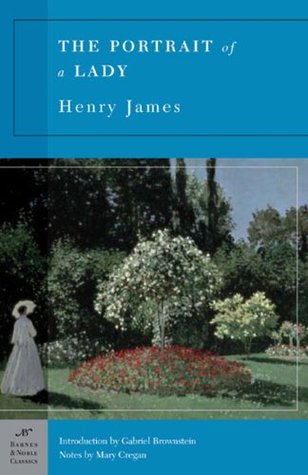
First sentence: Under certain circumstances there are few hours in life more agreeable than the hour dedicated to the ceremony known as afternoon tea.
Premise/plot: The lady in question is a Miss Isabel Archer. James' novel chronicles her adventures and misadventures. Miss Archer is an American, but, most of the novel is set in England and in Italy. There must be something about Miss Archer, for, every man--no matter their age, no matter their prospects--seems to want her--to need her. The men in her life: Ralph, her cousin, who seems to genuinely care for her wellbeing; Lord Warburton, who is not the first or last apparently to fall in love with her at first sight. (I have a soft spot for both Ralph and Lord Warburton). Caspar Goodwood is an old suitor who is so besotted he follows her across the globe. Last but not least, there is Gilbert Osmond. Lady Merle, one of her aunt's friends, insists that she absolutely has to go to Italy to meet HIM. He is her most special friend, and, worthy of her acquaintance to be sure. Of course, she can marry only once--for better or worse. When the novel starts, Miss Archer is convinced that marriage isn't for her, and, that she may never marry at all. She's certainly not ready to say yes to just anyone who asks her. Even if she really, really, really likes someone. Even if she could see herself being happy with that person. She wants to make her own path and walk it. With the help of her uncle's money--he dies and leaves her a good portion of his fortune--she has a way to fund her way across Europe. But she finds it isn't easy to break free from convention altogether. She's wooed and courted wherever she goes. And marriage seems more and more inevitable despite her initial intentions. As to why she chooses WHO she chooses, James' lost me on that one!!! Readers see her as a happy, determined woman with strong opinions, then, later as an unhappy woman with a brave resilience, a if-life-gives-you-lemons-you-stay-and-make-lemonade resilience. I can see how readers might see her as both weak and strong.
Of course, Miss Archer isn't the only woman in the novel. Readers also meet the aunt, Mrs. Touchett, Henrietta Stackpole, Madame Merle, Countess Gemini, and Pansy. Mrs. Touchett, how to describe her? A bit cold and definitely shallow, in my opinion. She lives an almost completely separated life from her husband. She travels between America, Europe, and England on a strict routine or schedule. Her friends are superficial friends only. If she has feelings for her son and husband, then she conceals them completely. She's certainly no role model wife. Henrietta Stackpole is SPUNKY and unpredictable. She is definitely a busy body, wanting into EVERYONE'S business. She's always looking for a story, a scoop. She wants DETAILS. And she's not at all your typical young woman. While the men all long for Miss Archer, plenty are frightened away by Henrietta's point of view, way of living. Madame Merle is calculating and ambitious. She lacks sincerity and warmth. She knows just what to say to gain the trust of unsuspecting folks, for sure. Yet, is there something more behind her mask? James won't let her put it down, so I'll never know. Countess Gemini is the sister of Gilbert Osmond. She's lonely and discontent. Being a wife hasn't brought her happiness. She like so many women in this novel are stuck with their lot. Last but not least, there is the young woman, Pansy. She is the daughter of Gilbert Osmond. Miss Archer becomes her stepmother. The last half of the novel she becomes a heroine of some importance. Two men are pursuing her. One has the father's approval. One has the daughter's approval. The father is absolute and the daughter is subservient and submissive. Readers are left to conclude that Pansy's fate won't be of her own choosing. Though Pansy may make the most of it and find her own way of being joyful and content.
This novel is very much relationship-driven. There are deep friendships, not just romantic entanglements.
My thoughts: I really loved both Ralph and his father. I liked Lord Warburton. I think Miss Archer would have been much happier if she'd said yes to his proposal in the opening chapters of the book! That being said, Miss Archer wanted something more than just to be someone's wife. And even though she ultimately failed, she did try. It was scary to try at this point in history. And not many women dared to make their own path and live on their own terms. It required money and eccentricity, I think, to comfortably succeed. Henrietta was a hoot. I didn't always agree with some of the 'wild' things she said and did. But she was always good at stealing a scene and bringing some lightness to the novel.
Gilbert Osmond is a character I won't miss--not even slightly. There was one scene that just got under my skin. I am still furious with him. (Osmond is saying really horribly, utterly unforgivable things about RALPH.)
Overall, even though I didn't love everything about this one, I am glad I read it.
Quotes:
“Have you drunk your tea?” asked the son. “Yes, and enjoyed it.” “Shall I give you some more?” The old man considered, placidly. “Well, I guess I’ll wait and see.” He had, in speaking, the American tone. “Are you cold?” the son enquired. The father slowly rubbed his legs. “Well, I don’t know. I can’t tell till I feel.” “Perhaps some one might feel for you,” said the younger man, laughing. “Oh, I hope some one will always feel for me! Don’t you feel for me, Lord Warburton?” “Oh yes, immensely,” said the gentleman addressed as Lord Warburton, promptly. “I’m bound to say you look wonderfully comfortable.”
“The fact is I’ve been comfortable so many years that I suppose I’ve got so used to it I don’t know it.” “Yes, that’s the bore of comfort,” said Lord Warburton. “We only know when we’re uncomfortable.”
His son broke into a laugh. “He’ll think you mean that as a provocation! My dear father, you’ve lived with the English for thirty years, and you’ve picked up a good many of the things they say. But you’ve never learned the things they don’t say!”
“I’ve never kept up with Isabel — it would have taken all my time,” she had often remarked; in spite of which, however, she held her rather wistfully in sight; watching her as a motherly spaniel might watch a free greyhound. “I want to see her safely married — that’s what I want to see,” she frequently noted to her husband. “Well, I must say I should have no particular desire to marry her,” Edmund Ludlow was accustomed to answer in an extremely audible tone. “I know you say that for argument; you always take the opposite ground. I don’t see what you’ve against her except that she’s so original.” “Well, I don’t like originals; I like translations,” Mr. Ludlow had more than once replied. “Isabel’s written in a foreign tongue. I can’t make her out. She ought to marry an Armenian or a Portuguese.” “That’s just what I’m afraid she’ll do!” cried Lilian, who thought Isabel capable of anything.
Clearness is too expensive.
In matters of opinion she had had her own way, and it had led her into a thousand ridiculous zigzags.
There are as many points of view in the world as there are people of sense to take them.
“I shall always tell you,” her aunt answered, “whenever I see you taking what seems to me too much liberty.” “Pray do; but I don’t say I shall always think your remonstrance just.” “Very likely not. You’re too fond of your own ways.” “Yes, I think I’m very fond of them. But I always want to know the things one shouldn’t do.” “So as to do them?” asked her aunt. “So as to choose,” said Isabel.
Shall I love her or shall I hate her?” Ralph asked while they moved along the platform. “Whichever you do will matter very little to her,” said Isabel. “She doesn’t care a straw what men think of her.” “As a man I’m bound to dislike her then. She must be a kind of monster. Is she very ugly?” “No, she’s decidedly pretty.” “A female interviewer — a reporter in petticoats? I’m very curious to see her,” Ralph conceded. “It’s very easy to laugh at her but it is not easy to be as brave as she.”
“My poor Henrietta,” she said, “you’ve no sense of privacy.” Henrietta coloured deeply, and for a moment her brilliant eyes were suffused, while Isabel found her more than ever inconsequent. “You do me great injustice,” said Miss Stackpole with dignity. “I’ve never written a word about myself!” “I’m very sure of that; but it seems to me one should be modest for others also!”
“Yes, you’re changed; you’ve got new ideas over here,” her friend continued. “I hope so,” said Isabel; “one should get as many new ideas as possible.” “Yes; but they shouldn’t interfere with the old ones when the old ones have been the right ones.”
We see our lives from our own point of view; that is the privilege of the weakest and humblest of us;
“It seems to me I’ve told you very little.” “You’ve told me the great thing: that the world interests you and that you want to throw yourself into it.” Her silvery eyes shone a moment in the dusk. “I never said that.” “I think you meant it. Don’t repudiate it. It’s so fine!” “I don’t know what you’re trying to fasten upon me, for I’m not in the least an adventurous spirit. Women are not like men.” Ralph slowly rose from his seat and they walked together to the gate of the square. “No,” he said; “women rarely boast of their courage. Men do so with a certain frequency.” “Men have it to boast of!” “Women have it too. You’ve a great deal.”
I wish to choose my fate and know something of human affairs beyond what other people think it compatible with propriety to tell me.
“I’m afraid there are moments in life when even Schubert has nothing to say to us. We must admit, however, that they are our worst.” “I’m not in that state now then,” said Isabel.
One can’t judge till one’s forty; before that we’re too eager, too hard, too cruel, and in addition much too ignorant. I’m sorry for you; it will be a long time before you’re forty. But every gain’s a loss of some kind; I often think that after forty one can’t really feel. The freshness, the quickness have certainly gone. You’ll keep them longer than most people; it will be a great satisfaction to me to see you some years hence. I want to see what life makes of you. One thing’s certain — it can’t spoil you. It may pull you about horribly, but I defy it to break you up.
A woman, it seems to me, has no natural place anywhere; wherever she finds herself she has to remain on the surface and, more or less, to crawl. You protest, my dear? you’re horrified? you declare you’ll never crawl? It’s very true that I don’t see you crawling; you stand more upright than a good many poor creatures. Very good; on the whole, I don’t think you’ll crawl.
When you’ve lived as long as I you’ll see that every human being has his shell and that you must take the shell into account. By the shell I mean the whole envelope of circumstances. There’s no such thing as an isolated man or woman; we’re each of us made up of some cluster of appurtenances.
What shall we call our ‘self’? Where does it begin? where does it end? It overflows into everything that belongs to us — and then it flows back again. I know a large part of myself is in the clothes I choose to wear. I’ve a great respect for things! One’s self — for other people — is one’s expression of one’s self; and one’s house, one’s furniture, one’s garments, the books one reads, the company one keeps — these things are all expressive.
My clothes may express the dressmaker, but they don’t express me. To begin with it’s not my own choice that I wear them; they’re imposed upon me by society.” “Should you prefer to go without them?” Madame Merle enquired in a tone which virtually terminated the discussion.
“I never sacrificed my husband to another,” Mrs. Touchett continued with her stout curtness. “Oh no,” thought Madame Merle; “you never did anything for another!”
Whatever life you lead you must put your soul in it — to make any sort of success of it; and from the moment you do that it ceases to be romance, I assure you: it becomes grim reality! And you can’t always please yourself; you must sometimes please other people. That, I admit, you’re very ready to do; but there’s another thing that’s still more important — you must often displease others. You must always be ready for that — you must never shrink from it. That doesn’t suit you at all — you’re too fond of admiration, you like to be thought well of. You think we can escape disagreeable duties by taking romantic views — that’s your great illusion, my dear. But we can’t. You must be prepared on many occasions in life to please no one at all — not even yourself.
“I don’t pretend to know what people are meant for,” said Madame Merle. “I only know what I can do with them.”
We know too much about people in these days; we hear too much. Our ears, our minds, our mouths, are stuffed with personalities.
Don’t mind anything any one tells you about any one else. Judge everyone and everything for yourself.” “That’s what I try to do,” said Isabel “but when you do that people call you conceited.” “You’re not to mind them — that’s precisely my argument; not to mind what they say about yourself any more than what they say about your friend or your enemy.” Isabel considered. “I think you’re right; but there are some things I can’t help minding: for instance when my friend’s attacked or when I myself am praised.” “Of course you’re always at liberty to judge the critic. Judge people as critics, however,” Ralph added, “and you’ll condemn them all!”
“I’m rather ashamed of my plans; I make a new one every day.”
It’s one’s own fault if one isn’t happy.
The two words in the language I most respect are Yes and No.
Changing the form of one’s mission’s almost as difficult as changing the shape of one’s nose: there they are, each, in the middle of one’s face and one’s character — one has to begin too far back.
“My envy’s not dangerous; it wouldn’t hurt a mouse. I don’t want to destroy the people — I only want to be them. You see it would destroy only myself.”
Henrietta contracted friendships, in travelling, with great freedom, and had formed in railway-carriages several that were among her most valued ties.
Doing all the vain things one likes is often very tiresome.
You could criticise any marriage; it was the essence of a marriage to be open to criticism.
I’ve only one ambition — to be free to follow out a good feeling.
A mistake’s made before one knows it.
You must save what you can of your life; you mustn’t lose it all simply because you’ve lost a part.
© 2017 Becky Laney of Becky's Book Reviews
Monday, May 01, 2017
Further thoughts on reading Oliver
Oliver Twist dares you to be uncomfortable as a reader, to look head-on at another's pain and misery. The novel places you in horridly unjust situations time and time again. Will you look away? Will you shrug off another's burden or struggle? Or will you open your eyes, your ears, your heart? Can you stand to stand witness? Or will you cling to Dickens dark and slightly inappropriate humor? If Dickens can find much to laugh about, I can too, right? But is poverty, hunger and starvation, homelessness, and abuse something to make light about...then or now? Just because Oliver Twist gets a happy ending doesn't wipe away the injustices--the deep embedded injustices. Are you willing to think about injustices, specific injustices? Are you willing to do more than think? Are you willing to act? It is easy, it is natural to not dwell on subjects that make us uncomfortable, situations that just don't seem to be 'our problem'. Problems don't disappear because you ignore them; problems don't go away because you ask nicely.
Is the novel still relevant? Domestic abuse happens. Every day it happens. There are women whose lives are in danger. Nancy is not alone in her situation. Unfortunately. For me, it is harder to witness Nancy's plight than Oliver's. What kind of person is Nancy? Brave certainly. Why? She finds a way to have a voice, to speak out to others, to speak up for another. She finds a way to stand by her conviction despite enormous risk. This is no small thing she's doing--and readers should not presume that it is easy for her. I don't think it is. Speaking up reveals inner strength, but what does staying reveal? Could it ever be anything but foolish? Perhaps inevitable is a second choice. We can imagine Nancy's background, how she came to be under the control of Fagin and Sykes, but we haven't--most of us at least--walked in her shoes. We don't know why her heart was so full of love for Bill, we don't know why he was her everything, her whole world. We see a violent, abusive, cruel, domineering man--she sees him differently. It is easy to conclude she's a fool to stay. But are we quick to think we know her? She's spent her whole life being the property of others, doing what she's told, not questioning orders, not speaking back. What changes Nancy so much that she starts thinking for herself, acting for herself, being bold and risky?
She sees something in Oliver perhaps, or maybe there's a life within her that has her thinking of the future? There has to be a moment when she realizes that this is no kind of life to be living, that there is still a chance for Oliver even if she is all out of chances for her own life. Perhaps she is wishing that someone had stepped up to save her. She may not be able to save every child, but Oliver, he can be saved. Once that decision has been made, there's no turning back. Nancy is fiercely brave.
Hunger and homelessness also still persist in the world. Not to mention the buying and selling of women and children. This isn't a one issue problem novel. It is a dark, bleak novel that is written in a tongue in cheek way at times. I let myself become distant so I wouldn't have to deal with the problems--so long as they weren't real to me, I could forget them, right? Yes and no.
Is it right to dismiss injustice because you don't like to feel uncomfortable or awkward?
Oliver Twist was the medicine that I didn't want to swallow because of the way it tasted.
© 2017 Becky Laney of Becky's Book Reviews
Is the novel still relevant? Domestic abuse happens. Every day it happens. There are women whose lives are in danger. Nancy is not alone in her situation. Unfortunately. For me, it is harder to witness Nancy's plight than Oliver's. What kind of person is Nancy? Brave certainly. Why? She finds a way to have a voice, to speak out to others, to speak up for another. She finds a way to stand by her conviction despite enormous risk. This is no small thing she's doing--and readers should not presume that it is easy for her. I don't think it is. Speaking up reveals inner strength, but what does staying reveal? Could it ever be anything but foolish? Perhaps inevitable is a second choice. We can imagine Nancy's background, how she came to be under the control of Fagin and Sykes, but we haven't--most of us at least--walked in her shoes. We don't know why her heart was so full of love for Bill, we don't know why he was her everything, her whole world. We see a violent, abusive, cruel, domineering man--she sees him differently. It is easy to conclude she's a fool to stay. But are we quick to think we know her? She's spent her whole life being the property of others, doing what she's told, not questioning orders, not speaking back. What changes Nancy so much that she starts thinking for herself, acting for herself, being bold and risky?
She sees something in Oliver perhaps, or maybe there's a life within her that has her thinking of the future? There has to be a moment when she realizes that this is no kind of life to be living, that there is still a chance for Oliver even if she is all out of chances for her own life. Perhaps she is wishing that someone had stepped up to save her. She may not be able to save every child, but Oliver, he can be saved. Once that decision has been made, there's no turning back. Nancy is fiercely brave.
Hunger and homelessness also still persist in the world. Not to mention the buying and selling of women and children. This isn't a one issue problem novel. It is a dark, bleak novel that is written in a tongue in cheek way at times. I let myself become distant so I wouldn't have to deal with the problems--so long as they weren't real to me, I could forget them, right? Yes and no.
Is it right to dismiss injustice because you don't like to feel uncomfortable or awkward?
Oliver Twist was the medicine that I didn't want to swallow because of the way it tasted.
© 2017 Becky Laney of Becky's Book Reviews
Oliver Twist

First sentence: Among other public buildings in a certain town, which for many reasons it will be prudent to refrain from mentioning, and to which I will assign no fictitious name, there is one anciently common to most towns, great or small: to wit, a workhouse; and in this workhouse was born; on a day and date which I need not trouble myself to repeat, inasmuch as it can be of no possible consequence to the reader, in this stage of the business at all events; the item of mortality whose name is prefixed to the head of this chapter.Premise/plot: Oliver Twist, the 'hero' of Charles Dickens novels, endures much drama before finally getting a happily ever after ending.
Who is Oliver Twist? He's an orphan born in a workhouse. He's an orphan who dares ask for MORE gruel. He's a boy sold to an undertaker. He's a boy who's bullied to the point of running away. He's a boy who dreams that London holds the answers. He's a boy who falls into bad company. Coincidences surround Oliver. (He happens to be taken in to Mr. Brownlow's household. He happens to be taken into Mrs. Maylie's household. Both Brownlow and the Maylies knew his parent(s). Both care about what happens to him in the future. Both are on his side--Oliver is never truly alone against this mad, bad world.) He's a boy worth risking your life for--if you're Nancy. He's a boy that things happen to. Ever notice how all the drama just happens to him, because of him, around him, and Oliver is just there. (If Oliver is the hero, he's the most boring hero ever.)
The characters that are of interest in this one are: Nancy, Fagin, and Artful Dodger. If the novel is worth reading, it is because Dickens has peopled it with the likes of these, the least of these, the thieves and prostitutes.
My thoughts: Here's my advice for what it's worth: Read the book before you see the movie or the musical. Every time you're tempted to watch an adaptation, make a point of rereading the book. That may slow down your eagerness some. Why this admittedly weird advice. I read this book years ago--years--and I've since seen about two or three adaptations. (Including the live musical a few weeks ago.) I had forgotten that most adaptations--if not all adaptations--really, really mess around with the plot. Some adaptations are better than others. (One adaptation in particular I wish I could get my time back!) But having all those adaptations in my head really ruined reading Dickens for me.
For example, in the movie, Nancy helps kidnap Oliver Twist and brings him back to the thieves. He's held hostage until the end finale--the big showdown. A lot of intense stuff happens and Nancy is all about rescuing Oliver from his fate. In the book, Nancy helps kidnap Oliver Twist; Oliver is forced to help in a robbery; he's shot; he's abandoned; he's taken in by a kind and loving family; his happily ever after essentially begins right then and there; the book has hundreds of pages left where Oliver is safe and the drama is moving on without him. Plenty of drama. New characters are introduced--like Monks--old characters are also reintroduced--like Noah and Charlotte, Mr and Mrs. Bumble. But Oliver Twist has disappeared from the plot--almost proving that though this novel has his name, he's the least interesting character in it.
I think if you read the book with the expectation that he will be DOING anything except asking for more and accepting whatever comes his way, you'll be disappointed.
I think the most interesting character in this one is Fagin. Especially in the musical adaptation. He can MAKE the show. His songs are the most interesting, most entertaining, best for energizing the audience.
I think the next most interesting character is Nancy. Her scenes were very emotional. But I don't understand why she would keep going back knowing that her very life was in danger. I don't understand love like that. I hope I never do.
© 2017 Becky Laney of Becky's Book Reviews
Saturday, April 22, 2017
Washington Square

First sentence: During a portion of the first half of the present century, and more particularly during the latter part of it, there flourished and practised in the city of New York a physician who enjoyed perhaps an exceptional share of the consideration which, in the United States, has always been bestowed upon distinguished members of the medical profession.
Premise/plot: Catherine Sloper is being raised by her father, Dr. Sloper, and her aunt, Mrs. Penniman. Neither is the ideal guardian perhaps. Mrs. Penniman is foolish and her romantic ideals rarely if ever match up perfectly with reality. Dr. Sloper is an unpleasant, opinionated, hard-hearted soul. He sees the world very much in black and white terms. And he's judged his daughter--practically from her birth--a person to be easily dismissed or ignored. He reckons that trouble will come--not because his daughter is beautiful, not because his daughter is intelligent, not because his daughter is charming, not because his daughter is kind and compassionate--but because her aunt will try to talk his daughter into the idea that she is worthy of attention and love from the opposite sex. How dare she try to tell Catherine that one day she'll get married! Who would ever want to marry her?! Sadly, he's got the notion that just because he sees his daughter as a waste that every person feels likewise.
A young man does come into her life--Morris Townsend--but who will prove right? Catherine who thinks it's true love. Mrs. Penniman who hopes that the two will marry so that she can continue to hang on his every word. Dr. Sloper who KNOWS (there is no mere thinking) that Mr. Townsend is a no-good idler after her money.
My thoughts: Henry James is JUST what I needed. I sped through this one in just two days. You've got to love a classic that just absorbs and excites you.
The characters. I hated Dr. Sloper. I wanted to YELL at Mrs. Penniman. I wanted to cheer for Catherine. As for Morris Townsend, well, it's best not to say anything about him at all. (I do wish we'd seen more of his sister, however.)
The story. I wasn't disappointed. Perhaps there was a time when the ending would have annoyed me. But not anymore.
Quotes:
“Try and make a clever woman of her, Lavinia; I should like her to be a clever woman.” Mrs. Penniman, at this, looked thoughtful a moment. “My dear Austin,” she then inquired, “do you think it is better to be clever than to be good?” “Good for what?” asked the Doctor. “You are good for nothing unless you are clever.”
Dr. Sloper would have liked to be proud of his daughter; but there was nothing to be proud of in poor Catherine. There was nothing, of course, to be ashamed of; but this was not enough for the Doctor, who was a proud man and would have enjoyed being able to think of his daughter as an unusual girl.
“He is not what I call a gentleman. He has not the soul of one. He is extremely insinuating; but it’s a vulgar nature. I saw through it in a minute. He is altogether too familiar — I hate familiarity. He is a plausible coxcomb.” “Ah, well,” said Mrs. Almond; “if you make up your mind so easily, it’s a great advantage.” “I don’t make up my mind easily. What I tell you is the result of thirty years of observation; and in order to be able to form that judgement in a single evening, I have had to spend a lifetime in study.”
“it doesn’t take long to like a person — when once you begin.”
“But your daughter doesn’t marry a category,” Townsend urged, with his handsome smile. “She marries an individual — an individual whom she is so good as to say she loves.” “An individual who offers so little in return!” “Is it possible to offer more than the most tender affection and a lifelong devotion?” the young man demanded. “It depends how we take it. It is possible to offer a few other things besides; and not only is it possible, but it’s usual. A lifelong devotion is measured after the fact; and meanwhile it is customary in these cases to give a few material securities. What are yours? A very handsome face and figure, and a very good manner. They are excellent as far as they go, but they don’t go far enough.”
“The alphabet of common sense is something you will never learn,” the Doctor permitted himself to respond.
“Don’t undervalue irony, it is often of great use. It is not, however, always necessary, and I will show you how gracefully I can lay it aside. I should like to know whether you think Morris Townsend will hang on.” “I will answer you with your own weapons,” said Mrs. Penniman. “You had better wait and see!”
© 2017 Becky Laney of Becky's Book Reviews
Sunday, March 05, 2017
Classic Spin (my first; their 15)
My list of twenty books for the Classic Spin. Number will be posted at the Classics Club on Friday, March 10. It was the #12.
1. Here I Stand: A Life of Martin Luther by Roland H. Bainton (1950)
2. East of Eden by John Steinbeck (1952)
3. Brave Men by Ernie Pyle (1944)
4. Richard the Third by Paul Murray Kendall (1955)
5. Wycliffe New Testament (1388, modern spelling edition, 2002)
6. The Three Clerks. Anthony Trollope. 1858.
7. The Enchanted April Elizabeth von Arnim (1922)
8. The Crystal Cave by Mary Stewart (1970)
9. Dead Souls by Nikolai Gogol. 1842.
10. Letters of John Newton, 1911
11. Arabian Nights, Anonymous (800)
12. Oliver Twist. Charles Dickens. 1838.
13. Uncle Tom's Cabin by Harriet Beecher Stowe (1852)
14. Confidence. Henry James. 1879
15. Tyndale New Testament (1534, modern spelling edition, 1989)
16. The Tempest by William Shakespeare (1610)
17. The Idiot by Fyodor Dostoyevsky. 1869.
18. Martin Chuzzlewit by Charles Dickens (1844)
19. Vanity Fair by William Makepeace Thackery (1847)
20. Sermon on the Mount by James Montgomery Boice (1972)
© 2017 Becky Laney of Becky's Book Reviews
1. Here I Stand: A Life of Martin Luther by Roland H. Bainton (1950)
2. East of Eden by John Steinbeck (1952)
3. Brave Men by Ernie Pyle (1944)
4. Richard the Third by Paul Murray Kendall (1955)
5. Wycliffe New Testament (1388, modern spelling edition, 2002)
6. The Three Clerks. Anthony Trollope. 1858.
7. The Enchanted April Elizabeth von Arnim (1922)
8. The Crystal Cave by Mary Stewart (1970)
9. Dead Souls by Nikolai Gogol. 1842.
10. Letters of John Newton, 1911
11. Arabian Nights, Anonymous (800)
12. Oliver Twist. Charles Dickens. 1838.
13. Uncle Tom's Cabin by Harriet Beecher Stowe (1852)
14. Confidence. Henry James. 1879
15. Tyndale New Testament (1534, modern spelling edition, 1989)
16. The Tempest by William Shakespeare (1610)
17. The Idiot by Fyodor Dostoyevsky. 1869.
18. Martin Chuzzlewit by Charles Dickens (1844)
19. Vanity Fair by William Makepeace Thackery (1847)
20. Sermon on the Mount by James Montgomery Boice (1972)
© 2017 Becky Laney of Becky's Book Reviews
Monday, November 21, 2016
The Matchmaker
First sentence: I tell you for the hundredth time you will never marry my niece.
Premise/plot: The Matchmaker is a play by Thornton Wilder. Chances are if you hear the names "Horace Vandergelder," "Cornelius Hackl," "Barnaby Tucker," "Irene Molloy," and "Dolly Levi" you will likely think of the musical Hello Dolly and not The Matchmaker. But The Matchmaker obviously came first.
What should you know? It is FUNNY. It features more characters than the musical. (I really LOVED Malachi Stack and Flora Van Huysen. Malachi gets some of the best lines, in my opinion!) The ending is similar but not identical.
So for those who haven't seen the musical... Horace Vandergelder is a cranky old man who is about to make a big decision. He has decided to remarry. Just as emphatically as he's decided to marry, he's decided that his niece will NOT be marrying her fellow, Ambrose Kemper. Two of Vandergelder's clerks (he's a store owner) decide--on this momentous day--that they've had enough and deserve a day off. Not just any day off, but a day off in the CITY. One of them vows TO NOT COME HOME UNTIL HE'S KISSED A GIRL. Cornelius and Barnaby "happen" to meet Irene Molloy (Vandergelder's first choice) and her assistant, Minnie. The people seeking adventure get in over their heads. The people NOT seeking adventure get in over their heads too. By the end, one and all long for normalcy and routine.
My thoughts: If you ask me if I like the movie--well, I can get all the best scenes by watching Wall-E. But after seeing Hello Dolly live at my local theatre, well, my perspective changed a bit. Things that were slightly funny sitting at home watching the movie really become hilarious on stage. I walked out a FAN. The Matchmaker was a perfectly perfect read for me. And I loved coming across lines like, "Go and get your Sunday clothes on."
Quotes:
"It looks to me like you're pretty rash to judge which is fools and which isn't fools, Mr. Vandergelder. People that's et onions is bad judges of who's et onions and who ain't." Joe (the barber) to Mr. Vandergelder
"Ninety-nine percent of the people in the world are fools and the rest of us are in great danger of contagion." Mr. Vandergelder
"I tell you right now: a fine woman is the greatest work of God." Cornelius
"There's nothing like eavesdropping to show you that the world outside your head is different from the world inside your head." Malachi
© 2016 Becky Laney of Becky's Book Reviews
Sunday, November 20, 2016
Joining the Classics Club

50+ classics by November 30, 2021
Main Site
Completed Classics
1. Pilgrim's Progress by John Bunyan (1678) completed February 2017
2. Here I Stand: A Life of Martin Luther by Roland H. Bainton (1950) completed April 2017
3. Three Treatises by Martin Luther (1520) (completed January 2017)
4. Basic Christianity by John R.W. Stott (completed June 2017)
5. Reformation Heritage Study Bible -- King James Version (notes 2014) (completed June 2017)
6. The Brothers Karamazov by Fyodor Dostoevsky (1880) (completed January 2017)
7. Everyman, Anonymous (1520?) (completed December 2016)
8. The Circular Staircase by Mary Roberts Rinehart (1908) Completed September 2017
9. Murder in the Cathedral by T.S. Eliot (1935) --Completed March 2017
10. The Matchmaker by Thornton Wilder (1954)-- Completed November 2016
11. The Skin of Our Teeth by Thornton Wilder (1942) Completed March 2017
12. Our Town by Thornton Wilder (1938) -- Completed December 2016
13. The Kellys and O'Kellys by Anthony Trollope (1848) -- completed January 2017
14. The Macdermots of Ballycloran. Anthony Trollope. (1847) (completed January 2017)
15. A Child's Geography of the World (1929/1951) -- Completed November 2016
16. Watch and Ward by Henry James (1871) (completed January 2017)
17. Roderick Hudson by Henry James (1875) completed January 2017
18. La Vendee by Anthony Trollope (1855) completed February 2017
19. The American. Henry James. 1877. Completed February 2017
20. The Europeans. Henry James. 1878. Completed February 2017
21. Twelve Angry Men. Reginald Rose. 1954. Completed February 2017
22. Confidence. Henry James. 1879. Completed March 2017
23. Washington Square. Henry James. 1880 Completed April 2017
24. The Portrait of a Lady. Henry James. 1881. Completed June 2017
25. The Three Clerks. Anthony Trollope. 1858. Completed April 2017
26. Doctor Thorne. Anthony Trollope 1858. Completed May 2017
27. The Bertrams. Anthony Trollope. 1859. Completed June 2017
28. Oliver Twist. Charles Dickens. 1838. Completed May 2017
29. Camille. Alexandre Dumas, fils. 1848. Completed July 2017
30. Great Expectations. Charles Dickens. 1860. Completed August 2017.
31. Castle Richmond. Anthony Trollope. 1860. (October 2017)
32. Adam Bede. George Eliot. 1859. Completed October 2017
33. A Christmas Carol. Charles Dickens. 1843. Completed December 2017
34. Uncle Tom's Cabin by Harriet Beecher Stowe (1852) Completed December 2017
35. CSB Spurgeon Study Bible, Holman Bible Publishers (B&H). 2017. 1840 pages. [Source: Gift] Completed December 2017.
--
36. Coming Events and Present Duties (1867) Completed January 2018
37. Framley Parsonage. Anthony Trollope. 1861. Completed January 2018
38. My Antonia. Willa Cather. 1918. 336 pages. [Source: LIBRARY] Completed January 2018.
39. A Tender Victory. Taylor Caldwell. 1956. 374 pages. [Source: Bought] Completed february 2018
40. Mary Barton. Elizabeth Gaskell. 1848. 437 pages. [Source: Bought] Completed March 2018
41. Five English Reformers. J.C. Ryle. 1890. 150 pages. [Source: Bought] Completed January 2018
42. KJV Reader's Bible. 2016. Holman Bible Publishers. 1840 pages. [Source: Gift] [Completed January 2018]
43. Crime and Punishment. Fyodor Dostoyevsky. Translated by David McDuff. 1866/2002. 671 pages. [Source: Library]COMPLETED APRIL 2018
44. Orley Farm. Anthony Trollope. 1862. 825 pages. [Source: Bought] COMPLETED MAY 2018
45. The Struggles of Brown, Jones, and Robinson, by One of the Firm. Anthony Trollope. 1862. 254 pages. [Source: Bought] COMPLETED MAY 2018
46. Old Paths. J.C. Ryle. 536 pages. [Source: Bought] Completed June 2018
47. Short Stories of Lucy Maud Montgomery from 1909-1922. L.M. Montgomery. 2008/2010. 312 pages. [Source: Bought] Completed April 2018
48. East of Eden by John Steinbeck (1952) Completed July 2018
49. Commentary on the Epistle to the Romans. Martin Luther. 1954/1976. Kregel. 224 pages. [Source: Gift] [Completed June 2018]
50. Rachel Ray. Anthony Trollope. 1863. 326 pages. [Source: Bought] [Completed July 2018]
51.The Conqueror by Georgette Heyer. 1931/2008. Sourcebooks. 469 pages. [Source: Review copy]
52. Sylvia's Lovers. Elizabeth Gaskell. 1863/1997. Everyman Paperbacks. 560 pages. [Source: Bought]
53. Little Men. Louisa May Alcott. 1871. 329 pages. [Source: Bought]
54. Dear and Glorious Physician. Taylor Caldwell. 1958. 560 pages. [Source: Bought]
55. Wives and Daughters. Elizabeth Gaskell. 1866. 649 pages. [Source: Bought]
56. Small House at Allington. Anthony Trollope. 1864. 695 pages. [Source: Bought]
57. Ruth. Elizabeth Gaskell. 1853. 432 pages. [Source: Bought]
------------------------------------ 2019
58. Ivanhoe. Walter Scott. 1819. 544 pages. [Source: Bought]
59. The Jungle Book. Rudyard Kipling. 1893/1894. 138 pages. [Source: Bought]
60.Evelina. Fanny Burney. 1778. 455 pages. [Source: Bought]
61. Shirley. Charlotte Bronte. 1849. 624 pages. [Source: Bought]
62. The Innocents Abroad. Mark Twain. 1869. 560 pages. [Source: Bought]
63. Miss Buncle's Book. D.E. Stevenson. 1934. 304 pages. [Source: Bought]
64. Death in the Stocks. Inspectors Hannasyde & Hemingway #1) Georgette Heyer. 1935/2019. Sourcebooks. 384 pages. [Source: Review copy]
65. The Princess Bride. William Goldman. 1973/2003. 398 pages. [Source: Bought]
66. Beautiful Stories from Shakespeare. E. Nesbit. Illustrated by Arthur Rackham. 1918. 192 pages. [Source: Library]
67. Sense and Sensibility. Jane Austen. 1811. 409 pages. [Source: Bought]
68. Hebrew Melodies. George Gordon, Lord Byron. 1815/1824. 70 pages. [Source: Bought]
69. The Tempest. William Shakespeare. 1623. 127 pages. [Source: Bought]
Pre-Eighteenth Century
- Don Quixote. Miguel de Cervantes Saavedra (1605)
- Robinson Crusoe Daniel Defoe (1719)
- Love in Excess. Eliza Fowler Haywood. 1719.
- Moll Flanders. Daniel Defoe. 1722.
- Belinda. Maria Edgeworth. 1801.
- Hunchback of Notre Dame by Victor Hugo (1831)
- Domestic Manners of the Americans. Frances Trollope. 1832.
- The Three Musketeers. Alexandre Dumas. Richard Pevear, translator. 1844/2006.
- Vanity Fair by William Makepeace Thackery (1847)
- Les Miserables, Victor Hugo, translated by Julie Rose. 1862/2008.
- The Prince and the Pauper. Mark Twain. 1881.
- Jo's Boys. Louisa May Alcott. 1886.
- The Master of Ballantrae. Robert Louis Stevenson. 1889.
- The Innocence of Father Brown. G.K. Chesterton. 1911.
- The Forsyte Saga by John Galsworthy (1921)
- Footsteps in the Dark. Georgette Heyer. 1932.
- Gone With The Wind. Margaret Mitchell (1936)
- Their Eyes Were Watching God. Zora Neale Hurston. 1937.
- Dust Tracks on a Road. Zora Neale Hurston. 1942.
- A Tree Grows in Brooklyn. Betty Smith. 1943.
- Brave Men by Ernie Pyle (1944)
- Katherine. Anya Seton. 1954.
- Richard the Third by Paul Murray Kendall (1955)
- On the Beach. Nevil Shute. 1957.
- The Dreaming Suburb by R.F. Delderfield. 1958.
- The Avenue Goes To War. R.F. Delderfield. 1958.
- To Kill a Mockingbird. Harper Lee. 1960.
- Long Summer Day by R.F. Delderfield. 1966.
- Post of Honor. R.F. Delderfield. 1966.
- The Green Gauntlet. R.F. Delderfield. 1966.
- The Crystal Cave by Mary Stewart (1970)
- The Sunne in Splendour. Sharon Kay Penman. 1982.
- Pride and Prejudice
- Mansfield Park
- Emma
- Northanger Abbey
- Persuasion
- Lady Susan
- Jane Eyre
- Villette
- The Professor
- Emma
- Wuthering Heights
- The Tenant of Wildfell Hall
Fanny Burney
- Cecilia
- Camilla
- The Wanderer
- The Witlings
- Antonina
- Basil
- Hide and Seek
- A Rogue’s Life
- The Dead Secret
- The Woman In White
- No Name
- Armadale
- The Moonstone
- Man and Wife
- Poor Miss Finch
- The New Magdalen
- The Law and the Lady
- The Two Destinies
- The Haunted Hotel
- The Fallen Leaves
- Jezebel’s Daughter
- The Black Robe
- Heart and Science
- I Say No
- The Evil Genius
- The Guilty River
- The Legacy of Cain
- Blind Love
- The Pickwick Papers. Charles Dickens (1837)
- Nicholas Nickleby. Charles Dickens. 1839.
- Old Curiosity Shop. Charles Dickens. 1841.
- Barnaby Rudge. Charles Dickens. 1841.
- Martin Chuzzlewit. Charles Dickens. 1843.
- Dombey and Son. Charles Dickens. 1848.
- David Copperfield. Charles Dickens. 1850.
- Bleak House. Charles Dickens. 1853.
- Hard Times. Charles Dickens. 1854.
- Little Dorrit. Charles Dickens. 1857.
- Tale of Two Cities. Charles Dickens. 1859.
- Our Mutual Friend. Charles Dickens. 1865
- Edwin Drood. Charles Dickens. 1870.
- Poor Folk
- The Double
- Netochka Nezvanova
- Uncle’s Dream
- The Village of Stepanchikovo
- The Insulted and Humiliated
- The House of the Dead
- Notes from the Underground
- The Gambler
- The Idiot
- The Permanent Husband
- The Possessed
- The Raw Youth
- Cranford
- North and South
- The Moorland Cottage
- Mr. Harrison’s Confessions
- Lizzie Leigh
- Lois the Witch
- A Dark Night’s Work
- Cousin Phillis
- The Life of Charlotte Bronte
- Bostonians. Henry James. 1886.
- The Princess Casamassima. Henry James. 1886.
- The Reverberator. Henry James. 1888.
- The Tragic Muse. Henry James. 1890.
- The Other House. Henry James. 1896.
- The Spoils of Pynton. Henry James. 1897.
- What Maisie Knew. Henry James. 1897.
- The Awkward Age. Henry James. 1899.
- The Sacred Fount. Henry James. 1901.
- The Wings of the Dove. Henry James. 1902.
- The Ambassadors. Henry James. 1903.
- The Wonderful Garden 1911.
- Wet Magic 1913.
- Five of Us and Madeline. 1925.
- The Prophet's Mantle. 1885.
- The Red House. 1902.
- The Incomplete Amorist 1906.
- Salome and the Head (The House With No Address) 1909.
- Daphne in Fitzroy Street. 1909.
- Dormant (Rose Royal) 1911.
- The Incredible Honeymoon. 1916.
- The Lark. 1922
- Grim Tales. 1893.
- Pussy and Doggy Tales. 1895.
- In Homespun. 1896.
- Royal Children of English History. 1897.
- The Children's Shakespeare. 1897.
- The Book of Dragons. 1901.
- The Literary Sense. 1903.
- Oswald Bastable and Others. 1905.
- Man and Maid. 1906.
- The Magic World. 1912
- He That Will Not When He May
- Margaret Maitland of Sunnyside
- Merkland, A Story of Scottish Life
- Christian Melville
- The Days of My Life
- The House on the Moor
- The Doctor’s Family
- Salem Chapel
- The Perpetual Curate
- Miss Marjoribanks
- Madonna Mary
- At His Gates
- The Curate in Charge
- Phoebe, Junior
- A Beleaguered City
- The Ladies Lindores
- The Wizard’s Son
- The Lady’s Walk
- Sir Tom
- Hester
- Old Lady Mary
- A country Gentlemen and His Family
- The Marriage of Elinor
- Dies Irae
- The Executor
- The Rector
- A Widow’s Tale and Other Stories
- Complete Stories of the Seen and Unseen
Anthony Trollope In Chronological Order
- Can You Forgive Her? Anthony Trollope. 1865.
- Miss MacKenzie. Anthony Trollope. 1865
- The Belton Estate. Anthony Trollope. 1866.
- The Last Chronicle of Barset. 1867.
- The Claverings. Anthony Trollope. 1867
- Nina Balatka. Anthony Trollope. 1867.
- Linda Tressel. Anthony Trollope. 1868.
- Phineas Finn. Anthony Trollope. 1869.
- He Knew He Was Right. Anthony Trollope. 1869.
- The Vicar of Bullhampton. Anthony Trollope. 1870.
- Sir Harry Hotspur of Humblethwaite. Anthony Trollope. 1871.
- Ralph the Heir. Anthony Trollope. 1871.
- The Golden Lion of Granpere. Anthony Trollope. 1872.
- The Eustace Diamonds. Anthony Trollope 1873.
- Harry Heathcote of Gangoil. Anthony Trollope. 1874.
- Lady Anna. Anthony Trollope. 1874.
- Phineas Redux. Anthony Trollope. 1874.
- The Way We Live Now. Anthony Trollope 1875.
- The Prime Minister. Anthony Trollope. 1876.
- The American Senator. Anthony Trollope. 1877.
- Is He Popenjoy? Anthony Trollope. 1878
- John Caldigate. Anthony Trollope. 1879.
- An Eye for An Eye. Anthony Trollope. 1879.
- Cousin Henry. Anthony Trollope. 1879.
- The Duke's Children. Anthony Trollope. 1880.
- Ayala's Angel. Anthony Trollope. 1881.
- Doctor Wortle's School. Anthony Trollope. 1881.
- The Fixed Period. Anthony Trollope. 1882.
- Kept in the Dark. Anthony Trollope. 1882.
- Marion Fay. Anthony Trollope. 1882.
- Mr. Scarborough's Family. Anthony Trollope. 1883.
- The Landleaguers. Anthony Trollope. 1883.
- An Old Man's Love. Anthony Trollope. 1884.
- The Fortune of the Rougons (La Fortune des Rougon)
- The Kill (La Curée)
- The Belly of Paris (Le Ventre de Paris)
- The Conquest of Plassans (La Conquête de Plassans)
- The Sin of Father Mouret (La Faute de l'Abbé Mouret)
- His Excellency Eugène Rougon (Son Excellence Eugène Rougon)
- The Drinking Den (L'Assommoir)
- One Page of Love (Une Page d'amour)
- Nana
- Piping Hot (Pot-Bouille)
- The Ladies' Paradise (Au Bonheur des Dames)
- The Joy of Life (La Joie de vivre)
- Germinal
- The Masterpiece (L'Œuvre)
- The Earth (La Terre)
- The Dream (Le Rêve)
- The Beast in Man (La Bête humaine)
- Money (L'Argent)
- The Downfall (La Débâcle)
- Doctor Pascal (Le Docteur Pascal)
© 2016 Becky Laney of Becky's Book Reviews
Subscribe to:
Posts (Atom)