Thursday, November 03, 2022

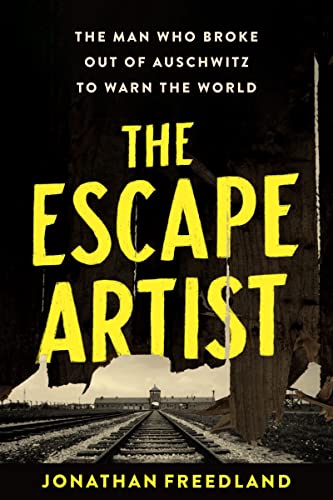
141. The Escape Artist


The Escape Artist: The Man Who Broke Out of Auschwitz To Warn the World. Jonathan Freedland. 2022. [October] 400 pages. [Source: Library]

First sentence: FROM THE START he knew he was special. He was not yet Rudolf Vrba, that would come later. His name was Walter Rosenberg and he had only to look into his mother’s eyes to know he was a one-off. Ilona Rosenberg had waited so long for him, desperate for his arrival. She was already a stepmother – her husband, Elias, came with three children from a previous marriage – but that was not the same as holding a baby of her own. For ten years, she had yearned for a child; the doctors told her she should stop hoping. So when Walter arrived on 11 September 1924, she greeted him like a miracle.

Premise/plot: The Escape Artist is a biography of Walter Rosenberg/Rudolf Vrba. He and Fred Wetzler escaped from Auschwitz--quite a feat--and tried their best to warn the world--especially, especially the Hungarian Jews who were the next target of the Nazis--about the "Final Solution." But that is only a fraction of his story. This is his life story, not only the story of those horrifying war years. Those chapters--which are considerable--are heart-shattering. But just because the contents are heart-shattering and horrifyingly tragic, doesn't mean that readers should look away. All voices should be heard. 

My thoughts: Words don't do this book justice. I know that. I found it an incredible read. Incredibly thought-provoking. Incredibly sad. Incredibly memorable. Sad seems an obvious description due to the subject, but, different kinds of sadness. His life after the war, for example, and how his early experiences effected his marriages (there were two) his children (there were two) and his overall health (mental and physical). The book never once uses the term PTSD, but, certainly I think that might explain so much. Another kind of sadness is that as heart-breaking, heart-shattering, horrifying, and haunting as the Holocaust was--and he witnessed so, so, so, so much, he didn't think that was the most tragic thing that ever happened to him. But I hesitate to spoil this one.

Quotes:

And yet Walter only really began to know of it that moment in Kanada where, in that pile of tiny shoes, the truth was staring him too hard in the face and he could not look away. Perhaps he could be forgiven for taking so long to understand what would eventually seem obvious, for failing to absorb the evidence that surrounded him, for failing to turn clear facts into knowledge. The SS had taken great pains to keep this operation hidden, even from those who were living at the scene of the crime.

The Nazis lied to their victims at every step of their journey towards destruction, step after step after step. Those people falling out of those stinking cattle trucks had boarded them believing they were being taken to new lives in a new place: ‘resettlement in the east’, they called it. Those Jews had packed up their belongings and held on tight to them because they thought they were building a new home, one that would need pots and pans, clothes for their backs and toys for their children. They believed that because that was what the Nazis had told them and it was what their own friends and families had told them, in the form of those postcards home that they did not realise had been written at gunpoint – those messages of forced cheer that Walter had heard read out on the train on the way to Majdanek – and which were designed to seal the lie.
 
For at eighteen years old Walter would witness events so harrowing they could change the life of the person who glimpsed them. He was witnessing such moments not once or twice, but day after day after day. He was in Auschwitz, a place where moral boundaries had dissolved long ago, where everything was permissible. This was a place where Dr Mengele once punished a Jewish woman by making a dog of her young son, because she had, in self-defence, killed an SS attack dog: he had the boy trained at the point of a whip to run on all fours, bark without pause and attack and bite Jews. Walter was in a place where one inmate might steal bread from another, even when that prisoner was dying and when the bread was covered in faeces. 
 
He had drawn a conclusion that would become an article of faith, an unshakeable creed that would drive every decision he took next. He now understood that the difference between knowledge and ignorance, between truth and lies, was the difference between life and death.
It was clear to him from then on that the Jews destined for destruction could defy their fate here only if they knew of it, incontrovertibly and before it was too late. Somehow Walter had to get out of this place and tell the world what was happening. He did not know it yet, but he was about to meet the people who could help.
 
If he had to be a spectator to horror, then he would make himself a witness. He would be a reporter. Christmas came and went, the SS forcing their Jewish captives to learn and sing ‘Stille Nacht’ – ‘Silent Night’ – perhaps to remind the Germans of home. Those who did not sing it properly were murdered. In Birkenau, the SS put up a huge Christmas tree and on Christmas Eve they brought out a group of prisoners. For their own entertainment, they gave the men a pointless task, ordering them to gather up soil in their coats, shooting any man who collected too little. Then they stacked the corpses in a heap under the tree, piled up like festive gifts.
 
The way Walter saw it, they had been written off by the world the day they stopped being Alfréd Wetzler and Walter Rosenberg and became prisoners 29162 and 44070, if not the day they stepped on to those deportation trains. True, they had become people of standing in the Auschwitz inmate hierarchy, but all that was lost now. The moment they crept out from under that fence they had entered a social vacuum. They knew no one; they had no one.
 
Rudolf Vrba was not an entirely new creation. There had been an influential Czech Catholic priest of that name who had died five years earlier, having built a reputation as an energetic antisemite: he had proposed a set of measures to secure the exclusion of Jews from Bohemian life. But the new Rudi, as he was to become, was not bothered by that association, if he was aware of it at all. (Nor, apparently, was he much fazed by sharing his new first name with the commandant of Auschwitz.) All that mattered was to be free of what, to him, was the Germanic taint of ‘Rosenberg’. He wanted to sever every connection with that supposedly ‘civilised’ nation. Walter Rosenberg was no more. From now on, and for the rest of his days, he would be Rudolf Vrba, with a name that was impeccably Czech, carrying no hint of German or, for that matter, Jew. The two men, reborn as Jozef and Rudi, headed for the mountains. Meanwhile, the work of their lives, the Auschwitz Report, was about to embark on a journey of its own.
 
Those audiences would have thrilled to hear the story of his escape and his mission to tell the world of Auschwitz, but he never left it at that. He would not serve up a morally comfortable narrative in which the only villains were the Nazis. Instead he always insisted on hitting out at Kasztner and the Hungarian Jewish leadership, as well as the Jewish council in Slovakia. He faulted them for failing to pass on his report and, in the Slovak case, for compiling the lists that had put him on a deportation train in the first place.
What made Rudi a more awkward witness still was his tendency to refer to the Jews whom he blamed as ‘Zionists’. As it happened, Rudolf Vrba was a supporter of Israel and rooted for it: he believed that the existence of the state of Israel was a good thing for Jews and for the world. But he could not contain his anger against those Zionists who he felt had betrayed the Jewish people, starting with Kasztner.
 
Rudolf Vrba refused to conform to what the world expects of a Holocaust survivor.
 
Rudi had to confront the fact that his younger self had been wrong to believe that the Allies did not know, and wrong to believe that they would come to the rescue of the Jews if they had. But he could cling to one last conviction: that if the Jews of Hungary had only known what he and Fred knew and had written down in their report, then they would have refused to go to their deaths.
Rudi held fast to that belief, and yet in his later years that too would be challenged.


© 2022 Becky Laney of Becky's Book Reviews

Tuesday, November 01, 2022

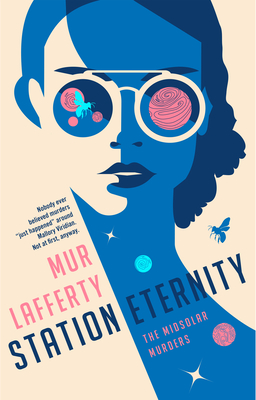
140. Station Eternity


Station Eternity. Mur Lafferty. 2022. [October] 457 pages. [Source: Library]

First sentence: Nobody ever believed murders "just happened" around Mallory Viridian. Not at first, anyway. Before 2032, she figured out she was an unlucky kid in that she'd been adjacent to two deaths, at separate times. In college, she witnessed four murders (unrelated) and, this time, helped solved them. She began to worry after she solved her third and fourth cases: two unrelated murders while on a college trip. She wasn't trained in crime scene investigation and she wasn't even a big fan of mystery novels. 

Premise/plot: Wanting to escape humanity all together, Mallory Viridian has found "her place" on a sentient space station [named Eternity]. She's one of three humans aboard. [One is the official human ambassador. The second is a stowaway, of sorts; someone not "on record" as being on the station.] But their lives are turned upside down the day they learn that a shuttle of HUMANS are coming to the station. Honestly, Mallory thought she was done running, and Xan is a wanted person back on Earth. It seems that even the space station itself [or is it herself? himself?] is against the shuttle of humans once she [he? it?] mentally connects with those aboard. Soon Mallory has her BIGGEST case to solve yet. 

My thoughts: I was hooked from the start. I was. Past tense. This one was so interesting and unique at the start. The premise was being worked out beautifully. However, at a certain point--perhaps the halfway point? perhaps earlier or later--everything began to spin out of control. I'm not saying that other readers will agree that this one falls apart and doesn't live up to the promising premise. But for me, once the narration started including anyone and everyone--instead of being just Mallory or Xan--and the plot began playing around with time--in that we not only were changing narrators but also flashing back and forth in time. It was just a little much. The chapter titles hinted--subtly, too subtly--what the chapter was about. One could try to deduce *when* in time it was and perhaps who was speaking. But more often than not, it was just a bit messy. 

I loved the idea of an amateur "detective" in space solving crime. I also really appreciated the reference to BABYLON 5. But overall, it didn't live up to the awesomeness of the premise--in my opinion.


© 2022 Becky Laney of Becky's Book Reviews

Monday, October 31, 2022

October Reflections


In October I read forty-nine books.

Books reviewed at Becky's Book Reviews

120. The Epic Story of Every Living Thing. Deb Caletti. 2022. 416 pages. [Source: Library]
121. So Much More to Helen! Meeg Pincus. Illustrated by Caroline Bonne-Muller. 2022. [April] 32 pages. [Source: Library]
122. Choosing Brave: How Mamie Till-Mobley and Emmett Till Sparked the Civil Rights Movement. Angela Joy. Illustrated by Janelle Washington. 2022. 64 pages. [Source: Library]
123. Magnificent Obsession. Lloyd C. Douglas. 1929. 336 pages. [Source: Library]
124. The Roman Hat Mystery. Ellery Queen. (aka Frederic Dannay and Manfred Bennington Lee) 1929. 239 pages. [Source: Library]
125. The House of Hades. (The Heroes of Olympus #4) Rick Riordan. 2013. 597 pages. [Source: Library]
126. Passing. Nella Larsen. (Introduced by Emily Bernard). 1929. 160 pages. [Source: Library]
127. We Own the Sky. Rodman Philbrick. 2022. [September] 208 pages. [Source: Library]
128. The Blood of Olympus (The Heroes of Olympus #5) Rick Riordan. 2014. 516 pages. [Source: Library]
129. The Jumping-Off Place. Marian Hurd McNeely. Illustrated by William Siegel. 1929. 321 pages. [Source: Review copy]
130. Days of Infamy: How A Century of Bigotry Led to Japanese American Internment. Lawrence Goldstone. 2022. 288 pages. [Source: Library]
131. Fairy Tale. Stephen King. 2022. 608 pages. [Source: Library]
132. Vampiric Vacation: Sinister Summer #2. Kiersten White. 2022. 320 pages. [Source: Library]
133. Crash from Outer Space: Unraveling the Mystery of Flying Saucers, Alien Beings, and Roswell. Candace Fleming. 2022. [October] 288 pages. [Source: Library]
134. Beauvallet. Georgette Heyer. 1929. 272 pages. [Source: Library]
135. Hitty: Her First Hundred Years. Rachel Field. Illustrated by Dorothy P. Lathrop. 1929. 256 pages. [Source: Library]
136. You Only Live Once, David Bravo. Mark Oshiro. 2022. 381 pages. [Source: Library]
137. Ender's Game. Orson Scott Card. 1985. 324 pages. [Source: Bought]
138. The Scrivener's Bones( Alcatraz Versus The Evil Librarians #2) Brandon Sanderson. 2008. 322 pages. [Source: Library]
139. Black Bird, Blue Road. Sofiya Pasternack. 2022. [September] 320 pages. [Source: Library]


Books reviewed at Young Readers

153. The Sisters Grimm: The Unusual Suspects. Michael Buckley. Illustrated by Peter Ferguson. 2005. 292 pages. [Source: Library]
154. How To Build An Orchestra. Mary Auld. Illustrated by Elisa Paganelli. 2020. [October] 48 pages. [Source: Library]
155. Sometimes I Grumblesquinch. Rachel Vail. Illustrated by Hyewon Yum. 2022. [August] 40 pages. [Source: Library]
156. Ben Yokoyama and the Cookie Thief (Cookie Chronicles #4) Matthew Swanson. Illustrated by Robbi Behr. 2022. [September]  304 pages. [Source: Library]

157. Violet and Jobie In the Wild. Lynne Rae Perkins. 2022. [September] 240 pages. [Source: Library]
158. Ballet Bruce (World of Reading, Level 1) Ryan T. Higgins. 2022. [July] 32 pages. [Source: Library]
159. Snail's Silly Adventures. Mary Peterson. 2020. 128 pages. [Source: Library]
160. Even Robots Can Be Thankful. Jan Thomas. 2022. 64 pages. [Source: Library]
161. How Kind! (Board Book) Mary Murphy. 2022. 24 pages. [Source: Library]
162. Hey, Bruce! An Interactive Book. Ryan T. Higgins. 2022. 48 pages. [Source: Library]
163. Haylee and Comet: Over the Moon (Haylee and Comet #3) Deborah Marcero. 2022. 72 pages. [Source: Library]
164. The Area 51 Files. Julie Buxbaum. 2022. [September] 304 pages. [Source: Library]
165. Race to Fire Mountain (Future Hero #1) Remi Blackwood. 2022. [August] 144 pages. [Source: Library]
166. Ruby Finley vs. the Interstellar Invasion. K. Tempest Bradford. 2022. 208 pages. [Source: Library]
167. Just Harriet. Elana K. Arnold. 2022. 208 pages. [Source: Library]
168. Two-Headed Chicken. Tom Angleberger. 2022. [September] 208 pages. [Source: Library]
169. Ballewiena. Rebecca Bender. 2022. 32 pages. [Source: Library]
170. Doggo and Pupper Save The World (Doggo and Pupper #2) Katherine Applegate. Illustrated by Charlie Alder. 2022. 96 pages. [Source: Library]
171. Who Was A Daring Pioneer of the Skies? Amelia Earhart. Melanie Gillman. 2022. [August] 64 pages. [Source: Library]
172. The Three Billy Goats Gruff. Mac Barnett. Illustrated by Jon Klassen. 2022. [October 18] 48 pages. [Source: Library]
173. Creepy Crayon! Aaron Reynolds. Illustrated by Peter Brown. 2022. [August] 48 pages. [Source: Library]
174. A Very Mercy Christmas. Kate DiCamillo. Illustrated by Chris Van Dusen. 2022. [September] 32 pages. [Source: Library]
175. Max Can Read. Rosemary Wells. 2022. [October] 32 pages. [Source: Library]
176. Odder. Katherine Applegate. Illustrated by Charles Santoso. 2022. 288 pages. [Source: Library]


Books reviewed at Operation Actually Read Bible

36. Counterfeit Kingdom: The Dangers of New Revelation, New Prophets, and New Age Practices in the Church. Holly Pivec and R. Douglas Geivett. 2022. [November] 272 pages. [Source: Review copy]
37. The First Songs of Christmas. Nancy DeMoss Wolgemuth. 2021. 160 pages. [Source: Bought]
38. The Florence Legacy. Lauraine Snelling. 2022. 400 pages. [Source: Review copy]

39. The Extraordinary Deaths of Mrs. Kip. Sara Brunsvold. 2022. 361 pages. [Source: Library]


Bibles reviewed at Operation Actually Read Bible

15. ESV Gospel Transformation Study Bible: Christ In All of Scripture, Grace for All of Life. 2019 (this edition). 2096 pages. [Source: Gift]
16. New American Standard Reference Edition. 1973. God. 1899 pages. [Source: Bought]


October Totals

October reads
# of books49
# of pages14218


2022 Yearly Totals

2022 Totals
# of books369
# of pages109129


© 2022 Becky Laney of Becky's Book Reviews

Thursday, October 27, 2022

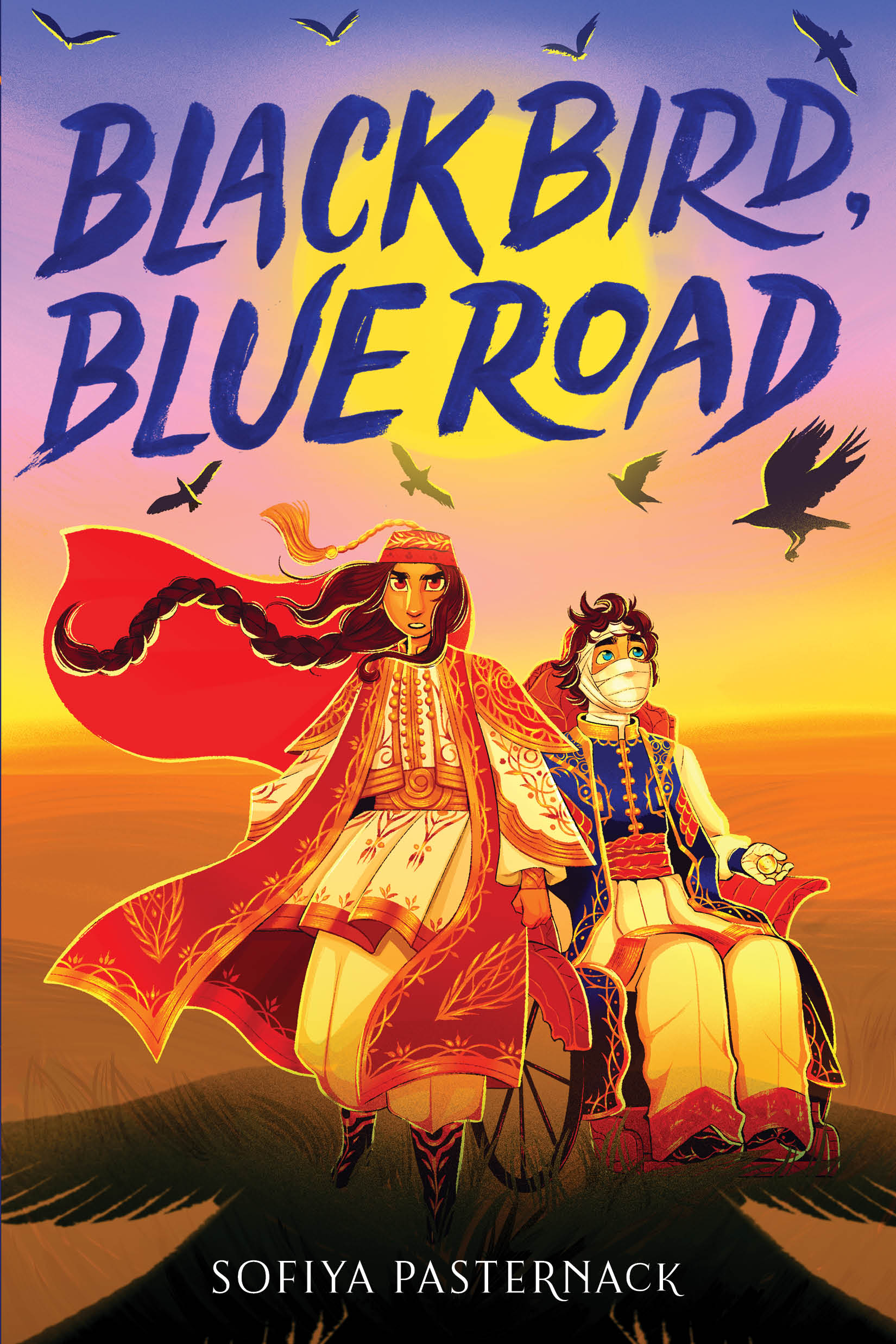
139. Black Bird, Blue Road


Black Bird, Blue Road. Sofiya Pasternack. 2022. [September] 320 pages. [Source: Library]

First sentence: Hello! Come in. Sit down. Don't be scared. This is a very important story, after all, and you shouldn't be afraid to hear it. It's from a very long time ago. A thousand years! In thos days, they used to begin their stories like this: There was one, there was no one. So that's how I'll begin, too. There was one. A girl. Ziva bat Leah, the daughter of a judge and the sister of a prophet. There was no one. No one to believe that Ziva could do the things she set out to do--like find a cure for her brother's illness, or master a demon, or sway the Angel of Death, whom she called malach ha-mavet. Ziva did two of those things, dear listener. Which two? Well. 

Premise/plot: Historical fantasy starring Jewish characters [and community]. Ziva, our heroine, loves, loves, loves her twin brother, Pesah. Everytime someone tells her that her brother is dying, she reacts. NO. No. No. A thousand times no. She is not ready to give up on her brother. He may have leprosy. He may have a gurgling, hagging-nagging cough, but she is not ready to give up on him. She will stand by his side fighting for a cure, clinging to any and every hope for a cure. This ultimately leads her to run away from home--with her brother--in search of a cure. It is an incredible journey. I will refrain from going into specifics of that journey. BUT MY OH MY this book was good.

My thoughts: The first few pages of the prologue grabbed my attention. The first part of the novel (proper) were much slower, in my opinion. But once these two start on their [runaway] journey, this one really takes off. Once these two encounter the half-demon (there was a Jewish name but I don't have a copy of the book in front of me and I didn't take actual notes), Almas, and these three set off in search of a city [Luz] where they can find immortality, the book becomes impossible--absolutely impossible--to put down. They are on a flight to out-run the Angel of Death.


© 2022 Becky Laney of Becky's Book Reviews
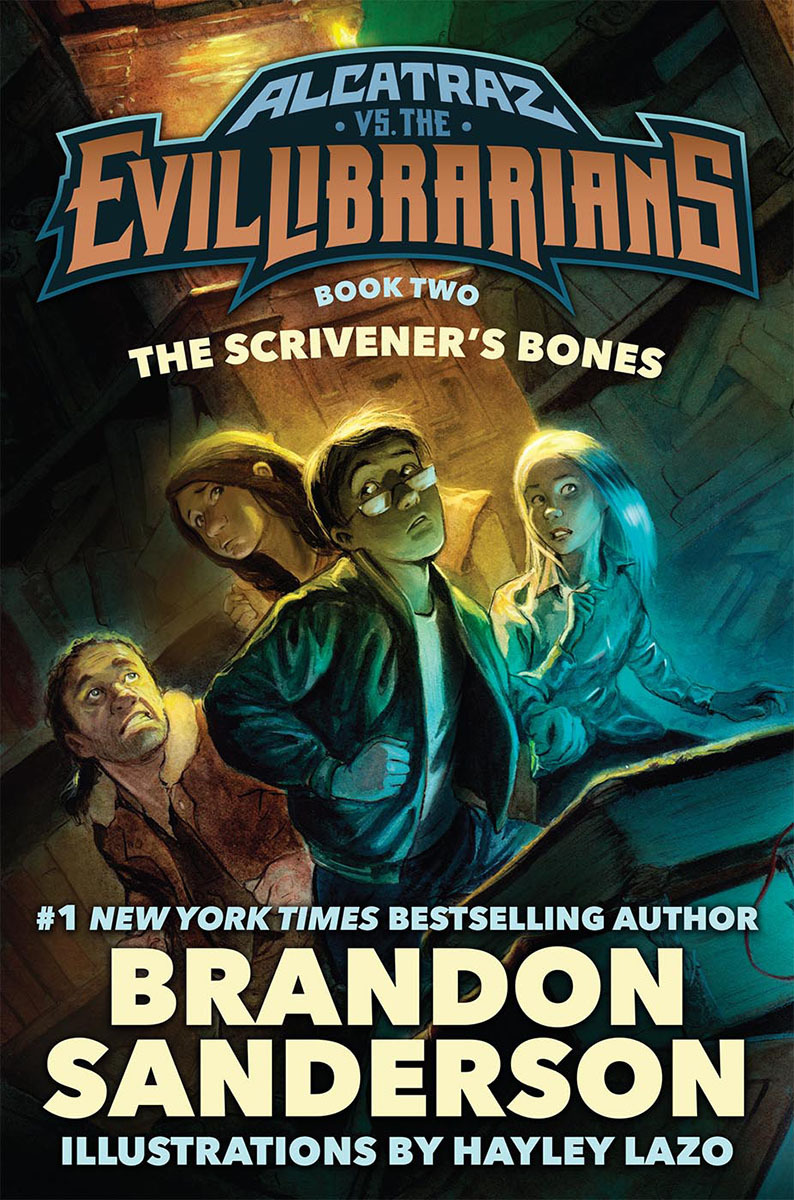
138. Alcatraz Vs. The Evil Librarians: The Scrivener's Bones


The Scrivener's Bones( Alcatraz Versus The Evil Librarians #2) Brandon Sanderson. 2008. 322 pages. [Source: Library]

First sentence: So, there I was, slumped in my chair, waiting in a drab airport terminal, munching absently on a bag of stale potato chips. Not the beginning you expected, is it? You likely thought that I would start this book with something exciting. A scene involving evil Librarians, perhaps -- something with altars, Alivened, or at least some machine guns. I'm sorry to disappoint you. It won't be the first time I do that. However, it's for your own good.

Premise/plot: This is the sequel to Alcatraz Versus the Evil Librarians. Alcatraz Smedry is back for his second adventure. And oh how he loves to manipulate his readers, tease them, taunt them. It's mean and I love it. If you haven't read the first book, you should. Trust me on that. It's funny and clever. And the best entertainment to be had between the covers of a book.

I'd like to make something clear. I have been unfair to you. That is to be expected, liar that I am.
In the first book of this series, I made some sweeping generalizations about librarians, many of which are completely true.
I need to come clean. There are several kinds of librarians. There are the ones I talked about in my last book -- the Librarians, with a capital L. We also call them the Librarians of Biblioden, or the Scrivener's Librarians. Most of what I said about that particular group is, indeed, factual.
However, I didn't take the time to explain that they're not the only kind of librarians. You may, therefore, have assumed that all librarians are evil cultists who want to take over the world, enslave humanity, and sacrifice people on their altars.
This is completely untrue. Not all librarians are evil cultists. Some librarians are instead vengeful undead who want to suck your soul.
I'm glad we cleared that up. (44-45)


In this second adventure, we have Alcatraz and Bastille teaming up with others--new characters, new talents--on a quest trying to track down Grandpa Smedry and Attica Smedry. (Attica being the long-lost-and-often-presumed-dead father of our hero, Alcatraz.) Alcatraz believes that both can be found in the Library of Alexandria. It is here in this ancient library, that they come across the worst sort of librarian: the kind that can take your soul if you take a book. (If you sign a contract to lose your soul, you have ten hours before the dreaded soul-taking takes place. If you don't sign a contract but happen to pick up a book, then you've got ten seconds.) These librarians taunt and tease. Urging you to read this and that. Good news if you give in: You get to read all the books in the library. And we're not just talking ancient scrolls and the like. New books--American books--are being sent over all the time. (Every book ever written.) Bad news: You're doomed to spend eternity there with no hope of ever leaving. And as a curator, you yourself will join their numbers trying to steal other people's souls.

Can Alcatraz find his father and grandfather and escape this threatening-but-oh-so-tempting library with his soul intact? Will his friends? There's danger. There's threats--new and old. There are traps, traps, and more traps. There are daring rescues (or rescue attempts I should say). There are more than a few surprises. It's great fun. You should try it.

My thoughts: I really LOVE revisiting this series. I don't know why I've never taken the time to reread these books. I definitely loved them the first time around and I'm loving them this time around as well. I am so glad a new book in the series is releasing so I can revisit this wonderful series. I do think the narrative style is super appealing to readers of all ages.

© 2022 Becky Laney of Becky's Book Reviews