Showing posts with label 1818. Show all posts

Sunday, February 01, 2026

12. Frankenstein


12. Frankenstein (Oxford World's Classics). Mary Wollstonecraft Shelley. 1818/1998. 261 pages. [Source: Library, Audiobook, classic, science fiction, speculative fiction.]

First sentence: You will rejoice to hear that no disaster has accompanied the commencement of an enterprise which you have regarded with such evil forebodings.

Premise/plot: Robert Walton is on the adventure of a lifetime; he's always, always, always wanted to be an arctic explorer. He just wishes he had a best-good-buddy to share it with. As he's sharing his longing for a friend with his sister--via letter--he stumbles across a candidate for the job. He's a strange, odd man with one super-crazy story to tell. He's also a man full of warnings and woes. His name is Victor Frankenstein. You might have heard of him. Maybe.

Victor Frankenstein understands dreaming big. If asked what he wanted to be when he grew up, he might have responded oh-so-seriously: GOD. You see, Victor spends way too much time thinking about how life is created. Well. Perhaps I should rephrase that. When he's thinking about creation, he's thinking about how to reanimate DEAD BODIES and RECREATE life.

Frankenstein becomes more than a little obsessed with his science project. I personally could never figure out the appeal. He isn't interested in bringing the dead back to life--as is. That is, reanimating the life of a specific person. He is interested in piecing together bits and pieces of dead humans into a new super-human form. Taller. Stronger. Bigger. And definitely uglier. He isn't interested in prolonging life or reuniting families. What does he hope to gain by his creation? Does he see himself as a Creator? What does he owe his creature--if anything? What does his creature owe him--if anything?

If man is created in the image of God, is the monster created in the image of Frankenstein? Does the monster share the characteristics of Victor Frankenstein? Are the two more alike or different? Does the monster reveal the heart and mind of his Creator?

My thoughts: I've read Frankenstein so many times now. I think I've really only ever read the 1818 text of the novel. Most of the time I stick with the same copy I used in college.

I love the book.


© 2026 Becky Laney of Becky's Book Reviews

Monday, February 03, 2020

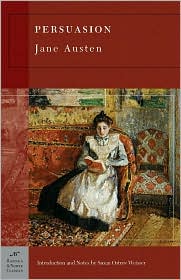
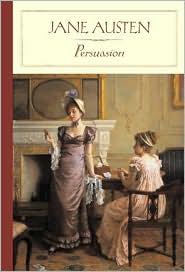
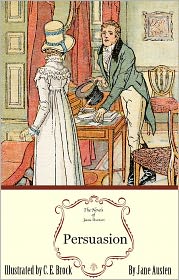
20. Persuasion

Persuasion. Jane Austen. 1818. 325 pages. [Source: Bought] [Adult fiction; adult romance; adult classic]

First sentence: Sir Walter Elliot, of Kellynch Hall, in Somersetshire, was a man who, for his own amusement, never took up any book but the Baronetage; there he found occupation for an idle hour, and consolation in a distressed one; there his faculties were roused into admiration and respect, by contemplating the limited remnant of the earliest patents; there any unwelcome sensations, arising from domestic affairs changed naturally into pity and contempt as he turned over the almost endless creations of the last century; and there, if every other leaf were powerless, he could read his own history with an interest which never failed.


Premise/plot: Anne Elliot, our heroine spinster, has missed her chance for love and happiness--or has she?! When she broke off her engagement seven years earlier--I believe it to be seven; it is at the very least seven--Anne never expected to see Frederick Wentworth again...

The Elliot family is in financial trouble--Anne the only sensible Elliot. The family decides to rent out their big estate and move to Bath. Anne isn't really necessary for this--she's just Anne--so she remains behind in the neighborhood, staying with her married sister, Mary, and brother-in-law, Charles, and their two children. Lady Russell, Anne's substitute mother of sorts, will bring her to Bath when she comes (several months) later.

The estate is rented out to the Crofts--Admiral and Mrs. Croft. Her brother happens to be....Captain Frederick Wentworth. (If The Bachelor had existed in 1818, he'd have applied to be a contestant.) What he is looking for MARRIAGE. She must be....anyone but Anne. Well, that's what he thinks at the start...

So the two socialize in the same circles; Mary has two sisters-in-law either which would do for Captain Wentworth--if he can choose between them. But Anne is ever in the background. Perhaps especially in her own family. Though at least with the Musgroves she's vital and essential to the every day management of life and comfort and peace. (As opposed to when she's with her father and other sister, Elizabeth, where she might as well be an ugly vase.

My thoughts: I love, love, love, crazy love and ABSOLUTELY adore this one. I've reviewed it in 2008 (in which I said it was my second time to read it); in 2011; in 2014 and 2016. I find it a giddy-making read. I love, love, love the romance between Anne and Frederick. I love the last half of the novel especially. There is such incredible build-up in this relationship. It never fails to thrill even when I know exactly how it will end.

Quotes:
Vanity was the beginning and the end of Sir Walter Elliot's character; vanity of person and of situation.
His two other children were of very inferior value. Mary had acquired a little artificial importance, by becoming Mrs Charles Musgrove; but Anne, with an elegance of mind and sweetness of character, which must have placed her high with any people of real understanding, was nobody with either father or sister; her word had no weight, her convenience was always to give way--she was only Anne.
To Lady Russell, indeed, she was a most dear and highly valued god-daughter, favourite, and friend. Lady Russell loved them all; but it was only in Anne that she could fancy the mother to revive again.
Lady Russell, indeed, had scarcely any influence with Elizabeth, and seemed to love her, rather because she would love her, than because Elizabeth deserved it.
Half the sum of attraction, on either side, might have been enough, for he had nothing to do, and she had hardly anybody to love; but the encounter of such lavish recommendations could not fail.
They were gradually acquainted, and when acquainted, rapidly and deeply in love.
It would be difficult to say which had seen highest perfection in the other, or which had been the happiest: she, in receiving his declarations and proposals, or he in having them accepted.
She was persuaded to believe the engagement a wrong thing: indiscreet, improper, hardly capable of success, and not deserving it.
The belief of being prudent, and self-denying, principally for his advantage, was her chief consolation, under the misery of a parting, a final parting; and every consolation was required, for she had to encounter all the additional pain of opinions, on his side, totally unconvinced and unbending, and of his feeling himself ill used by so forced a relinquishment.
She had been forced into prudence in her youth, she learned romance as she grew older: the natural sequel of an unnatural beginning.
To be claimed as a good, though in an improper style, is at least better than being rejected as no good at all; and Anne, glad to be thought of some use, glad to have anything marked out as a duty, and certainly not sorry to have the scene of it in the country, and her own dear country, readily agreed to stay.
"There is hardly any personal defect," replied Anne, "which an agreeable manner might not gradually reconcile one to."
Excepting one short period of her life, she had never, since the age of fourteen, never since the loss of her dear mother, known the happiness of being listened to, or encouraged by any just appreciation or real taste.
If there is anything disagreeable going on men are always sure to get out of it, and Charles is as bad as any of them.
A sick child is always the mother's property: her own feelings generally make it so.
You, who have not a mother's feelings, are a great deal the properest person.
He had not forgiven Anne Elliot. She had used him ill, deserted and disappointed him; and worse, she had shewn a feebleness of character in doing so, which his own decided, confident temper could not endure.
She had given him up to oblige others. It had been the effect of over-persuasion. It had been weakness and timidity.
"Yes, here I am, Sophia, quite ready to make a foolish match. Anybody between fifteen and thirty may have me for asking. A little beauty, and a few smiles, and a few compliments to the navy, and I am a lost man. Should not this be enough for a sailor, who has had no society among women to make him nice?"
"A strong mind, with sweetness of manner," made the first and the last of the description. "That is the woman I want," said he.
"Something a little inferior I shall of course put up with, but it must not be much. If I am a fool, I shall be a fool indeed, for I have thought on the subject more than most men."
We none of us expect to be in smooth water all our days.
They were more in love with him; yet there it was not love. It was a little fever of admiration; but it might, probably must, end in love with some.
He was only wrong in accepting the attentions (for accepting must be the word) of two young women at once.
You are never sure of a good impression being durable; everybody may sway it.
One man's ways may be as good as another's, but we all like our own best.
I have done very little besides sending away some of the large looking-glasses from my dressing-room, which was your father's. A very good man, and very much the gentleman I am sure: but I should think, Miss Elliot," (looking with serious reflection), "I should think he must be rather a dressy man for his time of life. Such a number of looking-glasses! oh Lord! there was no getting away from one's self.
Give him a book, and he will read all day long.
Everybody has their taste in noises as well as in other matters; and sounds are quite innoxious, or most distressing, by their sort rather than their quantity. 
There is so little real friendship in the world! and unfortunately" (speaking low and tremulously) "there are so many who forget to think seriously till it is almost too late."
 She hoped to be wise and reasonable in time; but alas! alas! she must confess to herself that she was not wise yet.
 One does not love a place the less for having suffered in it, unless it has been all suffering, nothing but suffering.    
  Anne saw nothing, thought nothing of the brilliancy of the room. Her happiness was from within. Her eyes were bright and her cheeks glowed; but she knew nothing about it. She was thinking only of the last half hour, and as they passed to their seats, her mind took a hasty range over it.
What wild imaginations one forms where dear self is concerned! How sure to be mistaken!
Facts or opinions which are to pass through the hands of so many, to be misconceived by folly in one, and ignorance in another, can hardly have much truth left.
All the privilege I claim for my own sex (it is not a very enviable one; you need not covet it), is that of loving longest, when existence or when hope is gone.
On the contents of that letter depended all which this world could do for her. Anything was possible, anything might be defied rather than suspense.
"I can listen no longer in silence. I must speak to you by such means as are within my reach. You pierce my soul. I am half agony, half hope. Tell me not that I am too late, that such precious feelings are gone for ever. I offer myself to you again with a heart even more your own than when you almost broke it, eight years and a half ago. Dare not say that man forgets sooner than woman, that his love has an earlier death. I have loved none but you. Unjust I may have been, weak and resentful I have been, but never inconstant. You alone have brought me to Bath. For you alone, I think and plan. Have you not seen this? Can you fail to have understood my wishes? I had not waited even these ten days, could I have read your feelings, as I think you must have penetrated mine. I can hardly write. I am every instant hearing something which overpowers me. You sink your voice, but I can distinguish the tones of that voice when they would be lost on others. Too good, too excellent creature! You do us justice, indeed. You do believe that there is true attachment and constancy among men. Believe it to be most fervent, most undeviating, in F. W. "I must go, uncertain of my fate; but I shall return hither, or follow your party, as soon as possible. A word, a look, will be enough to decide whether I enter your father's house this evening or never."         
Such a letter was not to be soon recovered from.
There could be only the most proper alacrity, a most obliging compliance for public view; and smiles reined in and spirits dancing in private rapture.
There they exchanged again those feelings and those promises which had once before seemed to secure everything, but which had been followed by so many, many years of division and estrangement. There they returned again into the past, more exquisitely happy, perhaps, in their re-union, than when it had been first projected; more tender, more tried, more fixed in a knowledge of each other's character, truth, and attachment; more equal to act, more justified in acting.               
Who can be in doubt of what followed? When any two young people take it into their heads to marry, they are pretty sure by perseverance to carry their point, be they ever so poor, or ever so imprudent, or ever so little likely to be necessary to each other's ultimate comfort.

© 2020 Becky Laney of Becky's Book Reviews

Friday, September 28, 2018

Frankenstein

Frankenstein (Oxford World's Classics). Mary Wollstonecraft Shelley. 1818/1998. 261 pages. [Source: Bought in College.]

You will rejoice to hear that no disaster has accompanied the commencement of an enterprise which you have regarded with such evil forebodings.

Premise/plot: Robert Walton is on the adventure of a lifetime; he's always, always, always wanted to be an arctic explorer. He just wishes he had a best-good-buddy to share it with. As he's sharing his longing for a friend with his sister--via letter--he stumbles across a candidate for the job. He's a strange, odd man with one super-crazy story to tell. He's also a man full of warnings and woes. His name is Victor Frankenstein. You might have heard of him. Maybe.

Victor Frankenstein understands dreaming big. If asked what he wanted to be when he grew up, he might have responded oh-so-seriously: GOD. You see, Victor spends way too much time thinking about how life is created. Well. Perhaps I should rephrase that. When he's thinking about creation, he's thinking about how to reanimate DEAD BODIES and RECREATE life.

Frankenstein becomes more than a little obsessed with his science project. I personally could never figure out the appeal. He isn't interested in bringing the dead back to life--as is. That is, reanimating the life of a specific person. He is interested in piecing together bits and pieces of dead humans into a new super-human form. Taller. Stronger. Bigger. And definitely uglier. He isn't interested in prolonging life or reuniting families. What does he hope to gain by his creation? Does he see himself as a Creator? What does he owe his creature--if anything? What does his creature owe him--if anything?

If man is created in the image of God, is the monster created in the image of Frankenstein? Does the monster share the characteristics of Victor Frankenstein? Are the two more alike or different? Does the monster reveal the heart and mind of his Creator?

My thoughts: I've read Frankenstein so many times now. I think I've really only ever read the 1818 text of the novel. Most of the time I stick with the same copy I used in college.

I love the book.


© 2018 Becky Laney of Becky's Book Reviews

Monday, April 11, 2016

Persuasion (1818)

Persuasion. Jane Austen 1818/1992. Knopf Doubleday. 304 pages. [Source: Bought]

Persuasion by Jane Austen is without a doubt one of my favorite books. Persuasion, Jane Eyre, and North and South are my top three classics, top three romances. As to which of the three I like best, well, do I really have to choose between them?! I've read these three again and again and again and again. I do feel sorry for people who don't make rereading a priority in their lives!

Anne Elliot is the heroine of Persuasion. She has a father, who in turns neglects and insults her, and two sisters. Her oldest sister, when she thinks of her at all, does so in a condescending manner. Her younger sister, well, she thinks of her more often, but mainly in a way that takes advantage of her! Anne is both patient and frustrated. She's made peace with how things are, accepts that this is how things will likely remain. True, she sometimes finds herself dreaming of HIM. The man she loved passionately way back when, and, still loves to this day. The man that her family disapproved of. The man that she ultimately broke up with because she was a dutiful daughter. Captain Wentworth. Yes, sometimes she does think of him....

So when the family's financial difficulties leads the family to move to Bath and rent out their estate to a naval officer, that, is when Anne gets a second chance at life, love, and happiness. Of course, no one knew it would be to her advantage! Anne meets Captain Wentworth again. The meeting isn't without its awkwardness. And Captain Wentworth seems EAGER to marry now that he's established himself and is quite wealthy. But he's eager to marry any woman that is not Anne....

There are dozens of characters to meet in this one. Austen, like always, does a great job in creating a world we carry about, and characters we can react to! This is Captain Wentworth and Anne's story....but.... it's much more than that.

I would definitely recommend this one. And. If you get the chance to read it before Pride and Prejudice that might be even better. I think when people become so obsessed with Pride and Prejudice it can be hard for them to like Austen's other heroines. But I much prefer Persuasion to Pride and Prejudice.

© 2016 Becky Laney of Becky's Book Reviews

Sunday, November 09, 2014

Sundays with Jane: Persuasion (1818)

Persuasion. Jane Austen 1818/1992. Knopf Doubleday. 304 pages. [Source: Bought]

Persuasion is my favorite Jane Austen novel. It just is. I believe this is the third time I've reviewed it. April 2011. January 2008. Out of all of Austen's opening lines, I have to admit that Persuasion's first sentence is my least favorite. Wouldn't you agree?

Opening to Sense and Sensibility: The family of Dashwood had long been settled in Sussex.

Opening to Pride and Prejudice: It is a truth universally acknowledged, that a single man in possession of a good fortune, must be in want of a wife.

Opening to Mansfield Park: About thirty years ago Miss Maria Ward, of Huntingdon, with only seven thousand pounds, had the good luck to captivate Sir Thomas Bertram, of Mansfield Park, in the county of Northampton, and to be thereby raised to the rank of a baronet's lady, with all the comforts and consequences of an handsome house and large income.

Opening to Emma: Emma Woodhouse, handsome, clever, and rich, with a comfortable home and happy disposition, seemed to unite some of the best blessings of existence; and had lived nearly twenty-one years in the world with very little to distress or vex her. 

Opening to Northanger Abbey: No one who had ever seen Catherine Morland in her infancy would have supposed her born to be an heroine. Her situation in life, the character of her father and mother, her own person and disposition, were all equally against her. 

Opening to Persuasion: Sir Walter Elliot, of Kellynch Hall, in Somersetshire, was a man who, for his own amusement, never took up any book but the Baronetage; there he found occupation for an idle hour, and consolation in a distressed one; there his faculties were roused into admiration and respect, by contemplating the limited remnant of the earliest patents; there any unwelcome sensations, arising from domestic affairs changed naturally into pity and contempt as he turned over the almost endless creations of the last century; and there, if every other leaf were powerless, he could read his own history with an interest which never failed.

I've already summarized the plot twice before, and, the problem with reread posts is that I have to always (try to) find new ways to say what I've already said.

Anne Elliot is the heroine of Persuasion. If you haven't read Persuasion before let me add this, please, don't expect Anne to be Elizabeth Bennet. Just don't. You'll be happier for letting Anne be Anne and not comparing her to Elizabeth, Emma, Elinor, Marianne, Catherine, or Fanny. Plenty of people misunderstand Anne--the top offenders being her very own family--I don't want you to be one of them. Don't let her family persuade you that Anne is someone to easily dismiss, a nobody.

As I was saying, Anne is the heroine of Persuasion. Eight years before the novel opens, Anne fell in love. It was a forever-love. She wanted to marry Frederick Wentworth. He wanted to marry her too. They loved each other very much. But he had no way to support her. It wasn't just that he couldn't support her in style. Her family disapproved. Her friends disapproved. Long story short, the engagement was broken off. Persuasion is all about her second chance. When Anne and Captain Wentworth meet again, eight years later, can these two come together and make it work, can they have their happily ever after? That is the very simplified version, I suppose! Austen being Austen, there are plenty of characters and stories introduced in Persuasion. It is a very enjoyable read. In places, it is quite giddy-making.

Do you have a favorite Austen hero? Captain Wentworth is perhaps one of the strongest Austen heroes. Of course, everyone is familiar with Darcy. But Wentworth has his fans as well! Perhaps in large part due to his letter to Anne:
I can listen no longer in silence. I must speak to you by such means as are within my reach. You pierce my soul. I am half agony, half hope. Tell me not that I am too late, that such precious feelings are gone forever. I offer myself to you again with a heart even more your own than when you almost broke it eight years and a half ago. Dare not say that a man forgets sooner than woman, that his love has an earlier death. I have loved none but you. Unjust I may have been, weak and resentful I have been, but never inconstant. You alone have brought me to Bath. For you alone I think and plan. (234)
Personally, I love Henry Tilney, Mr. Knightley, and Captain Wentworth.

Favorite quotes:
Excepting one short period of her life, she had never, since the age of fourteen, never since the loss of her dear mother, known the happiness of being listened to, or encouraged by any just appreciation or real taste.
No, it was not regret which made Anne’s heart beat in spite of herself, and brought the colour into her cheeks when she thought of Captain Wentworth unshackled and free. She had some feelings which she was ashamed to investigate. They were too much like joy, senseless joy!
She hoped to be wise and reasonable in time; but alas! alas! she must confess to herself that she was not wise yet.

© 2014 Becky Laney of Becky's Book Reviews

Thursday, October 27, 2011

The Classics Circuit: Frankenstein

Frankenstein. Mary Shelley. 1818. Oxford World's Classics. 250 pages.

I am happy today to be reviewing Mary Shelley's Frankenstein for October's Classic Circuit Tour on Gothic Lit. Frankenstein just happens to be one of my favorite novels--though that hasn't always been the case. If you want to read a long ramble about how this short little novel became a favorite of mind, you may read my first review published in 2007. My second review of the novel was in 2009. If you want to read my thoughts on the graphic novel, I reviewed it just last year.

I'll be honest. If you have NOT read Frankenstein, then this discussion probably isn't for you. I don't know how to talk about Frankenstein without talking spoilers. 

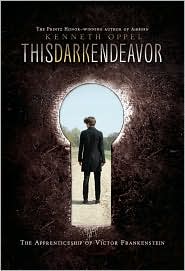
Before I read Frankenstein (this time), I happened to read two young adult novels: Mister Creecher by Chris Priestly and This Dark Endeavour by Kenneth Oppel. Both novels challenged me to rethink the original novel. Mister Creecher urged me to examine excuses. And This Dark Endeavour showed me just how much we don't know about some of the characters. Specifically, how much we DON'T know about Henry (Clerval) and Elizabeth. I wouldn't say reading these two books exactly guided me in this rereading. I, of course, noticed a few things on my own.

Frankenstein is a great little novel. Readers meet two fully developed characters in Victor Frankenstein and the creature (or monster, if you must see him in that way). I've always been so caught up in their story--the dual narration--that I've never really noticed how undeveloped other characters are. What do we know of Elizabeth? She's sweet. She's beautiful. She's pure. What do we know of Henry? He's Frankenstein's best friend. The man who shows up when Frankenstein is in great need. But does he have much of a personality? Do we ever get a glimpse of who he is apart from the faithful friend? Elizabeth and Henry are the two people nearest and dearest to Victor. Because he's close to these two, the creature is able to use them to get to Victor. Then there is Robert Walton. His letters provide the framework for the novel. Walton himself is experiencing some loneliness and anxiety. He WANTS to be successful as an explorer. He wants to be the one to discover the Northwest Passage. It's a dream that is all risk. If he's successful, of course, it would all be worth it. But if he's not, well, at best that means disappointment and frustration, at worst, death. He LISTENS to the story--this incredible story. He's found Victor Frankenstein on the ice, he's sick and mad. He's not exactly a picture of mental health. And physically, he's in terrible shape. As Walton spends time--a LOT of time with Frankenstein, he records his story. Readers do get to know a little about Walton. We know he's determined, ambitious, curious. We know he's got some stubbornness to him. Some pride. Some desire for fame. But we also know that he has feelings. That he feels lonely and isolated. That he wants more than anything to find a friend, a true friend. He wants to be understood. He wants companionship. So there are THREE characters that Shelley really explores in her novel.

This Dark Endeavor was an interesting prequel to Frankenstein for many reasons. I won't mention all of them, don't worry. But what intrigued me most was the characterization of Elizabeth. Oppel's Elizabeth was strong, resilient, brave, and very smart. And Shelley's Elizabeth, well, she was oh-so-passively good and pure and sweet. Readers do know she loves Victor. Readers do know that she loves her Uncle and her cousins. We do know that she is a compassionate person because she pities Justine to the very end. But I still can't help seeing her existing just so she can be the ultimate victim.

Mister Creecher like John Kessel's short novellette, "Pride and Prometheus," is an expansion of Mary Shelley's original novel. Both are set in the waiting period. Victor Frankenstein has promised his creation, his creature, a mate. He travels to England--to London, to Oxford, etc.--and eventually Scotland with his friend Clerval. All the while struggling with his promise. Should he repeat his mistake? Do two wrongs make a right? Can Frankenstein take his creature at his word? Can Frankenstein take for granted that the creature can predict (and/or control) his potential mate? Can he play with fate like that? If the first creation turned his life upside down and ruined him completely, can the creation of a second really change that? undo it?

So Mister Creecher introduces a friend. A young teen boy named Billy. A thief. Billy himself is an outcast of sorts. He's dirty, despised, looked down upon, chased away. People judge him all the time too. The truth is, if he died no one would miss him. Not at all. He has no one in the world to look out for him, no one to call friend. He's a nobody too. So the two do potentially have some things in common. But Billy CANNOT stand how pitiful the creature is, how full of excuses. He hears Mr. Creecher go on and on and on and on and on about his sad and lonely and miserable existence. How friendless he is. How hopeless he is. How he is rejected by one and all. Mr. Creecher may LOOK different from others, but his story isn't all that unique. He's not the only one to EVER feel so dejected, lonely, and depressed.
'Shut up!' Billy snapped. 'Why do you have to be such a...'
He snarled and kicked a moss-covered branch and sent it tumbling into the darkness. Without the coachlights, the moon provided the only illumination to the scene.
'You see how it is for me,' said Creecher. 'I try to help and--'
'It's always about you, isn't it?' said Billy. 'Oh, poor me--I'm ugly and no one likes me. Boo hoo, boo hoo. Well, life ain't a bowl of cherries for the rest of us neither!'
'But you can live among them...'
Billy fumed for a few moments, unable to express his feelings. The truth was he had never felt part of 'them.' He had never belonged.
'Oh yeah. I can get treated like filth,' he replied. 'I can starve or steal. I can hang. If you want someone to feel sorry for you, you've come to the wrong place.' (191)
So when I read Frankenstein this time, I began noticing that this was more than a little true. The creature does complain a lot, and he does have an exceedingly long list of excuses. He blames Victor for everything. He sees each one of his crimes as being Victor's fault. "Victor made me do it. Victor created me. Victor's responsible for every (bad) decision I make. Yes, I knew it was wrong. But he made me. He made me with these big, strong hands. It couldn't possibly be my fault that I use them to kill. I couldn't hurt anyone at all if I didn't exist." And then there's "If only Victor had loved me..." "If only Victor had taken time to teach me, nurture me, show me how to be a good 'little' monster...I wouldn't have possibly strayed from the straight and narrow." When the creature is not blaming Victor, he's blaming the victims, or blaming the rest of humanity. He never really takes responsibility for his crimes. He does confess. I'm not saying he doesn't admit to being a killer. But he has excuses. He would rather be the victim--the "real" victim--than a killer, a murderer. He wants Victor to be the bigger bad guy, the ultimate bad guy.

It's hard not to pity the creature. It's really, really hard not to feel compassion for him. Especially at the beginning as his story unfolds. It is easy to see his point. It is easy to see that Victor's rejection of him wounded him deeply and warped him a bit. Each rejection just pushes him a little closer to the edge. The more education he receives--through observation, through reading, etc--the more difficult it is for him to just be. He learns of love, of family, of friendship, of joy, of happiness, of laughter. These ideas haunt him because they are unattainable. He'll never feel any of these 'lighter' emotions, he'll feel--and plenty--but he turns to anger, frustration, bitterness, revenge, hate. He gives himself over to hate and revenge. And once he goes bad, pity may remain but it's not exactly a healthy compassion. The truth remains. Did the creature have a choice? Did he know right from wrong and knowingly choose to commit wrong time and time again? The creature felt that becoming a murderer was his only choice, that there was no other choice he could have made. But is that true?

I do think that the creature was acting like an immature child. Maybe a well-read immature child. But I do think he was acting out to get Victor's attention. Victor is a character, on the other hand, that is troublesome almost from the start. It is easy to relate to the creature's loneliness, his outcast state, his wanting a friend. It is harder to relate to Victor's mad obsession to create life, to play at being a god, to gain too much control over the natural world, to venture too far into the unknown, to act without ANY thought at all, to be completely reckless and foolish. Victor seems like a tragically flawed character who couldn't have known any other destiny. And readers really don't know WHY Victor made the decisions he made. Not really. (At least this reader can't fathom.)

So Frankenstein is an emotional read--very powerful, very haunting.

You may also find these books helpful:

Frankenstein's Monster by Susan Heyboer O'Keere.
The Casebook of Victor Frankenstein by Peter Ackroyd.
A Monster's Notes by Laurie Sheck.
Mister Creecher by Chris Priestly
This Dark Endeavour by Kenneth Oppel
"Pride and Prometheus" by John Kessel
AngelMonster by Veronica Bennett.
Wildly Romantic by Catherine M. Andronik.

© 2011 Becky Laney of Becky's Book Reviews

Friday, April 01, 2011

Persuasion

Persuasion. Jane Austen 1818/1992. Knopf Doubleday. 304 pages.

Sir Walter Elliot, of Kellynch-hall, in Sometsetshire, was a man who, for his own amusement, never took up any book but the Baronetage; there he found occupation for an idle hour, and consolation in a distressed one; there his faculties were roused into admiration and respect, by contemplating the limited remnant of the earliest patents; there any unwelcome sensations, arising from domestic affairs, changed naturally into pity and contempt, as he turned over the almost endless creations of the last century -- and there, if every other leaf were powerless, he could read his own history with an interest which never failed -- this was the page at which the favorite volume always opened: Elliot of Kellynch-Hall.

Oh how I love Persuasion. It's not every book I read that inspires this type of devotion, attention. A could-talk-for-hours-and-hours-and-never-tire-of-gushing love and devotion. In her younger days, Anne Elliot fell madly in love with (Captain) Frederick Wentworth. In chapter four, we read:
He was, at that time, a remarkably fine young man, with a great deal of intelligence, spirit and brilliancy; and Anne an extremely pretty girl, with gentleness, modesty, taste, and feeling. Half the sum of attraction, on either side, might have been enough, for he had nothing to do, and she had hardly any body to love; but the encounter of such lavish recommendations could not fail. They were gradually acquainted, and when acquainted, rapidly and deeply in love. It would be difficult to say which had seen highest perfection in the other, or which had been the happiest; she, in receiving his declarations and proposals, or he in having them accepted. (25)
But this happiness does not last. For a "wise" friend standing in the place of a mother, the only kind and caring person in young Anne's life, counsels her against the match. For Wentworth is penniless, at the moment, he has no way to support her. And, Anne is young. Maybe Wentworth is the love of her life, but what if he isn't? Wouldn't it be wiser to wait, to not marry so young? Two hearts are then broken by her decision to part.

The novel opens eight years later. Fate will bring Anne Elliot and Captain Wentworth into each other's lives again. What will happen when these two meet again? She's never stopped loving him. But how does he feel now? Does he love her still? Or did he forget her? Has he forgiven her? Is he angry? bitter?

Anne is taken advantage of by her family. Her father and older sister pay her no mind. They talk at her, mind you. Try to direct her so they can tell her how not to embarrass them.  But they've never listened to anything she's ever said. We read in chapter one:
Anne, with an elegance of mind and sweetness of character, which must have placed her high with any people of real understanding, was nobody with either father or sister: her word had no weight, her convenience was always to give way; she was only Anne. (5)
She's too intelligent, too wise, too observant, too kind, has too much common sense to do them any good. What her father loves best is his own reflection. And her older sister isn't that much better. No, it is their pride, vanity, selfishness, shortsightedness that has endangered their estate. They are moving to Bath to maintain appearances, but their estate will be rented to a naval officer. (But some people can't be humbled.)

Anne does have a second sister, Mary, who's married to Charles, a man who would have much preferred marrying her. (Mary is his second choice, at best, and though he may not act like it in their encounters, there are those in his family who can't forget that Anne is the better woman.) So is Mary better than Elizabeth?  She does have use for Anne. She does enjoy Anne's company. She just loves confiding in Anne. Everyone loves confiding in Anne. (Or should I say complaining to Anne?) Still, her time with the Musgroves isn't horrid. And if she wasn't there, who would love those nephews? They certainly receive no love or care from their mother!
To be claimed as a good, though in an improper style, is at least better than being rejected as no good at all; and Anne, glad to be thought of some use, glad to have any thing marked out as a duty, and certainly not sorry to have the scene of it in the country, and her own dear country, readily agreed to stay. (32)
While her father and sister have gone ahead to Bath, she remains behind. And it is while she's visiting the Musgroves--her sister Mary--that she sees Captain Wentworth again. He appears to have gotten over her. He appears to be falling in love with one of the Musgrove sisters. But. appearances can be deceiving. Will Anne get a second chance?

I love this one. I do. I love Anne. I love Captain Wentworth. I love so many of the secondary characters--maybe love isn't quite the right word. Since most are very flawed, each with his or her own quirks. But still. I enjoy spending time with this novel. I like visiting these characters again and again and again. And that letter!!!! I just LOVE, LOVE, LOVE Captain Wentworth's letter to Anne in which he declares how much he still loves her, wants her, needs her!
I can listen no longer in silence. I must speak to you by such means as are within my reach. You pierce my soul. I am half agony, half hope. Tell me not that I am too late, that such precious feelings are gone forever. I offer myself to you again with a heart even more your own than when you almost broke it eight years and a half ago. Dare not say that a man forgets sooner than woman, that his love has an earlier death. I have loved none but you. Unjust I may have been, weak and resentful I have been, but never inconstant. You alone have brought me to Bath. For you alone I think and plan. (234)
This romance is so wonderful, so giddy-making. I can't recommend it enough!!!

© 2011 Becky Laney of Becky's Book Reviews