Friday, February 13, 2026
19. Jella Lepman and Her Library of Dreams
19. Jella Lepman and Her Library of Dreams. Katherine Paterson. Illustrated by Sally Deng. 2025. 112 pages. [Source: Library] [4 stars, middle grade nonfiction, books about books, aftermath of world war II, biography]
First sentence: Everything about the flight was miserable. Of course, it wasn't meant to be comfortable. The man and the woman were on a military transport build during World War II to ferry troops and armaments to the front.
Premise/plot: Katherine Paterson has written a biography of Jella Lepman.
My thoughts: I am not often speechless about the books I read. Though nonfiction sometimes isn't the easiest to review. What can I say about this book? It is oversized. Don't be fooled by its picture book appearance or the fact that it is illustrated. It is for children. If I had to guess I'd say ages eight or nine plus. That might be a little young. The subject matter perhaps is best matched with older readers. The format presents a bit younger. It doesn't feature chapters like many nonfiction books for older readers.
I found it a fascinating read. It covers decades but roughly begins in 1945 after the end of the Second World War. Jella Lepman is being sent to Europe, to countries still overwhelmed and struggling with the aftermath of war. Her 'job description' if you will is to 'repair' or 're-educate' the women and children of those countries. To repair or mend the lives of the most vulnerable--women and children--from the long-term damages of war. She seeks to do this through books. YES, books. She wants to create a large--extremely very large--collection of books written in many, many, many, many languages to bring together the children of the world. She imagines a space of safety where children can thrive--books are a part of her message, but creativity is also encouraged--think art: drawing, painting and the like. It won't be an easy sell, but, Jella Lepman is determined.
One thing I think the book desperately, desperately needs IS a timeline.
© 2026 Becky Laney of Becky's Book Reviews
Tuesday, February 18, 2025
17. Becoming Real
17. Becoming Real: The True Story of the Velveteen Rabbit. Molly Golden. Illustrated by Paola Escobar. 2025. 48 pages. [Source: Library] [5 stars, nonfiction picture book, book about books, author biographies]
First sentence: Long ago in London, there was a little girl who didn't go to school. Her name was Margery.
Becoming Real is a picture book biography of Margery Williams the author of THE VELVETEEN RABBIT. That in and of itself may convince some to pick it up. (It certainly was enough for me. I love and adore The Velveteen Rabbit. It is SO quotable, so meaning-of-life, so BEAUTIFUL, so memorable.)
I LOVE, LOVE, LOVE how quotes from the VELVETEEN RABBIT are spread throughout the text. I love how that book is the lens through which we see her entire life play out. (If that makes sense?) It is the story of how she came to write this classic. It is building up to that time. I also love how her story--and HISTORY--give context.
I love the narrative. I thought it was well done. I LOVE the illustrations as well. Both text and art complement each other perfectly. As a whole, it was a compelling read that I am already gushing about to anyone who will listen.
© 2025 Becky Laney of Becky's Book Reviews
16. The Great Good Thing
The Great Good Thing (Sylvie Cycle #1) Roderick Townley. 2001? reprinted 2025. 224 pages. [Source: Library] [3 stars, mg fiction, books about books]
First sentence: Sylvie had an amazing life, but she didn't get to live it very often. What good were potions and disguises if no one came along to scare you or save you or kiss you behind the waterfall? Week after week nothing changed. Years went by. The sparkles on Sylvie's dress began to fade, and a fine dust coated the leaves, turning the green woods gray. Once in a while, it looked as though something might happen.
The Great Good Thing is a book about books, or perhaps the self-awareness of fictional characters OF their human readers. This is a book about lasting impressions and dreams. It's an odd little book that doesn't necessarily fit many molds. It does celebrates stories and storytelling and LEGACIES of stories.
Sylvie, the main character, is a fictional book character that--for better or worse, mostly for better--has a special relationship with a family of readers--a grandmother/granddaughter. She is able to "crossover" from the fictional world--the literal pages of her book--into the readers' dream world. When her book suffers a horrible fate--a fire--she is able to help the other characters transition into her readers' dream world where they exist--barely, minimally--for decades.
The book is more abstract and philosophical than young readers may appreciate? In other words, this might 'touch' adults more than children. Though if it's read aloud by an adult who absolutely loves the story, I wouldn't be surprised if young readers catch the enthusiasm and love it as well. I just don't personally see it as a book that kids will discover on their own and absolutely fall in love with. It would need some hand-selling or "blessing."
The book has a heaviness to it which I think might vary from reader to reader to reader. It has a lot of things--directly and indirectly--to say about death.
© 2025 Becky Laney of Becky's Book Reviews
Friday, December 08, 2023
188. What You Are Looking For Is In the Library
What You Are Looking For Is In the Library. Michiko Aoyama. Translated by Alison Watts. 2020/2023. 304 pages. [Source: Library] [adult fiction, realistic fiction, books about books, novellas]
First sentence: When Saya sends a text to tell me she has a new boyfriend, I instantly write back: What's he like? But all she replies is: He's a doctor.
Premise/plot: This newly translated novel contains five interconnected novellas. Different protagonists. Varied problems. But all come to the same community library and meet the same reference librarian. Each is recommended a list of books with one quirky book recommendation tagged onto the end that doesn't quite meet their stated search needs. Each receives a gift--something felted--from the librarian. All lives are changed, though perhaps not as dramatically as one might expect. The changes mostly come from within.
This novella collection celebrates books, libraries, and LIBRARIANS.
My thoughts: I definitely enjoyed this one. And it went a long way in helping me out of my slump. I don't know it I will stay out of my reading slump. I've been struggling the past few weeks with staying engaged with what I am reading. I loved the focus on BOOKS and reading. I thought the characters were well-developed within the novella format. In fact, you might argue that you learn more about these characters in under a hundred pages than you do some books in four hundred pages.
© 2023 Becky Laney of Becky's Book Reviews
Friday, June 09, 2023
114. Revenge of the Librarians
Revenge of the Librarian. Tom Gauld. 2022. [October] 180 pages. [Source: Library] [Bored Adults]
First sentence: Now that you are my bride, you will never leave this castle! Wow! Your library is amazing!
Premise/plot: A collection of book-themed comic strips. Each strip stands alone. All are connected loosely by the theme of books. There are comic strips about writing, editing, publishing, reading, reviewing, and librarying. (Okay, there's no such word. Being a librarian.) The strips also address the pandemic.
My thoughts: Each strip stands alone. Some I loved. Some I didn't. Most fall in neutral territory. It was a quick and easy read. It sometimes made me smile. I think my favorite came towards the end of the book. (There are NO page numbers. This was a little bit frustrating.) "Review Dice"
Quote:
Can't decide what kind of book review to write? Simply cut out, assemble, and roll this helpful dice! Hatchet job; super-detailed, spoiler-filled retelling; brutally polite dismissal; elegant and insightful analysis; rambling personal essay that barely mentions the book; ecstatic love letter.
© 2023 Becky Laney of Becky's Book Reviews
Monday, January 02, 2023
2. Magpie Murders
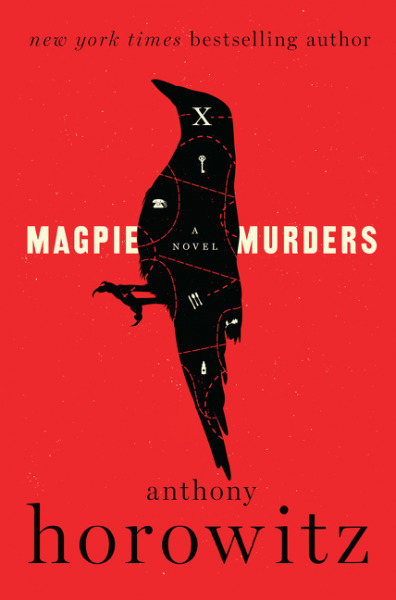
Magpie Murders. Anthony Horowitz. 2016. 477 pages. [Source: Library]
First sentence: A bottle of wine. A family-sized packet of Nacho Cheese Flavoured Tortilla Chips and a jar of hot salsa dip. A packet of cigarettes on the side (I know, I know). The rain hammering against the windows. And a book. What could have been lovelier? Magpie Murders was number nine in the much-loved and world-bestselling Atticus Pünd series. When I first opened it on that wet August evening, it existed only as a typescript and it would be my job to edit it before it was published. First, I intended to enjoy it.
Premise/plot: Susan Ryeland, our heroine, is an editor. She edits Alan Conway's mysteries. Alan Conway's newest book [and final book] is Magpie Murders. The book opens with an entire book-within-a-book. Readers are reading alongside Susan, the manuscript for a mystery novel. Readers discover along with Susan that THE LAST FEW CHAPTERS are missing from the manuscript in front of her. Soon after she realizes this, news breaks that Alan Conway [the author, if you remember] is DEAD. Susan has mysteries to solve. Where are the missing chapters? In the book, who did it??? who was the murderer??? And in real life, WHY did Conway choose to take his own life???? Or did he??? Was this a set up??? Was he murdered??? Are these two events connected???? Did the murderer [if there was a murderer] take the last chapters of the manuscript??? If so, why????
My thoughts: I watched the television show first. For better or worse. You are probably wondering, ARE THEY THE SAME????? And the answer is there are differences, definitely differences. The book is a thousand times easier to follow. And there are differences in DETAILS and clues as well. Ultimately, who did it in both mysteries is the same. But there are differences in the journey and how everything unfolds. I definitely preferred the book. But the television show prompted me to pick up the book. So it was definitely worth watching for that alone.
© 2023 Becky Laney of Becky's Book Reviews
Wednesday, December 07, 2022
169. Steeped in Stories
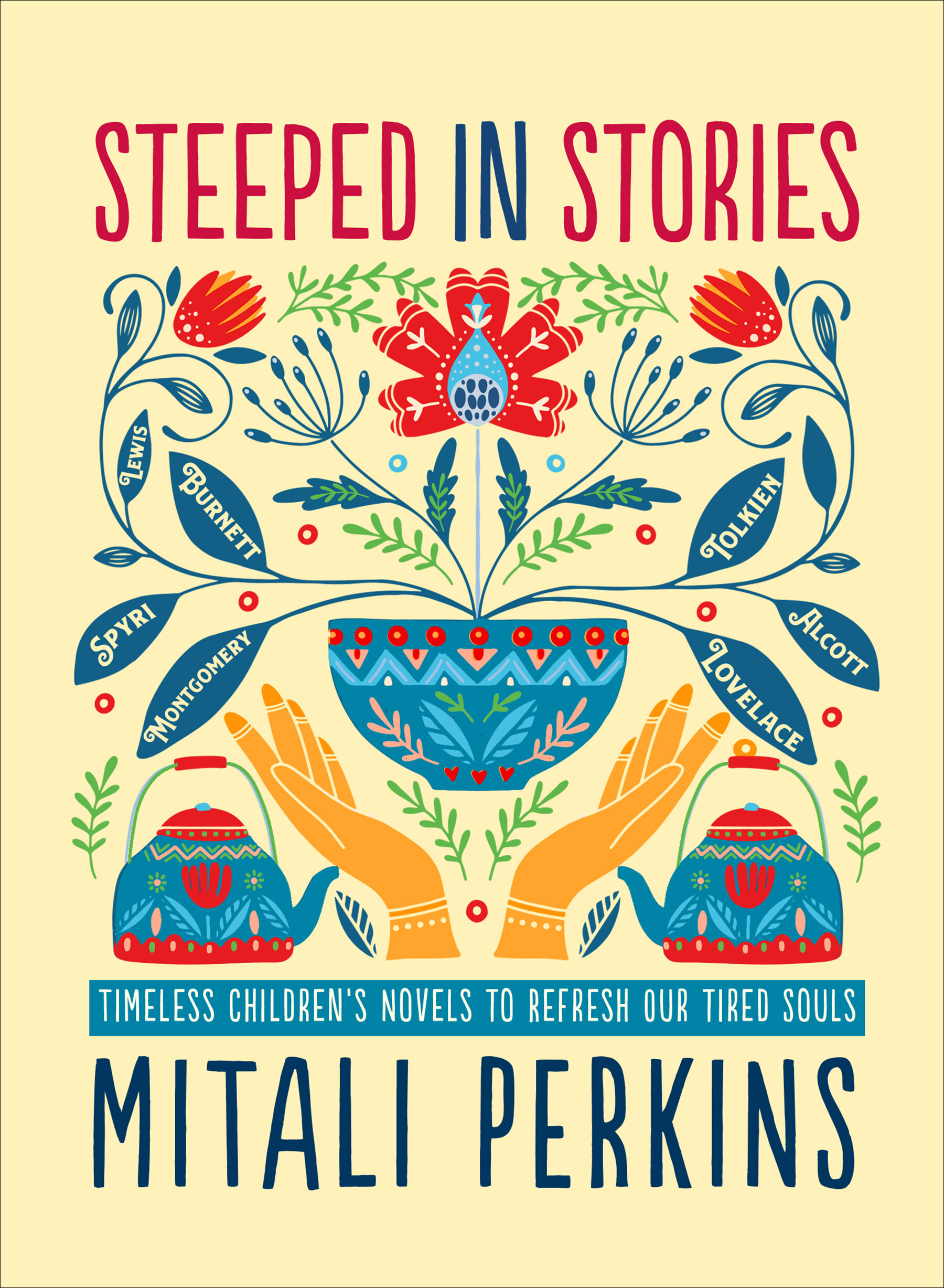
Steeped in Stories: Timeless Children's Novels to Refresh Our Tired Souls. Mitali Perkins. 2021. 240 pages. [Source: Library]
First sentence: My lifelong love of children's books begins on a humid summer's day in Flushing, Queens. Our family, newly immigrated from Kolkata, India, is unpacking suitcases in a small, stuffy apartment. I am seven years old, bored of settling in and grumpy.
Premise/plot: It is a truth universally acknowledged that almost all classics can be found problematic and offensive by some--be it a few, be it a lot. In Steeped in Stories, Mitali Perkins speaks of this in general and in specifics. Her opening and closing chapters are more general, more practical. Take these guidelines and go forth and read, read, read. But be aware, be discerning, ask the right questions. But her middle chapters focus on seven novels: Anne of Green Gables, Heidi, Emily of Deep Valley, The Hobbit, Little Women, A Little Princess, and The Silver Chair. The framework is that of virtues [and to some extent vices]. Each novel highlights one of the seven virtues. For example, in her discussion of Little Women, Perkins is talking about the vice self-indulgence and the virtue temperance. She is upfront and straightforward about discussing the flaws or vices of classics--children's classics in this book, but I think her principles can be extended. But she's also well-balanced and grounded. She is not advocating for censorship, banning, bowdlerizing. She stresses again and again to look for the good. [Or to look for the good as well as the bad.] No book is all good; no book is all bad. And again she stresses, that it is easier to find fault with the past than to recognize it in the present. Books published today in the here and now are not immune to being problematic. It isn't as simple as past = bad, present = good. There are virtues and vices.
My thoughts: I loved the seven books she chose. I am friends with all seven. Perhaps A Little Princess being the one I am least familiar with. But still, it helped immensely that I was familiar with all the books being discussed. These chapters are like literary essays. When you are familiar with the source material, it is FUN and THOUGHT-PROVOKING to read an essay about it. I loved that these children's books were being taken seriously.
I loved that she was neither extreme. Extremes are scary. Keep reading the books. Don't cancel them. Just read with your eyes wide open. Ask questions. [She even has a list of questions here and there.] Be open to discuss, to ponder, to consider, to examine. Don't be blind to vices. But also look for the good, look for the positive, embrace the goodness that you do find. Though she never uses the word humility or humble, I think that definitely comes into play.
But above all else, I love that she advocates for rereading books. I have never exactly been ashamed of rereading. But there are times when avid re-readers do face a little judgment or condescension. As if you are wasting your time if you reread books. As if there's never a good reason to reread.
Favorite quote:
Each time I reread a novel, the encounter is richer and deeper, perhaps because I myself am changed as a reader. Like aromatic leaves that eventually turn water into tea, so those stories changed me...When we reread a novel, we encounter it as all the ages we have been as well as the age we are now. Our souls are steeped in that story.
© 2022 Becky Laney of Becky's Book Reviews
Monday, May 11, 2020
64. The Book Collectors
First sentence: It’s a remarkable image. A mysterious photo that somehow escaped the hell that is Syria without a trace of blood or bullets. Two men in profile, surrounded by walls of books. The first one leans over a text, open to the middle. The second scans a shelf. They’re young, in their twenties, one sporting a hooded sweatshirt, the other with a baseball hat secured firmly on his head.
Premise/plot: Delphine Minoui shares her personal interactions with "a band of Syrian Rebels" who started an underground library in the midst of war. Their city under near-constant (daily) bombardment, these guys started collecting books from bombed out buildings, mending, and organizing along the way. The strangest thing may just be that before the war, these two founders weren't particularly readers. But the ideas within books, the words and stories uplifted, encouraged, gave hope. A community of readers formed--mostly men (though the men could take home books for their mothers, wives, sisters, etc.) and reading became an obsession. The author communicated with these men--the founders, the readers, via text, email, video chat, etc...for several years. This book tells their story.
It started with her seeing one photograph...but that was just the beginning:
If we look at this city only as it appears on a computer screen, we risk getting the story wrong. But looking away would condemn it to silence. Bashar al-Assad wanted to put Daraya in parentheses, to make it a footnote. I intend to make it the headline. To find other images, to fit them together with that first snapshot, the way you assemble the pieces of a puzzle.
I repeat my request: “I’d like to write a book about the library in Daraya.” A metallic clamor chokes the line. Another night full of this constant terror and danger—how ridiculous this project must seem to him. When the rain of bombs ends, his voice breaks through. “Ahlan wa sahlan!” Be my guest. Hearing his enthusiasm, I smile at my screen. Ahmad will be my guide. I will be his willing scribe. I make him a promise: one day, this book—their book—will join the other volumes in the library. It will be the living diary of Daraya
My thoughts: I LOVED, LOVED, LOVED, LOVED, LOVED this one. I would wholeheartedly recommend it to anyone who has ever loved the printed word on a page, to anyone who has ever found a home in the library. It is well-written, beautifully narrated. It is a personal story with so many feels.
© 2020 Becky Laney of Becky's Book Reviews
Tuesday, January 21, 2020
13. The Ministry of Truth
First sentence: December 1948. A man sits at a typewriter, in bed, on a remote island, fighting to complete the book that means more to him than any other.
Premise/plot: The Ministry of Truth is a biography of a book—George Orwell’s 1984. What does that involve? How does that even work? It is a closer look At Orwell’s life, his beliefs, his career, his works, his relationships. It is a closer look at the evolution of the utopian/dystopian genre. What books came before. What books are its contemporaries. What books came after. (This also means mini biographies of other writers.) It is a closer look at ideas, philosophies, politics. Can man be improved? Is perfection possible? Is progress helping us become better people? Will technology lead us to an ideal paradise? Or is humanity what is wrong with the world? Is technology destroying us? Will it ultimately be our downfall? Primarily there is a lot of discussion on communism, socialism, democratic socialism, totalitarianism, fascism, etc. Apparently there are distinctions between all of them. Orwell’s beliefs—his world view—shifted, changed, evolved, over time. And his beliefs can’t necessarily be divorced from the times, the culture, his life experiences. Learning more about the books he read, the company he kept, what he believed as deduced from what he was writing both publicly and privately, has me asking the question are people interpreting 1984 all wrong? I don’t have an answer to that...
My thoughts: I will be honest—this one was way too detailed for my interest level. I like 1984 okay, but I am not obsessed with it. I don’t have it memorized. It is not “my book.” (Think Fahrenheit 451). I do have an interest in the sub genre of dystopias. I have read Brave New World, We, 1984, It Can’t Happen Here, The Time Machine, The Sleeper Awakes, etc. (And of course Fahrenheit 451 which is one of my favorite, favorite books that I love and adore in a much more obsessive way.) I did find it interesting to learn about other novels that came before that I haven’t read...at least not yet. I didn’t necessarily love all the political and philosophical discourse. In that it’s hard for me to differentiate between all the isms in a meaningful way. I don’t get the hundred shades of socialism—but apparently it isn’t black and white. I get the impression that to read 1984 and conclude that socialism is bad or communism is bad is too simplistic in this scholar’s opinion. Apparently Orwell wasn’t condemning all of any ism. Conservatives see what they want in the novel. Liberals see what they want to see in the novel. No matter your political leanings, your world view, you interpret the book as agreeing with you to some extent at least.
© 2020 Becky Laney of Becky's Book Reviews
Monday, May 13, 2019
Paperback Crush
First sentence from the introduction: Are you an adult with a full-time job who still dreams of switching places with your (nonexistent) identical twin?
First sentence from chapter one: Where there are teens, there are love stories.
Premise/plot: Paperback Crush is a book about books, or, if you prefer a book about reading books. Specifically it is about (paperback) book series published in the 80s and 90s that were geared towards tweens and teens. Moss examines trends and quirks and presents her findings with a little perspective that only time can provide. She addresses books categorically. Chapter one focuses on LOVE. Chapter two focuses on FRIENDS. Chapter three focuses on FAMILY. Chapter four focuses on SCHOOL. Chapter five focuses on JOBS. Chapter six focuses on DANGER. Chapter seven focuses on TERROR.
Each chapter begins with the roots of the genre or sub-genre. Is this a topic or subject that has a long past? (For example, books focusing on family and friends and school). Is this a new topic or subject that has not been openly talked about before? (divorce, abortion, drugs, alcohol, rape, stalking, etc.) How diverse are the books being published? What was the appeal then? Does it still hold appeal now? How long did the series last? Were there copycat series? Did the series have one author or many contributing authors? Each chapter includes many examples--dozens--of books. You can expect to find book covers, synopses, the occasional excerpt, and critique. The critique often addresses issues of realism and sensitivity. Moss never expects series to be realistic exactly. But some are more over-the-top than others! Another fun aspect of critique is when Moss talks book covers!
You might be thinking what are the differences between DANGER and TERROR. In the 'danger' chapter, the focus is on problem/issue novels. Sexual abuse and assault, kidnapping, drug or alcohol abuse, sexual orientation and/or coming out, teen pregnancy, abortion, terminal illness, death. In the 'terror' chapter, think werewolves, vampires, ghosts, suspense, thrillers, murder mysteries, etc. Stalking, I believe, may be mentioned in both chapters.
There are a handful of interviews sprinkled throughout the book.
My thoughts: You could read this book in one of two ways. I could definitely see someone reading it cover to cover. (That's what I did.) But I could also see someone skipping around and reading the chapters out of order. It doesn't lose anything, in my opinion, if you approach it in this way.
The book title suggests the focus is TEENS, but I didn't find that to be totally accurate. A good many of the books were geared towards a younger audience (upper elementary). Still over half the books are geared towards teens.
There were three series that I read growing up: The Gymnasts, The Babysitters Club, and the Sunfire Romance "Name" books. I don't necessarily regret selling the Babysitters Club books. But I very much regret selling The Gymnast series. I would never, ever, ever sell my Sunfire books.
I liked the narrative approach. This one is very visual. So many book covers. It was a treat to read.
© 2019 Becky Laney of Becky's Book Reviews
Monday, March 18, 2019
Miss Buncle's Book
First sentence: One fine summer’s morning the sun peeped over the hills and looked down upon the valley of Silverstream.
Premise/plot: Miss Barbara Buncle lives in the quiet and peaceful village of Silverstream. But Miss Buncle has a secret which is so BIG, so EXPLOSIVE, that it will shake up an entire community. Her secret? Necessity has driven her to write a book, and since she lacks an imagination, her book is peopled with her actual neighbors. In some ways no one is more surprised that the book will be published than Miss Buncle herself. Can she keep her secret intact and protect herself from a potential mob? The book is published under the name JOHN SMITH. This gives Miss Buncle some time at least! But there are a few people who will dedicate their lives to uncovering the REAL identity of the author. While there are busybodies trying to discover John Smith's identity, Miss Buncle is spending her time WRITING A SEQUEL.
My thoughts: I loved, loved, LOVED this one. I wish I'd known about it sooner in my life. I loved spending time with Miss Buncle. I loved meeting everyone in the village. I especially loved the doctor's wife, Sarah, and the young Sally Carter. (I also loved, loved, loved the publisher, Mr. Abbott.)
This is a novel that is just OH-SO-RIGHT that you can't help wanting to live in it and savor every single minute of it. I loved the characterization, as I've hinted at, but I also loved the WRITING. One could almost open it up to any page and find something worthy of quoting.
I loved how the events of Miss Buncle's books start happening in real life...
Favorite quotes:
What fools the public were! They were exactly like sheep…thought Mr. Abbott sleepily…following each other’s lead, neglecting one book and buying another just because other people were buying it, although, for the life of you, you couldn’t see what the one lacked and the other possessed. But this book, said Mr. Abbott to himself, this book must go—it should be made to go. Pleasant visions of bookstalls piled with neat copies of Chronicles of an English Village and the public clamoring for more editions passed dreamily through his mind.
John Smith, what a name! An assumed name, of course, and rather a good one considering the nature of the book. Every single character breathed the breath of life. There was not a flat two-dimensional character in the book—rather unusual that!
It was queer, it was unusual, it was provocative, and, strangely enough, it was also extremely funny.
“Why did you write it? How did you feel when you were writing it? Have you ever written anything before?” he explained. “I wanted money,” said Miss Buncle simply. Mr. Abbott chuckled. This was a new kind of author. Johnson’s dictum that nobody but a donkey wrote for anything except money was as true today as it had ever been and always would be, but how few authors owned to the fact so simply! They either told you that something stronger than themselves compelled them to write, or else that they felt they had a message to give the world.
In his opinion Disturber of the Peace was a golden egg, but whether Miss Goose Buncle would lay anymore was beyond the power of man to tell.
Barbara watched it all with interest; it was such fun to watch people and see how they reacted to one another’s personality.
Nobody in Silverstream cared what Barbara Buncle thought; the woman was nothing but an idiot.
She had lived for so long among these people and had suffered so many afternoon teas that she was able to say the expected thing without thinking about it at all. You simply put a penny in the machine and the expected thing came out at once, all done up in a neat little packet, and suitably labeled.
He had already noticed that Miss Buncle was either monosyllabic and completely inarticulate, or else overpowered by a stream of words which forced themselves between her lips like water from a bursting dam.
(It was almost as if she were on oath to speak the truth, the whole truth, and nothing but the truth all day long and every day of the week).
“Ugh, damn and blast!” he cried, rubbing his ear with a thoroughly grimy hand, and decided for a bath. The decision had been made for him by a spider (not for the first time had this intelligent insect helped a gallant soldier to make an important decision at a critical moment. It will be remembered that Robert the Bruce was similarly guided).
She tried to fix her mind on the sermon. It was all about loving your neighbor, and how you must seek out the good in people and only see the good. Mr. Hathaway said that was the way to make people good—by refusing to see the evil. Barbara wondered if this were true, and, if so, how deep it went. If you refused to see the evil in a murderer, did that cure him? Doubtful.
“Ladies and gentlemen, we have met together today to discuss this book—Disturber of the Peace—which has been flung into our peaceful village like a poison bomb. Before the publication of this book we were all living together like a big happy family, but now there are rifts in the lute and the music is discordant and harsh.”
A person can read when they’re knitting, but they can’t write, can they?
“What about history?” suggested Sally. “I’m awfully ignorant about history, you know.” “We had better start with history, then,” Ernest said. “Everyone should know something about history, shouldn’t they?” Sally demanded.
“Nobody even thought of you. You could never have written Disturber of the Peace. Sarah Walker has brains. I don’t care for the woman at all—never did. She has no idea of how a lady ought to behave. Barbara was hurt, and amused, intensely relieved, and very much annoyed all at the same time.
Christmas came and went; Silverstream went to church and gave each other small and somewhat useless presents just as it always did at this season of the year.
Ernest learned quite as much as Sally at these history lessons—not much history, of course, but there are other things just as important as history.
Mr. Abbott had never before read a novel about a woman who wrote a novel about a woman who wrote a novel—it was like a recurring decimal, he thought, or perhaps even more like a perspective of mirrors such as tailors use, in which the woman and her novel were reflected back and forth to infinity. It made your brain reel if you pursued the thought too far, but there was no need to do so, unless you wanted to, of course. So much for the main theme.
Miss Buncle’s writing had come on a lot, and yet it had not lost the extraordinary simplicity which some people had taken for satire.
Mr. Abbott sat and thought about it for a long time, and then he smiled. He saw the end of the book quite clearly, and it was an end that satisfied him—he hoped sincerely that it would satisfy Miss Buncle. He found a sheet of foolscap and outlined his idea for the completion of The Pen is Mightier—. The letter which he enclosed with the manuscript and the notes took him much longer to write, and he re-wrote it several times before he was satisfied with its wording.
An episode that has actually happened in real life cannot be said to be too improbable for a novel.
© 2019 Becky Laney of Becky's Book Reviews
Tuesday, January 01, 2019
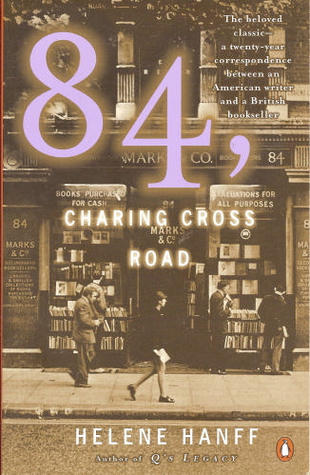
84, Charing Cross Road
First sentence: Gentlemen: Your ad in the Saturday Review of Literature says that you specialize in out-of-print books.
Premise/plot: 84, Charing Cross Road is a collection of letters exchanged between the author, Helen Hanff, and a British book dealer, Marks & Company. The first letter is dated October 5, 1949, and the last is dated October 1969. Many of the letters are between Helene and Frank Doel. The letters focus mainly on books and authors--titles she's hoping to buy, titles she's enjoyed, titles she's hated. But the letters also include plenty of chit-chat as she gets to know the employees of the shop and the families of the employees as well.
The letters contain flashes of spirit that are charming.
October 15, 1951
WHAT KIND OF A PEPYS' DIARY DO YOU CALL THIS? this is not pepys' diary, this is some busybody editor's miserable collection of excerpts from pepys' diary may he rot. I could just spit. where is jan. 12, 1668, where his wife chased him out of bed and around the bedroom with a red-hot poker? where is sir w. pen's son that was giving everybody so much trouble with his Quaker notions? ONE mention does he get in this whole pseudo-book. and me from philadelphia. I enclose two limp singles, i will make do with this thing till you find me a real Pepys. THEN i will rip up this ersatz book, page by page, and WRAP THINGS IN IT. HH (31)
May 11, 1952
Dear Frank:
Meant to write you the day the Angler arrived, just to thank you, the woodcuts alone are worth ten times the price of the book. What a weird world we live in when so beautiful a thing can be owned for life--for the price of a ticket to a Broadway movie palace, or 1/50th the cost of having one tooth capped. Well, if your books cost what they're worth I couldn't afford them! You'll be fascinated to learn (from me that hates novels) that I finally got round to Jane Austen and went out of my mind over Pride and Prejudice which I can't bring myself to take back to the library till you find me a copy of my own. Regards to Nora and the wage-slaves. HH (50)
My thoughts: What a lovely way to start a new year!!! This is a charming collection of letters. If you love books about books, or, if you love meeting other book lovers, then this is a true must read.
© 2019 Becky Laney of Becky's Book Reviews
Monday, June 25, 2018
Red Again
Premise/plot: Does a book need words to tell a story? Red Again is a companion picture book to Barbara Lehman's The Red Book. Both, I believe, are wordless picture books. I have read Red Again. I have not--so far as I recall--read the Red Book.
In the book, a boy finds a red book in an unexpected place. The book--as it is read--leads him to the unexpected. It leads him to another reader--of the same book. The magic continues as the red book is lost and found yet again.
My thoughts: Typically my answer is "Yes, a book needs words to tell a story." But there are always exceptions to the rule. And to be clear the question does not have a 'right' or 'wrong' answer.
I think Red Again works for me because it is about the wonder and magic of books, of the reading experience. It is all about the act of reading and the delight it can bring you.
Text: 0 out of 0
Illustrations: 3 out of 5
Total: 3 out of 5
© 2018 Becky Laney of Becky's Book Reviews
Tuesday, June 19, 2018
Library on Wheels
First sentence: Mary Lemist Titcomb grew up wanting to do things. The problem was, people were always telling her that she couldn't. She couldn't do this, because she was too young. She couldn't do that, because she was a girl, or because her family didn't have enough money, or because it just wasn't practical. But Mary never gave up.
Premise/plot: Library On Wheels is about a pioneer librarian, Mary Lemist Titcomb. Librarianship was a new field when she came of age, and it wasn't an accepted field for women. (Not like teaching or nursing.) But Titcomb was diligent, determined, and ambitious. It wasn't only that librarianship was a brand new field but that public libraries were brand new as well. Titcomb's vision of what could be--what should be--would have a lasting impact.
The library she would have the biggest impact on perhaps was Washington County Free Library. (This wasn't her very first library to work.) The Washington County Free Library was the second county-wide library in the U.S. (I believe this is in 1901).
It had been established for all the residents of Washington County, but over half of them--some 25,000 people--lived far from town, on farms scattered across nearly 500 square miles. How to get the library's books to them?But her biggest accomplishment was her vision of having book wagons deliver books to the people.
Miss Titcomb was determined that everyone should have access to the library--not just adults, not just the rich or educated, not just those who lived in town. She was absolutely unwavering in her dedication this vision. First, she opened a children's room in the library--one of the first in the nation. She also made sure that all the outlying village schools had a good rotating supply of books and pictures from the library. Then she started a storytelling hour in remote areas to get the country children excited about books and reading.
Next, she set up book deposit stations throughout the county. These served as small branch libraries where people could check out books, then return the ones they had already read...
"The book goes to the man. We do not wait for the man to come to the book."
The book wagon made its maiden voyage in April 1905. Although Miss Titcomb rode along whenever she could, she still had her duties to fulfill back at the main library, so Mr. Joshua Thomas, the library janitor, was enlisted to be the driver. The wagon was pulled by a pair of dapper horses named Black Beauty and Dandy.I loved, loved, loved that Mr. Thomas listed his profession as BOOK MISSIONARY in the 1910 census.
The book wagon evolved through the years--especially after a tragic accident with a train. This book tells a remarkable story of that evolution and the extraordinary librarian behind it.
My thoughts: I loved this one. I did. I absolutely loved it. I think it is for all ages. Yes, it's a nonfiction book for middle grade, but, it's so much more than that. I think it is for anyone and everyone who has ever loved a book or loved a library. I found it fascinating. There are so many pictures!!! They just weren't that many awesome nonfiction books when I was a kid.
© 2018 Becky Laney of Becky's Book Reviews
Thursday, May 03, 2018
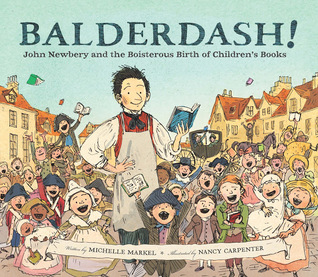
Balderdash
First sentence: Welcome! This book's for you. Every page, every picture, every word, and even its letters are designed for your pleasure. Lucky, lucky reader. Be glad it's not 1726.
Premise/plot: Balderdash is the story of the origins of children's book publishing. It is the story of one man in particular, John Newbery, and his contribution to the world. And it is a BIG contribution to be sure. The narrative begins by taking readers back to a time when books were decidedly NOT for children. "In those days of powdered wigs and petticoats, England was brimming with books. Books of pirates and monsters and miniature people. Tales of travels and quests and shipwrecks and crimes. At the fairs, in the market stalls, in the bookshop windows were hundreds of wonderful books. But not for children." (Where there any materials written with children in mind? Some. "Preachy poems and fables, religious texts that made them fear that death was near...")
John Newbery was a boy who LOVED reading who grew up to be a publisher. He wanted to publish books for the WHOLE family including children. SHOCKER. Books written and published specifically for children to READ AND ENJOY! If that wasn't shocking enough. He marketed his books to sell with TOYS. ("Price of book alone, 6 pence, with a ball or pincushion, 8 pence...") He soon expanded to publishing magazines for children. His ideas were novel and wonderful!
Can you imagine a world without children's books?!
My thoughts: I LOVED this one. I LOVED, LOVED, LOVED it. I found it fascinating and packed with detail. I was not completely unfamiliar with the history of children's literature. In fact, one of my favorite graduate courses was the history of children's literature. There was a huge difference between the before and after. If you weren't thankful for children's books before the course, you certainly would be afterwards. It was a great way to celebrate PROGRESS. The same is true of reading this picture book. IT reminds us of where we've been and how far we've come. It celebrates the legacy of one man's contribution, but it also celebrates READING in general.
Text: 5 out of 5
Illustrations: 5 out of 5
Total: 10 out of 10
© 2018 Becky Laney of Becky's Book Reviews
Thursday, March 15, 2018
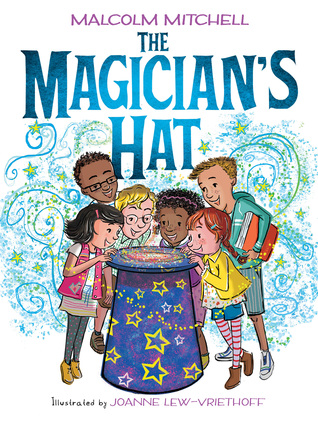
The Magician's Hat
First sentence: Family Fun Day at the library was filled with exciting events. Book scavenger hunts. Storytelling. Reading rallies. Today, for the first time, a magician arrived with a bag of tricks and a BIG hat.
Premise/plot: Do libraries need visiting magicians to be magical places? NO! But in this picture book, a magician who loves books happens to be visiting. He tells the children that books are magic, that books can take you to places you've only dreamed about. The book does seem to be occupied chiefly with associating books with occupations. "What do you want to be when you grow up?" "I've got a book for that in my hat!" (The quotes are NOT from the book, just my summing up of the book's plot.)
My thoughts: I love books. I love reading. I love the message that books can be magical. But. I didn't quite love this one. Books aren't only for figuring out what you want to do in life. That is such a narrow, narrow focus of what books have to offer readers. There are hundreds of reasons why kids might pick up a book. There are hundreds--if not thousands--of reasons why adults might continue to read books.
Text: 3 out of 5
Illustrations: 4 out of 5
Total: 7 out of 10
© 2018 Becky Laney of Becky's Book Reviews
Friday, December 15, 2017
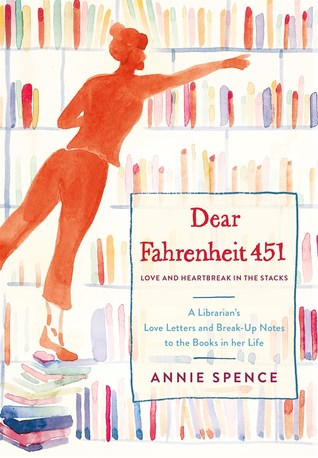
Dear Fahrenheit 451
Premise/plot: Most of the book consists of "letters" to various books from the author's life--personal and professional, read and unread. Some letters are 100% snark. Others are more sentimental and gushy. A good many contain profanity, the profanity that isn't so much necessary (warranted) as deemed entertaining and "cool."
My thoughts:
Dear Fahrenheit 451,
I wanted to love you. I mean just LOOK at that cover. It promises great things. And it wasn't just your cover I was drawn to, it was also your premise. A book about books, what is there not to love? But I could have done with a little more sincerity and a little less snark. Don't get me wrong, I can appreciate snark. But it has its time and place. A pickle goes great with many meals, but who would want to eat a meal consisting solely of pickles?!
What I loved best was the premise. I would love to start writing letters to the books in my life--past and present. I think I will.
I do think you will find a readership. There are plenty of readers--of all ages--who will find themselves nodding their heads, smiling, wanting to read some of your passages aloud to anyone and everyone who will listen, or pretend to listen. (I loved her letter to Color Me Beautiful).
Becky
Favorite quotes:
[Dear Miss Maple Series,]
Who would have thought a gossipy spinster from St. Mary Mead could bring us all together? Sometimes I wonder if the library could get by on a collection that was just you, A Child Called It, The Five Love Languages, and some Rick Steve travel DVDs. Honestly, I think we'd make it a week before someone complained. But you're my favorite, Miss M. My good-time gal. Props, Annie. (18-9)
Dear Frog and Toad Storybook Treasury,
I've been with a lot of books and had other characters who've imprinted themselves on my heart. But your main character Toad is my spirit animal. For starters, we are both pear shaped. But it's so much more than body types. Toad's very character aligns so closely with my own that I find myself going to some of your stories for advice. What would Toad do, I ask myself, when faced with a challenge. Would he go home and sleep or make some food? Either way, it's excellent counsel...(42-3)
Dear Fahrenheit 451,© 2017 Becky Laney of Becky's Book Reviews
Don't ever change. And stay here with us, always. You were created in a library, and I'm comforted by the fact that you'll remain on library shelves around the world...(85-6)
Saturday, October 21, 2017
Hug this Book
First sentence: You can read this book to a hippo. You can read this book in the bath. If you read this book being tickled, I dare you not to laugh! You can kiss and hug and smell this book. That might sound sort of silly. You can wrap this book in a sweater, if it ever gets too chilly.
Premise/plot: The children in this book have found a book that they LOVE, LOVE, LOVE.
My thoughts: Who hasn't wanted to hug a book? Be honest. Aren't there some books that you really do love in a crazy, over-the-top way? The question isn't have I ever really, truly loved a book. The question is do I feel that way about Barney Saltzberg's Hug This Book?! I can appreciate the over-the-top nature of the book. It's very silly. But the thing is that I really do find myself loving the rhythm and rhyme of it. I think the text just works really well when read aloud. That being said, do I love the art? Not really. In fact, I really don't.
Text: 5 out of 5
Illustrations: 3 out of 5
Total: 8 out of 10
© 2017 Becky Laney of Becky's Book Reviews
Thursday, October 05, 2017
Hooray for Books
First sentence: "Where is that book? It's my favorite!" Turtle said. He searched his entire house--but no book.
Premise/plot: Turtle cannot find his FAVORITE book. Did he lend it to a friend? He visits his friend one by one to see if his book can be found. Each friend offers him a different book to read instead--one of their favorites. But Turtle wants HIS favorite book. Will Turtle find his book again?
Hooray for Books is the third in a series. Readers can also enjoy Hooray for Hat! and Hooray for Today! If you've read the previous books, chances are you'll enjoy this one all the more.
My thoughts: This book could have had a tragic ending. I can definitely relate to Turtle. There is nothing worse than being caught up in the panic of not knowing where your favorite book is. Until the book is found, how can normality ever be restored. In some cases, it can't. One then must seek out a new copy of a favorite book. (Which leads to the potential of a happy dance if you find the original, "lost" copy). When the search is on--the SEARCH IS ON--nothing can or will stop you. (I can relate to Turtle being completely disinterested in his friend's books. I will commend Turtle for being polite and not getting angry or pushy.) When the book is found, Turtle celebrates by reading it THREE times in a row. (If my favorite book was a picture book, I would so do this.) Will Turtle lend his book again? Here's where Turtle and I part company. Turtle does. He borrows his friends' books, and he lends out his again. (I personally am of the opinion that if you only have one copy of your favorite book, it should not be loaned; that's why you *need* multiple copies of your favorite book.)
The book celebrates stories, books, and friendship.
Text: 5 out of 5
Illustrations: 3 out of 5
Total: 8 out of 10
© 2017 Becky Laney of Becky's Book Reviews
Wednesday, September 20, 2017
You Can Read
First sentence: You can read in the classroom. You can read in the park. You can read on a mission under cover in the dark.
Premise/plot: You Can Read celebrates reading books anywhere and everywhere. It rhymes, and in a good way.
My thoughts: The text of the book is in all-caps. I found this very annoying to read. But even more annoying is the disturbing lack of periods. There is not a single period in the whole book. (I couldn't help adding periods into the text I quoted above. I just couldn't present it the way it is in the book.) (Two sentences end in exclamation points.) If this book were getting graded by a first grade teacher, it would lose a lot of points. (The students in the first grade class might love it because of the illustrated underwear.)
That being said, the text of the book itself isn't bad. The message is a good one. I LOVE books. (Everybody knows that I love books.) I wanted to love, love, love it. The illustrations were not my style at all.
Text: 4 out of 5
Illustrations: 1 out of 5
Total: 5 out of 10
© 2017 Becky Laney of Becky's Book Reviews