Showing posts with label R.I.P. Challenge. Show all posts

Thursday, August 31, 2017

2017 Challenges: R.I.P. XII

R.EADERS I.MBIBING P.ERIL XII (RIPXII)
Hosted by Estella's Revenge
Duration: September - October 2017
# of books: I'm aiming for ONE

The Stand. Stephen King. 1978/2001. 1153 pages. [Source: Bought]

One goal, I have only one goal, to read King's The STAND.  Obviously if I read other books that qualify, I'll list them. But. I don't want other books to distract me from this chunkster.

ETA. I am NOT loving The Stand. I am almost 350 pages into it--and I am not loving it one little bit. I could keep going and see if that changes. I could give it another two hundred pages and reevaluate then. Or. I could give myself permission to say THIS BOOK IS NOT FOR ME AND THAT IS OKAY.

SO NEW PLAN: How many mysteries can I read in two months. Go.

1) Blood, Bullets, and Bones. The Story of Forensic Science from Sherlock Holmes to DNA. Bridget Heos. 2016. 263 pages. [Source: Library]
2) Heirloom Murders. (Chloe Ellefson Mystery #2) Kathleen Ernst. 2011. 349 pages. [Source: Library]
3) Light Keeper's Legacy. (Chloe Ellefson Mystery #3) Kathleen Ernst. 2012. 360 pages. [Source: Library]
4) The Case of the Gilded Lily. (Perry Mason #50) Erle Stanley Gardner. 1956. 188 pages. [Source: Bought]
5)The Case of the Daring Decoy. (Perry Mason #54) Erle Stanley Gardner. 1957. 198 pages. [Source: Bought] 
6) The Wife Between Us. Greer Hendricks and Sarah Pekkanen. 2018. St. Martin's Press. 352 pages. [Source: Review copy]
7)  The Case of the Fiery Fingers. Erle Stanley Gardner. 1951. 192 pages. [Source: Bought]
8) Death of a Cad. M.C. Beaton. 1987. 214 pages. [Source: Library]
9) The Case of the Lucky Loser. Erle Stanley Gardner. 1957. 192 pages. [Source: Bought]

The purpose of the R.I.P. Challenge is to enjoy books that could be classified as:

Mystery.
Suspense.
Thriller.
Dark Fantasy.
Gothic.
Horror.
Supernatural.


© 2017 Becky Laney of Becky's Book Reviews

Thursday, September 01, 2011

R.I.P. VI

There are plenty of books I want to read for Carl's R.I.P challenge this year. Not all books will make it to the list--I simply couldn't list them all. And I'm sure there will be a few surprises or 'impulses.' But I do have a vague idea of what I'd like to read this year:

Frankenstein by Mary Shelley*
Jane Eyre by Charlotte Bronte**
The Lifted Veil: The Book of Fantastic Literature by Women 1800-World War II edited and introduced by A. Susan Williams.
Murder Must Advertise by Dorothy Sayers
The Nine Tailors by Dorothy Sayers
Busman's Honeymoon by Dorothy Sayers
A Shilling for Candles by Josephine Tey
Miss Pym Disposes by Josephine Tey
The Francise Affair by Josephine Tey
The Murder on the Links by Agatha Christie
Dumb Witness by Agatha Christie
The Mirror Crack'd From Side to Side by Agatha Christie
The House of the Seven Gables by Nathaniel Hawthorne
Woman in White by Wilkie Collins
Great Expectations by Charles Dickens
Grave Expectations by Sherri Browning Erwin and Charles Dickens
Count Magnus and Other Ghost Stories by M.R. James
The Haunted Doll's House and Other Ghost Stories by M.R. James
Macbeth by William Shakespeare
Kill Shakespeare, Volume 1

*Could I go a year without reading Frankenstein? Maybe? But why would I want to do something like that?! This is one of my favorite, favorite, favorite books!
**I would LOVE to reread Jane Eyre this year!

The review site for sharing links.

Mystery.
Suspense.
Thriller.
Dark Fantasy.
Gothic.
Horror.
Supernatural.


I'm signing up for the first peril--which is four books of any length that qualify.

1. A Pocket Full of Rye. Agatha Christie.
2. A Murder on the Links. Agatha Christie.
3. Human.4 Mike A. Lancaster.
4. The Five Red Herrings. Dorothy L. Sayers.
5. Mister Creecher by Chris Priestly
6. This Dark Endeavor by Kenneth Oppel

© 2011 Becky Laney of Becky's Book Reviews

Saturday, September 11, 2010

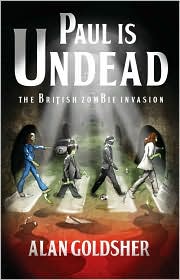
Paul is Undead


Paul is Undead. Alan Goldsher. 2010. Simon & Schuster. 310 pages.

For some, the most indelible memory of their television-viewing lives was the moment Jack Ruby assassinated Lee Harvey Oswald in 1963. For others, it was Neil Armstrong's 1969 moon landing. For today's generation, it might be the fall of the Berlin Wall in 1989, or the World Trade Center attacks on September 11, 2001.
I realized television was more than sitcoms and sporting events on December 8, 1980, the night Mark David Chapman tried to lop off John Lennon's head with a silver scythe.


Paul is Undead is strange, no question. The premise is simple enough: what if three of the fab four were undead? What if John, Paul, and George were zombies? (What about Ringo? Well, he's a ninja.) The format is slightly unusual. The book is an oral history of sorts. A collection of interviews. So readers will "meet" John, Paul, George, Ringo, and many of the men and women whose lives were changed--for better or worse--by knowing the Fab Four. The novel focuses mainly on the past--1958 through 1970--through John's meeting with Paul one summer day to the band's breakup. Of course, the later years are touched on here and there.

This one made me uncomfortable in places. Though to be honest, reading any Beatle biography is likely to make readers uncomfortable to some degree. It won't be for everyone. But. That's only to be expected. If you like zombies--brain-eating zombies--then this one might appeal. It's definitely violent--in places. (Funny in others.) If you like the Beatles, and, if you can tolerate the wild premise of this one, then it might appeal to you as well. Though the facts have been changed--greatly changed--you'll find many familiar elements of the story. These basic events do make up the band's history.

Did I like it? Not particularly. I kept reading because I was curious. I wanted to know how the author chose to imagine certain events. It was violent, funny, and completely irreverent.

© Becky Laney of Becky's Book Reviews

Friday, September 03, 2010

RIP V


I'm happy to be joining Carl's fifth R.I.P (Readers Imbibing Peril) challenge! Peril the First. Anticipating the announcement this week of the challenge, I have read three books this past week: Jane Eyre, the Graphic Novel; Frankenstein, the Graphic Novel, and Jane Slayre! I'm not quite sure what I'll be reading next. There are hundreds of YA books in my TBR pile that 'fit' this challenge. And there are two HUGE books that fit the challenge as well: Drood by Dan Simmons and The Passage by Justin Cronin. And then there are classics! (I'd love to read some Wilkie Collins!)

Links to reviews can be shared here.

What I've read for the challenge:

1. Paul is Undead. Alan Goldsher.
2. Moonstone by Wilkie Collins
3. Bleak House by Charles Dickens
4. Sweetness at the Bottom of the Pie by Alan Bradley
5. The Maze Runner. James Dashner.
6. Jane Eyre, the Graphic Novel;
7. Frankenstein, the Graphic Novel
8. Jane Slayre by Charlotte Bronte and Sherri Browning Erwin.
9. I am Number Four by Pittacus Lore
10. A Pleasure to Burn by Ray Bradbury (review coming Tuesday)
11. Frankenstein's Monster. Susan Heyboer O'Keefe. 

Short Stories: Ray Bradbury, Part One; Ray Bradbury, Part Two; Part Three;


© Becky Laney of Becky's Book Reviews

Wednesday, October 31, 2007

Close of the R.I.P. Challenge

Today marks the end of Carl's RIP II challenge. (Readers Imbibing Peril) You may read all of my challenge related posts here. I still can't believe I read 18 books for this one. Especially since I said I was only going to read ONE book for this challenge. My old favorite is, of course, Frankenstein. But I've made many new friends. I've fallen in love with two authors: Ray Bradbury and H.G. Wells. All of the books have been good, some have been truly great.

My first selection was The Island of Dr. Moreau by H.G. Wells
Vampirates: Tide of Terror by Justin Somper
The Invisible Man by H.G. Wells
Frankenstein by Mary Shelley
The War of the Worlds by H.G. Wells
Thirteenth Tale by Diane Setterfield
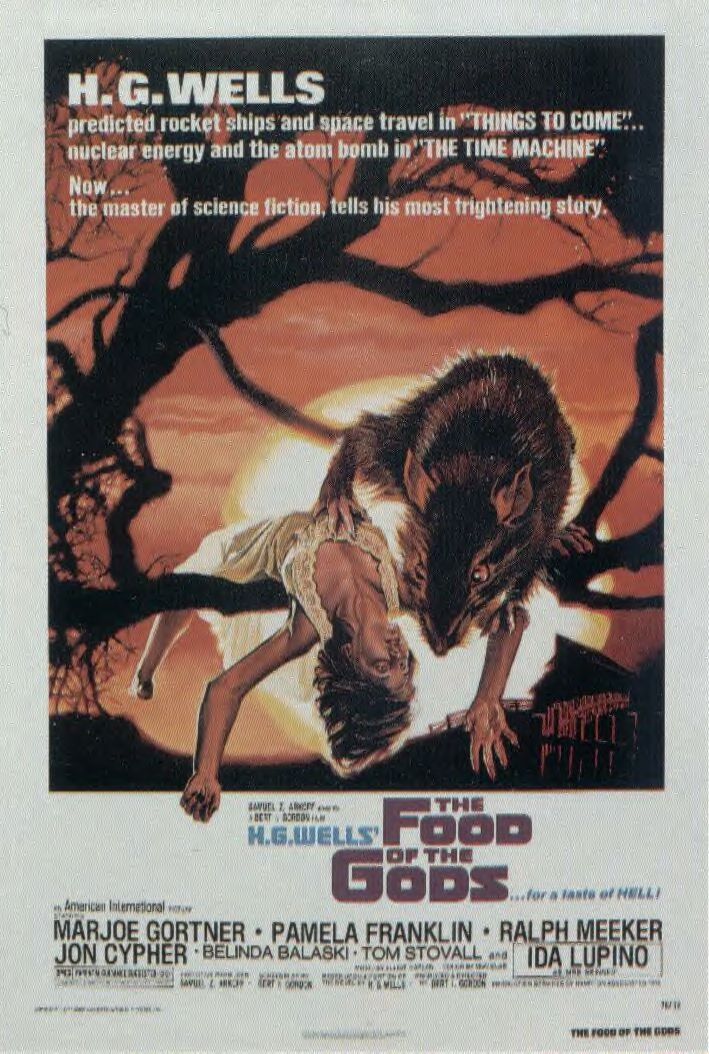
The Food of the Gods by H.G. Wells
Book of A Thousand Days by Shannon Hale
Dr. Jekyll and Mr. Hyde by Robert Louis Stevenson
Bearwalker by Joseph Bruchac
Dracula by Bram Stoker
City of Bones by Cassandra Clare
Life As We Knew It by Susan Beth Pfeffer
Lost Boys by Orson Scott Card
The Historian by Elizabeth Kostova
Empire by Orson Scott Card
One for Sorrow by Christopher Barzak
My final selection was: Something Wicked This Way Comes by Ray Bradbury


Tuesday, October 16, 2007

Something Wicked This Way Comes


Bradbury, Ray. Something Wicked This Way Comes.

After reading Chris' review of Something Wicked This Way Comes, I really couldn't resist picking it up on my next library visit. (I ended up taking several Bradbury's home with me though this was the only one I got read this past week.) There is something so delicious about Bradbury's style. I still don't know if I'm actually in love with the style or the content. I guess a bit of both. But for me it's all about the style. It is how the story is told. The words, the phrases, the images. I think if this story had been written by another writer, it wouldn't have "grabbed" me as much as it did. This is a book that gets you at hello. Read the first few paragraphs and see what I mean:

First of all, it was October, a rare month for boys. Not that all months aren't rare. But there be bad and good, as the pirates say. Take September, a bad month: school begins. Consider August, a good month: school hasn't begun yet. July, well, July's really fine: there's no chance in the world for school. June, no doubting it, June's best of all, for the school doors spring wide and September's a billion years away.

But you take October, now. School's been on a month and you're riding easier in the reins, jogging along. You got time to think of the garbage you'll dump on old man Prickett's porch, or the hairy-ape costume you'll wear to the YMCA the last nightof the month. And if it's around October twentieth and everything smoky-smelling and the sky orange and ash gray at twilight, it seems Halloween will never come in a fall of broomsticks and a soft flap of bedsheets around corners.
But one strange wild dark long year, Halloween came early.

One year Halloween came on October 24, three hours after midnight.

At that time James Nightshade of 97 Oak Street was thirteen years, eleven months, twenty-three days old. Next door, William Halloway was thirteen years, eleven months and twenty-four days old. Both touched toward fourteen; it almost trembled in their hands.

And that was the October week when they grew up overnight, and were never so young any more...
(1-2)

I really can't say much more about it. Two friends. One big adventure. A Carnival with the wrong sorts of people. It is one thrilling ride of a book.

Saturday, October 06, 2007

One for Sorrow


Barzak, Christopher. 2007. One for Sorrow.

An honest and uncanny ride through the shadows between grief and acceptance. This is how real magic works. --Scott Westerfeld, author of Uglies and Extras

The Westerfeld blurb is one of the reasons I picked up One For Sorrow. I trust Westerfeld. I trust that when he says a book is good, it delivers. I wasn't disappointed with his recommendation this time either. Barzak's story is an odd one I'll admit. It's part ghost-story. The average teenage boy doesn't interrupt his life to become best friends with a ghost and relegate that relationship above all others--even the relationship with his girlfriend/lover. But the story is well-written. Adam McCormick is from a dysfunctional family. His grandmother tried and tried to warn the family that trouble was heading their way, but the only one who paid her any attention was Adam. Then she died. Adam was the one to discover her body in bed. His parents fight ALL the time. His mother and father just don't get it or don't care how their fighting is affecting the rest of the family. There is no respect, no love, no compassion in that household holding this family together. The brother, Andy, is just as bad. All four members of the McCormick family have issues--issues with respect, with anger, with courtesy. The book begins with the murder of one of Adam's classmates, Jamie Marks. The day that his body is discovered by yet another classmate, Gracie Highsmith, is a day that will change his life--his family's life forever. After an argument, his mother in a fit of rage gets behind the wheel to head to the local bar...little knowing that Lucy Hall a drunk who had escaped her own marital problems earlier in the morning was barreling towards her on a collision course. The accident left Mrs. McCormick paralyzed. Talk about adjustments for the family! Within a matter of weeks: Adam is discovered naked in the grave of the murdered student, Jamie; his mother becomes best friends with Lucy; Adam drops out of school completely and gets a lover/girlfriend practically overnight. About the time that he discovers these "sunflower" moments of intimacy he begins to see Jamie on a regular basis. Adam balances his time between hanging out with the living and the dead. Playing video games with a ghost versus making out with his girlfriend while her parents are gone. But then as if it wasn't odd enough already, the ghost starts planning to runaway with Adam. He encourages him to leave the insanity of his home and begin a new adventure with him. Something that sounds all too tempting to Adam who can barely stand to be in the same room with his family. What Adam is searching for is someone who loves him and accepts him and understands him.

Life and death and everything in between. That is what this novel is about. Life is full of choices, and day by day Adam is reaching the point where he'll have to make the big decision--whether he wants to live or die.

What the characters all reveal in one way or another is that while life is far from perfect--in fact it is very messy and raw and ugly--it is WORTH living. Troubles may weigh you down, sorrow may have a hold on you, but it's good to be alive to feel even the pain and sorrow and confusion of life.

Another review of One for Sorrow
More information on One for Sorrow and Christopher Barzak

Sunday, September 30, 2007

Empire


Empire by Orson Scott Card, 2006.

I read this book for the Cardathon challenge and the R.I.P. II challenge. I have mixed views on this one. It's not that I disliked it, I didn't. But I didn't love it. The characters, well, I liked them. But this was more about premise than action or characters. (There was plenty of action, believe me, but you never forgot that it was action based on a certain premise.) Politics. Media. Scary subjects for those liking to remain neutral observers of the world around them. The novel is about the polarization of America into red and blue. Conservative and liberals. Republicans and Democrats. Radical views. Strict dogmas. Plenty of rhetoric and media coverage. No middle ground. The situation in this future-America is bleak. The country is divided--strongly divided. There are people--hundreds of thousands if not millions--that hate the President and his particular party. Congress is divided as well. These two parties are always at ends with one another. Can't see eye to eye on anything. Determined to disagree on even the smallest issue. Compromise is never an option. They fight and bicker over everything. In this charged environment, a few men in the military are working on a secret secret project. A project that leads to a destructive climax. Well, not a climax so much as an opening premise. Reuben Malich--Major Malich--is working on a top-secret project that supposedly came directly from the White House. He's supposed to write up a plan on how to assassinate the President, so that they can then work on ways to prevent such an attack. He's playing devil's advocate if you will. He's supposed to think like a criminal and find the weaknesses in the system. The problem? He's being used--set up--by the bad guys. His plans become the plan that actually works at crippling the nation as we know it. The president, vice president, and secretary of defense (as well as a lot of other people) are killed--murdered. Now it is up to Reuben and his few friends--including his new assistant Captain Coleman to find out just who these "bad guys" are and uncover the whole plot. The plot is complex, not difficult to dissect afterwards, but a mystery while you're reading it. I can't really go into it here. The characters were okay for me. But none of them were developed that well. None of them were particularly strong or outstanding. The action was fast-paced. But again, it was driven by the premise of "what if????" And while the premise is arguably interesting in and of itself, I don't know that it was enough to carry the novel alone. This one had no tidy ending either. So it's one of those where you have to try to guess what would happen next. So instead of having a rather boring but satisfactory "Ah, America will be okay and everything is back to normal and just as it should be" feeling, you're left with a bit of angst. Am I glad I read it? Definitely. Did it make me think? Sure. Is it my least favorite Card novel? No. But it doesn't come close to my top ten.

Sunday, September 23, 2007

The Historian


The Historian by Elizabeth Kostova.

I picked this one up at the suggestion of Chris from Stuff As Dreams Are Made On. He reviewed it last week, and really how could I not look for it at the next trip to the library? Anyway, this rather long novel is quite good. I won't say it's the best thing I've read for the R.I.P. II Challenge, it would be hard to match The Thirteenth Tale or Dracula. But it was good. Like most novels over six-hundred pages, it has a complicated and twisted plot. The story is told through many narrators, and the "action" occurs across several decades. Primarily, the story is of a Professor Rossi in the thirties, of Helen and Paul in the fifties, and of the primary narrator (I can't recall if she's ever named), the daughter of Paul and Helen, in the seventies. Of course these characters' lives intersect at many, many points. And other characters play significant roles in the unfolding drama. The premise of the novel is simple: vampires are real; Dracula is an active threat to humanity. A series of men (and women) "discover" a book with a dragon in the centerpiece. A mysteriously "old" and unusual book. The bravest of these follow sets of clues to discover the vampire threat. Who is leaving this book where it can be found? Who is leaving the clues? Who is manipulating the drama? Well, I'll leave that for you to figure out. It is a mystery, a puzzle, a race. Can "good" finally overcome "evil" for good? Can this dangerous threat finally be wiped off the face of the earth? The "heroes" in this book are ordinary men and women. Librarians. Scholars. Graduate students. Professors. Not your typical sort to go on quests around the globe. The action happens in libraries, rare book vaults, and monasteries. Overall, I enjoyed it a great deal. I liked some parts better than others. Some times the pacing was great, other times I wished it would go faster or slower. Some details I thought were a bit much, others I thought weren't detailed enough. But generally, I liked it. I read it in two days.

Monday, September 17, 2007

Lost Boys


I read Lost Boys for the R.I.P. II Challenge, the Cardathon Challenge which I'm hosting, and the Read the Author Challenge. I had avoided it for years quite honestly because it is not really my kind of book. The premise is simple, what if a boy's "imaginary" friends weren't imaginary. What if they were ghosts. What if a boy's changed behavior wasn't the result of a cross-country move, what if their new house was the burial ground for kidnapped and murdered children. What if he was the only one who could see them, hear them, talk with them. What if no one believed your story. Meet Stevie. A young boy--seven and eight--who is the 'sensitive' one in his family. Thought to be odd by his classmates, Steve's insight isn't as imaginary as folks think. The oldest child--with two younger siblings and another on the way--the year of 1983 is a living nightmare. His father, devastated by the economic recession gets a job as a writer of computer manuals. He was a game programmer. A rather successful one. The mother is lost in taking care of her children and busying herself with church work. Neither is quite aware of the dangers that await them in this small town in North Carolina.

It's an uncomfortable read that never gets any easier. Why? It paints the horrors of humanity--the depravity of man--in a thoroughly realistic and haunting way. Though there is 'one' main threat, the sickness and cruelty of the human race surround this family. The coworker who is a bit too insistent on babysitting. The teacher whose cruelty is just unspeakable. The neighbor who is quite possibly certifiably crazy yet off his medication. And then there is the serial killer/child molester. This seemingly "normal" and "safe" neighborhood is anything but. And that is what makes Lost Boys so scary. The fact that even though these are cautious parents who want only the best for their children, in some ways they are helpless to protect them. It is what you don't know that may come back to haunt you when all is said and done.

Thursday, September 13, 2007

Life As We Knew It


The first time I read Life As We Knew It by Susan Beth Pfeffer was last fall--late October, early November--it was not "winter" yet, but it was after the first frost. I remember curling up in bed and getting colder, and colder, and hungrier and hungrier. I read it at night. In one sitting. And of course, I dreamed about being cold, hungry, and afraid. And all throughout the next day, I kept thinking about their frantic grocery store trip. Of course, if you HAVEN'T read Life As We Knew It you haven't the foggiest idea of what I'm talking about. You can read my first review here.
Imagine waking up one day to find that everything had changed practically over night. All over the world massive destruction due to one natural disaster after another. And what if there was no way to turn back the clock. To wake up knowing that each day will be worse than the one before. No electricity. No phone service. No gas or oil. Limited food supplies. What is there left to hope for? How would you live your last days?

Meet Miranda your personal guide through this terrifying adventure.
The second time I "read" it, I listened to it on audio book. The narrator is Emily Bauer and I just have to say she did an incredible job giving Miranda a voice. From the beginning chapters where Miranda is your typical teen--a bit shallow, a bit whiny, a bit superficial--to the earth-shattering, life-changing depths that Miranda takes on as her character changes day by day, hour by hour. I thought the text was haunting to read, but it is even more haunting to listen to the story unfold. Emily Bauer was believable as 'Miranda' from beginning to end. That isn't always the case with audiobooks. Typically, I don't bother with audiobooks. For one thing, I read very fast. Audio just slows me down. (Not that I'm following along with a book, like those kiddie records waiting for the bell to ding.) But I am so glad that I made an exception for Life As We Knew It. It was beautifully, beautifully done. It was slower, but in some ways that made it even better. The words were able to sink in fully. The situations, the circumstances, the characters seemed to resonate more with time. Since it took about a week--maybe a week and a half--to listen to the seven discs (or is six???), I found myself lost in the story...thinking about the characters all the time. It was more emotional, more intense. Perhaps it has something to do with the fact that this was my second time to read it. The first time I was too concerned about finding out what happened, too caught up in the plot to really savor each and every page fully.

Anyway, I can't recommend this one highly enough!!! And there will be a companion novel to Life As We Knew It. So we can get even more perspectives on this terrifying catastrophe.

Hint: If you want to read this one yourself, you should definitely check out her blog. Especially the post that says "Another One Dusts the Byte"

http://susanbethpfeffer.blogspot.com/

Wednesday, September 12, 2007

City of Bones


Clare, Cassandra. 2007. City of Bones.

You might not think that witnessing a murder would lead a young teen, Clary Fray, onto an unforgettable journey of self-discovery, but, you'd be wrong. When she witnesses three teens--oddly dressed and strangely beautiful teens--murder a fellow clubber, she is shocked, terrified, and confused. Understandably so. But not for the same reasons you might be thinking. The body? The blood? They disappeared instantly. The murderers? Invisible to the rest of the world. And as one of the 'murderers' pointed out, the police can't arrest people they can't see and charge them with a murder when there is no body and no blood and no 'evidence' or sign of a struggle. These murderers--whom we later learn to be Jace, Alec, and Isabelle--are just as surprised that Clary can see them. Why? They're ShadowHunters. Descendants of the Nephilim, offspring of angels and humans. Their mission? To track down demon infiltrations around the world and eliminate these fiends. All this happens within the first chapter. It was quite an exciting start to what turned out to be a very fast-paced adventure.

Clary, seemingly normal teen, can witness things no 'mundie' (mundane human) should have been able to see. The weirdness continues through the next few days and escalates when her mother disappears with only one frantic phone call to warn her daughter of the danger that lurks in her home. Jace, one of the ShadowHunters, just happens to be chatting with her when that phone call comes in. So the two rush home together to face the threat of Darkness that turns Clary's world upside down.

One thing is known, Clary's life will never be "normal" again after seeing the unexplainable, fighting her own demon, and discovering the "truth" about her parents.

City of Bones is perfect for readers looking for a fast, action-packed read. There are all sorts of supernatural creatures--vampires, werewolves, demons, warlocks, wizards, etc--to fill the pages and add suspense.

The book reminds me of many things: Scott Westerfelds' Midnighter series, Holly Black's Faerie series, Melissa de la Cruz Blue Bloods series, Charmed, and Star Wars.

The book, by the way, is the first in the Mortal Instruments series. The next book will be City of Ashes.

http://www.mortalinstruments.com/

Monday, September 10, 2007

Dracula


No man knows till he has suffered from the night how sweet and how dear to his heart and eye the morning can be. (46)
I chose to read Dracula for many reasons. But here are the top two: 1) My friend, Julie, is directing Dracula at the local community theater this October. She's been talking about it for weeks. (This is her first time to direct in this community.) And she's been telling me how wonderful it is...and how much I'd love it. How the writing, the language, the imagery, is just incredible. And I do want to be a supportive friend and all. And she's never disappointed me before when she's recommended a book. 2) It is one of the 'perils' in the R.I.P. II Challenge.
All men are mad in some way or the other; and inasmuch as you deal discreetly with your madmen, so deal with God's madmen too--the rest of the world. (115)
Let me say this now, it was SO good and SO different from how I expected. I'll admit that the first chapter didn't hook me. The format--letters and diaries--took a little bit of getting used to. (I'm not used to suspense being dispensed in that way.) But soon enough, I was hooked. I had not realized this story was told through so many narrators--and each one is unique and well-developed. I read most of it on Saturday afternoon/evening in fact. I didn't want to put it down. But I couldn't finish the last hundred pages or so until the next day. But I did finish it last night, Sunday, and it was just incredible. It was so intense, so suspenseful, so teasing, so memorable, so haunting, so tragic, so good. It was just a WOW book for me.

We have been blind somewhat; blind after the manner of men, since when we can look back we see what we might have seen looking forward if we had been able to see what we might have seen! Alas, but that sentence is a puddle; is it not? (300)

Sunday, September 09, 2007

Bearwalker


Bruchac, Joseph. 2007. Bearwalker.

Bearwalker is NOT your typical middle school read. Yes, our hero is an eighth grader who is picked on by the school bullies, but from the second or third chapter on...this book is SO much more than that. Baron, our hero, is Native American--Mohawk Bear Clan. But he is not excited to be going on a weekend field trip with his class. The idea of being alone in the wilderness with the bullies so near is not his idea of fun. But after a series of "accidents" (accidents that occur too frequently to be mere coincidence) this field trip turns into a wild race for survival. And Baron's heritage of stories with strong and brave heroes and scary monsters may just save the day. If you are in the mood for a thrilling adventure--a wilderness adventure--then this is the book for you.

Saturday, September 08, 2007

Dr. Jekyll and Mr. Hyde


Dr. Jekyll and Mr. Hyde by Robert Louis Stevenson.

If it wasn't for the R.I.P. II challenge, I wouldn't have picked up Dr. Jekyll and Mr. Hyde. (I could even clarify and say that if it wasn't for Nymeth's review, I wouldn't have read the book.) Let's just say that I'm very happy that I did. I not only liked this book, I loved it. It's only been a few weeks at best since I announced this challenge and said it "so-isn't-me" but I was willing to read one book to give it a go. (Debi was so right when she said that she had a feeling I'd finish peril the first.)

The story may be familiar to some. I certainly knew elements of it going into it. But that really didn't influence me too much. Okay, I might have been alternating between thinking of the Arthur version of it and the VeggieTales version of it called The Strange Case Dr. Jiggle and Mr. Sly. I might have eventually gotten around to thinking about the Wishbone episode. But it didn't have catchy music.

The story is simple. Dr. Jekyll's lawyer, Mr. Utterson, begins to worry about his client because he names Mr. Hyde in his will. Mr. Hyde, he has just learned, is a strange man that almost everyone has a bad vibe about. He is described as "pure evil" by some. Utterson worries that Hyde must be blackmailing Jekyll into making those provisions in his will. The more worried and anxious he becomes, the more involved he gets in trying to solve the mystery between the two men. He especially becomes worried when Mr. Hyde commits a murder. Will Dr. Jekyll be next? Is there a way to save his friend and put Mr. Hyde away for good?

Here's a bit of the Arthur song:
I started shaking!
My legs were quaking!
My stomach aching!
My brain was breaking!
Started turning green,
Feeling mean,
It was like in that story.
I was acting strange,
Quite deranged,
It was pure allegory.
(Chorus)
Cause I was:
Jekyll, Jekyll, Hyde
Jekyll Hyde, Hyde Jekyll
Jekyll, Jekyll, Hyde
Jekyll, Hyde!

Friday, September 07, 2007

Book Of A Thousand Days by Shannon Hale


Hale, Shannon. 2007. Book of A Thousand Days.

Based on a tale from Brothers Grimm, Book Of A Thousand Days is an exciting read about a maid, a lady, two suitors, mistaken identities, disguises, love, and war. Dashti, our narrator, is a maid to the Lady Saren. The two, when the book opens, are being locked away in a dark tower because of the lady's refusal to marry the man her father has chosen: Khasar. The other suitor, the one she was secretly betrothed to, Khan Tegus, has been rejected by her father. The pair will remain locked away in the tower--under guard--for seven years. There is a cellar in the tower with what her father deems enough food for two to last seven years. But, let's say that the father didn't count on his girl's greediness nor the hunger of the rats.

Dashti is our heroine from the onset. Though she is a maid, she is the one our heart goes out to. She is the one we know is worthy of so much more. Saren, well, Saren is sullen and whiny and miserable and selfish and clingy. The book is a diary of their time together...their fears, their hopes, the dangers, their losses, etc.

I can't really relate much more without giving away too much...but I must say that this book was INCREDIBLE. I loved the story, loved the characters, loved the plot twists, loved the ending. It was satisfying from cover to cover.

This book--according to Amazon--will be released September 18, 2007. It will be released in the UK in March 2008.

Behind the scenes of Book Of A Thousand Days.
Miss Erin's review of Book Of A thousand Days.

Tuesday, September 04, 2007

The Food of the Gods


It could hardly escape your notice by now my recent obsession with H.G. Wells. There is good news on that front, I have completed six of the seven novels in the book, Seven Science Fiction Novels of H.G. Wells. And while the book is due back at the library tomorrow, I was able to buy my own copy at my local used bookstore, Recycled Books. That means there is no rush on finishing the book. Hence, I can soon start reading and reviewing YA books again. I hope I have persuaded at least one person to give Wells a try.

Today's review: The Food of the Gods.

H.G. Wells' works have many similarities. Many feature scientists. Many feature "mad" scientists who are either greedy, ambitious, emotionally unstable, and/or insane. The Foods of the Gods is really no exception to the rule. It features two scientists: Mr. Bensington and Professor Redwood. (Of course there are many other characters ranging in sanity and motives.) It begins off in a rather strange manner. It is more sarcastic. More biting. More critical. More pointed. It begins off as more social commentary and 'clever' wit than as science fiction. But as the story progresses, the tone changes. The Food of the Gods. That is the ambition. That is the goal. These two scientists want to create a "food"--a substance--that would turn on the human growth gene. A substance that would cause everything--man, animal, plant, etc.--to grow, grow, grow. The two scientists name this 'the food of the gods' or 'herakleophorbia.' But soon the public names this "boomfood." But let's just say that some things are better left uninvented and some consequences better left unfelt. IT quickly becomes apparent that they've unleashed a monstrous effect on the world. Giant wasps. Giant roaches. Giant mosquitoes. Giant leeches. Giant rats. Etc. Even weeds, vines, and other plant life take on terrifying proportions and wreak havoc on the world--England in particular. The novel tells the story of how it was invented and its first effects. But then it jumps ahead twenty or twenty-five years to show the long-term effects of "bigness" on the world. What becomes of the infants who were given "boomfood" as an experiment? As you might have guessed, the future only has room for one size...big or little...and it will be a fight to the bitter end.

The Food of the Gods is a scary read. Chapters about giant rats chasing, eating, and gnawing humans and picking them clean are not what you want to read before bedtime. Yet despite the terrifying aspects of this book, it is hard not to feel some sympathy for the victims. The real criminals here are the scientists who are playing god. Those are deciding the fate of the world without forethought. Without judgement. Without wisdom. You have to really be a mad scientist to feed your newborn child an experimental drug--an untested drug with who knows what kind of side effects. I do feel sorry for these small babies that became experiments and "projects" for scientists gone wild. And I think Wells' intended the readers to identify and sympathize with the giants who are only shown as being strong, good, and wiser than the 'pygmies' (natural-sized) humans.

Monday, September 03, 2007

Thirteenth Tale


Haunted by the loss of a twin she never knew and wasn't supposed to know about, Margaret Lea, the daughter of an antiques and collectibles bookseller, accepts Vida Winter's strange offer to come stay with her and hear her true story. Ms. Vida Winter is a famous--a world-famous--author. She's known not only for her excellent prose, but for her ability to spin a story--a web of lies--for the journalists and reporters that come round every time a new book is released. There are hundreds of printed stories about Ms. Winter's childhood circulating about. None of them are true. Miss Lea knows this, of course, when she goes. The invitation was so touching though--leaving words that echo down deep inside her--that Margaret just can't say no.

Preparing for her journey, Margaret immerses herself in Winter's novels. Within a matter of days, she has fallen in love with the way this woman tells a story, writes a book, crafts a narrative.

Of course one always hopes for something special when one reads an author one hasn't read before, and Miss Winter's books gave me the same thrill I had when I discovered the Landier diaries, for instance. But it was more than that. I have always been a reader; I have read at every stage of my life, and there has never been a time when reading was not my greatest joy. And yet I cannot pretend that the reading I have done in my adult years matches in its impact on my soul the reading I did as a child. I still believe in stories. I still forget myself when I am in the middle of a good book. Yet it is not the same. Books are, for me, it must be said, the most important thing; what I cannot forget is that there was a time when they were at once more banal and more essential than that. When I was a child, books were everything. And so there is in me, always, a nostalgic yearning for the lost pleasure of books. It is not a yearning that one ever expects to be fulfilled. And during this time, these days when I read all day and half the night, when I slept under a counterpane strewn with books, when my sleep was black and dreamless and passed in a flash and I woke to read again--the lost joys of reading returned to me. Miss Winter restored to me the virginal qualities of the novice reader, and then with her stories she ravished me. (32)


The story is a weaving of the past and present. Each day Miss Winter shares a little bit more of her life story. The beginning. The middle. The end. Each night Margaret is haunted not only by her day's work but by the loss of her twin. Her own family secrets. Her own hurts and pains. The story is both Miss Winter's and Margaret's. Secrets. Lies. Broken families. Ghosts. Violence. Loss. Betrayal. Love.

The Thirteenth Tale is an unforgettable read. Enjoyable from cover to cover. It's haunting. It's powerful. It's one-of-a-kind.

http://www.thethirteenthtale.com/

Friday, August 31, 2007

The Thrill of Falling-In-Love With An Author


If you're a regular reader here you have probably noticed that I've been reading alot of H.G. Wells lately. I have. And it's been wonderful. Guilty, but wonderful. You see, this is a site for reviewing young adult books, children's books, picture books. A site that says "may occasionally" review older books, but focuses on literature 2004-present. But silly old me has gone and fallen in love with H.G. Wells. The books were written for the adult crowd--though I'd imagine young adults could enjoy them as much as anyone--and they're certainly not new. Nineteenth century science fiction is not "new" or "contemporary." But they're just so good, I can't stop myself. So I've been indulging. Each day I open up my Seven Science Fiction Novels of H.G. Wells, prop up my feet, fluff a few pillows and relax with a very exciting, wonderfully written book. But a part of me can't help but feel guilty. I have stacks and stacks of books calling out at me. They're saying, "We're new. You're supposed to be reading us. What happened??? Why don't you love us??? Did you forget we're here????" Anyway, I've been ignoring them. My Wells' book is due at the library, September 5th, and I'm hoping that I'll get them all done and won't have to renew.

The latest Wells' novel that I've devoured is War of the Worlds. Each time I finish a novel, I think to myself, "It just can't get better than this. This has to be my favorite. That has to be his best." I felt that way after War of the Worlds. It was exciting. It was thrilling. It was without a doubt one of his faster-paced novel. I was hooked practically from the first page on. It was just a very compelling read. I didn't want to put it down. It chronicles through the eyes of one man, the arrival of Martians on Earth and the destructive peril that follows the landings of a handful of cylinders. (I believe there were around ten cylinders, maybe seven or eight. But no more than ten.) It is a terrifying thing for our narrator to witness. There is death. There is violence. There is fear. There is panic. There is chaos. It is the unraveling of society. The unraveling of life and society as we know it. The book shows how men--and women--but particularly this one man--handles the breakdown of society and civilization. How one man tries to survive against all odds. How one man comes to deal with such horror and terror and the unknown. How to even keep one's wits about them long enough to plan, to act, to move, to cope. It's very exciting, very suspenseful. And by far, one of my new *favorites* by Wells. I won't say it replaces The Time Machine as my favorite. It would probably be a toss up still, but it was very, very good. And definitely more exciting than the Time Machine.


online text of War of the Worlds

Thursday, August 30, 2007

How I Came To Love A Monster


How I Came to Love A Monster:

A Rambling Review of Mary Shelley’s classic novel Frankenstein

Frankenstein has haunted and followed me around wherever I go. I remember first reading the book in high school. It must have been tenth or twelfth grade because Mrs. Lippe--the dreaded and much afeared Mrs. Lippe was the one who assigned it. I don’t really remember much about this brief introduction to Mary Shelley’s creative masterpiece. I could have hated it. I could have loathed it. I could have been bored to tears with it. I often was with classics at that time in my life. That might have been the end of our acquaintance, if it had not been for a fateful decision in the fall of 1997. I decided that fall, in the month of November, to become an English major. At the time, I was under the instruction of another dreaded and much afeared professor: Dr. Casper. I had not taken the class willingly. It had been thrust upon when a schedule conflict came up regarding another class. But the class did change my life. In a good way, I might add. Up until that point, I had been an education major. I wasn’t a firmly committed student, I wasn’t dying to be a teacher or anything. But I needed to have a major listed. But taking a literature course was new...it was exciting...it was almost thrilling. And the ‘scary’ teacher became my academic advisor. And she really wasn’t that scary if you did your work and behaved. I’m happy to say I got an A despite her first day of class warnings of how she never ever gave A’s to her students. [Now that I think about it, there were horror stories passed around about both of those teachers--my high school teacher, and that college professor. Students would speak in hushed tones and give strangers the warning: beware this teacher...]

Frankenstein came back into my life several semesters later. The person who re-introduced us was Dr. Palmer. Palmer is many things but scary is not one of them. She’s a gentle soul whose love of books is evident from the start. She speaks in almost a whisper, but she speaks with great enthusiasm about the friends she’s met in books. Some of her “friends” became my friends. But even I didn’t click with the books we were reading, I always respected and appreciated her style. The second time I read Frankenstein was for Dr. Palmer’s British novels class. I was an undergraduate. I was older. I was wiser. (And I had a very good friend in that class.) And somehow or other, I was more aware of my surroundings this time through. I remember finishing it and saying, “Hmm, that wasn’t so bad. I think I almost even enjoyed it.” And the discussions and essays instead of being a chore, weren’t too bad with this one. Again, this might have been the end of the story...we’ve met again. It wasn’t distasteful. But at this point I wasn’t using the word “love” in regards to Shelley’s book or the monster.


The third and fourth times through really, really made a believer out of me. This time, I was in graduate school. Once again majoring in English. (Don’t even begin to ask me what is practical about having a Masters of Arts degree in literature. I still don’t know. But those were fun years out of my life just the same.) One spring--probably the spring of 2001--I read Frankenstein for Dr. Palmer’s Romanticism class. It was a course that followed the lives of both Shelleys (Mary and Percy), Lord Byron, and John Keats. It was a great class. A happy class. Well, as happy as you can get reading some of their poetry--some of it can be a wee bit depressing--and they weren’t always happy guys to be around. But enough about that, the fourth time was that fall. Fall 2001. The horrible, dreadful fall of 2001 that was so overwhelmingly depressing. Yes, I was upset by 9/11. But more upsetting for me was the fact that my grandfather was dying of cancer and in hospice. I was having to go to school and work every day knowing that that day could be the day...that I could get a phone call at any minute telling me that he was gone. The hardest thing for me was to go through the motions of every day life. How could I go on like nothing had changed...when everything had changed. How could I act cheerful and ready to greet the world when I wanted to crawl into a hole and hide? How could I answer the phones with a perky “Good Morning” when all I wanted to do was stay in bed and cry. Maybe it was because of the misery though that I finally and truly fell in love with Frankenstein.

Frankenstein is all about misery. But it is also about what it means to be human. It covers it all. It addresses the “meaning-of-life” type issues in a way that I find most effective. By making a monster appear human and a human appear to be a monster, it challenges and changes everything that you thought you knew about the world. For one thing, it shows that you can’t judge someone based on appearances. You can’t see inside someone’s heart and mind. You can’t read their soul. Something hideous or something beautiful could be beneath the surface, but you don’t always know which is which until it’s too late.

Of course the novel addresses the issue of man playing God. Of man trying to rule the universe. Trying to tamper with things that he shouldn’t be tampering with. Trying to do the divine, be the divine. Not happy to be content with himself, always struggling to be more, have more, do more. Wanting more knowledge, more power, more wealth, more prestige, more honor, more whatever. Ambition can be dangerous. Deadly even, as Victor proves.

But what strikes me most about the novel, and I have reread it--I read it again the last week of July--is the fact that the monster wants what so many of us want. He wants to be loved. He wants to be accepted. He wants to be a part of something. He wants approval. He wants someone to see past the exterior and know him for who he is. And isn’t that what we all want? Someone to love us for who we are. Someone to love us unconditionally. Someone to be our friend. Someone to talk to. To share with. To love. Man was not designed to be alone, to live alone. Man has always needed companionship and love and fellowship. Man has always been a social creature. So when you take away a person’s basic needs--deny him of everything that is good and right and natural--what can you expect but to find a monster? The story of Frankenstein is how one man slowly and surely became a monster. But the ‘monster’ the man creates wasn’t born a monster. He wasn’t born evil. He wasn’t born anything. His only thoughts and feelings were those of an animal. He sought food, drink, and shelter. But he knew nothing of loss, love, pain, or joy. He had no words to speak. No way to communicate. No love. No hate. But he became a man. Surely and slowly he observed, he learned, he grew a soul of sorts. He grew in both head and heart knowledge. He knew what greatness looked like. But he was denied everything based purely on his appearance. He became a monster because that is how people treated him. They were the ones that chased him. They were the ones that tried to kill him. He observed humans behaving as monsters. While, this monster didn’t stay ‘pure’ and ‘good’ and began to act very wickedly, it is easy to understand why. Death became the only way he could communicate. The only way anyone would listen.

Imagine. Victor Frankenstein plays both a Creator role (God if you will) and a father role. He is the one who worked and slaved and labored obsessively to create this being. It was his ‘brilliant’ idea from start to finish. Yet the moment his brilliant work is finished. The moment it is a notable “success” what does he do? He fears, he rejects, he runs, he panics, he does everything a parent shouldn’t do. Imagine being “born” into the world and being rejected from the start. Not a welcome, not a hello, not instructions, not encouragement, not love, not acceptance, not a kind word.

Here is the thing that has always always puzzled me about Victor. How could you work on a creature for however many months or years and not know what it was going to look like? If the creature looked scary or spooky alive, wouldn’t you think that it would look spooky before? How could he have pieced him together and sewn him and whatnot and given him form from dead mangled bodies and not known he was hideous and ugly? Why did it take the breath of life to make “ugly” terrifying? Did he not see with open eyes day after day what the creature was? Was he so blinded that he didn’t see? Or did he think his chances of success so low that he never considered that it might just work after all? Is that why he was so shocked? So afraid? Did he expect to fail and so never considered the consequences and ramifications of his creation working? What did he expect? What did he hope to gain? What was his purpose? There certainly wasn’t a demand for ugly ill-formed freakish monsters to fill Europe and the other continents.

Here is my other pondering about Frankenstein...why did he have to piece together a human? If he had the so-called secret of regeneration that would cause dead bodies to come back to life, why didn’t he just use that knowledge, that secret, to raise a whole person, a human being. A ‘creation’ that wouldn’t be a monster in appearance? I suppose the answer could be that Shelley thought the other was more frightening... But I guess this goes back to man’s search for immortality. Man searching for ways to prolong and lengthen his life. Perhaps man searching for ways to save his loved ones. To keep his loved ones with him forever. Surely the reason he started this experimentation was to bring back lost loved ones from the dead...but I guess his ultimate lesson is that death comes to everyone great and small. And you can’t cheat death in the end. It’s the one sure thing we know about the world. There is a 100% mortality rate.

The thing about reading Frankenstein is that I learn something new each time. I grow in awareness. I notice new details. Make different connections. Have a different reaction or response. That doesn’t happen often with fiction. Usually, there aren’t that many “layers” or “levels” of depth. But with Shelley, I think it’s a masterpiece you could explore for a lifetime.

This time round, my realization was relatively simple. I had always noted the similarities between Robert Walton and Victor Frankenstein. But this was the first time I noticed that he also had a bit in common with the monster as well. He was a blend of the two. So he could ‘see’ himself and ‘know’ himself as both. Anyway, I have always liked the framework of this story. How Victor’s shambled life became a parable of sorts for this man-in-need of a wake up call.