Showing posts with label "I" Titles. Show all posts

Monday, December 29, 2008

In My Hands


Opdyke, Irene Gut. 1999. In My Hands: Memories of a Holocaust Rescuer.

I did not ask myself, Should I do this? But, How will I do this? Every step of my childhood had brought me to this crossroad; I must take the right path, or I would no longer be myself. You must understand that I did not become a resistance fighter, a smuggler of Jews, a defier of the SS and the Nazis, all at once. One's first steps are always small: I had begun by hiding food under a fence. Now I was making plans to... (142-143)

In My Hands is nonfiction--a memoir--and it's a powerful one. Full of descriptive images you might wish you'd never seen. But it's an important work, a necessary one. Our narrator, Irene Gut, was a Polish girl--a young woman training to be a nurse when the war burst into her life. The conflict between Germany and Russia stripping her of her childhood in more ways than one. Her account of what happened during the war years are powerful and haunting. But there is nothing over-the-top either. It's straightforward, spare, even.

This is her description of the purging of the Poland of Jews (I believe we're speaking of the ghettos.)
The gates were dragged open, and the Jewish prisoners were forced out through a gauntlet, while the guards beat at them with their rifle butts. An old man, tottering with a cane, was not fast enough, and a guard shot him on the spot. In vain, women tried to protect their small children from blows, men tried to shield their old fathers. But every time someone stumbled and fell under the beatings, shots rang out. The street was paved with bodies, and still the Jews were forced to march out over them.
We watched this from our windows in a paralysis of horror. We could do nothing but watch. We could not even pull back from the glass to keep hidden. An old rabbi carrying the Torah stopped to help a young woman with a shrieking toddler, and all three were shot. A graybeard in a faded uniform of the Polish army from the last war limped past the guards, and he, too, was not fast enough. The sun shone down on all of them, and the dust settled in pools of blood.
By this time, the four of us were crying uncontrollably. Helen was on her knees, sobbing in her mother's arms. Janina turned her face away. But I watched, flattening myself against the window. As I pressed against the glass, I saw an officer make a flinging movement with his arm, and something rose up into the sky like a fat bird. With his other hand he aimed his pistol, and the bird plummeted to the ground beside its screaming mother, and the officer shot the mother, too. But it was not a bird. It was not a bird. It was not a bird.
(116-117)

This is how she sums it up, "We did not speak of what we had seen. At the time, to speak of it seemed worse than sacrilege: We had witnessed a thing so terrible that it acquired a dreadful holiness. It was a miracle of evil. It was not possible to say with words what we had witnessed, and so we kept it safely guarded until the time we could bring it out, and show it to others, and say, "Behold. This is the worst thing man can do."" (118)

© Becky Laney of Becky's Book Reviews

Saturday, November 22, 2008

I Wanna Be Your Joey Ramone


Kuehnert, Stephanie. 2008. I Wanna Be Your Joey Ramone.

Altars. Saviors. Rock'n'roll. I braved my fear of spiders, dust plumes as thick as L.A. smog, and the stench of dog piss that the last owner of the house had let permeate the basement to tirelessly search my father's record collection for my next holy grail.

I liked this one. It was well written. Stephanie Kuehnert has a way with words, and she can spin a good story. No doubt about it. For those that love music--particularly punk--and angst will find much to delight them in I Wanna Be Your Joey Ramone. Emily, our heroine, is a girl rocker with a band. Emily's choices aren't always wise. Often they're just the opposite. And she has to learn things the hard way. But through it all, I found myself liking her...flaws and all.

Emily has abandonment issues and justly so. Her mother abandoned her and her dad when she was just a few months old. Her parents had notoriously left Carlisle, Wisconsin, in 1974. But after she left, he decides to return--much to the dismay and delight of some of the residents. Emily's best friend is the daughter of her mother's best friend. Regan and Emily are inseparable. (Regan's part of the band as well.)

We get Emily's story, but we also get snippets of her mother's story. Both share certain similarities. Emily's story is sad and bittersweet in a way. As Emily chooses time and time again not to respect herself and her body. Her choices when it come to what men she lets in...are often all too regrettable.

I Wanna Be Your Joey Ramone is an ambitious novel covering a great span of years--some of her childhood, all of her teen years, and even a little beyond when she's an adult. The plot revolves around her growing up and growing wise. Of course before she can do that, she has to hit rock bottom. She has to make all the wrong choices before she can start making the right ones. But even when Emily is down on her luck and spiraling out of control, you can't help but like her and want her to find happiness.

© Becky Laney of Becky's Book Reviews

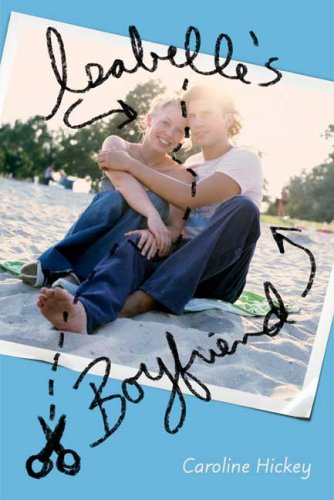
Isabelle's Boyfriend

Hickey, Caroline. 2008. Isabelle's Boyfriend.

I loved the jacket description: "This is the story of how I met the guy of my dreams and became friends with his perfect girlfriend just so I could steal him. Along the way, I lost my best friend, realized my mother was a human being, stopped letting my dog boss me around, and embarrassed myself more than once. If you want to know all the gory details, read on. Just do me a favor--don't show this to Isabelle."

That sounds like a fun book, doesn't it?

What I liked about this one? It doesn't end happily. I better explain. I feel it's a good thing Taryn doesn't get what she wants. Because what she wants wouldn't be good for her.

Taryn, our heroine, has a messy life with messy problems. She wants a better life, a more perfect life. She wants to have "the dream" which for almost any teen girl would include having a boyfriend and being a part of the popular crowd.

Taryn gets caught up in everything so quickly. She sees a cute guy, John Epplin or "Epp". She talks with him a few minutes. She walks away with the notion that he's her DREAM guy, a guy who's made just for her. She convinces herself that it is destiny and fate that led to this meeting. Even though she so knows that he has a girlfriend. Yes, he smiled at her. Yes, there was eye contact. But he mentioned his girlfriend. This story only becomes more convoluted when she discusses him with her best friend, Lila. Suddenly, this plan comes to form. She must go after this guy, chase him, must do what she can to steal him, to win him. After this point, the embarrassment increases chapter by chapter. She's not a nice person. She becomes someone who it is almost impossible to like or respect. She drops her best friend, Lila, begins to use her new friends, Isabelle and Pete, and generally speaking makes a fool out of herself. I especially thought the way she treated Pete and Lila was awful.

Here we see a girl in love with the idea of love. We see love at its most naive.

Another thing I liked about the novel was that it explored how love--the seeking and obtaining of boys--can interfere in friendships. How boys can come between friends. How having a boyfriend can "ruin" friendships when you become obsessed, or when you just become too busy to spend time with your other friends. How easily you can hurt your friends by moving on or ignoring them.

Taryn is immature in my opinion. I'd be curious to see what others have to say on this one. But she felt a bit too immature to be fifteen. She's a naive fifteen let's say. Of course, I'm no expert on what is "normal" for fifteen. So she could be completely authentic. I just don't know.

I do think there are girls like Taryn out there--fifteen or any other age.

© Becky Laney of Becky's Book Reviews

Tuesday, October 21, 2008

Ink Exchange


Marr, Melissa. 2008. Ink Exchange.

Ink Exchange is the follow-up novel to Wicked Lovely. (Same fictional world, different narrators. Wicked Lovely, by the way, is a book that I could have sworn that I'd read last year...but for some reason or other...it isn't showing up in my archives. Which leaves me with the puzzlement...did I really read it? Regardless of if that is yes or no...I can say that I was able to get swept away into this book, this story, this world.)

Leslie is a mortal girl who is very troubled. Her father's essentially a broken man, a man who's almost completely out of her life. Her brother, Ren, is a drug addict/drug dealer. He's not beyond selling his sister's body--without her consent--to get what he wants or what he needs. Leslie is angry, hurt, and confused. Very angst-filled teen with good reason. She seeks an escape. She seeks a new identity. And for Leslie, step number one of this new life is getting a tattoo.

Leslie's right in a way. The tattoo will change her life. But Leslie had no idea what she was really in for. What a tangled mess she was getting into when she requested this one particular tattoo.

This tattoo links her body-and-soul with the king of the dark court. This faery king needs a mortal to "feed" his court, his followers. (It's only half as bad as it sounds. The dark faeries feed on emotions felt by humans. So it's exploitive and manipulative and sometimes cruel and sometimes just plain awful.)

Irial and Niall aren't mortals, they're part of the faerie world. Each desires Leslie. Each recognizes to a certain extent that they'd be bad for Leslie in that interactions between mortals and faeries almost always end badly for humans. But they're both drawn to her. Both lust for her. Both love her. Or claim to love her. Both have a bad track record with human women.

One of the things I enjoyed about this dark little story were the characters. Each was flawed. Each had good qualities; each had bad qualities. No one character was completely good or completely evil. Each was selfish and looking out for themselves, but most also were loving enough to want what was best for those around them whom they loved as well. Few (if any)was so completely self-absorbed that they were a monster.

This book was also way more complex than I was bargaining for. The characters had so much baggage, so much depth, so much I don't quite what the right word is. The characters were complicated which made them feel real to me as opposed to feeling that they were flat and lifeless or stereotypical or boring or whatever.

© Becky Laney of Becky's Book Reviews
Saturday, October 18, 2008

If You're Reading This, It's Too Late


Bosch, Pseudonymous. 2008. If You're Reading This, It's Too Late.

If You're Reading This, It's Too Late is the sequel to The Name of This Book Is Secret. I enjoyed the first book tremendously. I loved it. L-O-V-E loved it. This one....well, it didn't quite live up to my expectations...but I think it's an enjoyable enough read. I think it might be just my mood. (Or maybe sometimes second books have a hard time living up to the first book.)

Like The Name of This Book Is Secret, this one is written in a very informal, casual way. Novel-as-conversation. The narrator-author is speaking directly to the reader. And this works in many ways. It's meant to be humorous and adventurous all in one.

Here's the author's note:

Please read the contract on the following page very carefully. If you refuse to sign, I'm afraid you must close this book immediately.

Turn the page, and this is what you'll see:

I, the Reader of this Book, certify that I am reading this book for entertainment only. Or to avoid cleaning my bedroom or doing my homework. I will not try to uncover the true identities or locations of the people described in this book. Nor will I try to contact any secret society mentioned in this book. Although the story may concern an ancient and powerful secret, I hereby deny any knowledge of this so-called secret. If I am ever asked about it, I will run from the room. Unless I am on an airplane, in which case I will close my eyes and ignore the person speaking to me. And if all else fails, I'll scream. I will not repeat a word of this book under any circumstances. Unless I just can't help it.
If that doesn't make you curious, surely the prologue will.

One thing that I enjoyed about this one is that the chapters count down. We begin with chapter 33 and end with chapter 1. I thought that was unusual but fun.

The narrator is just as fun as ever. And the story is full of adventure, mystery, and humor. Our hero-and-heroine (Cass and Max-Ernest) are back for more secrets, more chases, and more close-calls. And they're ready to join the Terces society, and prepared to go on missions for the greater-good to put a stop to the evil society of the Midnight Sun.

© Becky Laney of Becky's Book Reviews

Saturday, October 04, 2008

Impossible


Werlin, Nancy. 2008. Impossible.

If you haven't read one of Nancy Werlin's books...you really don't know what you're missing. Here are the books I have read (and loved): Rules for Survival, Double Helix, and Black Mirror. I can now add Impossible to the list. (If anyone is looking for books to read during the 24 Hour Read-a-thon, I'd definitely recommend Werlin!)

What can I say about Impossible? It's good. It's a page turner. It matches my high expectations in a Werlin novel. But that doesn't really do it justice, does it? Lucy Scarborough is our heroine. She's seventeen. It's spring. She's preparing for prom. Little does she know just how at risk she is to falling prey to the old-family-curse. A curse that she, of course, has no knowledge of. She's got her foster parents. She's got her best girl friend, Sarah, and her best guy friend, Zach. She's got a prom date, Gray. She's not quite carefree. She's a bit bothered that her birth mother, Miranda, has popped up in town again. Lucy always finds it hard to deal with her mentally ill, emotionally unbalanced, and homeless mother. But Lucy is full of hope for the future...

Back cover:

From the sting of my curse she can never be free Parsley, sage, rosemary and thyme Unless she unravels my riddlings three She will be a true love of mine

Jacket copy: Lucy has only nine months in which to break an ancient curse.

Lucy Scarborough is seventeen when she discovers that the women of her family have been cursed through the generations, forced to attempt three seemingly impossible tasks or to fall into madness upon their child's birth. How can Lucy succeed when all of her ancestors have tried and and failed? But Lucy is the first girl who won't be alone as she tackles the list. She has her fiercely protective foster parents beside her. And she has Zach, whose strength amazes her more each day. Do they have enough love and resolve to overcome an age-old evil? Inspired by the ballad "Scarborough Fair," this spellbinding novel combines suspense, fantasy, and romance for an intensely page-turning and masterfully original tale.


© Becky Laney of Becky's Book Reviews

Friday, August 22, 2008

Impulse and Initiative


Reynolds, Abigail. 2008. Impulse and Initiative: A Pride and Prejudice Variation.

This book sets out to answer these questions, "What if...instead of disappearing from Elizabeth Bennet's life after she refused his offer of marriage, Mr. Darcy had stayed and tried to change her mind? What if...Lizzy as she gets to know Darcy, finds him undeniably attractive and her impulses win out over her sense of propriety? What if...madly in love and mutually on fire, their passion anticipates their wedding?"

I have mixed feelings on this one. I do. Pride and Prejudice is one of those books that is practically perfect in every way. One of those happy-making books that you enjoy reading with a big smile on your face. Mr. Darcy is just so perfect, just the way he is. So I've never thought about him needing improvement. Never imagined him courting Elizabeth any other way. Never thought their relationship lacked sizzle.

And this book sets out to re-imagine those beloved characters. It is a variation in tone, in character, and in plot. Mr. Darcy is madly in love with Elizabeth. But she's hesitant about his wooing. For Darcy, as Reynolds envisions him, this means that he needs to turn up the heat. If she won't respond to his true-heart-revelations, perhaps she'll respond to his touch, his kiss, his embrace. If he can make her melt, drive her wild with passion, then surely she'll consent to become Mrs. Darcy. Right?

The problem with this is that to win her that way, he has to resort to becoming everything he despises. Darcy is fundamentally a gentleman at heart. A Mr. Darcy without morals, without propriety, without thought or concern for a lady's reputation--his lady's reputation--is almost unimaginable until now. Darcy borrowing from Wickham? Really?! An Elizabeth whose reputation is in tatters, who has become the disappointment of her father, who has adopted Lydia's it-feels-so-good-it-can't-be-wrong philosophy?!

The writing. Reynolds' writing is not fundamentally bad. It's not that she doesn't know how to write, how to turn a phrase, how to write scenes that work. Stylistically, on the surface, everything about this one works. The characters. The scenes. All good--maybe not brilliantly, great (award-winning great) but not bad. Certainly entertaining. Certainly on the level of other romance novelists. But it's the fact that it's Mr. Darcy. It's Elizabeth. Their love isn't supposed to be smutty. Respect. Purity. Both qualities that they'd expect to find in the other, and hold themselves to as well.

There were enjoyable aspects of this novel. I must say that I smiled when it was Elizabeth who came home and announced that she'd married first. You know those smug scenes between Lydia and her mother and sisters. The ones where she's bragging that she got married first. That she got her man. That married life was so wonderful. Now it's Elizabeth's turn to boast.
And there are a few other enjoyable scenes as well. I like, in a way, the conversations between Darcy and Elizabeth trying to prove to themselves (reassure themselves) why it was right for them to have sex, but wrong for Wickham and Lydia. I suppose they rationalize it all by intentions. Wickham is a jerk, a lusty jerk that is selfish and only looking out for himself. And Darcy, well his intentions are honorable even if his actions aren't. And while one might think Elizabeth's own tainted (impure) experience might give her sympathy or understanding for her sister and her sister's giving into temptation...you'd be wrong. Elizabeth still feels a bit superior to her sister. Still judges her for the foolish idiot she is.

If you're looking for Pride and Prejudice with smut inserted, then this one is for you.

© Becky Laney of Becky's Book Reviews

Thursday, August 14, 2008

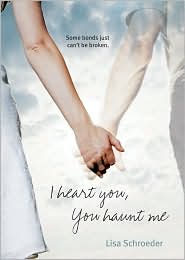
I Heart You, You Haunt Me


Schroeder, Lisa. 2008. I Heart You, You Haunt Me.

Ava's boyfriend Jackson Montgomery has tragically died when the novel, I Heart You, You Haunt Me, opens. Our first glimpse of Ava is at his funeral. We see her grieving; we see her distraught. We feel the rawness and vulnerability of her aloneness, her grief.

The novel is written in verse. And it spans the summer--he died at an end-of-school party in May--when she is most lost. What Ava realizes soon after Jackson's been buried is that he's never really left. She feels him, smells him, hears him, sees him. He is haunting her house and her dreams. And at first, Ava is so relieved to be near him--even if he is just a ghost--that she doesn't want to leave the house, doesn't want to visit with her friends, doesn't want to go out and have your typical summer fun. And part of that is certainly understandable. But her parents and friends sense that something is a bit off with Ava. They just don't know quite what.

Ava has a decision to make about her life, about how she lives it. And Jackson is there to help, or is he?


© Becky Laney of Becky's Book Reviews

Wednesday, July 30, 2008

Travel the World: Sweden: I Need You More Than I Love You


Ardelius, Gunnar. 2008. (November release). I Need You More Than I Love You And I Love You To Bits. Translated by Tara Chace. Frontstreet Books.

Not quite poetry, not quite a novel, I NEED YOU MORE THAN I LOVE YOU... is a verse novel of sorts about the joys and sorrows, ups and downs, of young love, of first love. Told from both the male and female perspective, it has a little bit of everything emotionally speaking. It does share quite a bit of the couple's intimate moments, and because of this 'adult nature' of the work, it may not be appropriate for younger teens. But for older teens, it has its rightful place.

Here is the first piece,

Her foot slides over and then back, cautiously
stroking the toes of his left foot. His head quivers
when he glances up and catches her gleaming
eyes, as wide as fie kronor coins. He blushes,
noting the soft tug at his heart.

And here is another a bit further on (p. 37)

My taste has changed. The love songs on the
radio have started describing how everything
really is. I'm not sure I can deal with being
happy, it feels like I'm made out of play dough.
I don't want to be in love like that, like all the
other boring people. Our love is different. It's
about us.

Anyway, it's a nice enough book. These two young lovers are ordinary folks who do ordinary things. They're in and out of love and confused at times. Sometimes they're fighting with their parents. Sometimes they're at odds with the world around them. Sometimes nothing seems to be going right. Sometimes it does.

© Becky Laney of Becky's Book Reviews
Saturday, June 28, 2008

In the Company of Whispers

Lowenstein, Sallie. 2008. In the Company of Whispers.

Weird. Weird. Weird. There is really no other way to describe this one. Weird doesn't equal bad. Not really. Especially not in this case. But it does mean different, very very different. That is unless you can name a list of novels that are part memoir and part science fiction that focus on Burma's troubled past in the 1950s and a Big-Brother type government of the 2040s. Certainly none came to my mind.

I'll try to give you an impression of what you'll find IN THE COMPANY OF WHISPERS. First, you'll find lots of quotes. These are drawn from the Burmese culture--history, mythology, etc. Second, you'll find lots of photos. Black and white photos. There is a list (an appendix perhaps?) of photo credits. That's something you don't find every day. Third, you'll find letters, personal letters, from 1958. These letters are based on those from the author's family from their time in Burma. Fourth, you'll find a fictional story of a family and society in turmoil. This is where the science fiction elements come more into play.

So it was interesting and fascinating in a way. But very strange and other-ly as well.

Three strange characters share this futuristic story--Zeyya, a teen girl, Granna, her grandmother, I think her name might be Louise but I'm not 100% sure, and Jonah, a tattooed stranger that appears on their doorstep soon after Zeyya's parents are "quarantined."

Another review: Wands and Worlds.

© Becky Laney of Becky's Book Reviews

Monday, June 23, 2008

I Am Scout

Shields, Charles J. 2008. I Am Scout: The Biography of Harper Lee.

In ten wonderful chapters, the reader gets an introduction to the ever-so-fascinating author Nelle Harper Lee, author of the phenomenal To Kill A Mockingbird. I AM SCOUT by Charles J. Shields  is a must-read for any one who has ever been curious about this novel and novelist. (For those that are wondering, I AM SCOUT is an adapted version of his MOCKINGBIRD. I haven't read Mockingbird. But I Am Scout is just wonderful.)

Well researched, well written, I Am Scout fascinates with every page. Did you know that "Dill" is Truman Capote? Did you realize how influential Lee was in Capote's writing of In Cold Blood? Did you know that she did at one time have plans for a second book? Did you know that Atticus Finch is loosely based on her own father? There are hundreds of I-didn't-know-that facts sprinkled throughout I Am Scout that makes this one so essential to those interested in a behind-the-scenes look at this mysterious writer.

This one is definitely one I'd recommend.

Read Sarah Miller's review.
Visit the author's website.
Blogged with the Flock Browser

Saturday, June 21, 2008

In Mozart's Shadow

Meyer, Carolyn. 2008. In Mozart's Shadow: His Sister's Story.

"In the beginning, when I was four, Papa sat beside me at the clavichord, the music book open to minuets and other short pieces he had prepared for me, and he taught me how to play." (7)

In Mozart's Shadow is a novelization of Nannerl Mozart. Several years older than Wolfgang Amadeus Mozart, she was a talented, gifted musician in her own right.  When Wolferl showed talent and promise as well, the family--mom, dad, brother, sister--went on the road together. The children performed together. Nannerl would have her time to shine. Wolferl would have his spotlight. They'd perform together as well playing duets. Their father would join in on occasion as well. Music was the family business. The Mozart's world revolved around music. Unfortunately, while many many people enjoyed their performances, money never really quite rolled in the way the parents hoped. They wanted fame, yes, but they also wanted money. Lots and lots of money. The father had a habit of living beyond his means, beyond his income. He wanted the best of everything. He thought that by spending money he would look aristocratic. And he thought that by looking aristocratic, people would give him more money.

These times together on the road as a family performing music were some of the happiest of her life. Unfortunately, the good times would not--could not--last. Sooner than Nannerl would have liked, her father stopped touring as a family. Wolferl, her younger brother, was the rising star now. He was the one that everyone hoped and prayed would be a big STAR. If the family were to make a fortune, to have a rise in social standing--fame, glory, success, money--it would be because of Wolfgang Amadeus Mozart. And the father didn't want Nannerl along for the journey--not even in the background.

Nannerl's hopes and dreams would not disappear or dissipate overnight. No, she clung to her dreams, her hopes for many years. Many. But her happiness was not to be. Not at all. Her life was full of  disappointments, shattered dreams, and losses. It brings to mind Langston Hughes' "A Dream Deferred." Though she was talented, she was a she. There were not any famous women musicians, keyboard players. Women singers occasionally made it big and became stars. But not musicians. There was no place in that society for a grown woman to succeed in the world of men. The best she could hope for--if she wanted to keep music in her life--was to teach music. That and to play privately for family and friends and acquaintances and such. But there would be no career as a professional musician.

Though Nannerl's story is far from happy, the book itself is rich in detail. The people. The places. The culture and society. Hair. Fashion. Gossip. Those who love historical fiction will find it interesting I'm sure.

P
a
r
t
i
a
l

S
p
o
i
l
e
r

Nannerl's life is one of frustration. Raised by a domineering, controlling, authoritative, demanding father--worst stage dad ever perhaps--she was kept reined in even at home. She was in her early thirties and her father would not even consider letting her get married. He turned away any suitors that came around. She did fall in love. She did hope to marry. There was a man very much in love with her. But her father said never in a million years. She did eventually marry, but she never found love in that marriage. She married a man just as abominable--if not more so--than her father. Her true love stayed true to her even though they could never be together.

I'm not quite sure how well-known the existence the life of Mozart's sister, Nannerl, (Maria Anna) is generally speaking. (I was going to say with teens. But then I got to thinking...how many adults are familiar with her? I just don't know. I certainly didn't learn of her until a year or so ago. And that was just through a conversation with a friend. She mentioned her casually. So maybe I was clueless and the rest of the world is more aware. Or maybe she's just well known in certain sets.)
Blogged with the Flock Browser

Wednesday, May 21, 2008

Island of the Blue Dolphins


O'Dell, Scott. 1960. Island of the Blue Dolphins.

If as a child I read Island of the Blue Dolphins, I must have blocked it from my memory. And there's a good reason for that: 1 dead father +1 dead brother +1 dead dog + countless years spent alone on an island trying to survive the elements and cope with the loneliness = 1 book I'd just as soon live without. Sometimes I try to fool myself into thinking that I'm all introspective, that I am happy with my alone time. It doesn't work for long. I need people. Not 24 hours a day, 7 days a week. But given enough "alone" time, I start to go crazy.

Island of the Blue Dolphins is about a girl, Karana, and her slightly unusual coming-of-age story. It is based on a true story. Which *should* logically make the dead father, the dead brother, the dead dog, etc. easier to accept because it is so authentic. The author's note says, "The girl Robinson Crusoe whose story I have attempted to re-create actually lived alone upon this island from 1835 to 1853, and is known to history as The Lost Woman of San Nicolas." I cannot imagine, can't fathom, the emotional, mental, and physical strain of such loneliness. To not only have to have the strength and courage and common sense to survive day after day and season after season and year after year, but to have to live with everything psychologically speaking.

The novel begins with the arrival of the Aleuts. Karana's tribe welcome halfheartedly these strangers onto their shores. These hunters are here to kill sea otters. They agree to pay for this privilege; however, there is some distrust. Her family, her community, are unsure about the trustworthiness of these men, these strangers. But what can they do? If they don't allow them to hunt, won't that be challenging them and provoking a war? If they do allow them to hunt, and they don't get what has been promised, that is a challenge or threat of war as well. But there is a small chance that they might actually be honorable. I don't know if there is a right or wrong way to go about it. What is, is.

As you might have guessed, these men are not honorable. And the community is practically slaughtered. By the time these strangers leave, the tribe is down to fifteen men--most of them old men or young boys. There are only a handful of men physically and mentally capable of leadership. Karana's father, the chief, is one of the men that died. She does witness it--from a distance I believe.

The people then decide, over the next few years or seasons, that the island has too many bad memories. That they should try to move to another island. One man goes off in search of a new home, and he later sends a ship back for the rest of the tribe.

The problem? Karana's brother misses the boat. He went back home to get his spear despite Karana having told him NOT to go because there wasn't enough time. She's safely on the boat, but her brother isn't. As they're leaving, she realizes that he is not there. She even, I believe, sees him on the shore. She jumps into the sea and swims home. The tragedy of it all? Within a few days--maybe even that same day--her brother is dead--mauled by a pack of wild dogs. So her brave attempt to be a good big sister is all in vain. Now she's alone, alone, alone.

Perhaps some people love the Robinson Crusoe of it all. I'm not one of them. I didn't like Robinson Crusoe in school--hated it in fact. And this doesn't really read like Swiss Family Robinson. For one thing, it's realistic. But another thing, it's the story of one person's isolation. Maybe the book doesn't focus on the alone-ness of it. But as a reader, it was something I couldn't escape. How do you keep your sanity when you are all alone for years and years?

S
P
O
I
L
E
R

She is eventually rescued. But she is never reunited with her community, her tribe. What is perhaps sadder is that she could only communicate with others in signs. No one understood her language, and she couldn't understand other languages. So even supposedly-rescued, she remains isolated in a way. I can't imagine being unable to communicate fully and freely. To be alone in your own little world. There is something so troubling about this whole mess. People need to be heard, be understood. They need to connect.

I think there are many many people who love this book. I don't know that I can grasp the why of that love. But it's there just the same. I am not one of them. This book has a haunting sadness, a heartbreaking melancholy that I just DON'T want to experience again.

© Becky Laney of Becky's Book Reviews

Saturday, February 17, 2007

I Am The Messenger

Zusak, Markus. 2005. I Am The Messenger.

Set in Australia, I AM THE MESSENGER is a charmingly odd story of how one man learns some important life lessons over the course of a year. Nineteen or twenty years old and a cab driver, our hero, Ed Kennedy is not on the fast-track for success. In fact, most of his friends would nominate him as one of the laziest men ever. But things begin to change when Ed begins receiving some strange mail. Messages on aces. But perhaps I’m jumping ahead, Ed and his friend witness a bank robbery. During this robbery, Ed inadvertantly plays hero and ends up with the gun while the robber makes a very botched escape. After the robbery, things really begin to change. He’s the headliner in this small town. A real hero, at least for a week or so while everyone’s talking. But then he begins receiving strange, cryptic messages on playing cards. What could the messages mean? And is his life in danger if he ignores them? Who is behind this elaborate scheme? As he ‘delivers’ each message--each unique message--Ed begins to realize certain things about himself, his family, his friends, his life. I AM THE MESSENGER is an odd but enjoyable mystery.

http://www.randomhouse.com/features/markuszusak/author.html

At the age of 30, Zusak has already asserted himself as one of today’s most innovative and poetic novelists. With the publication of The Book Thief, he is now being dubbed a ‘literary phenomenon’ by Australian and U.S. critics. Zusak is the award-winning author of four previous books for young adults: The Underdog, Fighting Ruben Wolfe, Getting the Girl, and I Am the Messenger, recipient of a 2006 Printz Honor for excellence in young adult literature. He lives in Sydney.

Monday, January 29, 2007

Ned Vizzini

Vizzini, Ned. 2006. It’s Kind of A Funny Story.

Craig Gilner thinks his acceptance into an elite high school will be the beginning of the best years of his life. But when the pressures of high school overwhelm him, he has no where to turn but to drugs. Thus his downward spiral begins at the height of his success. As academic and social pressures build, can Craig find a healthy way to cope with the anxiety? Or is he doomed to sleepless nights and days of vomiting? Can therapy and prescription drugs really be the answer? Or does the answer lay within himself? Is there a way out of his seemingly hopeless situation? It’s Kind Of A Funny Story follows the ups and downs of a young boys life as he learns about life, love, and coping with reality.

Wednesday, January 17, 2007

In My Father's House

Rinaldi, Ann. 1993. In My Father’s House.

IN MY FATHER’S HOUSE is an interesting historical novel based on actual historical events. Did you know that the land where the first battle of the Civil War took place was owned by the same man whose land provided the place for the signing of the Confederates’ surrender? Yes, the Civil War began on Will McLean’s property and ended on his property. Will McLean was a man who saw the collapse of the South years before the first battle of the Civil War took place. Considering himself a man of the New South, he raised his family to be more open-minded towards life. He even hired a Yankee governess for his children to tutor them. Oscie is Will McLean’s stepdaughter. Her father died when she was a young child--five or six--and Daddy Will has been the one to raise her for better or worse. Oscie is our young narrator. She provides a behind-the-scenes look at life on a plantation from 1852 to the close of the Civil War in 1865. As she grows up, she learns many life lessons--about life, love, family, and duty. She has difficulty at first deciding what exactly she believes and who she supports. Yet, as the civil war begins--she realizes as does her stepfather--that the Confederate cause is not only ill fated or doomed but that it deserves to be defeated so that something better can begin. Not an easy position to take when most of your neighbors would violently oppose your opinions if you aired them. But sometimes the right road isn’t always the easiest.

Friday, October 27, 2006

Incantation

Hoffman, Alice. 2006. Incantation.

With a title like Incantation, one doesn't know quite what to expect. I certainly didn't expect to find the book to be about a Jewish family living in sixteenth century Spain masquerading as Catholics trying to blend in during the Inquisition. But that is exactly what Incantation is about. Mostly.

Estrella deMadrigal is a girl on the verge of womanhood and just beginning to experience life. Her best friend, Catalina, her neighbor is her dearest companion. They've grown up 'Raven' and 'Crow' (both nicknamed for their black hair) laughing and sharing everything until the summer when Catalina's cousin Andres came to live with them. Suddenly, the girls' friendship is threatened. Catalina has every expectation--as does her family--in her making a match with her cousin. Andres has different plans. He's fallen for the attractive neighbor, the best friend, the lovely Estrella. Estrella try as she may can't stop thinking about him either. But what will their attraction mean to everyone in this dangerous time?

Will Catalina's friendship and love turn to bitter hatred? Will she seek the ultimate revenge on her friend and her family?

http://www.alicehoffman.com/

Tuesday, October 17, 2006

Clueless...

Carter, Ally. 2006. I'd Tell You I Love You, But Then I'd Have To Kill You.

Cammie Morgan thinks she has it all. A second-generation Gallagher Girl, she's always been the best...fluent in fourteen languages AND capable of killing a man in seven different ways. One would think she would be immune to intimidation. But there is one thing they didn't prepare her for at Gallagher: falling in love with an ordinary boy.

What is Gallagher Academy? A school for geniuses, yes. But more than geniuses, a training ground for future spies. Cammie and her friends may be able to carry out some pretty elaborate missions--at least for their ages--but they're clueless when it comes to being 'normal' teen girls trying to blend into the town's high school crowd. Clueless in fashion, flirting, and above all else, matters of the heart. How can a girl trained in lying avoid breaking a guy's heart in the end?

I'd Tell You I Love You, But Then I'd Have To Kill You is a great book, a fun book, one that will keep you smiling as you read about her adventures and misadventures in life and love.

http://www.allycarter.com/
http://www.allycarter.com/blog.html
http://www.allycarter.com/index_ya.html