Showing posts with label "M" titles. Show all posts

Friday, May 29, 2020

76. The Pull of the Stars

The Pull of the Stars. Emma Donoghue. 2020. [July] 304 pages. [Source: Review copy]

First sentence: Still hours of dark to go when I left the house that morning. I cycled through reeking Dublin streets that were slick with rain. My short green cape kept off the worst, but my coat sleeves were soon wet through.

Premise/plot: Set during the Spanish Influenza of 1918 in Dublin, Ireland, it follows Nurse Julia Power closely over the course of three days in the maternity fever ward. Julia is a midwife; she's used to losing patients--either mothers, or babies, or sometimes both mother and baby. She has a way of marking each loss of a patient; she's diligent and hardworking, but caring as well.

Readers get to know a few other characters as well including one person from history: Dr. Kathleen Lynn (1874–1955).

My thoughts: What an incredibly intense read!!!! For better or worse. There's nothing beautiful or glamorous about being a nurse/midwife. And the women in her ward, in her care, well they're fully fleshed/realized characters. This is like a super-super-super-super-super intense episode of Call the Midwife minus the hope and humor.

There are essentially NO CHAPTERS, just four sections (if I counted right, which is always doubtful!). I'm not sure if the lack of chapters kept me up reading, or, if it was my need to know if anyone would be okay, if the patients would live to see another day or night.

I'm not sure if the narrative style is technically stream of consciousness, but, if I had to guess I'd say it might very well be. It is very in the moment and personal. We see everything through Nurse Power's eyes.

Reading this during COVID is an experience in and of itself. I think that's why it's being published perhaps a little earlier than originally intended?

I noticed just one headline about the flu today, low down on the right: Increase in Reports of Influenza. A masterpiece of understatement, as if it were only the reporting that had increased, or perhaps the pandemic was a figment of the collective imagination. I wondered whether it was the newspaper publisher’s decision to play down the danger or if he’d received orders from above.


That’s what influenza means, she said. Influenza delle stelle—the influence of the stars. Medieval Italians thought the illness proved that the heavens were governing their fates, that people were quite literally star-crossed. I pictured that, the celestial bodies trying to fly us like upside-down kites. Or perhaps just yanking on us for their obscure amusement.


But wasn’t it the whole world’s war now? Hadn’t we caught it from each other, as helpless against it as against other infections? No way to keep one’s distance; no island to hide on. Like the poor, maybe, the war would always be with us. Across the world, one lasting state of noise and terror under the bone man’s reign.


THE PUBLIC IS URGED TO STAY OUT OF PUBLIC PLACES SUCH AS CAFÉS, THEATRES, CINEMAS, AND PUBLIC HOUSES. SEE ONLY THOSE PERSONS ONE NEEDS TO SEE. REFRAIN FROM SHAKING HANDS, LAUGHING, OR CHATTING CLOSELY TOGETHER. IF ONE MUST KISS, DO SO THROUGH A HANDKERCHIEF. SPRINKLE SULPHUR IN THE SHOES. IF IN DOUBT, DON’T STIR OUT.


It occurred to me that in the case of this flu there could be no signing a pact with it; what we waged in hospitals was a war of attrition, a battle over each and every body.


THE GOVERNMENT HAS THE SITUATION WELL IN HAND AND THE EPIDEMIC IS ACTUALLY IN DECLINE. THERE IS NO REAL RISK EXCEPT TO THE RECKLESS WHO TRY TO FIGHT THE FLU ON THEIR FEET. IF YOU FEEL YOURSELF SUCCUMBING, REPORT YOURSELF AND LIE DOWN FOR A FORTNIGHT. WOULD THEY BE DEAD IF THEY’D STAYED IN BED? 


© 2020 Becky Laney of Becky's Book Reviews

Wednesday, May 20, 2009

Moribito: Guardian of the Spirit (MG, YA)


Uehashi, Nahoko. 1996/2008. Moribito: Guardian of the Spirit. Translated into English by Cathy Hirano. Illustrated by Yuko Shimizu. Scholastic.

High quality. You'll notice it from the start. This book is very pleasing--to the eyes, yes, but also to the touch. But I'm reviewing the book, not the book jacket, so I need to get back on task.

At the moment the royal procession reached the Yamakage Bridge, Balsa's destiny took an unexpected turn.

Who is Balsa? Why should you care? Well, Balsa is the star of Nahoko Uehashi's Moribito: Guardian of the Spirit. She is a body guard, a female warrior. She is paid to protect. Paid to fight. As to why you should care? This book is a fun fantasy novel with lots of action and adventure. Originally published in Japan in 1996, the book has at last been translated into English and published in America.

When Balsa saves the Prince's life (second prince, not the crown prince), the second queen (second wife, mother of the second prince) shows her gratitude by inviting Balsa to her home, her palace. An offer Balsa cannot ignore. Though she knows that this invitation comes with a hidden cost. The Queen wants something from her. Wants it badly. The Queen feels her son is in danger. She wants Balsa to take the prince, Chagum, and run. Why is he in danger? Well, I could go there. But I'd likely confuse you. Or else you wouldn't believe me. If I told you the prince had a magical/spiritual egg inside him waiting to hatch? And that the whole book resolves around protecting this Prince/egg? You might think it a rather odd plot twist. But it works. And well. It's exciting. It's well written.

This is the first book in a long and seemingly well-beloved fantasy series in Japan. (Beloved enough to inspire anime and manga adaptations. According to Wikipedia, the series will air in the United States in the summer of 09.)

© Becky Laney of Becky's Book Reviews
If you're reading this post on another site, or another feed, the content has been stolen.

Tuesday, March 24, 2009

Mansfield Park Revisited


Aiken, Joan. 1985/2005. Mansfield Park Revisited. Sourcebooks. 201 pages.

The sudden and unexpected death of Sir Thomas Bertram, while abroad engaged on business relating to his various properties in the West Indies, could be a cause of nothing but sorrow, dismay, and consternation to the baronet's friends in England.

I just LOVED this book. It was delightful and charming. But more importantly it is redemptive. With Fanny and Edmund out of the picture--for the most part--the narrative has a chance to focus in on other characters. Susan, Fanny's younger sister, and Tom, Edmund's brother, for example. But it also returns to us the brother-sister villains, Henry and Mary Crawford. (She's come back--and is actually renting a cottage from the Bertrams--but there's a catch: she's dying.) New characters are also introduced--the lovely Mrs. Osborne and her brother, the Reverend Francis Wadham. (He will be taking Edmund's place in the parish temporarily.) The book is full of characters you come to love...and those you love to hate.

Appearances can be deceiving, and such is the case here. All isn't as it first appeared, for example, in Mansfield Park. I have never been a fan of Mansfield Park, but I am a BIG FAN of this sequel. If you're like me, you might want to give this one a try. You might just find yourself surprised!

Like most Austen novels, this one has to do with love and matchmaking. And so much more.

I'm sorry I can't really describe it very well. But it is one of those where sharing a few details might spoil it. It is best to read for yourself and see where the story goes.


© Becky Laney of Becky's Book Reviews
If you're reading this post on another site, or another feed, the content has been stolen.

Friday, November 14, 2008

My Mother Is A French Fry...


Sydor, Colleen. 2008. My Mother Is A French Fry And Further Proof Of My Fuzzed Up Life.

I'll try to keep this one as short as possible. The jacket calls our heroine, Eli Smythe, "quick-witted, tightly coiled, sarcastic." I call her a whiny self-centered brat. So I didn't much care for this one because of the narrator's voice. I hope that Eli is just going through a phase, I'd hate to think she'll be like this when she's thirty.

My Mother Is A French Fry and Further Proof of My Fuzzed-Up Life is somewhat typical YA fiction. A teen girl whose relationship with her mother is very strained, very heated, very argumentative. A teen girl who is embarrassed by her mother--and to some extent her father--particularly because her mother is pregnant. And the fact that she's pregnant is proof that her parents--gasp--have sex. Something she doesn't want to forgive her parents for. How could they!

It's also typical in that the heroine's own first relationship is explored. Though how her boyfriend, JG (Jeffrey Geoffrey) puts up with her is beyond me.

Not everything in the book is annoying. There are some admittedly humorous bits. But generally this one wasn't to my liking. Of course, that doesn't mean that you won't like it. You may enjoy Eli's narrative more than I did. And you may be able to relate to it more than I did. And you may develop a crush on JG which could help you fall in love with the book.

© Becky Laney of Becky's Book Reviews

Tuesday, November 11, 2008

My Life As A Rhombus


Johnson, Varian. 2008. My Life As A Rhombus.

Rhonda the Rhombus. Perhaps not the most-appealing nickname a girl can have. But...Rhonda makes for quite a good heroine as one of the stars in Varian Johnson's My Life As A Rhombus.

Rhonda Lee is great at math. She excels so much that she tutors students of all ages at West Columbia Community Center. Which is how our heroine comes to meet Sarah Gamble. Sarah is one of the beautiful, popular people. Sarah needs help...and she needs it quickly if she's going to pull her grades up. But what starts as a rather reluctant relationship...becomes much much more through the course of the novel. As these two unlikely teens find they have much in common.

Their common bond? Unplanned pregnancies. Rhonda's is in the past--two years previous--and Sarah's is in the present. Sarah's secret is revealed to Rhonda alone. And the two come to discuss life and all its hardships in detail as Sarah puzzles out what to do with her life, her body. Rhonda's pregnancy ended in abortion--it's a choice that was out of her hands. Rhonda's father controlled the situation then, and this has put some strain into the relationship. It's not that Rhonda wanted to have her baby--not really. But she wanted to be the one to think it through, the one to decide. She wanted the choice to be hers. And the whole situation--sex, pregnancy, abortion--still haunts her in many, many ways. Her past keeps her from living in the present.

Sarah's friendship--and Sarah's brother, David--offer Rhonda a unique opportunity. A chance to offer comfort and support, yes, but a chance to heal as well. A chance to learn that your life need not be defined by past mistakes and regrets. A chance to accept life in all its fullness.

I enjoyed this one. I liked the transformation and development of the relationships between Rhonda and Sarah and Rhonda and David. For that matter, I liked the characterizations in general.

© Becky Laney of Becky's Book Reviews

Wednesday, November 05, 2008

Mousetraps


Schmatz, Pat. 2008. Mousetraps.

Mousetraps is a busy little book. In a way it reminds me of Sweethearts by Sara Zarr. And it feels like a cousin once or twice removed from a Barry Lyga novel*. At the heart of this novel, is the story of an almost-friendship. Once upon a time (back in elementary school) there was a girl, Maxie, who was quite good friends with a boy, Roddy Nash. After a violent (bullying) incident in middle school (seventh grade, I think), Roddy moves away...only to resurface several years later in high school. He is now calling himself Rick. Maxie is shocked to see him in her chemistry class. Not happy. Not upset. Just shocked. You see in the last year (or two) when she'd known him she had begun to distance herself from him. His nerdiness was becoming more apparent--or perhaps, she just began caring that he was a bit different from the other kids.

Now that he's back, Maxie is trying to decide what their relationship--if any--should be. Just lab partners? Just friends? Just friends outside of school? Boyfriend and girlfriend?

As I said, this is a busy book. There are many different complicating layers to the basic plot. Her cousin, Sean, and his biracial jock boyfriend, Dexter, who is still in the closet. Her best friend, Tay, who is becoming more and more distant as she experiments with drugs. And there are the assumptions and burdens of memory. How traumatized was Roddy from all those years before? Is Rick gay? Is Rick in denial? Does Rick have an anger problem? Now that it's written out, it doesn't seem like those additional story lines would cloud up the text...but it just felt like this was too much of a "problem" novel.

I think the book tried to do too much in a way. (Especially towards the end.) Yes, life is complicated. Yes, people often have more than one problem to deal with at a time. But the characters and the plot seemed to only have dimensions because of the problems. Take away the problems, and what you're left with are very flat characters. The problems define the characters. That isn't true of everyone. There are a few that are multi-dimensional.

Another review of Moustraps: Amanda,
*I'm thinking of The Astonishing Adventures of Fanboy and Goth Girl.

© Becky Laney of Becky's Book Reviews
Wednesday, October 08, 2008

Travel the World: England: Montmorency


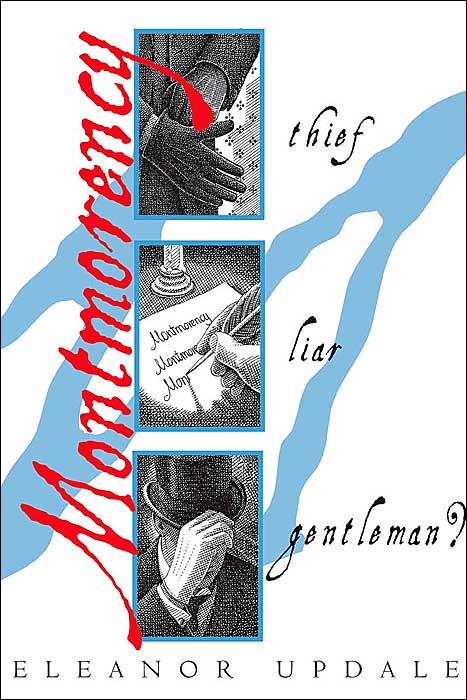
Updale, Eleanor. 2003/2004. Montmorency: Thief, Liar, Gentleman?

Originally published in Great Britain in 2003. Montmorency: Thief, Liar, Gentleman is the first in a series. (Montmorency having lots of adventures you see.) Set in Victorian England, it focuses on a thief and con man. We first meet our narrator in prison. We learn that he's been named "Montmorency" by the doctor that saved his life (and made a guinea pig out of him as well), Dr. Farcett. But he goes by another name as well: Prisoner 493.

493 is not well liked by his fellow prisoners. As the subject of study (and experimentation) of Dr. Farcett, he gets to go in and out of prison on a regular basis. True, his times out of prison he is the exhibit, an object on display, of Farcett and his lectures. But the other prisoners think he gets special treatment.

Ever calculating, 493 is already planning for his life out of prison. And he is absorbing everything around him. Absorbing all the information he hears at these lectures. Planning out his next big scheme.

His big plan? After hearing a lecture on the sewer system, he decides that he can use these underground passages as a way to get around during his burglaries. He can sneak into rich neighborhoods, hit his mark, and vanish underground. The scheme is complex--more complex than his previous crimes. So it takes a bit of planning. He soon realizes, he needs to be two people. To play two people. A Mr. Montmorency who is a rich, gentleman. A man who has the look and appearance of a gentleman. A man no one would mistake as a common thief. And Scarper, a lower-class man who can play the role of thief. Not that onlookers would take him as a thief. But he needs to be dirty and grungy and "common" enough that no one cares who he is and what he does. (It is a bit more complicated than that. But he has different "personas" he puts on to act out this scheme.)

Of course, he can plan all he likes when he's in prison...it's a different story to carry it out once he's been released. But Montmorency thinks he can do it.

My thoughts...I know this one is generally well liked (often loved) and it is typically highly recommended. But for me personally, I just didn't like it all that much. So while I think it has a certain amount of appeal to certain readers, I'm not sure I'll be following the series in the future.


© Becky Laney of Becky's Book Reviews

Thursday, September 04, 2008

My New Best Friend


Bowe, Julie. 2008. My New Best Friend.

As much as I enjoyed the first one, I do believe I loved this one just that much more. I loved it. It just felt right, felt natural, felt good. These books really capture what it feels like to be in fourth grade. Clubs. Fourth grade can be (and often is) all about the clubs. Including and excluding. Creating a hierarchy. Ida May is our narrator once again. And this time she is starting out the book with a best friend. A certain girl we first met in My Last Best Friend, a girl prone to lying at times: Stacey Merriweather. Jenna Drews is the "enemy" of sorts to our heroine. Though not so much as in the first book.

Here's the jacket description: "Ida May and her new best friend, Stacey Merriweather, are two peas in a pod. And when they discover a magical mermaid night-light that seems to grant wishes, they start a secret club--just the two of them. But before long, Ida suspects that Stacey is using the mermaid to tell some big lies...and to cause some big trouble at home. How will Ida set the record straight while still keeping her new best friend."

First paragraph:

"I'm Ida May and I have a lot to be thankful for.
  • I have not dropped my lunch tray once since the start of fourth grade.
  • I have only tripped twice in public.
  • Dodgeball season is almost over.
  • So is our science unit on dissecting worms.
I'm thankful for my teacher, Mr. Crow, even though he makes us slice open worms and pin back their skin. Because he doesn't make us touch their insides if we don't want to. And he always comes us with new ways to keep us from getting too bored with school. For example, he makes us learn how to spell big words like influenza, which is what you get if you breathe in too many bad germs, and catastrophe, which is what you get if things don't go the way you planned. Also, he reads to us every day. Not baby books, either. Lately, he's been reading us Greek stories about gods and goddesses and the creatures that work for them. Actually, they're Greek myths. Myth is a Greek word for made-up story. Like the one about the god Apollo driving a chariot across the sky when really it's just the sun. And other myths about pretty nymphs and singing muses who aren't as powerful as goddesses but, still, they can get you to do things that you don't exactly want to do. Mr. Crow says a myth is true if you believe it's true." (1-2)
I loved this one. I loved the mermaid night-light. Loved the secret club. Loved the story. It was funny in all the right places, yet it wasn't just a few pieced together laughs either. It had heart.

© Becky Laney of Becky's Book Reviews

Saturday, August 30, 2008

The Mystery of the Fool & The Vanisher


Ellwand, David and Ruth. 2008. The Mystery of the Fool & The Vanisher.

At just a little over a hundred pages, The Mystery of the Fool & The Vanisher is a perfect way to begin Carl's R.I.P. Challenge. The book evokes all these deliciously dark and creepy vibes. It's a mood piece, really, when I come to think of it. First, it's a work of fiction. I state this clearly because it is one of those works that presents itself like a journal. In this case, it would be a journal within a journal. On the one hand, it is the story of a man, a photographer, who happens to discover a mystery chest one day. On the other hand, it is the story of a man--a photographer--who is exploring and documenting these same woods, this same locale. Did I mention that this inner story is set within the 1880s? Both narrators--present and past--have a curiosity, a fascination, with all things faery, with these "superstitions" found in folklore. Both love cameras and photographs. Second, the book is illustrated. I would say the photographs do most of the work actually. And if the book succeeds in evoking the look and feel intended, it will be because the reader has a deep appreciation for the artistic merit of the illustrations, of the photographs.

I read this book and immediately thought of Carl. Not that I know him extremely well. But I just have this gut feeling that he'd really like this one. Maybe Chris as well. But definitely Carl.

Here's the book trailer:


© Becky Laney of Becky's Book Reviews

Tuesday, August 26, 2008

My Last Best Friend


Bowe, Julie. 2007. My Last Best Friend.

I enjoyed My Last Best Friend right from the start:

"I'm Ida May, and there's one thing I know. Fourth grade isn't fourth at all. Fourth means you've done something at least three times before. But fourth grade is nothing like third grade. Or second grade. Or first grade.
In fourth grade there is no more printing There is only cursive. I hate cursive.
In fourth grade you are not allowed to add and subtract. You are only allowed to multiply and divide.
In fourth grade you're a baby if you still want to play with Barbies. Or if the Tooth Fairy still comes to your house. Or if you want your mother to walk you to the bus stop. Third grade is the last grade you can get by with any of that. Trust me." (1)

Our narrator, Ida May, is great. I found her voice to be believable. And I cared for her almost immediately. Ida May's "problems" are authentic ones. Her best friend has moved away. She's starting a new school year, and she doesn't have--make that doesn't want--another best friend. She's a bit intimidated by some of the other kids in her class. Especially by the mean, bully Jenna Drews. And she just wishes it would all go away. Her parents just don't understand. (As an adult, I can see that they just want their child to be "happy." And sometimes to get to that happy place later--further on in the future--you've got to be pushed into doing some things you just don't like in the here and now.) But Ida May feels her parents are always pushing and prodding and picking on her when it comes to the "friends" issue. (They want her to have friends and to be popular and part of the crowd instead of isolated on her own.)

What she finds is a friend through a pen pal. Stacey Merriweather is the new girl. On the surface, she's best pals with the "evil" Jenna Drews. But Ida May feels that maybe just maybe Stacey isn't what she seems. That beneath the surface, there's someone there that would be her friend. Ida knows Stacey is a liar. That she's not telling the truth. That she's keeping secrets. And before Ida risks revealing herself, she wants a few reassurances, promises. Thus a correspondence begins between Anastasia (Stacey) and Cordelia (Ida). She's able to be herself, her true self, on paper and really begins to open up again to the possibility of friendship and happiness.

Life. School. Friendship. Bullies. Family.

© Becky Laney of Becky's Book Reviews

Saturday, August 16, 2008

Memories of Babi


Siegal, Aranka. 2008. Memories of Babi.

A collection of nine short stories--loosely connected much in the same way as A Long Way From Chicago works--about a young girl spending time with her grandmother. Set in pre-World War II Ukraine (near the Ukraine/Hungary border really), the stories feature a Jewish family living side by side with their gentile neighbors in this small mountain community. The stories are fictional but based on the author's childhood memories of her time with her grandmother. The stories have little life lessons packed into them, but not in a preachy way.

I read this book about a month ago. So the details are sketchy when it comes to individual stories. But I do remember liking the book in a general way.

The author is Aranka Siegal who won a Newbery Honor for her autobiography Upon the Head of The Goat in 1982.

© Becky Laney of Becky's Book Reviews

Sunday, August 10, 2008

Mary Ingalls On Her Own


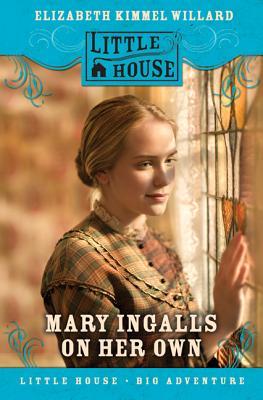
Willard, Elizabeth Kimmel. 2008. Mary Ingalls On Her Own.

"Mary Ingalls stepped carefully from the train onto the bustling platform in Vinton, Iowa. She stood straight and quiet, her hands clasping the handle of her small suitcase. Her pale blue eyes shone with a mix of anxiety and excitement. Mary took a deep breath as the cool November breeze fanned her flushed cheeks and carried the hot smell of engine steam past her nose."

The novel, Mary Ingalls On Her Own, opens with Ma and Pa and Mary arriving in Vinton, Iowa. They have brought their daughter to blind school, a college for the blind. Everyone in the Ingalls family has worked so hard in order to provide this opportunity for Mary. And Mary know she is fortunate and blessed to be here. Her emotions on this day are mixed. Feeling sad to be leaving her family behind, to be leaving Laura behind. Laura has been her best friend, her confidante, her "eyes" for years now. Yet she feels the need to prove herself, to gain independence, to try her best at this new venture. The novel only spans two months, perhaps even a little less time. (From her arrival on that November day--we're not told when in November she arrives--to Christmas Eve/Christmas Day. During this time Mary has her moments.

Adjusting to life on her own in this new environment isn't quite as easy as Mary thought it would be. She does have two great roommates Hannah and Blanche. However, she also has one grumpy neighbor, Mattie, a girl who is only partially blind. And this young woman is going to try her patience something fierce. Mattie sees Mary as being a GOOD GIRL. Interpret that as being a goody-two-shoes or self-righteous or stereotypically perfect. Mary does have to wrestle with that image. She doesn't feel like a good girl. But she's aware that others have always had that image of her. She's not sure how she's projecting that image so much, just that it must stem from the fact that she doesn't speak without thinking. She's not prone to putting her foot in her mouth. Or giving way to anger. Or really letting people have it.

As for the plot, not much happens. That's not being rude. There are a few things now and then that "happen." But this one is about exploring the inner thoughts of one character. The emphasis is on character growth in other words.

The novel is fiction. While we know that Mary attended this college for the blind, we don't know much about her experiences there. We know she was a good student. We know she was known for being well-behaved and intelligent, but we don't know much about her personal life, her thoughts, her emotions, her hopes and dreams.

For those that can't get enough of Little House, this one might be for you. One of the things I enjoyed was seeing little facts or details from the other novels turn up. References to what Ma, Pa, Laura, Carrie, and Grace were doing. References to Mary's past and their present as well. For example, we hear by letter from the family occasionally giving updates. And if you've read the other books cover to cover, you know where that fits in here. So that was fun.

Another review: Sarah Miller,

© Becky Laney of Becky's Book Reviews

Tuesday, July 29, 2008

Mysterious Benedict Society and the Perilous Journey


Stewart, Trenton Lee. 2008. The Mysterious Benedict Society and the Perilous Journey. Illustrations by Diana Sukyka.

First sentence: On a bright September morning, when most children his age were in school fretting over fractions and decimal points, a boy named Reynie Muldoon was walking down a dusty road.

Reynie, Sticky, Kate, and Constance are back for their second adventure. It's been a full year since Mr. Benedict has brought down Mr. Curtain and his evil plan for world domination through the Whisperer device. And the four kids--who all became fast friends after much testing in the first book--are celebrating with a reunion and a trip. But would a book about a simple but joyful reunion have the phrase "Perilous Journey" in it? I didn't think so either.

Mr. Benedict and Number Two have been kidnapped by Dr. Curtain, and it is up to these four children--with some adult help along the way--to save him and stop Mr. Curtain's evil scheme from succeeding. What is Mr. Curtain after this time? A plant called Duskwort that could quite possibly be used to cure Narcolepsy...OR even more likely to be misused to drug entire cities to sleep.

I enjoyed this second book. It was fun. It was exciting. It was full of twists and turns. It was a never-ending adventure until the last page. If you enjoyed the first one, chances are you'll like this one as well.

© Becky Laney of Becky's Book Reviews
Wednesday, July 16, 2008

Travel the World: England: Narnia: Magician's Nephew


Lewis, C.S. 1955. The Magician's Nephew.

As long as folks don't erroneously place this one first in the series, I have no problems with this one at all. It's an interesting story of a young boy, Digory, and a young girl, Polly, and their adventures and misadventures in and out of this world, this reality.

"This is a story about something that happened long ago when your grandfather was a child. It is a very important story because it shows how all the comings and goings between our own world and the land of Narnia first began."

It assumes--presumes--a familiarity of sorts with Narnia, with Aslan, with the White Witch, with the Lamp Post, with the Wardrobe, with the Professor. (And it's just a bit silly to think this one should come first.)

Digory, the young boy, grows up to be the Professor from The Lion, The Witch, and The Wardrobe. And this story is one of creation. How the world of Narnia came to be. How it was created. How evil was introduced into it. And how a promise of a savior was introduced as well. Hope. Promise. This one is rich in meaning.

The story for this one? Digory has a sick mother. Him and his mother are living with the Ketterleys. Mr. Ketterley is the boy's uncle. And he is mad, crazy, out-of-touch with reality, obsessed. He feels as the last person (in his reckoning at least) who had a godmother with a touch of real fairy blood in her that he is destined for great things, great discoveries. His dreams are of being a powerful and great magician. He loves power; he uses it as a front to his own weakness both physical and mental. He's really an overgrown baby. Very fearful. Very immature. He tricks Polly so he can use her in an experiment, and then using Polly as incentive, he has Digory as a human guinea pig as well.

Polly and Digory travel to another reality--several different realities--in fact. The book is full of their adventures and misadventures as they keep trying to set things right.

Aslan plays a big role in this one. And I love those scenes. I do.

© Becky Laney of Becky's Book Reviews

Monday, May 19, 2008

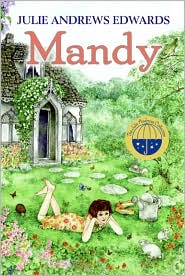
Mandy


Edwards, Julie. 1971. Mandy.

Mandy, I admit, was a childhood favorite of mine. There was just something so heartfelt, so vital, about this young orphan girl who was searching for something to make her feel complete and found it in having her own little secret garden and cottage. Her dreams, her determination, her stubbornness made Mandy work for me. It's not that you can't find those characteristics in other orphans--I can think of plenty and I'm sure you can as well. But I think the fact is that I personally "met" Mandy first. (I read it before Anne of Green Gables or The Secret Garden.) Mandy is very simply the story of a young girl, Mandy, growing up in an orphanage. A girl who is as happy as she can be--most of the time at least--but not as happy as she wants to be, needs to be in order to feel truly, deeply loved. She's a girl that longs for more, wants more. She discovers in part what she's looking for when she ventures over the wall surrounding the orphanage. She finds a forgotten little place--perhaps this place represents herself in her mind, I haven't really thought of it like that--that is crying out for love and attention. It's in sad shape. But Mandy is determined to "play" house quite properly. She wants to fix up the garden, fix up the yard, and fix up the house. And she'll stop at NOTHING to do it.

Mandy, unlike Anne in many ways, is a sad and lonely little girl. It's not that she couldn't make friends her own age at the orphanage, that she couldn't connect with others, it's that she doesn't want to. She's introspective, I suppose. Would prefer to be my herself in some ways, yet feels a terrible loneliness. A garden--of flowers and such--isn't going to take the place of a family, a friend no matter how much Mandy wishes it to.

I loved Mandy then, and I love Mandy now.

For those that aren't aware, Julie Edwards = Julie Andrews.

© Becky Laney of Becky's Book Reviews

Friday, May 09, 2008

Magic and Other Misdemeanors


Buckley, Michael. 2007. The Sisters Grimm: Magic and Other Misdemeanors.

Typically, I'm not a big fan of prologues. However, Michael Buckley's Sisters Grimm series always proves to be the exception to the rule. With just a page or two, he draws you into some rather intense and emotional scenes...whetting your appetite for more while never revealing too much. Even though I've seen the smallest glimpse of what is coming, I'm still on the edge of my seat. The books are always so action-packed, adventure-fulled, and suspensefully tantalizing that I've just got to read more.

Sabrina, Daphne, and Puck are back! It's always so interesting (to me) to see what trouble these three get in and out of in each novel. For those that may be new to the series, you should definitely read them in order. (This is the fifth novel.) But here's a brief refresher course. Sabrina and Daphne are sisters who have come to stay with their grandmother--Granny Relda--in the small town of Ferryport Landing. The three are descendants of the ever-famous Brothers Grimm. The town is a town where Everafters live--Prince Charming, Snow White, Three Little Pigs, Three Blind Mice, Rapunzel, etc.--and the Grimms are their keepers. They guard the town; they guard these fairy tale creatures from escaping the town's boundaries and preventing some of the darker ones from wreaking havoc on an unsuspecting world. This doesn't always make them popular. Some love them. Some hate them. Granny Relda is training her two granddaughters. And that gives you some idea of what these novels are about. They're intense-but-wacky treats for young readers. Action. Mystery. Humor.

Magic and Other Misdemeanors is about many things--their ongoing quest to save the girls' parents from their enchanted sleep, their ongoing quest to uncover the mysteries of the Scarlet Hand gang, about their adventures trying to save some burglaries of some local witches, and their troubles with the new city government and their new tax problem. The book is exciting. I'm not sure every reader will be as *thrilled* with the time elements. But they made my day. They really did.

http://www.sistersgrimm.com/books.html

The others in the series: The Fairy Tale Detectives, The Unusual Suspects, The Problem Child, and Once Upon A Crime. The sixth book Tales From the Hood came out May 1rst. My review will be coming soon, I promise!

© Becky Laney of Becky's Book Reviews

Thursday, February 15, 2007

Milkweed

Spinelli, Jerry. 2003. Milkweed.

Milkweed is a wonderful fictional account of the Holocaust. Set in Warsaw, Poland, our narrator is at first a nameless thief--a thief without a past, a family, or a name. Adopted by sorts by a gang of thieves--who steal to survive--he makes his way into the world. As he learns from the world around them, from his gang, from the people he encounters, he learns a few things. One, it is never a ‘good’ thing to be a Jew. It is dangerous if people think you’re a Jew. You get beaten up. You get killed. So his friends--one friend in particular, named Uri--makes up a story for this homeless boy. He’s a gypsy--being a gypsy is slightly safer than being a Jew--but not much. His created identity is Misha Pilsudski. But that is only one of the names he’ll wear throughout his life. Misha (formerly Stopthief) as the war progresses becomes a skilled smuggler who goes back and forth between the Jewish ghettos and the city. It’s a dangerous lifestyle. But these are dangerous times. Can anyone really be safe? In this harsh novel, our narrator learns some of the cruelties of life along with some of the small joys and pleasures. He learns to create and mold his own identity from the wreckage.

I think of all the voices that have told me who I have been, the names I’ve had. Call me thief. Call me stupid. Call me Gypsy. Call me Jew. Call me one-eared Jack. I don’t care. Empty-handed victims once told me who I was. Then Uri told me. Then an armband. Then an immigration officer. And now this little girl in my lap, this little girl whose call silences the tramping Jackboots. Her voice will be the last. I was. Now I am. I am. . . Poppynoodle.

Friday, February 02, 2007

The Miraculous Journey of Edward Tulane

DiCamillo, Kate. 2006. The Miraculous Journey of Edward Tulane.
This week you’ve noticed that sometimes I begin reading books with slight traces of prejudice...I can judge a book on its cover...(or by what it says on its cover)...or based on what I’ve heard about it from other sources. This can be a good thing or a bad thing. If a book is being praised by everyone as the best book the world has ever seen...it makes me slightly skeptical. It’s like the book-world goes through phrases where certain books and authors are above criticism. They’re considered supreme. To disagree with their pronouncement that the book is perfect...simply shows your ignorance. There were two books this year that everyone seemed to be talking about: one was Octavian Nothing by M.T. Anderson, the second was the Miraculous Journey of Edward Tulane. Well, for those that might have missed my ongoing scorn of Octavian Nothing, let’s just say that something quite different happened when I read The Miraculous Journey of Edward Tulane.

The Miraculous Journey of Edward Tulane is a book that is about one china rabbit’s adventures in a sometimes harsh world. He is commissioned by the grandmother for her granddaughter, Abilene.
Once, in a house on Egypt street, there lived a rabbit who was made entirely of china. He had china arms and china legs, china paws and a china head, a china torso and a chino nose. His arms and legs were jointed and joined by wire so that his china elbows and china knees could be bent, giving him much freedom of movement. His ears were made of real rabbit fur, and beneath the fur, there were strong, bendable wires, which allowed the ears to be arranged into poses that reflected the rabbit’s mood--jaunty, tired, full of ennui. His tail, too, was made of real rabbit fur and was fluffy and soft and well shaped. The rabbit’s name was Edward Tulane, and he was tall. He measured almost three feet from the tip of his ears to the tip of his feet; his eyes were painted a penetrating and intelligent blue. In all, Edward Tulane felt himself to be an exceptional specimen. (5-6)
He has everything a fine toy could want: fine clothes, a fine pocket watch, a girl who loves him, a nice home, a place of prestige among the other toys, and the love of his owner. Abilene loves him. Dotes on him. Treasures him. Yet Edward who has never known any other kind of life is unappreciative. It’s not that he dislikes his owner. The fact is that he’s disinterested in humans altogether. Preferring one over another has never occured to him. He has no love. He has no hate--unless its for neighboring dogs who try to pee on him or carry him in their mouths--or for thoughless maids who vacuum his ears and have the audicity to place him on the shelf with other dolls. He is not an emotional rabbit.
But that is just his first stop on a long journey. His starting place. When Edward accompanies the family on an ocean voyage, his luck begins to change. In the following days, months, years, even decades...his whole world is turned upside down over and over and over again. What he learns are valuable life lessons. What it means to love. What it means to lose someone you love. What it means to grieve. What it means to hope and despair. What it means to be content. What it means to be compassionate. He learns to be content with whatever his lot is in life. To be happy with the small things...no longer is pride in possessions or appearance of the utmost importance. Gone is his dignity. Gone are the days when he could gloat and brag. Whether he is filling the need of an elderly couple who treat him like a young child...or comforting a dying girl in her last days on earth...or companionship for a hobo and his dog...or joy for a young boy as he dances for crowds. If there is a human emotion, he’s felt it. He’s learned through experience what it is to be alive. Here is his journey: the good, the bad, the ugly. Full of sadness, disappointment, heartbreak, despair, but also full of hope and love and joy.
I must admit that for me this book is all about the ending. Yes, Edward Tulane suffers. He suffers a lot. The moment things begin to look up, the moment that he’s happy and all is right with the world, that’s when his world is turned upside down again. Yet, Edward Tulane NEEDED a happy ending. The world wants a happy ending. In life there are times of suffering that no one can really explain away. No one can take the pain away, but to live life without hope of a better tomorrow seems worse than not living at all. Hope is needed. Love is needed. Edward Tulane illustrates this perfectly.
All that being said is Edward Tulane a book really for children? Or is it a children’s book for adults? I can only say this. I loved it as an adult, but I think its darkness would have frightened me as a child. Would it frighten every child? No! But for some--like me--there were places and feelings that I was not ready to go. The fact that this poor toy rabbit suffers one torture after another...that the book depicts death, loss, hate, and despair...it wouldn’t have worked for me then. It would have been disturbing to me. (Heidi was disturbing to me as was Wizard of Oz). But for the right child, this is a great book. Not every children’s book can be loved and appreciated and treasured by adults....this one can.
Does this mean that this book is the most perfectly perfect book in the whole world? No. I still feel no one book is ‘perfect’ for everybody. Everyone is different. Everyone has different needs. Everyone has different tastes. Different life experiences. Different backgrounds. But I can see why some people are putting this one on the top of their ‘best of 2006’ lists.

Sunday, January 28, 2007

Markus + Diana

Hagerup, Klaus. 2006. Markus +Diana.

Klaus Hagerup, a Norwegian stage director and dramatist, has made a name for himself during the past decade as a writer of award-winning books for young people. Two of his books have been made into films. Five of his novels feature the unpredictable Markus Simonsen--a series that has gained enormous popularity in Norway and abroad

Despite the front cover, Markus + Diana is a novel that almost anyone can enjoy. Markus Simonsen is a great narrator. No one was a bigger coward than Wormster. Markus Simonsen who was afraid of heights and scared of the dark. Markus Simonsen who was sure lightning would strike him if he stepped on a crack in the sidewalk and who wouldn’t dare take an elevator, even if it would save his life. Markus Simonsen who was afraid of spiders and dogs and just about everything else you could be afraid of in this world. Especially girls. They scared the hell out of him and all they had to do to make him blush was look at him. And they did that a lot. Even though he wasn’t much to look at. Markus was the shortest, scrawniest boy in class 6B at Ruud Elementary School. He had sand-colored hair and thick glasses with brown frames. They made him look almost like an old man even though he was only thirteen. Actually, it wasn’t just the glasses that made him look older than he was. It was also all the anxiety he carried around with him. (7) Anxious though he may be, he has a best friend who helps him cope in this chaotic world, Sigmund, the tallest, most talented boy in the class (8). As his school year comes to an end and summer begins, Markus begins the adventure of a lifetime.

Tuesday, January 16, 2007

Mine Eyes Have Seen

Rinaldi, Ann. 1998. MINE EYES HAVE SEEN.

MINE EYES HAVE SEEN is a fictional portrayal of an historical event. In the summer of 1859, our heroine Annie Brown makes her way south with her sister-in-law to visit her father, John Brown, who under the name of Isaac Smith, has taken up residence near Harpers Ferry. Annie is fifteen, in love with life, and completely unsure about the sanity of her father. Annie has a love/hate relationship with this power-hungry, irrational abusive man. As do many of her brothers and sisters. Posted as watchdog, Annie provides readers an inside look into a dark period in American history.

Here is what the author's note has to say:

Fifteen years old in 1859, Annie came down from the Brown place in North elba, New York, with her seventeen-year-old sister-in-law, Martha, to help keep house for the Provisional Army and to make life at the Kennedy farm appear normal. She was assigned the task of "watchdog"--keeping watch on the porch for approaching strangers. The farm-house was soon full of men, eighteen in all (one arrived right before Annie and Martha left, two after). It was Annie's job to keep the men from running off, warn the inhabitants of the house when a stranger was approaching, and generally keep curious eyes at bay. John Brown could not have it known that so many men were living at the farmhouse, that he was receiving and storing arms there, and that some of the men were Negro. So Annie had her work cut out for her. Indeed, in some of the books on John Brown there are excerpts of Annie's account of life on the farm that summer. From these accounts, written by Annie in her later years when she was Mrs. Annie Brown Adams, I learned the nucleus of facts about that summer in Maryland, her description of some of the men, her chores, the newspapers her father subscribed to, the dog Cuffee, the description of the house, and, of course Mrs. Huffmaster.