Showing posts with label unreliable narrators. Show all posts

Saturday, September 07, 2024

67. Tig

Tig. Heather Smith. 2024. 160 pages. [Source: Library] [MG Fiction??????? MG Realistic Fiction?????] [4 stars]

First sentence: We're different now, me and Peter. That's the thing about being left behind--it changes your whole being. It's like how abandoned animals stop trusting humans. They go wild and crazy and when they're rescued it takes ages for them to calm down, to love and be loved again. Don't get me wrong, Uncle Scott is a decent guy and Manny makes the best grilled cheese I've ever had. But me and Peter? We're still in the hissing and biting stage.

My thoughts (preview): I am SO conflicted on this one. I am. On the one hand EXQUISITE, beautiful writing. On the other hand, the trigger warnings this book needs is longer than a Walgreens receipt. No lie. Here's the thing just because real life can sometimes have ALL THE TRAUMA (and then some) does not mean that most/many readers in the [so-called] target audience are mentally and emotionally prepared for the trauma in the pages. That's why I'm conflicted. I don't want to deny that bad stuff happens to kids. I might be a horrible person to think that the real target audience should be adults who work with kids--teachers, librarians, principals, counselors, foster parents, etc. I can see why books like this exist, even perhaps need to exist, but should it be sorted as children's or middle grade???? [Goodreads lists both in the target age range]. 

Premise/plot: Tig (and Peter) have been "rescued" from a dangerous situation. They've been living on their own in a house without electricity for months ever since they were abandoned. Now Tig (and Peter) will be living with Uncle Scott and his partner, Manny, but Tig equates this new situation as fake, too good to be true. She trusts NO ONE, not even a little bit. With Peter by her stand she holds onto a bit of dignity but not a smidge of hope for a new beginning. 

My thoughts (continued): The novel is on the shorter side--which is good. I think it's a potent novel. The emotions are so concentrated, so focused, so negative, so raw, that I wasn't aching for a longer read. There are layers. There are twists and turns. This is one of those where knowing that actual-actual-actual plot would spoil too much. So yes, one can say oh it's about a girl living with her uncle and his partner...but beyond that, well, you can't talk about the plot or the characters or the character development. 

I am again so conflicted with this one. There are scenes that are so hard to read because of how disturbing the situations are.

Quotes: 

The sympathy on his face leaked out his pores and dripped on the floor. I put on my imaginary boots and splashed in his pity puddle. He got drenched. I stayed dry. My yellow raincoat matched my boots.

We didn't know when the hour was up because seconds don't hang around, they tick away, and it's not like you can collect them and count them up. Once they're gone, they're gone.

If you were a clean slate, you wouldn't be you. And knowing who you are, it kind of helps you, you know? It's what keeps you going.


© 2024 Becky Laney of Becky's Book Reviews

Monday, November 07, 2022

144. The Girl in the Castle


The Girl in the Castle. James Patterson and Emily Raymond. 2022. [September] 368 pages. [Source: Library]

First sentence: It starts with a girl, half naked and screaming. Even though it's midtown Manhattan, in January, the girl is wearing only a thin white T-shirt over a black lace bra. She slaps at the air like she's fighting an enemy only she can see.

Premise/plot: Hannah Doe [Hannah Dory] is desperate for "you" to believe her. [By you, I mean both fictional characters in the book and, you, the reader.] Her story seems absolutely impossible. She lives in two times--2023 and 1347. So she says. In the 2023 setting, she's a patient in a Psych ward [Belman Pscyh]. It is not her first time. Almost always she's brought in by the police. In the 1347 setting, she's a peasant who would do just about anything to keep her family [what remains of it] from starving. Her village is divided into haves and have-nots, and, well, the baron has everything, and almost everyone else has nothing. Her plan has her rebelling against the powers that be--the baron--and stealing food. When she's caught--along with the other peasants she's convinced to join her in the revolt, well, things don't quite go according to plan. But even though she's gained a little in this process--at what cost. 

Jordan, a psych student [from a local college] is observing/assisting at Belman. He takes a VERY close interest in Hannah's case. [In my personal opinion, he crosses the line time and time again. He doesn't seem professional. Then again, he's just a student. But still. Like who's supervising him??? And can't they tell he seems to be falling in love with one of the patients????]

My thoughts: I read through most of this one in one day. However, I reached a point where I was running out of pages--chapters--and I knew that there was absolutely no way this one could resolve even remotely decently or satisfactorily. And by that I don't mean I had a preconceived notion of how the ending should play out. I didn't. I mean it was like the author(s) were rambling along and realized--OH NO, WE ONLY HAVE TWELVE PAGES LEFT TO RESOLVE THE STORY WHAT SHOULD WE DO. And then they just kept rambling on hoping that somehow, someway it would work itself out. But I feel like there was no plan. I think a crisis point was reached and then they brainstormed, HEY, WE'LL JUST USE THE LAST FEW PAGES TO FLASH AHEAD FIVE YEARS. Jordan and Hannah will see each other across the room and let's fade to black. That will be awesome, won't it??? NOPE. Not awesome.

I didn't love this one. Don't expect this one to be sci-fi or fantasy at all. This is 100% just a novel of someone having a mental breakdown and losing her complete grasp on reality. The narrator is unreliable from start to finish. [Which is one reason why the flash ahead several years ending just fell flat to me.] The language is definitely crude. I don't fault it for that. Just some readers like to be warned so they can make the best decision for themselves. 

I do think readers need to know in advance that it is very RAW and full of suicidal talk, suicide attempts, actual suicides, etc. It is a DARK and GRIM book. Again, some readers may seek this out and find it a good read. Others really do need a trigger warning because of the sensitive nature of this one.


© 2022 Becky Laney of Becky's Book Reviews

Wednesday, March 28, 2018

Misunderstood Shark

Misunderstood Shark. Ame Dyckman. Illustrated by Scott Magoon. 2018. Scholastic. 48 pages. [Source: Review copy]

First sentence: "Hello, people! Today on Underwater World with Bob, Fun Facts about--" SHARK!

Premise/plot: Bob, the narrator--both of this book and of Underwater World--shares a LOT of facts about sharks in this new picture book. Will readers believe Bob's facts and intuition OR shark's own spin of what is really happening?!?!
"Shark! The people are watching! Don't eat that fish in front of the people!"
"The PEOPLE can see me?"
"You misunderstood!! I wasn't going to eat him. I was just...showing him my new tooth!"
"Fun fact about that! Sharks can grow and lose 30,000 teeth in their lifetime."
This picture book goes on to show that ANYTHING can happen on live TV.

My thoughts: Misunderstood Shark is a great book. I loved the illustrations. (I also loved the design and layout. So clever!) I loved the narrative. What a great way to introduce the concept of an unreliable narrator! There's also the fun way it incorporates facts into the narrative.

This one might pair well with Jonathan Fenske's Barnacle is Bored or Plankton is Pushy. Or even Mo Willems That Is Not A Good Idea! Misunderstood Shark uses the live TV angle and That Is Not a Good Idea seems inspired by silent movies. Both are predictably tricksy.

Text: 5 out of 5
Illustrations: 5 out of 5
Total: 10 out of 10


© 2018 Becky Laney of Becky's Book Reviews
Thursday, September 28, 2017

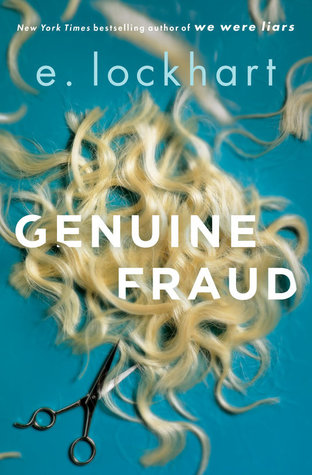
Genuine Fraud

Genuine Fraud. E. Lockhart. 2017. 272 pages. [Source: Library]
First sentence: It was a bloody great hotel.

Premise/plot: Looking for a book that is told completely in reverse chronology? Have I got a book for you. E. Lockhart's Genuine Fraud. Lockhart mentions two specific inspirations for her novel: Great Expectations by Charles Dickens and The Talented Mr. Ripley by Patricia Highsmith.
Mysteries perpetuate the status quo. Everything always wraps up at the end. Order is restored. But order doesn't really exist, right? It's an artificial construct. The whole genre of the mystery novel reinforces the hegemony of Western notions of causation. In L'Etranger, you know everything that happens from the beginning. There's nothing to find out, because human existence is ultimately meaningless. (70) ~ Forrest to Jules
Jules, the heroine of Genuine Fraud, sees herself as the center of an action movie.
She knew that women were rarely the centers of such stories. Instead, they were eye candy, arm candy, victims, or love interests. Mostly they existed to help the great white hetero hero on his [...] epic journey. When there was a heroine, she weighed very little, wore very little, and had had her teeth fixed. Jule knew she didn't look like those women. She would never look like those women. But she was everything those heroes were, and in some ways, she was more. She knew that too. (22)
I am the center of the story now, Jule said to herself. I don't have to weigh very little, wear very little, or have my teeth fixed. I am the center. (150)
My thoughts: Genuine Fraud isn't my typical book. I don't typically do psychological thrillers. I don't have a special love for unreliable narrators. But. There was something intriguing about E. Lockhart's Genuine Fraud. Something that kept me reading even if that something wasn't suspense. Was Lockhart hoping to lead her readers on a quest for the WHY? Or perhaps was it all about illustrating how there are no whys to explain away murderers actions?

I have not read The Talented Mr. Ripley. I've read reviews saying that Lockhart has borrowed every plot point, every character, directly from this book. And for people who've read both--it was too much echoing to be inspiration.


© 2017 Becky Laney of Becky's Book Reviews
Wednesday, August 01, 2012

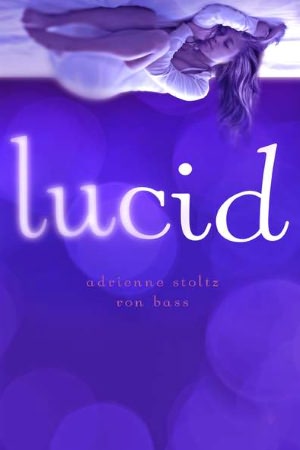
Lucid (YA)

Lucid. Adrienne Stoltz and Ron Bass. 2012. Penguin. 288 pages.

Right now, I'm Maggie. 

Maggie enters the same dream world every single night. Every single night she lives a day in Sloane's life. Sloane is a teenager living in Connecticut with her Mom, Dad, and younger brother. (She also has an older brother who has gone away to college.) Is Sloane's life perfect? Not exactly. True, she has some great friends, true, there's a new boy whom she has a love/hate interest in. His name is James. But she's still mourning the loss of her best friend, Bill. In fact, when the reader first meets Sloane she has just been asked to speak at a memorial celebration. Sloane also has a secret--a big secret. Every single night, she dreams a day in Maggie's life. No one would mistake Maggie's life for the perfect life. Her dad is dead, her younger sister, Jade, is having some health problems, and her mom, Nicole, is more of a hindrance than a help. But her Manhattan life is certainly far removed from Connecticut. Maggie is an actress. She is always auditioning for new roles and following her dreams. She's met two men Andrew and Thomas. One tempts her with auditions, the other offers only honest companionship: a willingness to listen, to respond with sincerity and honesty. As Maggie falls for Andrew, Sloane falls for James...will either girl get her happily ever after?

This book is certainly memorable! And it's definitely better than I expected!!! I would definitely recommend it. It was a compelling read--impossible to put down. And I cared about both Sloane and Maggie. While Andrew was my favorite love interest, James was also a good choice...at least for Sloane. I loved how their relationship began with debating literature.

I would have to say that this is one of my favorite YA reads of the year.

Read Lucid
  • If you like compelling YA Fiction
  • If you like the premise of lucid dreaming and dream worlds
  • If you were intrigued by the movie Inception
  • If you like fiction that questions the nature of reality

© 2012 Becky Laney of Becky's Book Reviews

Saturday, March 19, 2011

Nightlight: A Parody

Nightlight: A Parody: The Harvard Lampoon. 2009. Knopf Doubleday. 160 pages.

The hot Phoenix sun glared down on the car windowsill where my bare, pallid arm dangled shamelessly. My mom and I were both going to the airport, but only I had a ticket waiting for me, and that ticket was one-way.
I had a dejected, brooding expression on my face, and I could tell from the reflection on the window that it was also an intriguing expression. It seemed out of place, coming from a girl in a sleeveless, lacy top and bell-bottom jeans (stars on the back pockets). But I was that kind of girl--out of place. Then I shifted from that place on the dashboard to a normal position in the seat. Much better.

You'll either love it or hate it. Depending on how you feel about sparkly vampires. If you think of Edward as your ideal match? Probably not so much. But for the rest of us, those that see Twilight as something to be mildly tolerated--at best--to outright ridiculed, well, this is your kind of book.  And I found it to be just the right length. IF this one was as long as Twilight itself, well, it might have become old. But as it is, it's funny enough to entertain you for one afternoon. It's a satisfying read too.

Our narrator, Belle Goose, has just moved to Switchblade, Oregon, to live with her father, who has just gifted her with a U-Haul truck. On her first day of school, she is wowed by Edwart Mullen, a boy more interested in computers than girls. To her delight, this dreamy boy (she's the only one who finds him swoon-worthy) is in her biology class. Here's how she describes him, "I hadn't seen something this beautiful since I was a kid and the Skittles in my sweaty fist turned my hand rainbow." (18) She wants him, but does he want her? How far is she willing to go to get him to notice her? to talk to her? Will he play her games? Will he pretend to be the bossy, controlling vampire that she foolishly imagines him to be? 

I enjoyed Belle Goose. I enjoyed Edwart Mullen. I did. I liked him better than Edward. And I really loved the ending!!! This one had me smiling throughout. When I was looking for what quotes to include, well, I accidentally reread half the book. I think that says something about how well this one works--as a parody, at least. Like how Shamela complements Pamela. When it's done well, you almost wish there were more of these parodies being published.

When I saw him waiting for me outside the terminal, I walked towards him shyly, tripping over a toddler and soaring into a key chain display. Embarrassed, I straightened up and fell down the escalator, somersaulting over the roller luggage inconsiderately placed on the left side. I get my lack of coordination from my dad, who always used to push me down when I was learning how to walk. (5)


"It looks like your first class is English."
"But I've already taken English. A few semesters of it, actually."
"Don't be smart with me, young lady."
So she knew I was smart. Flattered, I conceded.
"You know what?" I said. "I'll go. What the heck, right?"
"Down the hall to your right," she told me. "Room 201."
"Thank you," I said. It wasn't even noon yet, and I'd already made a friend. Was I some kind of people-magnet? (10)

One girl walked with me to the cafeteria for lunch. She had brown bushy hair in a ponytail that was more like a squirrel tail in the context of her beady squirrel eyes. I thought I recognized her from somewhere, but I couldn't place it.
"Hi," she said. "I think I'm in all your classes." So that's why I recognized her. She reminded me of a squirrel I hung out with in Phoenix.
"I'm Belle."
"I know. We've introduced ourselves already. Like, four times."
"Oh, sorry. I have a hard time remembering things that won't be useful to me later." (12)

It was then that I saw him. He was sitting at a table all by himself, not even eating. He had an entire tray of baked potatoes in front of him and still he did not touch a single one. How could a human have his pick of baked potatoes and resist them all? Even odder, he hadn't noticed me, Belle Goose, future Academy Award winner. (13)

First, I told Tom and Lucy that Edwart saved me from a snowball. They weren't impressed. So I started saying Edwart saved me from a rock with snow around it, and, later, I started saying he saved me from an avalanche. One day, I said that Edwart ran with superhuman speed, stopping a car that was about to hit me with his superhuman strength. (33)


© 2011 Becky Laney of Becky's Book Reviews
Tuesday, February 16, 2010

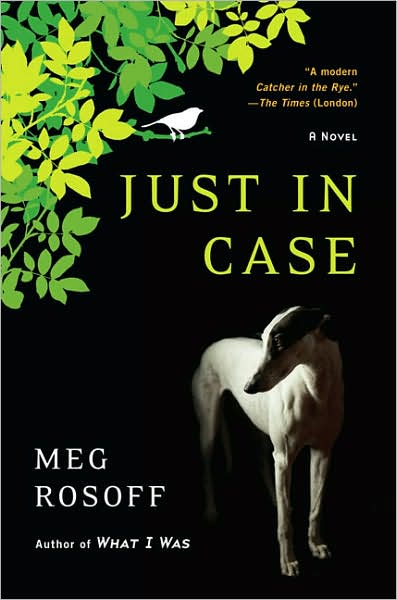
Just In Case (YA)


Just In Case. Meg Rosoff. 2006. Random House. 250 pages.

David Case's baby brother had recently learned to walk but he wasn't what you'd call an expert.

David Case has been coming undone bit by bit since the birth of his baby brother. Not that his parents have noticed. But when his baby brother nearly falls out of a window, David loses it completely. Instead of realizing that he's lucky. Lucky to have been there. Lucky to have noticed. Lucky to have stopped this tragedy in the making. He feels doomed. Hopelessly doomed. Like Fate has it in for him. Like it's just a matter of time until something horrible happens. Haunted by Fate, David Case reimagines himself. Creates a new identity. Justin Case. Maybe by "being" someone else, dressing like someone else, acting like someone else, he can outwit Fate. For example, David Case is not athletic. At all. But Justin Case? Well, he just went out for the track team. He's learning that he can be good at it too. The running. It may just enable him to run away from Fate all together. (Or can it?!)

Our narrator is very strange. And yet for some reason I found Just In Case to be a compelling read. (You can find a sample chapter here.) It's a strange book, and you might have to appreciate the strange in order to like it. But I think this one works for the right kind of reader.

© Becky Laney of Becky's Book Reviews
Friday, November 13, 2009

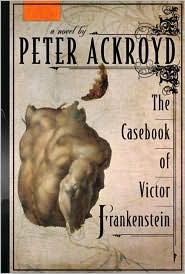
The Casebook of Victor Frankenstein


Ackroyd, Peter. 2008. The Casebook of Victor Frankenstein. Doubleday. 353 pages.

I was born in the alpine region of Switzerland, my father owning much territory between Geneva and the village of Chamonix where my family resided.

This book is a reimagining of Mary Shelley's Frankenstein. Our narrator is Victor Frankenstein. It weaves small doses of fact into the fiction by having Victor become friends with Percy Bysshe Shelley, Mary Shelley, Lord Byron, and John William Polidori. Sounds interesting, right? Like it might have some potential.


This might be a good time to talk about expectations. I had high hopes for this one. I *really* wanted to like it. I wanted to connect with this one right from the start. I wanted it to be really smart and clever and fun. I wanted it to be engaging. Perhaps if I'd had lower expectations, I wouldn't have been so let down.

I can't say if it's fortunate or unfortunate, but the jacket flap is really something else. Containing phrases like: "tour de force" "world's most accomplished" "incomparable" "brilliantly reimagines" "penned in period-perfect voice" and "sure to become a classic of the twenty-first century." (I've long thought that the phrase "sure to become a classic" should be banned from all jacket flaps and blurbs.)

Did I like this one? Not really. Why didn't I like this one? Well, it disrespected Mary Shelley's original. I could live with it playing around with the original novel. (Elizabeth being his sister and not his love interest. There being different murder victims than in the original book.) I could even come to like the directions and twists this one took. The character development of this Victor Frankenstein. The big twist did make me think. It is still making me think. (I'm still trying to puzzle out if it really truly works as a whole. Knowing the ending, does all that come before still work. Or does it all fall apart?) So the fact that this one wasn't faithful to Mary Shelley's Frankenstein didn't bother me all that much. But it disrespected history itself. By having Victor Frankenstein interact with real people--with Percy and Mary Shelley, with Lord Byron, with others of the time period you add in a whole other level.

Yes, this book is fiction. It never claims otherwise. But what few facts find their way into the book get so compressed and distorted and out of order that it was just weird. At least weird to me. It is fiction. The author can do anything he wants. It's his choice, his right. Will this bother most readers? I don't know. Probably not. And I suppose that's the good news.

Plus, this one got disgusting. Unlike the original which tended to leave things to your imagination, this one got too detailed and disturbing. (I could choose a scene or two to describe, but I don't really want to go there. I'm not comfortable going there.)

Is it readable? Is it compelling? I read it in two days. Half the time I was hating it, but I still kept reading. This isn't a book I wanted to give up on in the middle, you know, just in case it got good and redeemed itself by an oh-so-amazing ending. How easy is it to read? Well, I'd say it was about as challenging as the original novel. Ackroyd did fairly good at imitating Victor Frankenstein's complex style. Is this one for you? Maybe. Maybe not.

© Becky Laney of Becky's Book Reviews

Saturday, June 06, 2009

Liar (YA)


Larbalestier, Justine. 2009. (October Release). Liar. Bloomsbury. 388 pages.

I was born with a light covering of fur. After three days it had all fallen off, but the damage was done. My mother stopped trusting my father because it was a family condition he had not told her about. One of many omissions and lies. My father is a liar and so am I. But I'm going to stop. I have to stop. I will tell you my story and I will tell it straight. No lies, no omissions. That's my promise. This time I truly mean it.

Is Micah Wilkins, our narrator, a compulsive liar? Is she trustworthy? Is she sane? Divided into three parts, (Telling the Truth, Telling the True Truth, and The Actual Real Truth) Justine Larbalestier offers readers an always compelling, somewhat-unbelievable, but oh-so-thrilling read. When we first meet Micah, she's just learned something horrible: her boyfriend, Zach, is dead. Murdered. Everyone is stunned including Sarah, Zach's actual girlfriend, and Tayshawn, Zach's best friend. Who is Micah? Where does she fit in? Everywhere and Nowhere. As his after-hours girl--well, lover--she doesn't run in the same circles as Zach. She's little better than a freak at school. A girl with extremely short hair who doesn't wear makeup, who doesn't look or act like the other girls. A girl who once for a few days convinced everyone that she was a boy.

It's true that Micah feels out of sorts and all in-between. Not white enough to be white. Not black enough to be black. Not feminine enough to fit in with the popular girls, the gossipy girls. She doesn't feel pretty, that's for sure.

She is good at many things: lying, for one, biology, for another, and last but certainly not least, running. She is faster than fast. At least that is what she tells us. Why doesn't she have friends? Is it her appearance? The fact that she likes attention and tells outrageous lies?

What's her secret? Does that secret involve murder? What's the real story? Can we ever know the truth?

I liked this one mostly. It was definitely intense and suspenseful. It definitely made me think. It's a complex book, which is always nice to see. But I'm not sure I liked it, liked it. I'm not sure I want to hang out with Micah any time soon. I don't think we're meant to.

This is one of those books that could be easily spoiled for readers by too much description. So I'm purposefully keeping it short. The more I describe my thoughts (and reactions) about Micah, the more preconceived ideas and notions you might have to carry with you if you decide to pick it up on your own.

I am not quite sure I get the cover though. I'm not saying the US cover isn't attractive enough in its own little way. But it doesn't take the reader very long to discover that the main character, Micah, is black with very short, very cropped hair. True, the narrator is a compulsive liar, so maybe readers should doubt her when she says that she is black with short, cropped hair and can sometimes pass as a boy. But if this girl on the cover is meant to be Micah, well, there's nothing freaky or awkward about her. And even if you don't consider all that, I'm not sure that this cover matches the mood of the book. Do those eyes and that hair say it's a dark-mysterious-thriller?

The Australian cover.


© Becky Laney of Becky's Book Reviews

Tuesday, September 16, 2008

Identical


Hopkins, Ellen. 2008. Identical.

If you're familiar with Ellen Hopkins' other novels (verse novels)--Crank, Burned, Impulse, and Glass--then you know what to expect from her newest novel, Identical. For those that aren't familiar, you may find yourself in a state of shock at the issues Hopkins' touches on in her novel: alcohol, drugs, cutting, eating disorders, suicidal thoughts (and attempts), and sex. And of course some may squirm at the language.

No doubt about it, her novels won't suit everyone's tastes. Yet her novels do have fans. And there's a reason--her novels are powerful, very very potent. Raw. Emotional. Very gritty. Very in-your-face. There's always a depth and complexity to the characters that make them compelling. (Even if you don't happen to *like* the characters. You can't deny that they're humanly drawn.)

Identical is a shocking book in many ways. It deals with secrets, lies, brokenness, betrayal. It has more than angst, it has burning and haunting pain on almost every single page. It focuses on a dysfunctional, abusive family with much to hide--the Gardellas. A father who's a district court judge. A mother who's running for Congress. Our narrators are two teen girls Kaeleigh and Raeanne. These two angry-and-bitter narrators share a common enemy: their father and mother.

I hesitate to say much more because really in this instance, the less you know going in...the better the book will read.


© Becky Laney of Becky's Book Reviews

Wednesday, April 16, 2008

Travel the World: Australia: Dreamrider


Jonsberg, Barry. 2008. Dreamrider.

I killed two kids at school today.

Michael Terny is our narrator. He's fat. He doesn't fit in. The other kids are cruel, cruel, cruel. But Michael has a secret. Something only he knows. He has a way of 'getting back' at those that are so mean to him. A secret gift. A secret weapon. He can change reality in his dreams. What he dreams, comes true. Or so he thinks. He's what you might call a lucid dreamer. Someone who has control over what happens in their dreams. He can "heal" or "destroy" as he sees fit.

Sounds too good to be true, doesn't it? A bit too much wishful thinking? Well, you'll just have to see how fantasy and reality blend together in this new book.

It is difficult, in my opinion, to review a book such as this one. I'm afraid that if I say too much, it will "ruin" the book for others. But I'm afraid that if I say too little that I won't be doing the book much justice at all.

S
e
m
i

S
P
O
I
L
E
R

It's a book that isn't quite what it seems. Would pair well with Invisible by Pete Hautman.

© Becky Laney of Becky's Book Reviews