Showing posts with label "B" Titles. Show all posts

Thursday, June 11, 2009

Body of Christopher Creed (YA)

Plum-Ucci, Carol. 2000. The Body of Christopher Creed. Hyperion. 331 pages.

I had hoped that a new start away from Steepleton would make my junior year seem like a hundred years ago, rather than just one.

To say that The Body of Christopher Creed is haunting is an understatement. It is compellingly atmospheric. It completely draws you in. It's nearly impossible to put it down. Our narrator, Victor "Torey" Adams, is giving readers a personal glimpse into his nightmare. When the novel opens, we meet Torey. A new student--a senior--at a boarding school. We learn that there's something from his past that still haunts him. Maybe not quite so torturously as it once did. But something still holds him back from being that "normal" kid from two years ago. The football player.The musician. The boyfriend. The oh-so-normal, somewhat-popular guy. What is this something? Or should I say who is this something?

Who is Christopher Creed? Why should the reader care? The reader only sees Chris Creed through the eyes of various characters. We get impressions of him from Torey, from Bo, from Ali, from Alex and Ryan, etc. According to his classmates, Chris was weird. A definite freak. Someone who was out of touch with reality. A guy with a big, goofy grin who never knew when to shut up. Who never could quite sense when he was being obnoxious and annoying just by being there, by being himself. According to his mother, Chris was a happy, well-adjusted teen. He had no reason whatsoever to runaway from home. No reason to commit suicide. Therefore his disappearance must mean foul play. Surely, Chris, her very own son, would never of his own free will vanish. Who's the primary suspect? Well, that would be Bo, a boy from the wrong side of town. In this small-town, apparently, there is a lot of prejudice going on. It's nothing to talk trash about Boons, (folks from Boondocks; aka poor and trashy side of town, you know, where everything bad happens.) The whole town seems to have an us-versus-them mentality which is just freaky to be a little honest. But Ali and Torey believe Bo is innocent. In fact, there is a lot of disagreement. You've got folks thinking he was murdered. Folks thinking he committed suicide. Folks thinking he just ran away to get away from his controlling parents. Which of these theories is the truth? Will anyone ever be able to puzzle out the truth?

All of this is revealed through Torey. His written account of the events that led him to where he is today...to who he is today.

Writing it was supposed to bring me some quote-unquote "healing," at least that's what Dr. Fahdi had said. Maybe it did; who knows? I got a load off my chest. But I was looking for other things, more important things, like the peace you get when things make sense and life seems fair. I never got that peace. Some nights I would remember and write and remember and write, and I was sure I was just being Dr. Frankenstein, trying to re-create a dead human. The dead never come back the way they were in life. Some nights I got convinced I was creating a monster.


The story is a complex blend of realistic fiction and mystery. (It'd also be right at home in the coming-of-age genre.) And It's just-right in the drama department. Plum-Ucci is a great storyteller. The way she weaves together the story, the way she reveals it bit by bit. It's gripping and intense that's for sure. It's atmospheric as well. I feel this town almost has a persona of its own in an eery kind of way.

This book is very well done. It is easy to see why this one earned a Printz Honor.


© Becky Laney of Becky's Book Reviews

Friday, January 23, 2009

Because I Am Furniture


Chaltas, Thalia. 2009. (Pub April 2009) Because I Am Furniture. Viking. 356 pages.

I am always there.
But they don't care if I am
because I am furniture.

I don't get hit
I don't get fondled
I don't get love
because I am furniture

Suits me fine.

Anke has a difficult home life, though that is putting it mildly. Her father is abusive. She sees all. Hears all. Yet though a witness, she's somehow avoided being the subject of his abuse. (Though witnessing it is damaging enough as it is.) Can a teen girl break out of her silence and get help for her troubled family?

Because I Am Furniture is a verse novel about hard issues: physical, verbal, and sexual abuse. With all the negative going on in her life, Anke finds great joy in the one positive of her life: volleyball. Can what she learns on the court change her life off the court?

Here's one of the poems I enjoyed from the novel:

They call us
Nopes
the "out" crowd,
we don't fit their
dog-show guidelines
wealthy-beautiful.

We call them
Yups
they have to
all agree,
yup each other
every day on every thing.

And we say
Nope, don't
want any part
of your Yuppitude
so tight
society will burst
with any change
of thought.

But being a fractured, momentary gathering
and not an actual collective,
we say
Nope
individually
with scrambled cadence

and their
Yup
is way
louder.

(25-26)

Other reviews: Teen Book Review, The Compulsive Reader, Laura's Review Bookshelf, Flamingnet, Karin's Book Nook.


© Becky Laney of Becky's Book Reviews

Thursday, December 25, 2008

The Boy Who Dared


Bartoletti, Susan Campbell. 2008. The Boy Who Dared.

Historical fiction. Based on a true story. Set during World War II. Set in Nazi Germany. This one had all the outer fixings of a novel I'd just love. (Though to be honest, I'm more drawn to memoirs than fiction novels about this time period.) And I did like it. I didn't love it. But it was good. It's a story of courage, of boldness, of standing up and being strong. Could you, would you, do the same? Our hero, our narrator, is Helmuth Hubener. A boy growing into a man during Hitler's reign in Germany. He's not Jewish. He's Mormon. (Or if you prefer LDS). Yet he's so strongly convinced that he must do what is right, what is just no matter the cost to himself. No matter that technically speaking doing what is morally 'right' is legally wrong since Hitler came to power. Powerful story really when you think about it. It was the way it was told that perhaps made this one a 'like' not a 'love.' Still, it's a story worth reading.

© Becky Laney of Becky's Book Reviews

Wednesday, November 12, 2008

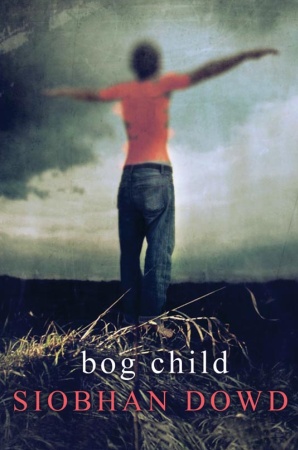
Travel the World: UK: Bog Child


Dowd, Siobhan. 2008. Bog Child.

Don't hate me. But I didn't love Bog Child. I stuck with it because I'm stubborn, not because it was going "good" for me. I found it confusing and a bit on the boring side. Abby has a generally positive take on the novel, but admits that, "This book is not for everyone, but those who can stick with it through the unfamiliar Irish slang and dialog will find a touching, dramatic story of family and sacrifice. Siobhan Dowd's writing is poetic and she builds tension throughout the book. This is an unforgettable story set during a time rife with passion and turmoil."

The novel has received four stars in the review journals. (Kirkus, School Library Journal, Booklist, Publishers Weekly). And those reviewers obviously saw much too praise. It also made Amazon Editors Top 10 List for teen lit. And Publisher's Weekly's Best of 2008 list. I'm sure it will be making many other "best lists" and might even merit an award or honor. [The Printz is notorious at times for choosing books that I wouldn't choose in a million years. Not all the time. Just some years.]

What is it about? A young man, Fergus, on the verge of adulthood discovers half-a-body. The body of a seeming child. (Minus the legs. Plus an ancient-looking bangle). The archaeologists who come to collect the body--and study it--feel it might date from the Iron Age. First century A.D. (What I suppose you'd call C.E. now in these days of political correctness.) The novel is set in Ireland in 1981.

The book is a complex-and-tedious weaving of two or three story lines. Fergus has a brother in prison on a hunger strike. To "help" his brother out, he agrees to smuggle packages across the border at some risk to himself. He doesn't know what he's carrying. He doesn't want to know either. But he fears that it might be materials used in making bombs. During the course of a few months, Fergus begins having dreams about "Mel" the body they discovered. Fergus also falls for a girl, Cora, and has a timid courtship that isn't quite fully explored.

The book offers little in explanations. It presumes that every reader--no matter the age--will have enough background on the troubles haunting Ireland. Their conflicts with the British. In particular the terrorist actions of certain groups within Ireland. I was clueless. I'd imagine many readers would be clueless. And Siobhan Dowd could have easily given just a few brief paragraphs to orientate American readers with what was going on. True, the author is dead. But the publisher might have foreseen that readers might have trouble jumping in on this one.

For a book as complex as this one to work for the reader, you have to care. Care about the characters. Care about the action. Care about something. Obviously Dowd got many readers--at least the ones with review columns--to care and some deeply so. But not this reader.

To read a somewhat spoilerish but thorough review read the Guardian's thoughts on the novel.
Teenreads.com


© Becky Laney of Becky's Book Reviews
Wednesday, August 13, 2008

Breaking Dawn


Meyer, Stephenie. 2008. Breaking Dawn.

What more can be said about Breaking Dawn. Chances are you either a) have already read it and are very opinionated (loved it; hated it) b) are planning to read it and have already read other spoiler reviews (like all the ones on Amazon) c) are planning to read it and are avoiding all reviews just in case they have some spoilers d) have no interest in reading it at all. (So far--on Amazon--as of Wednesday, September 13th 10AM Central time, it has received 2, 251 reviews: 925 5 star reviews, 317 4 star reviews, 197 3 star reviews, 250 2 star reviews, and 562 1 star reviews.) There will be spoilers.

I have extremely mixed feelings on Breaking Dawn. Probably the biggest problem with the novel is that it defies logic. And I'm not just talking because they're werewolves and vampires. In the first three novels, Meyer has created--for the most part--a very realistic accounting. Yes, there are vampires and other supernatural beings, but they're written in such a way that they feel real. It reads like typical realistic fiction. It's not hard to swallow, to suspend your disbelief. Yes, Meyer's fictional world doesn't quite match up with reality, but it has its own set of rules to go by. Its own logic. Not in Breaking Dawn.

Breaking Dawn reminds me of the movie Soap Dish. It almost seems to be a spoof of the first three novels. The rules are being rewritten as you go. The rules and logic are very slippery. Almost all of the logic that has evolved in the first three novels and in the first few chapters of Breaking Dawn even will be tossed out the window by book two. The only explanation used by the characters are that they didn't know. They're just as surprised as the rest of us at the strange goings on in the plot. Meyer really doesn't give us much more to go on. We're just supposed to believe so thoroughly that Bella--both as human and vampire--was so one-of-a-kind, so unique, so magically supernatural that of course she can do anything she wants. She's had the power all along. In New Dawn and Eclipse and even Twilight, Meyer backs up her supernatural beings with supernatural mythology and logic. She explains why they exist, how they exist, gives them purpose, defines their limitations, explores their needs and intents. Not so with Breaking Dawn. There are no answers to the questions.

The other reason is that Breaking Dawn is just so weird, so very very weird. The fast-acting, miracle-gro vampire sperm that compacts a nine month pregnancy into three or four weeks. The wonder-baby that develops from a newborn to a preschooler (almost looks 5) in just five months. We're told in the end that she'll be fully grown (an adult) in just seven years. Jacob's imprinting on the baby. Edward calling Jacob both "brother" and "son." Jacob's living in the Cullen house. Edward asking Jacob at one point to have sex with Bella and give her some pups. The all-night sex marathons just a week after giving birth. I could go on and on and on.

Bella. I've had my fair share of issues with Bella. She was whiny. She was too dependent. She was too immature. She was manipulative (though to be fair all the characters have been manipulative.) Bella has never been the "role model" teen in my opinion. Her whole world is Edward, she idolizes him. She places him so far above herself in the first three books--and in half of this book as well--that it's just too unhealthy. She sees him as perfect, flawless, the one and only reason for her existence. And that's just dangerous as we saw in New Moon. In some ways, becoming a vampire corrects some of these Bella-flaws. She's more of his equal now. But the doting has only intensified. The scary thing for me is the portrayal of their love. For me it isn't their age. It's not that they're 17-and-18 and getting married. They're going to be trapped at those ages for eternity. And age is just a number after all. (Though I must say that if it was any other "human" experiencing that much panic and anxiety and cold feet and still going to go through with the wedding anyway it would be a big mistake. I don't typically buy into the hidden-or-not-so-hidden messages in books. But the message of this one early on could be frightening; ignore your own feelings, ignore your intuitions and judgment, and get married anyway. That would be frightening for any age.) No, the issue for me is how sickeningly sweet, perfectly perfect, oozing in euphoria the happy couple is at all times.

"Happiness was the main component in my life now, the dominant pattern in the tapestry." (527)

"And then Edward hugged me tightly, because nothing pleased him more than my overwhelming ecstasy in this new life. And I was euphoric the vast majority of the time. The days were not long enough for me to get my fill of adoring my daughter, the nights did not have enough hours to satisfy my need for Edward." (527)

I believe that people can be happy in their marriages. But overwhelming ecstatic and euphoric the vast majority of time on a day in day out forever and ever basis? Not likely. Problems happen. Arguments happen. You get annoyed. You get frustrated. You have bad days. You have good days. You have so-so days. Life happens. Life is not perfect. No one gets everything they want. But I don't think its possible--single or married--to go through life "overwhelmingly ecstatic." Some of Bella's descriptions are just over-the-top sickeningly sweet.

And it's not like I want Bella to be miserable. Or for Edward to become un-perfect in her eyes. Or vice versa. But still.

Yet, if you could go outside yourself you could find yourself enjoying it in a very amusing way. Yes, it's not believable. Yes, it's very very weird. But entertaining? I must say that it is.

© Becky Laney of Becky's Book Reviews

Friday, July 04, 2008

Big Fat Manifesto


Vaught, Susan. 2008. Big Fat Manifesto.

This is the third 2008 novel I've read this year (within the past two weeks actually) that deal with "weight" in one way or another. Each of these books (Looks, Artichoke's Heart, and Big Fat Manifesto) is unique from the others. Each is in some ways flawed. Some more than others, but still none is perfectly perfect.

Jamie D. Carcaterra is a writer on her high school's newspaper. At the beginning of her senior year, Jamie starts a new column. A column she hopes will win her the National Feature Award for outstanding journalism. Her column is a manifesto of what it's like to be a "fat girl."
"I am so sick of reading books and articles about fat girls written by skinny women. Or worse yet, skinny guys. Tell me, what in the name of all that's cream and chocolate do skinny guys know about being a fat girl?
The fat girl never gets to be the main character. She never gets to talk, really talk, about her life and her feelings and her dreams. Nobody wants to publish books about fat girls, by fat girls, or for fat girls, except maybe diet books. No way." (1)
Thus begins the book and her first "fat girl" column. Jamie is a great character. She may be a fat girl but she's not your stereotypical fat girl: lonely, friendless, dateless and a person who is lacking in ALL self-esteem and confidence.
Let me shoot down a few myths right now, before you even set up a stereotype:

Myth number one: Speak gently to poor Fat Girl. She can't help her terrible disability.
Myth number two: Poor Fat Girl needs to be educated about her problem.
Myth number three: Poor Fat Girl laughs to hide her tears.
Myth number four: Poor lonely Fat Girl can't get a date.
Myth number five: All poor Fat Girl wants to do is lose weight. (2-4, largely abbreviated)
Chapter one: "I have two must-achieve-or-die goals this year. The first do-or-die is probably the easiest: Write the best Fat Girl feature series ever, expose the politics and social injustices of being a fat female in today's world, and win the National Feature Award to ensure my collegiate funding. The second do-or-die, related to the first, is earning admission to Northwestern University." (6)

Jamie's voice is wonderful. I loved it. I especially especially loved her Fat Girl columns. They were true. They were authentic. They were needed. The novel focuses on Jamie's life. Her mostly crazy, often chaotic life where she is juggling writing, acting, and studying on top of having a boyfriend (Burke) and several girl friends (NoNo and Freddie). Her parents hardly enter into the picture at all. The central plot of this one is her relationship with two guys: Burke and Heath, her editor-in-chief. Burke, her boyfriend, is a Fat Boy himself. However, he decides to have weight-loss surgery. A decision that Jamie can't quite support with her head and her heart. Surgery is risky and dangerous and so drastic a step, isn't it? And if he has the surgery, how much of him--his personality, his life-style--will he lose along with all those pounds? Will she still be his fat-girl goddess once he's a muscular hunk? Heath, her editor, becomes a close friend. He's there for her and with her when all the chaos of her life begins to unfold--Burke's surgery, the columns continuing media circus, etc. (The local media has picked up on her "fat girl" columns and decided that Jamie is dangerous and promoting a "fat" lifestyle just because she's not a lonely, depressed, pitiable girl with NO self esteem or self-worth. Because she's fat and okay with being fat...she must be a menace to society, right????)

I loved almost everything about Big Fat Manifesto. However, if Big Fat Manifesto has a weakness then it is in the character development of minor characters. NoNo and Freddie are nothing more than one-sided stereotypical characters. (Freddie the side-kick lesbian; NoNo the sidekick vegetarian, animal-rights protester.) They lack the "flesh" they need to stand on their own. Burke, Jamie's boyfriend, is more developed than Freddie and NoNo, however, he doesn't have that sparkle and depth that a proper boyfriend should. Heath, on the other hand, seems to have a charm and substance and vitality that I noticed from his first introduction. But Jamie? Jamie's development is complete.

Other reviews: Melissa in Estella's Revenge, TeenReads, Teens Read Too, ProperNoun, Tales from the Rushmore Kid, MatriFocus, Curled Up, Oops, Wrong Cookie, Book Divas, Alternative Teen Services, Review & React, Abby the Librarian,
*if you've reviewed this one, you can leave a link in the comments and I'll add you in*

Author's site and blog and interview

© Becky Laney of Becky's Book Reviews

Wednesday, May 07, 2008

Bronte's Book Club


Gregory, Kristiana. 2008. Bronte's Book Club.

Bronte's Book Club is a fun title that is just right for the eight to ten crowd. Bronte Bella has just recently moved with her family from New Mexico to California. Wanting to use the move to her advantage, Bronte is determined to make a new start. Typically shy and hesitant in the friend department, she wants more than anything to make a few friends before school starts in the fall. She's nervous but brave. After a few days in her new house, she's inspired to start a book club. A club that will meet every Wednesday for the rest of the summer. She makes fliers and hangs them up around town. But what Bronte realizes is that the perfect book club doesn't just happen overnight. Friendships don't happen overnight either. The book Bronte chooses? Island of the Blue Dolphins by Scott O'Dell.

Books. Friendship. Summer adventures. And snacks. This is perfect light reading for young readers.

© Becky Laney of Becky's Book Reviews

Tuesday, May 06, 2008

The Battle of the Labyrinth


Riordan, Rick. 2008. The Battle of the Labyrinth.

Oh my. Trust me it's good. Really really good. The Battle of the Labyrinth is the fourth novel in the Percy Jackson series, a contemporary fantasy series built around the premise that the Greek gods are alive and well and living in modern-day America. The others include The Lightning Thief, Sea of Monsters, and The Titan's Curse. Rick Riordan is one of my favorite authors. His Percy Jackson novels in a way illustrate the ultimate when it comes to the can't-put-downability experience. Once you start, you really can't stop. They're just that good, that suspenseful, that magical.

What can I say about The Battle of the Labyrinth? It's good. It's intense. It's very intense. There really isn't a calm or dull moment in its 361 pages. The story? The plot? Well, I won't be spilling that here. For one, I don't think you'll need the incentive to go and read this one if you've read the other three. You'd read it no matter what I said. You might already have a copy in hand or on order. If you haven't read any of the Percy Jackson books yet, you really need to correct that...and soon! It's fun and educational. The weaving of Greek mythology into a modern-day adventure story starring unforgettable characters...is just brilliant. Each novel adds more depth, more substance, more meaning into the story. New characters, new plot twists, new ways of making this series oh-so-magical.

First sentence: The last thing I wanted to do on my summer break was blow up another school.
Last sentence: "Come inside for cake and ice cream," I said. "It sounds like we've got a lot to talk about."

© Becky Laney of Becky's Book Reviews

Friday, May 02, 2008

Blackness Tower

Blackness TowerCarl, Lillian Stewart. 2008. Blackness Tower.
Review by Becky Laney.

What can I say about Blackness Tower? On one hand, it did keep me reading. I didn't read it all in one sitting, I read it in three, but it was always pleasant to get back to. I liked reading it. It wasn't a not-that again experience. It held my interest for the most part. And I wasn't ever bored with it. On the other hand, it was one of those almost books. Maybe you know the kind. There were some things I liked about the novel, but there was just something about it that kept me from loving it. Something that kept me from getting excited--really excited about it. It was almost a romance novel, but not quite. It was almost a fantasy book, but not quite. Okay, that last one isn't really fair. But fantasy isn't the right word either. It was all about the paranormal. Mostly. So it's a paranormal-mystery-romance hybrid. An American woman comes to Scotland, comes to explore Black Ness Tower because she's been having dreams and visions. There she meets three men. All seem to be attracted to her, seeking her out in some ways, but all three seem cloaked in mystery as well. All loosely-connected to the same mission she's on. And then there are the spooky girl characters. Essentially the main character is confused and frustrated and has trouble figuring out who to trust and what's really going on. As I said, it kept me reading. But somehow it was a bit disappointing over all. Not terrible. Not awful. But definitely just an okay read for me. I don't regret reading it. I wanted to know what happened. But the way the mystery comes out, the way it all unfolds, it just left me personally a little empty. I think I started out connected with the characters, and then somewhere in the middle, I became slightly disconnected.

Your response, your reaction could be completely different than mine. Especially if you're really into paranormal romances. Though it lacks smut. If it had been a true paranormal romance, then there would have been some smut.

© Becky Laney of Becky's Book Reviews

Monday, February 19, 2007

Black Duck

I've mentioned this before, but let me repeat myself...a test of a good book...particularly a good historical fiction book is when the reader picks up a book ABOUT a subject or event that they have had little or no interest in reading about before and having the book completely draw them in. In that regards, BLACK DUCK by Janet Taylor Lisle is a great book.

Lisle, Janet Taylor. 2006. BLACK DUCK.

On December 30, 1929, the Coast Guard killed three suspected rum-runners on the vessel Black Duck which they claim failed to stop (and surrender) when warning shots were fired. This newspaper account in the Newport Daily Journal introduces us to the book Black Duck. David Peterson is a young boy in town looking for a story. He dreams of one day being a journalist. And he is looking for any chance to get away from the family business of lawn care. So David is a boy on a mission:

A rumrunner had lived in town, one of the notorious outlaws who smuggled liquor during the days of Prohibition, that was the rumor...Someone said to ask at the general store across from the church. It would be a miracle if the man was still alive, David thought. He'd be over eighty. If he were anywhere, he'd probably be in a nursing home by now. But it turned out he wasn't. He still lived in town. Ruben Hart was his name. The number listed in the telephone book doesn't answer. There is an address, though. (3).

Looking for a story to report, he finds so much more. He finds a story that has yet to be told. Ruben Hart was just a young boy at the time. He had no intentions of participating in anything illegal. Witnessing anything illegal. But sometimes you don't have a choice. When Ruben and his friend discovered a dead body on the beach...it was the beginning of a sometimes dangerous, sometimes exciting adventure. It is book about decisions. Ethical decisions. Moral decisions. Taking a stand. Is Ruben the kind of boy who sees things as black and white? Or is he the kind of boy who sees a gray foggy area between the two? Friendships of all sorts will be formed and tested throughout the course of the novel.

The framework of the story is integral. Ruben is fleshing out stories that no one else knows. He's going beyond the meager facts of a few newspaper articles. He's going back to the beginning...well his beginning of the story. As he shares his story from the summer of 1929 through that fateful December day, he's sharing his life story with David. It's a process that is connecting the two, forming a new friendship. Fulfilling needs neither one was aware of. But it's a beautiful thing. A healing thing.

Behind the scenes of my reading (selection) process....OR why I loved to be surprised

Here are four of the reasons why I picked up this book I was uninterested in...
1) It appeared on Kirkus Reviews Best Books of 2006
2) It appeared on the Best Books for Young Adults (BBYA 2007) list
3) It appeared on the VOYA Top Shelf Fiction for Middle School Readers 2006 list
4) It appeared on the Texas Lonestar Reading List for 2007-2008.

The fifth reason I picked up this 'uninteresting' book was because it was available at my local library and it was one of the few 2006 titles left on the shelves. (At least that I hadn't already read in previous months.)

My only other exposure to this book was by reading The Golden Fuse Awards 2006. (Fuse #8's personal picks of the year.) It was mentioned as one of the books in the category of: The "Kids Really Want To Read About This?" Trend.

So I knew when I saw the book on the shelf that I would check it out. I knew that I would read it. But I didn't expect much from it. I didn't expect to hate it. But I didn't expect to love it either. Here is what the back cover says:

What happened next that spring afternoon is something I know Jeddy remembers. I can see us standing there, two raw-boned boys beside the bootleg crate, seagulls wheeling overhead, making dives on a tidal pool up the beach from us. Almost as an afterthought we wondered toward this pool, not expecting to see anything. It came into view with no more drama than if it had been a sodden piece of driftwood lying on the sand: a naked human leg.

It is further described in these ways:

History and mystery collide in a gripping saga of rum-running on the Rhode Island coast during the 1920s.
and
Inspired by very real accounts of the Black Duck, a legendary rum-running boat that worked the New England shores during the era, Newbery Honor winner Janet Taylor Lisle has written a colorful, original work of historical fiction.

Those blurbs and the cover weren't enough to catch my eye. But as previously stated the fact that it appeared on four "best of the year" lists convinced me that this was a book worthy of review for this blog.

Let me just say how wonderful it was to be surprised by a book. I didn't just like BLACK DUCK. I absolutely LOVED Black Duck. I thought it was great. I loved so much about it. I loved the framework of the story. I loved the intergenerational aspects of the novel. I loved the storytelling format of the novel. Most of all I love how this novel unfolds bit by bit. Even though as a reader you know you're building your way up to the killing/murder on December 30th....the story was suspenseful to me. You still didn't know the how or why of it. The characters were wonderful. You saw how everyone was struggling. On one hand, money was scarce. It was not easily come by. Yet by either looking the other way or pretending you didn't see what you saw you could make a few bucks OR you could even go so far as to help the bootleggers and make enough money to support your whole family. A hard choice. Do you watch your family live in poverty...always wanting or needing a little more than they have? Is it better to follow the laws? Or do you adopt the philosophy...well what is it really hurting anyone if I break a few laws now and then. Half of Ruben's neighbors seemed to be on the side that was beyond bribery or temptation. Half were not. But there were very few truly bad characters. Everyone was doing what they felt was right for them. They might not be understood by the other side. But they were following their own consciences. Some decisions. Some actions had some unpleasant consequences. But it was always a very thoughtful (thought-filled) book.

http://www.janettaylorlisle.com/author/author.html
http://www.janettaylorlisle.com/books/blackduck.html
Interview with Janet Taylor Lisle about Black Duck

(I also just learned that it was A 2006 Junior Library Guild selection.)

Friday, February 16, 2007

Book Thief

Zusak, Markus. 2006. The Book Thief.

Markus Zusak’s novel, The Book Thief has already been recognized as one of the best young adult books of 2006. It was nominated for the 2006 Quill Awards in the Young Adult category (along with Dairy Queen, Elsewhere, King Dork, and Eldest) although it didn’t win that particlar prize. It has won the Kathleen Mitchell award--an award given for literary merit by a writer aged thirty or under at the time of publication. Also Zusak was chosen as one of the Sydney Morning Herald's Young Writers of the year for The Book Thief. (In case you didn’t know, he is Australian.)

What is it about?

In the author’s own words “It’s just a small story really, about among other things: a girl, some words, an accordionist, some fanatical Germans, a Jewish fist-fighter, and quite a lot of thievery.” Narrated by Death--yes, the grim reaper finally gets a voice--it tells the story of a young girl, Leisel Meminger, growing up in Munich, Germany, in the late thirties and early forties. Practically abandoned by her mother, she is sent into a foster home where she meets a harsh but loving mother and a friendly accordian-playing father who teach her a lot of important life-lessons."

Although it is quite a long book--or perhaps just its subject matter makes it seem so long--I do recommend it to others. Particularly those interested in this time period.

These are the honors that I am aware of for The Book Thief

  • Librarians’ Choices 2006,
  • BCCB 2006 Blue Ribbons,
  • SLJ Best Books of 2006,
  • Kirkus Reviews Best Books 2006,
  • Publishers Weekly Best Books of the Year,
  • Horn Book Fanfare 2006,
  • Amazon’s Best Books of 2006,
  • 2006 Quill Book Awards Finalist,
  • Cybils Finalist in YA Fiction,
  • Booklist Editors’ Choice 2006,
  • Michael L. Printz Honor Book 2007,
  • BBYA Top Ten,
  • BBYA 2007,
  • the Association of Jewish Libraries inaugural Teen Book Award
  • Jewish National Book Award (in the Young Adult \ Childrens’ division)
  • Tayshas Reading List 2007-2008


His first novel, I Am The Messenger has won several awards including:
WINNER 2006 - Michael L. Printz Honor
WINNER 2006 - Bulletin Blue Ribbon Book
WINNER 2005 - Publishers Weekly Best Books of the Year - Children
Winner 2003 - Children’s Book Council Book of the Year Award in Australia

http://www.randomhouse.com/features/markuszusak/author.html

Since reading this book in November 2006, I have since had the wonderful pleasure of listening to THE BOOK THIEF on audio book. It is read by Allan Corduner and produced by Listening Library. I have only this to say: Death has never sounded so good. Everything seemed to work better for me. My interest was more focused than when I was reading it--which is extremely unusual for me when it comes to audio books. It seemed more beautiful, more haunting. And I loved the occasional accordion. Overall, I thought it was beautifully done. One of the best books I've ever listened to quite honestly.

And further searching reveals he also narrates the KEYS TO THE KINGDOM series by Garth Nix and the SEPTIMUS HEAP series by Angie Sage.

Monday, February 12, 2007

Black Mirror

Werlin, Nancy. 2001. Black Mirror.

As Black Mirror begins, the reader meets Frances, a teen girl who is struggling with accepting her brother’s tragic death from a drug overdose. Both were attending the prestigious private school--on scholarship--Pettengill. Unity. Patrick Leyden. The man whose ‘generous’ nature has led him to not only start such ‘excellent’ educational endeavors as Pettengill School, but whose other charities involve feeding and clothing the poor and homeless. Who could not love such a man? A young man. An attractive man? Frances, that’s who! Frances from the young age of fourteen has distrusted Mr. Leyden. Distrusted Unity. Watching her brother worship Mr. Leyden is almost more than she could stand. Seeing him hang on his every word while at the same time living a dangerous drug-filled lifestyle. Is there a connection that most cannot grasp? How could such an ‘involved’ young man become addicted to drugs? As Frances tries to track down the ‘why’ of her brother’s death...an exciting and dangerous adventure begins.

Thursday, February 08, 2007

The Book of Everything

Kuijer, Guus. 2006. The Book of Everything.

About the Author:
Guus Kuijer is one of Holland's most celebrated children's book authors, with published work spanning short story collections, novels for children and adults, stage plays and television scripts. In 2005, The Book of Everything won the Flemish Golden Owl Award and the Dutch Golden Pencil Award. Guus has been nominated for the prestigious Astrid Lindgren Memorial Award, to be announced in March 2006.

John Nieuwenhuizen has translated six novels from the Dutch language, including Falling, The Baboon King (winner of the prestigious Mildred L. Batchelder Award for translation) and And What About Anna?. In 2005 John was shortlisted for the NSW Premier's Translation Prize. His translation of Ann Provoost's In the Shadow of the Ark is on the long-list for the International IMPAC Dublin Literary Award.

The Book of Everything is an interesting book. Relatively short. Very readable. Thomas is a young boy with a troubled life. He sees things others doesn't. You could say he has an active imagination. Some of his visions insert beauty where there is none. Other visions seem to fulfill his deepest and most secret wishes. His father is awful. He beats his wife. He is verbally abusive to his whole household. He is as tyrannical as they come. No wonder Thomas has to keep a journal of his wishes and 'visions' of sorts. In his 'Book of Everything' he creates his own world. And in this book he writes his greatest wish--besides the obvious that he wants God to bring down the plagues of Egypt on his father--he wants to be happy when he grows up. Throughout the course of the book, he meets a few people who encourage him and guide him on his journey to happiness. He's told that the key to being happy is to no longer be afraid. But how can he no longer be afraid when night after night he watches his father be a horrible person? Yelling, snapping at his family, hitting his mother.... It seems like an unending nightmare. Will he ever wake up? Will he ever be happy? Will his family ever have peace?

I can admire many aspects of THE BOOK OF EVERYTHING. I can see why some people really love this novel. But I must admit that I have some hesitations about it. You see there are two representations of God in this novel. The 'God' that this horribly abusive, strict, tyrannical, hateful man worships. The 'God' who feels it's okay to beat your wife and children and subject them to emotional and mental torment. The 'God' who says that men have the right to rule over women and women deserve to be treated as 'less than' because they are the 'weaker sex.' The second representation of God is one held by the boy, Thomas. He begins having 'visions' or 'conversations' with Jesus. But let me tell you now it's not the Jesus from Christianity. It's not the Jesus of the Bible. This Jesus is wasted. Perhaps thats the wrong word. He's a guy who knows nothing, sees nothing, does nothing. He isn't powerful. He isn't comforting. He borders on sympathetic--but only just barely. He isn't all-knowing. He isn't a Savior. He has this laidback "whatever" kind of philosophy where he just doesn't care or pay attention to the world. And as far as him being the son of God...well this 'Jesus' claims to be on bad terms with the father ever since that whole nailed to the cross thing. In fact this 'Jesus' claims that God the Father is missing, lost, hasn't been seen or heard from in quite a while...in fact 'Jesus' has almost come to the conclusion that God the Father is dead. I find offense...take offense at BOTH representations. I would be offended if only the first 'God' was represented in this novel. I would be offended if only the second 'God' was represented in this novel. It is one my pet peeves in literature when God, Christianity, religion is inaccurately, horribly rendered or portrayed. So often they get it wrong, and they get it wrong on purpose. These books mock what should be kept sacred. And for me any book that uses Jesus as a character and gives him dialogue that is purposefully mocking, sacrilegious, wrong, offensive...should come with a warning label. I know that some people won't be offended by this religious imagery. They'll enjoy it even. Maybe even laugh about it. But I know other people will be offended. And since you can't look at the cover or the flap or even the one sentence summary of the book and get an accurate view of what the novel is like...I just wanted to say that the THE BOOK OF EVERYTHING isn't a book for everyone.

Note: I don't really really believe in warning labels on literature. But I don't believe in false advertising either. And this book, in my opinion, gives off the impression that its friendly to faith. It says it's a book about God. It says it's about a boy's conversations with Jesus. What they don't tell you is that the God of the Bible will be horribly mocked and misrepresented. However, in the book's defense, it does occur to me just now that both the father and the son could be presented as having imaginary relationships with the gods of their own creation. So perhaps no one was trying to say that either one was THE god of Christianity. That would make some sense, and it would take the offensiveness down a notch or two. But some hesitation still remains.

Thursday, January 25, 2007

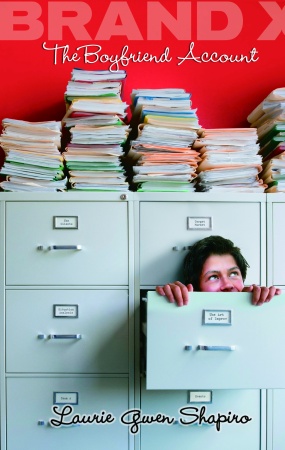
Brand X

Shapiro, Laurie Gwen. 2006. Brand X: The Boyfriend Account.

When Jordie Popkin, a sixteen year old junior, receives her internmentship at an ad agency, no one quite knows what to expect. While her peers all received more academic assignments, she’s landed one of the few creative opportunities ever offered at the school. But is it too good to be true? Can a team of creative, free spirits teach Jordie a thing or two about life and love? Jordie’s life is fine--but she dreams of it being great. Of getting the most popular boy in school to be her boyfriend. She’s always thought he was out of her league...but can her employers--her coworkers--work their magic and transform her life. Can a person be created, shaped, transformed like a product’s image? And even if she can get him...should she? Is he even worth it?

Wednesday, January 03, 2007

Bleed

Stolarz, Laurie Faria. 2006. Bleed.

Bleed can best be described as a collection of interwoven short stories. Each of the ten stories take place within one twenty-four hour period, and they feature ten to twelve young characters who in some fashion or another know each other. Each story is told by a different narrator. Some are more seriously troubled than others. Some are looking for love. Some are looking for acceptance. Some are looking for excitement. Some are looking for a sense of belonging. Some are looking for escape. Some are popular. Some are not. Featuring stories narrated by both teen girls and teen guys, Bleed is an interesting concept showing how small things we do or don’t do can have significant and somewhat unforeseen impact on others around us. But because these characters are from short stories and not novels, they are lacking somewhat in development and depth. But overall, an interesting and enjoyable read. Like most collections of short stories, they’re not all of equal value.

Friday, December 22, 2006

But Excuse Me That Is MY Book

Today I am reviewing one of the newer books in one of my favorite series. I absolutely fell in love with the characters of Charlie and Lola created by Lauren Child several years ago. In their first book, I WILL NOT EVER EAT A TOMATO, Charlie must help his sister Lola, who is a picky eater, overcome some of her issues with food. In their second book, I AM NOT SLEEPY AND I WILL NOT GO TO BED, Charlie must help put Lola, who is rather stubborn, to bed. Their third book, perhaps my favorite because it was the first one that I discovered, was called I AM TOO ABSOLUTELY SMALL FOR SCHOOL. Charlie must help Lola overcome her going-to-school jitters. Each of the books were fun, creative, and had a way of combining illustrations and text that were memorable and ever-so-charming. (Child does her own illustrations.) After the release of the third book, I discovered a new program. Someone had brought Charlie and Lola to life as a cartoon show on a cable network! Now with the success of the show, Charlie and Lola books are abundant with several hardback and paperback books being published each year.

Child, Lauren. 2006. But Excuse Me That Is My Book.

When their father tells Charlie and Lola that he is taking them to the library, this brother and sister team are happy. Lola has it all figured out. Today she will check out her favorite book in the whole world. It doesn't matter that she's checked this book out time and time and time again in the past. It is her favorite and her best. "But Charlie, Beetles, Bugs, and Butterflies is a very special book that is my favorite and I really need it. Now. Now. Now. Now. Now!" But when the pair arrive at the library, Lola is in for quite a shock. She discovers her book is "lost" and "completely not there!" Charlie, ever-patient, reminds her that this is a library and that lots of people check out books. But Lola is convinced that Beetles, Bugs, and Butterflies is HER book. Can Charlie convince her that she might like another book just as much? Or will this library trip turn into a disastrous fit? Funny as ever, Child once again illustrates a valuable lesson that relates with children everywhere.

http://www.milkmonitor.com/
http://www.charlieandlola.com/

Friday, December 08, 2006

Behind the Eyes

Stork, Francisco X. 2006. Behind the Eyes.

Set in Texas--El Paso and San Antonio--Behind the Eyes is the story of a young teen boy in trouble with the law. When his brother is murdered by a rival gang, our narrator Hector Robles steps out of his character and does the unthinkable: tries to retaliate. Hector grew up different from his father and brother. Not prone to violence or anger. A boy who likes to blend in and escape notice from the more dangerous elements of their neighborhood. A boy who tries to make good grades and dreams of making a better life and getting the necessary education. But all that changes with the death of his brother. Without thinking almost, he reacts impulsively and is almost killed. Now lying in a hospital bed, he is missing his own brother’s funeral and listening to a social worker tell him that his only hope to survive is to go to a school for teens with troubled pasts in San Antonio. Once there he must learn to cope with the past in order to create a positive future not only for himself but for his family as well.

Friday, December 01, 2006

The Book of Bright Ideas

I tend to be slightly skeptical of any book that proclaims itself: A powerful, poignant novel of family, friendship, and a summer that will change lives forever. However, The Book of Bright Ideas by Sandra Kring, author of Carry Me Home, was described quite accurately.

Kring, Sandra. 2006. The Book of Bright Ideas.

Set in a small community in Wisconsin, Eveyln "Button" Peters and her family (mother, father, aunt, uncle) expect this summer--the summer of 1961--to be quiet and quite ordinary. All that changes when the Malones come quite noisily into town to stay. Winnalee and her older sister Freeda are a bit wilder and more vivacious than their new neighbors. But Button knows this: Winnalee is her new best friend and her drab life will never be the same again.

Winnalee's relationship with Button is close. The two become almost like sisters, sharing intimate, private secrets with one another. One such secret is a book--a blank book--Winnalee keeps in which she writes her bright ideas. The goal, if she can write down 100 bright ideas she knows she'll be wise and never make the same mistake twice. These bright ideas are often quite observant about human nature--universal and specific.

Here are a few of their bright ideas:

And although this isn't the official #1 in Winnalee's book, this is what would be Bright Idea #1 in Button's own book.
Bright Idea #1: If you take an ugly girl and you dress her up in a pretty pink dress, lacy anklets, and plunk a homemade bow on her head, you're not going to get a pretty girl. All you're going to get is an ugly girl in a pretty dress, lacy anklets, with a bow plunked on her head.

Bright Idea #86: If you're scared of dead people, then you're probably scared of live people too. But you don't got to be scared of either.

Bright Idea #89: If you ever don't know which direction to go in, or you start moving in the right direction but then get lost along the way, don't get rattled and start moving fast, this way and that. Instead, stand still and be quiet. Then you'll be showed which way to go.

Bright Idea #90: After you play beauty shop, your husband might say you look like a beauty queen, or he might just ask you where the Phillips screwdriver is. Either way, it doesn't matter, as long as your new hair makes you think nice things about yourself.

The Book of Bright Ideas is about how much of an impact a person can have on those around her/him. One person can change a life. It is a novel about discovering yourself. Finding your authentic self. Becoming the person you want to be. Growing in confidence and self-esteem. It's a novel about opening up and becoming vulnerable. And a novel about letting go of the past and saying hello to the future.

Although our heroine "Button" is nine, the novel is written for an older audience.

http://www.sandrakring.com/

Friday, November 24, 2006

Gordon Korman

Korman, Gordon. 2006. Born to Rock.

Born to Rock is an enjoyable novel narrated by Leo Caraway. Leo's life may not seem typical at the outset--he's president of the Young Republican's club, has a 4.0 GPA, and has already been accepted by Harvard on scholarship--but his life is about to get even more untypical. When Leo is falsely accused of cheating, his future looks bleak--at least if he's determined for that Ivy League education. But things get even weirder when he reads his friend's essay on her punk rock idol. Let me explain. As a child, he had no idea that his 'father' wasn't his biological father. When he discovers his birth certificate with a stranger's name on it--Marion X. McMurphy--he's confused. Fast forward ten years or so in the future when he reads in his friend's paper that King Maggot was born Marion X. McMurphy and you've got some idea of his reaction.

"I'd always assumed I'd learn about my father in the long run. But it would be from Mom. . .whoever thought that such pivotal, life-altering information would come from Melinda Rapaport's essay on punk rock?" (41)
"When I finished the essay, I wasn't done yet. Google came up with 175,000 hits on the keywords "King Maggot." I thought of the years I'd spent agonizing over the identity of my stealth sire. If I'd bothered to do a simple Internet search, I'd have learned the truth on day one" (44).


Armed with this knowledge, Leo embarks on a new adventure: to meet his famous dad. Luckily, a reunion tour is just beginning. Will Leo's dad believe his story? Will he welcome Leo with open arms? Will be become 'Prince Maggot'? Or is Leo's future as uncertain as ever?

http://gordonkorman.com/

Monday, November 20, 2006

The Braid

Frost, Helen. 2006. The Braid.

Set in Scotland and Canada in the nineteenth century, The Braid tells through a series of poems the story of two sisters separated by an ocean but still fiercely devoted to one another. Jeannie narrates the poems told from Canada, and Sarah narrates the poems told from Scotland. How did the sisters become separated? The family was living in Scotland when their landlord forced them off the land and gave them a deadline. The grandmother refused to go with the rest of the family to Canada. She wanted to return to the village where she grew up. One sister, Sarah, didn't want to be separated from her grandmother and didn't like the idea of her being alone. She was also, of course, rather attached to the land herself. So when the day comes for the family to depart, Sarah disappears in the middle of the night leaving in the bed she shared with her sister Jeannie a braid of her hair. Filled with emotion and heartache, each sister tells her own story, yet their stories connect in some ways as the reader discovers as the plot unfolds...

http://www.helenfrost.net/