Showing posts with label teens in trouble with the law. Show all posts

Thursday, October 28, 2010

Lockdown (YA)

Lockdown. Walter Dean Myers. 2010. HarperCollins. 247 pages.


"I hope you mess this up! I hope you blow it big-time! You're supposed to be smart. You think you're smart, right?"

Reese, just fourteen, is serving time at Progress--a juvenile detention center. Because he's shown promise in the twenty-two months he's been there, he's chosen for a new work program. He'll be working ten days a month at Evergreen, an assisted living center for senior citizens. He's hoping that his good behavior and his new and improved attitude, will help him get released sooner.

But. Nothing is ever that easy. Life at Progress isn't easy. No matter how much he tries to stay out of fights, tries to not let himself be provoked into bad situations, Reese struggles. Daily. Reese never expected to find a role model at Evergreen. Especially one as cranky as Mr. Hooft. This "friendship" is a struggle too. But it's worth it.

I liked Lockdown. I liked Reese. It was an easy read, a compelling one. I would recommend this one.

© Becky Laney of Becky's Book Reviews

Wednesday, April 14, 2010

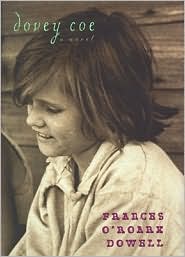
Dovey Coe (MG)


Dovey Coe. Frances O'Roark Dowell. 2000. Simon & Schuster. 192 pages.

My name is Dovey Coe, and I reckon it don't matter if you like me or not. I'm here to lay the record straight, to let you know them folks saying I done a terrible thing are liars. I aim to prove it, too. I hated Parnell Caraway as much as the next person, but I didn't kill him.

Loved this one. Loved the way it started out too! (What do you think?! Would you want to read more after reading that first paragraph?!) Frances O'Roark Dowell has a way with words, a way with characters. And she did a wonderful job in describing the Coe family and the mountain community in which they live.

Dovey Coe does not like Parnell Caraway hanging around her sister, Caroline. Doesn't like the fact that her oh-so-beautiful sister doesn't reject him outright. Doesn't like the fact that her sister might just be reconsidering her plans. You see, Caroline wants to go to college, wants to be a teacher. But Parnell is trying to do anything and everything to make her change her mind. The pretty words he's been saying. The drives they've been taking in his car. The promises of a rich future they could have...together. But not all his words sound so pretty--some are quite ugly. Will Caroline make the right choice? And what will her choice mean for the rest of the Coe family?

This book would be perfect for the Southern Reading Challenge.

© Becky Laney of Becky's Book Reviews

Saturday, April 03, 2010

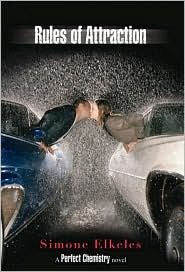
Rules of Attraction (YA)


Rules of Attraction by Simone Elkeles. 2010. April 2010. Walker (Bloomsbury) 336 pages.

I want to live life on my own terms. But I'm Mexican, so mi familia is always there to guide me in everything I do whether I want them to or not. Well, guide is too weak of a word. Dictate is more like it.

Rules of Attraction is a sequel (of sorts) to Simone Elkeles' Perfect Chemistry. The narrators are Carlos (Alex's younger brother) and Kiara (his love interest). The premise is simple. Carlos is being sent to live with Alex in Colorado. His mother is hoping that Alex will be a good influence on him. After all, Alex has gotten his life together since meeting Brittany. Giving up his gang--truly risking it all--and putting all his energy and drive into his new dreams. These dreams which he shares with his girlfriend.

But Carlos is angry. He doesn't see this new Alex (it has been two years since the close of Perfect Chemistry, I believe) as a better Alex. He doesn't see Brittany as a good thing for his brother. Far from it. He still sees her as an outsider. Too rich. Too white. Too perfect.

Like Perfect Chemistry, this YA Romance is told from two perspectives. So it becomes a real he said, she said, affair. So who is Kiara? Well, it's a bit complicated. No, her character isn't all that complicated. But the circumstances that line up to bring these two together. Alex knows Kiara and her father. (Kiara shares his interest in cars. Kiara's father is a professor who invests a lot in his students. He has become close with Alex. And so Carlos sort of comes under his wings as well. He invites Carlos into his home--to live--when something big comes up.)

These two so do not get along. At first anyway.

I didn't love this one as much as Perfect Chemistry. Perhaps because Carlos isn't Alex and Kiara isn't Brittany. Though in all fairness, there is no reason they should be. Just because Alex and Carlos are brothers don't mean they're the same. Brothers can be very, very different from one another! And these differences do need to be appreciated. Kiara. I just didn't connect as deeply with Kiara as I did Brittany. I never felt I really got past the surface with Kiara. But that could be just me. Some readers may be able to relate to her more.

So this one is still recommended.


© Becky Laney of Becky's Book Reviews

Sunday, March 28, 2010

Perfect Chemistry (YA)


Perfect Chemistry. Simone Elkeles. 2008. [December 2008] Walker & Company (Bloomsbury). 368 pages.

Everyone knows I'm perfect. My life is perfect. My clothes are perfect. Even my family is perfect.

Brittany looks like she has the perfect life. A life that includes the perfect boyfriend. But. Appearances can be deceiving. Brittany is keeping more than a few secrets. Not wanting anyone at school to know how her home life really is. She doesn't want anyone to see the real her. Brittany has a role to play, control to maintain.

Alex, our other narrator, doesn't even pretend to have the perfect life. (Though that doesn't mean he's not pretending about other things.) There are thousands of rumors going round about him at school. And some of them are true. Not all of them, mind you. But some of them. Like the fact that he's a gang member. Like the fact that he's been arrested.

Destiny steps in when the chemistry teacher pairs these two (from opposite sides of town) as lab partners. These two teens have nothing in common (so they think) and don't want anything to do with each other. At first. Brittany just doesn't know what to make of Alex, his teasing, his charisma. Does he really like her? Does he really understand her more than Colin?
Is she brave enough to go there?

I loved this one. It's not that I think it's the most perfect book I've ever read. It's not. But it's satisfying. Really satisfying. I really enjoyed these characters. I loved the development of this relationship.
There's been something nagging at me all day. As long as I'm here with him, I might as well ask. "Did we kiss last night?"
"Yes."
"Well, it wasn't memorable because I have no recollection of it."
He laughs. "I was kiddin'. We didn't kiss." He leans in. "When we kiss you'll remember it. Forever."
Oh, God. I wish his words didn't leave my knees weak. I know I should be scared, alone with a gang member in a deserted place talking about kissing. But I'm not. Deep in my soul I know he wouldn't intentionally hurt me or force me to do anything. (142)*
If you enjoy romance, you'll probably enjoy this one. It's satisfying in the same way as 10 Things I Hate About You, Dirty Dancing, and How To Lose A Guy In Ten Days.

*All quotes are from an ARC. They might have been revised in the final edition.


© Becky Laney of Becky's Book Reviews

Thursday, August 27, 2009

Hoppergrass (YA)


Brown, Chris Carlton. 2009. Henry Holt. 232 pages.

It's always a clean white car--this time a Ford.

Every now and then I come across a not-for-me type book. Such is the case with Hoppergrass by Chris Carlton Brown. It is a coming of age novel. It's set in the late sixties--1969 to be precise--at an institute for delinquent teenage boys. The novel is about the harder things of life, the injustices of life--both large and small. It's also a novel about tensions between races: the whites and blacks. Our narrator, Bowser, becomes friends with Nose, a black teen, but Bowser's other friends--and Nose's other friends--can't exactly understand. These two are scripted--by their friends--to hate one another. To be enemies. But behind the scenes, these two are on good terms. But the power and authority of this institution is corrupt--very corrupt--and the lives of some teens (delinquent or not) are at risk. Bowser is one of a very small handful that realizes just how dangerous the situation is becoming. Bowser and Nose are the two facing the biggest risks.

I think there are plenty of readers out there who can appreciate this one. It's about meaning-of-life type stuff. Serious issues of justice and injustice, corruption and prejudice and the like. It's a book about friendship and courage as well. So thematically, the book has much to offer.

I think I just didn't get this book. I didn't really feel a connection with the characters and the story. I wanted to care more than I actually did.

© Becky Laney of Becky's Book Reviews

Friday, August 07, 2009

Tricks (YA, Adult)


Hopkins, Ellen. 2009. Tricks. Simon & Schuster. 625 pages.

Ellen Hopkins is dependable. You know what you're going to get. No surprises. At least not after the first--once you've read one, you know what to expect: the raw, ugly, vulnerable side of teen life. The side that some adults would rather not know about--the broken and desperate side. Addictions like drugs and alcohol. Eating disorders. Cutting. Suicides and suicide attempts. Abuse--be it sexual, physical, or emotional. Hopkins' verse novels are all about the angst of growing up. Hopkins writes verse novels. (So don't let the length fool you.)

In Tricks we've got the interconnected stories of a handful of teens--two guys (Seth, Cody) and three girls (Eden, Whitney, Ginger)--who for varying reasons all end up as prostitutes. Five teens, five different circumstances, one very ugly story. This one won't be for everyone. As you can imagine--if you choose--this one is heavy in graphic depictions of sex--both homosexual and heterosexual. And that may be a turn off for some readers. You should also know that it deals with addictions. Drugs. Gambling.

It's a novel that makes you think. In the beginning, each of these teens is in a seemingly stable place. If you were to ask each character, would you ever, could you ever sell your body--each would answer, never, no way.

But while it can't please everyone, for those who have enjoyed (though enjoy is really not the right word) Hopkins' previous books, this one is undoubtedly good. I don't think you'll be disappointed. If you haven't read any Hopkins before, this might be a good place to start.

© Becky Laney of Becky's Book Reviews

Thursday, June 11, 2009

Body of Christopher Creed (YA)

Plum-Ucci, Carol. 2000. The Body of Christopher Creed. Hyperion. 331 pages.

I had hoped that a new start away from Steepleton would make my junior year seem like a hundred years ago, rather than just one.

To say that The Body of Christopher Creed is haunting is an understatement. It is compellingly atmospheric. It completely draws you in. It's nearly impossible to put it down. Our narrator, Victor "Torey" Adams, is giving readers a personal glimpse into his nightmare. When the novel opens, we meet Torey. A new student--a senior--at a boarding school. We learn that there's something from his past that still haunts him. Maybe not quite so torturously as it once did. But something still holds him back from being that "normal" kid from two years ago. The football player.The musician. The boyfriend. The oh-so-normal, somewhat-popular guy. What is this something? Or should I say who is this something?

Who is Christopher Creed? Why should the reader care? The reader only sees Chris Creed through the eyes of various characters. We get impressions of him from Torey, from Bo, from Ali, from Alex and Ryan, etc. According to his classmates, Chris was weird. A definite freak. Someone who was out of touch with reality. A guy with a big, goofy grin who never knew when to shut up. Who never could quite sense when he was being obnoxious and annoying just by being there, by being himself. According to his mother, Chris was a happy, well-adjusted teen. He had no reason whatsoever to runaway from home. No reason to commit suicide. Therefore his disappearance must mean foul play. Surely, Chris, her very own son, would never of his own free will vanish. Who's the primary suspect? Well, that would be Bo, a boy from the wrong side of town. In this small-town, apparently, there is a lot of prejudice going on. It's nothing to talk trash about Boons, (folks from Boondocks; aka poor and trashy side of town, you know, where everything bad happens.) The whole town seems to have an us-versus-them mentality which is just freaky to be a little honest. But Ali and Torey believe Bo is innocent. In fact, there is a lot of disagreement. You've got folks thinking he was murdered. Folks thinking he committed suicide. Folks thinking he just ran away to get away from his controlling parents. Which of these theories is the truth? Will anyone ever be able to puzzle out the truth?

All of this is revealed through Torey. His written account of the events that led him to where he is today...to who he is today.

Writing it was supposed to bring me some quote-unquote "healing," at least that's what Dr. Fahdi had said. Maybe it did; who knows? I got a load off my chest. But I was looking for other things, more important things, like the peace you get when things make sense and life seems fair. I never got that peace. Some nights I would remember and write and remember and write, and I was sure I was just being Dr. Frankenstein, trying to re-create a dead human. The dead never come back the way they were in life. Some nights I got convinced I was creating a monster.


The story is a complex blend of realistic fiction and mystery. (It'd also be right at home in the coming-of-age genre.) And It's just-right in the drama department. Plum-Ucci is a great storyteller. The way she weaves together the story, the way she reveals it bit by bit. It's gripping and intense that's for sure. It's atmospheric as well. I feel this town almost has a persona of its own in an eery kind of way.

This book is very well done. It is easy to see why this one earned a Printz Honor.


© Becky Laney of Becky's Book Reviews

Tuesday, December 16, 2008

Swimming with the Sharks


fischer, Debbie Reed. 2008. Swimming with the Sharks.

The list is titled Top Ten Guys Who Are Still Virgins. Dorkowitz tops it off at number one, of course.

I didn't care for this one. I'll be honest. It's a book about mean girls--mean cheerleaders to be exact--who go to great lengths to torture the newest cheerleader, Ellika, and 'persuade' her into quitting. Why is she on the team to begin with? Her family is rich, they made a very large contribution to the school--to the gym I believe--and this was one of the stipulations: a place for their chunky/plus-size daughter on the varsity cheering squad. Our narrator, Peyton Grady, goes along with Operation Smellika--in fact she commits several of these cruelties personally--including smashing Ellika's glasses to pieces. It isn't until bones get broken and heads get concussed that Peyton sees the bigger picture and decides to break the pact. And even then it's a tough decision for her.

I suppose we're supposed to 'like' Peyton. This bystander who silently questions but still acts and goes along with the others on the team. Peyton has a conscience, but she's choosing to not listen to what her instincts are telling her. Peyton is clueless about many things. Things that the reader won't be. It's easy to predict each twist and turn in this one. Only Peyton and Ellika seem not to see the truth that's right in front of their faces.

Ellika. I have a hard time in believing in Ellika as a character. Yes, I feel sorry for her--in a way--but I have a hard time believing she could be so stupid or naive. Ellika is used to being teased, used to being called names, so why she goes and seeks out the popular crowd is beyond me. She's a new student, and she wants to 'buy' her way into the 'in' crowd? She thinks it will work? That she'll suddenly become popular? become accepted? That she'll be like that girl in the movies--the ugly duckling who transforms herself into the most popular, beautiful girl in the school. The fact that she perseveres no matter how much abuse--physical, mental, emotional--is piled onto her by her teammates...that she doesn't quit the team, that she doesn't tell her parents, that she doesn't want to change schools, etc. That she honestly believes that she can outlast and outwit the cheerleaders. That if she endures the pain, the torment, the abuse, that by the end of the school year she'll have made it, made new friends, found a place to belong. Why would she want to "belong" in the first place? Why would she want these bullies to be her friends? Why does she seek out their acceptance knowing how cruel and mean and stupid they all are? I have a hard time believing that anyone could ever welcome that much abuse into their lives.

© Becky Laney of Becky's Book Reviews

Wednesday, December 10, 2008

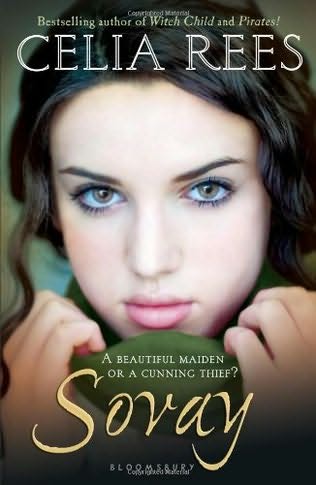
Travel the World: England: Sovay


Rees, Celia. 2008. Sovay.

I liked this one a lot. It is about a female--young teen girl--highwayman. She didn't begin her life of crime out of need, or even for thrills. No, she began--her first armed robbery--solely for revenge. 1790s. England. Sovay is a young woman engaged to be married. When she learns that he has cheated on her, she begins plotting her revenge. But what she doesn't know is how trivial this will all seem within a few days. Sovay's family--her father, her brother especially--will soon be threatened; their lives at danger if they're found. For Sovay learns that her family is about to be charged with treason--among other charges--they stand accused of having the wrong views on the French revolution, of being symphatetic with the uprisers in France. The charges aren't exactly true--they support the philosophies not the murderous actions of the people--but true or not...there are people who will stop at nothing to destroy her family. Sovay is an adventurous, strong, intelligent heroine.

I won't go into much detail. It was fun. It was enjoyable. It was delightful. Most of the reviews of this one that I've come across have found it disappointing in one way or another. The readers have read other books they feel are better or more worthwhile. I haven't had that much experience with this time period, with this subject. So I didn't find it disappointing. I didn't find it unoriginal or uninspired. I found it entertaining and well paced. I enjoyed every minute I spent with this one.

Here is the UK book cover. Which cover do you like best?

© Becky Laney of Becky's Book Reviews

Tuesday, December 09, 2008

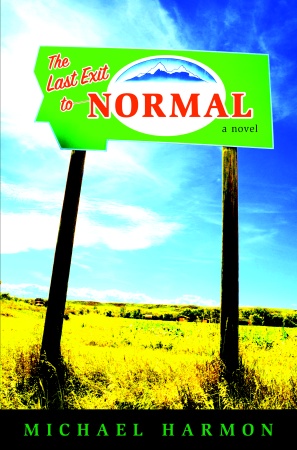
The Last Exit to Normal


Harmon, Michael. 2008. The Last Exit to Normal.

The decoder card to the universe wasn't included in the box of cereal God gave humanity. At the ripe old age of seventeen, I'd at least figured out that no matter how hard you try to guess what happens next, you can't. Life wasn't set up that way and we don't like it, so we spend most of our time running around like a bunch of dimwits.

Ben Campbell, our narrator, I must admit, is one of my favorite characters of the year. He makes this book work for me. The story itself? It's as simple and complex as life itself. Ben moves with his two fathers to a small Montana town after Ben has some emotional problems after the big reveal and its aftermath. (His father is gay; his mother moved out and away.) The three move in with Edward's mother, Bonnie Mae Ingerson. And let me tell you, Bonnie Mae is quite a character. Character with a capital C. (Just one of many reasons why I love this one!) The book is a coming of age story of a boy coming to terms with his life as it now is. It's about a boy learning that it's okay that it's not okay. It's more than that. It's about life and love; work and play; friends and enemies. It's about a boy becoming a hero, making a stand when and where he can.

I can't promise you'll love this one. (I did though.) But you should definitely give it a try.

© Becky Laney of Becky's Book Reviews

Friday, October 17, 2008

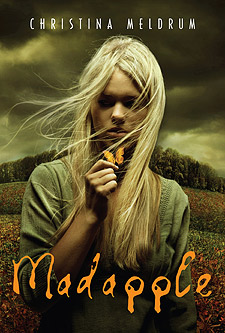
Madapple


Meldrum, Christina. 2008. Madapple.

The women resemble schoolgirls with gangly limbs, ruddy cheeks, plaited flaxen hair; they walk holding hands.

Weird and sometimes wonderful is how I'd describe Madapple by Christina Meldrum. It's not a novel for everyone. It's a bit dark, a bit moody, at times overwhelming, and not a bit traditional. It's a complex plot in a way. Well written. Well imagined. But very weird. Of course, there are plenty of folks that would read that description and think "this is the book for me!"

Set in the modern world--in America to be exact--the book has a very strange otherworldly feel to it. In part because our heroine, Aslaug, has been raised in isolation. Her mother, Maren, is a hard woman to know, to understand, to love. The two have been living in the country, living off the land for the most part. Aslaug has never attended school or church. She's never interacted or associated with anyone really. Though the two did occasionally venture into the nearest town to collect their mail and buy a few supplies now and then. But she's never known about the real world. She's lived a very sheltered, very odd existence. The information that her mother thought was most important to pass down to her daughter--and the information that her mother chose to conceal--is what sets Aslaug apart from her peers. What Aslaug knows is the natural world--the world of herbs and plants and weeds (roots, barks, etc.) She knows what plants are poisonous, and which ones aren't. And it is this knowledge of the natural world (in some ways associated with witches and witchcraft) that get her into trouble as the reader learns.

Maren, Aslaug's mother, dies of cancer. Though the powers-that-be suspect foul play for a bit and place Aslaug under arrest. (True, it was a bit strange that this teenage girl would try to bury her mother in the back yard after discovering her body instead of calling the authorities and arranging for a proper burial. But this "mistake" makes sense in connection with Aslaug's upbringing. What does she know of the authorities? Of the police? Of what's proper and improper?)

After Maren's death, Aslaug goes to stay with her mother's sister--her aunt Sara--and her cousins, Sanne and Rune. One might for half a second think this would be an improvement for her. That she would learn what it was like to be normal, to be loved....but no....this family she now finds herself in is just plain weird. Weird and a bit delusional. A bit out-of-place. Completely alien-outsider-culture going on in the midst of a modern day setting. What makes them so weird? They're cult-like, ultra-weird, non-traditional, spiritual-religious environment where everything's turned inside out and upside down and given a good shake or two.

Did I like it? Yes and no. I can see that it's well done. But it's a bit too weird for my personal taste. Don't get me wrong. I'm glad I read it. I couldn't put it down. It had me hooked from almost the very start. But once is enough for me. I won't be rereading it anytime soon. But I wouldn't be surprised to read that others loved it. Or if it began receiving attention on best-of-lists, etc.

I don't know if this description will make sense to anyone or not...but this is a thunderstorm of a book. You know how some people love the sound of rain, wind, and thunder...and others not so much. It's just a very symbolically-stormy kind of book.

© Becky Laney of Becky's Book Reviews

Tuesday, July 08, 2008

The Hanging Woods


Sanders, Scott Loring. 2008. The Hanging Woods.

What can I say about this one? Really? Truly? It's dark. It's depressing. It's truly dreadful--dreadful in content, not style. It's disturbing, very disturbing. A difficult read, a discomforting read. Warped. Twisted. And oh-so-wrong.

First sentence: "In 1975, when I was thirteen, I killed a fox. It happened a few weeks after I'd snuck into my mother's room and read her diary. That diary told me a lot of things that I didn't want to know. Or maybe I did want to know them. I can't say for sure."

The good news is that you should be able to tell fairly early on whether or not The Hanging Woods is for you. In the first chapter alone we've got the slaughtering of a fox and a chicken. (And the two aren't connected. The fox wasn't after the chicken.) In the second chapter, we see many signs of unhealthy relationships. Relationships between friends. Relationships between families. And we see our first human death. Very bizarre. Not exactly murder. Not exactly calculated. But strange indeed. And in the third chapter, we learn that our narrator, Walter, committed arson. He burned a house down. So right from the start you know this is going to be one dark-and-weird book. It's not for everyone. The language. The violence. The subject matter. It just paints a very dark and unpleasant portrait of humanity. Not that I'm denying that humans can be ugly and cruel and tortured and demented and perverted and whatnot. But dismal, dismal, very dismal.

The Hanging Woods is about the breakdown of friends, of family, of the mind itself.

Personally, I don't like dark and edgy all that much. I prefer my narrators a bit more sane. HOWEVER I know that some readers will appreciate this one. It is well written. If it had been poorly written, I wouldn't have found the strength to keep reading.

Edited to add: I slept on this one. Given it some more thought. And I wanted to add that it was really well done. When characters are so thoroughly written, so powerfully drawn that you have to keep reading even if you personally hate where they are going...then that says something about the writing. So for skills in writing, in characterization this one gets my approval.

© Becky Laney of Becky's Book Reviews

Wednesday, March 12, 2008

Travel the World: Ireland: Saga


Kostick, Conor. 2008. Saga.

All motion ceased. A Communication-Assassination probe gradually awoke from a dream in which it had been submerged far beneath deep arctic waters. Barely ten million kilometers away, a star was blazing with uncomfortable brightness. The probe slid filters over its sensors, the first action it had taken in a hundred and fourteen years, five months, three days, seventeen hours, and forty-four seconds. It conjectured that a human being waking up to a bright morning and reaching for sunglasses would feel exactly the same as the probe did now.
Saga is the 'thrilling' conclusion to Epic. (I reviewed Epic here. This was my lead: "Looking for a fast-paced science-fiction novel set on a distant planet? Looking for a novel that explores the depths of the video world? The fun of video gaming and virtual realities? Looking for a great dystopic novel? Look no further for all your needs than Conor Kostick’s novel Epic. Looking for a fast-paced science-fiction novel set on a distant planet? Looking for a novel that explores the depths of the video world? The fun of video gaming and virtual realities? Looking for a great dystopic novel? Look no further for all your needs than Conor Kostick’s novel Epic.") Change "Saga" for "Epic" and it's still a fairly accurate assessment.
When Epic concluded, the video game "Epic" perished. But soon after, there's a new game to be found on New Earth. A new game with deadly consequences. A game delivered via probe. (I'm assuming satellite probe, satellite feed would be an appropriate description though I don't know if the book sums it up like that.) The citizens are unaware of the game's origins, and definitely unaware of the risks, unaware that they're putting their lives on the line.
Featuring mainly new characters, the book takes readers on another exciting adventure. Old characters both 'real' and 'virtual' do have a role in the plot. Saga--for that is the name of the game--is a very different virtual world than Epic was. It's urban for one thing. Second, there's no magic. Which gives Cinderella Dragonslayer a distinct advantage. All other humans on New Earth have to start from scratch, create new avatars. But for whatever reason, the probe was unable to erase Cinderella. So Erik is the only player who is unaffected, unchanged, by the Dark Queen's secret strategy.
Who is the Dark Queen? I'll leave that for you to discover. Same goes with the details of her secret strategy. Suffice to say that if you like excitement and suspense, you'll probably enjoy this one.
If I'm being honest, I must admit that I liked the 'game' Epic much much better than the 'game' Saga. But the writing, the style, the characters, the plot are equally enjoyable. I just prefer the fantasy/magic elements more than urban street fighting and anarchist punk air boarding. But that's just me.
367 pages

Wednesday, November 07, 2007

Unwind


Shusterman, Neal. 2007. Unwind.

"Funny but when he was little Connor was terrified of the boogeyman. He would have to sleep with the lights on, he would have his parents check his closet every night. They told him that the boogeyman wasn't real, but they lied. The Bill of Life made the boogeyman real, and he didn't need the closet; he came walking right in through the front door." (4)
Unwind by Neal Shusterman is dystopia at its best. Connor is born into a new world. A world set after the Heartland Wars or the Second Civil War. The fight was between people in the pro-life camp and those in the pro-choice camp. The compromise? The Bill of Life. "The Bill of Life states that human life may not be touched from the moment of conception until a child reaches the age of thirteen. However, between the ages of thirteen and eighteen, a parent may choose to retroactively 'abort' a child…on the condition that the child's life doesn't 'technically' end. The process by which a child is both terminated and yet kept alive is called 'unwinding.' Unwinding is now a common, and accepted, practice in society." (Prologue/1) Imagine living in a world where—if you're a teenager—your life is constantly in danger. If you anger your parents just one time too many, you could be on the next bus out of town heading to a Harvest camp or the "chop shop" as it's called in slang. Your organs—every single part of you (except maybe your appendix), stripped away and 'donated' to make someone else's life better. This scenario is about to become terrifyingly real to three teenagers. Told through many narrators, Unwind is a suspenseful, fast-paced read. While the premise is fascinating in and of itself, Shusterman manages to make this story resonate with strong characters. The world he creates is haunting yet not completely without hope and redemption as people—teens and adults—team up to change the world one step at a time. To read the complete review, visit the October issue of The Edge of the Forest. Check the review archives if a new issue has already been posted.

Monday, June 04, 2007

Harmless


Reinhardt, Dana. 2007. Harmless.

My expectations of Harmless were low. Very low. Why? I disliked A Brief Chapter In My Impossible Life. Every time I heard someone heap on glowing praise about that novel, I thought to myself what book did they read??? But I was more than pleasantly surprised when I read Harmless. Harmless is the story of three teen girls and the one big, lie that threatens to overwhelm them all. Emma, Anna, and Mariah seem like ordinary girls. They're young. They want to have fun. And they don't mind telling a little lie here or there if it helps them have a little more fun on the weekend. What kind of lies? They might say they're having a sleepover at another girl's house or going to the movies...when really what they are doing is going someplace where they can hang out with boys without parental supervision. Harmless lies? Maybe. Maybe not. They shouldn't be lying to their parents in any case. They probably shouldn't be hanging out with seventeen or eighteen year old guys either. But they're a bit naive. A bit innocent. But they won't stay that way for long. One night, their little lie about going to the movies is found out. The fun is over. Their lives are ruined. They have no hope for a social life unless....unless they tell an even bigger lie to cover their tracks.

Harmless is the story of how a "justifiable" lie becomes a devastating one to three girls, three families, and one community.

Sometimes things happen. Things happen even when you don't intend them to happen. Maybe at the beginning you had good intentions, or no intentions, or intentions you thought were harmless, but before you knew it things got out of your control. (208)

What I liked most about Harmless were the perspectives. This story has three very different narrators. Each girl has a unique side of the story to tell.

Wednesday, May 02, 2007

Twisted


Anderson, Laurie Halse. 2007. Twisted.

The wait is over. Those who read my blog regularly know that I have been waiting--very eagerly and somewhat impatiently--to get my hands on Laurie Halse Anderson's newest book TWISTED which was published in March. I have read all of Anderson's previous YA books--Speak; Catalyst; Fever, 1793; and Prom. All with varied responses. I loved Speak--I really don't think you can get any more perfect in the YA field than Speak. I enjoyed Fever, 1793. I liked Catalyst. I barely tolerated Prom. (I thought it so mediocre compared to the rest of her books.) But Twisted has restored my confidence in Laurie Halse Anderson in telling POWERFUL stories with a blend of emotions. Not too light, not too dark, not too angsty, not too frivolous, not too funny, not too serious. The perfect blend of frustration, sarcasm, and hope.

Our narrator is Tyler, a senior in high school. He has spent the summer before his senior year on probation and doing community service. His crime? Vandalizing school property with spray paint. He knows he should be thankful not to be doing time in jail or in a juvenile detention center, but life seems so unfair at times. True, not many of the administrators or teachers seem sympathetic with this "criminal," but his story is told in such a way that it's hard not to see his side of the story. If there is a message in TWISTED it is that life isn't fair. It isn't just. Sometimes you can do the right thing AND still be misjudged and mistreated. You can't force other people to see the truth once they're convinced they're right. One past mistake can haunt you for life.

Twisted is in some ways the story of a young teen's troubled life. His life-crisis if you will. How his life downspirals into chaos. How frustration and anger can tear at the soul and bring a person down. But it is equally about how a family is in crisis. Tyler's family is a mess. Just being honest. But they're a complete mess. The father has anger-management issues. He rages out of control. He's angry. He's bitter. He yells all the time. He seems bent on ruining his family's happiness. It almost seems like he goes out of his way to squash the joy out of his wife and two children. Like he wants to see them angry, upset, crying, sullen. He wants to cause problems. Of course, that's only how it seems. I'm sure if it was told from his point of view, it would be another story. The mom? She's afraid of her husband. She knows he's out of control. She knows her husband has a problem. Or make that IS the problem of the family. The family is in chaos because the husband is out of control. He is irrational. Illogical. There is no reasoning with him. Once he decides that something should be done a certain way--that is the ONLY way. For example, his punishment for Tyler who has low grades. To take away his power cord for the computer. The problem? Without the computer how can he do his assignments? How can you improve your grades if you can't do your homework? Luckily, his mom is behind-the-scenes taking care of her children and protecting them from the brunt of their father's anger. But it leaves her a mess. It's a miracle she's still standing at the end of the day after having to deal with her husband. The sister? She's a freshman in high school. I wouldn't say she is acting out for attention necessarily. But she is to a certain extent. She is beginning to rebel from her parents. To want to be different. To want to be popular. To want to follow the crowds. To be accepted by her peers. If that means sneaking out of the house to go to a party where there is drinking and sex--then sobeit. If that means hiding her belly button ring from her parents, then that is what she'll do. She is intent on showing LOTS of skin and being popular. Tyler is a likeable guy. He's a sympathetic character. You know exactly why he feels the way he does. You know and understand.

TWISTED is a novel about dysfunctional families, high school, and society in general. It contains equal parts of humor, sarcasm, frustration, anger, despair, and hope.

The bus let us out in front of the building. Hannah was about to burst with excitement, which would have been disgusting because she would have sprayed blood, guts, and glitter in every direction. She was an innocent, a freshman, one of the sad believers who thought high school was where they would be popular and smart and happy--above all, happy. My sister had watched too many movies. The enlightened ones--the wounded sophomores, jaded juniors, and wise seniors--we trudged to the door, a prison gang so beaten down we didn't need ankle shackles. (44)

I picked up one of the books and flipped through it. Don't get me wrong, I like reading. But some books should come with warning labels: Caution: contains characters and plots guaranteed to induce sleepiness. Do not attempt to drive or operate heavy machinery after ingesting more than one chapter. Has been known to cause blindness, seizures, and a terminal loathing of literature. Should only be taken under the supervision of a highly trained English teacher. Preferably one who grades on the curve. (51)

http://www.writerlady.com/twisted.html

Thursday, April 19, 2007

Impulse


Hopkins, Ellen. 2007. Impulse.

Impulse is not particularly the kind of book you want to pick up (or post about) the week of the Virginia Tech Massacre. Like all of Ellen Hopkins books its theme is dark and depressing. That is not to say it isn’t honest and authentic. Impulse has this honest feel about it. These are characters that feel real. The pain they’re describing, they’re living, feels authentic. It feels genuine. The secrets, the lies, the hopes, the fears, the worries, the stress, everything. It is the story (fictional) of three teens who have attempted suicide. Two boys and one girl. They, all three, find themselves at Aspen Springs a mental institution for juveniles. Each teen has a story. Each teen has a journey. One tried to overdose on drugs. One tried to shoot himself. One slit her wrist. All have obstacles to overcome. All have secrets. All have quirks. Tony. Vanessa. Conner. Three teens who are walking the same self-destructive path. Can they find help in time? Can their lives be changed? Can there be hope where formerly there was none? Can broken lives find healing? It is a harsh story. Hopkins doesn’t hide the hard, bitter, dark pain of suicidal thoughts. But amidst all the pain and suffering, redemption may be just within reach.

Hopkins writing is once again powerful. Not every reader will want to journey down this dark tunnel with these three characters. Even if there is light shining at the end of the tunnel. For readers in search of "problem novels" or "edgy novels" or novels about suicide, cutting, drugs, or dysfunctional families in general, this book may be a perfect fit. It is a powerful, authentic verse novel.

Cloistered

I can't remember
when it has snowed
so much, yards
and yards of lacy ribbons,
wrapping the world in white.
Was it three years ago? Ten?

Memory is a tenuous thing,
like a rainbow's end
or a camera with a failing lens.
Sometimes my focus
is sharp, every detail
clear as the splashes
of ice, fringing the eaves;
other times it is a hazy
field of frost, like the meadow
outside my window.
I think it might be a meadow.
A lawn? A parking lot?

Is it even a window
I'm looking through,
or only cloudy panes
of vision, opening
on drifts of ivory
linens--soft cotton,
crisp percale--
my snow just
a blizzard of white
noise?

From IMPULSE by Ellen Hopkins, p. 17-18


http://www.ellenhopkins.com/

Readers may also enjoy It's Kind of A Funny Story by Ned Vizzini, The Burn Journals by Brent Runyon, and Twisted by Laurie Halse Anderson. I haven't read Twisted yet, but based on what reviews I have read...it seems like this would be a good match.

Tuesday, March 27, 2007

All About Maude March

Couloumbis, Audrey. 2005. The Misadventures of Maude March or Trouble Rides A Fast Horse.

Sallie March, and her soon to be infamous sister, Maude, didn't intend to become outlaws. It all started one perfectly ordinary day when their Aunt Ruthie--their only known living relative--was shot down outside the mercantile. Joe Harden, the outlaw made famous by a series of dime novels, didn't mean to shoot Aunt Ruthie...as we come to find out. But the damage had already been done. The bank forecloses on the girls' home even before Ruthie is put in the ground. Now Sallie and Maude are dependent on the town's charity. Taken in by the preacher and his wife, all seems to be going well. True, the two work all day slaving away. But there is at least a roof over their heads and food in their mouths. But when the preacher tries to force Maude, then 15, into marrying a middle-aged man...Maude does the only thing she can think of: to run as far away as possible. While it's true that Maude and Sallie take two horses--a buggy pony and a plow horse. But they left them their milk cow. I figured we're owed the buggy pony and the plow horse, I told her. The one is gassy and the other is so old it would have died soon anyway of overwork. Aunt Ruthies cow is worth more than the two of them put together. That was only too true. I'd have happily ridden our cow if she could be counted on to run when I dug my heels in. She could be counted on in every other way that mattered, but she wasn't built to run(44). Now Maude and Sallie are on the run carrying what food and supplies they can. Their goal: Independence, the last known residence of their Uncle Arlen who disappeared when the girls were still young. They can barely remember him. They can only hope he's made it out west. What the girls don't know is that trouble will follow them all the way on their journey...and by the time they reach Independence, Maude's reputation will be lost forever.

I tell you all this to make you understand that Maude was an upright young woman who never made mock of the truth or questioned the dark ways of justice until she saw how truth could be mangled to make a shape unrecognizable. To have you know her for a rightly praised person who never complained about the awful twists of fate that made her life less comfortable than it might have been. To show you how impossible it was for her to do the things everyone claimed that she did. For this is the true story of how my sister, Maude March, came to be known far and wide as a horse thief, a bank robber, and a cold-blooded killer. (6)

Couloumbis, Audrey. 2007. Maude March on the Run: Or Trouble is Her Middle Name.

They say my sixteen-year-old sister passes for a man and shoots like an outlaw, and I cannot argue it, since she has done both in her day. Maude has been called a hardened criminal, and of this I must tell you, do not believe it. People say a great many things and only some of them are true. (1)

A year after the conclusion of The Misadventures of Maude March, Sallie and Maude are about to be in danger yet again. Although their simple life blending into the town has been successful so far, their cover--or Maude's cover--is about to be blown. When Maude is arrested, it is up to Sallie and the girls' friend Marion Hardly (aka Joe Harden) to break her out of jail and make a run for it. They succeed in their mission--although they end up freeing another outlaw as well--and Maude's reputation is once more being slandered. At each stop along the way, Sallie reads more and more about the supposed adventures of Maude March. One day in Kansas. The next in Arkansas. The next in Texas. It seems she can be in four or five states at once. One town even claimed to have killed and buried her. But rumors of her death don't last long. The girls soon figure out that there are dozens of women--ranging from young to old--who are out running about the west using her name and giving HER the bad reputation. In fact, they meet a few of these pretenders along the way. Yes, life is full of adventure and danger when you're on the trail with a bunch of outlaws.

http://www.audreycouloumbis.com/
Chapter One of Maude March on the Run
Chapter One of The Misadventures of Maude March

Thursday, January 04, 2007

Saint Iggy

Going, K.L. 2006. Saint Iggy.

Iggy Corso is a troubled teen. The truth is, he didn’t become troubled. He was born that way. With a mother addicted to drugs, he was born addicted too. Now as a sixteen-year-old, everyone expects him to be a trouble-maker, a drug addict, just like his no-good family. Living in the projects with his father who is drunk or stoned most of the time, he rarely sees his mother anymore. Although when he does, he knows she’s still as addicted to drugs and the druggie lifestyle. So it shouldn’t come as a big surprise that Iggy has a problem with authority figures. When he follows a ‘hot chick’ into a class that is not his own--he dropped it the first week of school--the teacher challenges him and accuses him of trying to assault her. What he really guilty of? Following a girl into a classroom, sitting down, trying to blend in, and answering sarcastically when the teacher asked why he was there. He’s not violent. He’s not prone to making threats. But because of who he is--his poverty stricken, drug-infested household--everyone always assumes the worst. SAINT IGGY follows his adventures and misadventures as this sixteen year old boy tries to get his life back on track. It’s not easy. It’s not pretty. It’s a harsh portrayal of drugs, crime, and violence.

Tuesday, December 12, 2006

More Fun With Rash

I know it's rare for me to devote two blogs to the same book. But I loved RASH by Pete Hautman so much that it was just too hard to pick and choose.

Hautman, Pete. 2006. Rash.

Yesterday I described Rash, but today I want to bring you the author's spin on RASH:

What do smoke-free restaurants, seatbelts and airbags in cars, and bicycle helmets have in common?

Fifty years ago none of those things existed. People smoked cigarettes everywhere--even in hospitals. Cars had no seatbelts or airbags. And any kid dorky enough to wear a helmet while riding a bicycle would have been laughed off the street.

Today, Americans are safer than ever. Accidents, violence, and disease are way, way down. Every year we get safer and safer...and safer...

That's good, right?

I wonder. Being safe is good--to a point--but I sometimes think we are so obsessed with safety we miss out on much of what life has to offer. I mean, if you wanted to be really safe, you would eat nothing but oatmeal, kale and lentils. You would never play contact sports, or ride a skateboard, or go for a hike in the mountains, or speak to a stranger, or drive a car, or give birth to a child...or do much of anything at all.

What if this safety trend continues? What will it be like in another fifty years? How safe do we want to be? Will sneezing in public be considered assault? Will tricycles have airbags? Will overweight people be sent to forced-labor diet farms? Will kitchen knives bear warning labels? (Caution: This implement can cause cuts!) Will french fries be as illegal as crack cocaine?

Thinking about these things was what led me to write Rash , a sometimes funny, sometimes not funny book about a teen growing up in the "United Safer States of America," circa 2074, when pedestrians wear walking helmets, football has been banned, verbal abuse is a misdemeanor, and obesity is a felony.

And because just about everything is illegal, nearly 20% of the population is in jail, where they provide the manual labor that keeps the USSA running.

Bo Marsten, like his imprisoned father and brother, has trouble following the rules. Rash is his story.


http://www.petehautman.com/rash.html

And just for fun, here are some more quotes:

From Bo's History Quiz:

Which of the following crimes were legal prior to 2023?
a) alcohol consumption
b) private ownership of large dogs
c) hunting
d) public defecation
e) driving without a safety web
f) boxing
g) chain saw possession

I had no idea. Every one of the crimes listed struck me as outrageous. It had to be a trick question. I answered: None of the above. (19)

About 'Reading' and 'Novels':

We were studying the ‘novel’ a twentieth-century media format that nobody under the age of sixty cares about anymore. Novels are long documents containing nothing but page after page of black font on a white background: no photos, no graphics, no animations, no audio. Gramps had a whole bookcase full of them in paperback form. He once tried to get me to read one called The Adventures of Huckleberry Finn. I tried but couldn’t make any sense of it. The paper pages felt strange and dry and crisp and like they were sucking all the moisture from my fingertips. Later I found out that the book was banned, so it was just as well I never read it. The novel we were reading for Mr. Peterman’s class was called Harry Potter and the Power Stone, an abridged and updated version of a book that was popular in the late twentieth century. Gramps claimed to have read it when he was eight years old. He said it was better back then. It had a different title, and in the original version some characters actually died. (34)


About Freedom:

There was a time in America when people talked a lot about freedom. It was a big deal back in the 1700s during the American Revolution, and it was a big deal during the Civil War, and in all the other wars. People wrote songs about freedom. America was a place where the most important thing was to be free to make your dreams come true. But people don’t talk about freedom as much as they used to. At least that’s what Gramps says. Most people are more likely to say, ‘what good is freedom if you’re dead?’
I think the change started when our life spans increased. Back in the mid 1900s people only expected to live about sixty or seventy years. But by the end of the millenium most people were living well into their eighties and nineties, unless they had an accident of some sort. People started wearing bicycle helmets and eating organic food and doing other things to fend off a premature death. A hundred years ago people would say to themselves ‘I’m only gonna live seventy years, anyway. What’s the big deal if I smoke a few cigarettes and croak at sixty-five?’ But when it became possible to make it to one hundred, well, folks weren’t so quick to throw those years away. They started taking care of themselves. By the time the 2030s rolled around, researchers at Philip Morris Wellness Center had developed the Telomere Therapies, which increased everybody’s life span by at least another twenty or thirty years--maybe more. Theoretically, unless you caught some horrible virus or poisoned yourself with drugs or walked in front of a suv or choked on a pretzel, you could live forever. Gramps said, ‘I think the country went to hell the day we decided we’d rather be safe than free.’ (59-60)