Showing posts with label "P" Titles. Show all posts

Friday, January 23, 2009

Predator's Gold


Reeve, Philip. 2003. Predator's Gold. HarperCollins, 325 pages.

Freya awoke early and lay for a while in the dark, feeling her city shiver and sway beneath her as its powerful engines sent it skimming across the ice. Sleepily, she waited for her servants to come and help her out of bed. It took her a few moments to remember that they were all dead.

Predator's Gold is the sequel to The Mortal Engines. It continues the story of Tom and Hester; it's been two years since the destruction of London and the pair's close call. Never wanting to lead a dull life--well, Hester sure doesn't!--the two are always seeking one adventure after another. And adventure is what they find when their fate leads them to the city of Anchorage. Anchorage, like London, is a city on the move. Though to clarify, they're not seeking to destroy other cities, they want merely to survive. Led by a young teen girl, Anchorage has seen better days and then some.

This is a completely new adventure with mostly new characters. It was fun. It was funny. Much funnier than The Mortal Engines. Just the way the story is written--the narrative style--is comical. Such as the names he has for his characters. They're just really something. Completely unique. I guess you'll have to take my word on that!

One of my favorite things about Predator's Gold was the introduction of Professor Nimrod B. Pennyroyal, an alternate "historian" who tells stories of his encounters with the American natives Machine Washable, Allow Twelve Days For Delivery, and Zip Code. Then again, I also liked the very minor character of Widgery Blinkoe and his five wives. And Caul, that little burglar with a big heart, was a pleasure to get to know.

There was so much to love. It's entertaining and satisfying.

© Becky Laney of Becky's Book Reviews

Friday, November 21, 2008

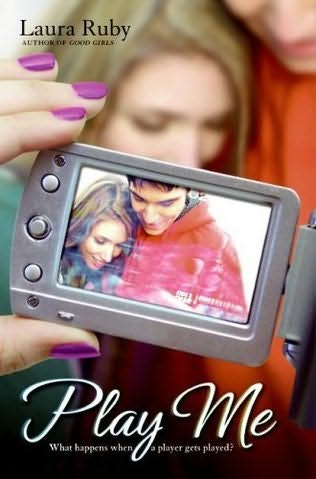
Play Me


Ruby, Laura. 2008. Play Me.

Most people turn into complete morons when you put them in front of the camera, and thank God for that.

I liked the first line. In fact, that's probably my favorite thing about this one. I think this is a case of a reader being disconnected from the book in hand. I don't blame the book for the disconnect. I just failed to connect with the characters and the story. (If I'm going to blame anyone, then I'll lay the blame fully on Tippi Hedren. Tippi is the narrator's pet bird--I'm supposing it's a parrot of some sort since it speaks, though I am FAR from an expert on birds.)

Eddy is a high school student who has big plans. He wants to be a writer, director, and cameraman. He's all about making movies. Right now, his current project--making episodes of Riot Grrl 16, is keeping him plenty busy. If his show gets viewers votes, he could be on his way to making it to MTV. But while his 'professional' life seems to be getting on track--and off track, then back on, then off, then back on, then off, etc.--his love life isn't about love at all. Lust. Lust. Lust. And Eddy is fine with that, fine with being a player. But then he falls and falls hard for the one girl he probably couldn't get anyway: Lucinda Dulko.

I suppose this one classifies as a coming-of-age story where a player gets played and semi-learns a lesson about life and love and friendship. I just didn't care for Eddy.

I think it will appeal to other readers. There are film references galore. The whole movie-pop-culture world really. I'm sure 90% went right over my head. I did catch the reference to llama llama duck.

© Becky Laney of Becky's Book Reviews

Sunday, November 16, 2008

The Possibilities of Sainthood


Freitas, Donna. 2008. The Possibilities of Sainthood.

I'm in like with this book. It's cute. It's funny. The narrative voice works for me. I found the main character, Antonia Lucia Labella, to be lovable. I found Michael, her "friend" who is only a friend to be crush-worthy. Antonia's crush, Andy, was predictable and a bit undeveloped. (No reader doubts that he is filler, just a pawn in the story.) Maria was a nice sidekick. I loved the Labella family as a whole. This book had atmosphere--plenty of atmosphere--and delightful characters as well.

Antonia Lucia Labella wants to be the first living saint. She writes the Vatican once a month with her ideas--always fresh, innovative, down-to-earth and practical--with ideas for new patron saints. So far no luck. The book begins with her idea of having a new patron saint for figs and fig trees. That's only the beginning. This premise is cute, but it doesn't grow old...at least not in my opinion. Antonia is just too likeable.

When she's not writing to the Vatican, praying to the saints, doing her homework, or working with her mom in her business, she's crushing on Andy. Andy's her dream guy. But the only guy in her life, Michael, is there uninvited. He's always closer than Antonia likes. Though Michael insists that he's just there to be her friend. Her friend on her terms. Her head is full of hopes and dreams of having her first kiss...and having that kiss come from the ever-dreamy Andy. Will Antonia be the last to notice how thoroughly kissable Michael is?

© Becky Laney of Becky's Book Reviews

Saturday, October 18, 2008

Poison Ink


Golden, Christopher. 2008. Poison Ink.

In a way, Poison Ink reminded me of Devilish, Zombie Blondes, and Dead Is The New Black. It is the story of friendship that becomes warped and twisted by...you guessed it...poison ink. Sammi (only her parents can get away with calling her Samantha) has four best friends--T.Q., Letty, Caryn, and Katsuko (don't even think about calling her Kat). And while at a last-chance-slumber party (the weekend before school starts), one of them suggests that they should all get tattoos to show how bonded and super-loyal they are. Each of the five girls having the exact same tattoo. True, they're all under eighteen. And true, none of them would have the consent of their parents. But surely there is someone out there willing and able to help these girls out, right?

Enter Dante. A smooth-talking tattoo artist who just happens to be inspired to create a unique tattoo on the spot for these strange-but-attractive girls that have stumbled into his tattoo parlor. What's the problem? Don't get me started. But it's really quite simple. Sammi starts having doubts about getting a tattoo. She has BIG doubts. And so she refuses. Only problem is that all four of her friends now seriously hate her.

Friendless or almost so at any rate, Sammi is one of the first to notice just how strange her friends--or former friends--are becoming. It is like they're completely different people. Angry. Bitter. Slutty. Violent. And there is even a rumor or two that they're on drugs. And did I mention they've all started cutting classes?

What's a girl to do. Sammi to the rescue! She's determined to figure out why her friends have become "possessed" (for lack of a better word) and to do all that she can--at no small risk--to get her friends back.

© Becky Laney of Becky's Book Reviews

Tuesday, October 07, 2008

The Penderwicks On Gardam Street


Birdsall, Jeanne. 2008. The Penderwicks on Gardam Street.

Sometimes it's best to read a book without having any preconceived ideas. All I've heard over and over again since this book has been released is how it is even better, even greater than the original. How people loved it just that much more. (I was expecting it to be a WoW book; one that just was so incredibly amazingly good that I wouldn't know what to do with myself.) So I think my expectations were just a tiny bit too high. That being said, I still loved it.

This second book, The Penderwicks on Gardam Street, picks up soon after the original concludes. The Penderwick family consists of: Mr. Penderwick (dad), Rosalind, Skye, Jane, Batty and Hound. The family has returned home. School has begun. Life is going on as usual...mostly. [They do have a new neighbor on their street. A single woman (widow) with a small child of her own.] Each child has their own drama going on; each has their own story line. One that weaves them all together (in a way) is the fact that their dad has started dating again. Each of the girls is a bit worried about that. Worried that he'll find someone he'll like. Worried that he'll find someone to marry. So they're not content to mind their own business. Lots of MOP meetings going on. Lots of schemes--some successful, some foiled.

I enjoyed this one. I did. I liked how the dad was able to fool everyone into thinking he was dating a "Marianne Dashwood." I liked the story of Jane and Skye. How they exchanged homework assignments with some rather unforeseen results. I loved Jane in general.

I enjoyed this book because I loved the characters. I loved the narrative. I loved how Birdsall wrote the story. The narrative voices. The language. The style. But I didn't love this one because of the plot. The plot was just incidental. I didn't like this plot more than the other. Didn't find it greater than the original. This novel is great because the characters are great. And that's the same way I felt about the first book. Neither book's plots stood out as amazing to me. But the characters did. So I loved both books.

© Becky Laney of Becky's Book Reviews

Saturday, September 27, 2008

The Penderwicks


Birdsall, Jeanne. 2005. The Penderwicks: A Summer Tale of Four Sisters, Two Rabbits, and a Very Interesting Boy.

For a long time after that summer, the four Penderwick sisters still talked of Arundel. Fate drove us there, Jane would say. No, it was the greedy landlord who sold our vacation house on Cape Cod, someone else would say, probably Skye.

I liked this one. A lot. It was a nice and enjoyable novel. One that a whole family could enjoy. One that was meant to be read aloud and shared. It's not a loud story. Not crammed with action and explosions and bathroom jokes. But it's a good and pleasant one. It's a story of the Penderwick family--Mr. Penderwick, Rosalind (12), Skye (11), Jane (10), and Batty (4), and their dog, Hound. Mrs. Penderwick died when Batty was just a baby. (From cancer I believe.)

The book is about one of their summers. The summer that they visit Arundel, a cottage. It is owned by a rather grumpy and snooty woman Mrs. Tifton. But Mrs. Tifton has a son, Jeffrey, and a gardener, Cagney, and there is where the fun begins. New friends to make. Problems to create and solve. Life to be experienced.

Recommended for those who like a bit of old-fashioned charm in their lives.

About the book:

The Penderwicks: A Summer Tale of Four Sisters, Two Rabbits, and a Very Interesting Boy is on many State Award Master Lists, including those for Arizona, Hawaii, Illinois, Kansas, Kentucky, Maine, Massachusetts, Michigan, Nebraska, New Hampshire, New Mexico, Pennsylvania, Rhode Island, South Carolina, Tennessee, Texas, Vermont, and Virginia. Other awards and honors include:

  • National Book Award Winner for Young People’s Literature
  • New York Times Bestseller
  • Book Sense National Bestseller
  • Booklist Editors’ Choice
  • Kirkus Reviews Editors’ Choice
  • Publishers Weekly Best Children’s Book
  • School Library Journal Best Book of the Year
  • Child Magazine Best Kids’ Book of the Year
  • Children’s Book Sense Top Ten Pick
  • 2007 Kalbacher Klapperschlange (Germany)

© Becky Laney of Becky's Book Reviews

Thursday, July 24, 2008

Paper Towns


Green, John. 2008. Paper Towns. October release.

Prologue opening paragraph: The way I figure it, everyone gets a miracle. Like, I will probably never be struck by lightning, or win a Nobel Prize, or become the dictator of a small nation in the Pacific Islands, or contract terminal ear cancer, or spontaneously combust. But if you consider all the unlikely things together, at least one of them will probably happen to each of us. I could have seen it rain frogs. I could have stepped foot on Mars. I could have been eaten by a whale. I could have married the queen of England or survived months at sea. But my miracle was different. My miracle was this: out of all the houses in all the subdivisions in all of Florida, I ended up living next door to Margo Roth Spiegelman.

First sentence: The longest day of my life began tardily.

My favorite quote: I spent the next three hours in classrooms, trying not to look at the clocks above various blackboards, and then looking at the clocks, and then being amazed that only a few minutes had passed since I last looked at the clock. I'd had nearly four years of experience looking at these clocks, but their sluggishness never ceased to surprise. If I am ever told that I have one day to live, I will head straight for the hallowed halls of Winter Park High School, where a day has been known to last a thousand years. (18)

Quentin Jacobsen, our narrator, has been trying to puzzle out the mystery that is Margo for years now. And as their senior year comes to a close, the mystery is only deepening as far as he's concerned. It all starts with a late night visit. Margo appears at his bedroom window asking Quentin to join her in some mischievous revenge--she needs his car, or rather she needs his mom's car. And Quentin, or Q as she calls him, would do anything and everything for this once-in-a-lifetime opportunity to spend some quality time with the girl of his dreams.

What happens that night and in the following weeks will shape Quentin in ways he never would--never could have--expected.

John Green's first novel, Looking for Alaska, won the Printz award in 2006. Green's second novel, An Abundance of Katherines, earned a Printz honor. And, of course, along the way he's picked up an enormous number of fans both through his books and his vlogging with the Brotherhood 2.0. (And though that's over and done with, more videos and blogging can be seen on the Nerdfighters Ning site.

Note: I'm reviewing an ARC, so keep that in mind when I'm pulling a few quotes out. They may or may not be the same as what makes it into the finished book that will be released in October.

Now for some Weekly Geeks Q&A fun:

Bart's Bookshelf asks, "I've not read any John Green, so have you a favourite quote/line from Paper Towns that best sums up the relationship of the main protagonists?"

I've already quoted a bit of this one. But here are two more that will give you a feel for the book:

"Margo always loved mysteries. And in everything that came afterward, I could never stop thinking that maybe she loved mysteries so much that she became one." (8)

"I smiled. She smiled. I believed the smile. We walked to the stairs and then ran down them. At the bottom of each flight, I jumped off the bottom step and clicked my heels to make her laugh, and she laughed. I thought I was cheering her up. I thought she was cheerable. I thought maybe if I could be confident, something might happen between us. I was wrong." (58)

Jennie asks, "Is Paper Towns everything that we've now come to expect from John Green? Because I'm DYING to read this one!!! Will I just be disappointed, so is my internal hype well-deserved?"

Yes. If you've followed his vlogging and come to love his personality just as much as his fiction, then you won't be disappointed. Green's personality shines through on this one. I haven't read An Abundance of Katherines yet, but this one is just as good as Looking for Alaska.

M. Molly says, "John Green said that Paper Towns was written as a response to Looking for Alaska. Do you see signs of this in PT? Also, does PT break out of JG's "Nerdy boy meets awesome girl who changes his life" equation (not that I mind it...)?"

Yes and no. In some ways the two books are similar. Two guys on the fringe of 'the-in-crowd' find a few wacky friends, two unforgettable girls to dream about and idolize, and thus "come of age". Both have humor and sarcasm in just the right amount. Both have their serious and meaningful layers. Where they differ, in my opinion, is in the mixing. Looking for Alaska is very bittersweet, very contemplative. And Paper Towns has this too. But it's not as bittersweet. It's a bit wackier than Looking for Alaska. Miles and Quentin are not mirror images or anything. Quentin has enough of a personality--as does his friends and dream-girl--to make this one unique. It is not Looking for Alaska part two. But if you boiled it down to the basics, it would have many of the same ingredients, just in different amounts.

Suey says, "I 2nd everything everyone's said about Paper Towns. Dying to know if it's like his others. Better maybe even?"

It's good. It's very good. I won't say I think it's the best, best, best book ever written. But it's definitely one of the better books I've read of YA published in 2008. It would make my top ten list--so far at least--for YA novels published this year. I can't say it's better necessarily. But I can say it met my expectations. I expected really good work, and it delivered. I was surprised by Looking for Alaska. I read it before it was published. It was his first book. I didn't know quite what to expect. And it just blew me away, I thought it was one of the BEST books of the year. So it's hard to match my enthusiasm and passion since with this one I went into with different expectations.

Melissa asks, "Trying to say something different about Paper Towns: how does it compare to his other two? Better? Worse? Different? Do you think that his style works well for the story? (I don't even know the story!)"

I think Green is great at coming-of-age stories about awkward guys who come into their own and get comfortable with who they are and what they want. And he's great at depicting the highs and lows of teen life. The best and worst and most embarrassing. He definitely is a great storyteller.

I haven't read An Abundance of Katherines, but I thought this one was just as good as his first one, Looking for Alaska.

Joy Renee asks, "I'm interested in the technique and art of storytelling itself so anything along that line would interest me. My questions are for any or all of the fiction titles in your list:

How was Point-of-View handled? Was there a single POV character or did it alternate among two or more. Was it always clear whose eyes and mind were filtering?

It was written in first person. And I think this was an effective way to tell a very personal story.

How does the title relate to the story? Was it fitting?" It was very fitting. I can't really go into it all here because it would contain spoilers. I think if you *know* ahead of time what the title is all about, then you might approach the book differently. It's best just to go with it and learn as the character grows.

© Becky Laney of Becky's Book Reviews

Tuesday, July 08, 2008

Planet Pregnancy


High, Linda Oatman. 2008. Planet Pregnancy. 197 pages. October 2008.

Planet Pregnancy is a novel in free verse. Sahara, our narrator, is sixteen going on seventeen. And, as you can guess from the title and cover, her whole world is about to change. Here is how we meet Sahara:

It's September tenth and
I'm holding my breath
because life
and death
and everything
in-between
depends
on a stick
dipped
for less than
ten seconds
in a dish
of pee.

A page or two further...

My name's Sahara,
like the desert.
Unlike the Badlands,
though,
I'm not barren.

Sahara has quite a predicament on her hands no doubt about it. Scared to tell her mother, she keeps her pregnancy a secret from practically everyone. She tells only her closest friend, and even then, she waits until the second trimester.

I remember seeing girls like Sahara on various talk shows. I saw a Dr. Phil episode last week in fact about girls keeping their pregnancies secret, about moms that are so clueless when it comes to knowing, to observing, to seeing what is right in front of them. So there's not a doubt in my mind that this is a realistic portrayal.

As for the poetry itself, it's not perfect. I'm on the fence about it actually. There are places where it's got a certain rhythm, where it seems to work. But there are other places, many places, where it rhymes too much. The rhymes just don't work for me. They sound authentically amateurish. Like they could be how a sixteen-or-seventeen year old might choose to document their life. For me the rhymes took me out of the story. Were a distraction.

For example,

My stomach
is in a curl.
I'm going to
hurl.
"I have
something
to tell you,"
I stammer.
My heart
is a hammer. (129)

Or

She's going
to freak.
I feel weak.
I think I'm
going to barf.
Mom's wearing
a green scarf. (128)

Or

School is so
not cool.
The teachers
are geeks,
and the weeks
drag like rags
through mud.
School is
crud.
At this time
next year,
I'll still be here,
waiting to graduate
in gown and cap
into the Real World
of crap. (99)

However, maybe the rhyming won't annoy other readers. Maybe it's just a personal thing. I just wish it was more natural. No one really and truly rhymes naturally that frequently. People just don't talk like that. Don't think like that.

To end on a more positive note. I think the poems do convey the emotions well. The confusion. The drama. The love. The hate. The uncertainty. The flip-flopping of emotions, of feelings, of hormones. I think it does do a good job of portraying the changes the mind and body go through as it changes through the months of pregnancy.

© Becky Laney of Becky's Book Reviews

Friday, May 09, 2008

The Patron Saint of Butterflies

Galante, Cecilia. 2008. The Patron Saint of Butterflies.

The Patron Saint of Butterflies is good. It's not always a comfortable read. But it's good and powerful and memorable. Narrated by two young girls--Agnes and Honey--it is the story of two children (among many) growing up in a religious commune, a cult, if you will. Agnes, of the two, is the most devout, the most brainwashed by the leaders. Honey, unlike most of the others, has doubts on most days. Perhaps this is because Honey is not as accepted, not as loved, not as "important" as Agnes. Honey lives alone from the others. Maybe Honey has been inside the "Regulation Room" a few too many times to believe than any man who is that cruel could be holy. The two girls are very different, and sometimes they're more enemies than friends. But their lives are connected in more ways than one as the story unfolds.

Honey after a horrible beating is looking for escape, she finds that escape in Agnes' grandmother, Nana Pete, a yearly visitor to Mount Blessing. She tells her secret; she tells her truth hoping and praying that this kind woman will intervene, will stand up for what must be right. Honey is a good judge of character. The event that triggers their exodus, however, is an injury. Agnes' brother, Benny, needs medical treatment. His parents refuse. They trust in Emmanuel, their leader, to "heal" their son. Fortunately, this grandma isn't going to stand by and watch her grandson be treated thus...at the best, he'd just lose the use of his hand, at the worst he could very well die. She must act and quickly.

Honey, Agnes, Benny, and Nana Pete are soon on the road and seeking freedom. But not everyone wants to be free...

The book is intense and powerful and well written.

© Becky Laney of Becky's Book Reviews

Saturday, February 24, 2007

Poison

Wooding, Chris. 2005. POISON.

Once upon a time there was a young lady who lived in a marsh, and her name was Poison. Life in the marsh--or the Black Marshes--isn’t exactly exciting. Sure, it’s full of dangers...swamp fever, poisonous creatures of every shape and size, etc...but what Poison longs for is real adventure. She wants to venture outside her community in the marsh. She wants to see the world outside. What’s left of it anyway. Set perhaps centuries after a disastrous war--the Many-Sided War--humans have become divided, weak, and fearful. They’ve gone to hiding in the mountains and living in marshes. Poison knows what is expected of her: to marry and have children year after year the rest of her life. But Poison wants more...needs more. But even with this dream for more, Poison never actually expected to leave her life in the village and go on a quest like in a storybook. When her younger sister, Azalea, is kidnapped by the Phaerie Lord she sets out on a mission to bring her back. Along the way she meets some friends and makes some enemies. One thing is certain: Poison’s life will never be the same once she ventures outside the Realm of man and into the Realm of Phaerie.

Tuesday, February 06, 2007

Penny From Heaven

Holm, Jennifer. 2006. Penny From Heaven

Barbara Ann Falucci is eleven going on twelve. Half-Italian, she splits her time between visiting her Italian Catholic side of the family and her mother’s side of the family that were just ‘plain American’ and Methodist. The sides don’t necessarily get along well together. Called ‘Penny’ ever since she could remember, she is enjoying living life to the fullest in the summer of 1953. Playing with her cousin Frankie, listening to ball games with her Uncle Dominic, and surviving her sometimes chaotic life at home with her mom and her grandparents--Pop-pop and Me-Me. Not to mention her dog, Scarlett O’Hara who has a way of making life even more messy--literally. But life is good. This is a family-friendly title. Full of life’s ups and downs. An enjoyable treat. And definitely worthy of the Newbery Honor.

Tuesday, January 30, 2007

The Pull of the Ocean

Mourlevat, Jean-Claude. 2006. The Pull of the Ocean.

Recently won the Mildred L. Batchelder Award for 2007.

To be honest, which I always am but I like to use prefaces, I never would have read this title if it hadn't just won an award. First of all, I wouldn't have known it existed. Second, if I had seen it on the shelf and been curious enough to pull it out to read the back cover, I probably would have placed it right back on the shelf. The book flap (side flap) reads: that The Pull of the Ocean is a 'social fable' and 'a modern reinterpretation of 'Tom Thumb' that deftly gives life to memorable characters and explores resonating themes. Which leads me to make this point: if someone has to tell you that a book has 'memorable' characters right on the bookcover that tends to make me suspicious. Don't get me wrong, it's fine with classic novels that have been around a generation or two...but for a 2006 book to flaunt or assert how wonderfully memorable the characters are leaves me with a certain degree of doubt. Furthermore to be told that a book 'explores' resonating themes is very condescending. Like a reader can't judge for him/herself that a book has 'memorable' characters and explores 'resonating' themes??? It's like someone is warning you: you SHOULD like this book because it is smart and clever and a social fable. And saying if you don't like this book it is because you're just not smart enough to 'get it.'

But putting aside certain prejudices, after all I don't know who is responsible for the book flap nonsense it could have been a perfectly fine book, I read the book practically in one sitting.

The book is about a young boy, a midget or dwarf, who has six older brothers--three sets of twins. They are very poor. Their situation is desperate. Their father and mother are too poverty-stricken, too stressed, too everything to care about the emotional needs of their children. Particularly their youngest child whom they openly despise because he is different. They blame him for not only being different but they use him as a scape goat. It's okay to verbally abuse him and treat him horribly because he deserves it. He asks for it. I'm a good parent. Really. If he didn't go around thinking he was 'better' than everyone else because he can read and write...then I wouldn't have to smack him around. Some of the twins are nice. Some are violent like their father. But it is the youngest, Yann, the one small enough to fit in a sack who is considered 'wise beyond his years' and 'respected and revered' despite his size and age.

The story is told through many voices. Voices of the young and old. Male and female. All walks of life. The story is one of a young boy leading his brothers on a journey far from home. He wakes them up in the middle of the night with a threat: I just heard Dad say he was going to kill all seven of us tomorrow. Their journey is not an easy one. They listen to Yann and trust Yann no matter what he leads them into.

If this character is supposed to inspire affection from the reader...it falls short. He is not an inspiration. Don't get me wrong. He shouldn't be picked on because he is small. He shouldn't be picked on because he likes to read. But he isn't a likeable character either. He does not talk. The book leaves the reader with the idea that his muteness is one of choice. He doesn't want to communicate with his family, his parents. They allude to the fact that he expresses everything that needs to be said with his eyes. Is the fact that he's a mute midget supposed to make him a hero who can do no wrong??? Not in my eyes.

S
P
O
I
L
E
R

He is a liar. The father was not going to kill him or his brothers. He was going to kill a stray cat and her kittens. If you're struggling to feed seven children should you be expected--on a farm in the country--to provide nourishment and care for stray animals? Apparently, Yann equated the death of cats with a certain amount of cruelty that he felt was intolerable. He would not try to stay in a house with a man who would 'take care' of strays in this manner. True his parents hated him. True they were abusive in the past. True the kids probably deserved a better homelife...but to reward his lies and make him a hero???? He's a liar. He's a thief.

If this is a social fable I fail to see what the message is...

Tuesday, January 02, 2007

Porch Lies

McKissack, Patricia. 2006. Porch Lies: Tales of Slicksters, Tricksters, and Other Wily Characters. Illustrated by Andre Carrilho.

Patricia McKissack’s collection of short stories, Porch Lies, would make a great read aloud. After all, they are written in the great African-American story-telling tradition. The stories are funny, entertaining, and some communicate some great life-lessons. My favorites include “Change” about a man who spent years living off his neighbors with the excuse that he only had a one hundred dollar bill. Since no one in the depression had change for a bill that large, then he always was getting by on credit or the line, “I’ll pay you next week.” After years, the town is fed up. Someone gets the ‘clever’ idea to challenge him. They confront him and state that he is a liar and that he doesn’t really have a hundred dollar bill. Not threatened in the least, he suggests a bet. So sure of themselves, most folks bet money that he has been lying and can’t produce the legendary bill. But sure enough, he surprises them all by pulling one out. He wins money from almost everyone in town and using that money he begins to make good on his debts. “Aunt Gran and the Outlaws” is another story about how an old woman and her young great-nephew who harbor two of history’s most infamous criminals: Frank and Jesse James. Using her wits, she uses her new houseguests to scare away the white men who have been bullying and threatening her for years. I highly recommend this book to all who love a good story!

Thursday, December 21, 2006

Princess and the Beast

Child, Lauren. 2006. The Princess and The Pea.

Today I am presenting reviews for two beautiful picture books that are retellings of classic fairy tales. The first is Princess and the Pea by Lauren Child. It is beautifully illustrated. Child created beautiful, intricate, detailed paper dolls and provided them with proper backgrounds even adding small little details done in miniature to create the perfect backdrop for this classic tale of love. This miniature world was then photographed to create the illustrations. The text of the picture book is wonderful as well. Together the text and illustrations share a magical story with young readers.

Real princesses do not grow on trees. You just have to wait for one to come to you. And if one does, just to be sure, make her a bed of twelve feather mattresses, and underneath those twelve feather mattresses place a small pea-green pea. Then wait for the moon to set and the sun to rise. And if she wakes up all black and blue, you’ll know that you have indeed discovered a REAL princess.

http://www.milkmonitor.com/

http://www.surlalunefairytales.com/princesspea/index.html

Eilenberg, Max. 2006. Beauty and the Beast.

The second book I am reviewing today is a retelling of Beauty and the Beast by Max Eilenberg and illustrated by Angela Barrett. Again beautiful illustrations and text are used to create a magical environment for sharing this story with young readers. The illustrations by Angela Barrett are done beautifully in soft pastel colors. And help set the tone and mood of the story. The text is well-written and for the most part faithful to the traditional tale.

http://www.surlalunefairytales.com/beautybeast/index.html

http://www.walkerbooks.co.uk/Max-Eilenberg

Wednesday, December 06, 2006

Dominique Paul

Paul, Dominique. 2006. The Possibility of Fireflies.

2006 seems to be another banner year for troubled teens. I suppose it is the one ‘trend’ in young adult literature that never wavers throughout the decades. Often the ‘trouble’ is the teen rebelling in anger and resentment against parents who are not developed enough to be judged by the reader as worthy or unworthy of such treatment. We don’t know enough to judge if the anger is justified. That is not the case with THE POSSIBILITY OF FIREFLIES. The main character, Ellie Roma, and her sister Gwen are mistreated and abused by a despicable woman who is their mother. She yells. She screams. She hits. She locks her kids out of the house on a regular basis. She neglects them. She doesn’t worry about feeding them. She doesn’t care about them at all. She tells them day in and day out that they ruined her life and she hates them. So it doesn’t come as any surprise when Gwen begins hanging out with the wrong crowd and doing some typical rebelling: smoking, drinking, doing drugs. Ellie’s response may be calmer, but it is equally strong. Silent and angry, Ellie is counting the days until she can make her final escape. THE POSSIBILITY OF FIREFLIES presents two teens, one labeled 'good' and one labeled 'bad', struggling to survive the harshness of their home life. It is an emotionally raw and intense book. I believe the characters are memorable.

Sometimes I think it is okay that my mother doesn’t love me anymore, because she did. And I remember. I only wish I had known it would stop. I would have paid better attention, saved up everything in reserves like when they thought the bomb was coming. But I hadn’t known. I just hadn’t known (91).

Dominique Paul grew up in a Maryland suburb just outside of Washington, D.C., and received her BA in English from the University of Maryland, College Park. Currently she lives in Los Angeles, where she works as a screenwriter. The Possibility of Fireflies is her first novel.

Simon & Schuster: Dominque Paul

Thursday, November 16, 2006

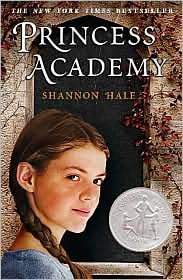
The Princess Academy


I have had so much fun reading and re-reading the works of Shannon Hale. And my review of Princess Academy will be my final installment in "Author Spotlight: Shannon Hale." I hope she has a long career in the field of children's literature because she is very talented!

Hale, Shannon. 2005. PRINCESS ACADEMY. New York: Bloomsbury. ISBN 1582349932

PRINCESS ACADEMY written by Shannon Hale, author of THE GOOSE GIRL and ENNA BURNING, is a delightful novel set in the fictional locale of Danland. In a setting reminiscent of "long ago and far away," Miri and her companions are selected to attend a "princess academy" to prepare themselves to meet the prince. (The priests have forseen that the future bride of the prince will come from this small town on top of a remote mountain.) The girls range from twelve to eighteen. For the first time in their lives, they are learning to read and write. Of course, there are other less essential items taught at the school as well: conversation, poise, curtseying, dancing, diplomacy, etc. As the school year draws to an end, however, some of the girls are realizing that they do not want the prince to choose them. They begin to doubt that the royalty lives "happily ever after." After all, how much do they actually know about this prince? Then the girls realize something: this education they're receiving is empowering them. It's not about who "wins" the prince; it's about gaining knowledge of themselves and the world. This education is something that they will have the rest of their lives no matter where they live or who they marry.

PRINCESS ACADEMY is narrated by Miri, a fourteen year old with a sensitive insight to her own emotions and of the emotions of those around her. She has always felt like an outcast in her village, but through her experiences at the academy, she learns that she has many strengths. Her academy experiences make her smarter, wiser, and ultimately a strong leader. PRINCESS ACADEMY is a delightful and enjoyable read with a satisfying ending.

Monday, November 06, 2006

Psyche In A Dress

Block, Francesca Lia. 2006. Psyche in A Dress.

Psyche In A Dress is a verse novel told in first person narrative that can be at times confusing, yet if the reader is persistent he/she will be rewarded for their effort. Why the confusion? There are two possible reasons the reader might find himself/herself confused: 1) being plunged into characters and story lines from Greek mythology with no explanation or context from the author and 2) having the narrator transform herself from one heroine to another metaphorically speaking. The good news? If the reader keeps reading, by the end of the book it will make a lot more sense. The bad news? If the reader gives up after the first confusing chapter or two or gets tired of metaphors and symbolism...then they'll be missing the big picture that Block was trying to paint.

The narrator who sometimes refers to herself as Psyche or Soul has various lovers throughout her life who take on the personas of gods and other characters (mortal or immortal) from Greek mythology). With each new lover--love, heartache, pain, etc, her persona or personality is transformed or changed to take on the characteristics of female goddesses or characters (mortal or immortal) from Greek mythology. Therefore she switches from representing one goddess to another to another in rapid succession which can be more than a little confusing to the reader with only a mediocre frame of reference to these myths. Who are some of these lovers? Love, Narcissus, Orpheus, and Hades. And the female personas she wears like a dress? Psyche, Echo, Eurydice, Maenad, Persephone, and Demeter.

It's a good book, perhaps one that will improve upon second reading. And if the reader is well-versed in Greek mythology and knows the stories backwards and forwards and can recall the small details that make each story unique, perhaps Psyche in a Dress will be an easy, enjoyable read. But the book remains a clever examination of what it means to be a woman by examining the roles women play, the lies they tell themselves, and the things they'll do to feel loved and accepted.

http://www.francescaliablock.com/

Sunday, October 22, 2006

Peter Pan in Scarlet

McCaughrean, Geraldine. 2006. Peter Pan in Scarlet. Illustrations by Scott M. Fischer.

Those who know me, know I have a weakness for most things Peter Pan. So I was quite excited when a few weeks ago the "first-ever authorized sequel to J.M. Barrie's Peter Pan" was released. I had great hopes, but not much information to go on other than the fact it would take place several decades after the original story ended and would involve a journey back to Neverland to have a series of adventures. You have to accept some things on pure faith, and I sure was satisfied with this one!

Often with 'sequels' written by a different author one only meets with great disappointment as the book fails to meet even the smallest expectations. Not so with PETER PAN IN SCARLET. The story begins simply enough with the reader meeting John and Wendy Darling along with the other Lost Boys one by one. It seems each has been experiencing vivid dreams of Neverland: the pirates, the lagoon, mermaids, the crocodile, Capt. Hook, the birdsong, flying, etc. These dreams aren't just faint memories though, these dreams leave lasting proof: physical evidence that Neverland is reaching out to them and calling them home. Perhaps the most vivid dream comes when the group of men fall asleep during their meeting at the Gentlemen's Club.

They dreamed they were playing tag with the mermaids, while the reflections of rainbows twisted around and between them like water snakes. Then, from somewhere deeper down and darker, came a hugely slithering shape that brushed the soles of their feet with its knobbly, scaly hide...When they woke, the Old Boys' clothes were sopping wet, and there on its back, in the middle of the Gentlemen's Library, was a prodigious crocodile, lashing its tail and snapping its jaws in an effort to turn over and make supper of them. The Gentlemen's Club emptied in the record time of forty-three seconds, and next day Members everywhere received a letter from the management. . . 'We regret to inform you that the Club will be closed for redecoration from 23rd April until approximately 1999.' (5-6)

These 'old' friends now with families of their own and professional careers must make a choice on whether to try to return to Neverland and get to the bottom of all of these crazy dreams. Most however decide to follow the call back to Neverland and youthful adventures.

I do not want to say WHAT happens when they get to Neverland because that would spoil all the fun of reading the adventures for yourself. But old friends are reunited, new friends and enemies are acquired along the way, and it is an exciting journey for the reader full of adventure, danger, and imagination.

http://www.geraldine-mccaughrean.co.uk/

http://www.peterpaninscarlet.com/

Tuesday, October 10, 2006

Peter and the Starcatchers

Barry, Dave, and Ridley Pearson. 2004. PETER AND THE STARCATCHERS. Ill. by Greg Call. New York: Hyperion. ISBN: 0786854456.

PETER AND THE STARCATCHERS is a fast-paced prequel to J.M. Barrie's PETER PAN. Peter is one of five orphans on his way to the faraway kingdom of Rundoon on the rundown ship The Never Land where they will enter the service of a cruel king. As the leader of his gang, Peter takes his responsibilities seriously. He's determined to find a way to save them all from an unpleasant fate. But even Peter couldn't predict how the trip would end. Other ships in on the adventure are the British ship The Wasp and the pirate ship The Sea Devil, which is commanded by the dreaded Black Stache known for his thick black mustache that is over a foot long. While some felt that Black Stache had no heart--the reader knows differently--after all "he had a real soft spot for his ma, and was truly sorry for the time he'd marooned her" (47). The pirates are after the "greatest treasure" that ever sailed on the seas which is hidden away on the ship The Never Land. Molly, a young girl, is a Starcatcher trying to prevent the trunk of Starstuff (a magical dust that falls from the heavens with some falling stars) from falling into the wrong hands. This exciting game of hide and seek takes place on several ships and one small inhabited island full of angry natives and one hungry crocodile (Mr. Grin) who has cultivated a taste for human flesh.

Full of bad guys, good guys, and countless chase scenes, PETER AND THE STARCATCHERS never fails to entertain. Its short chapters compliment the changing narration and the quick pace of the novel. The black and white illustrations by Greg Call capture the tone--particularly his rendering of the evil pirate Black Stache found on page 81. And I think children will find the pirate vessel's sails particularly amusing--the sails are based on a woman's brassiere (page 103). An audio book is available as well.

Monday, October 09, 2006

John Lennon's Birthday

Delaney, Mark. 2004. PEPPERLAND. Atlanta: Peachtree. ISBN 156145317X.

Pamela Jean Cochran (a.k.a. Star) is sixteen when her mother dies from breast cancer. Struggling to find a way to cope, she turns to her music hoping that if she can write a song to honor her mother then she can finally let go of her anger and pain. While going through her mother's belongings, Star discovers a fan letter to John Lennon and a vintage Gibson guitar--now in need of repair. These two items are the catalyst to Star's healing process. Set in the fall of 1980, Delaney's novel is a wonderful exploration of grief, anger, loss, and confusion. Star and Dooley, her best friend, are remarkably well-developed characters. And Delaney's use of language is impressive. One striking passage occurs when Dooley shows Star his new drawing:

"Before me is a portrait of a young woman. She is strikingly beautiful, her face nearly white and her cheekbones shaded in an ice pale blue. Her eyes are large and pretty, but dark and a little wounded-looking. She's not really smiling. Behind her is a background of burgundy and violet. Within this background, and over the girl's face, are crossing lines, like the squares on a sheet of graph paper. It's as if little parts of her have been painted on hundreds of tiles, and the tiles have assembled themselves to make this image. Except in the upper left-hand corner, the pattern breaks down. The tiles are scattered, the lines no longer forming perfect angles. The pieces seem to be falling, cascading into place. The girl is in the process of becoming a complete picture...And then I understand. I see it. The girl with the wounded eyes, the girl who doesn't quite smile, the girl made of a thousand pieces that are falling, at last, into their proper places...She's me" (105-106).